
Chilled Processed Food Market Report 2026
Global Outlook – By Product Type (Chilled Ready Meals, Chilled Meat And Poultry, Chilled Seafood, Chilled Dairy Products, Chilled Fruits And Vegetables), By Packaging (Modified Atmosphere Packaging, Vacuum Packaging, Plastic Tubs And Trays, Flexible Pouches), By Distribution Channel (Supermarkets And Hypermarkets, Convenience Stores, Specialty Food Stores, Online Retail, Foodservice Channels, Direct Sales Or Institutional Supply), By End User (Household Consumers, Restaurants And Cafes, Hotels, Catering Services, Institutional Buyers) – Market Size, Trends, Strategies, and Forecast to 2030
Chilled Processed Food Market Overview
• Chilled Processed Food market size has reached to $181.37 billion in 2025 • Expected to grow to $236.47 billion in 2030 at a compound annual growth rate (CAGR) of 5.5% • Growth Driver: Rising Demand For Convenience Foods Driving The Market Growth Due To Busy Lifestyles And Preference For Ready-To-Eat Meals • Market Trend: Localized Poultry Processing To Enhance Supply Chain Efficiency And Product Freshness • Europe was the largest region in 2025 and Asia-Pacific is the fastest growing region.Market Gains By 2030 – Top Opportunities By Segment
Market Gain identifies the most promising market opportunities by highlighting the segments or products expected to generate the highest incremental revenue growth over the next five years.
What Is Covered Under Chilled Processed Food Market?
Chilled processed food is food that has been minimally or fully processed and kept under refrigeration to slow spoilage and maintain quality. It includes items such as prepared meals, dairy products, and fresh-cut produce that are ready to eat or require minimal preparation. The main product types of chilled processed food include chilled ready meals, chilled meat and poultry, chilled seafood, chilled dairy products, and chilled fruits and vegetables. Chilled ready meals refer to pre-cooked and portioned food items that are stored at low temperatures to maintain freshness and convenience for quick consumption. The different packaging types include modified atmosphere packaging, vacuum packaging, plastic tubs and trays, and flexible pouches. The various distribution channels include supermarkets and hypermarkets, convenience stores, specialty food stores, online retail, foodservice channels, and direct sales or institutional supply, while end users involved are household consumers, restaurants and cafes, hotels, catering services, and institutional buyers.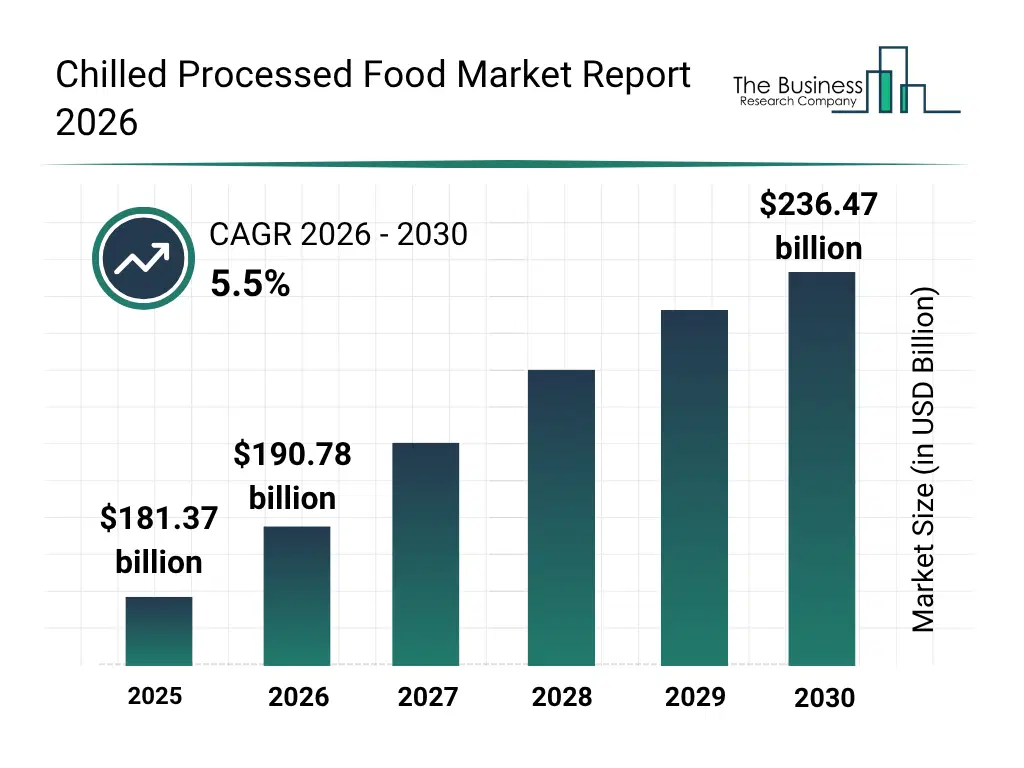
What Is The Chilled Processed Food Market Size and Share 2026?
The chilled processed food market size has grown strongly in recent years.It will grow from $181.37 billion in 2025 to $190.78 billion in 2026 at a compound annual growth rate (CAGR) of 5.2%. The growth in the historic period can be attributed to rising urbanization and busy consumer lifestyles, expansion of modern retail and supermarkets, increasing demand for convenient ready-to-eat foods, growth in refrigerated logistics infrastructure, improvements in cold storage technologies.What Is The Chilled Processed Food Market Growth Forecast?
The chilled processed food market size is expected to see strong growth in the next few years.It will grow to $236.47 billion by 2030 at a compound annual growth rate (CAGR) of 5.5%. The growth in the forecast period can be attributed to rising demand for fresh and minimally processed foods, increasing penetration of online food delivery platforms, growth in premium chilled organic food products, expansion of smart refrigeration and iot-based cold chain systems, increasing consumer focus on food safety and shelf life extension.Major trends in the forecast period include growth of smart cold chain monitoring systems, increasing adoption of modified atmosphere packaging, rising demand for ready-to-eat chilled meals, expansion of online grocery delivery for perishable foods, increasing use of advanced refrigeration and shelf-life extension technologies.
Global Chilled Processed Food Market Segmentation
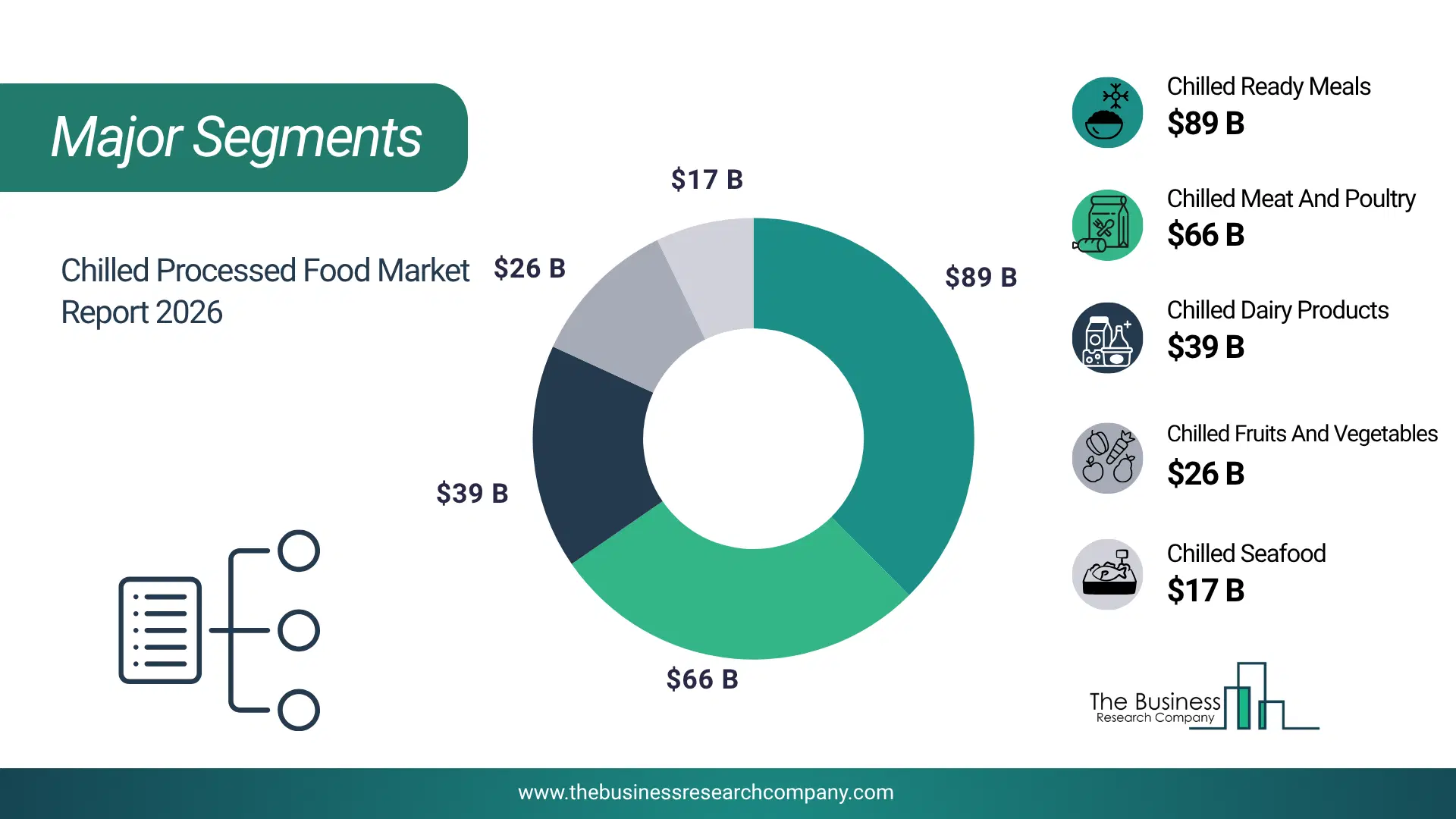
1) By Product Type: Chilled Ready Meals, Chilled Meat And Poultry, Chilled Seafood, Chilled Dairy Products, Chilled Fruits And Vegetables 2) By Packaging: Modified Atmosphere Packaging, Vacuum Packaging, Plastic Tubs And Trays, Flexible Pouches 3) By Distribution Channel: Supermarkets And Hypermarkets, Convenience Stores, Specialty Food Stores, Online Retail, Foodservice Channels, Direct Sales Or Institutional Supply 4) By End User: Household Consumers, Restaurants And Cafes, Hotels, Catering Services, Institutional Buyers Subsegments: 1) By Chilled Ready Meals: Chilled Pasta Meals, Chilled Rice Based Meals, Chilled Ethnic Cuisine Meals, Chilled Vegetarian Ready Meals, Chilled Non Vegetarian Ready Meals, Chilled Meal Bowls, Chilled Sandwiches And Wraps 2) By Chilled Meat And Poultry: Chilled Fresh Poultry Cuts, Chilled Red Meat Cuts, Chilled Processed Meat Products, Chilled Marinated Meat Products, Chilled Minced Meat Products, Chilled Sausages And Frankfurters, Chilled Deli Meat Slices 3) By Chilled Seafood: Chilled Fish Fillets, Chilled Whole Fish, Chilled Shrimp And Prawns, Chilled Shellfish, Chilled Crab And Lobster Products, Chilled Marinated Seafood, Chilled Ready To Cook Seafood Mixes 4) By Chilled Dairy Products: Chilled Milk And Flavored Milk, Chilled Yogurt Products, Chilled Cheese Products, Chilled Cream Products, Chilled Butter And Spreads, Chilled Dairy Desserts, Chilled Fermented Dairy Products 5) By Chilled Fruits And Vegetables: Pre Cut Fruits, Fresh Cut Vegetable Packs, Ready To Eat Fruit Bowls, Salad Mixes, Washed And Trimmed Vegetables, Fruit Salads, Vegetable Snack Packs The top segments in the chilled processed food market will be: • Chilled Ready Meals will reach $88.8 Billion by 2030. • Chilled Meat And Poultry will reach $65.61 Billion by 2030. • Chilled Dairy Products will reach $39.02 Billion by 2030. • Chilled Fruits And Vegetables will reach $25.85 Billion by 2030. • Chilled Seafood will reach $17.18 Billion by 2030.What Is The Driver Of The Chilled Processed Food Market?
The rising demand for convenience foods is expected to propel the growth of the chilled processed food industry going forward.Convenience foods are processed or packaged foods designed to require minimal preparation, allowing quick and easy consumption.Convenience foods are increasing as busy lifestyles reduce cooking time, leading people to prefer quick and easy meal options.Chilled processed foods support convenience foods by offering ready-to-cook or ready-to-eat meals that require minimal preparation while maintaining freshness through refrigeration.For instance, in September 2025, according to the National Association of Convenience Stores (NACS), a US-based trade association, in 2024, foodservice sales, including prepared food, commissary, and hot, cold, and frozen dispensed beverages, represented 27.7% of in-store sales and 38.6% of gross margins at convenience stores, with prepared food dominating at 72.6% of foodservice sales and steadily increasing its share over the past five years.Therefore, the rising demand for convenience foods is driving the growth of the chilled processed food industry.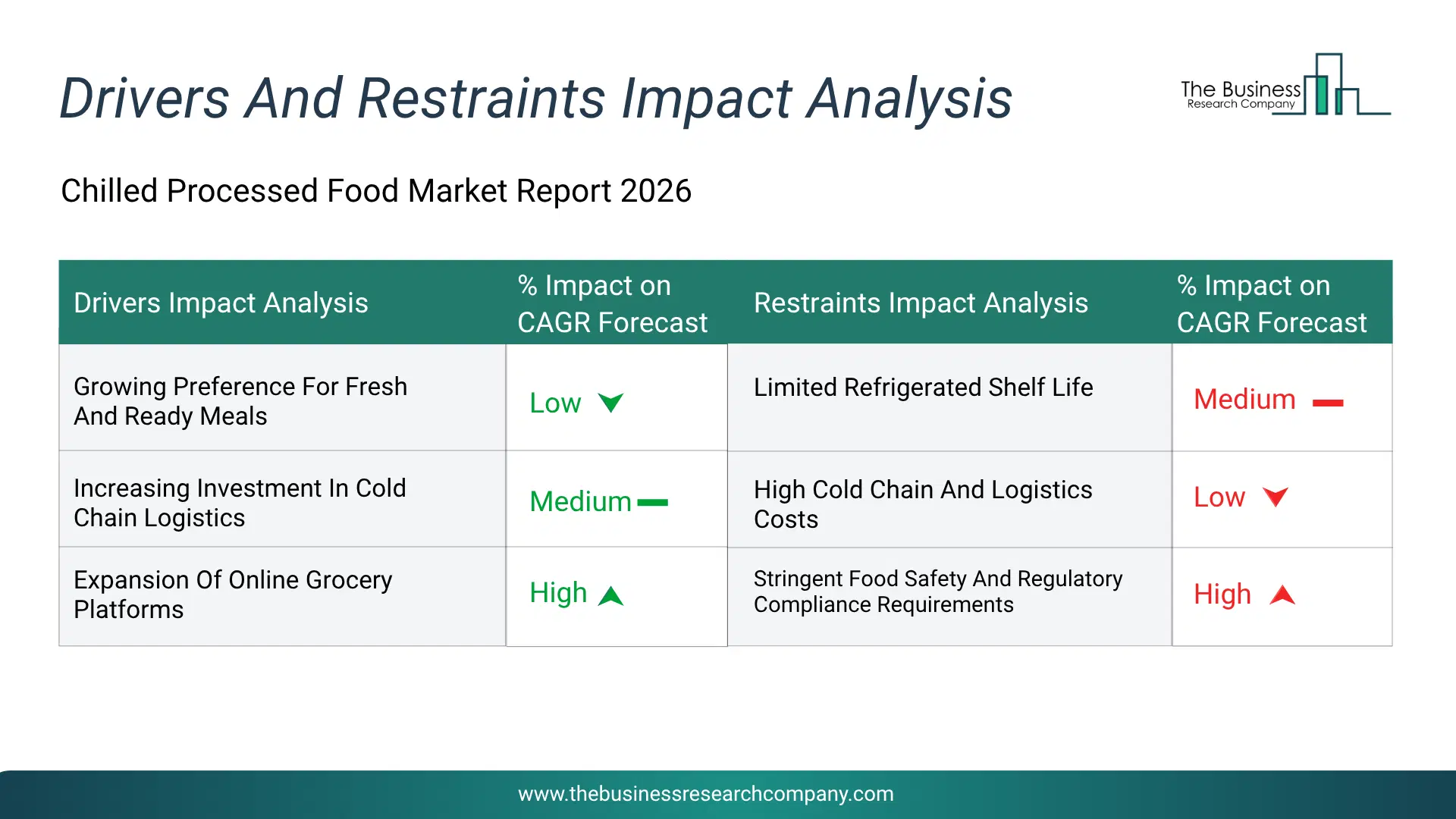
Infographic Chart Showing Key Market Drivers Analysis And Restraints For Chilled Processed Food Market
The chart presents an impact analysis of key drivers and restraints, quantifying their relative influence on the market's growth rate and helping assess the balance between growth enablers and limiting factors. This chart offers a high-level perspective; the full report contains more detailed insights.
How Will The Drivers Impact Growth In The Global Chilled Processed Food Market?
• Growing Preference For Fresh And Ready Meals (Low) – During the forecast period, the growing preference for fresh and ready meals is expected to become a key growth driver for the chilled processed food market by 2030. Increasing consumer inclination toward convenient yet fresh-tasting food options is accelerating demand for chilled ready-to-eat and ready-to-cook products. Busy lifestyles and rising workforce participation are encouraging consumers to opt for meal solutions that require minimal preparation time while maintaining nutritional value and taste. This shift is further supported by product diversification across cuisines and dietary preferences, enhancing consumer appeal. Additionally, manufacturers are focusing on clean-label ingredients and shorter shelf-life products to align with freshness expectations. • Increasing Investment In Cold Chain Logistics (Medium) – During the forecast period, the increasing investment in cold chain logistics is expected to emerge as a major factor driving the expansion of the chilled processed food market by 2030. Significant improvements in refrigerated transportation, warehousing, and storage infrastructure are enabling efficient handling and distribution of temperature-sensitive food products. Enhanced cold chain capabilities help maintain product quality, safety, and shelf life across long distances, supporting market expansion into new geographic regions. Investments from both public and private sectors are facilitating the modernization of supply chains, reducing spoilage and operational inefficiencies. Furthermore, advancements in temperature monitoring and tracking technologies are improving supply chain reliability. • Expansion Of Online Grocery Platforms (High) – During the forecast period, the expansion of online grocery platforms is expected to act as a key growth catalyst for the chilled processed food market by 2030. The rapid growth of e-commerce and digital retail channels is transforming the way consumers purchase chilled food products. Online platforms offer convenience, wider product selection, and doorstep delivery, making chilled processed foods more accessible to a broader consumer base. Integration of advanced logistics systems and last-mile delivery solutions ensures the safe and timely delivery of perishable products. Additionally, the use of data analytics and personalized recommendations is enhancing customer engagement and purchase frequency. This digital shift is enabling manufacturers and retailers to expand their reach and optimize inventory management.How Will The Restraints Impact Growth In The Global Chilled Processed Food Market?
• Limited Refrigerated Shelf Life (Low) – During the forecast period, limited refrigerated shelf life acts as a major restraint for the chilled processed food market because products must be sold and consumed within a short time frame to ensure safety and quality. This increases the risk of spoilage if temperature conditions fluctuate during storage or transportation. Manufacturers and retailers face higher inventory losses and food waste due to unsold or expired products. Short shelf life also restricts long-distance distribution and export opportunities. Frequent production and replenishment cycles raise operational costs. Together, these factors reduce profit margins and limit market expansion. • High Cold Chain And Logistics Costs (Medium) – During the forecast period, high cold chain and logistics costs act as a major restraint for the chilled processed food market because these products require continuous temperature-controlled storage and transportation to maintain safety and quality. Maintaining refrigeration across the supply chain leads to high energy consumption and increased fuel and electricity expenses. Specialized refrigerated vehicles, warehouses, and monitoring systems further raise operational costs. Any temperature deviation can result in spoilage, causing financial losses and food waste. These elevated logistics costs often increase final product prices, reducing affordability for consumers. As a result, market expansion becomes challenging, especially in price-sensitive and infrastructure-limited regions. • Stringent Food Safety And Regulatory Compliance Requirements (High) – During the forecast period, stringent food safety and regulatory compliance requirements act as a restraint for the chilled processed food market by increasing the operational burden on manufacturers. Producers must invest heavily in hygiene controls, temperature monitoring systems, testing, and certification to meet regulatory standards. These requirements raise production and compliance costs, which can reduce profit margins or lead to higher product prices. Regulatory complexity also slows product approvals and market entry, particularly for new or small players. Frequent inspections and strict traceability rules increase administrative workload across the supply chain. Together, these factors limit flexibility, scalability, and speed of expansion for chilled processed food manufacturers.Key Players In The Global Chilled Processed Food Market
Major companies operating in the chilled processed food market are Nestlé S. A., Tyson Foods Inc., The Kraft Heinz Company, Conagra Brands Inc., Unilever PLC, General Mills Inc., JBS S. A., Hormel Foods Corporation, WH Group Limited, Danone S. A., Kerry Group, Maple Leaf Foods Inc., OSI Group LLC, Greencore Group plc, Ajinomoto Co. Inc., Sigma Alimentos S. A. de C. V., Danish Crown A/S, Nippon Ham Co. Ltd., Perdue Farms Inc., 2 Sisters Food Group Limited, Signature International Foods India Private Limited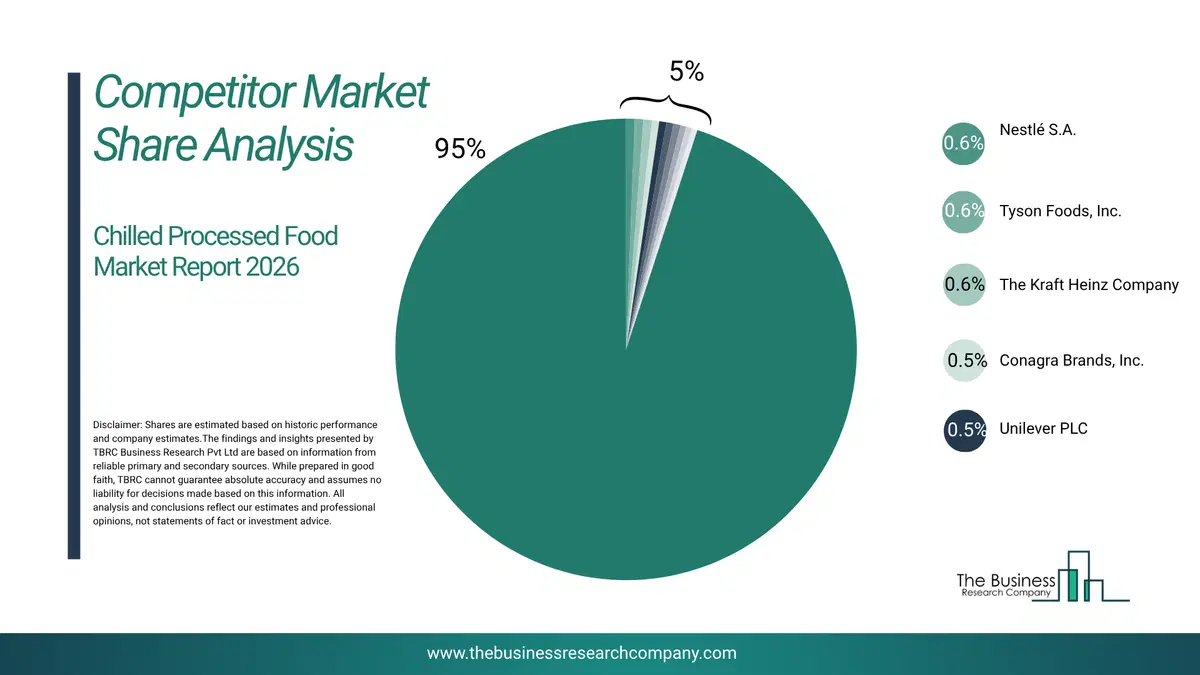
This chart is for illustrative purposes; the full report includes a detailed competitor analysis and comprehensive overview of the top 10 companies in the market.
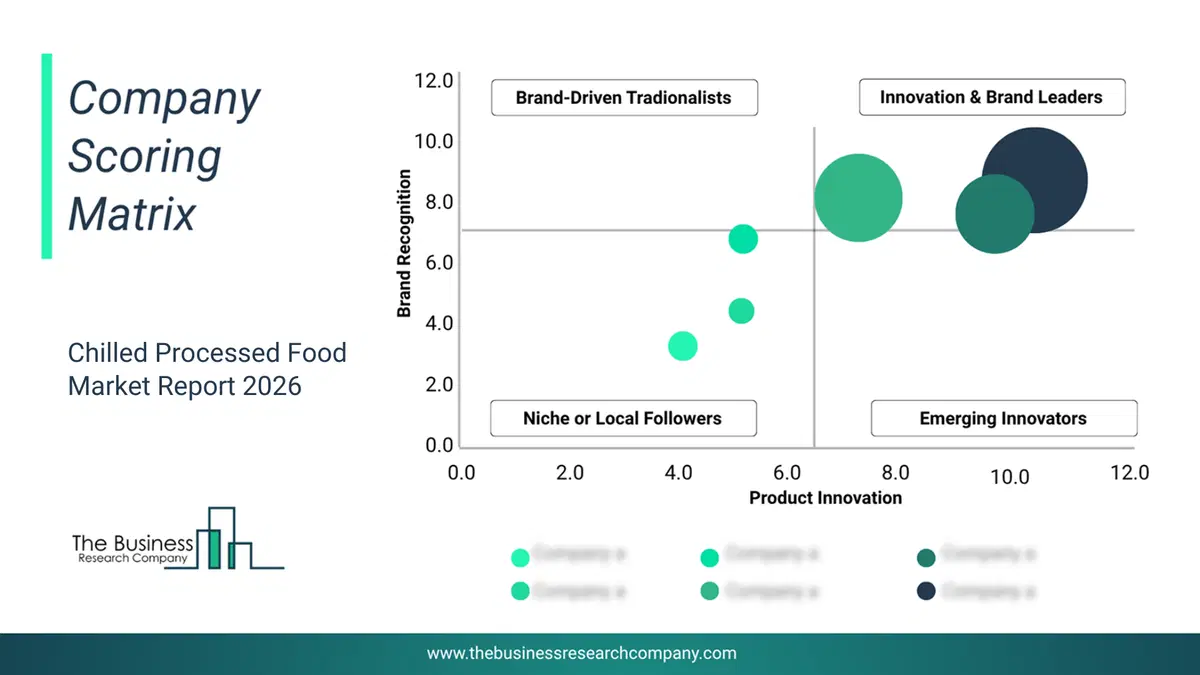
This chart maps companies by product innovation and brand strength, with bubble size indicating relative revenue, helping identify market leaders, challengers, and niche players. This is an illustrative chart; the full report provides a complete and accurate competitive analysis.
Global Chilled Processed Food Market Trends and Insights
Major companies operating in the chilled processed food market are focusing on developing innovative solutions such as, localized chilled poultry processing to improve supply chain efficiency, preserve product freshness, meet regional taste preferences, and reduce cold-chain logistics costs. Localized chilled poultry processing involves handling and chilling poultry close to consumption markets to minimize transit time, maintain quality, and lower distribution expenses. For example, in July 2025, BRF S. A., a Brazil-based food processing company, introduced its first chilled chicken product line in Saudi Arabia, featuring locally processed and packaged items under its established brands. This launch reinforces BRF’s expansion in the Gulf’s growing chilled poultry segment and supports its strategy of strengthening localized production of chilled and processed foods within the kingdom.What Are Latest Mergers And Acquisitions In The Chilled Processed Food Market?
In July 2025, the Compleat Food Group, a UK-based food manufacturing company, acquired Fresh-Pak Chilled Foods Ltd. for an undisclosed amount. With this acquisition, The Compleat Food Group aims to strengthen its position in chilled food by expanding its capabilities in egg processing, deli fillers, and food-to-go products while driving innovation and growth in protein-rich and convenience food categories. Fresh-Pak Chilled Foods Ltd. is a UK-based food manufacturing company that specializes in chilled convenience products.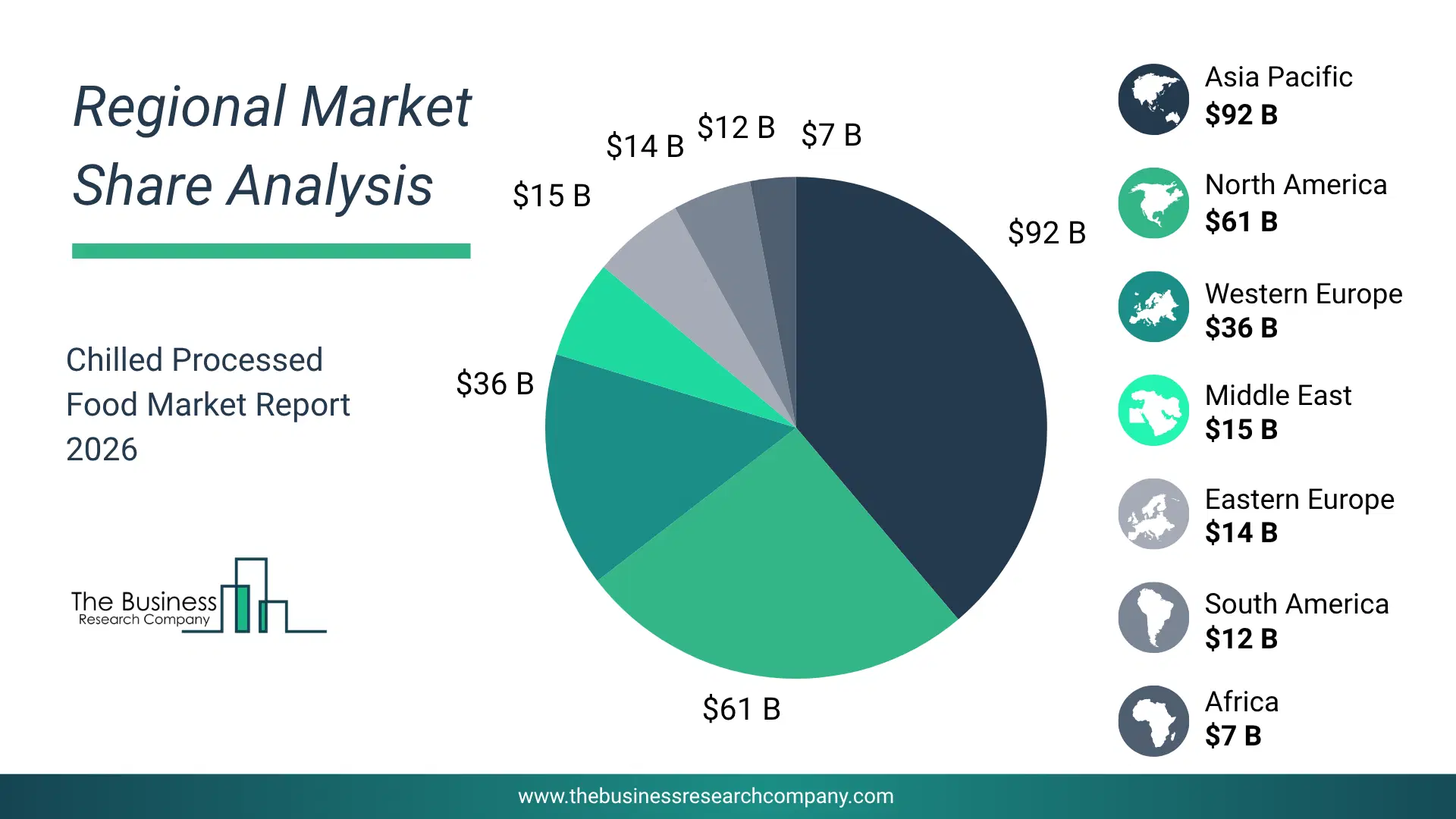
Regional Insights
Europe was the largest region in the chilled processed food market in 2025. Asia-Pacific is expected to be the fastest-growing region in the forecast period. The regions covered in this market report are Asia-Pacific, South East Asia, Western Europe, Eastern Europe, North America, South America, Middle East and Africa. The countries covered in this market report are Australia, Brazil, China, France, Germany, India, Indonesia, Japan, Taiwan, Russia, South Korea, UK, USA, Canada, Italy, Spain.What Defines the Chilled Processed Food Market?
The chilled processed food market consists of sales of chilled fresh-cut fruits and fruit salads, chilled fresh-cut vegetables and salad kits, and chilled beverages. Values in this market are ‘factory gate’ values, that is, the value of goods sold by the manufacturers or creators of the goods, whether to other entities (including downstream manufacturers, wholesalers, distributors, and retailers) or directly to end customers. The value of goods in this market includes related services sold by the creators of the goods.What is the Market Assessment and Strategic Outlook for the Chilled Processed Food Industry?
The chilled processed food market research report is one of a series of new reports from The Business Research Company that provides market statistics, including industry global market size, regional shares, competitors with the market share, detailed market segments, market trends and opportunities, and any further data you may need to thrive in the chilled processed food industry. The market research report delivers a complete perspective of everything you need, with an in-depth analysis of the current and future state of the industry.
This chart presents market attractiveness based on a quantitative evaluation of growth, competition, strategic alignment, and risk, offering a clear view of opportunity areas for decision-making. This chart is for illustrative purposes; the full report contains the complete analysis.

This chart highlights the Total Addressable Market (TAM) by estimating the maximum revenue opportunity using an assumption-driven approach, supporting strategic planning and opportunity sizing across markets. The chart is illustrative; the full report provides a more comprehensive analysis.
What is the Market Assessment and Strategic Outlook for the Chilled Processed Food Market Report 2026?
The chilled processed food market research report is one of a series of new reports from The Business Research Company that provides chilled processed food market statistics, including chilled processed food industry global market size, regional shares, competitors with a chilled processed food market share, detailed chilled processed food market segments, market trends and opportunities, and any further data you may need to thrive in the chilled processed food industry. This chilled processed food market research report delivers a complete perspective of everything you need, with an in-depth analysis of the current and future scenario of the industry.Chilled Processed Food Market Report Forecast Analysis
| Report Attribute | Details |
|---|---|
| Market Size Value In 2026 | $190.78 billion |
| Revenue Forecast In 2030 | $236.47 billion |
| Growth Rate | CAGR of 5.5% from 2026 to 2030 |
| Base Year For Estimation | 2025 |
| Actual Estimates/Historical Data | 2020-2025 |
| Forecast Period | 2026 - 2030 |
| Market Representation | Revenue in USD Billion and CAGR from 2026 to 2030 |
| Segments Covered | Product Type, Packaging, Distribution Channel, End User |
| Regional Scope | Asia-Pacific, Western Europe, Eastern Europe, North America, South America, Middle East, Africa |
| Country Scope | The countries covered in the report are Australia, Brazil, China, France, Germany, India, Indonesia, Japan, Taiwan, Russia, South Korea, UK, USA, Canada, Italy, Spain. |
| Key Companies Profiled | Nestlé S. A., Tyson Foods Inc., The Kraft Heinz Company, Conagra Brands Inc., Unilever PLC, General Mills Inc., JBS S. A., Hormel Foods Corporation, WH Group Limited, Danone S. A., Kerry Group, Maple Leaf Foods Inc., OSI Group LLC, Greencore Group plc, Ajinomoto Co. Inc., Sigma Alimentos S. A. de C. V., Danish Crown A/S, Nippon Ham Co. Ltd., Perdue Farms Inc., 2 Sisters Food Group Limited, Signature International Foods India Private Limited |
| Customization Scope | Request for Customization |
| Pricing And Purchase Options | Explore Purchase Options |