
Packaged Food Market Report 2026
Global Outlook – By Type (Dairy Products, Confectionery, Packaged Products, Bakery And Snack, Meat, Poultry And Seafood, Ready Meals, Other Types), By Material (Glass, Metal, Paper, Plastics, Other Materials), By Packaging (Jugs, Packets, Bottles, Bags, Bowls, Boxes, Cans, Cartons, Crates), By Sales Channel (Supermarkets Or Hypermarkets, Specialty Stores, Grocery Stores, Online Stores, Other Sales Channels) – Market Size, Trends, Strategies, and Forecast to 2030
Packaged Food Market Overview
• Packaged Food market size has reached to $3281.71 billion in 2025 • Expected to grow to $4604.68 billion in 2030 at a compound annual growth rate (CAGR) of 7.2% • Growth Driver: E-Commerce Surge Is A Catalyst For Packaged Food Market Growth In The Digital Era • Market Trend: Increasing Focus On Technological Innovations To Provide Reliable Services To Their Customers • North America was the largest region in 2025.Market Gains By 2030 – Top Opportunities By Segment
Market Gain identifies the most promising market opportunities by highlighting the segments or products expected to generate the highest incremental revenue growth over the next five years.
What Is Covered Under Packaged Food Market?
Packaged food refers to foods that have had its complete surface wrapped to avoid direct interaction with the atmosphere, either through transparent or impenetrable wrapping. It helps to keep food longer and fresher. The main types of packaged food are dairy products, confectionery, packaged products, bakery and snacks, meat, poultry and seafood, ready meals, and others. Dairy products are products made from milk, which has traditionally been a key nutrient source for individuals. The various materials include glass, metal, paper, plastics, and others with various packaging such as jugs, packets, bottles, bags, bowls, boxes, cans, cartons, and crates. These are sold through various sales channels such as supermarkets or hypermarkets, specialty stores, grocery stores, online stores, and others.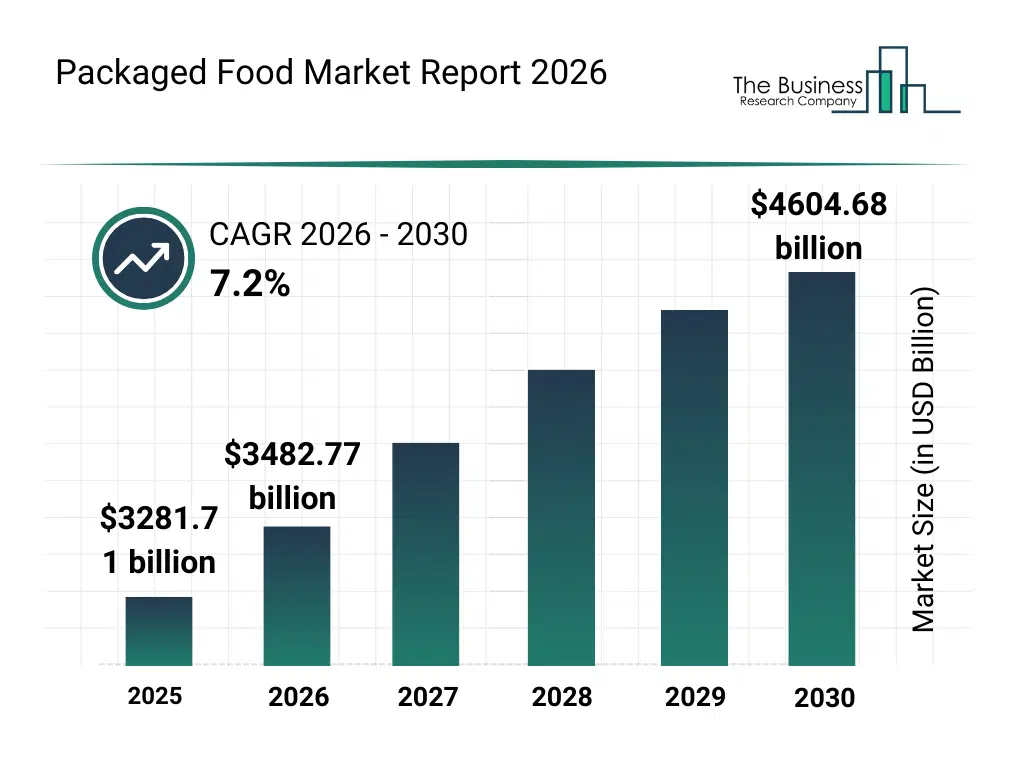
What Is The Packaged Food Market Size and Share 2026?
The packaged food market size has grown strongly in recent years. It will grow from $3281.71 billion in 2025 to $3482.77 billion in 2026 at a compound annual growth rate (CAGR) of 6.1%. The growth in the historic period can be attributed to growth of urban populations, increasing consumption of convenience foods, expansion of organized retail channels, rising demand for longer shelf-life foods, advancements in food packaging technologies.What Is The Packaged Food Market Growth Forecast?
The packaged food market size is expected to see strong growth in the next few years. It will grow to $4604.68 billion in 2030 at a compound annual growth rate (CAGR) of 7.2%. The growth in the forecast period can be attributed to increasing demand for healthy packaged foods, rising penetration of online grocery platforms, expansion of sustainable packaging materials, growing investments in food processing automation, increasing regulatory focus on food labeling and safety. Major trends in the forecast period include increasing demand for shelf-stable food products, rising adoption of smart packaging solutions, growing focus on clean-label packaged foods, expansion of ready-to-eat food categories, enhanced food safety and traceability measures.
Global Packaged Food Market Segmentation
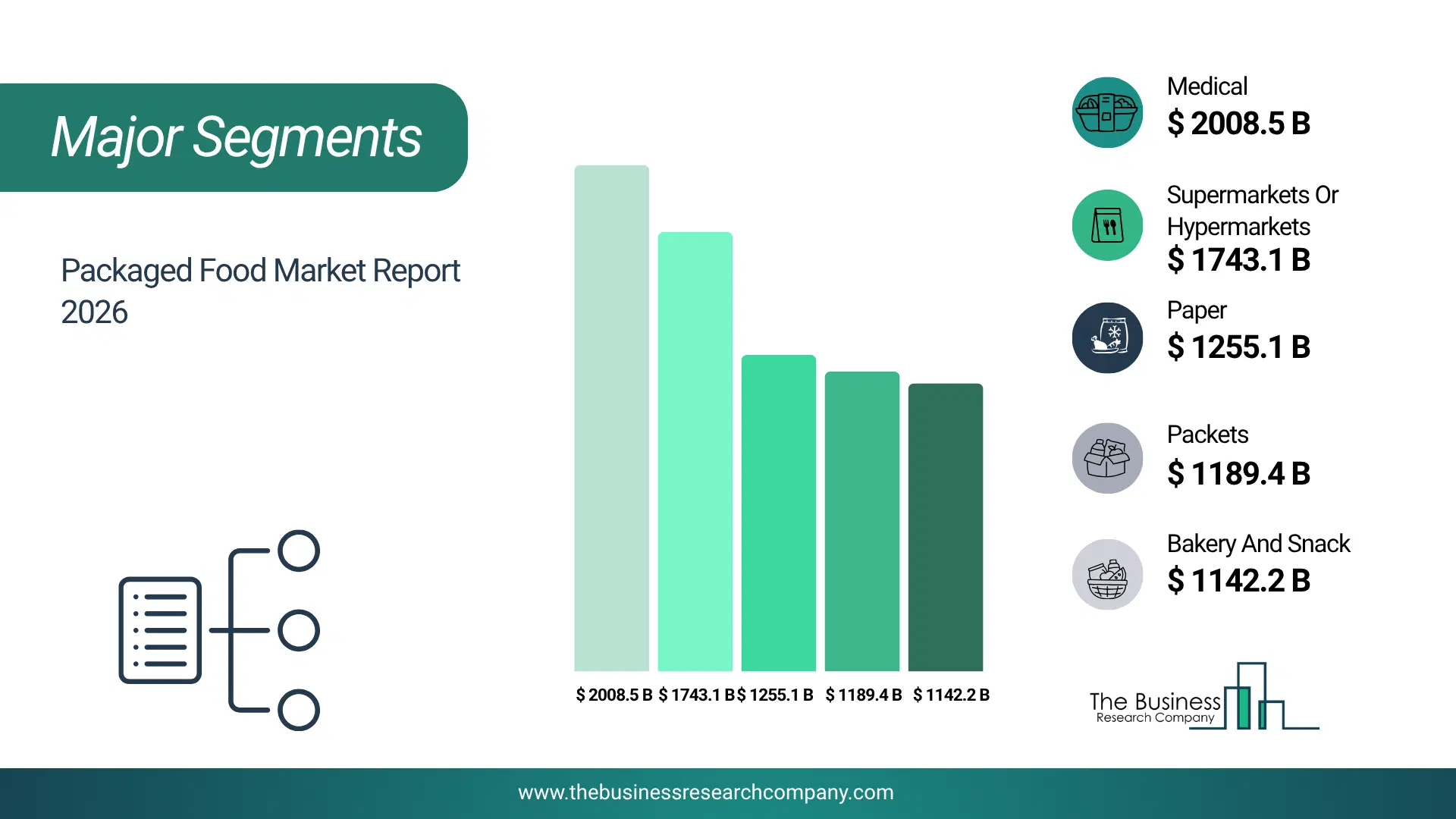
1) By Type: Dairy Products, Confectionery, Packaged Products, Bakery And Snack, Meat, Poultry And Seafood, Ready Meals, Other Types 2) By Material: Glass, Metal, Paper, Plastics, Other Materials 3) By Packaging: Jugs, Packets, Bottles, Bags, Bowls, Boxes, Cans, Cartons, Crates 4) By Sales Channel: Supermarkets Or Hypermarkets, Specialty Stores, Grocery Stores, Online Stores, Other Sales Channels Subsegments: 1) By Dairy Products: Milk And Cream, Cheese, Yogurt, Butter And Margarine 2) By Confectionery: Chocolate, Hard Candy, Gummy Candies, Mints 3) By Packaged Products: Canned Foods, Frozen Foods, Sauces And Condiments 4) By Bakery And Snack: Bread And Baked Goods, Cookies And Biscuits, Chips And Crackers, Granola Bars 5) By Meat, Poultry, And Seafood: Fresh Meat, Processed Meat, Poultry Products, Seafood Products 6) By Ready Meals: Frozen Meals, Chilled Meals, Shelf-Stable Meals 7) By Other Types: Instant Noodles, Meal Kits, Plant-Based Foods The top segments in the packaged food market will be: • Plastics will reach $2008554.32 Million by 2030. • Supermarkets Or Hypermarkets will reach $1743148.97 Million by 2030. • Paper will reach $1255147.5 Million by 2030. • Packets will reach $1189396.5 Million by 2030. • Bakery And Snack will reach $1142274.45 Million by 2030.What Is The Driver Of The Packaged Food Market?
The increasing demand in the e-commerce industry is expected to propel the growth of the packaged food market going forward. The e-commerce industry refers to the buying and selling of goods and services over the internet. E-commerce platforms offer consumers the convenience of ordering packaged food items, wider product selection, accessibility, time-saving, personalization, flexible payment options, and shoppers can benefit from the reviews and ratings provided by other customers. For instance, in August 2023, according to the United States Census Bureau, a US-based government agency, when compared to the second quarter of 2022, the estimate for e-commerce in the second quarter of 2023 increased by 7.5% (or 1.4%), while overall retail sales increased by 0.6% (or 0.4%). 15.4% of all sales in the second quarter of 2023 were made through online stores. Therefore, the increasing demand in the e-commerce industry is driving the growth of the packaged food industry.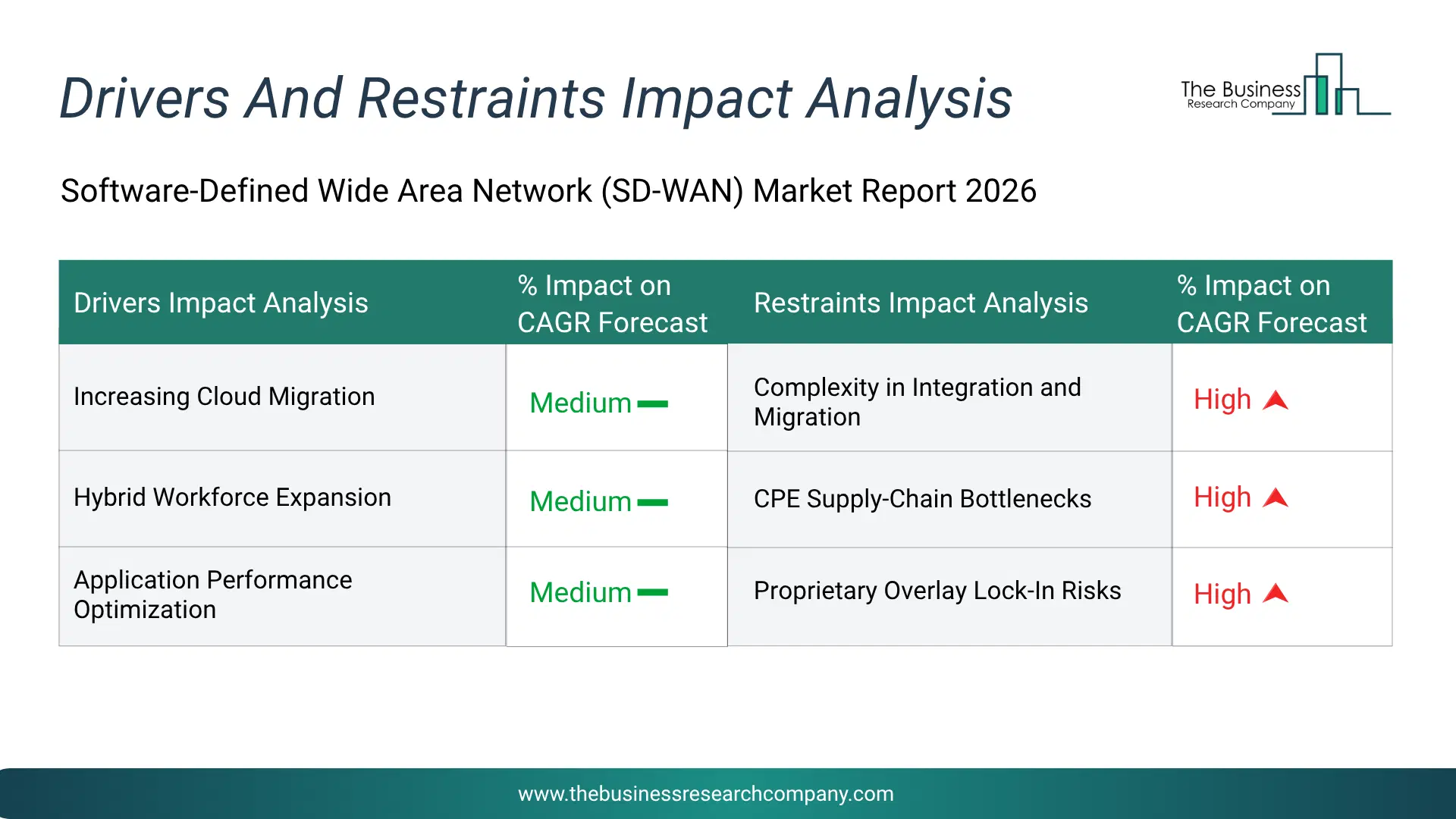
Infographic Chart Showing Key Market Drivers Analysis And Restraints For Packaged Food Market
The chart presents an impact analysis of key drivers and restraints, quantifying their relative influence on the market's growth rate and helping assess the balance between growth enablers and limiting factors. This chart offers a high-level perspective; the full report contains more detailed insights.
How Will The Drivers Impact Growth In The Global Packaged Food Market?
• Demand for Convenience and Ready-To-Eat Foods (Medium) – During the forecast period, the demand for convenience and ready-to-eat foods will become a key driver of growth in the packaged food market by 2030. changing lifestyles, urban living, and evolving eating habits are leading consumers to favor food products that require minimal preparation while offering consistent taste and quality. ready-to-eat packaged foods cater to a wide range of consumption occasions, including on-the-go meals, workplace eating, and quick home dining. manufacturers are responding by expanding product variety, improving nutritional profiles, and introducing innovative packaging formats to enhance convenience. this sustained preference for ready-to-eat solutions supports strong demand across multiple packaged food categories and reinforces long-term market growth. as a result, demand for convenience and ready-to-eat foods is anticipated to contributing to a 1.1% annual growth in the market. • Expanding Working Population (Low) – During the forecast period, the expanding working population will emerge as a major factor driving the expansion of the packaged food market by 2030. as more individuals engage in full-time employment, particularly in urban environments, the time available for meal preparation declines, leading consumers to rely more heavily on packaged food products for daily consumption. packaged foods offer ease of preparation, consistent quality, and flexible consumption options that align with busy schedules and varied eating occasions. the rise of dual-income households further reinforces this trend, as convenience becomes a priority in food purchasing decisions. consequently, the expanding working population is projected to contributing to a 0.9% annual growth in the market. • Expanding E-Commerce Industry (Low) – During the forecast period, the expanding e-commerce industry will serve as a key growth catalyst for the packaged food market by 2030. online platforms provide greater convenience, wider product assortment, and enhanced price transparency, enabling consumers to easily compare and purchase packaged food items across categories. the growth of digital grocery platforms supports demand for shelf-stable, branded, and well-packaged foods that can withstand storage and transportation requirements. improved last-mile delivery capabilities, subscription-based purchasing models, and personalized digital marketing further encourage repeat purchases of packaged foods. as e-commerce penetration deepens across urban and semi-urban regions, packaged food manufacturers are increasingly optimizing packaging formats, product sizes, and logistics strategies to cater to online sales. therefore, expanding e-commerce industry is projected to supporting to a 0.7% annual growth in the market. • Expansion of Cold Chain Infrastructure (Low) – During the forecast period, expansion of cold chain infrastructure is expected to be a key driver of the growth of the packaged food market in the forecast period. enhanced cold storage facilities and refrigerated logistics enable manufacturers to maintain product quality, safety, and freshness across longer supply chains and wider geographic regions. this infrastructure development supports the growth of packaged dairy, meat, poultry, seafood, and chilled ready meals, which require controlled temperature environments. improved cold chain reliability reduces spoilage, extends shelf life, and enhances inventory efficiency for retailers and foodservice operators. the expansion of cold chain infrastructure growth contribution during the forecast period in 2025 is 0.5%.How Will The Restraints Impact Growth In The Global Packaged Food Market?
• Environmental Concerns Related to Plastic and Non-Recyclable Packaging (Medium) – During the forecast period, environmental concerns related to plastic and non-recyclable packaging are restricting the growth of the packaged food market during the forecast period. growing public awareness of sustainability issues, combined with increasing regulatory scrutiny, places pressure on manufacturers to reduce plastic usage and transition to eco-friendly packaging solutions. however, sustainable alternatives often involve higher material costs, technical limitations, and compatibility challenges with existing packaging lines. these factors increase capital expenditure and operating costs while slowing packaging innovation cycles. growth affected by environmental concerns related to plastic and non-recyclable packaging during the forecast period in 2025 is -1.6%. • Short Shelf Life for Certain Products (Low) – During the forecast period, short shelf life for certain products is restricting the growth of the packaged food market during the forecast period. short shelf life associated with specific packaged food categories, especially dairy products, meat, poultry, seafood, and chilled ready meals, acts as a major restraint on market expansion. products with limited shelf stability require strict temperature-controlled storage, efficient logistics, and rapid inventory turnover to prevent spoilage and wastage. this increases operational complexity and distribution costs while raising the risk of inventory losses for manufacturers and retailers. in regions with underdeveloped cold-chain infrastructure or long transportation distances, short shelf-life limits market penetration and reduces product availability. growth affected by the short shelf life for certain products during the forecast period in 2025 is -1.1%. • Impact of Trade War and Tariff (Low) – During the forecast period, the impact of trade wars and tariffs is expected to restrict the growth of the packaged food market during the forecast period. tariffs raise input costs for manufacturers reliant on cross-border sourcing, forcing companies to either absorb margin losses or increase retail prices. additionally, retaliatory trade measures and regulatory uncertainty complicate international expansion strategies and reduce export competitiveness for packaged food producers. these trade-related pressures weaken supply chain efficiency, increase operational risk, and dampen investment confidence, collectively constraining market growth. growth affected by the impact of trade wars and tariffs during the forecast period in 2025 is -0.3%.Key Players In The Global Packaged Food Market
Major companies operating in the packaged food market are General Mills Inc., Tyson Foods Inc., Conagra Brands Inc., JBS SA, Nestle SA, Hormel Foods Corporation, Maple Leaf Foods Inc., The Kraft Heinz Company, Kellogg Company, PepsiCo Inc., Mars Incorporated, WH Group Limited, The Hershey Company, Andros Group, Histon Sweets Spreads Ltd, Danone SA, Mondelz Global LLC, Unilever plc, Gehl Foods LLC, B & G Foods Inc., Frito-Lay Inc., Mann Packing Co. Inc., Bonduelle Group, The Keebler Company, McCain Foods Limited, Grupo Bimbo S.A.B. de C.V., Campbell Soup Company, Nomad Foods Limited, Monde Nissin Corporation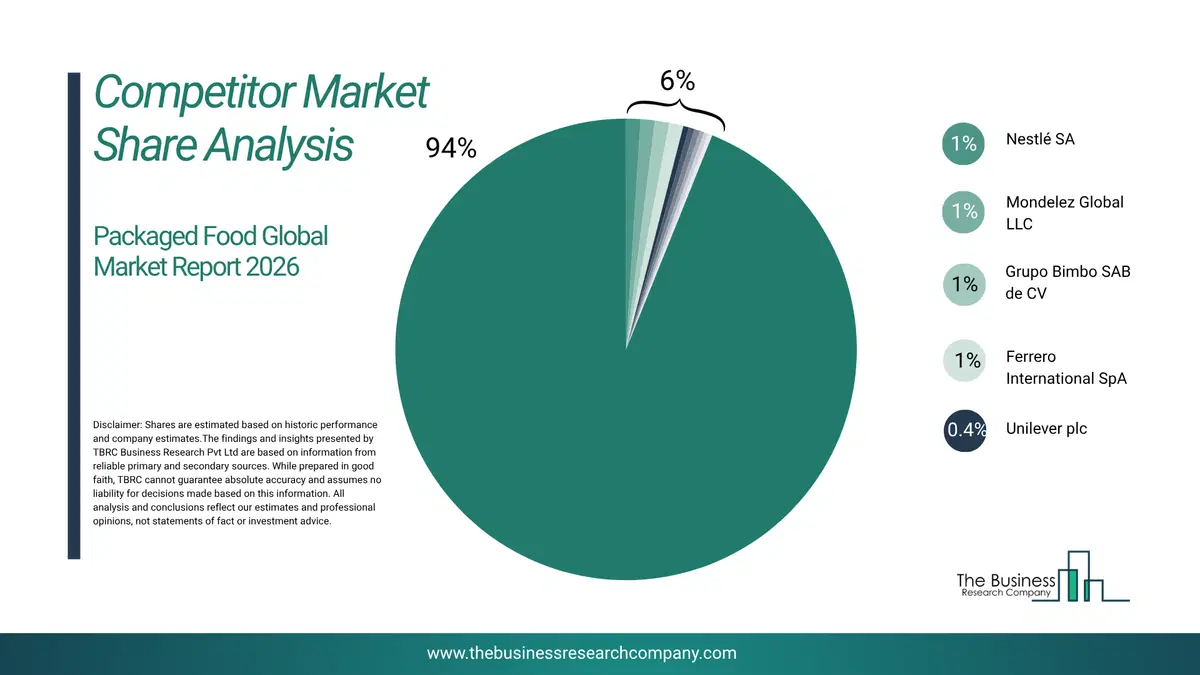
This chart is for illustrative purposes; the full report includes a detailed competitor analysis and comprehensive overview of the top 10 companies in the market.
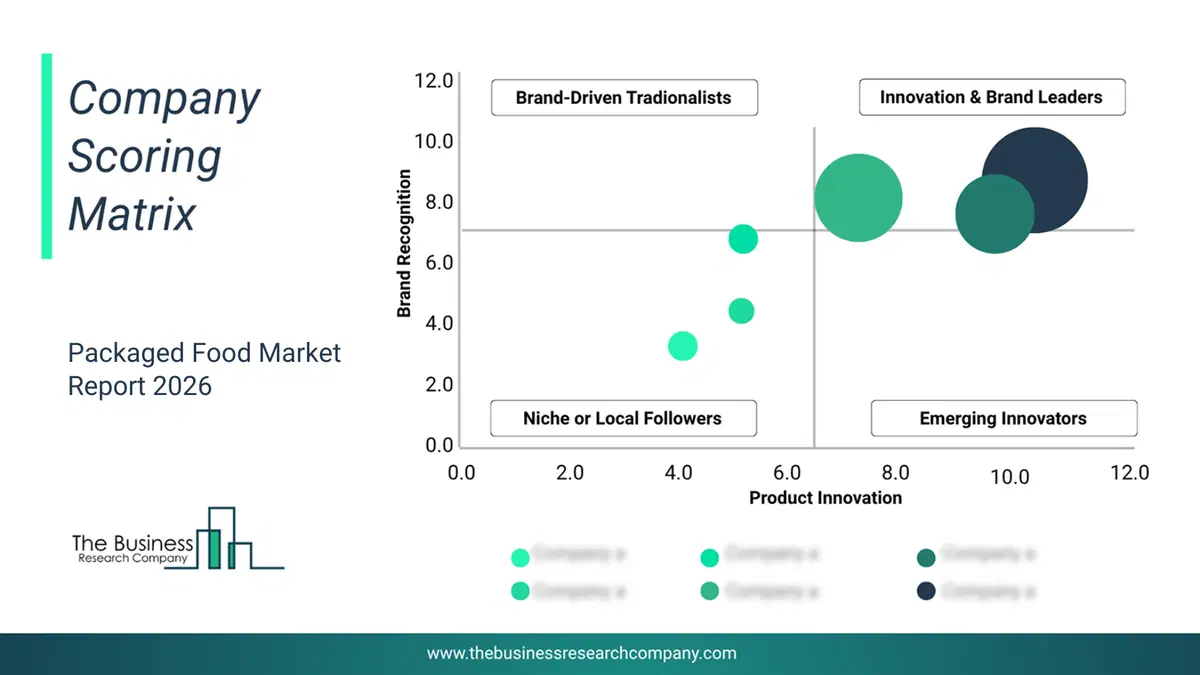
This chart maps companies by product innovation and brand strength, with bubble size indicating relative revenue, helping identify market leaders, challengers, and niche players. This is an illustrative chart; the full report provides a complete and accurate competitive analysis.
Global Packaged Food Market Trends and Insights
Major companies operating in the packaged food market are focusing on developing innovative technologies such as succulencePB to drive revenues in their market. SucculencePB is a taste technology that enables producers to produce plant-based meat substitutes with improved flavor and moisture content. For instance, in March 2023, Kerry Group PLC, an Ireland-based food and ingredients company launched succulencePB. This is a fat solution that can be utilized in formulations as a 1:1 substitute for certain oils and fats. By facilitating the major reduction or total removal of tropical oils and fats such as coconut or palm oil, significantly enhances the sustainability and clean label credentials of plant-based meat products. SucculencePB not only offers a far better nutritional profile and environmental impact but also and perhaps most crucially, addresses the issue of dry mouth in cooked plant-based meat substitutes.What Are Latest Mergers And Acquisitions In The Packaged Food Market?
In November 2023, The J.M. Smucker Company, a US-based provider of leading consumer food products, acquired Hostess Brands LLC for an undisclosed amount. Through this acquisition, J.M. Smucker aimed to strengthen its position in the fast-growing sweet baked snacks category, broaden its portfolio to capture more snacking occasions, enhance brand presence, and leverage Hostess’s iconic products to drive growth in both retail and foodservice channels. Hostess Brands LLC is a US-based producer of well-known sweet baked goods.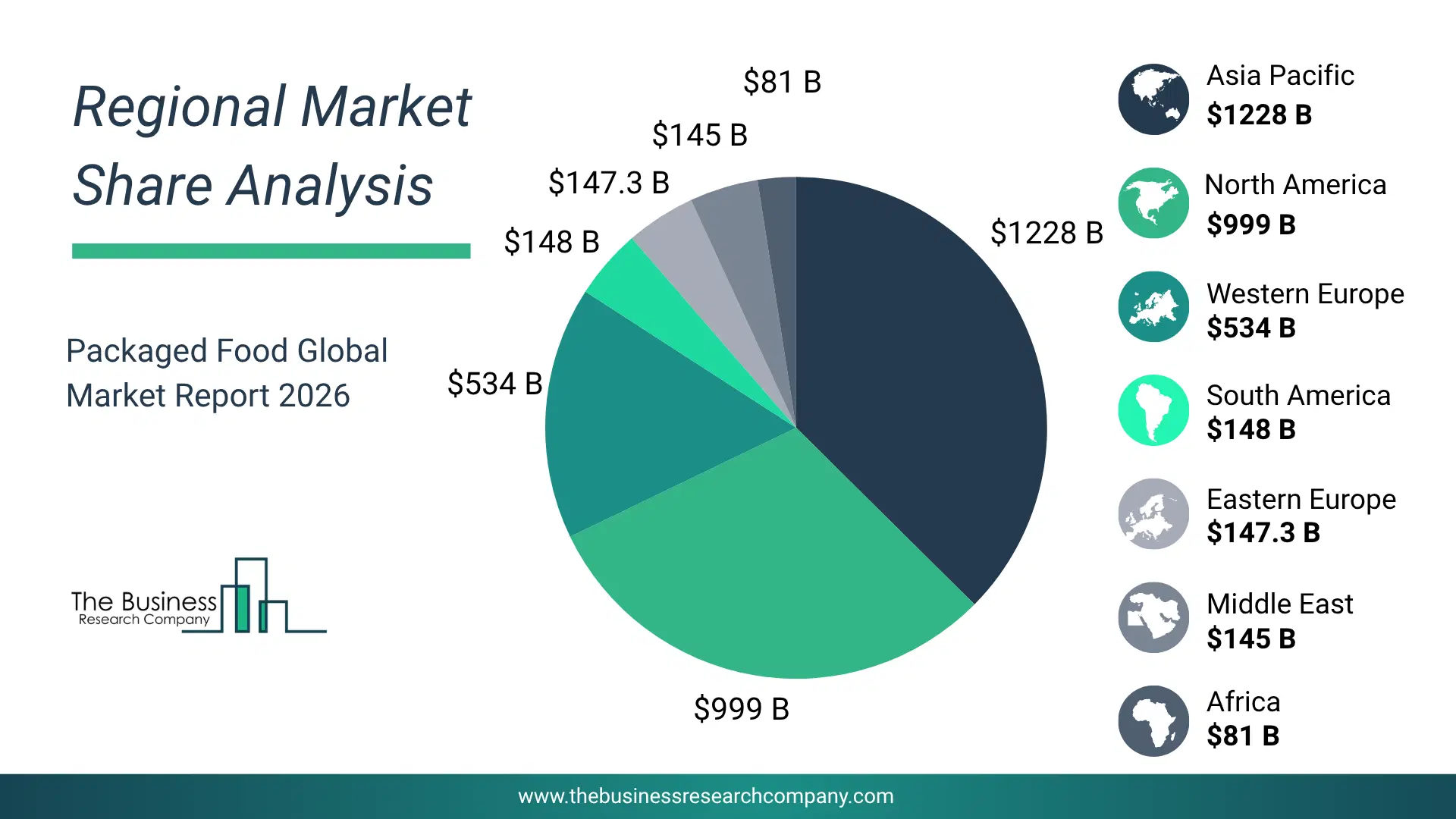
Regional Outlook
North America was the largest region in the packaged food market in 2025. The regions covered in this market report are Asia-Pacific, South East Asia, Western Europe, Eastern Europe, North America, South America, Middle East and Africa. The countries covered in this market report are Australia, Brazil, China, France, Germany, India, Indonesia, Japan, Taiwan, Russia, South Korea, UK, USA, Italy, Spain, CanadaWhat Defines the Packaged Food Market?
The packaged food market consists of sales of foods that are packaged such as bread, frozen vegetables, pasta, energy bars, canned vegetables, frozen fruits, breakfast cereals. Values in this market are ‘factory gate’ values, that is the value of goods sold by the manufacturers or creators of the goods, whether to other entities (including downstream manufacturers, wholesalers, distributors and retailers) or directly to end customers. The value of goods in this market includes related services sold by the creators of the goods.How is Market Value Defined and Measured?
The market value is defined as the revenues that enterprises gain from the sale of goods and/or services within the specified market and geography through sales, grants, or donations in terms of the currency (in USD unless otherwise specified). The revenues for a specified geography are consumption values that are revenues generated by organizations in the specified geography within the market, irrespective of where they are produced. It does not include revenues from resales along the supply chain, either further along the supply chain or as part of other products.
This chart presents market attractiveness based on a quantitative evaluation of growth, competition, strategic alignment, and risk, offering a clear view of opportunity areas for decision-making. This chart is for illustrative purposes; the full report contains the complete analysis.

This chart highlights the Total Addressable Market (TAM) by estimating the maximum revenue opportunity using an assumption-driven approach, supporting strategic planning and opportunity sizing across markets. The chart is illustrative; the full report provides a more comprehensive analysis.
What Key Data and Analysis Are Included in the Packaged Food Market Report 2026?
The packaged food market research report is one of a series of new reports from The Business Research Company that provides market statistics, including industry global market size, regional shares, competitors with the market share, detailed market segments, market trends and opportunities, and any further data you may need to thrive in the packaged food industry. The market research report delivers a complete perspective of everything you need, with an in-depth analysis of the current and future state of the industry.Packaged Food Market Report Forecast Analysis
| Report Attribute | Details |
|---|---|
| Market Size Value In 2026 | $3482.77 billion |
| Revenue Forecast In 2030 | $4604.68 billion |
| Growth Rate | CAGR of 6.1% from 2026 to 2030 |
| Base Year For Estimation | 2025 |
| Actual Estimates/Historical Data | 2020-2025 |
| Forecast Period | 2026 - 2030 - 2035 |
| Market Representation | Revenue in USD Billion and CAGR from 2026 to 2030 |
| Segments Covered | Type, Material, Packaging, Sales Channel |
| Regional Scope | Asia-Pacific, Western Europe, Eastern Europe, North America, South America, Middle East, Africa |
| Country Scope | The countries covered in the report are Australia, Brazil, China, France, Germany, India, Indonesia, Japan, Taiwan, Russia, South Korea, UK, USA, Canada, Italy, Spain. |
| Key Companies Profiled | General Mills Inc., Tyson Foods Inc., Conagra Brands Inc., JBS SA, Nestle SA, Hormel Foods Corporation, Maple Leaf Foods Inc., The Kraft Heinz Company, Kellogg Company, PepsiCo Inc., Mars Incorporated, WH Group Limited, The Hershey Company, Andros Group, Histon Sweets Spreads Ltd, Danone SA, Mondelz Global LLC, Unilever plc, Gehl Foods LLC, B & G Foods Inc., Frito-Lay Inc., Mann Packing Co. Inc., Bonduelle Group, The Keebler Company, McCain Foods Limited, Grupo Bimbo S.A.B. de C.V., Campbell Soup Company, Nomad Foods Limited, Monde Nissin Corporation |
| Customization Scope | Request for Customization |
| Pricing And Purchase Options | Explore Purchase Options |