
Clinical-Stage Biotechnology Market Report 2026
Global Outlook – By Product Type (Therapeutics, Diagnostics, Vaccines, Other Product Types), By Phase (Phase I, Phase II, Phase III), By Application (Oncology, Infectious Diseases, Cardiovascular Diseases, Neurology, Other Applications), By End-User (Hospitals, Research Institutes, Diagnostic Centers, Other End-Users) – Market Size, Trends, Strategies, and Forecast to 2030
Clinical-Stage Biotechnology Market Overview
• Clinical-Stage Biotechnology market size has reached to $47.14 billion in 2025 • Expected to grow to $97.12 billion in 2030 at a compound annual growth rate (CAGR) of 15.5% • Growth Driver: Surge In Growing Emphasis On Personalized Medicine Fueling The Growth Of The Market Due To Patient-Centric Therapeutic Demand • Market Trend: Expansion Of Clinical Trial Services Driving Innovation In Clinical-Stage Biotechnology • North America was the largest region in 2025.Market Gains By 2030 – Top Opportunities By Segment
Market Gain identifies the most promising market opportunities by highlighting the segments or products expected to generate the highest incremental revenue growth over the next five years.
What Is Covered Under Clinical-Stage Biotechnology Market?
Clinical-stage biotechnology refers to the phase of biotechnology development in which a drug, therapy, or medical product has advanced from preclinical research into human clinical trials. At this stage, the focus is on assessing safety, efficacy, and appropriate dosing in patients through structured trial phases. It marks the transition from laboratory and animal testing to real-world evaluation in humans. The main types of products in clinical-stage biotechnology are therapeutics, diagnostics, vaccines, and others. Therapeutics refer to medical products and treatments developed to prevent, manage, or cure diseases by targeting biological processes within the body. It consists of various phases, such as phase I, phase II, and phase III, and caters to applications including oncology, infectious diseases, cardiovascular diseases, neurology, and others. Key end-users are hospitals, research institutes, diagnostic centers, and others.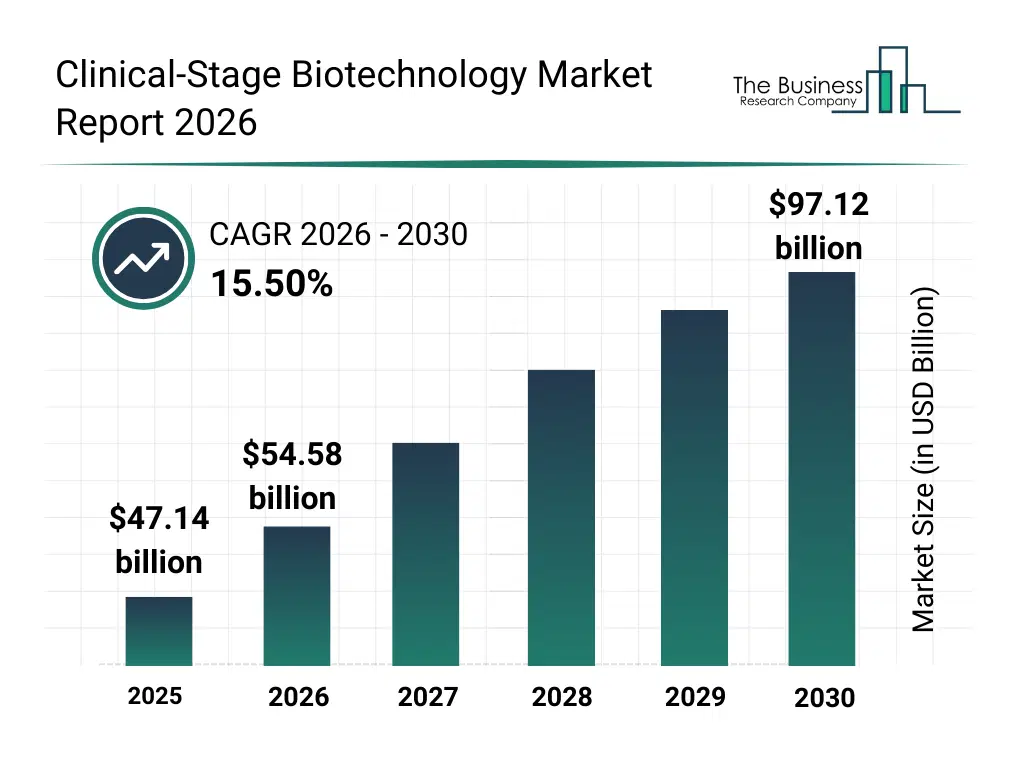
What Is The Clinical-Stage Biotechnology Market Size and Share 2026?
The clinical-stage biotechnology market size has grown rapidly in recent years. It will grow from $47.14 billion in 2025 to $54.58 billion in 2026 at a compound annual growth rate (CAGR) of 15.8%. The growth in the historic period can be attributed to expansion of venture funding for biotech startups, increasing success rates in early-phase trials, growth of academic-industry research partnerships, improvements in clinical trial infrastructure, rising prevalence of complex diseases.What Is The Clinical-Stage Biotechnology Market Growth Forecast?
The clinical-stage biotechnology market size is expected to see rapid growth in the next few years. It will grow to $97.12 billion in 2030 at a compound annual growth rate (CAGR) of 15.5%. The growth in the forecast period can be attributed to increasing investments in late-stage clinical programs, rising demand for novel therapeutics, expansion of precision medicine pipelines, growing integration of digital trial management tools, increasing regulatory support for innovative therapies. Major trends in the forecast period include increasing advancement of pipeline assets into human trials, rising adoption of adaptive clinical trial designs, growing use of biomarkers in patient stratification, expansion of multinational clinical studies, enhanced focus on translational research.
Global Clinical-Stage Biotechnology Market Segmentation
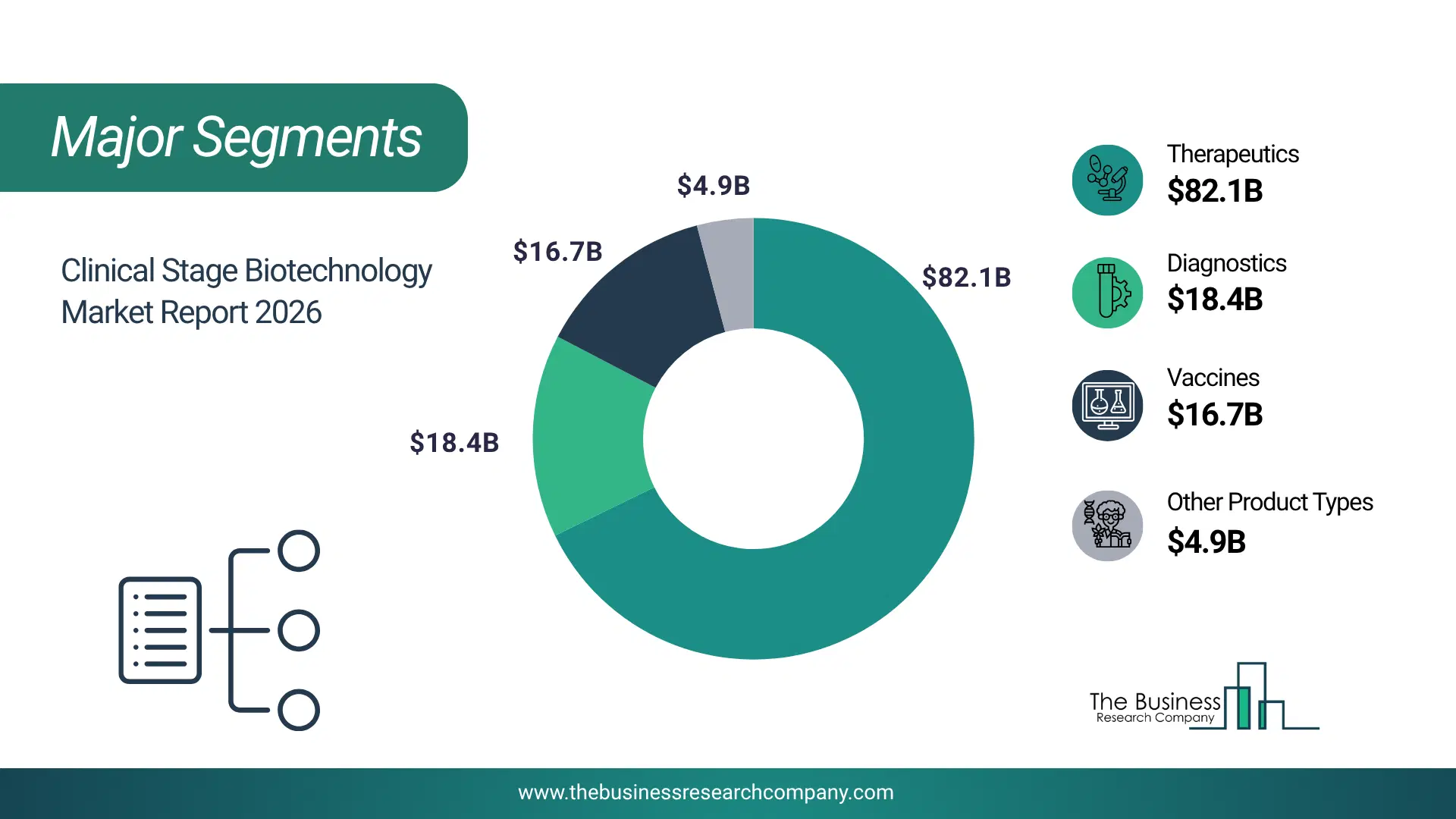
1) By Product Type: Therapeutics, Diagnostics, Vaccines, Other Product Types 2) By Phase: Phase I, Phase II, Phase III 3) By Application: Oncology, Infectious Diseases, Cardiovascular Diseases, Neurology, Other Applications 4) By End-User: Hospitals, Research Institutes, Diagnostic Centers, Other End-Users Subsegments: 1) By Therapeutics: Monoclonal Antibodies, Cell Therapy, Gene Therapy, Recombinant Proteins, Peptide Therapeutics, Small Molecule Therapeutics 2) By Diagnostics: Molecular Diagnostics, Immunoassays, Genetic Testing, Biomarker Testing, Point Of Care Diagnostics 3) By Vaccines: Live Attenuated Vaccines, Inactivated Vaccines, Subunit Vaccines, mRNA Vaccines, Viral Vector Vaccines 4) By Other Product Types: Regenerative Medicine Products, Research Reagents, Companion Diagnostics, Medical Devices The top segments in the clinical stage biotechnology market will be: • Therapeutics will reach $82.09 billion by 2030. • Diagnostics will reach $18.31 billion by 2030. • Vaccines will reach $16.69 billion by 2030. • Other Product Types will reach $4.85 billion by 2030.What Is The Driver Of The Clinical-Stage Biotechnology Market?
The growing emphasis on personalized medicine is expected to propel the growth of the clinical-stage biotechnology market going forward. Personalized medicine refers to the practice of tailoring medical treatment to the individual characteristics of each patient, particularly by using genetic, biomarker, and molecular information. The emphasis on personalized medicine is growing as it allows doctors to tailor cancer treatments to a patient’s genetic profile, improving effectiveness and reducing unnecessary side effects. Clinical-stage biotechnology supports personalized medicine by creating targeted therapies that align with an individual’s genetic profile to improve treatment effectiveness and safety. For instance, in February 2024, according to the Personalized Medicine Coalition, a US-based non-profit organization, in 2023, the FDA approved 16 new personalized therapies for patients with rare diseases, marking a sharp increase from just six approvals in 2022. Therefore, the growing emphasis on personalized medicine is expected to drive the growth of the clinical-stage biotechnology industry.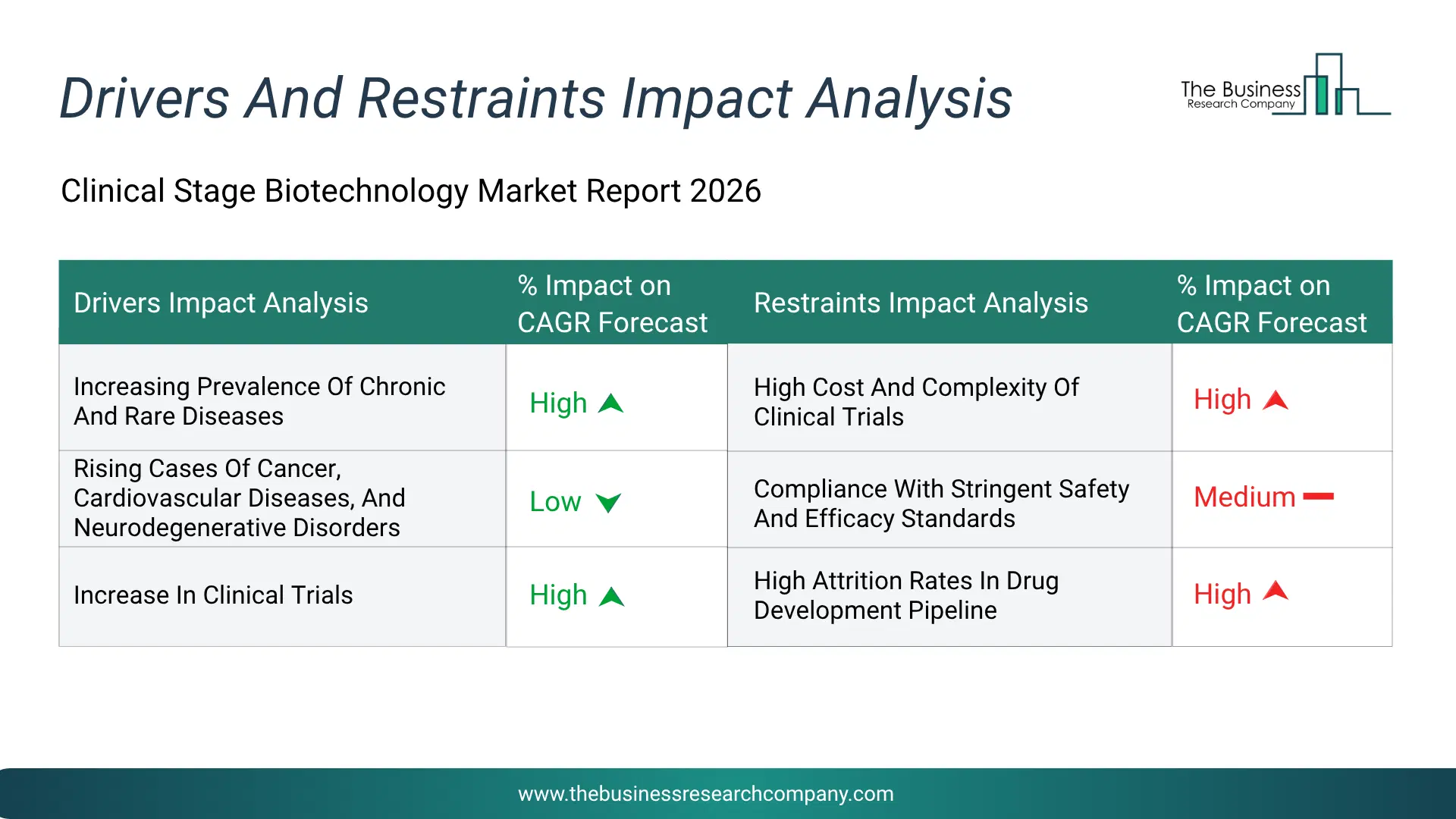
Infographic Chart Showing Key Market Drivers Analysis And Restraints For Clinical-Stage Biotechnology Market
The chart presents an impact analysis of key drivers and restraints, quantifying their relative influence on the market's growth rate and helping assess the balance between growth enablers and limiting factors. This chart offers a high-level perspective; the full report contains more detailed insights.
How Will The Drivers Impact Growth In The Global Clinical Stage Biotechnology Market?
• Increasing Prevalence Of Chronic And Rare Diseases (High) – During the forecast period, the increasing prevalence of chronic and rare diseases is expected to become a key growth driver for the clinical stage biotechnology market by 2030. The rising incidence of chronic and rare diseases is a key factor propelling growth in the clinical-stage biotechnology sector, as it intensifies the need for novel and highly targeted treatment options. With many conventional therapies proving insufficient for complex or uncommon conditions, biotechnology companies are increasingly focused on developing advanced biologics, gene and cell therapies, and precision medicine approaches. The expanding disease burden also stimulates higher levels of investment and financial support for clinical research and development programs. In addition, it fosters strategic collaborations between academic institutions, research organizations, and biotech firms to accelerate therapeutic innovation. Collectively, these factors drive pipeline expansion and strengthen momentum within the clinical-stage biotechnology market. • Rising Cases Of Cancer, Cardiovascular Diseases, And Neurodegenerative Disorders (Low) – During the forecast period, the rising cases of cancer, cardiovascular diseases, and neurodegenerative disorders is expected to emerge as a major factor driving the expansion of the clinical stage biotechnology market by 2030. The increasing incidence of cancer, cardiovascular disorders, and neurodegenerative diseases is a major growth catalyst for the clinical-stage biotechnology market, as it heightens the need for innovative and more effective therapeutic solutions. These complex and frequently treatment-resistant conditions drive biotechnology companies to prioritize the development of novel biologics, gene and cell therapies, and precision medicine approaches. The expanding disease burden also encourages higher levels of investment and strengthens partnerships between research institutions and pharmaceutical companies. Furthermore, ongoing advancements in biotechnology enable the development of targeted and personalized treatments, ultimately supporting improved clinical outcomes and long-term patient care. • Increase In Clinical Trials (High) – During the forecast period, the increase in clinical trials is expected to act as a key growth catalyst for the clinical stage biotechnology market by 2030. The growing number of clinical trials serves as a significant driver for the clinical-stage biotechnology market by expediting the development and validation of novel therapeutic candidates. An increase in trial activity creates broader opportunities to evaluate the safety, efficacy, and clinical value of innovative drugs across multiple indications. This heightened activity enhances investor confidence and attracts additional funding to support ongoing research and pipeline expansion. Furthermore, positive trial outcomes can streamline regulatory approval processes and accelerate the commercialization of new therapies, strengthening overall market growth.How Will The Restraints Impact Growth In The Global Clinical Stage Biotechnology Market?
• High Cost And Complexity Of Clinical Trials (High) – During the forecast period, the high cost and complexity of clinical trials act as a major restraint for clinical stage biotechnology companies. Conducting trials requires significant financial investment in regulatory compliance, patient recruitment, advanced equipment, and data management. Smaller biotech firms often face funding challenges, limiting their ability to carry out large-scale studies. Additionally, complex trial designs and lengthy approval processes delay product development and market entry. These factors collectively slow innovation and reduce the overall competitiveness of emerging biotechnology firms. • Compliance With Stringent Safety And Efficacy Standards (Medium) – During the forecast period, the compliance with stringent safety and efficacy standards acts as a restraint for clinical stage biotechnology companies because it significantly increases the time, cost, and complexity of bringing new therapies to market. These companies must conduct extensive preclinical and clinical trials to meet regulatory requirements, which can delay product approval and commercialization. The rigorous documentation and validation processes also demand substantial financial and technical resources. Smaller biotech firms often struggle to maintain compliance due to limited funding and expertise. Consequently, these strict standards, while essential for patient safety, can slow innovation and reduce the pace of new product development. • High Attrition Rates In Drug Development Pipeline (High) – During the forecast period, the high attrition rates in the drug development pipeline act as a significant restraint for clinical stage biotechnology companies, as a large proportion of drug candidates fail during clinical trials due to safety, efficacy, or commercial viability issues. This high failure rate increases overall r&d costs and reduces return on investment for companies engaged in clinical development. It also necessitates continuous funding to support multiple parallel programs to offset losses from failed candidates. Additionally, uncertainty in trial outcomes discourages investors and limits capital availability for smaller biotech firms. As a result, high attrition rates slow down innovation and constrain the growth potential of the clinical stage biotechnology market.Key Players In The Global Clinical-Stage Biotechnology Market
Major companies operating in the clinical-stage biotechnology market are Sarepta Therapeutics Inc., BioAge Labs Inc., PTC Therapeutics Inc., Evotec SE, Ultragenyx Pharmaceutical Inc., Rocket Pharmaceuticals Inc., Ventyx Biosciences Inc., Sangamo Therapeutics Inc., REGENXBIO Inc., Galapagos NV, Arvinas Inc., Editas Medicine Inc., Zymeworks Inc., CureVac N.V., Precision BioSciences Inc., 4D Molecular Therapeutics Inc., Domain Therapeutics S.A., ProQR Therapeutics N.V., Tonix Pharmaceuticals Holding Corp., Gilgamesh Pharmaceuticals Inc., T-Cure Bioscience Inc., Opna Bio Inc., EXUMA Biotech Inc., Prime Medicine Inc.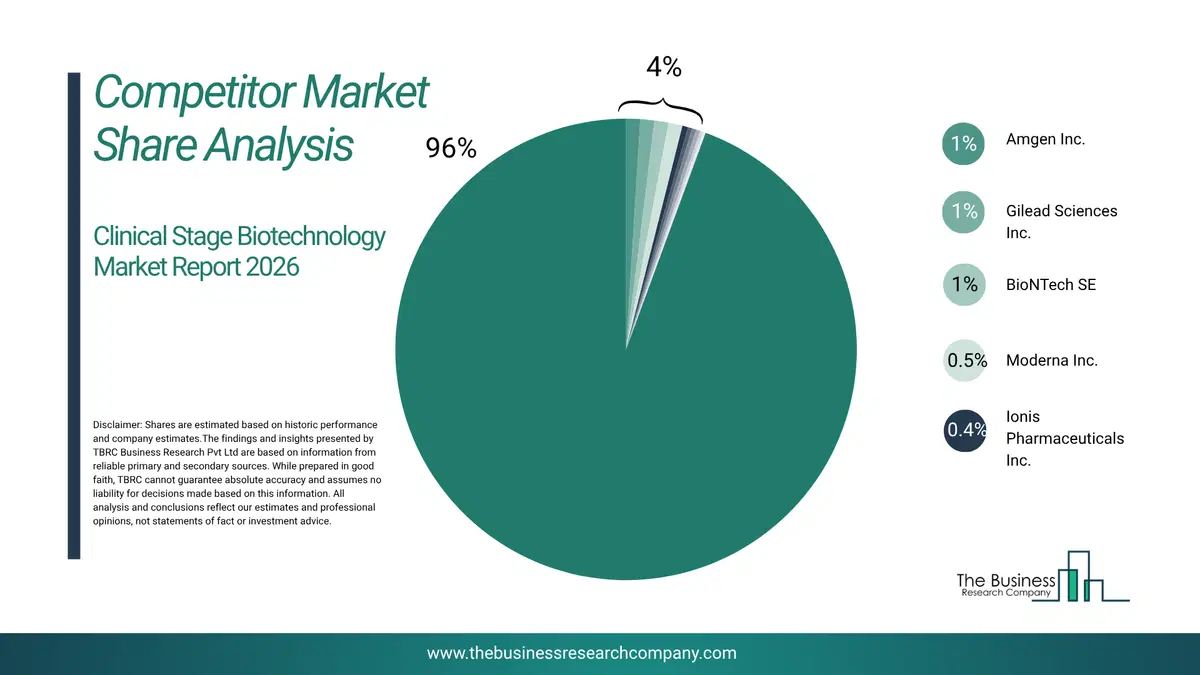
This chart is for illustrative purposes; the full report includes a detailed competitor analysis and comprehensive overview of the top 10 companies in the market.
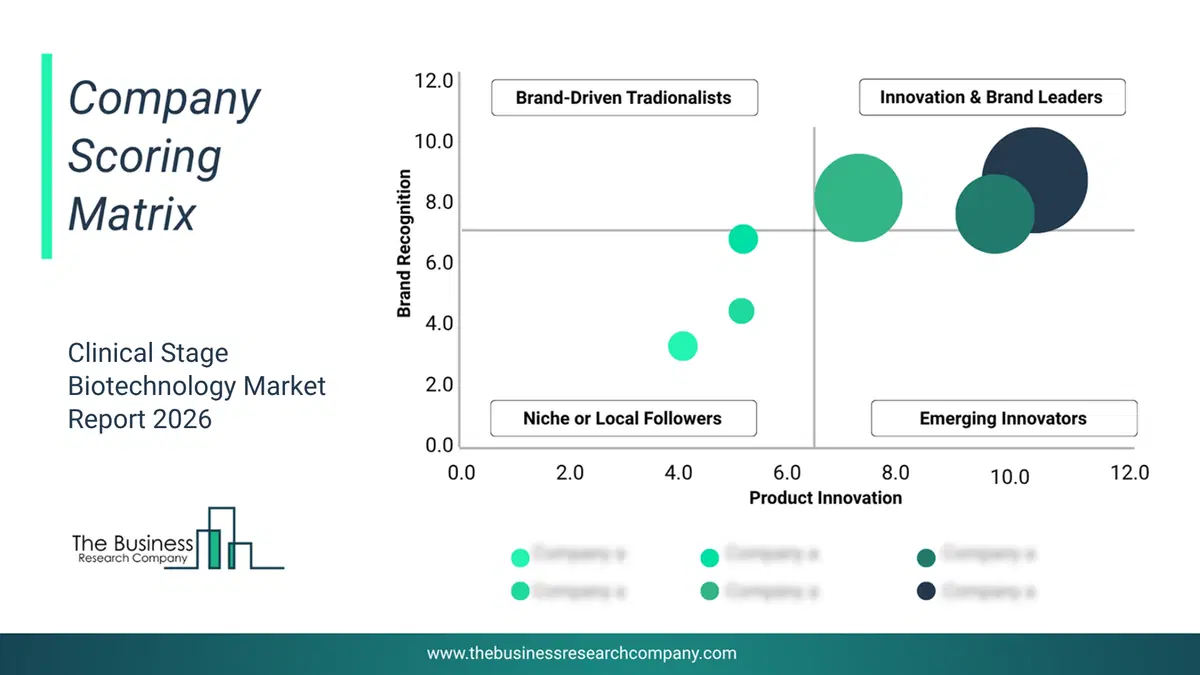
This chart maps companies by product innovation and brand strength, with bubble size indicating relative revenue, helping identify market leaders, challengers, and niche players. This is an illustrative chart; the full report provides a complete and accurate competitive analysis.
Global Clinical-Stage Biotechnology Market Trends and Insights
Major companies operating in the clinical-stage biotechnology market are focusing on developing innovative solutions, such as clinical trial services to accelerate drug development, improve patient recruitment and retention, and enhance regulatory compliance. Clinical trial services refer to the professional support and solutions that help design, manage, and conduct clinical studies to evaluate the safety and effectiveness of new drugs or therapies. For instance, in November 2023, Ichor Life Sciences, Inc., a US-based biotechnology company, launched a new division called Ichor Clinical Trial Services. This service expands their contract research organization (CRO) offerings to support biotechnology and pharmaceutical clients throughout the entire drug development process, from early preclinical studies to late-stage clinical trials and FDA approval. Ichor Clinical provides customized solutions, including protocol design, site identification and qualification, recruitment and retention strategies, and full CRO support. The unit aims to address unique client challenges and complexities, such as assisting ongoing trials with enrollment or operational issues, using a personalized and agile approach.What Are Latest Mergers And Acquisitions In The Clinical-Stage Biotechnology Market?
In June 2025, BioNTech SE, a Germany-based biotechnology company, acquired CureVac N.V. for $1.25 billion. Through this acquisition, BioNTech aims to significantly enhance its oncology pipeline by incorporating CureVac’s advanced messenger ribonucleic acid (mRNA) technology and extensive asset library, thereby reinforcing its position in the competitive field of cancer therapeutics and expanding opportunities for innovative treatment development. CureVac N.V. is a Germany-based clinical-stage biopharmaceutical company developing mRNA-based therapeutics and vaccines for cancer and infectious diseases.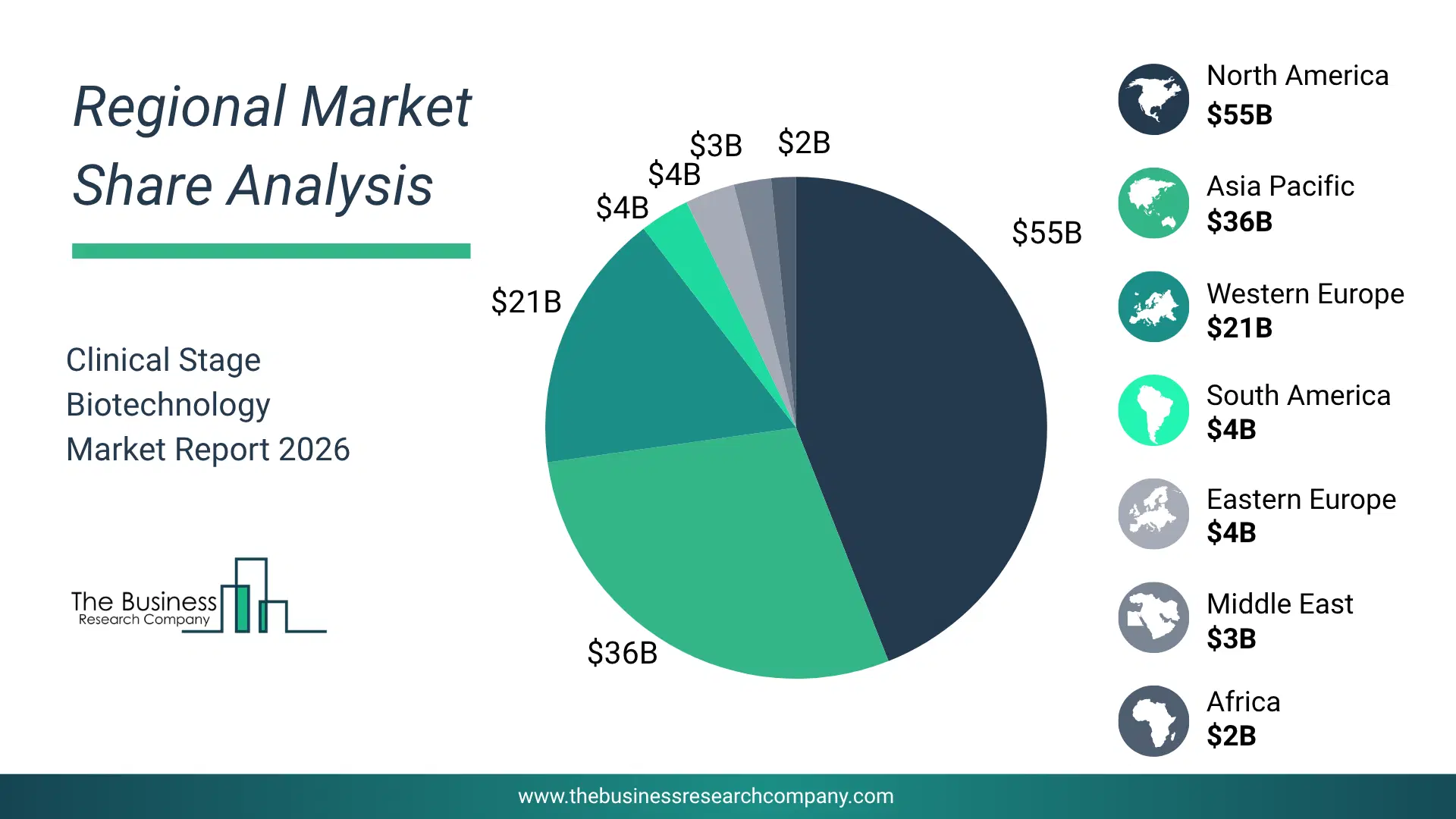
Regional Insights
North America was the largest region in the clinical-stage biotechnology market in 2025. The regions covered in this market report are Asia-Pacific, South East Asia, Western Europe, Eastern Europe, North America, South America, Middle East, Africa. The countries covered in this market report are Australia, Brazil, China, France, Germany, India, Indonesia, Japan, Taiwan, Russia, South Korea, UK, USA, Canada, Italy, Spain.What Defines the Clinical-Stage Biotechnology Market?
The clinical-stage biotechnology market includes sales of gene therapies, cell therapies, drug delivery systems, small molecule drugs, and regenerative medicines. Values in this market are ‘factory gate’ values, that is, the value of goods sold by the manufacturers or creators of the goods, whether to other entities (including downstream manufacturers, wholesalers, distributors, and retailers) or directly to end customers. The value of goods in this market includes related services sold by the creators of the goods.How is Market Value Defined and Measured?
The market value is defined as the revenues that enterprises gain from the sale of goods and/or services within the specified market and geography through sales, grants, or donations in terms of the currency (in USD unless otherwise specified). The revenues for a specified geography are consumption values that are revenues generated by organizations in the specified geography within the market, irrespective of where they are produced. It does not include revenues from resales along the supply chain, either further along the supply chain or as part of other products.
This chart presents market attractiveness based on a quantitative evaluation of growth, competition, strategic alignment, and risk, offering a clear view of opportunity areas for decision-making. This chart is for illustrative purposes; the full report contains the complete analysis.

This chart highlights the Total Addressable Market (TAM) by estimating the maximum revenue opportunity using an assumption-driven approach, supporting strategic planning and opportunity sizing across markets. The chart is illustrative; the full report provides a more comprehensive analysis.
What Key Data and Analysis Are Included in the Clinical-Stage Biotechnology Market Report 2026?
The clinical-stage biotechnology market research report is one of a series of new reports from The Business Research Company that provides market statistics, including industry global market size, regional shares, competitors with the market share, detailed market segments, market trends and opportunities, and any further data you may need to thrive in the clinical-stage biotechnology industry. The market research report delivers a complete perspective of everything you need, with an in-depth analysis of the current and future state of the industry.Clinical-Stage Biotechnology Market Report Forecast Analysis
| Report Attribute | Details |
|---|---|
| Market Size Value In 2026 | $54.58 billion |
| Revenue Forecast In 2030 | $97.12 billion |
| Growth Rate | CAGR of 15.5% from 2026 to 2030 |
| Base Year For Estimation | 2025 |
| Actual Estimates/Historical Data | 2020-2025 |
| Forecast Period | 2026 - 2030 |
| Market Representation | Revenue in USD Billion and CAGR from 2026 to 2030 |
| Segments Covered | Product Type, Phase, Application, End-User |
| Regional Scope | Asia-Pacific, Western Europe, Eastern Europe, North America, South America, Middle East, Africa |
| Country Scope | The countries covered in the report are Australia, Brazil, China, France, Germany, India, ... |
| Key Companies Profiled | Sarepta Therapeutics Inc., BioAge Labs Inc., PTC Therapeutics Inc., Evotec SE, Ultragenyx Pharmaceutical Inc., Rocket Pharmaceuticals Inc., Ventyx Biosciences Inc., Sangamo Therapeutics Inc., REGENXBIO Inc., Galapagos NV, Arvinas Inc., Editas Medicine Inc., Zymeworks Inc., CureVac N.V., Precision BioSciences Inc., 4D Molecular Therapeutics Inc., Domain Therapeutics S.A., ProQR Therapeutics N.V., Tonix Pharmaceuticals Holding Corp., Gilgamesh Pharmaceuticals Inc., T-Cure Bioscience Inc., Opna Bio Inc., EXUMA Biotech Inc., Prime Medicine Inc. |
| Customization Scope | Request for Customization |
| Pricing And Purchase Options | Explore Purchase Options |