

Cognitive Neuroscience Market Report 2026
Global Outlook – By Type (Magnetic Resonance Imaging (MRI), Functional Magnetic Resonance Imaging (fMRI), Positron Emission Tomography (PET), Magnetoencephalography (MEG), Encephalography (EEC), Near Infrared Spectroscopy (NIRS), Single Photon Emission Computed Tomography (SPECT)), By Technology (Neuroimaging Technology, Electrophysiological Monitoring Technology, Neurostimulation Technology, Digital And Software-Based), By Application (Brain Imaging, Neurological Research, Neurological Disorders, Psychiatry), By End User (Pharmaceutical Companies, Clinical And Research Laboratories, Academic Research Institutes, Hospitals And Pathology Laboratories, Other End Users) – Market Size, Trends, Strategies, and Forecast to 2030
Cognitive Neuroscience Market Overview
• Cognitive Neuroscience market size has reached to $26.15 billion in 2025 • Expected to grow to $35.02 billion in 2030 at a compound annual growth rate (CAGR) of 6% • Growth Driver: Surge In Research On Brain Function And Cognition Fueled The Market Growth Due To Rising Investment In Cognitive Neuroscience Studies • Market Trend: Deploying Deep Learning EEG Platforms To Enhance Automated Brain Health Insights And Support Precision Neuroscience Applications • North America was the largest region in 2025 and Asia-Pacific is the fastest growing region.What Is Covered Under Cognitive Neuroscience Market?
Cognitive neuroscience is the scientific study of how the brain enables thought, emotion, memory, and decision-making. It integrates principles from neuroscience and psychology to understand the biological basis of cognitive processes. This field uses advanced tools and methods to explore how neural activity gives rise to human behavior. The main types of cognitive neuroscience tools are including magnetic resonance imaging (MRI), functional magnetic resonance imaging (fMRI), positron emission tomography (PET), magnetoencephalography (MEG), encephalography (EEG), near-infrared spectroscopy (NIRS), and single photon emission computed tomography (SPECT). Magnetic resonance imaging (MRI) refers to a non-invasive neuroimaging technique that uses strong magnetic fields and radio waves to generate detailed structural images of the brain, enabling the study of brain anatomy and function. These tools are supported by technologies including neuroimaging, electrophysiological monitoring, neurostimulation, and digitalsoftware-based platforms. The applications brain imaging, neurological research, neurological disorders, and psychiatry and the key end users such as pharmaceutical companies, clinical and research laboratories, academic research institutes, hospitals and pathology laboratories, and others.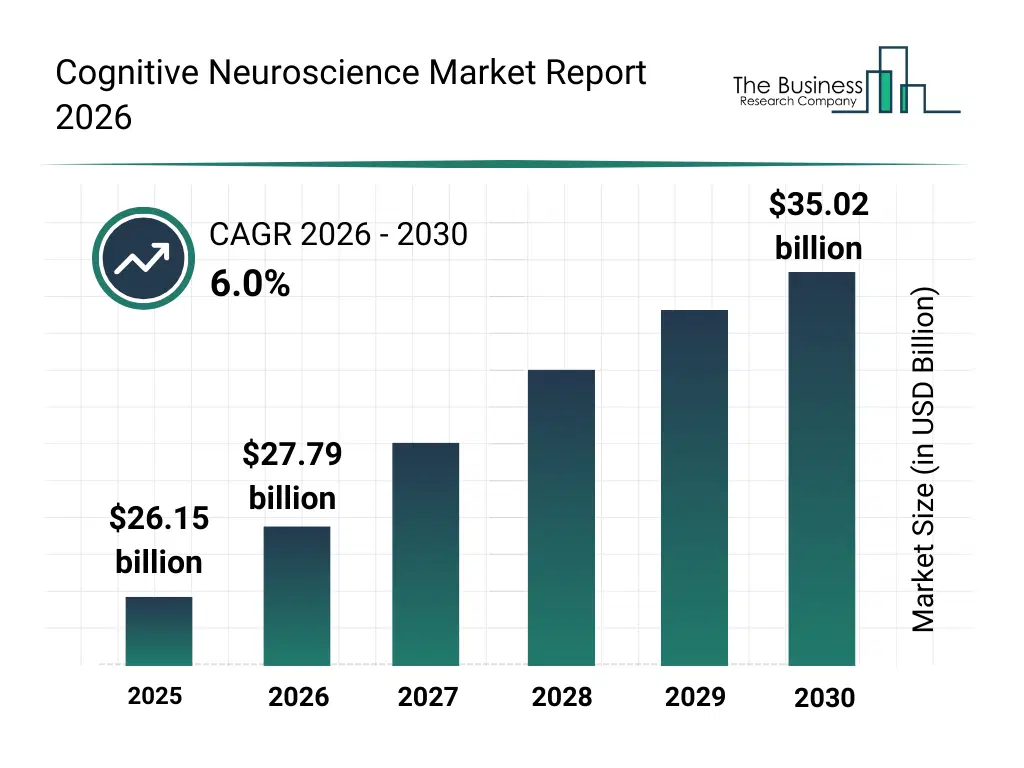
What Is The Cognitive Neuroscience Market Size and Share 2026?
The cognitive neuroscience market size has grown strongly in recent years. It will grow from $26.15 billion in 2025 to $27.79 billion in 2026 at a compound annual growth rate (CAGR) of 6.3%. The growth in the historic period can be attributed to increasing adoption of neuroimaging techniques, growing investment in brain research, rising prevalence of neurological disorders, expansion of academic research initiatives, and development of advanced imaging technologies.What Is The Cognitive Neuroscience Market Growth Forecast?
The cognitive neuroscience market size is expected to see strong growth in the next few years. It will grow to $35.02 billion in 2030 at a compound annual growth rate (CAGR) of 6.0%. The growth in the forecast period can be attributed to increasing integration of AI and machine learning in cognitive neuroscience, growing funding from public and private sectors, rising demand for personalized medicine applications, expansion of portable and non-invasive imaging devices, and increasing collaboration between pharmaceutical companies and research institutes. Major trends in the forecast period include technology advancements in functional and multimodal imaging, innovations in real-time brain monitoring systems, development of neuroinformatics and big data integration, advancements in personalized treatment solutions, and investment in cognitive neuroscience applications for psychiatry.
Global Cognitive Neuroscience Market Segmentation
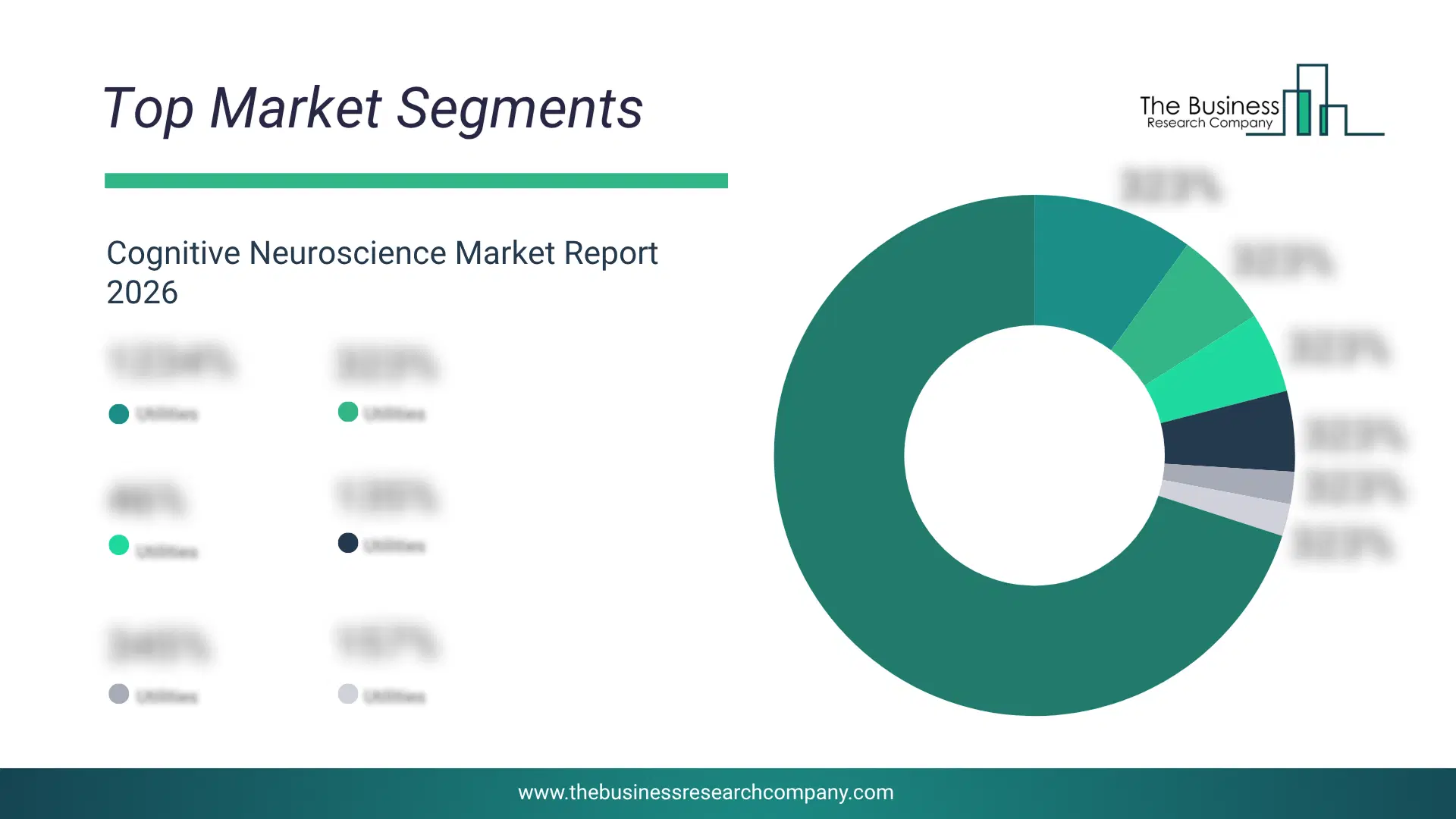
1) By Type: Magnetic Resonance Imaging (MRI), Functional Magnetic Resonance Imaging (fMRI), Positron Emission Tomography (PET), Magnetoencephalography (MEG), Encephalography (EEC), Near Infrared Spectroscopy (NIRS), Single Photon Emission Computed Tomography (SPECT) 2) By Technology: Neuroimaging Technology, Electrophysiological Monitoring Technology, Neurostimulation Technology, Digital And Software-Based 3) By Application: Brain Imaging, Neurological Research, Neurological Disorders, Psychiatry 4) By End User: Pharmaceutical Companies, Clinical And Research Laboratories, Academic Research Institutes, Hospitals And Pathology Laboratories, Other End Users Subsegments: 1) By Magnetic Resonance Imaging (MRI): Structural Imaging, Diffusion Imaging, Spectroscopy Imaging, Perfusion Imaging 2) By Functional Magnetic Resonance Imaging (fMRI): Task-Based Imaging, Resting-State Imaging, Connectivity Analysis, Perfusion Functional Imaging 3) By Positron Emission Tomography (PET): Neuroreceptor Imaging, Metabolic Imaging, Blood Flow Imaging, Neuroinflammation Imaging 4) By Magnetoencephalography (MEG): Source Localization, Functional Mapping, Connectivity Analysis, Event-Related Analysis 5) By Encephalography (EEC): Routine Recording, Ambulatory Recording, Sleep Study, Evoked Potentials 6) By Near Infrared Spectroscopy (NIRS): Continuous Wave Imaging, Frequency Domain Imaging, Time-Resolved Imaging, Functional Monitoring 7) By Single Photon Emission Computed Tomography (SPECT): Perfusion Imaging, Neuroreceptor Imaging, Metabolic Imaging, Blood Flow ImagingWhat Are The Drivers Of The Cognitive Neuroscience Market?
The increasing research on brain function and cognition is expected to propel the growth of the cognitive neuroscience market going forward. Increasing research refers to the rising volume of scientific studies, funding, and project activity that enhance understanding of neural mechanisms underpinning perception, memory, attention, language, decision-making, and related cognitive processes. Research activity expands because governments and public institutions prioritize neuroscience as a strategic scientific and health domain. The cognitive neuroscience supports research on brain function and cognition by supplying experimental tools, analytical methods, training initiatives, and collaborative research frameworks that investigators need to conduct and publish neuroscience work. For instance, in December 2023, according to the NIH BRAIN Initiative, a US-based government program, the initiative funded over 150 new neuroscience research projects totaling more than $220 million, up from 130 projects totaling $180 million in 2022, marking a 15.4 % increase in project count and a 22.2 % rise in funding year over year. Therefore, the increasing research on brain function and cognition is driving the growth of the cognitive neuroscience industry. The expanding use of personalized medicine and complex infusion protocols is expected to propel the growth of the cognitive neuroscience market going forward. Personalized medicine is the approach of tailoring medical treatments, including drug selection and dosing, to individual patient characteristics such as genetics, biomarkers, and disease profiles. The expansion of personalized medicine is driven by the increasing approval and clinical adoption of targeted therapies that require highly customized intravenous dosing and preparation. Cognitive neuroscience supports personalized medicine by providing insights into individual brain function and neural biomarkers, enabling tailored treatment strategies for neurological and psychiatric conditions. For instance, in November 2025, according to the Personalized Medicine Coalition, a US-based nonprofit organization, the US Food and Drug Administration approved 18 new personalized medicines in 2024, accounting for more than 25% of all new drug approvals, following 20 personalized medicine approvals in 2023, many of which require individualized IV preparation. Therefore, the expanding use of personalized medicine and complex infusion protocols is driving the growth of the cognitive neuroscience industry.Key Players In The Global Cognitive Neuroscience Market
Major companies operating in the cognitive neuroscience market are Magstim Company Limited, Philips International B.V., GE HealthCare Technologies Inc., Bruker Corporation, United Imaging Healthcare Co. Ltd., Brainbox Ltd., iMotions A/S, Blackrock Neurotech LLC, Advanced Brain Monitoring Inc., Compumedics Limited, BrainGate Inc., NeuroBehavioral Systems Inc., Neurospec AG, Emotiv Inc., Cogstate Ltd., Akili Interactive Labs Inc., MindMaze SA, Brain Products GmbH, Cambridge Cognition Ltd., ANT Neuro B.V., Canon Medical Systems Corporation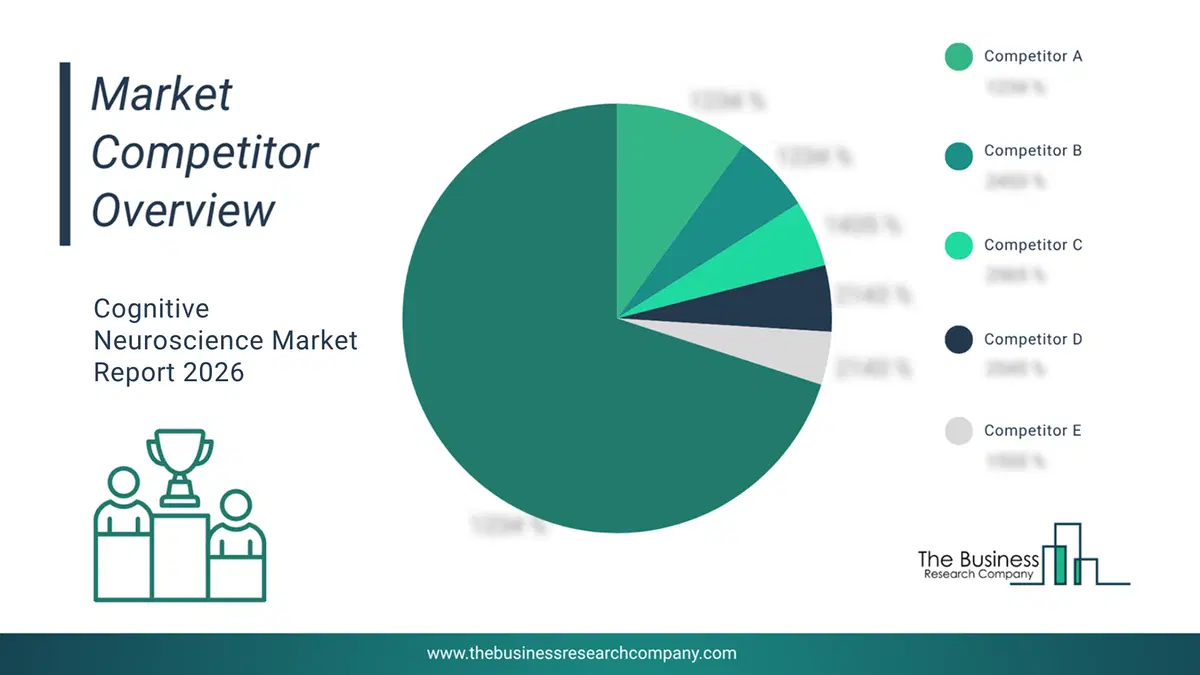
This chart is for illustrative purposes; the full report includes a detailed competitor analysis and comprehensive overview of the top 10 companies in the market.
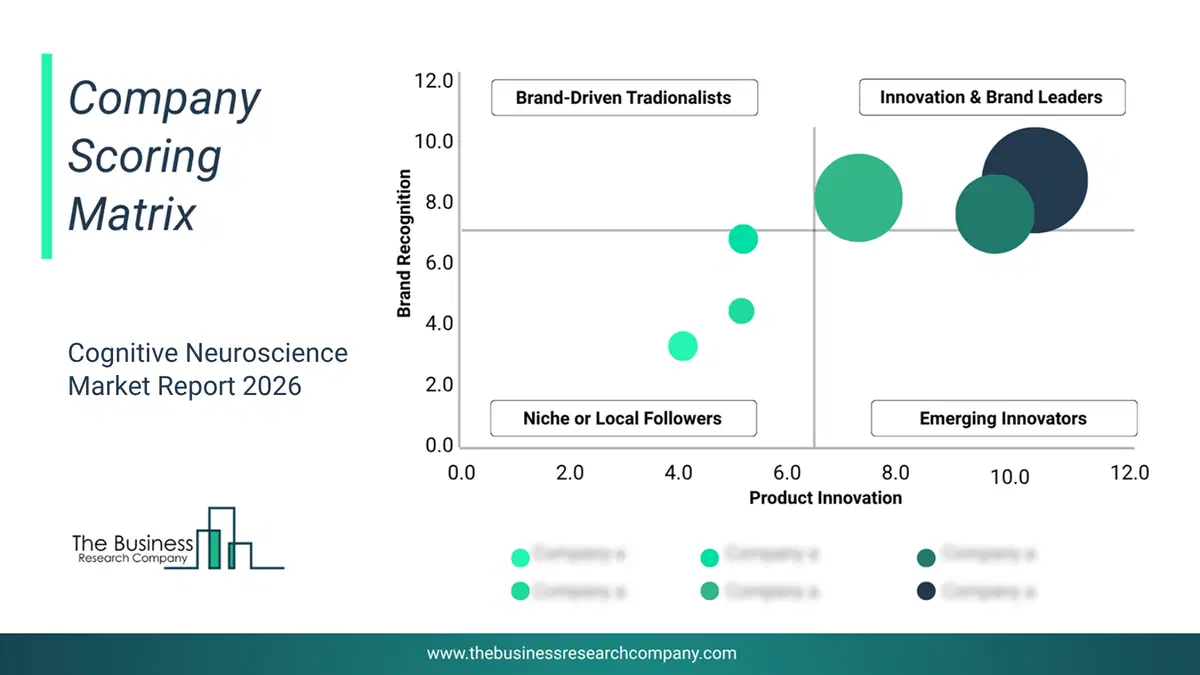
This chart maps companies by product innovation and brand strength, with bubble size indicating relative revenue, helping identify market leaders, challengers, and niche players. This is an illustrative chart; the full report provides a complete and accurate competitive analysis.
Global Cognitive Neuroscience Market Trends and Insights
Major companies operating in the cognitive neuroscience market are focusing on deploying next‑generation deep learning EEG platforms, such as large neural model platforms, to improve brain signal analysis, cognitive monitoring, and early neurological disorder detection. Large neural model platforms refer to computational frameworks or systems designed to develop, train, deploy, and manage large-scale neural network models, typically used in artificial intelligence (AI) and machine learning (ML) applications. For instance, in June 2025, BrainScope Inc., a US‑based neurotechnology company, launched its advanced EEG‑based Large Neural Model deep learning platform, featuring deep learning‑driven automated EEG interpretation, broader clinical condition support across concussion, stroke, and early Alzheimer’s detection, and enhanced real‑time biomarker extraction for precision diagnostics and clinical trial support. The platform enables clinicians and researchers to obtain clinically actionable brain function insights faster and with reduced reliance on specialized qEEG interpretation. This launch represents a significant technological advancement by combining AI-driven EEG analytics with scalable clinical applications, bridging neurotechnology innovation with improved patient care and research efficiency.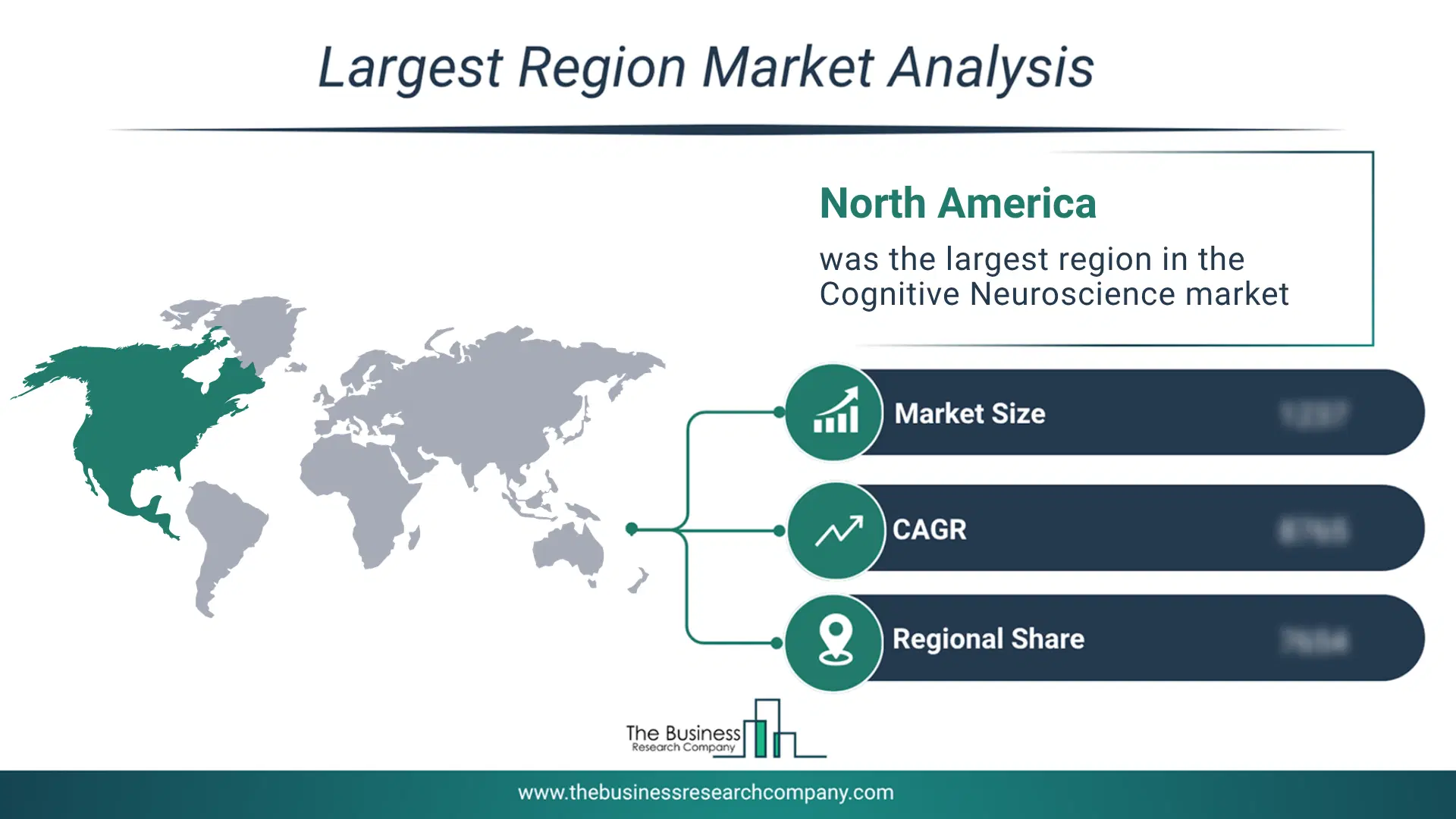
Regional Insights
North America was the largest region in the cognitive neuroscience market in 2025. Asia-Pacific is expected to be the fastest-growing region in the forecast period. The regions covered in this market report are Asia-Pacific, South East Asia, Western Europe, Eastern Europe, North America, South America, Middle East, Africa. The countries covered in this market report are Australia, Brazil, China, France, Germany, India, Indonesia, Japan, Taiwan, Russia, South Korea, UK, USA, Canada, Italy, Spain.What Defines the Cognitive Neuroscience Market?
The cognitive neuroscience market includes revenues earned by entities by providing services such as neuropsychological assessment, cognitive function testing, brain mapping services, neuroimaging analysis, cognitive rehabilitation, neurological consultation, research and data interpretation, cognitive behavioural therapy, and clinical trial support. The market value includes the value of related goods sold by the service provider or included within the service offering. The cognitive neuroscience market also includes sales of brain imaging systems, electroencephalography devices, cognitive assessment software, neurostimulation equipment, brain–computer interface systems, neural data analytics platforms, cognitive training tools, functional imaging sensors, and wearable neurotechnology devices. Values in this market are ‘factory gate’ values, that is the value of goods sold by the manufacturers or creators of the goods, whether to other entities (including downstream manufacturers, wholesalers, distributors and retailers) or directly to end customers. The value of goods in this market includes related services sold by the creators of the goods.How is Market Value Defined and Measured?
The market value is defined as the revenues that enterprises gain from the sale of goods and/or services within the specified market and geography through sales, grants, or donations in terms of the currency (in USD unless otherwise specified). The revenues for a specified geography are consumption values that are revenues generated by organizations in the specified geography within the market, irrespective of where they are produced. It does not include revenues from resales along the supply chain, either further along the supply chain or as part of other products.
This chart presents market attractiveness based on a quantitative evaluation of growth, competition, strategic alignment, and risk, offering a clear view of opportunity areas for decision-making. This chart is for illustrative purposes; the full report contains the complete analysis.

This chart highlights the Total Addressable Market (TAM) by estimating the maximum revenue opportunity using an assumption-driven approach, supporting strategic planning and opportunity sizing across markets. The chart is illustrative; the full report provides a more comprehensive analysis.
What Key Data and Analysis Are Included in the Cognitive Neuroscience Market Report 2026?
The cognitive neuroscience market research report is one of a series of new reports from The Business Research Company that provides market statistics, including industry global market size, regional shares, competitors with the market share, detailed market segments, market trends and opportunities, and any further data you may need to thrive in the cognitive neuroscience industry. The market research report delivers a complete perspective of everything you need, with an in-depth analysis of the current and future state of the industry.Cognitive Neuroscience Market Report Forecast Analysis
| Report Attribute | Details |
|---|---|
| Market Size Value In 2026 | $27.79 billion |
| Revenue Forecast In 2030 | $35.02 billion |
| Growth Rate | CAGR of 6% from 2026 to 2030 |
| Base Year For Estimation | 2025 |
| Actual Estimates/Historical Data | 2020-2025 |
| Forecast Period | 2026 - 2030 |
| Market Representation | Revenue in USD Billion and CAGR from 2026 to 2030 |
| Segments Covered | Type, Technology, Application, End User |
| Regional Scope | Asia-Pacific, Western Europe, Eastern Europe, North America, South America, Middle East, Africa |
| Country Scope | The countries covered in the report are Australia, Brazil, China, France, Germany, India, Indonesia, Japan, Taiwan, Russia, South Korea, UK, USA, Canada, Italy, Spain |
| Key Companies Profiled | Magstim Company Limited, Philips International B.V., GE HealthCare Technologies Inc., Bruker Corporation, United Imaging Healthcare Co. Ltd., Brainbox Ltd., iMotions A/S, Blackrock Neurotech LLC, Advanced Brain Monitoring Inc., Compumedics Limited, BrainGate Inc., NeuroBehavioral Systems Inc., Neurospec AG, Emotiv Inc., Cogstate Ltd., Akili Interactive Labs Inc., MindMaze SA, Brain Products GmbH, Cambridge Cognition Ltd., ANT Neuro B.V., Canon Medical Systems Corporation |
| Customization Scope | Request for Customization |
| Pricing And Purchase Options | Explore Purchase Options |