
Combined Heat And Power Market Report 2026
Global Outlook – By Fuel (Natural Gas, Coal, Biomass, Other Fuel), By Technology (Combined Cycle, Steam Turbine, Gas Turbine, Reciprocating Engine, Other Technologies), By Capacity (Up To 10 MW, 10-150 MW, 151-300 MW, Above 300 MW), By End-Use (Commercial, Industrial, Residential, Utilities, Other End-Uses) – Market Size, Trends, Strategies, and Forecast to 2030
Combined Heat And Power Market Overview
• Combined Heat And Power market size has reached to $30.65 billion in 2025 • Expected to grow to $43.59 billion in 2030 at a compound annual growth rate (CAGR) of 7.3% • Growth Driver: Surge In Energy Efficiency Drives Growth In The Combined Heat And Power Market • Market Trend: Innovative Power Solutions Bloom Energy Redefines The Combined Heat And Power Landscape With The Bloom Energy Server • Asia-Pacific was the largest region and fastest growing region.Market Gains By 2030 – Top Opportunities By Segment
Market Gain identifies the most promising market opportunities by highlighting the segments or products expected to generate the highest incremental revenue growth over the next five years.
What Is Covered Under Combined Heat And Power Market?
Combined heat and power (CHP) refer to the power generation method that uses the cogeneration technique for the simultaneous production of useful thermal energy (heating and/or cooling) and mechanical power or electricity from a single source of energy. The main types of fuel produced in combined heat and power are natural gas, coal, biomass, and other using various technologies such as combined cycle, steam turbine, gas turbine, reciprocating engine, and others. Natural gas refers to the fossil energy source that is formed deep beneath the earth's surface and contains different compounds such as methane, a molecule consisting of one carbon atom, four hydrogen atoms, and one oxygen atom. Natural gas in combined heat and power systems is used as fuel for process heating in the industrial sector. It has a capacity of up to 10 mw, 10-150 mw, 151-300 mw, and above 300 mw. The combined heat and power are used in commercial, industrial, residential, utilities, and other end-uses.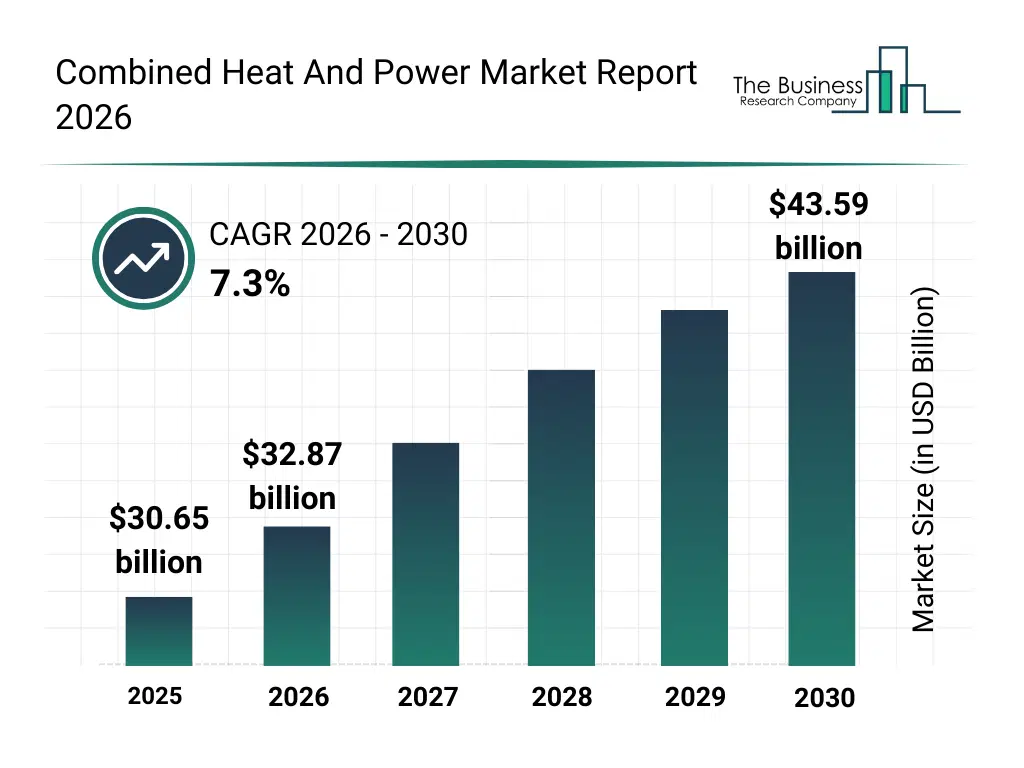
What Is The Combined Heat And Power Market Size and Share 2026?
The combined heat and power market size has grown strongly in recent years. It will grow from $30.65 billion in 2025 to $32.87 billion in 2026 at a compound annual growth rate (CAGR) of 7.2%. The growth in the historic period can be attributed to government incentives for cogeneration systems, rising energy efficiency regulations, growth in industrial and commercial electricity demand, early adoption of natural gas and coal-fired cogeneration, expansion of district heating networks.What Is The Combined Heat And Power Market Growth Forecast?
The combined heat and power market size is expected to see strong growth in the next few years. It will grow to $43.59 billion in 2030 at a compound annual growth rate (CAGR) of 7.3%. The growth in the forecast period can be attributed to increasing deployment of renewable-fueled chp plants, rising focus on decarbonization of industrial processes, growth in waste-to-energy and biomass cogeneration, adoption of advanced monitoring and control systems, expansion of residential and utility-scale cogeneration projects. Major trends in the forecast period include rising adoption of natural gas-fired chp systems, increasing implementation of biomass-based chp solutions, expansion of combined cycle and gas turbine technologies, growing deployment of waste heat recovery systems, advancements in high-efficiency steam turbine and reciprocating engine chp units.
Global Combined Heat And Power Market Segmentation
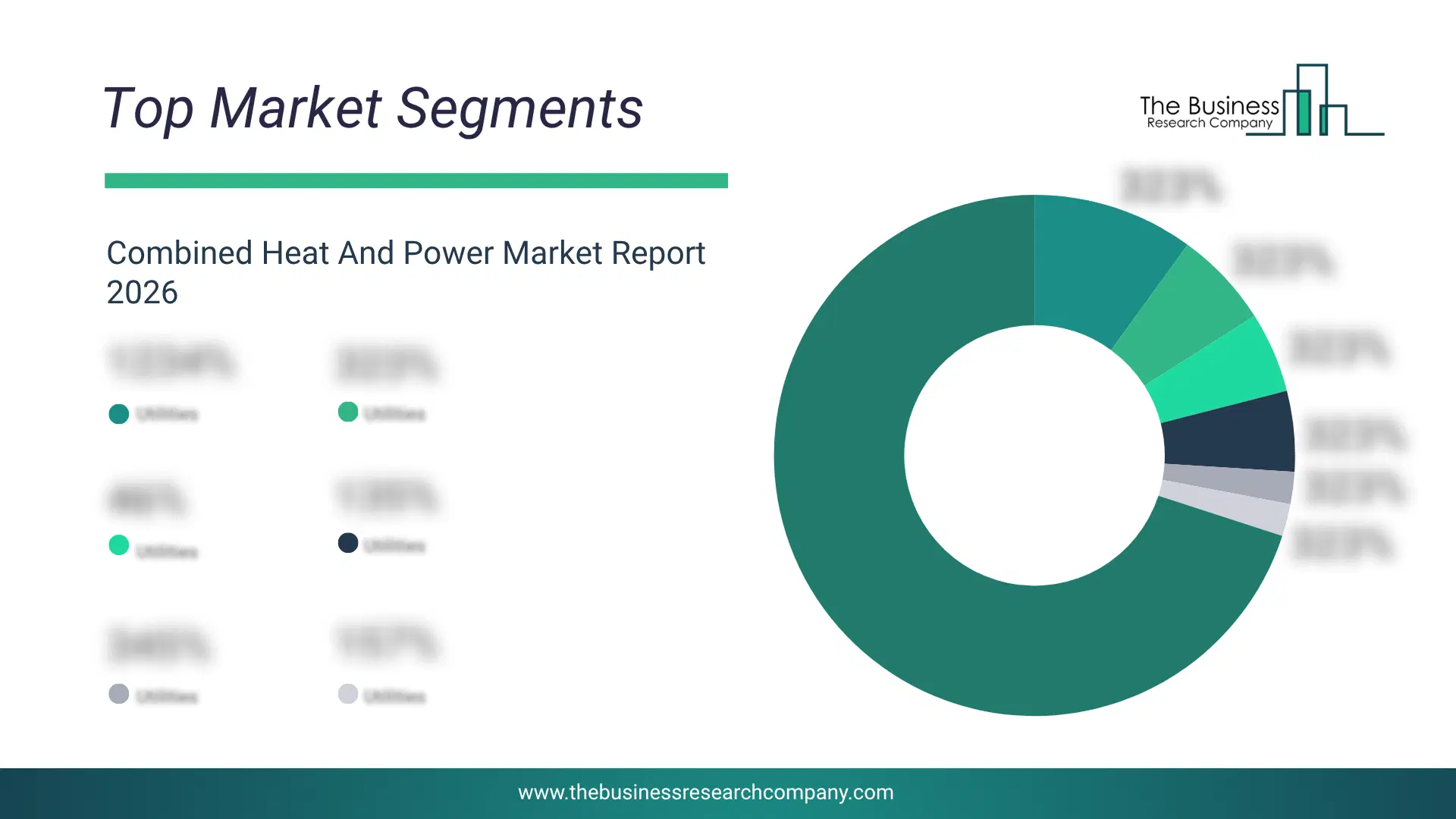
1) By Fuel: Natural Gas, Coal, Biomass, Other Fuel 2) By Technology: Combined Cycle, Steam Turbine, Gas Turbine, Reciprocating Engine, Other Technologies 3) By Capacity: Up To 10 MW, 10-150 MW, 151-300 MW, Above 300 MW 4) By End-Use: Commercial, Industrial, Residential, Utilities, Other End-Uses Subsegments: 1) By Natural Gas: Gas Turbines, Reciprocating Engines 2) By Coal: Coal-Fired Boilers, Integrated Gasification Combined Cycle (IGCC) 3) By Biomass: Wood Chips, Agricultural Residues 4) By Other Fuel: Oil, Waste Heat Recovery The top segments in the combined heat and power market will be: • Natural Gas will reach $28.52 Billion by 2030. • Coal will reach $9.98 Billion by 2030. • Biomass will reach $2.99 Billion by 2030. • Other Fuel will reach $2.1 Billion by 2030.What Is The Driver Of The Combined Heat And Power Market?
The increase in energy efficiency is expected to propel the growth of the combined heat and power market going forward. Energy efficiency refers to the efficient use of energy resources to accomplish a specific task or achieve a desired outcome while minimizing energy waste. Combined Heat and Power (CHP), also known as cogeneration, is a process that generates electricity and captures waste heat to provide both electrical and thermal energy. CHP systems are significantly more efficient than traditional methods of generating power. For instance, in June 2023, according to the International Energy Agency (IEA), a Paris-based autonomous intergovernmental organization, the demand for energy-efficient technologies is crucial to meeting climate objectives, highlighted that global energy efficiency improvements need to double by 2030, aiming for an annual progress rate of over 4% to stay within the 1.5°C global warming threshold. Additionally, the adoption of electric vehicles (EVs) is increasing rapidly, with global EV sales reaching 2.3 million units in the first quarter of 2023, marking a 25% rise compared to the same period in 2022. This growth underscores the rising trend in energy-efficient, digitally-enabled technologies essential for advancing sustainable energy transitions. Therefore, the increase in energy efficiency is driving the growth of the combined heat and power industry.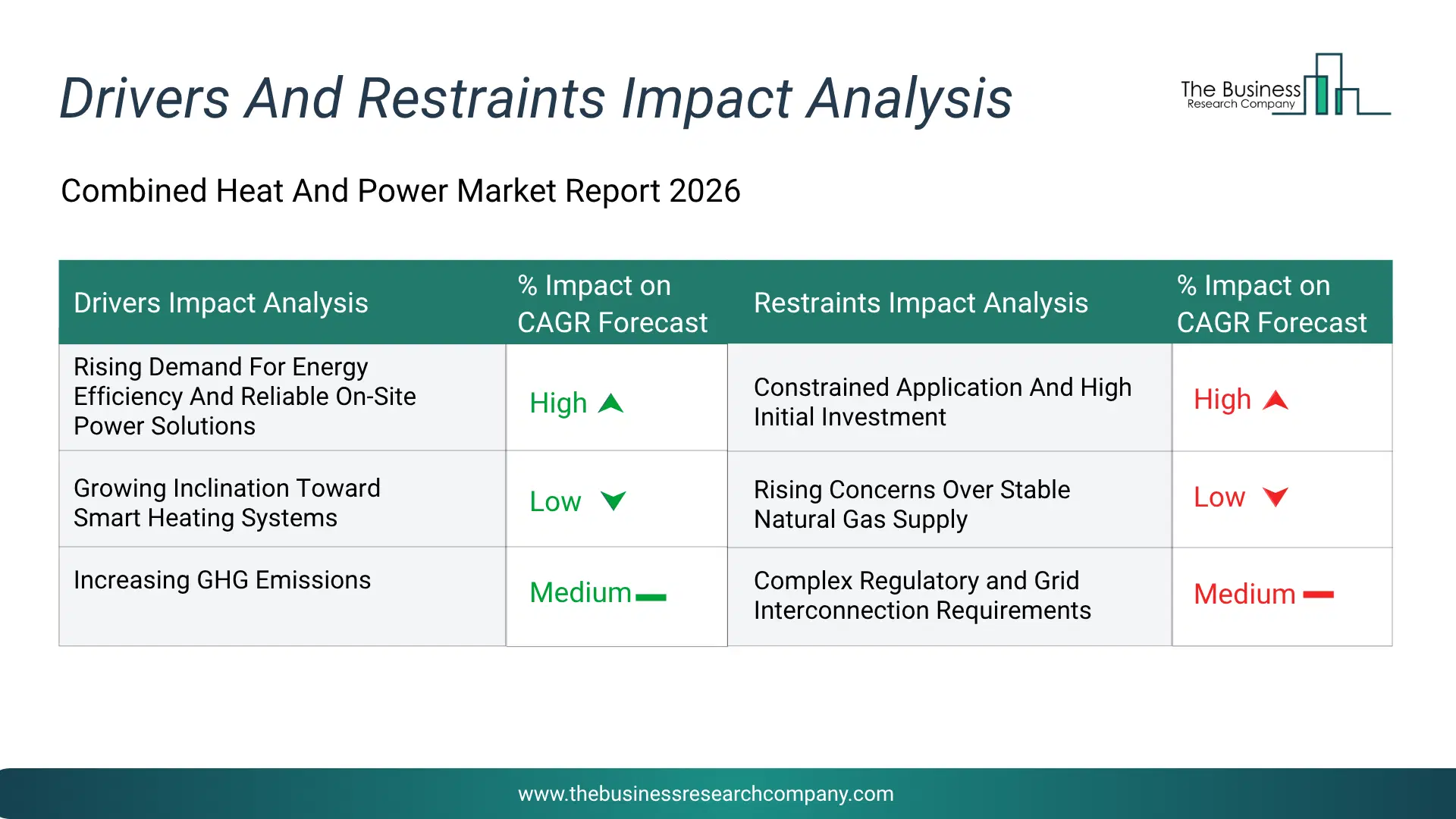
Infographic Chart Showing Key Market Drivers Analysis And Restraints For Combined Heat And Power Market
The chart presents an impact analysis of key drivers and restraints, quantifying their relative influence on the market's growth rate and helping assess the balance between growth enablers and limiting factors. This chart offers a high-level perspective; the full report contains more detailed insights.
How Will The Drivers Impact Growth In The Global Combined Heat And Power Market?
• Rising Demand For Energy Efficiency And Reliable On-Site Power Solutions (High) – During the forecast period, the rising demand for energy efficiency and reliable on-site power solutions is expected to become a key growth driver for the combined heat and power market by 2030. Industries and commercial facilities are increasingly adopting CHP systems to simultaneously generate electricity and useful thermal energy from a single fuel source, improving overall operational efficiency. These systems help reduce transmission losses, ensure uninterrupted power supply during grid outages, and lower long-term energy costs for end users. Growing concerns regarding grid instability and rising electricity consumption are further encouraging deployment of localized power generation systems. This transition toward high-efficiency energy infrastructure is reinforcing steady market expansion. • Growing Inclination Toward Smart Heating Systems (Low) – During the forecast period, the growing inclination toward smart heating systems is expected to emerge as a major factor driving the expansion of the combined heat and power market by 2030. The increasing integration of digital monitoring technologies, intelligent building energy management systems, and automated heating controls is encouraging the adoption of advanced CHP solutions in residential, commercial, and district heating applications. Smart heating systems enable optimized energy consumption, improved thermal efficiency, and real-time operational control, making CHP installations more attractive for modern infrastructure projects. Rising investments in smart cities and connected energy ecosystems are further accelerating demand for efficient cogeneration technologies. • Increasing GHG Emissions (Medium) – During the forecast period, the increasing GHG emissions are expected to act as a key growth catalyst for the combined heat and power market by 2030. Governments and industrial operators are increasingly focusing on cleaner and more efficient energy generation technologies to reduce carbon intensity and meet sustainability targets. CHP systems offer improved fuel utilization efficiency compared to conventional power generation methods, enabling lower greenhouse gas emissions per unit of energy produced. The growing adoption of low-carbon energy infrastructure across manufacturing facilities, utilities, and institutional buildings is further supporting CHP deployment worldwide. As environmental concerns and emission reduction initiatives continue to intensify, demand for efficient cogeneration systems is expected to accelerate steadily.How Will The Restraints Impact Growth In The Global Combined Heat And Power Market?
• Constrained Application And High Initial Investment (High) – During the forecast period, the combined heat and power market faces challenges due to the high upfront capital required for system installation, infrastructure integration, and maintenance. CHP systems often require significant investment in turbines, generators, heat recovery units, and control technologies, making adoption difficult for small and medium-sized enterprises. In addition, CHP technology is not suitable for every facility, as its efficiency depends heavily on continuous and balanced electricity and heat demand. Industries or buildings with fluctuating thermal requirements may not achieve optimal economic benefits from CHP deployment. Complex installation procedures and the need for skilled technical expertise further increase project costs and implementation time. Financing limitations in developing regions also restrict broader adoption of cogeneration systems. These factors collectively slow market penetration despite the long-term efficiency advantages offered by CHP technologies. • Rising Concerns Over Stable Natural Gas Supply (Low) – During the forecast period, the rising concerns over stable natural gas supply act as a restraint for the combined heat and power market because natural gas remains one of the primary fuels used in CHP systems. Supply disruptions caused by geopolitical tensions, pipeline constraints, trade uncertainties, or fluctuating production levels can negatively impact CHP operations and project viability. Volatility in natural gas prices also creates uncertainty regarding operational costs and return on investment for end users. Industries relying heavily on continuous energy generation may hesitate to adopt CHP systems if fuel availability cannot be guaranteed consistently. In some regions, limited gas infrastructure and inadequate distribution networks further restrict CHP deployment. Additionally, concerns regarding long-term dependency on fossil fuels are encouraging some organizations to explore alternative renewable energy technologies instead. These supply and pricing uncertainties can reduce confidence in large-scale CHP investments. • Complex Regulatory and Grid Interconnection Requirements (Medium) – During the forecast period, the complex regulatory and grid interconnection requirements are another major restraint affecting the combined heat and power market. CHP projects often require multiple permits, environmental approvals, and compliance with regional energy regulations before installation and operation. Differences in utility policies and grid interconnection standards across countries and regions can create delays and increase administrative burdens for project developers. In many cases, obtaining approvals for selling excess electricity back to the grid can be time-consuming and technically challenging. Smaller businesses may struggle to navigate these regulatory frameworks due to limited technical and financial resources. Additionally, evolving energy policies and changing emission standards may create uncertainty for long-term project planning. These regulatory complexities can discourage potential investors and slow the adoption of CHP technologies in several markets.Key Players In The Global Combined Heat And Power Market
Major companies operating in the combined heat and power market are General Electric Company, Siemens AG, Veolia Environnement S.A., Wärtsilä Oyj Abp, 2G Energy AG, Capstone Green Energy Corporation, Caterpillar Inc., Dalkia Aegis EDF Group LLC, Bosch Industriekessel GmbH, Centrica PLC, Cummins Inc., Kawasaki Heavy Industries Ltd., The Viessmann Group, Kohler Co., Elite Energy Systems LLC, MAN Energy Solutions SE, Centrax Gas Turbines, ABB Limited, Tecogen Inc., Aegis Energy Services Inc., Curtis Engine & Equipment Co. Inc., Rolls-Royce Power Systems AG, Mitsubishi Heavy Industries Ltd., Doosan Fuel Cell America Inc., FuelCell Energy Inc., Bloom Energy Corporation, ClearEdge Power Inc., Ceres Power Holdings PLC, Ceramic Fuel Cells Limited, Ballard Power Systems Inc., Plug Power Inc., Hydrogenics Corporation, ITM Power PLC, AFC Energy plc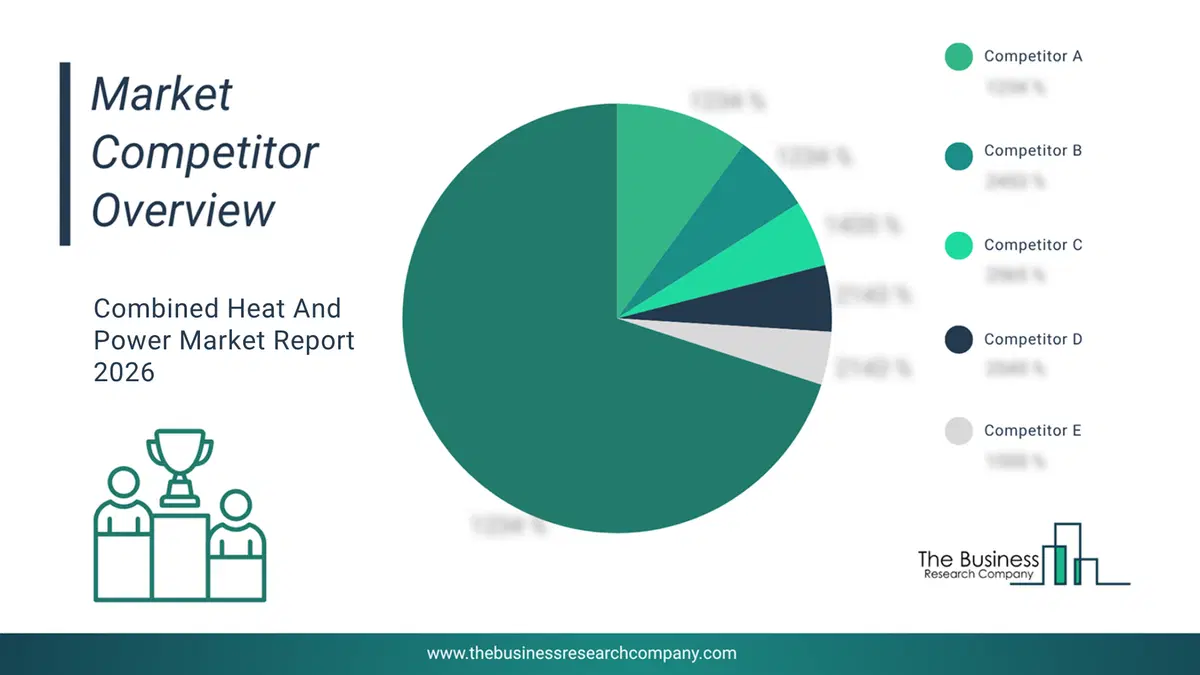
This chart is for illustrative purposes; the full report includes a detailed competitor analysis and comprehensive overview of the top 10 companies in the market.
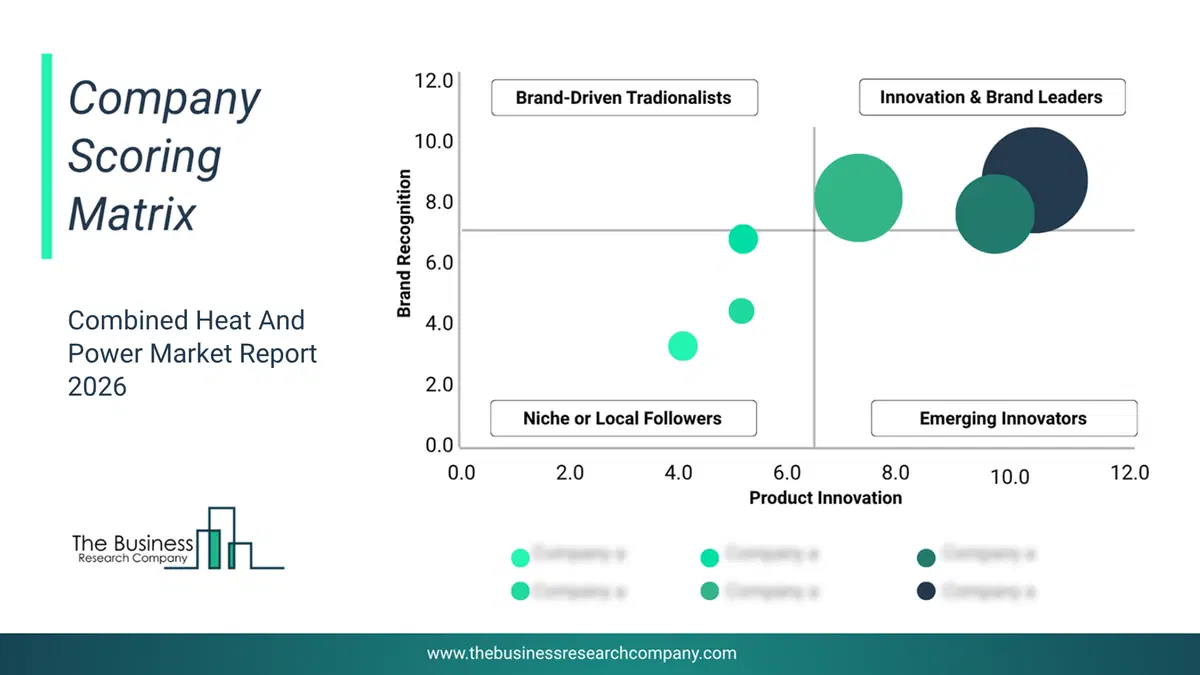
This chart maps companies by product innovation and brand strength, with bubble size indicating relative revenue, helping identify market leaders, challengers, and niche players. This is an illustrative chart; the full report provides a complete and accurate competitive analysis.
Global Combined Heat And Power Market Trends and Insights
Major companies operating in the combined heat and power market are innovating new technological solutions such as Bloom Energy Server to increase their profitability in the market. The Bloom Energy Server is a fuel cell power generation system. For instance, in February 2023, Bloom Energy, a US-based green energy company launched Bloom Energy Server. This cutting-edge technology can effectively generate electricity to meet a variety of energy demands while having a compact modular footprint. The Bloom Energy Server offers clean, dependable, and reasonably priced energy solutions by delivering onsite power that is dependable, robust, and constant. Because of its flexibility and ability to grow with the energy requirements of various applications, this platform may be used in a variety of locations and sectors. The technique is adaptable with respect to fuel and can produce energy from natural gas, mixed hydrogen, biogas, and hydrogen. It is based on Solid Oxide technology and operates at high temperatures.What Are Latest Mergers And Acquisitions In The Combined Heat And Power Market?
In November 2024, Yanmar Holdings Co., Ltd., a Japan based industrial and energy systems company, acquried TEDOM a.s. for an undisclosed amount. Through this acquisition, Yanmar aims to strengthen its presence in the combined heat and power (CHP) market by integrating TEDOM’s expertise in manufacturing and servicing cogeneration systems into its global energy solutions portfolio. TEDOM a.s. is a Czech Republic based company that develops, manufactures, and sells combined heat and power (CHP) units and provides related energy services worldwide.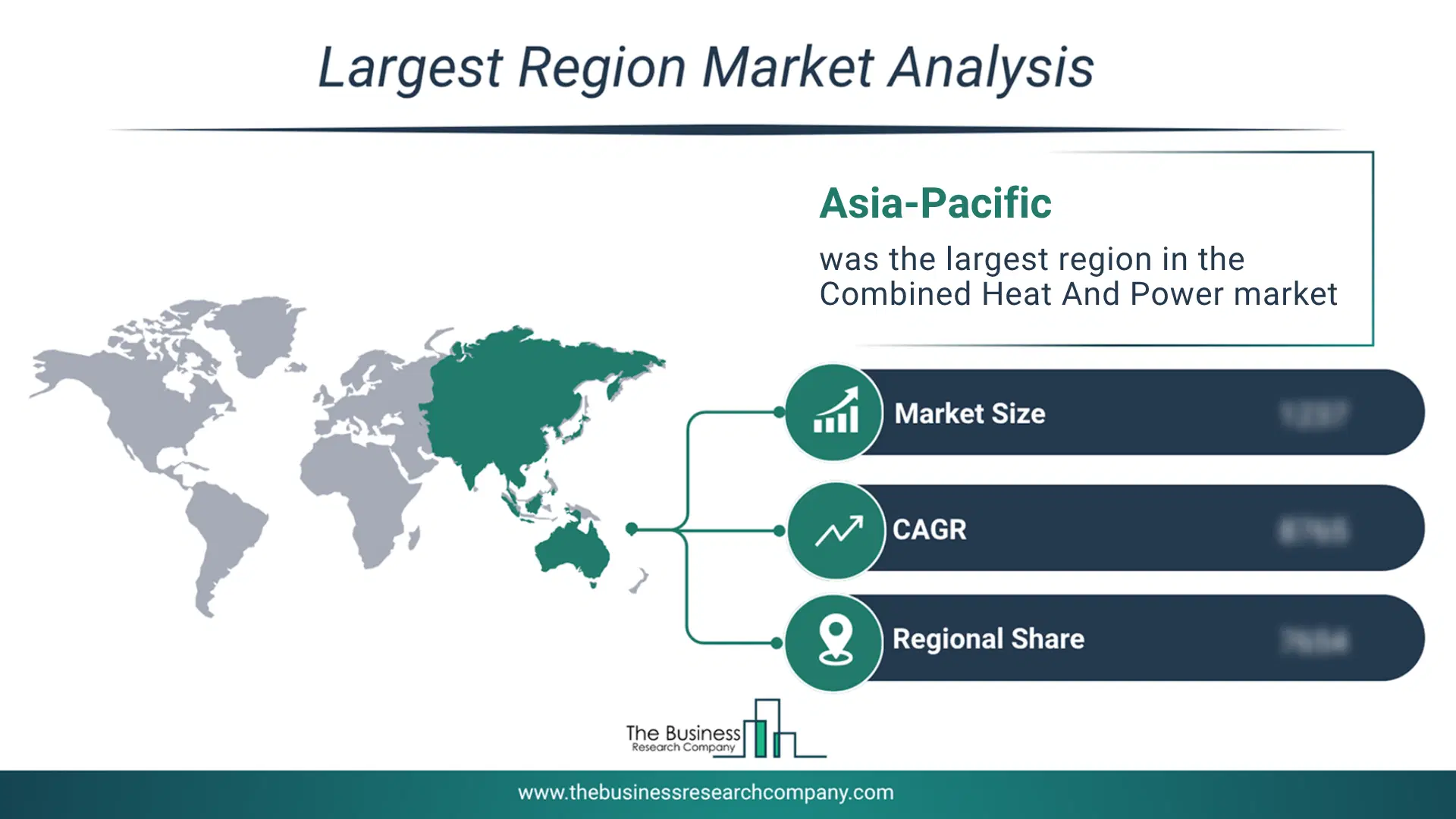
Regional Outlook
Asia-Pacific was the largest region in the combined heat and power market in 2025. Asia-Pacific is expected to be the fastest-growing region in the global combined heat and power (CHP) market share during the forecast period. The regions covered in this market report are Asia-Pacific, South East Asia, Western Europe, Eastern Europe, North America, South America, Middle East, Africa. The countries covered in this market report are Australia, Brazil, China, France, Germany, India, Indonesia, Japan, Taiwan, Russia, South Korea, UK, USA, Canada, Italy, SpainWhat Defines the Combined Heat And Power Market?
The combined heat and power (CHP) market consists of sales of fuel cells, microturbines, sterling engines, and combined cycle power plants. Values in this market are ‘factory gate’ values, that is the value of goods sold by the manufacturers or creators of the goods, whether to other entities (including downstream manufacturers, wholesalers, distributors, and retailers) or directly to end customers. The value of goods in this market includes related services sold by the creators of the goods.How is Market Value Defined and Measured?
The market value is defined as the revenues that enterprises gain from the sale of goods and/or services within the specified market and geography through sales, grants, or donations in terms of the currency (in USD unless otherwise specified). The revenues for a specified geography are consumption values that are revenues generated by organizations in the specified geography within the market, irrespective of where they are produced. It does not include revenues from resales along the supply chain, either further along the supply chain or as part of other products.
This chart presents market attractiveness based on a quantitative evaluation of growth, competition, strategic alignment, and risk, offering a clear view of opportunity areas for decision-making. This chart is for illustrative purposes; the full report contains the complete analysis.

This chart highlights the Total Addressable Market (TAM) by estimating the maximum revenue opportunity using an assumption-driven approach, supporting strategic planning and opportunity sizing across markets. The chart is illustrative; the full report provides a more comprehensive analysis.
What Key Data and Analysis Are Included in the Combined Heat And Power Market Report 2026?
The combined heat and power market research report is one of a series of new reports from The Business Research Company that provides market statistics, including Market Report 2026?global market size, regional shares, competitors with the market share, detailed market segments, market trends and opportunities, and any further data you may need to thrive in the combined heat and power Market Report 2026? The market research report delivers a complete perspective of everything you need, with an in-depth analysis of the current and future state of the Market Report 2026?Combined Heat And Power Market Report Forecast Analysis
| Report Attribute | Details |
|---|---|
| Market Size Value In 2026 | $32.87 billion |
| Revenue Forecast In 2030 | $43.59 billion |
| Growth Rate | CAGR of 7.2% from 2026 to 2030 |
| Base Year For Estimation | 2025 |
| Actual Estimates/Historical Data | 2020-2025 |
| Forecast Period | 2026 - 2030 |
| Market Representation | Revenue in USD Billion and CAGR from 2026 to 2030 |
| Segments Covered | Fuel, Technology, Capacity, End-Use |
| Regional Scope | Asia-Pacific, Western Europe, Eastern Europe, North America, South America, Middle East, Africa |
| Country Scope | The countries covered in the report are Australia, Brazil, China, France, Germany, India, Indonesia, Japan, Taiwan, Russia, South Korea, UK, USA, Canada, Italy, Spain. |
| Key Companies Profiled | General Electric Company, Siemens AG, Veolia Environnement S.A., Wärtsilä Oyj Abp, 2G Energy AG, Capstone Green Energy Corporation, Caterpillar Inc., Dalkia Aegis EDF Group LLC, Bosch Industriekessel GmbH, Centrica PLC, Cummins Inc., Kawasaki Heavy Industries Ltd., The Viessmann Group, Kohler Co., Elite Energy Systems LLC, MAN Energy Solutions SE, Centrax Gas Turbines, ABB Limited, Tecogen Inc., Aegis Energy Services Inc., Curtis Engine & Equipment Co. Inc., Rolls-Royce Power Systems AG, Mitsubishi Heavy Industries Ltd., Doosan Fuel Cell America Inc., FuelCell Energy Inc., Bloom Energy Corporation, ClearEdge Power Inc., Ceres Power Holdings PLC, Ceramic Fuel Cells Limited, Ballard Power Systems Inc., Plug Power Inc., Hydrogenics Corporation, ITM Power PLC, AFC Energy plc |
| Customization Scope | Request for Customization |
| Pricing And Purchase Options | Explore Purchase Options |