
District Heating Market Report 2026
Global Outlook – By Plant Type (Boiler, Combined Heat and Power (CHP), Others Plant Types), By Heat Source (Coal, Natural Gas, Renewables, Oil and Petroleum Products), By Application (Residential, Commercial, Industrial) – Market Size, Trends, Strategies, and Forecast to 2030
District Heating Market Overview
• District Heating market size has reached to $188.25 billion in 2025 • Expected to grow to $236.69 billion in 2030 at a compound annual growth rate (CAGR) of 4.7% • Growth Driver: Industrialization Expands Market Demand • Market Trend: Advancements In Low-Carbon District Heating Networks For Sustainable Urban Energy • Western Europe was the largest region in 2025 and North America is the fastest growing region.What Is Covered Under District Heating Market?
District heating refers to an underground infrastructure element that distributes thermal energy from a central energy plant or plants to different buildings. The plant's steam or hot water is distributed around the clock using underground thermal pipe networks that are well insulated. The thermal energy is delivered to the building's heating system so that the need for individual building boilers could be eliminated. It increases efficiency and greatly helps in controlling emissions. The main plant types of district heating are boiler, combined heat and power (CHP), and other plant types. Combined heat and power (CHP), also called cogeneration is the concurrent production of electricity or mechanical power and useful thermal energy (heating and/or cooling) from a single source of energy. The heat source used in district heating including coal, natural gas, renewables, and oil and petroleum products, and they are used in residential, commercial, and industrial applications.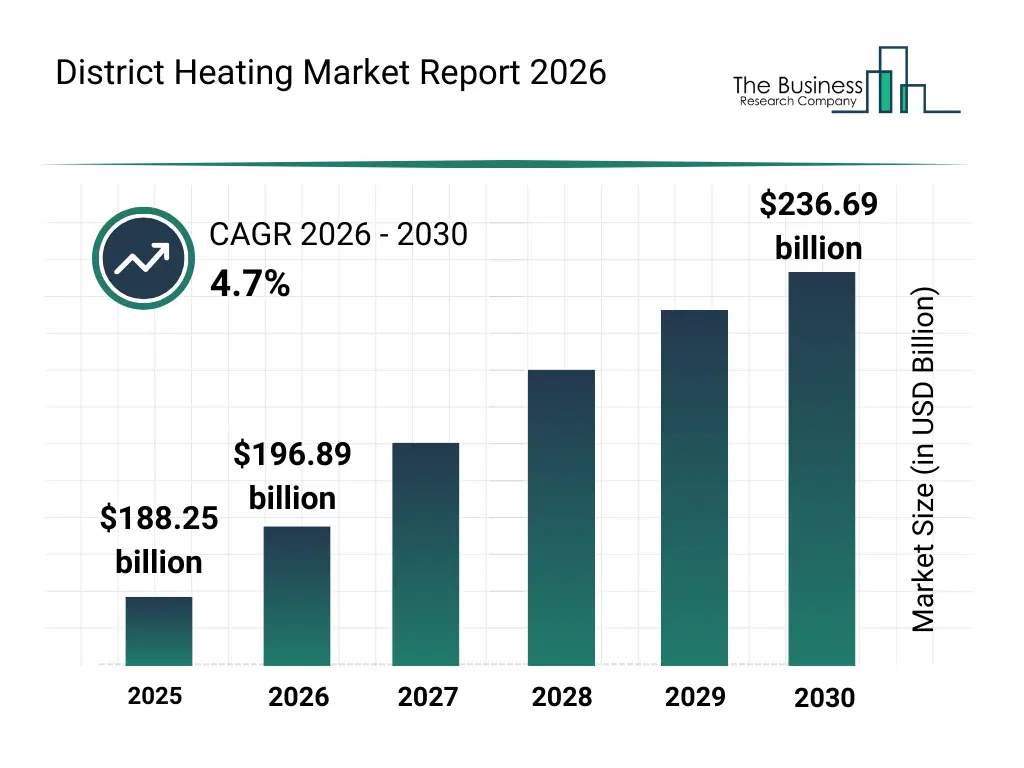
What Is The District Heating Market Size and Share 2026?
The district heating market size has grown steadily in recent years. It will grow from $188.25 billion in 2025 to $196.89 billion in 2026 at a compound annual growth rate (CAGR) of 4.6%. The growth in the historic period can be attributed to expansion of urban infrastructure development, rising demand for centralized heating solutions, increasing focus on emission reduction, availability of combined heat and power plants, growth in residential and commercial heating demand.What Is The District Heating Market Growth Forecast?
The district heating market size is expected to see steady growth in the next few years. It will grow to $236.69 billion in 2030 at a compound annual growth rate (CAGR) of 4.7%. The growth in the forecast period can be attributed to increasing investments in renewable district heating, rising adoption of smart grid integration, expansion of geothermal and solar thermal projects, growing regulatory support for decarbonization, increasing retrofitting of aging heating networks. Major trends in the forecast period include expansion of low-carbon district heating networks, rising integration of renewable heat sources, growing deployment of smart heat metering systems, increasing use of waste heat recovery, enhanced focus on energy efficiency optimization.Tariff Impact On District Heating Market
Tariffs are affecting the district heating market by increasing costs of imported boilers, heat exchangers, insulated pipes, pumps, and control systems required for large-scale network deployment. Utilities and municipal heating providers in Europe and Asia-Pacific are most affected due to reliance on imported high-capacity equipment and specialized components, leading to higher project development costs and extended implementation timelines. These tariffs are impacting both new installations and network expansion projects. However, they are also driving localization of equipment manufacturing, increased use of locally sourced materials, and innovation in cost-efficient and modular district heating solutions.
Global District Heating Market Segmentation
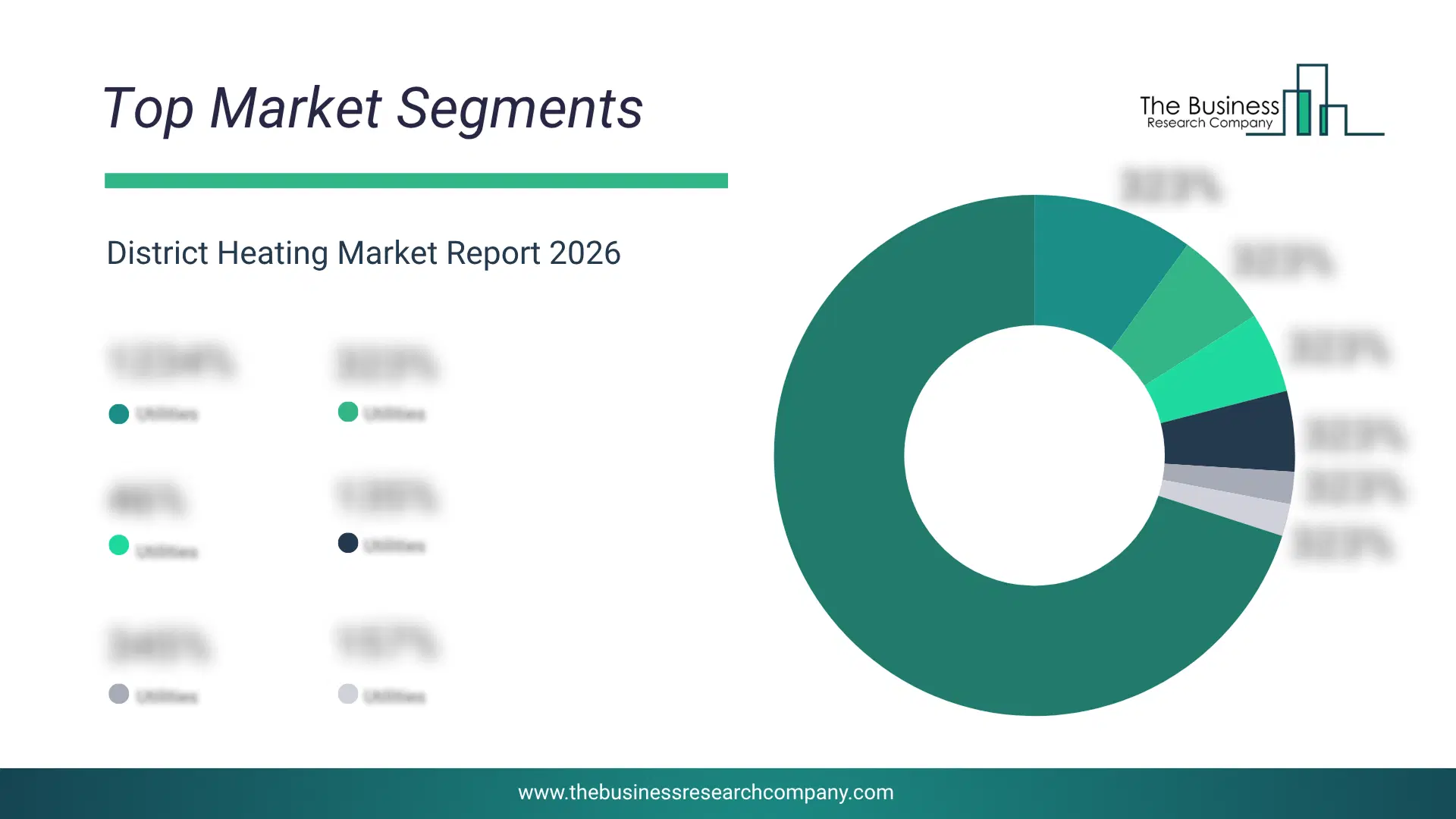
1) By Plant Type: Boiler, Combined Heat and Power (CHP), Others Plant Types 2) By Heat Source: Coal, Natural Gas, Renewables, Oil and Petroleum Products 3) By Application: Residential, Commercial, Industrial Subsegments: 1) By Boiler: Natural Gas Boilers, Biomass Boilers, Oil Boilers, Electric Boilers 2) By Combined Heat and Power (CHP): Gas Turbine CHP, Steam Turbine CHP, Reciprocating Engine CHP 3) By Other Plant Types: Geothermal Plants, Waste Heat Recovery Systems, Solar Thermal Plants, Heat PumpsWhat Is The Driver Of The District Heating Market?
Rising industrialization is expected to propel the growth of the district heating market going forward. Industrialization refers to the approach by which an economy is converted from a primarily agricultural one to one based on the manufacturing of goods. Infrastructure development during industrialization increases the implementation of district heating elements. For instance, in September 2024, according to the International Federation of Robotics (IFR), a Germany-based non-profit organization, reported that industrial robot installations in the UK rose by 51%, reaching 3,830 units, while in the Americas, over 50,000 units were installed for the third consecutive year, totaling 55,389 units in 2023. Therefore, the rise in industrialization is driving the growth of the district heating industry.Key Players In The Global District Heating Market
Major companies operating in the district heating market are Engie SA, Veolia Environnement S.A., Fortum Oyj, Vattenfall AB, E.ON SE, Danfoss A/S, LOGSTOR A/S, Ørsted A/S, Statkraft AS, Wien Energie GmbH, Göteborg Energi AB, RWE AG, Helen Ltd., Vital Energi Utilities Ltd., Agder Energi AS, Eidsiva Bioenergi AS, STEAG GmbH, Alfa Laval AB, Ramboll Group A/S, FVB Energy Inc., Keppel Corporation Limited, Hafslund Eco AS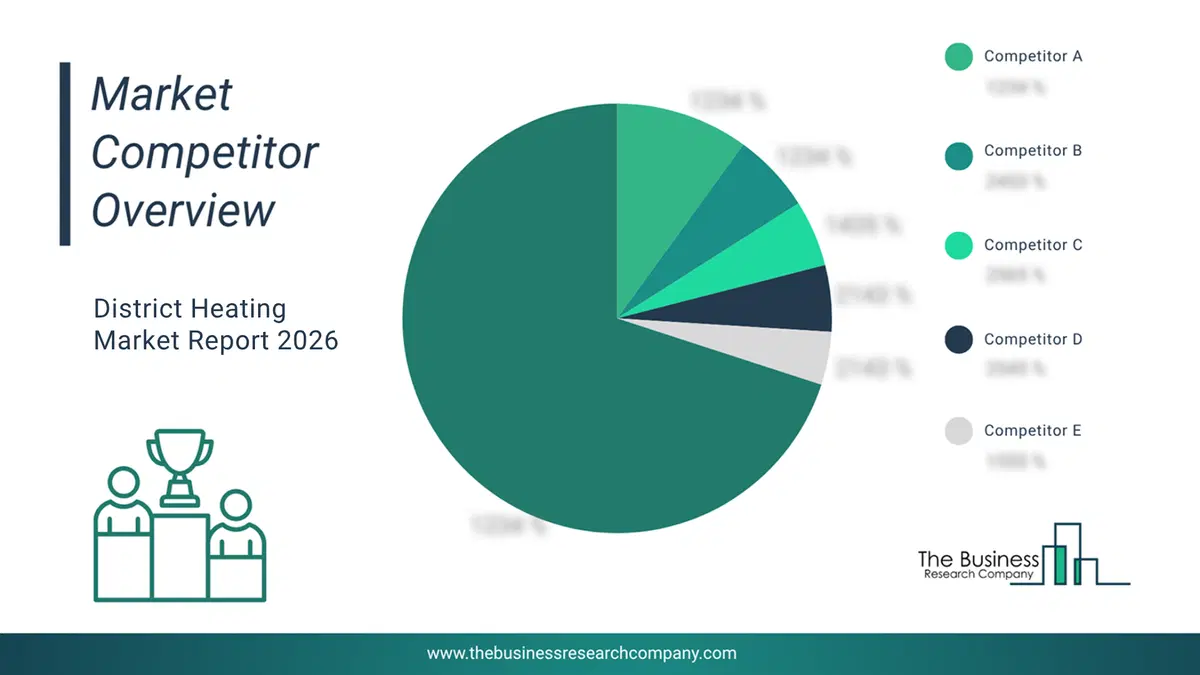
This chart is for illustrative purposes; the full report includes a detailed competitor analysis and comprehensive overview of the top 10 companies in the market.
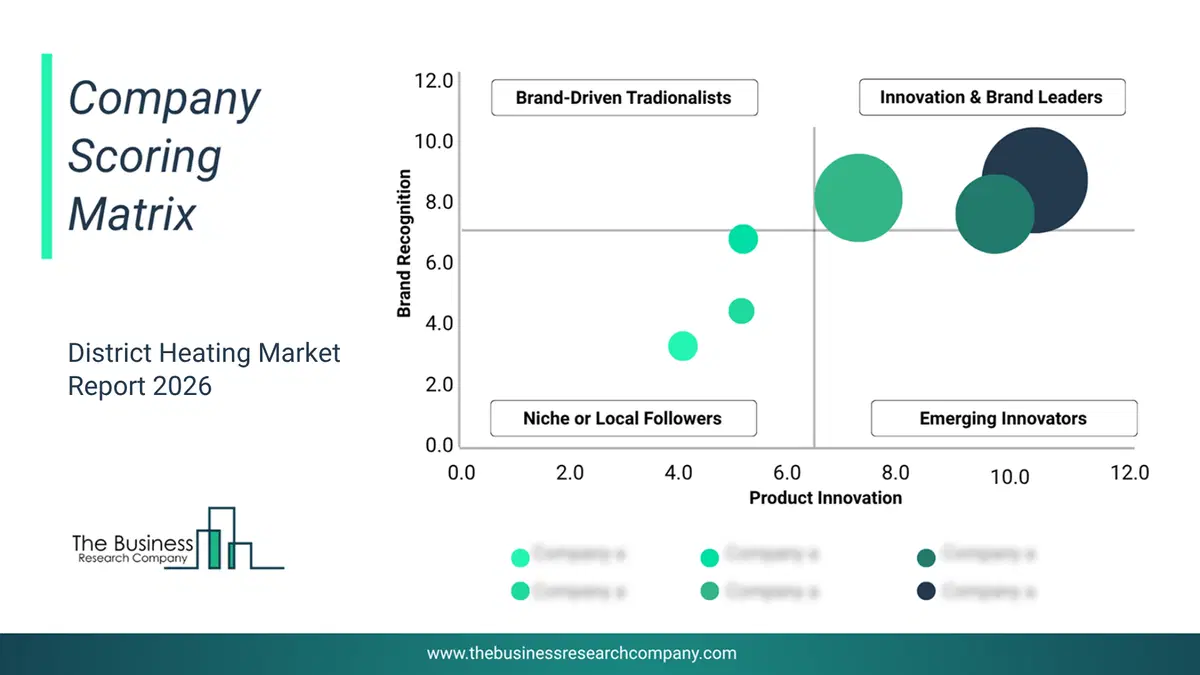
This chart maps companies by product innovation and brand strength, with bubble size indicating relative revenue, helping identify market leaders, challengers, and niche players. This is an illustrative chart; the full report provides a complete and accurate competitive analysis.
Global District Heating Market Trends and Insights
Major companies operating in the District Heating market are focusing on developing innovative solutions, such as low-carbon heat networks, to enhance energy efficiency, reduce carbon emissions, and provide sustainable heating solutions to residential, commercial, and industrial customers. A low-carbon heat network is a system that distributes heat, usually in the form of hot water or steam, from a centralized source to multiple buildings or facilities, while minimizing carbon dioxide (CO₂) emissions compared to conventional heating systems. For instance, in November 2025, Veolia Environnement S.A., a France-based provider of water, waste, and energy management solutions, launched the “Ecothermal Grid” in the UK, a low-carbon heat network designed to deliver carbon-neutral heating and cooling using a mix of energy sources. The Ecothermal Grid integrates AI-driven smart controls and energy storage technologies to optimize heat distribution, recover excess heat from industrial and data center operations, and provide reliable, flexible, and sustainable heating to urban areas. The initiative includes a £1bn project pipeline across locations such as Wiltshire, London, Bristol, Yorkshire, and Cambridgeshire, with applications ranging from residential complexes to large research campuses, supporting the UK government’s 2050 target of 20% heat demand from district heating networks.What Are Latest Mergers And Acquisitions In The District Heating Market?
In November 2024, Adven Oy AB, a Finland-based energy company, acquired Österlens Kraft Fjärrvärme AB for an undisclosed amount. With this acquisition, it aims to strengthen its district heating operations in Simrishamn, Sweden, enhance operational efficiency, and leverage its expertise in fuel procurement and project management to support sustainable and competitive heat delivery. Österlens Kraft Fjärrvärme AB is a Sweden-based provider of district heating services with over 50 years of experience in managing local heating networks.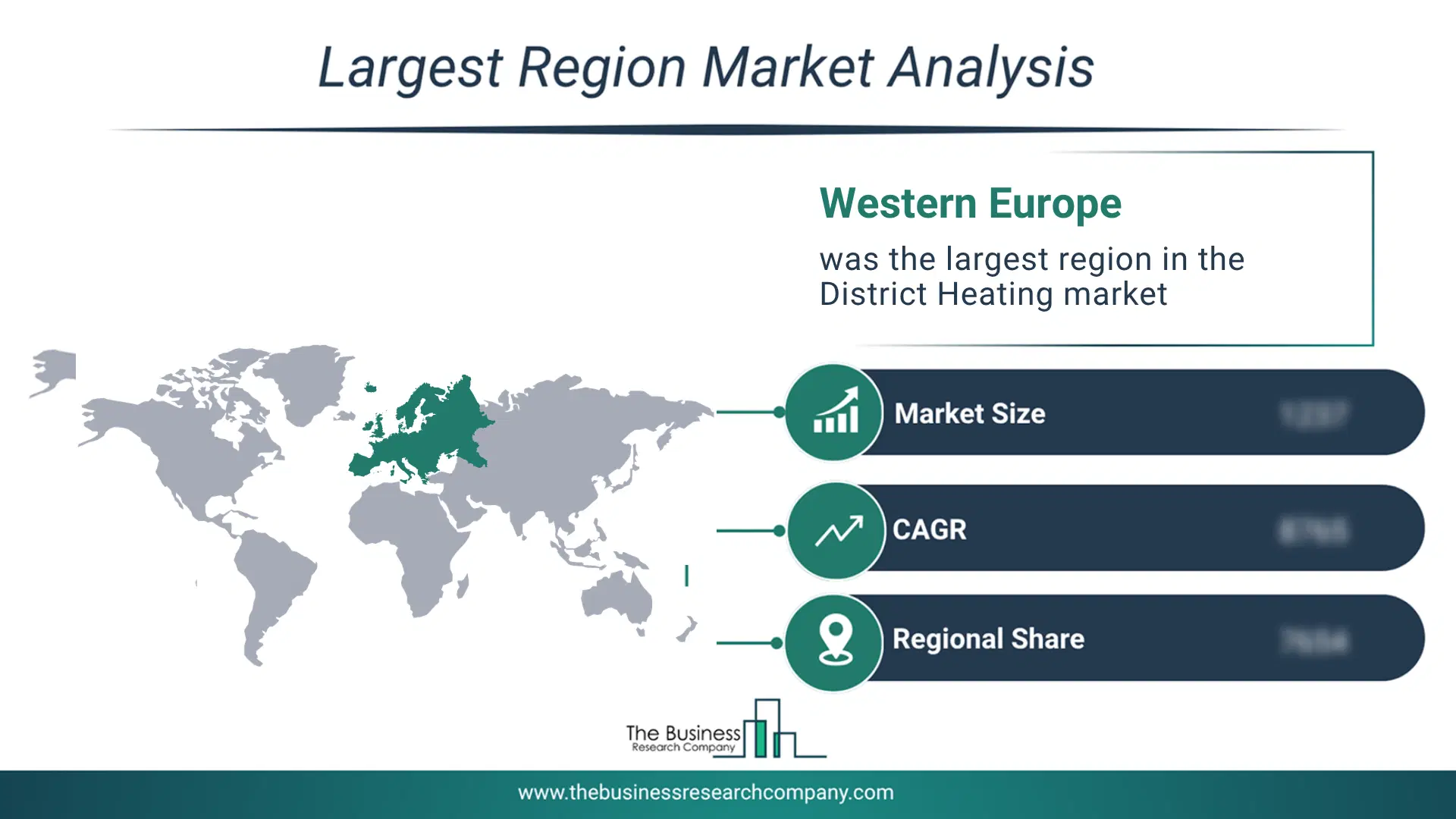
Regional Outlook
Western Europe was the largest region in the district heating market in 2025. North America is expected to be the fastest-growing region in the district heating market share during the forecast period. The regions covered in this market report are Asia-Pacific, South East Asia, Western Europe, Eastern Europe, North America, South America, Middle East, Africa The countries covered in this market report are Australia, Brazil, China, France, Germany, India, Indonesia, Japan, Taiwan, Russia, South Korea, UK, USA, Canada, Italy, Spain.What Defines the District Heating Market?
The district heating market consists of revenues earned by entities by providing services such as high-temperature district heating, medium-temperature, low-temperature district heating, and ultra-low-temperature district heating. The market value includes the value of related goods sold by the service provider or included within the service offering. The district heating market also includes sales of HVAC system thermostats, furnace burners, heat exchangers, blowers, and filter racks. Values in this market are ‘factory gate’ values, that is the value of goods sold by the manufacturers or creators of the goods, whether to other entities (including downstream manufacturers, wholesalers, distributors, and retailers) or directly to end customers. The value of goods in this market includes related services sold by the creators of the goods.How is Market Value Defined and Measured?
The market value is defined as the revenues that enterprises gain from the sale of goods and/or services within the specified market and geography through sales, grants, or donations in terms of the currency (in USD unless otherwise specified). The revenues for a specified geography are consumption values that are revenues generated by organizations in the specified geography within the market, irrespective of where they are produced. It does not include revenues from resales along the supply chain, either further along the supply chain or as part of other products.
This chart presents market attractiveness based on a quantitative evaluation of growth, competition, strategic alignment, and risk, offering a clear view of opportunity areas for decision-making. This chart is for illustrative purposes; the full report contains the complete analysis.

This chart highlights the Total Addressable Market (TAM) by estimating the maximum revenue opportunity using an assumption-driven approach, supporting strategic planning and opportunity sizing across markets. The chart is illustrative; the full report provides a more comprehensive analysis.
What Key Data and Analysis Are Included in the District Heating Market Report 2026?
The district heating market research report is one of a series of new reports from The Business Research Company that provides market statistics, including industry global market size, regional shares, competitors with the market share, detailed market segments, market trends and opportunities, and any further data you may need to thrive in the district heating industry. The market research report delivers a complete perspective of everything you need, with an in-depth analysis of the current and future state of the industry.District Heating Market Report Forecast Analysis
| Report Attribute | Details |
|---|---|
| Market Size Value In 2026 | $196.89 billion |
| Revenue Forecast In 2030 | $236.69 billion |
| Growth Rate | CAGR of 4.7% from 2026 to 2030 |
| Base Year For Estimation | 2025 |
| Actual Estimates/Historical Data | 2020-2025 |
| Forecast Period | 2026 - 2030 |
| Market Representation | Revenue in USD Billion and CAGR from 2026 to 2030 |
| Segments Covered | Plant Type, Heat Source, Application |
| Regional Scope | Asia-Pacific, Western Europe, Eastern Europe, North America, South America, Middle East, Africa |
| Key Companies Profiled | Engie SA, Veolia Environnement S.A., Fortum Oyj, Vattenfall AB, E.ON SE, Danfoss A/S, LOGSTOR A/S, Ørsted A/S, Statkraft AS, Wien Energie GmbH, Göteborg Energi AB, RWE AG, Helen Ltd., Vital Energi Utilities Ltd., Agder Energi AS, Eidsiva Bioenergi AS, STEAG GmbH, Alfa Laval AB, Ramboll Group A/S, FVB Energy Inc., Keppel Corporation Limited, Hafslund Eco AS |
| Customization Scope | Request for Customization |
| Pricing And Purchase Options | Explore Purchase Options |