
District Cooling Market Report 2026
Global Outlook – By Production Technique (Free Cooling, Absorption Cooling, Electric Chillers), By Function (Space Cooling, Process Cooling), By Application (Commercial, Residential, Industrial) – Market Size, Trends, Strategies, and Forecast to 2030
District Cooling Market Overview
• District Cooling market size has reached to $19.83 billion in 2025 • Expected to grow to $34.23 billion in 2030 at a compound annual growth rate (CAGR) of 11.5% • Growth Driver: The Impact of Sustainable Energy Adoption on Cooling Solutions • Market Trend: Geothermal-Powered Networks Reduce Emissions In District Cooling • Middle East was the largest region in 2025.What Is Covered Under District Cooling Market?
A district cooling system (DCS) refers to a system that distributes cooling capacity in the form of chilled water or another medium from a central source to many buildings via a network of subterranean pipes used to provide chilled water for indoor cooling purposes for industrial, commercial, and residential buildings. The main types of district cooling are free cooling, absorption cooling, electric chillers, and others. Free district cooling is used to ensure that the cooling supply is secure. The system is frequently supplemented by a heat pump or an electric chiller. The functions involved stationary cooling and transport cooling. The various applications include commercial, residential, and industrial.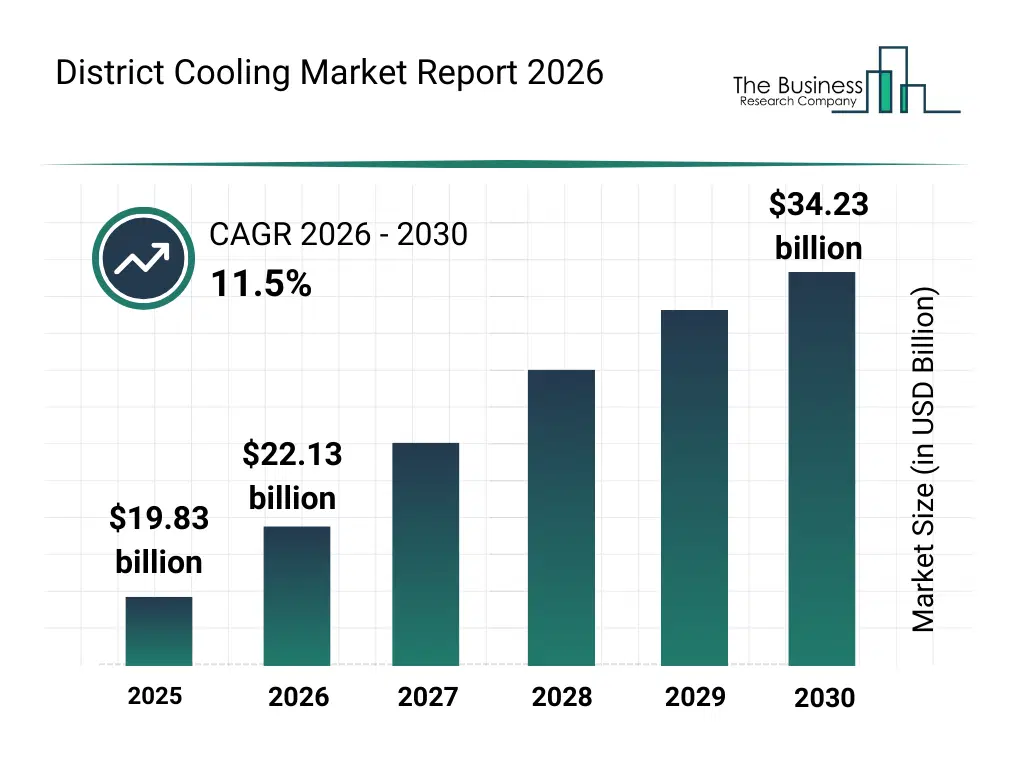
What Is The District Cooling Market Size and Share 2026?
The district cooling market size has grown rapidly in recent years. It will grow from $19.83 billion in 2025 to $22.13 billion in 2026 at a compound annual growth rate (CAGR) of 11.6%. The growth in the historic period can be attributed to growing demand for large scale cooling, increasing development of commercial infrastructure, rising industrialization in urban cities, early adoption of centralized cooling in developed regions, initial energy efficiency regulations.What Is The District Cooling Market Growth Forecast?
The district cooling market size is expected to see rapid growth in the next few years. It will grow to $34.23 billion in 2030 at a compound annual growth rate (CAGR) of 11.5%. The growth in the forecast period can be attributed to expanding smart city projects, rising focus on sustainable building cooling, increasing investments in district cooling infrastructure, growing demand from commercial complexes, strengthening environmental policies and efficiency mandates. Major trends in the forecast period include increasing adoption of centralized cooling networks, rising development of smart energy infrastructure, growing shift toward energy efficient cooling solutions, increasing integration of advanced cooling production techniques, rising focus on large scale urban cooling deployment.
Global District Cooling Market Segmentation
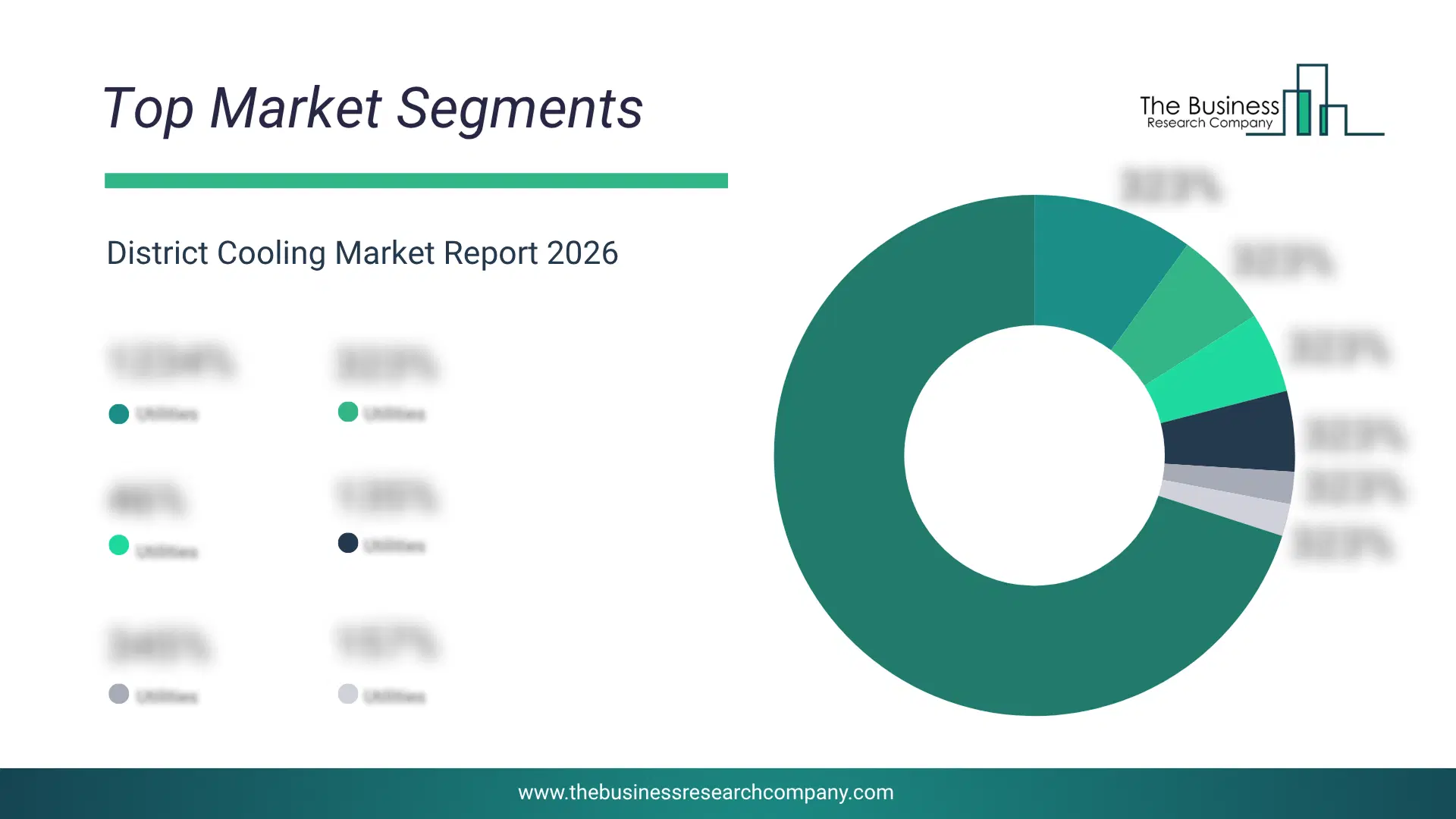
1) By Production Technique: Free Cooling, Absorption Cooling, Electric Chillers 2) By Function: Space Cooling, Process Cooling 3) By Application: Commercial, Residential, Industrial Subsegments: 1) By Free Cooling: Air-Based Free Cooling, Water-Based Free Cooling, Seasonal Thermal Energy Storage 2) By Absorption Cooling: Water-Lithium Bromide Systems, Ammonia-Water Systems 3) By Electric Chillers: Air-Cooled Chillers, Water-Cooled ChillersWhat Is The Driver Of The District Cooling Market?
The rising focus on the adoption of sustainable energy is expected to propel the growth of the district cooling market. Sustainable energy refers to a type of energy that cannot be depleted and can remain viable forever, it does not need to be renewed or replenished. Sustainable district cooling provides sustainable cooling and improves the local environment by reducing noise and increasing the security of the energy supply. For instance, in June 2023, according to the International Energy Agency, a France-based intergovernmental organization, global renewable capacity additions are set to soar by 107 gigawatts (GW) the largest absolute increase ever to more than 440 GW. Therefore, the rising focus on the adoption of sustainable energy is driving the growth of the district cooling industry.Key Players In The Global District Cooling Market
Major companies operating in the district cooling market report are Emirates District Cooling LLC, National Central Cooling Company PJSC, Emirates Central Cooling Systems Corp., Qatar District Cooling Company, Marafeq Qatar, Keppel DHCS Pte Ltd., Fortum Corporation, ENGIE SA, Veolia Environnement SA, Wien Energie Vertrieb GmbH & Co. KG, Stockholm Exergi AB, Vattenfall AB, NRG Energy Inc., Vicinity Energy LLC, Dubai Aerospace Enterprise Utilities Division, Palm District Cooling LLC, Tabreed India Pvt Ltd, Muscat District Cooling Company SAOC, Bahrain District Cooling Company BSC, Saudi Tabreed Cooling Company, National District Cooling Company Egypt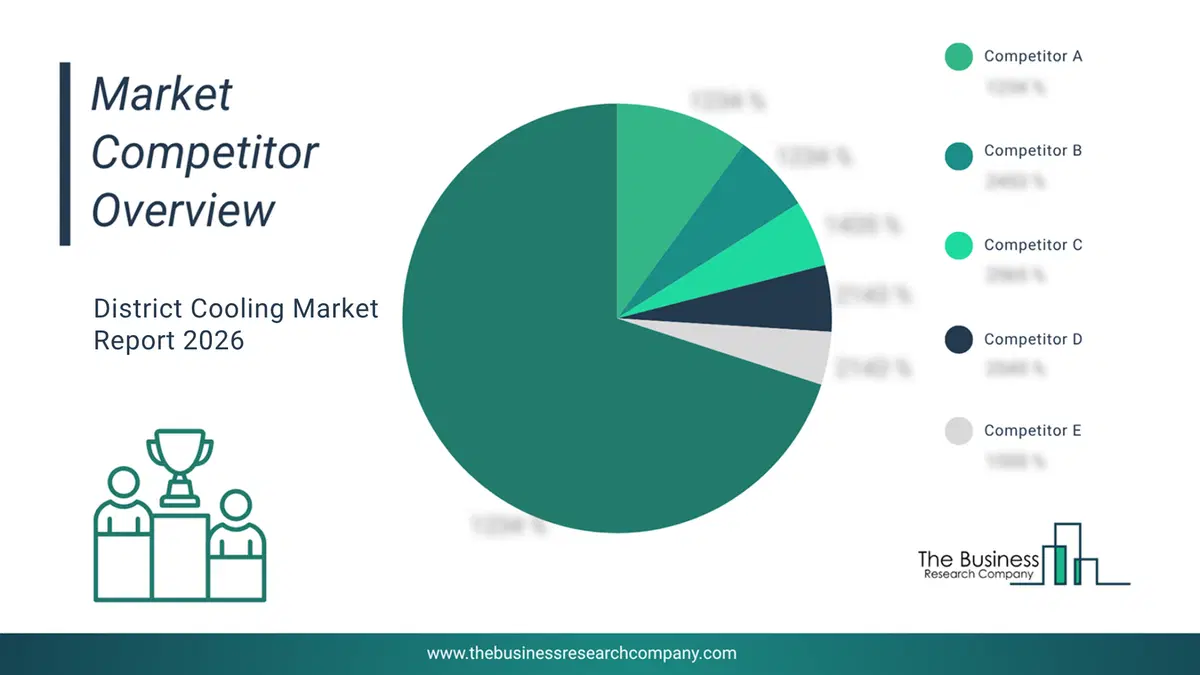
This chart is for illustrative purposes; the full report includes a detailed competitor analysis and comprehensive overview of the top 10 companies in the market.
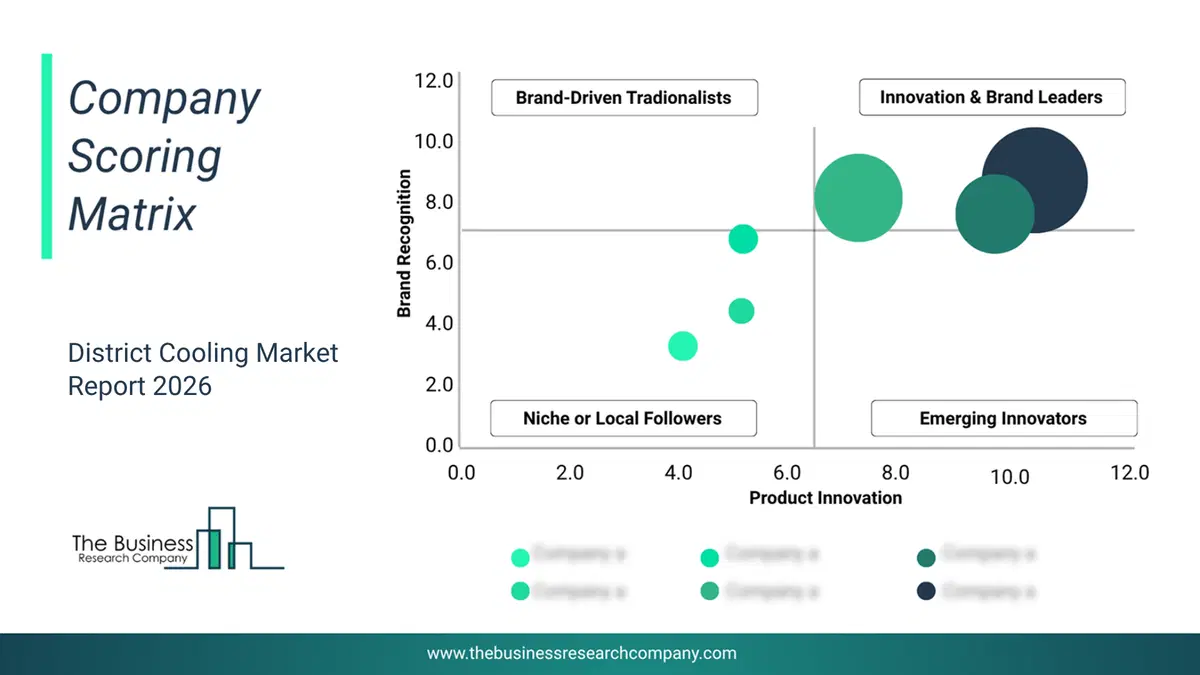
This chart maps companies by product innovation and brand strength, with bubble size indicating relative revenue, helping identify market leaders, challengers, and niche players. This is an illustrative chart; the full report provides a complete and accurate competitive analysis.
Global District Cooling Market Trends and Insights
Major companies operating in the global district cooling market are focusing on developing innovative solutions, such as geothermal energy-based district cooling plants, to meet the rising demand for low-carbon, energy-efficient cooling in urban areas where electricity use for air conditioning is very high. A geothermal district cooling plant uses deep wells to tap naturally occurring hot water, feeding this into absorption chillers that produce chilled water for a central network, reducing reliance on conventional electric chillers that depend entirely on grid power. For instance, in December 2023, National Central Cooling Company PJSC (Tabreed), a UAE-based district cooling company, in partnership with Abu Dhabi National Oil Company (ADNOC), launched commercial operations at G2COOL, the Gulf region’s first geothermal-powered district cooling plant in Masdar City, which uses two geothermal wells delivering water above 90 °C to absorption cooling technology and supplies around 10% of Masdar City’s cooling needs, thereby lowering grid electricity demand for cooling and supporting the UAE’s broader decarbonization and clean-energy goals.What Are Latest Mergers And Acquisitions In The District Cooling Market?
In July 2024, Panasonic, a Japan-based electronics company, acquired Area Cooling Solutions for an undisclosed amount. With this acquisition Panasonic aims to strengthen its presence in the European market, enhance its technological capabilities in environmentally friendly refrigeration, and respond effectively to evolving regulatory demands. Area Cooling Solutions, Poland-based provides a comprehensive range of products and services in the district cooling sector.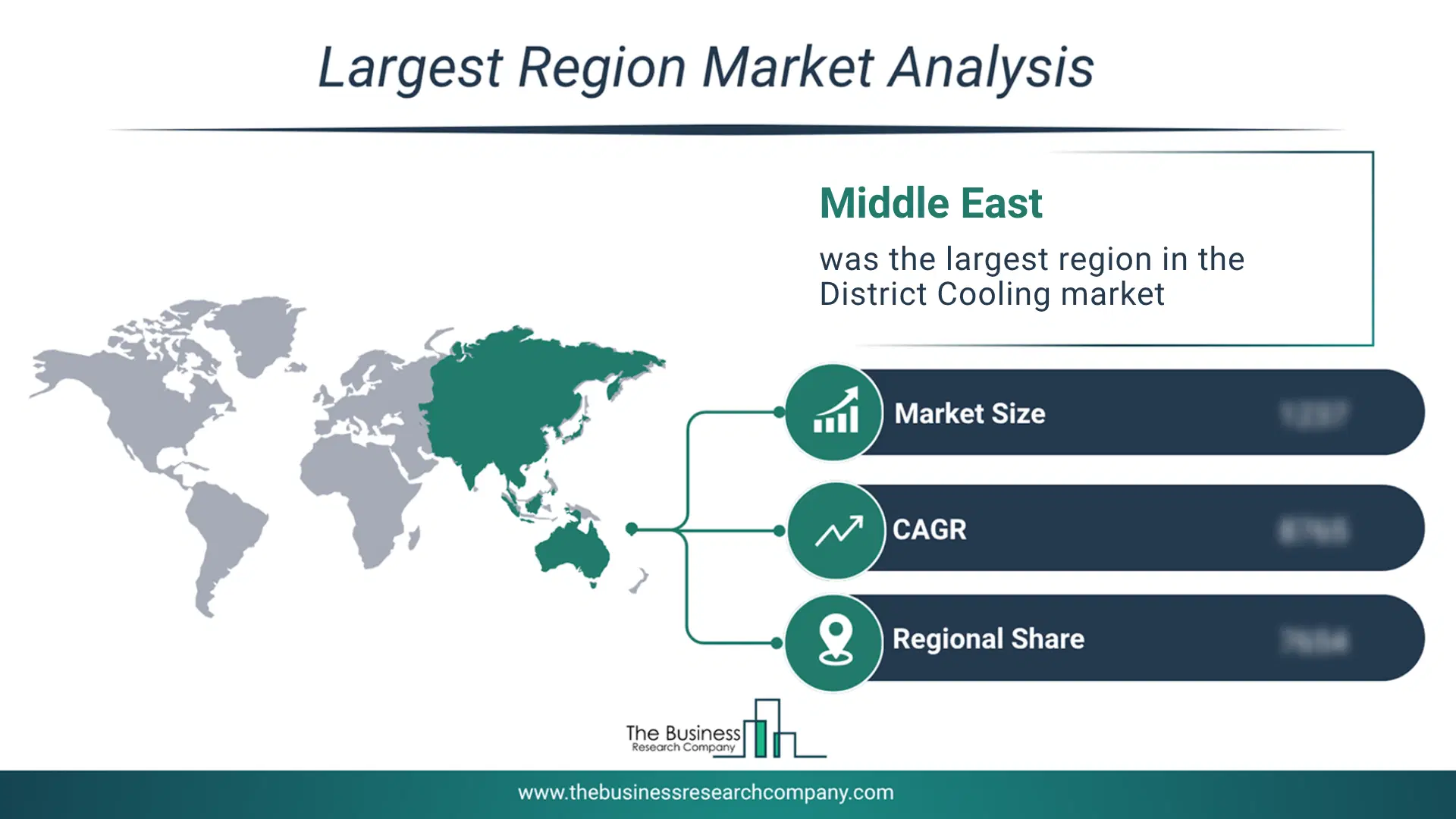
Regional Outlook
Middle East was the largest region in the district cooling market share in 2025. The regions covered in this market report are Asia-Pacific, South East Asia, Western Europe, Eastern Europe, North America, South America, Middle East, Africa. The countries covered in this market report are Australia, Brazil, China, France, Germany, India, Indonesia, Japan, Taiwan, Russia, South Korea, UK, USA, Canada, Italy, SpainWhat Defines the District Cooling Market?
The district cooling market consists of sales of single-effect absorption chillers, double-effect absorption chillers, and direct-fired absorption chillers. Values in this market are ‘factory gate’ values, that is the value of goods sold by the manufacturers or creators of the goods, whether to other entities (including downstream manufacturers, wholesalers, distributors and retailers) or directly to end customers. The value of goods in this market includes related services sold by the creators of the goods.How is Market Value Defined and Measured?
The market value is defined as the revenues that enterprises gain from the sale of goods and/or services within the specified market and geography through sales, grants, or donations in terms of the currency (in USD unless otherwise specified). The revenues for a specified geography are consumption values that are revenues generated by organizations in the specified geography within the market, irrespective of where they are produced. It does not include revenues from resales along the supply chain, either further along the supply chain or as part of other products.
This chart presents market attractiveness based on a quantitative evaluation of growth, competition, strategic alignment, and risk, offering a clear view of opportunity areas for decision-making. This chart is for illustrative purposes; the full report contains the complete analysis.

This chart highlights the Total Addressable Market (TAM) by estimating the maximum revenue opportunity using an assumption-driven approach, supporting strategic planning and opportunity sizing across markets. The chart is illustrative; the full report provides a more comprehensive analysis.
What Key Data and Analysis Are Included in the District Cooling Market Report 2026?
The district cooling market research report is one of a series of new reports from The Business Research Company that provides market statistics, including industry global market size, regional shares, competitors with the market share, detailed market segments, market trends and opportunities, and any further data you may need to thrive in the district cooling industry. The market research report delivers a complete perspective of everything you need, with an in-depth analysis of the current and future state of the industry.District Cooling Market Report Forecast Analysis
| Report Attribute | Details |
|---|---|
| Market Size Value In 2026 | $22.13 billion |
| Revenue Forecast In 2030 | $34.23 billion |
| Growth Rate | CAGR of 11.6% from 2026 to 2030 |
| Base Year For Estimation | 2025 |
| Actual Estimates/Historical Data | 2020-2025 |
| Forecast Period | 2026 - 2030 - 2030 |
| Market Representation | Revenue in USD Billion and CAGR from 2026 to 2030 |
| Segments Covered | Production Technique, Function, Application |
| Regional Scope | Asia-Pacific, Western Europe, Eastern Europe, North America, South America, Middle East, Africa |
| Country Scope | The countries covered in the report are Australia, Brazil, China, France, Germany, India, Indonesia, Japan, Taiwan, Russia, South Korea, UK, USA, Canada, Italy, Spain. |
| Key Companies Profiled | Emirates District Cooling LLC, National Central Cooling Company PJSC, Emirates Central Cooling Systems Corp., Qatar District Cooling Company, Marafeq Qatar, Keppel DHCS Pte Ltd., Fortum Corporation, ENGIE SA, Veolia Environnement SA, Wien Energie Vertrieb GmbH & Co. KG, Stockholm Exergi AB, Vattenfall AB, NRG Energy Inc., Vicinity Energy LLC, Dubai Aerospace Enterprise Utilities Division, Palm District Cooling LLC, Tabreed India Pvt Ltd, Muscat District Cooling Company SAOC, Bahrain District Cooling Company BSC, Saudi Tabreed Cooling Company, National District Cooling Company Egypt |
| Customization Scope | Request for Customization |
| Pricing And Purchase Options | Explore Purchase Options |