

Congenital Heart Defect Devices Market Report 2026
Global Outlook – By Device Type (Catheters, Pacemakers, Single-Chamber Pacemakers, Dual-Chamber Pacemakers, Biventricular Pacemakers, Leadless Pacemakers, Implantable Cardioverter Defibrillators, Biventricular Devices, Implanted Cardiac Loop Recorders, Other Device Types), By Defect Type (Atrial Septal Defect, Ventricular Septal Defect, Atrioventricular Septal Defect, Tricuspid Atresia, Truncus Arteriosus, Other Defect Types), By End user (Hospitals, Specialty Clinics, Academic And Research Institute, Other End Users) – Market Size, Trends, Strategies, and Forecast to 2030
Congenital Heart Defect Devices Market Overview
• Congenital Heart Defect Devices market size has reached to $3.11 billion in 2025 • Expected to grow to $4.45 billion in 2030 at a compound annual growth rate (CAGR) of 7.4% • Growth Driver: Rising Adoption of Minimally Invasive Procedures Boosts Congenital Heart Defect Device Sales • Market Trend: Strategic Partnerships Driving Innovation in the Congenital Heart Defect Devices Market • North America was the largest region in 2025 and Asia-Pacific is the fastest growing region.What Is Covered Under Congenital Heart Defect Devices Market?
Congenital heart defect devices refer to specialized medical instruments and implants designed to correct or manage heart abnormalities present at birth. They are used for diagnosing, treating, and supporting the heart's function in individuals with congenital heart defects, helping restore normal blood flow and improve cardiac function. The main device types of congenital heart defect devices are catheters, pacemakers, single-chamber pacemakers, dual-chamber pacemakers, biventricular pacemakers, leadless pacemakers, implantable cardioverter defibrillators, biventricular devices, implanted cardiac loop recorders, and others. Catheters are medical devices designed as thin, flexible tubes that are inserted into the body to perform various functions, including diagnostic, therapeutic, or monitoring purposes. The various defect types include ventricular septal defect, atrioventricular septal defect, tricuspid atresia, truncus arteriosus, and others, and are used by several end users such as hospitals, specialty clinics, academic and research institutes, and others.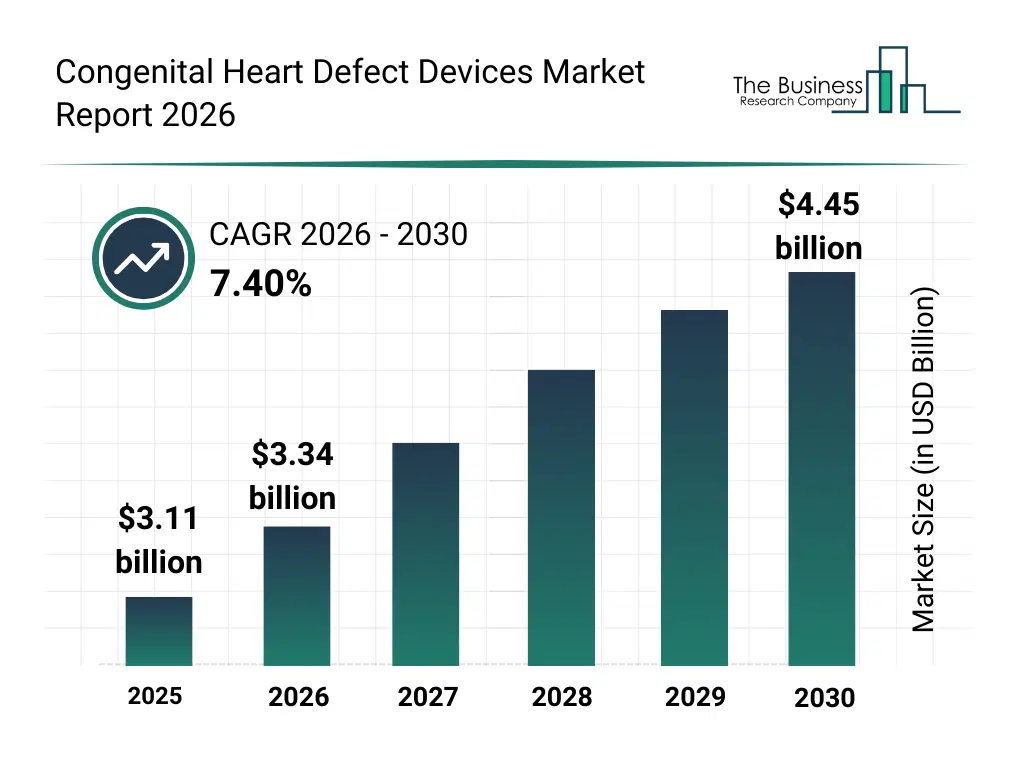
What Is The Congenital Heart Defect Devices Market Size and Share 2026?
The congenital heart defect devices market size has grown strongly in recent years. It will grow from $3.11 billion in 2025 to $3.34 billion in 2026 at a compound annual growth rate (CAGR) of 7.4%. The growth in the historic period can be attributed to rising incidence of congenital heart defects, advancements in pediatric cardiac surgery, increasing survival rates of congenital heart patients, expansion of specialized cardiac care centers, growing awareness of early congenital defect diagnosis.What Is The Congenital Heart Defect Devices Market Growth Forecast?
The congenital heart defect devices market size is expected to see strong growth in the next few years. It will grow to $4.45 billion in 2030 at a compound annual growth rate (CAGR) of 7.4%. The growth in the forecast period can be attributed to increasing focus on early diagnosis and intervention, rising demand for minimally invasive pediatric cardiac treatments, expanding access to advanced cardiac care in emerging markets, growing population of adults with congenital heart disease, continuous innovation in implantable cardiac devices. Major trends in the forecast period include rising adoption of minimally invasive congenital heart procedures, increasing use of transcatheter and implantable cardiac devices, growing focus on early-life and pediatric cardiac interventions, expansion of device-based therapies for complex heart defects, increasing demand for long-term cardiac monitoring and support devices.
Global Congenital Heart Defect Devices Market Segmentation
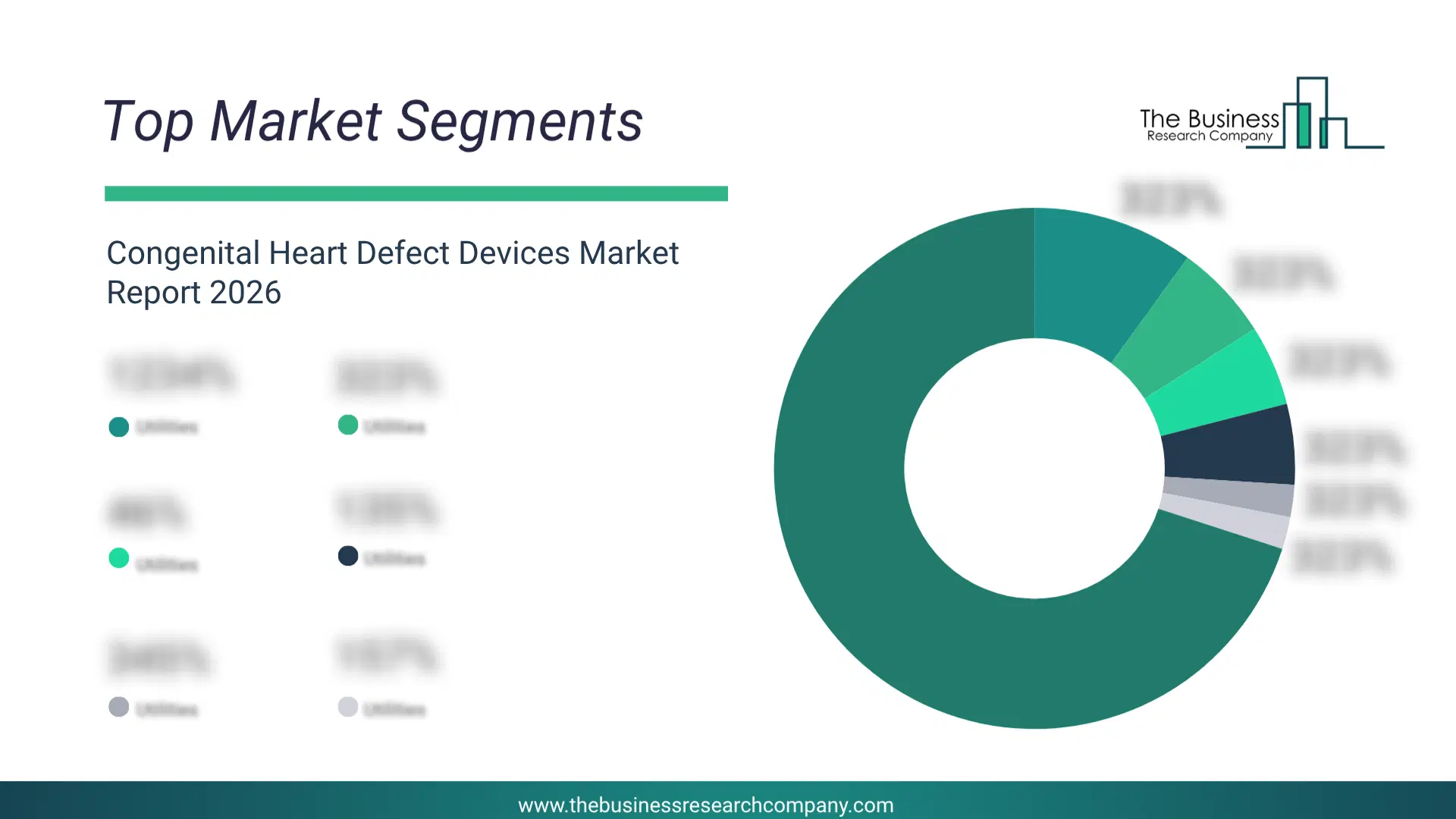
1) By Device Type: Catheters, Pacemakers, Single-Chamber Pacemakers, Dual-Chamber Pacemakers, Biventricular Pacemakers, Leadless Pacemakers, Implantable Cardioverter Defibrillators, Biventricular Devices, Implanted Cardiac Loop Recorders, Other Device Types 2) By Defect Type: Atrial Septal Defect, Ventricular Septal Defect, Atrioventricular Septal Defect, Tricuspid Atresia, Truncus Arteriosus, Other Defect Types 3) By End user: Hospitals, Specialty Clinics, Academic And Research Institute, Other End Users Subsegments: 1) By Catheters: Balloon Catheters, Diagnostic Catheters, Guiding Catheters 2) By Pacemakers: Single-Chamber Pacemakers, Dual-Chamber Pacemakers, Biventricular Pacemakers, Leadless Pacemakers 3) By Implantable Cardioverter Defibrillators: Single-Chamber Icds, Dual-Chamber Icds, Subcutaneous Icds 4) By Biventricular Devices: Crt-P (Cardiac Resynchronization Therapy Pacemakers), Crt-D (Cardiac Resynchronization Therapy Defibrillators) 5) By Implanted Cardiac Loop Recorders: Traditional Implantable Loop Recorders, Subcutaneous Implantable Loop Recorders 6) By Other Device Types: Transcatheter Heart Valves, Ventricular Assist Devices (VADS)What Is The Driver Of The Congenital Heart Defect Devices Market?
The increasing number of minimally invasive procedures is expected to propel the growth of the congenital heart defect device market. Minimally invasive procedures involve performing surgical interventions with small incisions or through natural body openings, often using specialized tools and techniques to minimize trauma and enhance recovery. The increase in minimally invasive procedures is due to advancements in technology, patient preference for less invasive treatments, improved surgical techniques, and the benefits of reduced recovery times and complications. Congenital heart defect devices are used for minimally invasive procedures by facilitating the diagnosis, treatment, and management of heart abnormalities through techniques that involve smaller incisions or catheter-based approaches. For instance, in June 2024, according to the American Society of Plastic Surgeons, a US-based organization, in 2023, plastic surgeries increased by 5%, while minimally invasive procedures rose by 7% compared to the previous year. Therefore, the increasing prevalence of minimally invasive procedures is driving the market for congenital heart defect devices industry.Key Players In The Global Congenital Heart Defect Devices Market
Major companies operating in the congenital heart defect devices market are Johnson & Johnson, Abbott Laboratories, Medtronic plc, Boston Scientific Corporation, W L Gore & Associates Inc, Lepu Medical Technology Beijing Co Ltd, MicroPort Scientific Corporation, Berlin Heart GmbH, Syncardia Systems LLC, Occlutech Holding AG, Sahajanand Medical Technologies Pvt Ltd, Xeltis AG, Procyrion Inc, Heartstitch Inc, Cardia Inc, OSYPKA Medical GmbH, On-X Life Technologies Inc, Ventracor Limited, HemoFlow Technologies, NuPulseCV Inc
This chart is for illustrative purposes; the full report includes a detailed competitor analysis and comprehensive overview of the top 10 companies in the market.
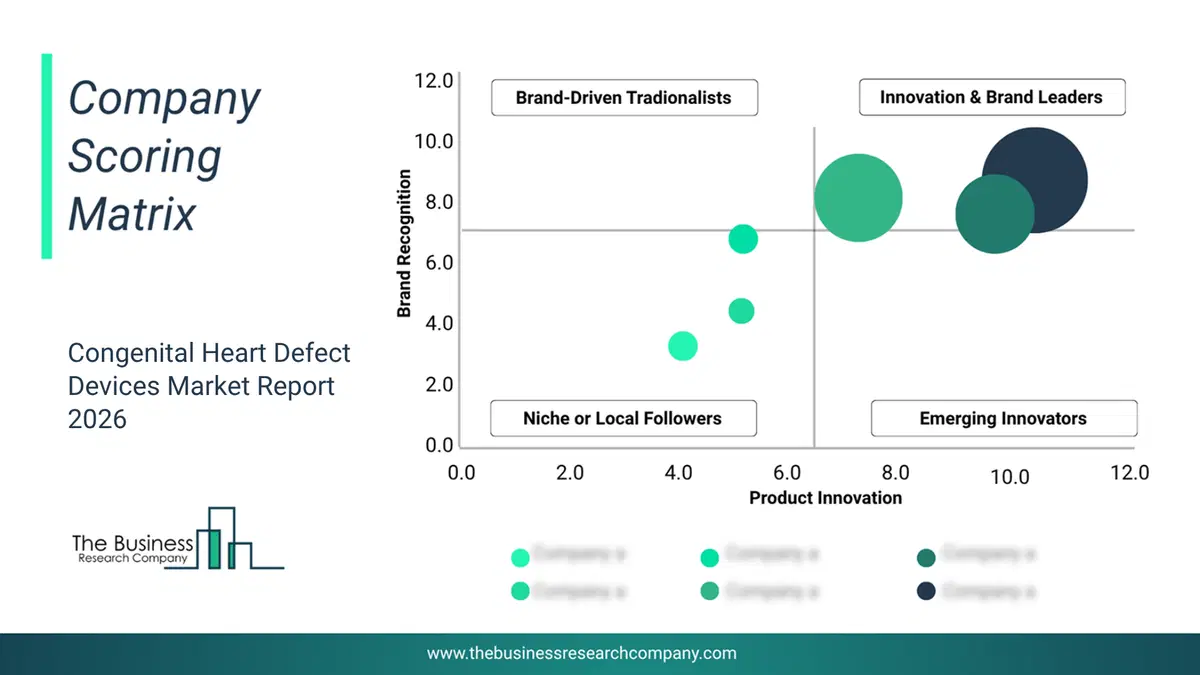
This chart maps companies by product innovation and brand strength, with bubble size indicating relative revenue, helping identify market leaders, challengers, and niche players. This is an illustrative chart; the full report provides a complete and accurate competitive analysis.
Global Congenital Heart Defect Devices Market Trends and Insights
Major companies operating in the congenital heart defect devices market are adopting strategic partnerships approach to develop innovative congenital heart defect devices. Strategic partnerships support companies in the congenital heart defect devices sector by pooling resources and expertise, boosting research and development efforts, broadening market access, and speeding up commercialization. This collaboration ultimately fosters innovation and drives growth within the industry. For instance, in May 2024, SMT (Sahajanand Medical Technologies Pvt Ltd), an India-based manufacturing company, partnered with HeartX, an India-based MedTech firm to enhance patient care within the cardiovascular sector. With this partnership, Sahajanand Medical Technologies (SMT) strengthens its position in the congenital heart defect (CHD) space by integrating HeartX's innovative solutions, such as the JOVE VB Stent. This strategic alliance enables SMT to offer advanced CHD devices that enhance treatment efficacy, simplify procedures, and improve patient outcomes.What Are Latest Mergers And Acquisitions In The Congenital Heart Defect Devices Market?
In June 2023, Translumina Therapeutics LLP, an India-based manufacturer of cardiovascular devices, acquired Wellinq Group Company for an undisclosed amount. With this acquisition, Translumina aims to expand its cardiovascular and endovascular solutions portfolio and enhance its market presence in the Netherlands by integrating Blue Medical Devices' innovative technologies and expertise. Wellinq Group Company is a Netherlands-based company that develops and manufactures products for treating congenital heart defects.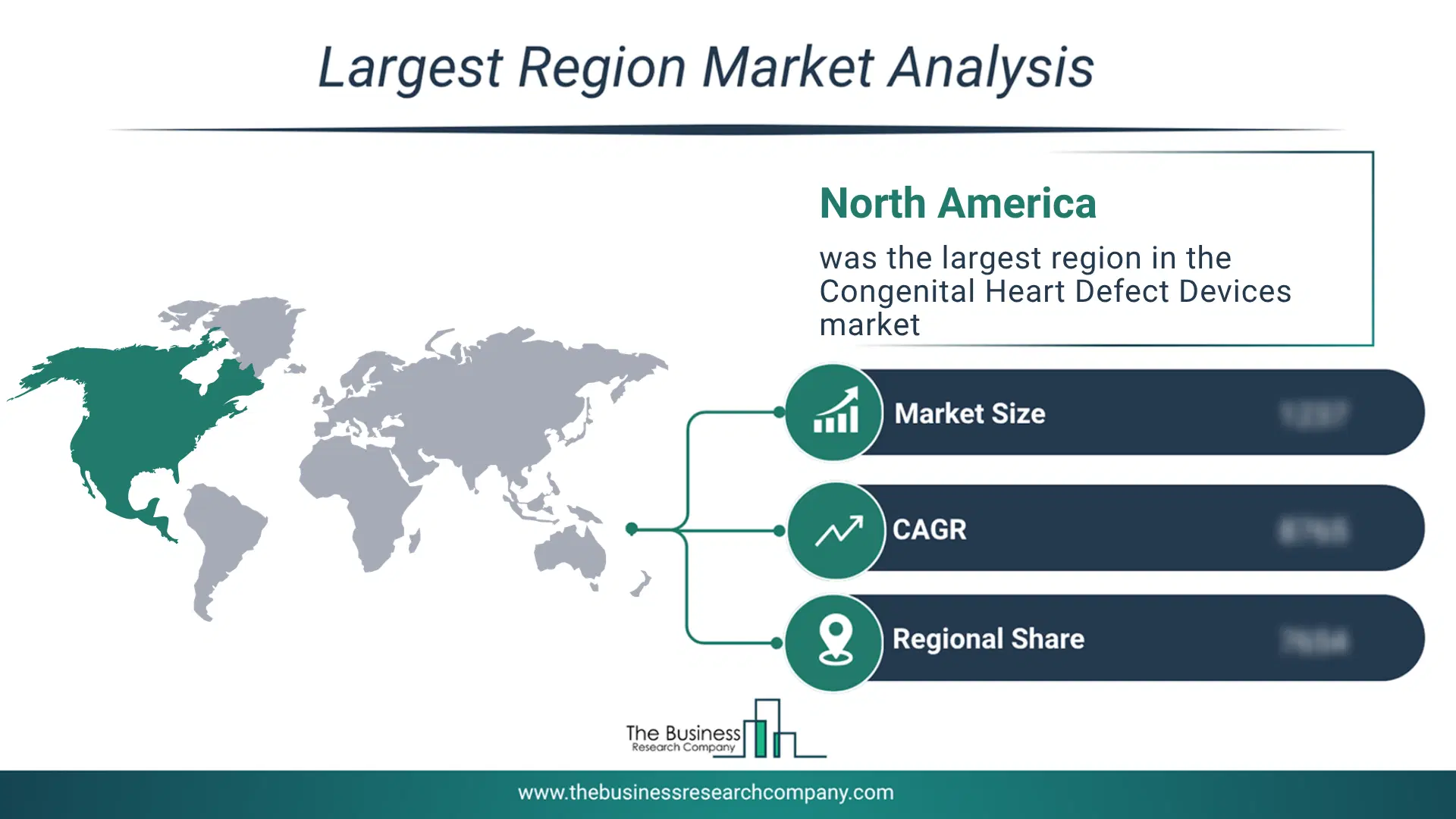
Regional Outlook
North America was the largest region in the congenital heart defect devices market in 2025. Asia-Pacific is expected to be the fastest-growing region in the forecast period. The regions covered in this market report are Asia-Pacific, South East Asia, Western Europe, Eastern Europe, North America, South America, Middle East, Africa. The countries covered in this market report are Australia, Brazil, China, France, Germany, India, Indonesia, Japan, Taiwan, Russia, South Korea, UK, USA, Canada, Italy, SpainWhat Defines the Congenital Heart Defect Devices Market?
The congenital heart defect devices market consists of sales of septal occluders, heart valves, patent ductus arteriosus (PDA) devices, and bioprosthetic devices. Values in this market are ‘factory gate’ values, that is the value of goods sold by the manufacturers or creators of the goods, whether to other entities (including downstream manufacturers, wholesalers, distributors and retailers) or directly to end customers. The value of goods in this market includes related services sold by the creators of the goods.How is Market Value Defined and Measured?
The market value is defined as the revenues that enterprises gain from the sale of goods and/or services within the specified market and geography through sales, grants, or donations in terms of the currency (in USD unless otherwise specified). The revenues for a specified geography are consumption values that are revenues generated by organizations in the specified geography within the market, irrespective of where they are produced. It does not include revenues from resales along the supply chain, either further along the supply chain or as part of other products.
This chart presents market attractiveness based on a quantitative evaluation of growth, competition, strategic alignment, and risk, offering a clear view of opportunity areas for decision-making. This chart is for illustrative purposes; the full report contains the complete analysis.

This chart highlights the Total Addressable Market (TAM) by estimating the maximum revenue opportunity using an assumption-driven approach, supporting strategic planning and opportunity sizing across markets. The chart is illustrative; the full report provides a more comprehensive analysis.
What Key Data and Analysis Are Included in the Congenital Heart Defect Devices Market Report 2026?
The congenital heart defect devices market research report is one of a series of new reports from The Business Research Company that provides market statistics, including industry global market size, regional shares, competitors with the market share, detailed market segments, market trends and opportunities, and any further data you may need to thrive in the congenital heart defect devices industry. The market research report delivers a complete perspective of everything you need, with an in-depth analysis of the current and future state of the industry.Congenital Heart Defect Devices Market Report Forecast Analysis
| Report Attribute | Details |
|---|---|
| Market Size Value In 2026 | $3.34 billion |
| Revenue Forecast In 2030 | $4.45 billion |
| Growth Rate | CAGR of 7.4% from 2026 to 2030 |
| Base Year For Estimation | 2025 |
| Actual Estimates/Historical Data | 2020-2025 |
| Forecast Period | 2026 - 2030 |
| Market Representation | Revenue in USD Billion and CAGR from 2026 to 2030 |
| Segments Covered | Device Type, Defect Type, End user |
| Regional Scope | Asia-Pacific, Western Europe, Eastern Europe, North America, South America, Middle East, Africa |
| Country Scope | The countries covered in the report are Australia, Brazil, China, France, Germany, India, Indonesia, Japan, Taiwan, Russia, South Korea, UK, USA, Canada, Italy, Spain. |
| Key Companies Profiled | Johnson & Johnson, Abbott Laboratories, Medtronic plc, Boston Scientific Corporation, W L Gore & Associates Inc, Lepu Medical Technology Beijing Co Ltd, MicroPort Scientific Corporation, Berlin Heart GmbH, Syncardia Systems LLC, Occlutech Holding AG, Sahajanand Medical Technologies Pvt Ltd, Xeltis AG, Procyrion Inc, Heartstitch Inc, Cardia Inc, OSYPKA Medical GmbH, On-X Life Technologies Inc, Ventracor Limited, HemoFlow Technologies, NuPulseCV Inc |
| Customization Scope | Request for Customization |
| Pricing And Purchase Options | Explore Purchase Options |