
Deep Brain Stimulation In Parkinson`s Disease Market Report 2026
Global Outlook – By Product Type (Implantable Pulse Generators (IPGs), Electrodes And Leads, External Programmers, Accessories And Consumables), By Technology (Conventional Deep Brain Stimulation (DBS) Systems, Closed Loop Deep Brain Stimulation (DBS) Systems, Wireless Deep Brain Stimulation (DBS) Systems), By Service Type (Pre-Surgical Evaluation Services, Surgical Implantation Services, Rehabilitation Support Services, Tele-Neurology Support Services, Training And Education Services), By Application (Tremor Management, Rigidity And Stiffness Management, Bradykinesia (Slow Movement) Management, Dyskinesia Management), By End-Users (Hospitals, Ambulatory Surgical Centres, Neurology Clinics) – Market Size, Trends, Strategies, and Forecast to 2030
Deep Brain Stimulation In Parkinson`s Disease Market Overview
• Deep Brain Stimulation In Parkinson`s Disease market size has reached to $3.27 billion in 2025 • Expected to grow to $4.49 billion in 2030 at a compound annual growth rate (CAGR) of 6.4% • Growth Driver: Rising Number Of Parkinson’s Disease Patients Fueling The Growth Of The Market Due To Increasing Need For Advanced Symptom Management Therapies • Market Trend: Integration Of Remote Programming Capabilities In Miniaturized Rechargeable Systems For Personalized Therapy Management • North America was the largest region in 2025 and Asia-Pacific is the fastest growing region.What Is Covered Under Deep Brain Stimulation In Parkinson`s Disease Market?
Deep brain stimulation in Parkinson’s disease is a medical procedure that uses implanted electrodes to send controlled electrical signals to specific areas of the brain. These signals help reduce motor symptoms such as tremors, stiffness, and slow movement by regulating abnormal neural activity. It is typically recommended when medications no longer provide sufficient symptom control and aims to improve the overall quality of life for patients. The main product types of deep brain stimulation in Parkinson’s disease are implantable pulse generators, electrodes and leads, external programmers, and accessories and consumables. Implantable pulse generators (IPGs) refer to surgically implanted devices that deliver controlled electrical impulses to targeted areas of the brain to regulate abnormal neural activity associated with Parkinson’s disease. The technologies such as conventional, closed-loop, and wireless deep brain stimulation systems, and are supported by services including pre-surgical evaluation, surgical implantation, device programming, patient monitoring, maintenance and follow-up, rehabilitation support, tele-neurology support, and training and education services. The applications such as tremor management, rigidity and stiffness, bradykinesia, and dyskinesia and the key end users such as hospitals, ambulatory surgical centers, and neurology clinics.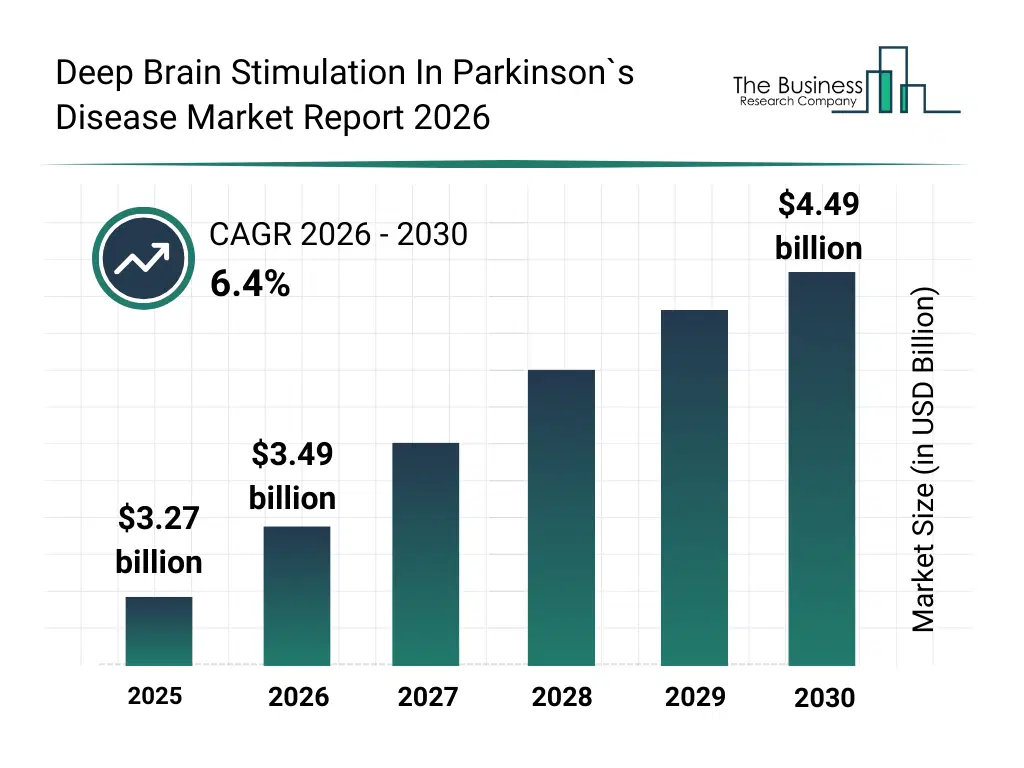
What Is The Deep Brain Stimulation In Parkinson`s Disease Market Size and Share 2026?
The deep brain stimulation in parkinson’s disease market size has grown strongly in recent years. It will grow from $3.27 billion in 2025 to $3.49 billion in 2026 at a compound annual growth rate (CAGR) of 6.7%. The growth in the historic period can be attributed to increasing prevalence of Parkinson’s disease, growing adoption of DBS devices, rising awareness of advanced neuromodulation therapies, expansion of neurosurgical infrastructure, and increasing healthcare spending.What Is The Deep Brain Stimulation In Parkinson`s Disease Market Growth Forecast?
The deep brain stimulation in parkinson’s disease market size is expected to see strong growth in the next few years. It will grow to $4.49 billion in 2030 at a compound annual growth rate (CAGR) of 6.4%. The growth in the forecast period can be attributed to rising demand for personalized neuromodulation therapies, growing investments in research and clinical trials, increasing access to tele-neurology services, expansion of reimbursement coverage, and rising adoption of MRI-compatible and rechargeable devices. Major trends in the forecast period include technological advancements in closed-loop and directional stimulation, innovations in rechargeable and long-life IPGs, developments in AI-assisted DBS programming, research and development in minimally invasive surgical techniques, and advancements in remote monitoring and telemedicine capabilities.
Global Deep Brain Stimulation In Parkinson`s Disease Market Segmentation
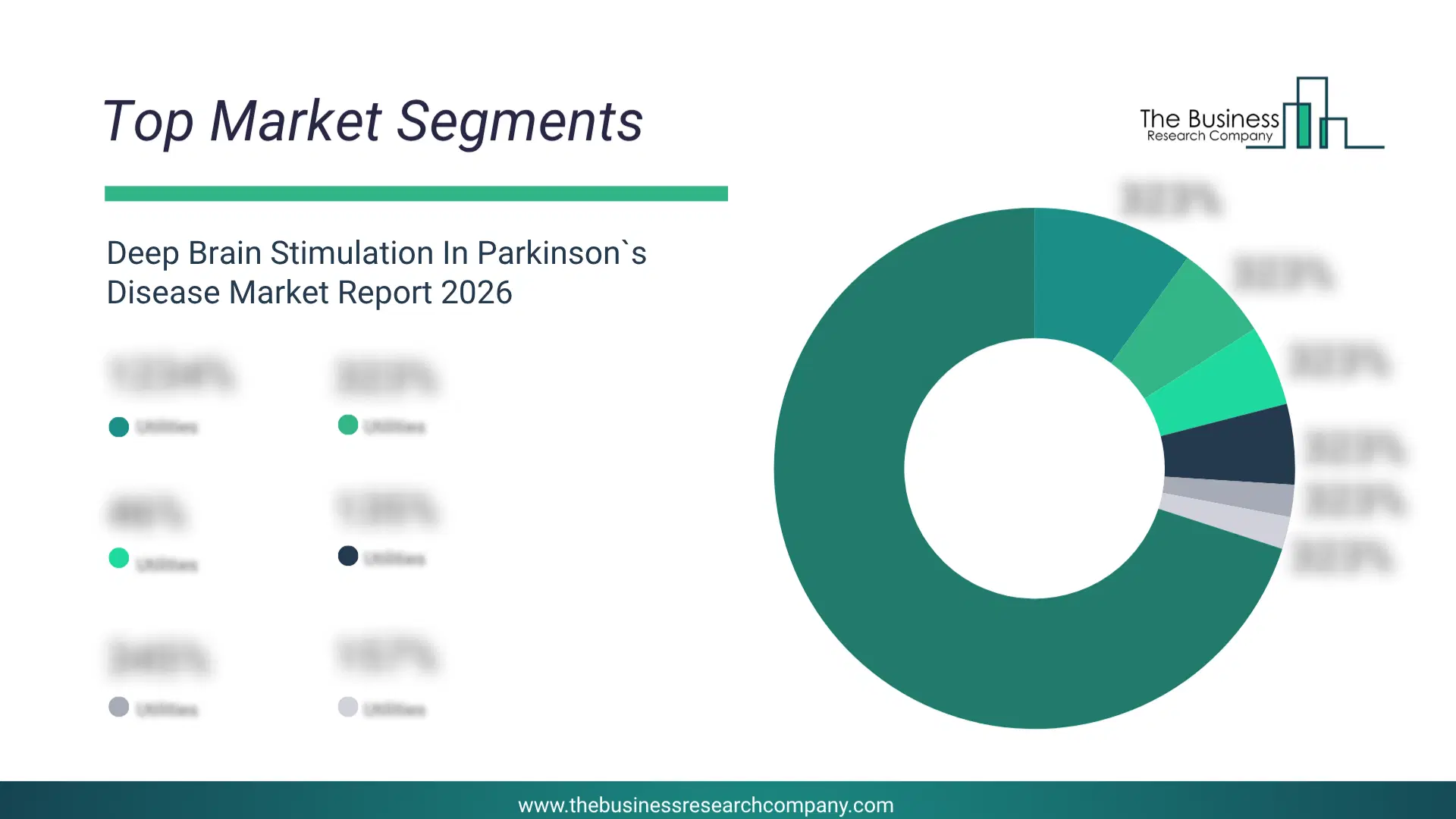
1) By Product Type: Implantable Pulse Generators (IPGs), Electrodes And Leads, External Programmers, Accessories And Consumables 2) By Technology: Conventional Deep Brain Stimulation (DBS) Systems, Closed Loop Deep Brain Stimulation (DBS) Systems, Wireless Deep Brain Stimulation (DBS) Systems 3) By Service Type: Pre-Surgical Evaluation Services, Surgical Implantation Services, Device Programming Services, Patient Monitoring Services, Maintenance And Follow-Up Services, Rehabilitation Support Services, Tele-Neurology Support Services, Training And Education Services 4) By Application: Tremor Management, Rigidity And Stiffness Management, Bradykinesia (Slow Movement) Management, Dyskinesia Management 5) By End-Users: Hospitals, Ambulatory Surgical Centres, Neurology Clinics Subsegments: 1) By Implantable Pulse Generators (IPGs): Rechargeable Implantable Pulse Generators, Non-Rechargeable Implantable Pulse Generators, Directional Implantable Pulse Generators 2) By Electrodes And Leads: Cylindrical Electrodes, Directional Electrodes, Stimulation Leads 3) By External Programmers: Handheld External Programmers, Desktop External Programmers, Wireless External Programmers 4) By Accessories And Consumables: Extension Cables, Battery Chargers, Surgical Tool KitsWhat Are The Drivers Of The Deep Brain Stimulation In Parkinson`s Disease Market?
The rising number of Parkinson’s disease patients is expected to propel the growth of the deep brain stimulation in Parkinson’s disease market going forward. Parkinson’s disease is a progressive neurological disorder that affects movement, causing symptoms such as tremors, stiffness, slowness of movement, and impaired balance due to the degeneration of dopamine-producing neurons in the brain. The rise in the number of Parkinson’s disease patients is due to the aging population, as the risk of developing Parkinson’s disease increases significantly with age. Deep brain stimulation helps manage Parkinson’s disease by delivering targeted electrical impulses to specific brain regions, reducing motor symptoms, improving quality of life, and lowering dependence on long-term medication. For instance, in 2025, according to the Parkinson’s Foundation, a US-based non-profit organization, an estimated 1.1 million people in the United States are living with Parkinson’s disease, expected to rise to 1.2 million by 2030, with nearly 90,000 new diagnoses each year and more than 10 million people affected worldwide. Therefore, the rising number of Parkinson’s disease patients is driving the growth of the deep brain stimulation in Parkinson’s disease market. The rising healthcare expenditure is expected to propel the growth of the deep brain stimulation in Parkinson’s disease market going forward. Healthcare expenditure refers to the total amount of financial resources spent on healthcare services, including medical treatments, hospital care, medications, and public health initiatives, by governments, businesses, and individuals. The increasing demand for healthcare expenditure is due to the rising prevalence of chronic diseases, which require long-term and costly treatments. Rising healthcare expenditure supports deep brain stimulation in Parkinson’s disease by funding advanced surgical procedures, equipment, and follow-up care. It improves patient outcomes by increasing access to this effective therapy, which alleviates motor symptoms and enhances quality of life. For instance, in May 2024, according to the Office for National Statistics, a UK-based government department, total healthcare expenditure saw a 5.6% increase in nominal terms in 2023, an increase of 0.9% growth compared to 2022. Therefore, the rising healthcare expenditure is driving the growth of the deep brain stimulation in Parkinson’s disease market.Key Players In The Global Deep Brain Stimulation In Parkinson`s Disease Market
Major companies operating in the deep brain stimulation in parkinson`s disease market are Abbott Laboratories, Medtronic plc, Boston Scientific Corporation, Mayo Foundation for Medical Education and Research, Cleveland Clinic, Renishaw plc, Neuralink Corp., NeuroPace Inc., PINS Medical Co. Ltd., Neurosoft Ltd., BrainsWay Ltd., Medscape, Inomed Medizintechnik GmbH, SceneRay Corporation Ltd., Neuroelectrics Barcelona S.L., Soterix Medical Inc., CorTec GmbH, Aleva Neurotherapeutics SA, NeuroSigma Inc., BrainGate Company Inc.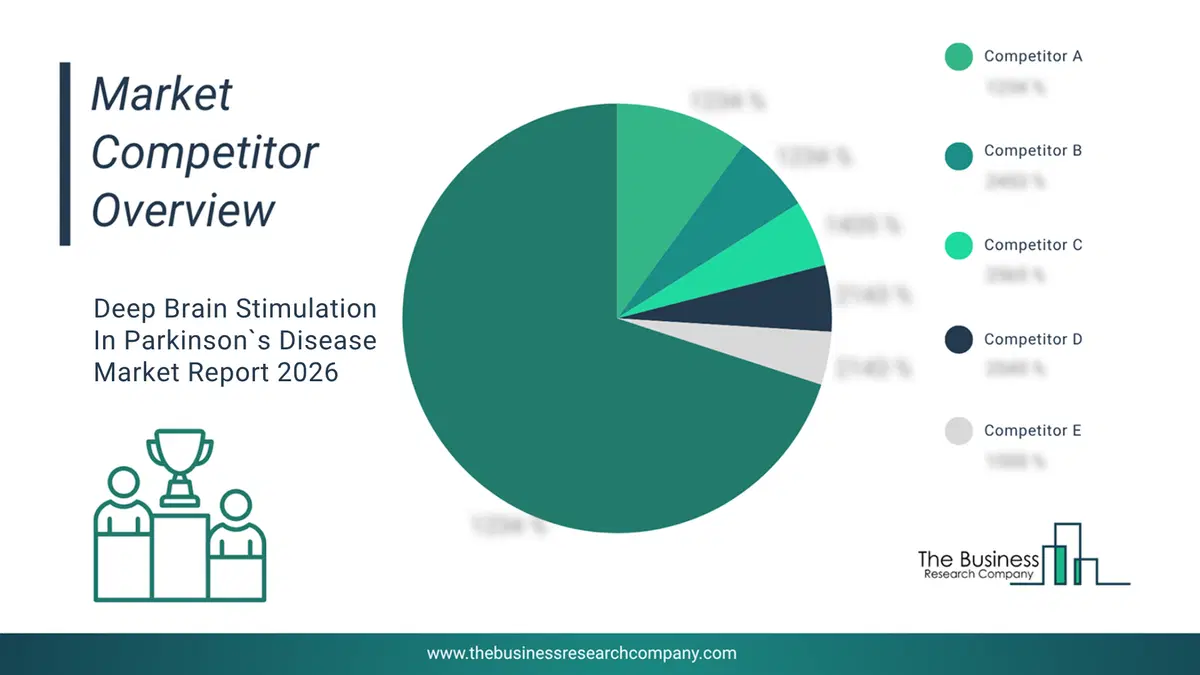
This chart is for illustrative purposes; the full report includes a detailed competitor analysis and comprehensive overview of the top 10 companies in the market.
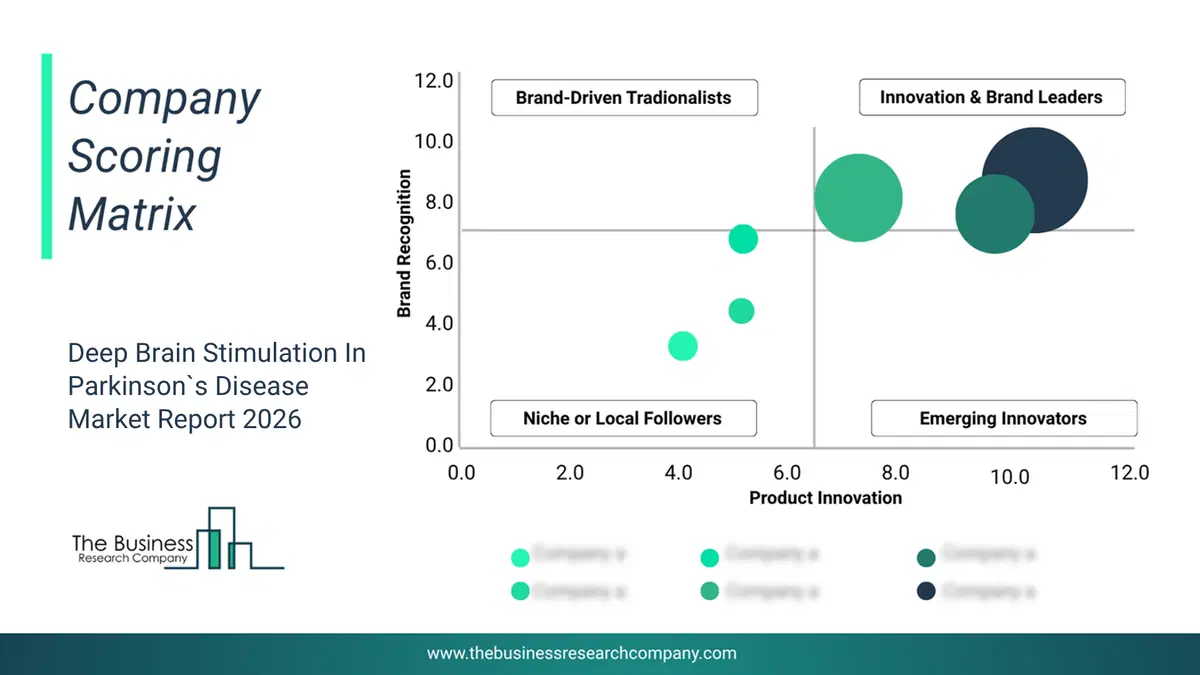
This chart maps companies by product innovation and brand strength, with bubble size indicating relative revenue, helping identify market leaders, challengers, and niche players. This is an illustrative chart; the full report provides a complete and accurate competitive analysis.
Global Deep Brain Stimulation In Parkinson`s Disease Market Trends and Insights
Major companies operating in the deep brain stimulation in Parkinson's disease market are focusing on developing advanced products, such as miniaturizing rechargeable implantable pulse generators and integrating remote programming platforms, to enhance patient comfort and care accessibility. Miniaturizing rechargeable implantable pulse generators refers to designing these battery-powered neurostimulation devices in much smaller, thinner form factors so they can be implanted less invasively while still delivering reliable therapeutic electrical pulses over long periods. For instance, in January 2024, Abbott Laboratories, a US-based multinational medical devices and healthcare company, launched its Liberta RC DBS system. The platform is a miniaturized rechargeable deep brain stimulation system with remote programming capabilities, designed to treat people living with movement disorders such as Parkinson's disease and essential tremor. The solution also provides the longest recharge interval of any FDA-approved DBS system, requiring only 10 recharge sessions a year for most people, and utilizes the NeuroSphere Virtual Clinic to enable patients to communicate with their doctors and receive treatment adjustments from the comfort of their homes.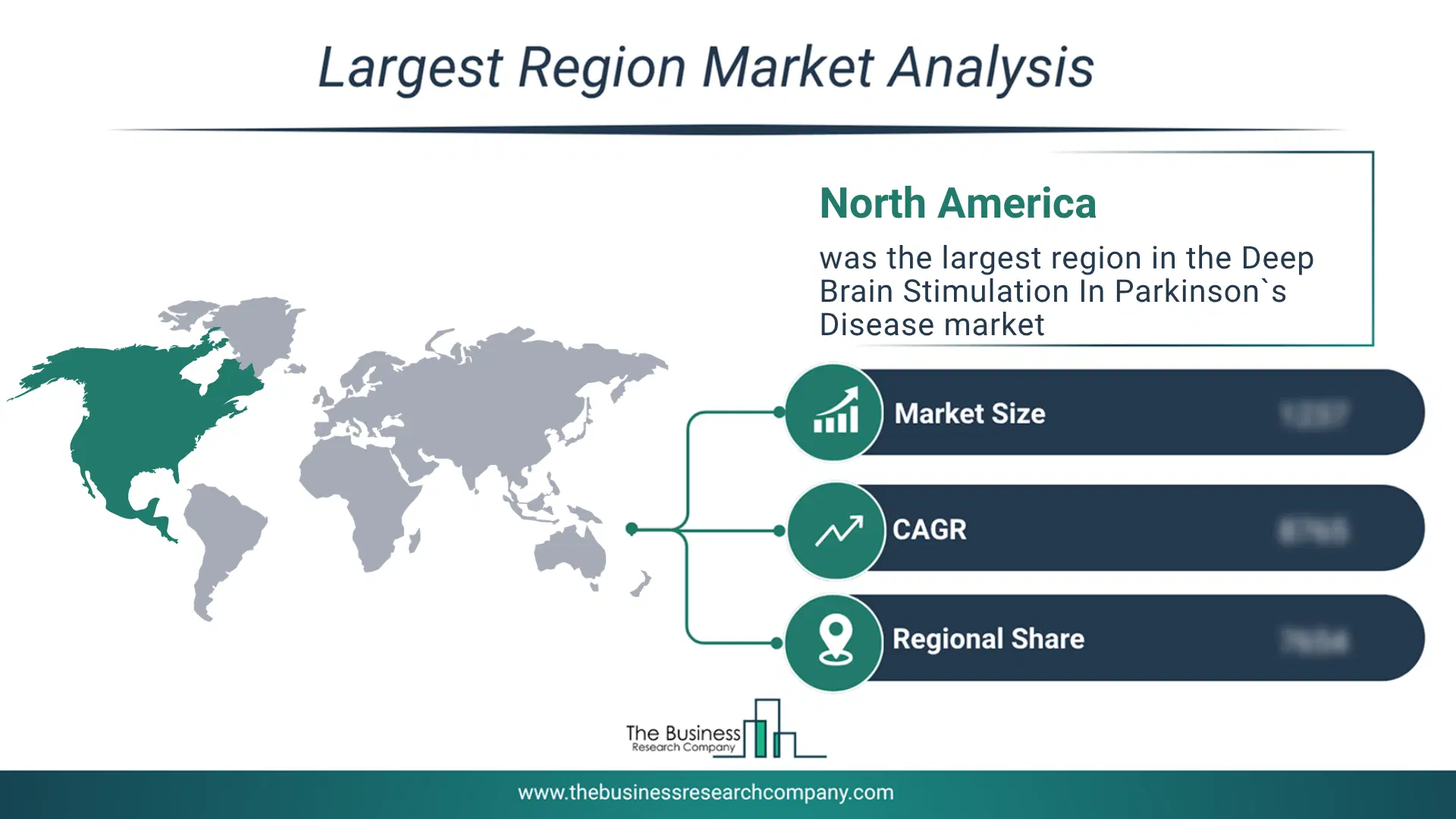
Regional Insights
North America was the largest region in the deep brain stimulation in parkinson’s disease market in 2025. Asia-Pacific is expected to be the fastest-growing region in the forecast period. The regions covered in the deep brain stimulation in parkinson`s disease market report are Asia-Pacific, South East Asia, Western Europe, Eastern Europe, North America, South America, Middle East, Africa. The countries covered in the deep brain stimulation in parkinson`s disease market report are Australia, Brazil, China, France, Germany, India, Indonesia, Japan, Taiwan, Russia, South Korea, UK, USA, Canada, Italy, Spain.What Defines the Deep Brain Stimulation In Parkinson`s Disease Market?
The deep brain stimulation in parkinson’s disease market consists of revenues earned by entities by providing services such as neurosurgical implantation procedures, preoperative patient assessment services, device programming and calibration services, postoperative monitoring and follow-up care, and long-term therapy management services. The market value includes the value of related goods sold by the service provider or included within the service offering. The deep brain stimulation in parkinson’s disease market also includes sales of implantable neurostimulators, intracranial electrodes, extension leads, external programmers, and neurostimulation system accessories. Values in this market are ‘factory gate’ values, that is, the value of goods sold by the manufacturers or creators of the goods, whether to other entities (including downstream manufacturers, wholesalers, distributors, and retailers) or directly to end customers. The value of goods in this market includes related services sold by the creators of the goods.How is Market Value Defined and Measured?
The market value is defined as the revenues that enterprises gain from the sale of goods and/or services within the specified market and geography through sales, grants, or donations in terms of the currency (in USD unless otherwise specified). The revenues for a specified geography are consumption values that are revenues generated by organizations in the specified geography within the market, irrespective of where they are produced. It does not include revenues from resales along the supply chain, either further along the supply chain or as part of other products.
This chart presents market attractiveness based on a quantitative evaluation of growth, competition, strategic alignment, and risk, offering a clear view of opportunity areas for decision-making. This chart is for illustrative purposes; the full report contains the complete analysis.

This chart highlights the Total Addressable Market (TAM) by estimating the maximum revenue opportunity using an assumption-driven approach, supporting strategic planning and opportunity sizing across markets. The chart is illustrative; the full report provides a more comprehensive analysis.
What Key Data and Analysis Are Included in the Deep Brain Stimulation In Parkinson`s Disease Market Report 2026?
The deep brain stimulation in parkinson`s disease market research report is one of a series of new reports from The Business Research Company that provides market statistics, including industry global market size, regional shares, competitors with the market share, detailed market segments, market trends and opportunities, and any further data you may need to thrive in the deep brain stimulation in parkinson`s disease industry. The market research report delivers a complete perspective of everything you need, with an in-depth analysis of the current and future state of the industry.Deep Brain Stimulation In Parkinson`s Disease Market Report Forecast Analysis
| Report Attribute | Details |
|---|---|
| Market Size Value In 2026 | $3.49 billion |
| Revenue Forecast In 2030 | $4.49 billion |
| Growth Rate | CAGR of 6.4% from 2026 to 2030 |
| Base Year For Estimation | 2025 |
| Actual Estimates/Historical Data | 2020-2025 |
| Forecast Period | 2026 - 2030 |
| Market Representation | Revenue in USD Billion and CAGR from 2026 to 2030 |
| Segments Covered | Product Type, Technology, Service Type, Application, End-Users |
| Regional Scope | Asia-Pacific, Western Europe, Eastern Europe, North America, South America, Middle East, Africa |
| Country Scope | The countries covered in the report are Australia, Brazil, China, France, Germany, India, Indonesia, Japan, Taiwan, Russia, South Korea, UK, USA, Canada, Italy, Spain. |
| Key Companies Profiled | Abbott Laboratories, Medtronic plc, Boston Scientific Corporation, Mayo Foundation for Medical Education and Research, Cleveland Clinic, Renishaw plc, Neuralink Corp., NeuroPace Inc., PINS Medical Co. Ltd., Neurosoft Ltd., BrainsWay Ltd., Medscape, Inomed Medizintechnik GmbH, SceneRay Corporation Ltd., Neuroelectrics Barcelona S.L., Soterix Medical Inc., CorTec GmbH, Aleva Neurotherapeutics SA, NeuroSigma Inc., BrainGate Company Inc. |
| Customization Scope | Request for Customization |
| Pricing And Purchase Options | Explore Purchase Options |