

Deoxyribonucleic Acid (DNA) Read, Write And Edit Market Report 2026
Global Outlook – By Types (Kits And Reagents, Cell Line Engineering, Animal Models, Services), By Technology (Clustered Regularly Interspaced Short Palindromic Repeats (CRISPR), Transcription Activator-Like Effector Nucleases (Talen), Zinc Finger Nucleases, Other Technologies), By Delivery Mode (Viral Vectors, Non-Viral Vectors, Electroporation, Microinjection), By Application (Gene Therapy, Diagnostics, Biotechnology, Agricultural, Synthetic Biology), By End Users (Pharmaceutical And Biotechnology Companies, Academic And Research Institutes, Clinical Research Organizations) - Market Size, Trends, Strategies, and Forecast to 2030
Deoxyribonucleic Acid (DNA) Read, Write And Edit Market Overview
• Deoxyribonucleic Acid (DNA) Read, Write And Edit market size has reached to $10.18 billion in 2025 • Expected to grow to $22.58 billion in 2030 at a compound annual growth rate (CAGR) of 17.2% • Growth Driver: Increasing Prevalence Of Genetic Disorders Fueling The Growth Of The Market Due To Rising Parental Age And Mutation Risks • Market Trend: Innovations In DNA Read, Write, And Edit Technologies • North America was the largest region in 2025 and Asia-Pacific is the fastest growing region.What Is Covered Under Deoxyribonucleic Acid (DNA) Read, Write And Edit Market?
Deoxyribonucleic acid (DNA) read, write, and edit refers to the set of techniques used to sequence (read) genetic information, synthesize (write) new deoxyribonucleic acid (DNA) strands, and modify (edit) existing genetic sequences. The purpose of these processes is to understand the genetic code, create synthetic genes, and make precise genetic modifications for research, medicine, and biotechnology. The main types of deoxyribonucleic acid (DNA) read, write, and edit are kits and reagents, cell line engineering, animal models, and services. Kits and reagents are pre-packaged materials and chemical substances used to perform specific laboratory tests, experiments, or procedures in research, diagnostics, and biotechnology. They use various technologies such as clustered regularly interspaced short palindromic repeats (CRISPR), transcription activator-like effector nucleases (TALEN), zinc finger nucleases, and others, with different delivery modes including viral vectors, non-viral vectors, electroporation, and microinjection. The applications include gene therapy, diagnostics, biotechnology, agriculture, and synthetic biology, with key end users being pharmaceutical and biotechnology companies, academic and research institutes, and clinical research organizations.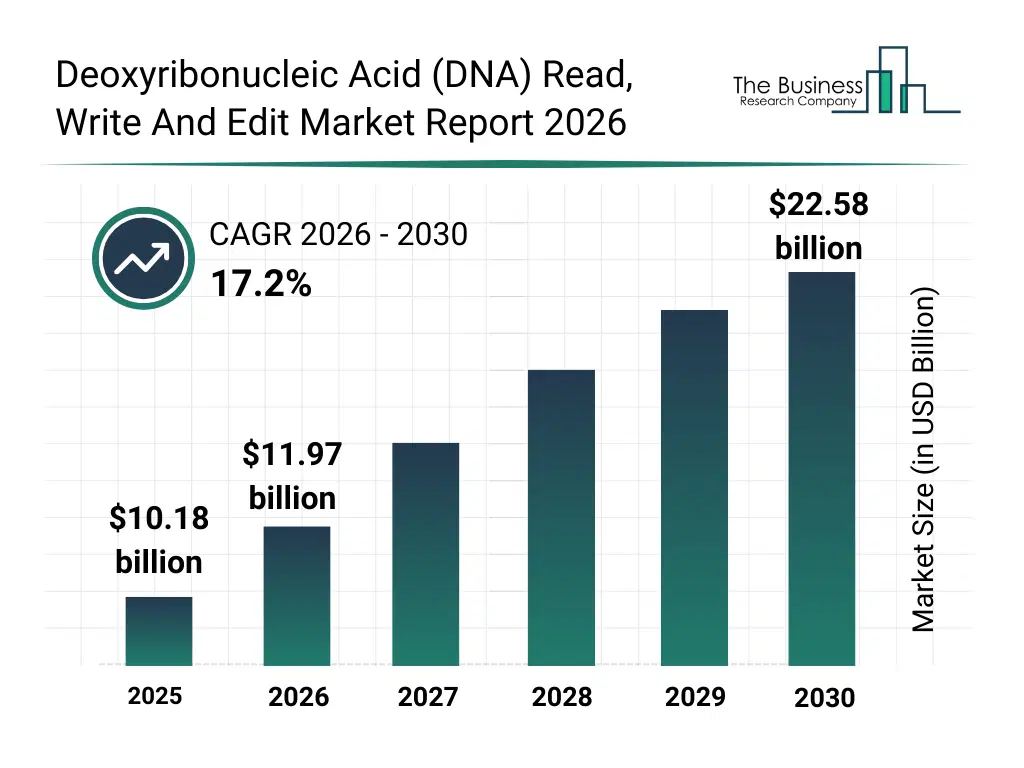
What Is The Deoxyribonucleic Acid (DNA) Read, Write And Edit Market Size and Share 2026?
The deoxyribonucleic acid (dna) read, write and edit market size has grown rapidly in recent years. It will grow from $10.18 billion in 2025 to $11.97 billion in 2026 at a compound annual growth rate (CAGR) of 17.5%. The growth in the historic period can be attributed to advancements in next-generation sequencing technologies, expansion of academic genomics research, increasing availability of gene editing tools, growth in biotechnology funding, early adoption of CRISPR-based methods.What Is The Deoxyribonucleic Acid (DNA) Read, Write And Edit Market Growth Forecast?
The deoxyribonucleic acid (dna) read, write and edit market size is expected to see rapid growth in the next few years. It will grow to $22.58 billion in 2030 at a compound annual growth rate (CAGR) of 17.2%. The growth in the forecast period can be attributed to increasing clinical adoption of gene therapies, rising demand for synthetic biology solutions, expansion of agricultural and industrial genomics applications, growing investment in genomic data analytics, increasing regulatory approvals for gene editing technologies. Major trends in the forecast period include increasing automation in dna sequencing and synthesis, growing adoption of precision gene editing techniques, expansion of synthetic biology applications, rising use of AI-driven genomic analysis, enhanced focus on scalable genetic engineering platforms.
Global Deoxyribonucleic Acid (DNA) Read, Write And Edit Market Segmentation
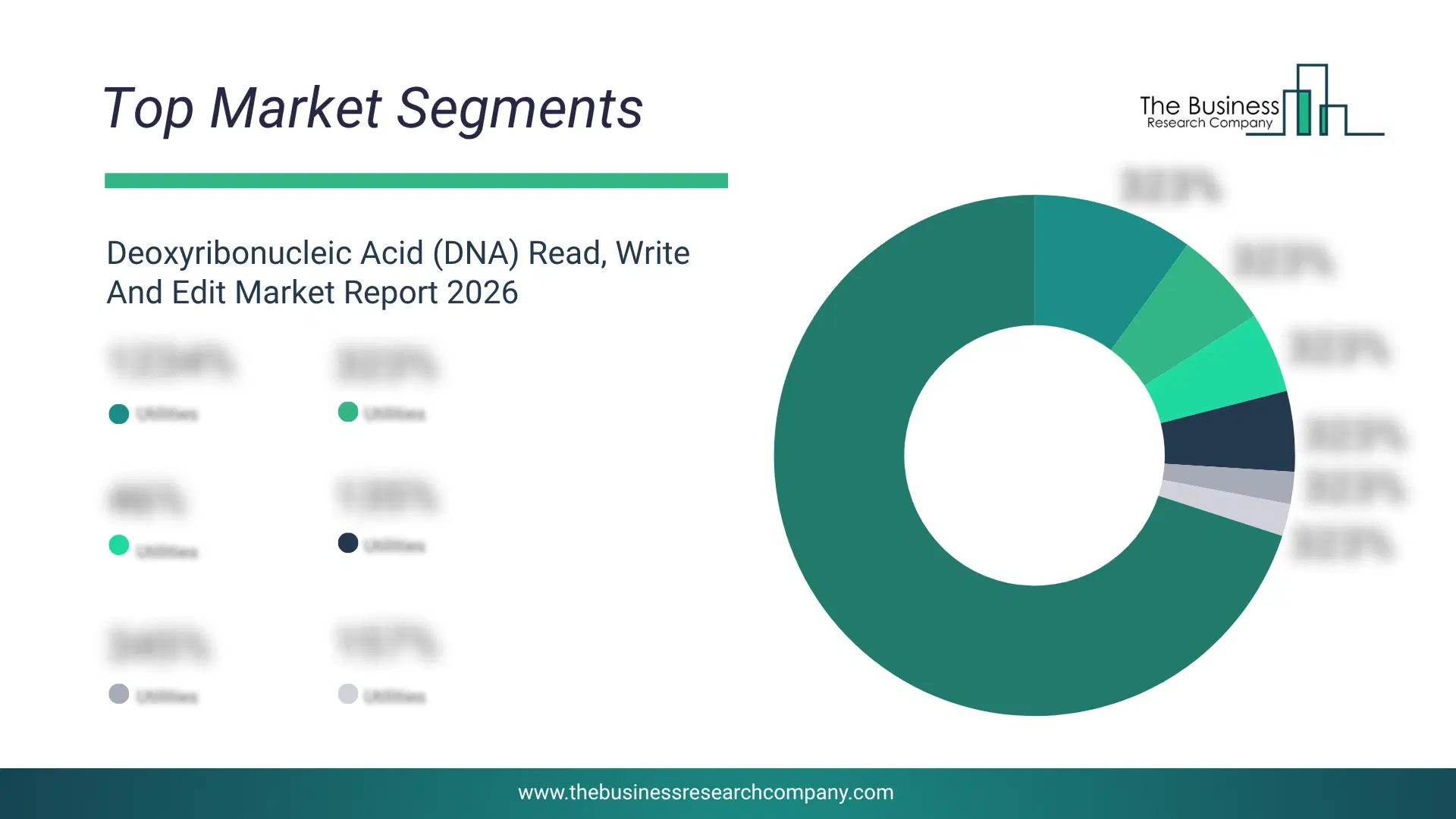
1) By Types: Kits And Reagents, Cell Line Engineering, Animal Models, Services 2) By Technology: Clustered Regularly Interspaced Short Palindromic Repeats (CRISPR), Transcription Activator-Like Effector Nucleases (Talen), Zinc Finger Nucleases, Other Technologies 3) By Delivery Mode: Viral Vectors, Non-Viral Vectors, Electroporation, Microinjection 4) By Application: Gene Therapy, Diagnostics, Biotechnology, Agricultural, Synthetic Biology 5) By End Users: Pharmaceutical And Biotechnology Companies, Academic And Research Institutes, Clinical Research Organizations Subsegments: 1) By Kits And Reagents: Deoxyribonucleic Acid Kits (DNA Kits), Ribonucleic Acid Kits (RNA Kits), Protein Assay Kits (PA Kits), Gene Editing Reagents (GER), Polymerase Chain Reaction Reagents (PCR Reagents) 2) By Cell Line Engineering: Stable Cell Lines (SCL), Transient Cell Lines (TCL), Hybridoma Cell Lines (HCL), Reporter Cell Lines (RCL), Primary Cell Lines (PCL) 3) By Animal Models: Transgenic Animals (TA), Knockout Animals (KA), Humanized Animals (HA), Xenograft Models (XM), Inbred Strains (IS) 4) By Services: Custom Gene Editing (CGE), Cell Line Development (CLD), Animal Model Development (AMD), Analytical Testing Services (ATS), Consulting Services (CS)What Is The Driver Of The Deoxyribonucleic Acid (DNA) Read, Write And Edit Market?
The increasing prevalence of genetic disorders is expected to propel the growth of the deoxyribonucleic acid (DNA) read, write and edit market going forward. Genetic disorders refer to medical conditions caused by abnormalities in an individual's deoxyribonucleic acid, inherited from one or both parents or arising from new mutations. The increasing genetic disorders are increasing due to rising parental age, as older parents have a higher risk of passing on genetic mutations to their children. Deoxyribonucleic acid (DNA) reading, writing, and editing help address genetic disorders by enabling precise identification, correction, and modification of disease-causing genes. They improve healthcare outcomes by allowing targeted therapies, reducing the risk of inherited conditions, and advancing personalized medicine for affected individuals. For instance, in May 2024, according to the National Health Service, a UK-based government department, there are 17,000 people living with sickle cell disease, an inherited genetic blood disorder, with around 250 new cases diagnosed each year. Therefore, the increasing prevalence of genetic disorders is driving the growth of the deoxyribonucleic acid (DNA) read, write and edit industry.Key Players In The Global Deoxyribonucleic Acid (DNA) Read, Write And Edit Market
Major companies operating in the deoxyribonucleic acid (dna) read, write and edit market are Roche Holding AG, Bayer AG, Thermo Fisher Scientific Inc., Danaher Corporation, Agilent Technologies Inc., MGI Tech, Bio-Rad Laboratories Inc., BGI Group, Ginkgo Bioworks, Oxford Nanopore Technologies, Twist Bioscience Corporation, New England Biolabs, GenScript Biotech Corporation, Pacific Biosciences, Beam Therapeutics Inc., Prime Medicine, Editas Medicine Inc., Cellectis S.A., 3Billion Inc., CRISPR Therapeutics AG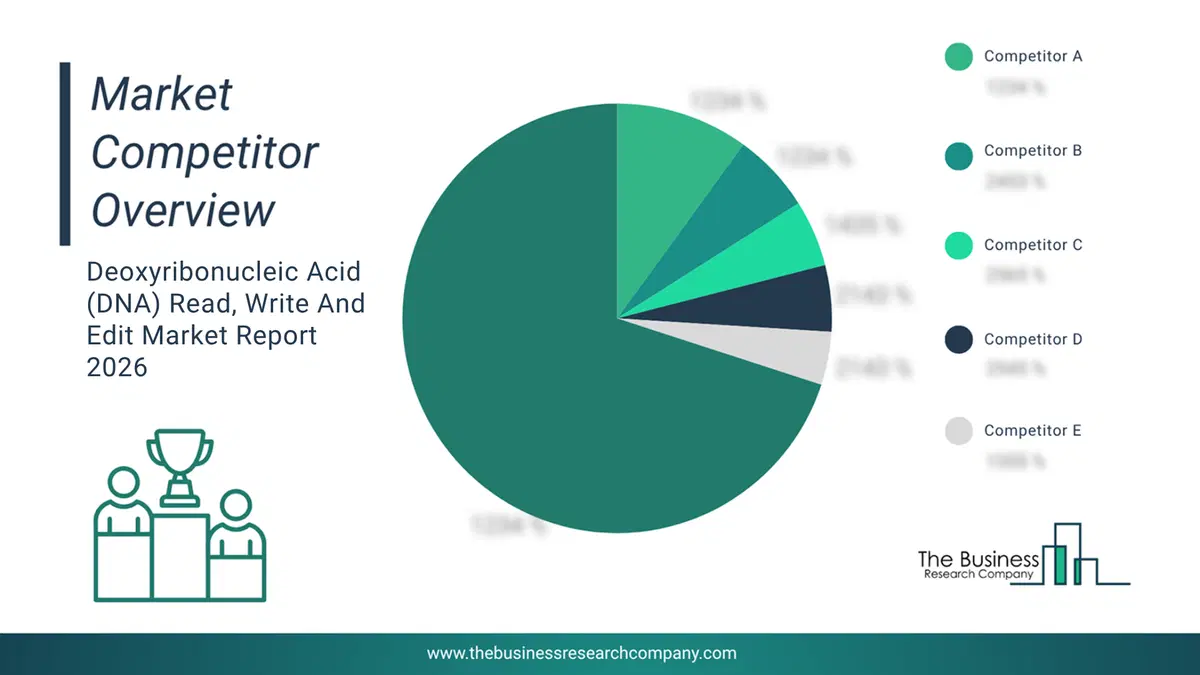
This chart is for illustrative purposes; the full report includes a detailed competitor analysis and comprehensive overview of the top 10 companies in the market.
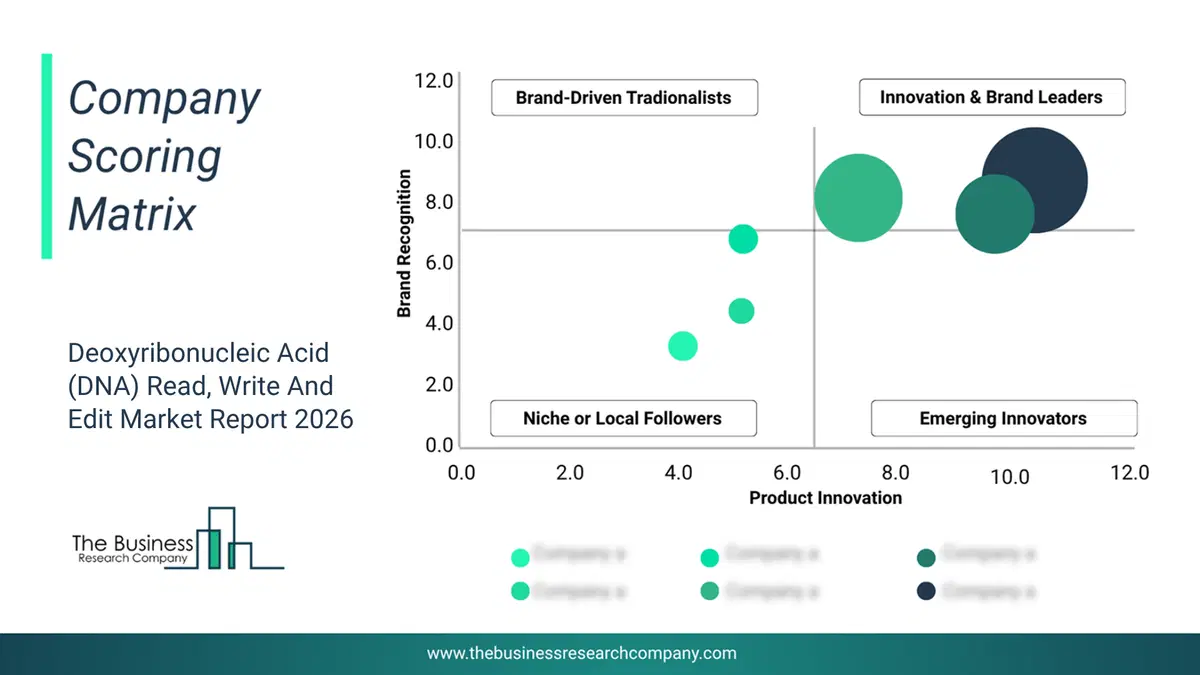
This chart maps companies by product innovation and brand strength, with bubble size indicating relative revenue, helping identify market leaders, challengers, and niche players. This is an illustrative chart; the full report provides a complete and accurate competitive analysis.
Global Deoxyribonucleic Acid (DNA) Read, Write And Edit Market Trends and Insights
Major companies operating in the deoxyribonucleic acid (DNA) read, write, and edit market are focusing on developing innovative solutions, such as cell-free synthetic DNA manufacturing platforms, which accelerate design-to-production timelines for DNA templates used in mRNA vaccines, gene therapies, and other nucleic-acid medicines. Cell-free DNA production synthesizes long, linear, NGS-verified DNA sequences outside living cells using enzymatic and synthetic biology workflows key features include rapid turnaround (days rather than weeks), high per-base accuracy, scalability without master-cell-bank bottlenecks, and direct compatibility with in vitro transcription (IVT) and downstream RNA workflows; unlike traditional plasmid-based or cell-cultured DNA production that requires cloning, bacterial propagation, and extensive purification, cell-free approaches remove cloning steps, reduce contamination risk, and shorten timelines from sequence design to GMP-ready material. For instance, in January 2024, GSK Plc, a UK-based pharmaceuticals company, collaborated with Elegen Corporation, a US-based biotechnology company, to use Elegen’s ENFINIA cell-free DNA platform for developing vaccines and medicines. The platform generates long, high-fidelity linear DNA with NGS-verified clonal quality in about seven business days and provides IVT-ready DNA for mRNA and RNA therapeutics. This enables faster antigen or vector optimization, reduces reliance on bacterial cell culture, and supports easier GMP translation. The collaboration highlights accelerated R&D, shorter time-to-clinic, and cost-effective early-stage and clinical material supply. Cell-free DNA from Elegen is positioned for applications from rapid vaccine prototyping to personalized cancer vaccines and gene-editing payloads.What Are Latest Mergers And Acquisitions In The Deoxyribonucleic Acid (DNA) Read, Write And Edit Market?
In January 2023, Qiagen N.V., a Netherlands-based biotechnology company, acquired Verogen Inc. for an undisclosed amount. With this acquisition, Qiagen expanded its capabilities in DNA read, write, and edit technologies, strengthening its position in forensic genomics and molecular diagnostics markets. Verogen Inc. is a US-based biotechnology company specializing in deoxyribonucleic acid (DNA) read, write, and edit technologies.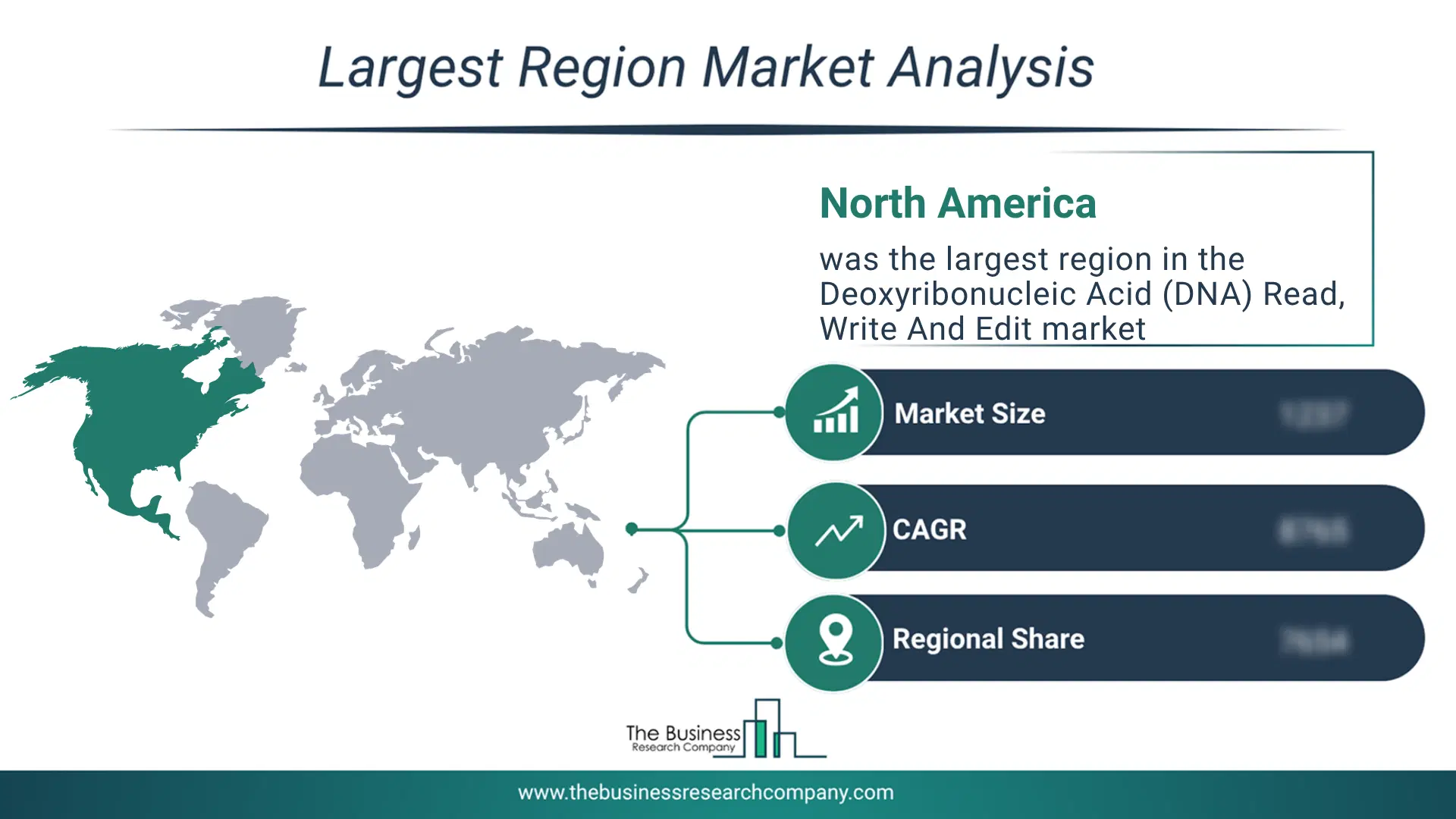
Regional Outlook
North America was the largest region in the deoxyribonucleic acid (DNA) read, write and edit market in 2025. Asia-Pacific is expected to be the fastest-growing region in the forecast period. The regions covered in this market report are Asia-Pacific, South East Asia, Western Europe, Eastern Europe, North America, South America, Middle East, Africa. The countries covered in this market report are Australia, Brazil, China, France, Germany, India, Indonesia, Japan, Taiwan, Russia, South Korea, UK, USA, Canada, Italy, Spain.What Defines the Deoxyribonucleic Acid (DNA) Read, Write And Edit Market?
The deoxyribonucleic acid (DNA) read, write and edit market consists of revenues earned by entities by providing services such as genetic testing services, genome sequencing services, gene editing services, synthetic biology services, and bioinformatics analysis services. The market value includes the value of related goods sold by the service provider or included within the service offering. The deoxyribonucleic acid (DNA) read, write and edit market also includes sales of deoxyribonucleic acid (DNA) sequencers, gene synthesis kits, genome editing tools, and bioinformatics software. Values in this market are ‘factory gate’ values, that is the value of goods sold by the manufacturers or creators of the goods, whether to other entities (including downstream manufacturers, wholesalers, distributors and retailers) or directly to end customers. The value of goods in this market includes related services sold by the creators of the goods.How is Market Value Defined and Measured?
The market value is defined as the revenues that enterprises gain from the sale of goods and/or services within the specified market and geography through sales, grants, or donations in terms of the currency (in USD unless otherwise specified). The revenues for a specified geography are consumption values that are revenues generated by organizations in the specified geography within the market, irrespective of where they are produced. It does not include revenues from resales along the supply chain, either further along the supply chain or as part of other products.
This chart presents market attractiveness based on a quantitative evaluation of growth, competition, strategic alignment, and risk, offering a clear view of opportunity areas for decision-making. This chart is for illustrative purposes; the full report contains the complete analysis.

This chart highlights the Total Addressable Market (TAM) by estimating the maximum revenue opportunity using an assumption-driven approach, supporting strategic planning and opportunity sizing across markets. The chart is illustrative; the full report provides a more comprehensive analysis.
What Key Data and Analysis Are Included in the Deoxyribonucleic Acid (DNA) Read, Write And Edit Market Report 2026?
The deoxyribonucleic acid (dna) read, write and edit market research report is one of a series of new reports from The Business Research Company that provides market statistics, including industry global market size, regional shares, competitors with the market share, detailed market segments, market trends and opportunities, and any further data you may need to thrive in the deoxyribonucleic acid (dna) read, write and edit industry. The market research report delivers a complete perspective of everything you need, with an in-depth analysis of the current and future state of the industry.Deoxyribonucleic Acid (DNA) Read, Write And Edit Market Report Forecast Analysis
| Report Attribute | Details |
|---|---|
| Market Size Value In 2026 | $11.97 billion |
| Revenue Forecast In 2030 | $22.58 billion |
| Growth Rate | CAGR of 17.2% from 2026 to 2030 |
| Base Year For Estimation | 2025 |
| Actual Estimates/Historical Data | 2020-2025 |
| Forecast Period | 2026 - 2030 |
| Market Representation | Revenue in USD Billion and CAGR from 2026 to 2030 |
| Segments Covered | Types, Technology, Delivery Mode, Application, End Users |
| Regional Scope | Asia-Pacific, Western Europe, Eastern Europe, North America, South America, Middle East, Africa |
| Country Scope | The countries covered in the report are Australia, Brazil, China, France, Germany, India, Indonesia, Japan, Taiwan, Russia, South Korea, UK, USA, Canada, Italy, Spain |
| Key Companies Profiled | Roche Holding AG, Bayer AG, Thermo Fisher Scientific Inc., Danaher Corporation, Agilent Technologies Inc., MGI Tech, Bio-Rad Laboratories Inc., BGI Group, Ginkgo Bioworks, Oxford Nanopore Technologies, Twist Bioscience Corporation, New England Biolabs, GenScript Biotech Corporation, Pacific Biosciences, Beam Therapeutics Inc., Prime Medicine, Editas Medicine Inc., Cellectis S.A., 3Billion Inc., CRISPR Therapeutics AG |
| Customization Scope | Request for Customization |
| Pricing And Purchase Options | Explore Purchase Options |