
Diabetic Ketoacidosis (DKA) Market Report 2026
Global Outlook – By Type (Pediatric Diabetic Ketoacidosis, Adult Diabetic Ketoacidosis), By Treatment Type (Fluid Replacement, Electrolyte Replacement, Insulin Therapy, Intermediate-Acting Insulin, Long-Acting Insulin), By Route Of Administration (Oral, Parenteral, Other Route Of Administration), By Distribution Channel (Online Channel, Offline Channel), By End Use (Hospitals, Ambulatory Care Center, Specialty Clinics) - Market Size, Trends, Strategies, and Forecast to 2030
Diabetic Ketoacidosis (DKA) Market Overview
• Diabetic Ketoacidosis (DKA) market size has reached to $3.15 billion in 2025 • Expected to grow to $4.69 billion in 2030 at a compound annual growth rate (CAGR) of 8.2% • Growth Driver: Impact Of Rising Obesity Rates On The Expansion Of The Market • Market Trend: Smart Insulin Infusion Systems Enhancing DKA Treatment Safety • North America was the largest region in 2025 and Asia-Pacific is the fastest growing region.What Is Covered Under Diabetic Ketoacidosis (DKA) Market?
Diabetic ketoacidosis (DKA) refers to a serious diabetes complication where the body produces high levels of blood acids called ketones, often due to insufficient insulin, leading to dehydration, electrolyte imbalances, and potentially life-threatening conditions. They are used for diagnosing and managing severe metabolic imbalances in diabetic patients to prevent complications such as dehydration, organ failure, and coma. The main types of diabetic ketoacidosis (DKA) are pediatric diabetic ketoacidosis and adult diabetic ketoacidosis. Pediatric DKA refers to the development of DKA in children and adolescents with diabetes, often triggered by insulin deficiency, infections, or other stress factors. Treatment options include fluid replacement, electrolyte replacement, insulin therapy, as well as intermediate-acting and long-acting insulin. The routes of administration encompass oral, parenteral, and other methods. They are distributed through various channels, including online and offline platforms, and are used by several end users, such as hospitals, ambulatory care centres, and specialty clinics.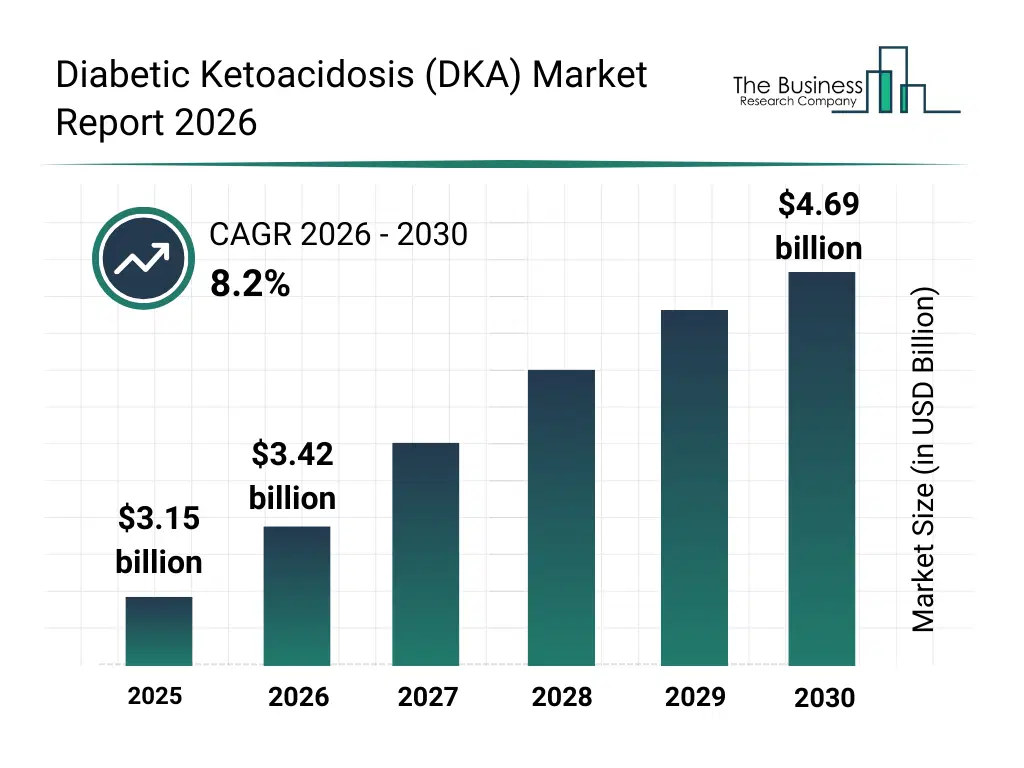
What Is The Diabetic Ketoacidosis (DKA) Market Size and Share 2026?
The diabetic ketoacidosis (dka) market size has grown strongly in recent years. It will grow from $3.15 billion in 2025 to $3.42 billion in 2026 at a compound annual growth rate (CAGR) of 8.5%. The growth in the historic period can be attributed to poor glycemic control in diabetic patients, delayed diagnosis of acute complications, limited patient awareness, dependence on hospital emergency care, rising type 1 diabetes cases.What Is The Diabetic Ketoacidosis (DKA) Market Growth Forecast?
The diabetic ketoacidosis (dka) market size is expected to see strong growth in the next few years. It will grow to $4.69 billion in 2030 at a compound annual growth rate (CAGR) of 8.2%. The growth in the forecast period can be attributed to improved patient education, expansion of remote monitoring tools, better insulin therapy adherence, adoption of early warning systems, focus on reducing emergency admissions. Major trends in the forecast period include rising hospitalization for acute diabetes complications, increased focus on rapid diagnosis and intervention, expansion of critical care treatment protocols, growing use of continuous glucose and ketone monitoring, integration of emergency diabetes management systems.
Global Diabetic Ketoacidosis (DKA) Market Segmentation
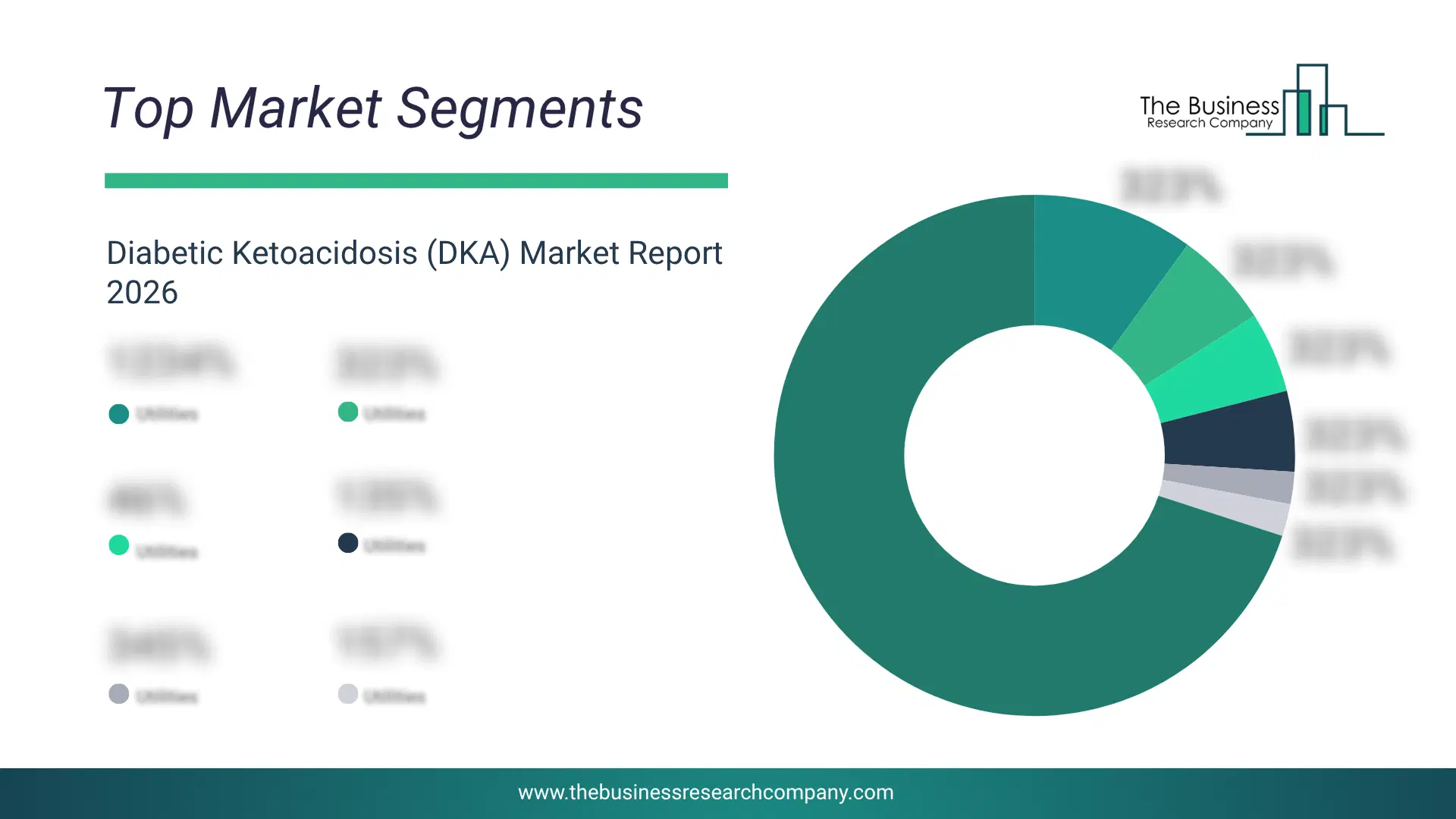
1) By Type: Pediatric Diabetic Ketoacidosis, Adult Diabetic Ketoacidosis 2) By Treatment Type: Fluid Replacement, Electrolyte Replacement, Insulin Therapy, Intermediate-Acting Insulin, Long-Acting Insulin 3) By Route Of Administration: Oral, Parenteral, Other Route Of Administration 4) By Distribution Channel: Online Channel, Offline Channel 5) By End Use: Hospitals, Ambulatory Care Center, Specialty Clinics Subsegments: 1) By Pediatric Diabetic Ketoacidosis: Mild Pediatric DKA, Moderate Pediatric DKA, Severe Pediatric DKA 2) By Adult Diabetic Ketoacidosis: Mild Adult DKA, Moderate Adult DKA, Severe Adult DKAWhat Is The Driver Of The Diabetic Ketoacidosis (DKA) Market?
The increasing prevalence of obesity is driving the expansion of the diabetic ketoacidosis (DKA) market. Obesity refers to a medical condition characterized by excessive body fat accumulation that can negatively impact health and increase the risk of various diseases. Obesity is rising due to a combination of factors, including unhealthy diets high in processed foods, sugars, and fats, sedentary lifestyles with reduced physical activity, increased screen time, and socioeconomic factors such as access to affordable healthy food and healthcare. Obesity rates increase the risk of diabetic ketoacidosis (DKA) by contributing to insulin resistance and the development of type 2 diabetes, which can lead to poor blood sugar control and subsequent DKA episodes. For instance, in March 2024, the World Health Organization (WHO), a Switzerland-based intergovernmental organization, reported that approximately one in eight people worldwide were struggling with obesity. This included 2.5 billion adults (aged 18 years and older) who were overweight, with 890 million of them living with obesity. Among adults, 43% were overweight, and 16% were classified as obese. Additionally, the number of overweight children under the age of 5 reached 37 million. Therefore, the rising prevalence of obesity is driving the growth of the diabetic ketoacidosis market.Key Players In The Global Diabetic Ketoacidosis (DKA) Market
Major companies operating in the diabetic ketoacidosis (dka) market are Merck & Co. Inc., Pfizer Inc., Sanofi S.A., Bristol Myers Squibb, Novartis AG, Roche Holding AG, GlaxoSmithKline plc, Eli Lilly and Company, Boehringer Ingelheim International GmbH, Novo Nordisk A/S, Teva Pharmaceutical Industries Ltd., B. Braun Medical Inc., Fresenius Kabi, Merit Pharmaceutical, Oramed Pharmaceuticals Inc., ICU Medical Inc., Tonghua Dongbao Pharmaceutical Co. Ltd., Wockhardt Ltd., Biocon Limited, Baxter International Inc., Hikma Pharmaceuticals PLC, Bayer AG, Dr Reddys Laboratories, Takeda Pharmaceutical Co Ltd, AstraZeneca plc, Amgen Inc.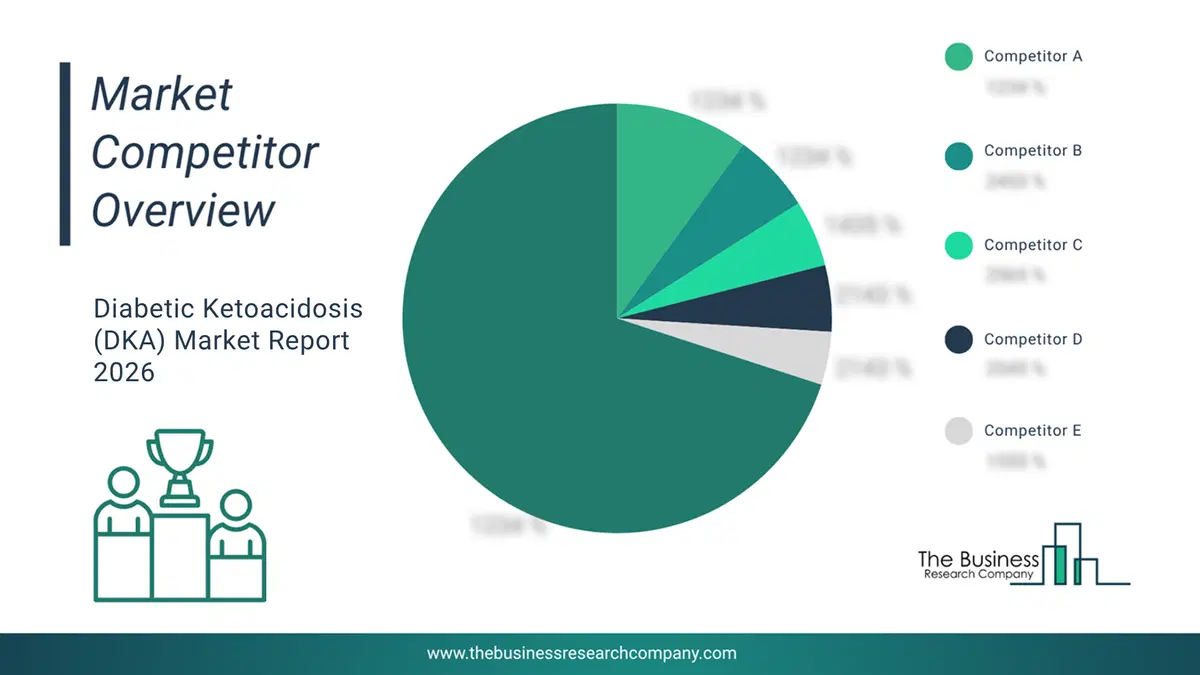
This chart is for illustrative purposes; the full report includes a detailed competitor analysis and comprehensive overview of the top 10 companies in the market.
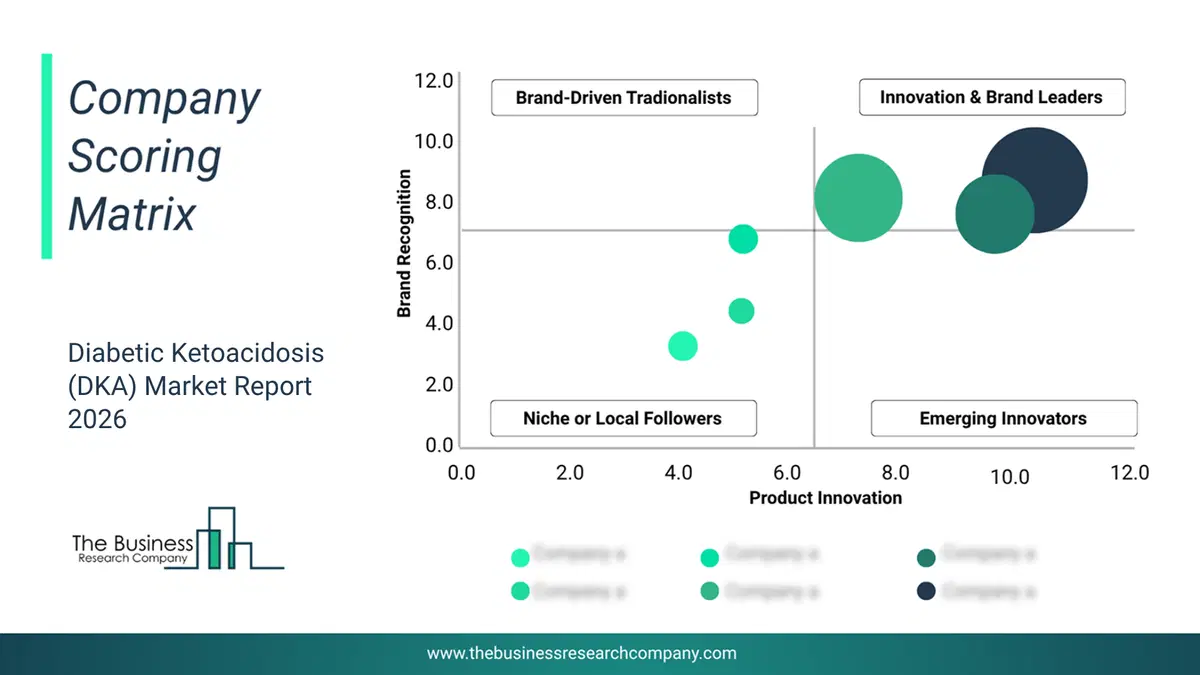
This chart maps companies by product innovation and brand strength, with bubble size indicating relative revenue, helping identify market leaders, challengers, and niche players. This is an illustrative chart; the full report provides a complete and accurate competitive analysis.
Global Diabetic Ketoacidosis (DKA) Market Trends and Insights
Major companies operating in the diabetic ketoacidosis (DKA) treatment market are focusing on developing innovative solutions such as algorithm-driven insulin-dosing systems to enhance treatment precision, patient safety and workflow efficiency. Algorithm-driven insulin-dosing systems are software platforms that use mathematical modelling and real-time patient data (e.g., glucose trends, renal function, estimated residual insulin) to generate individualized intravenous insulin-infusion recommendations, enabling capabilities such as dynamic dose adjustment and glucose-trend analysis. For instance, in December 2024, Monarch Medical Technologies, a US-based health-technology company specialising in inpatient glycaemic-management solutions, announced FDA 510(k) clearance for EndoTool IV 3.1, an algorithm-driven dosing solution designed to support hyperglycaemic crisis management including DKA and euglycaemic DKA, featuring real-time insulin-rate recalculation, integration of renal function and estimated residual insulin (EREI), and workflow-integrated decision-support. EndoTool IV 3.1 aims to improve precision in insulin delivery, enhance safety during acute metabolic emergencies and support more informed clinical decision-making.What Are Latest Mergers And Acquisitions In The Diabetic Ketoacidosis (DKA) Market?
In September 2023, Abbott Laboratories, a US-based medical device company, acquired Bigfoot Biomedical for an undisclosed amount. This acquisition enables Abbott to expand its diabetic care portfolio, which already includes the globally recognized FreeStyle Libre continuous glucose monitoring technology. Bigfoot Biomedical Inc. is a US-based company that provides diabetic care medical technology.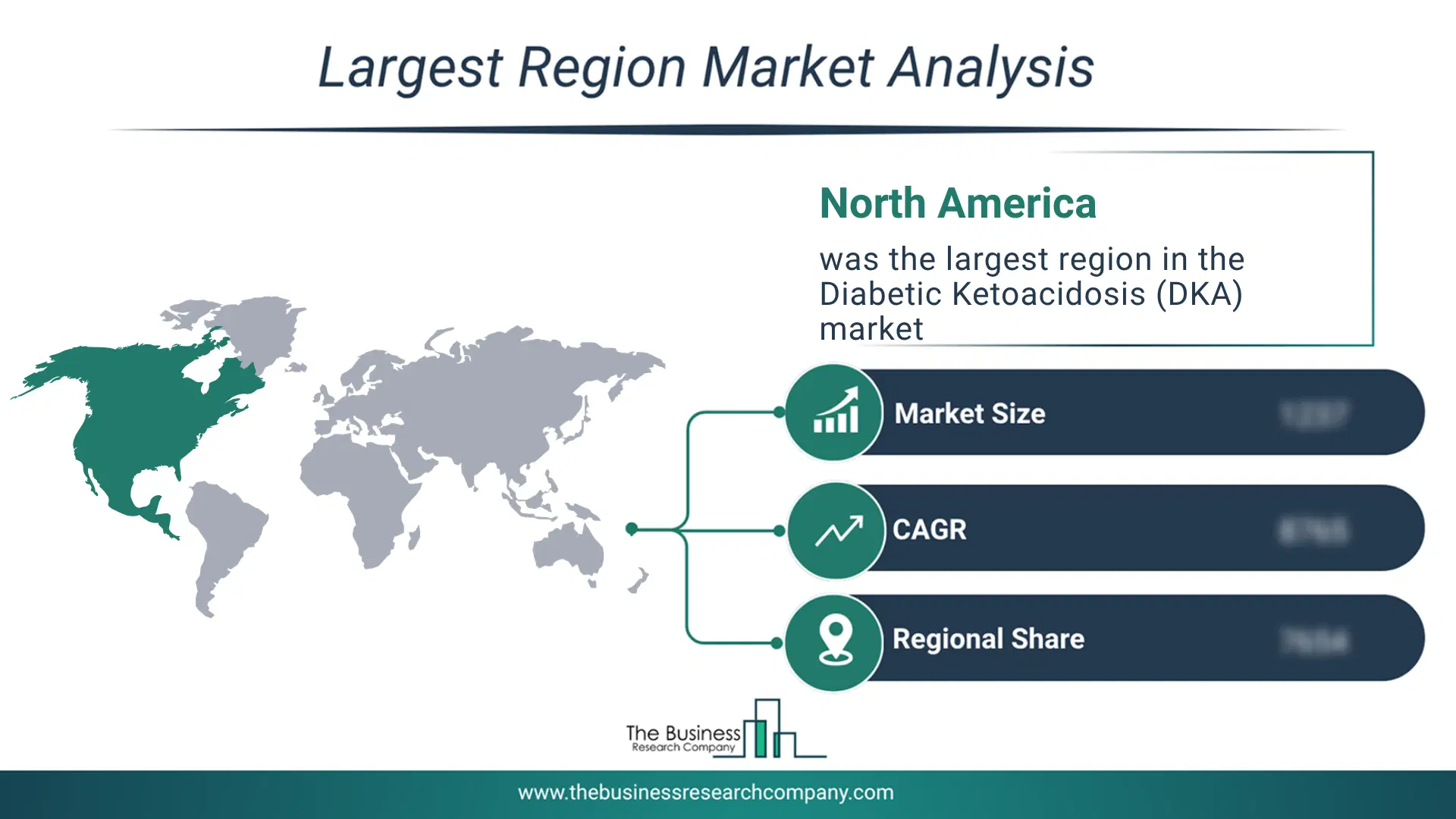
Regional Outlook
North America was the largest region in the diabetic ketoacidosis (DKA) market in 2025. Asia-Pacific is expected to be the fastest-growing region in the forecast period. The regions covered in this market report are Asia-Pacific, South East Asia, Western Europe, Eastern Europe, North America, South America, Middle East, Africa. The countries covered in this market report are Australia, Brazil, China, France, Germany, India, Indonesia, Japan, Taiwan, Russia, South Korea, UK, USA, Canada, Italy, Spain.What Defines the Diabetic Ketoacidosis (DKA) Market?
The diabetic ketoacidosis (DKA) market includes revenues earned by entities by providing services such as blood glucose monitoring, ketone testing, and arterial blood gas analysis and related products such as blood glucose monitors, continuous glucose monitoring (CGM) devices, syringes, insulin pens, and insulin pumps. The market value includes the value of related goods sold by the service provider or included within the service offering. Only goods and services traded between entities or sold to end consumers are included.How is Market Value Defined and Measured?
The market value is defined as the revenues that enterprises gain from the sale of goods and/or services within the specified market and geography through sales, grants, or donations in terms of the currency (in USD unless otherwise specified). The revenues for a specified geography are consumption values that are revenues generated by organizations in the specified geography within the market, irrespective of where they are produced. It does not include revenues from resales along the supply chain, either further along the supply chain or as part of other products.
This chart presents market attractiveness based on a quantitative evaluation of growth, competition, strategic alignment, and risk, offering a clear view of opportunity areas for decision-making. This chart is for illustrative purposes; the full report contains the complete analysis.

This chart highlights the Total Addressable Market (TAM) by estimating the maximum revenue opportunity using an assumption-driven approach, supporting strategic planning and opportunity sizing across markets. The chart is illustrative; the full report provides a more comprehensive analysis.
What Key Data and Analysis Are Included in the Diabetic Ketoacidosis (DKA) Market Report 2026?
The diabetic ketoacidosis (dka) market research report is one of a series of new reports from The Business Research Company that provides market statistics, including industry global market size, regional shares, competitors with the market share, detailed market segments, market trends and opportunities, and any further data you may need to thrive in the diabetic ketoacidosis (dka) industry. The market research report delivers a complete perspective of everything you need, with an in-depth analysis of the current and future state of the industry.Diabetic Ketoacidosis (DKA) Market Report Forecast Analysis
| Report Attribute | Details |
|---|---|
| Market Size Value In 2026 | $3.42 billion |
| Revenue Forecast In 2030 | $4.69 billion |
| Growth Rate | CAGR of 8.2% from 2026 to 2030 |
| Base Year For Estimation | 2025 |
| Actual Estimates/Historical Data | 2020-2025 |
| Forecast Period | 2026 - 2030 |
| Market Representation | Revenue in USD Billion and CAGR from 2026 to 2030 |
| Segments Covered | Type, Treatment Type, Route Of Administration, Distribution Channel, End Use |
| Regional Scope | Asia-Pacific, Western Europe, Eastern Europe, North America, South America, Middle East, Africa |
| Country Scope | The countries covered in the report are Australia, Brazil, China, France, Germany, India, Indonesia, Japan, Taiwan, Russia, South Korea, UK, USA, Canada, Italy, Spain |
| Key Companies Profiled | Merck & Co. Inc., Pfizer Inc., Sanofi S.A., Bristol Myers Squibb, Novartis AG, Roche Holding AG, GlaxoSmithKline plc, Eli Lilly and Company, Boehringer Ingelheim International GmbH, Novo Nordisk A/S, Teva Pharmaceutical Industries Ltd., B. Braun Medical Inc., Fresenius Kabi, Merit Pharmaceutical, Oramed Pharmaceuticals Inc., ICU Medical Inc., Tonghua Dongbao Pharmaceutical Co. Ltd., Wockhardt Ltd., Biocon Limited, Baxter International Inc., Hikma Pharmaceuticals PLC, Bayer AG, Dr Reddys Laboratories, Takeda Pharmaceutical Co Ltd, AstraZeneca plc, Amgen Inc. |
| Customization Scope | Request for Customization |
| Pricing And Purchase Options | Explore Purchase Options |