
Digestible Sensor Market Report 2026
Global Outlook – By Type (Capsule Sensors, Wearable Sensors, Ingestible Sensors, Implantable Sensors), By Distribution Channel (Online Retail, Pharmacies, Hospitals And Clinics, Direct Sales), By Technology (Microelectromechanical Systems (MEMS), Wireless Communication Technologies, Optical Sensors, Bioelectronic Interfaces), By Application (Medical Diagnostics, Drug Delivery, Patient Monitoring, Sports And Fitness, Other Applications), By End-User (Healthcare Providers, Research Institutions, Pharmaceutical Companies, Individual Consumers) – Market Size, Trends, Strategies, and Forecast to 2030
Digestible Sensor Market Overview
• Digestible Sensor market size has reached to $1.37 billion in 2025 • Expected to grow to $2.6 billion in 2030 at a compound annual growth rate (CAGR) of 13.7% • Growth Driver: Increasing Demand For Remote Health Monitoring Fueling Market Growth Due To People Preferring Personalized Real-Time Healthcare • Market Trend: Miniaturized Ingestible Sensors Revolutionize Gut Health Monitoring • North America was the largest region in 2025 and Asia-Pacific is the fastest growing region.What Is Covered Under Digestible Sensor Market?
A digestible sensor refers to a tiny, ingestible electronic device designed to be swallowed and used within the human body to monitor internal health conditions or deliver specific diagnostic information. These sensors are often integrated into pills and can track physiological parameters such as temperature, pH levels, or medication adherence as they pass through the gastrointestinal (GI) tract. The main types of digestible sensors are capsule sensors, wearable sensors, ingestible sensors, and implantable sensors. Capsule sensors refer to miniaturized, ingestible electronic devices shaped such as a capsule that are designed to travel through the gastrointestinal (GI) tract. The various distribution channels include online retail, pharmacies, hospitals and clinics, and direct sales. The various technologies, including microelectromechanical systems (MEMS), wireless communication technologies, optical sensors, and bioelectronic interfaces, through various applications such as medical diagnostics, drug delivery, patient monitoring, sports and fitness, and others and cater to several end users such as healthcare providers, research institutions, pharmaceutical companies, and individual consumers.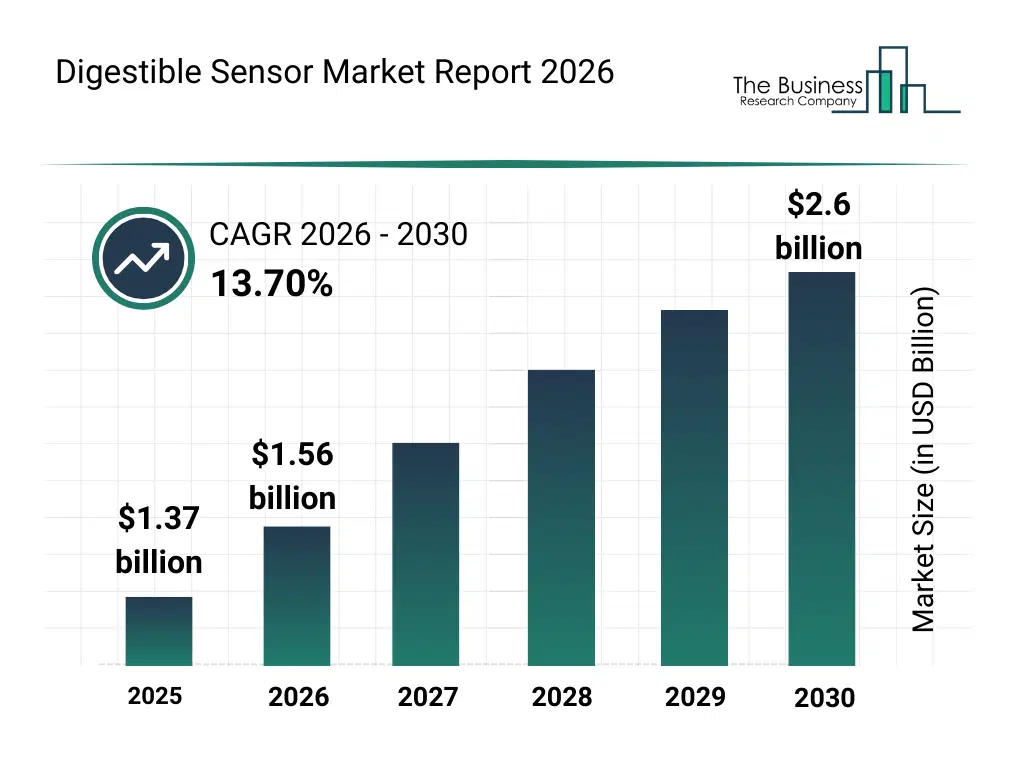
What Is The Digestible Sensor Market Size and Share 2026?
The digestible sensor market size has grown rapidly in recent years. It will grow from $1.37 billion in 2025 to $1.56 billion in 2026 at a compound annual growth rate (CAGR) of 14.0%. The growth in the historic period can be attributed to limited availability of ingestible sensor technologies, reliance on conventional diagnostics methods, growing awareness of gi health, early adoption of capsule endoscopy, increasing r&d in bioelectronic interfaces.What Is The Digestible Sensor Market Growth Forecast?
The digestible sensor market size is expected to see rapid growth in the next few years. It will grow to $2.6 billion in 2030 at a compound annual growth rate (CAGR) of 13.7%. The growth in the forecast period can be attributed to advancements in wireless communication and mems technologies, integration with digital health platforms, expansion of personalized medicine initiatives, rising demand for real-time patient monitoring, growth in home healthcare and telemedicine. Major trends in the forecast period include increasing adoption of ingestible sensors for gi health monitoring, integration of sensors with drug adherence programs, expansion of smart capsule endoscopy applications, rising use of electrochemical and gas sensing technologies, growth in personalized patient monitoring solutions.
Global Digestible Sensor Market Segmentation
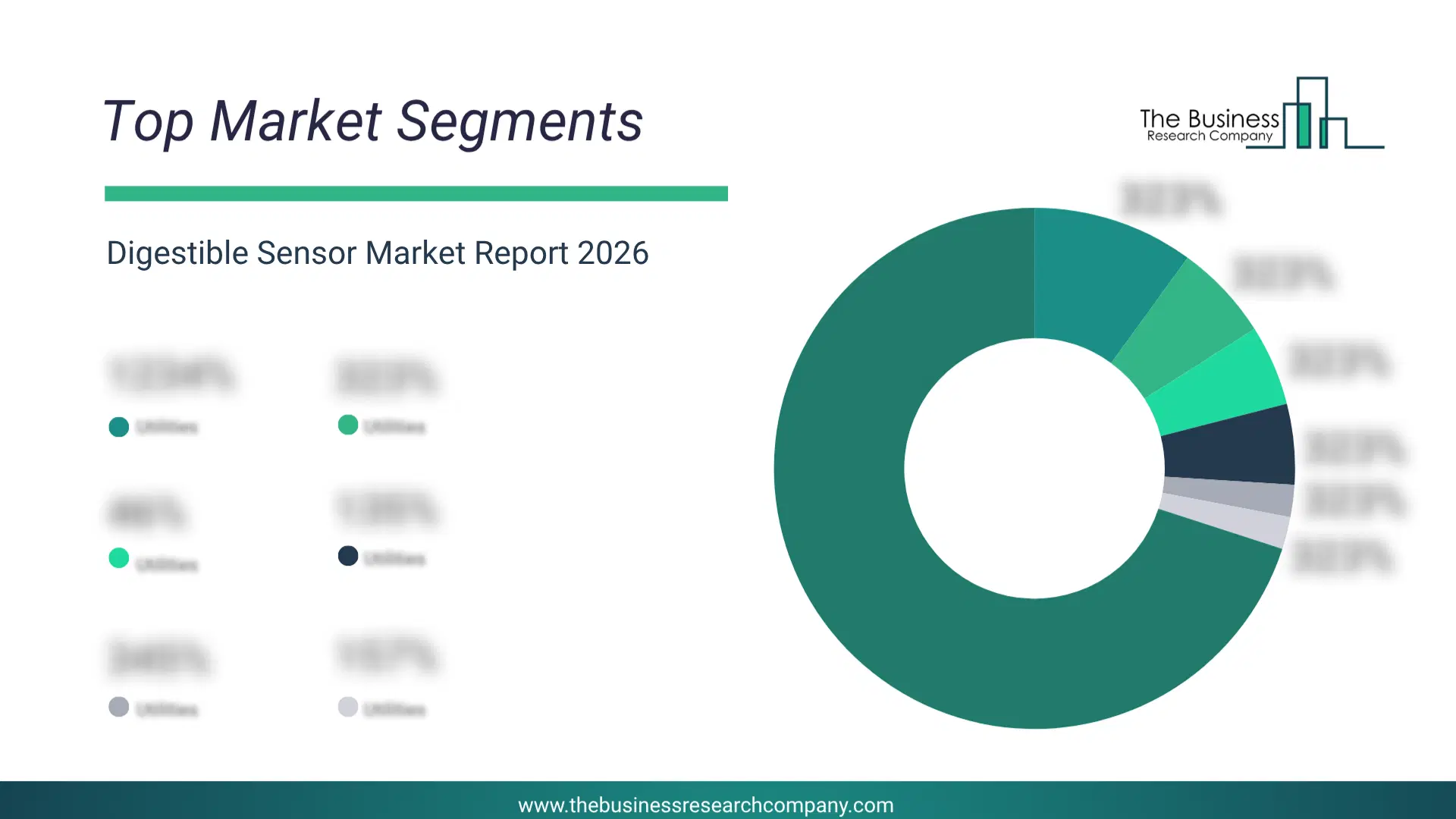
1) By Type: Capsule Sensors, Wearable Sensors, Ingestible Sensors, Implantable Sensors 2) By Distribution Channel: Online Retail, Pharmacies, Hospitals And Clinics, Direct Sales 3) By Technology: Microelectromechanical Systems (MEMS), Wireless Communication Technologies, Optical Sensors, Bioelectronic Interfaces 4) By Application: Medical Diagnostics, Drug Delivery, Patient Monitoring, Sports And Fitness, Other Applications 5) By End-User: Healthcare Providers, Research Institutions, Pharmaceutical Companies, Individual Consumers Subsegments: 1) By Capsule Sensors: pH Monitoring Capsules, Temperature Monitoring Capsules, Pressure Sensing Capsules, Smart Capsule Endoscopy, Drug Delivery Capsules With Sensors 2) By Wearable Sensors: Patch-Based External Receivers, Gastrointestinal Motility Trackers, Bio-Signal Monitoring Wearables, Wearable Adherence Trackers 3) By Ingestible Sensors: Vital Sign Monitoring Sensors, Drug Adherence Monitoring Sensors, Imaging Sensors, Gas Sensing Sensors, Electrochemical Sensors 4) By Implantable Sensors: GI Electrophysiology Sensors, pH And Enzyme Sensors, Neuromodulation Devices, Metabolic SensorsWhat Are The Drivers Of The Digestible Sensor Market?
The increasing demand for remote health monitoring is expected to propel the growth of the digestible sensor market going forward. Remote health monitoring refers to the use of technology to monitor and manage a patient’s health outside of traditional healthcare settings, typically from a distance. The rise of remote health monitoring is due to people preferring personalized, real-time healthcare from the comfort of their homes and cost-effective alternatives to traditional in-person visits. Digestible sensors help remote health monitoring by allowing real-time tracking of internal health metrics such as gastrointestinal function and provide doctors with valuable data on a patient's digestive system, enabling early detection of issues such as infections or disease without invasive procedures. For instance, in August 2025, according to the Office of Inspector General, U.S. Department of Health & Human Services (OIG) data-snapshot, in 2024 Medicare payments for remote patient monitoring exceeded US $536 million (a 31 % increase from 2023), nearly 1 million enrollees received RPM services (a 27 % increase from 2023), and about 4,600 medical practices routinely billed RPM. Therefore, the increasing demand for remote health monitoring is driving the growth of the digestible sensor industry. The growing demand for personalized medicine is expected to propel the growth of the digestible sensor market going forward. Personalized medicine refers to a medical model that uses information about a person’s genes and lifestyle environment to tailor treatments and healthcare to their specific needs. The rise of personalized medicine is due to people preferring health technologies that offer real-time monitoring and treatment plans customized to their unique biology. Digestible sensors help personalized medicine by allowing doctors to collect real-time data from inside the body and enable more accurate diagnoses and customized care based on a patient’s unique physiological responses. For instance, in February 2024, according to the Personalized Medicine Coalition, a US-based professional membership organization, in 2023, the FDA approved 16 new personalized treatments for rare disease patients (up from 6 in 2022), and overall the report documented 26 new personalized treatment approvals, 19 expanded indications for existing personalized medicines, and 17 significant new or expanded indications for 12 diagnostic testing products. Therefore, the growing demand for personalized medicine is driving the growth of the digestible sensor industry.Key Players In The Global Digestible Sensor Market
Major companies operating in the digestible sensor market are Medtronic plc, Koninklijke Philips N.V., Otsuka Pharmaceutical Co Ltd, Olympus Corporation, Sencure B.V., Millar Inc., Check‑Cap Ltd, Proteus Digital Health Inc., CapsoVision Inc., Atmo Biosciences, IntroMedic Co Ltd, BodyCAP S.A.S., Capsule Technologies Inc., etectRx Inc., Motus GI Inc., SmartPill Corporation, JINSHAN Science & Technology Group Co Ltd, MC10, Medtronic GI Solutions, Proteus GI Technologies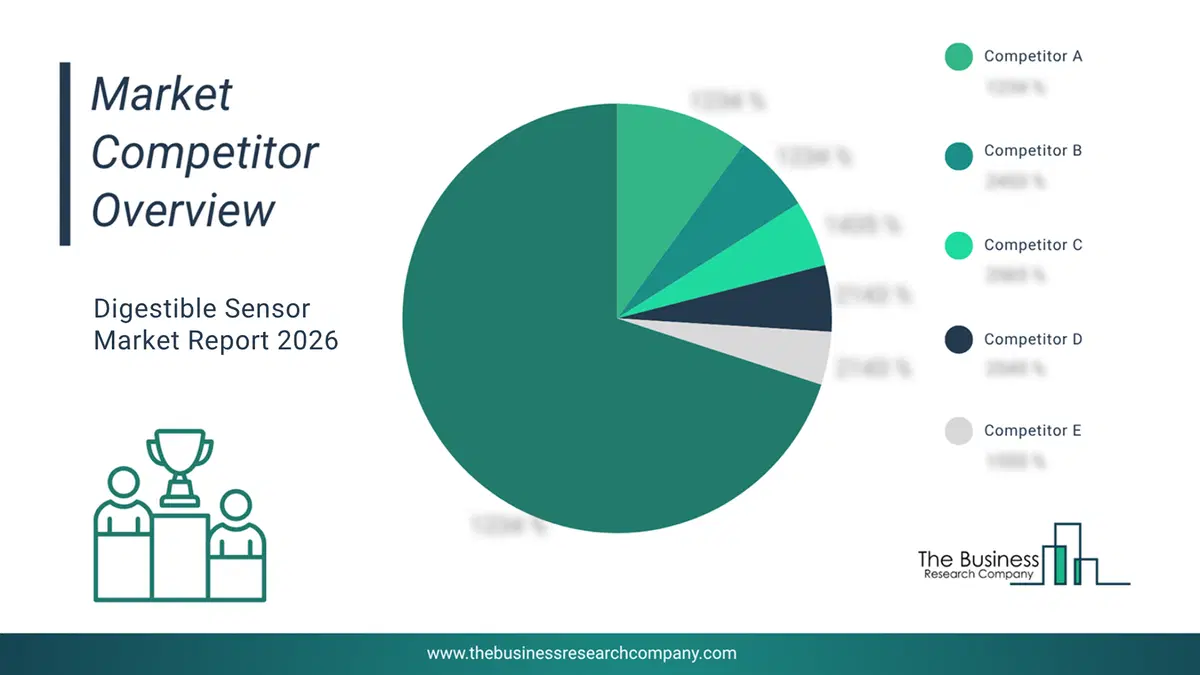
This chart is for illustrative purposes; the full report includes a detailed competitor analysis and comprehensive overview of the top 10 companies in the market.
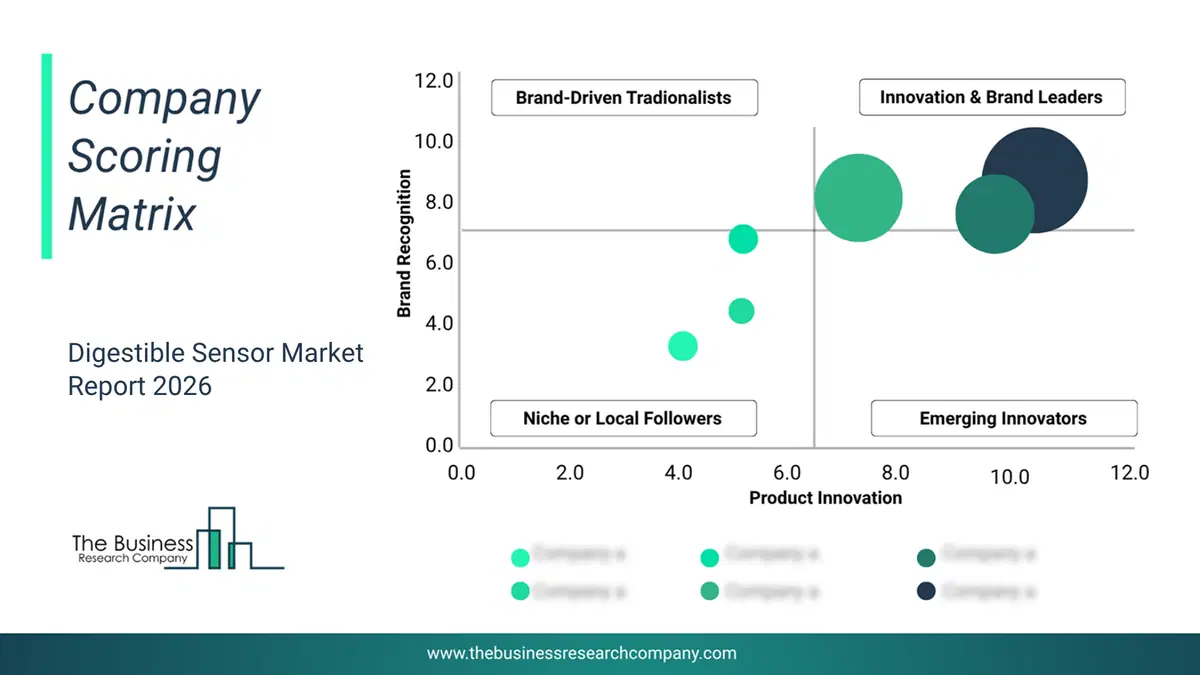
This chart maps companies by product innovation and brand strength, with bubble size indicating relative revenue, helping identify market leaders, challengers, and niche players. This is an illustrative chart; the full report provides a complete and accurate competitive analysis.
Global Digestible Sensor Market Trends and Insights
Major companies operating in the digestible sensor market are focusing on advanced solutions such as multi-parameter sensors to enhance diagnostic accuracy, expand application scope, and improve real-time health monitoring capabilities. Multi-parameter sensors refer to a device designed to simultaneously measure multiple physical or chemical parameters from its environment or subject, which combines various sensing technologies into one compact unit. For instance, in May 2025, the Interuniversity Microelectronics Centre, a Belgium-based non-profit research organization, unveiled a highly miniaturized ingestible sensor for gut health monitoring. The highly miniaturized ingestible sensor measures just 2.1 cm in length and 0.75 cm in diameter. The capsule is about three times smaller than traditional endoscopic capsules, enabling easier swallowing and improved patient comfort. It integrates multiple sensors, including oxidation-reduction potential (ORP), pH, and temperature, to provide real-time biochemical data from the gastrointestinal tract. The capsule records readings every 20 seconds throughout the entire digestive journey, powered by low-energy electronics and a compact battery. With wireless data transmission and a biocompatible casing, the device enables continuous, noninvasive analysis of internal gut conditions, offering significant potential for early diagnosis of inflammation, oxidative stress, and microbiome imbalances.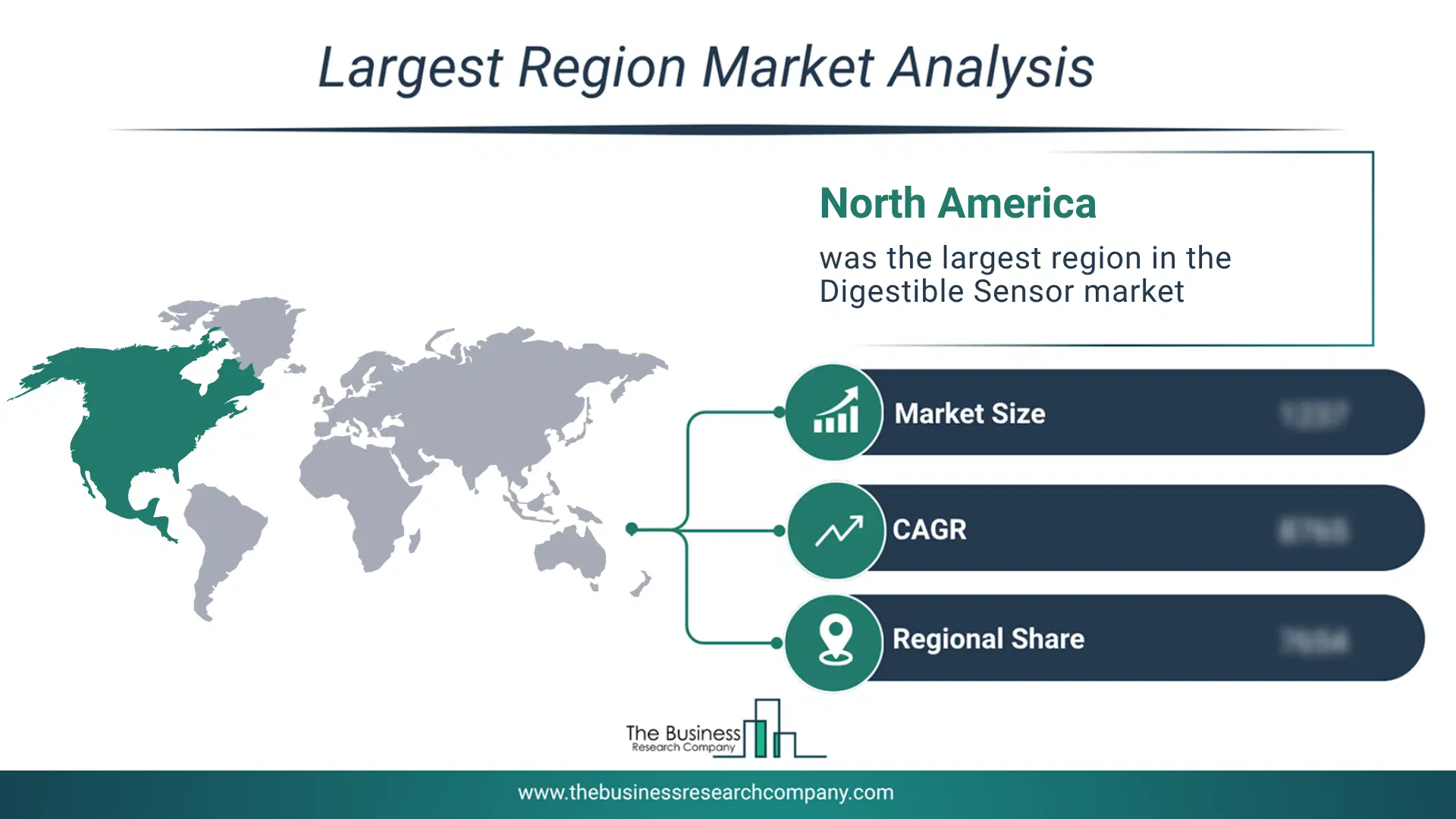
Regional Outlook
North America was the largest region in the digestible sensor market in 2025. Asia-Pacific is expected to be the fastest-growing region in the forecast period. The regions covered in this market report are Asia-Pacific, South East Asia, Western Europe, Eastern Europe, North America, South America, Middle East, Africa. The countries covered in this market report are Australia, Brazil, China, France, Germany, India, Indonesia, Japan, Taiwan, Russia, South Korea, UK, USA, Canada, Italy, SpainWhat Defines the Digestible Sensor Market?
The digestible sensor market consists of sales of ingestion event marker (IEM), electronic pills, and ingestible thermometers. Values in this market are ‘factory gate’ values, that is the value of goods sold by the manufacturers or creators of the goods, whether to other entities (including downstream manufacturers, wholesalers, distributors and retailers) or directly to end customers. The value of goods in this market includes related services sold by the creators of the goods.How is Market Value Defined and Measured?
The market value is defined as the revenues that enterprises gain from the sale of goods and/or services within the specified market and geography through sales, grants, or donations in terms of the currency (in USD unless otherwise specified). The revenues for a specified geography are consumption values that are revenues generated by organizations in the specified geography within the market, irrespective of where they are produced. It does not include revenues from resales along the supply chain, either further along the supply chain or as part of other products.
This chart presents market attractiveness based on a quantitative evaluation of growth, competition, strategic alignment, and risk, offering a clear view of opportunity areas for decision-making. This chart is for illustrative purposes; the full report contains the complete analysis.

This chart highlights the Total Addressable Market (TAM) by estimating the maximum revenue opportunity using an assumption-driven approach, supporting strategic planning and opportunity sizing across markets. The chart is illustrative; the full report provides a more comprehensive analysis.
What Key Data and Analysis Are Included in the Digestible Sensor Market Report 2026?
The digestible sensor market research report is one of a series of new reports from The Business Research Company that provides market statistics, including industry global market size, regional shares, competitors with the market share, detailed market segments, market trends and opportunities, and any further data you may need to thrive in the digestible sensor industry. The market research report delivers a complete perspective of everything you need, with an in-depth analysis of the current and future state of the industry.Digestible Sensor Market Report Forecast Analysis
| Report Attribute | Details |
|---|---|
| Market Size Value In 2026 | $1.56 billion |
| Revenue Forecast In 2030 | $2.6 billion |
| Growth Rate | CAGR of 13.7% from 2026 to 2030 |
| Base Year For Estimation | 2025 |
| Actual Estimates/Historical Data | 2020-2025 |
| Forecast Period | 2026 - 2030 |
| Market Representation | Revenue in USD Billion and CAGR from 2026 to 2030 |
| Segments Covered | Type, Distribution Channel, Technology, Application, End-User |
| Regional Scope | Asia-Pacific, Western Europe, Eastern Europe, North America, South America, Middle East, Africa |
| Country Scope | The countries covered in the report are Australia, Brazil, China, France, Germany, India, Indonesia, Japan, Taiwan, Russia, South Korea, UK, USA, Canada, Italy, Spain. |
| Key Companies Profiled | Medtronic plc, Koninklijke Philips N.V., Otsuka Pharmaceutical Co Ltd, Olympus Corporation, Sencure B.V., Millar Inc., Check‑Cap Ltd, Proteus Digital Health Inc., CapsoVision Inc., Atmo Biosciences, IntroMedic Co Ltd, BodyCAP S.A.S., Capsule Technologies Inc., etectRx Inc., Motus GI Inc., SmartPill Corporation, JINSHAN Science & Technology Group Co Ltd, MC10, Medtronic GI Solutions, Proteus GI Technologies |
| Customization Scope | Request for Customization |
| Pricing And Purchase Options | Explore Purchase Options |