
Chemical Sensors Market Report 2026
Global Outlook – By Product Type ( Optical, Pallister Or Catalytic Bead, Other Product Types), By Particulate Type ( Liquid, Gas), By Detection Method ( pH Sensors, Humidity Sensors, Bio Sensors), By End-User ( Automotive, Medical, Environmental Monitoring, Industrial, Other End-Users) – Market Size, Trends, Strategies, and Forecast to 2030
Chemical Sensors Market Overview
• Chemical Sensors market size has reached to $35.53 billion in 2025 • Expected to grow to $55.46 billion in 2030 at a compound annual growth rate (CAGR) of 9.4% • Growth Driver: Elevated Adoption Of Chemical Sensors In The Automotive Sector Boosts The Chemical Sensors Market • Market Trend: Innovative Product Development In The Chemical Sensors Market • North America was the largest region in 2025 and Asia-Pacific is the fastest growing region.What Is Covered Under Chemical Sensors Market?
A chemical sensor is a device that identifies and analyzes chemical properties in an analyte (the technical term for the chemical material under investigation) and converts the chemical data into electronic data. The main types of products in chemical sensors are electrochemical, optical, pallister, or catalytic bead, and others. Electrochemical sensors are devices that combine a chemically selective layer to an electrochemical transducer to provide information about the composition of a solution in real-time. The different detection methods include gas sensors, pH sensors, humidity sensors, biosensors and are available in various particulate forms such as solid, liquid, gas. It is implemented in various sectors such as oil and gas, automotive, medical, environmental monitoring, industrial, and others.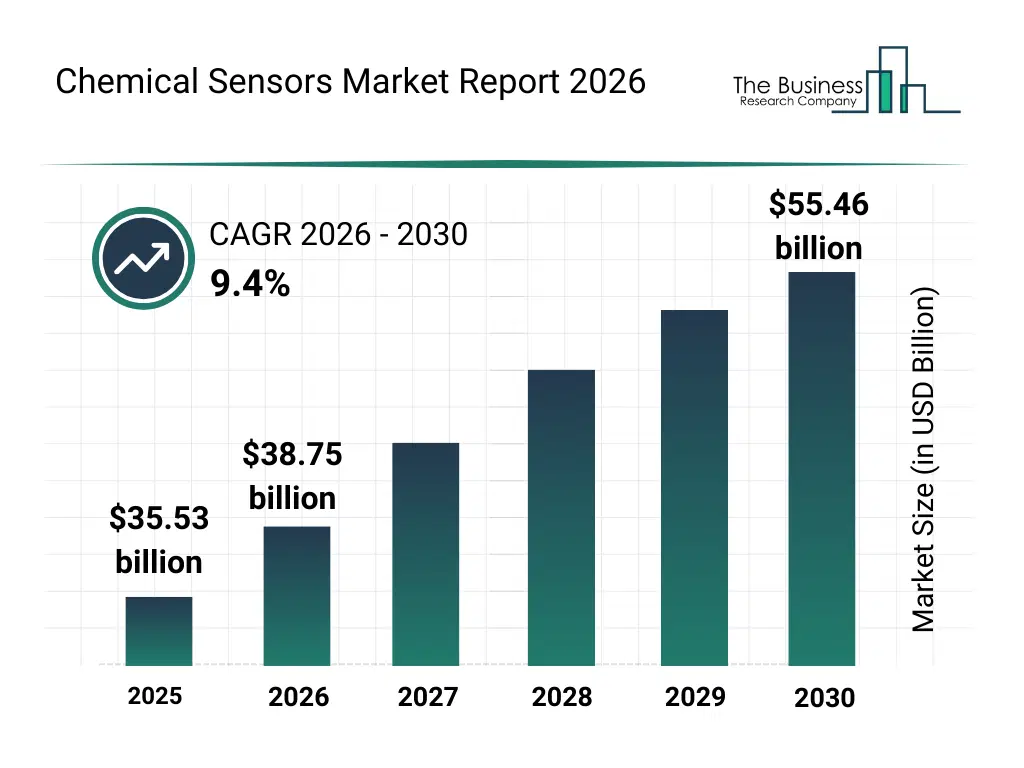
What Is The Chemical Sensors Market Size 2026 And Growth Rate?
The chemical sensors market size has grown strongly in recent years. It will grow from $35.53 billion in 2025 to $38.75 billion in 2026 at a compound annual growth rate (CAGR) of 9.1%. The growth in the historic period can be attributed to rise in use of optical and pellistor sensors, increasing adoption in automotive and medical applications, deployment in industrial monitoring, integration in environmental monitoring, use in gas and liquid detection.What Is The Chemical Sensors Market Growth Forecast?
The chemical sensors market size is expected to see strong growth in the next few years. It will grow to $55.46 billion in 2030 at a compound annual growth rate (CAGR) of 9.4%. The growth in the forecast period can be attributed to increase in AI-driven sensor analytics, rising adoption of IoT-enabled monitoring, expansion of high-precision chemical detection, growth in real-time environmental sensing, increase in smart analytical sensor applications. Major trends in the forecast period include integration of AI-powered chemical sensors, deployment of IoT-enabled sensor networks, adoption of advanced bio-sensors, implementation of real-time data monitoring, expansion of digitalized analytical solutions.
Global Chemical Sensors Market Segmentation
1) By Product Type: Optical, Pallister Or Catalytic Bead, Other Product Types 2) By Particulate Type: Liquid, Gas 3) By Detection Method: pH Sensors, Humidity Sensors, Bio Sensors 4) By End-User: Automotive, Medical, Environmental Monitoring, Industrial, Other End-Users Subsegments: 1) By Optical: Fluorescence-Based Sensors, Infrared (IR) Sensors, Raman Spectroscopy Sensors 2) By Pellistor or Catalytic Bead: Combustible Gas Sensors, Methane Sensors 3) By Other Product Types: Electrochemical Sensors, Semiconductor Sensors, Piezoelectric SensorsWhat Is The Driver Of The Chemical Sensors Market?
The increasing use of chemical sensors in the automotive industry is expected to drive the growth of the chemical sensors market in the forecast period. Automobile traffic is the primary source of exhaust gases. The chemical sensors and measurement technology can aid in improving engine performance, increasing energy efficiency, and lowering pollutant emissions. For instance, in January 2023, Bosch, a German-based supplier of technology and services, introduced new air quality sensors BME690 for integration into vehicles to monitor pollutants such as carbon monoxide and nitrogen dioxide, enhancing cabin air quality and providing data for optimizing vehicle emissions. The company is presently working on a variant of its air quality sensor technology with an autonomous vehicle manufacturer to deliver the first smoke detector capable of identifying smoke and vape within the vehicle environment. Therefore, the rising use of chemical sensors in the automotive industry propels the chemical sensors industry growth.Key Players In The Global Chemical Sensors Market
Major companies operating in the chemical sensors market are Honeywell International Inc., Siemens AG, Halma plc, Denso Corporation, Emerson Electric Co., General Electric Company, Intelligent Optical Systems Inc., SICK AG, Alpha MOS SA, Robert Bosch GmbH, Hans Turck GmbH & Co. KG, Owlstone Medical Ltd., SPEC Sensors LLC, Nemoto & Co. Ltd., SenseAir AB, Freescale Semiconductor Inc., JLM Innovation GmbH, ABB Group, BorgWarner Inc., Smiths Detection Inc., MSA Safety Incorporated, Pepperl+Fuchs Group, AirTest Technologies Inc., Yokogawa Electric Corporation, Thermo Fisher Scientific Inc., Pendar Technologies Inc., Intellisense Systems Inc., Lyten Inc., Physical Sciences Inc., Aerodyne Research Inc., Sensirion AG, City Technology Ltd., Figaro Engineering Inc.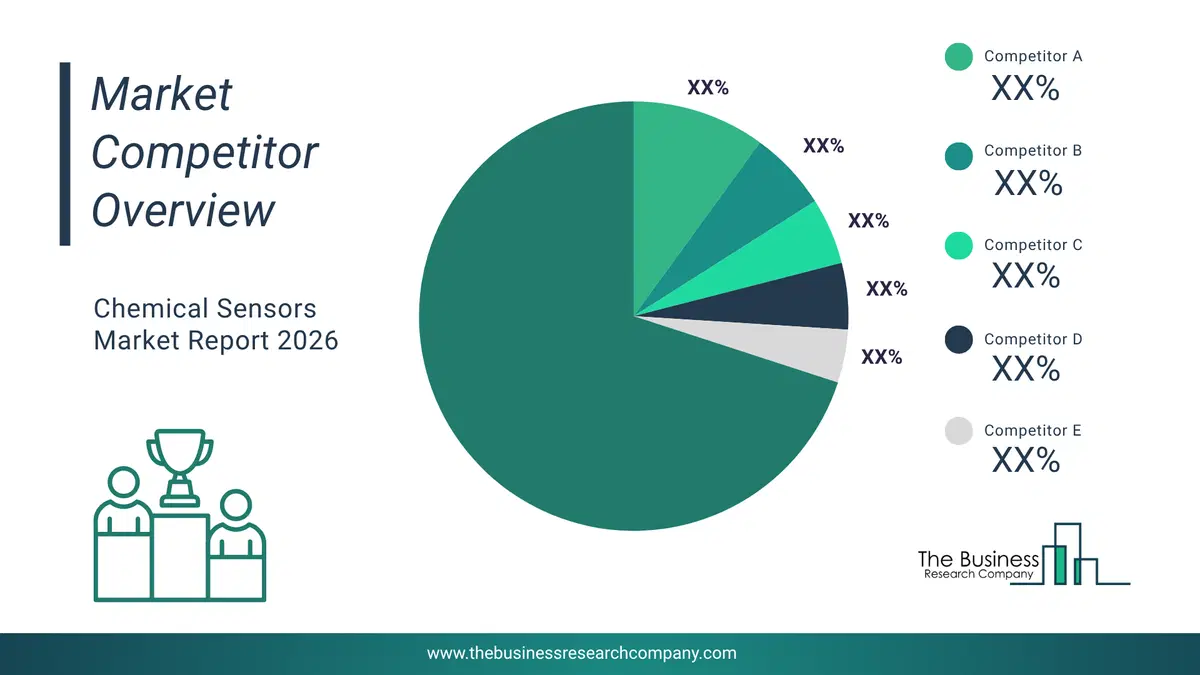
This chart is for illustrative purposes; the full report includes a detailed competitor analysis and comprehensive overview of the top 10 companies in the market.
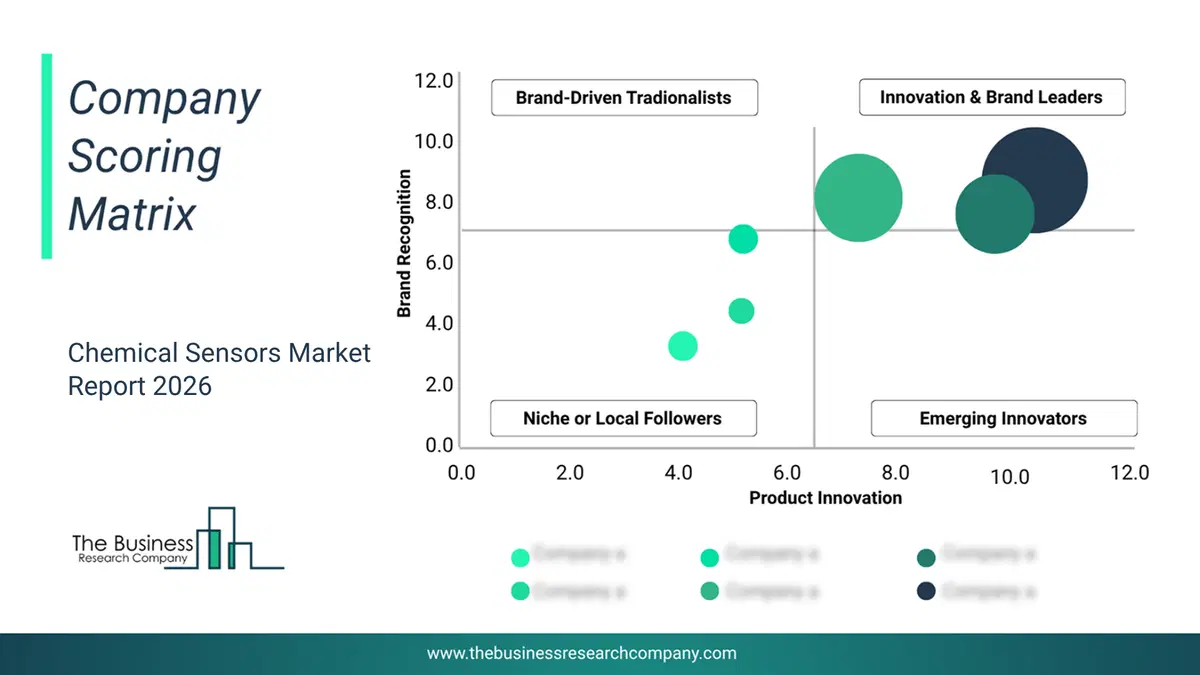
This chart maps companies by product innovation and brand strength, with bubble size indicating relative revenue, helping identify market leaders, challengers, and niche players. This is an illustrative chart; the full report provides a complete and accurate competitive analysis.
Global Chemical Sensors Market Trends and Insights
Major companies operating in the chemical distribution market are developing new products such as hydrogen pressure sensors to meet larger customer bases, more sales, and increase revenue. A hydrogen pressure sensor is a device that measures the pressure of hydrogen gas. For instance, in September 2023, Baker Hughes, a US-based energy technology company, launched Druck hydrogen-rated pressure sensors. Created for prolonged stability and resilience in challenging conditions, these hydrogen pressure sensors are suitable for a wide range of applications. These applications encompass gas turbines, hydrogen production through electrolysis, and hydrogen filling stations. The introduction of this innovative hydrogen technology empowers customers to leverage a pressure sensor that not only endures demanding hydrogen environments over extended periods but also delivers heightened precision and dependability. Baker Hughes has incorporated advanced barrier coating technology into their latest Druck hydrogen pressure sensors. This technology shields the sensor element from the adverse impacts of hydrogen, ensuring customers benefit from an exceptional minimum operational life of five years, spanning a broad pressure spectrum.What Are Latest Mergers And Acquisitions In The Chemical Sensors Market?
In January 2024, ABB, a Switzerland-based engineering company, acquired Real Tech Inc. for an undisclosed amount. This acquisition aims to enhance its smart water management portfolio by incorporating advanced optical sensor technology for real-time water quality monitoring, complementing its existing offerings, and seizing growth opportunities driven by the global push for sustainable water management. Real Tech Inc. is a Canada-based quality monitoring and testing solution providing chemical sensors.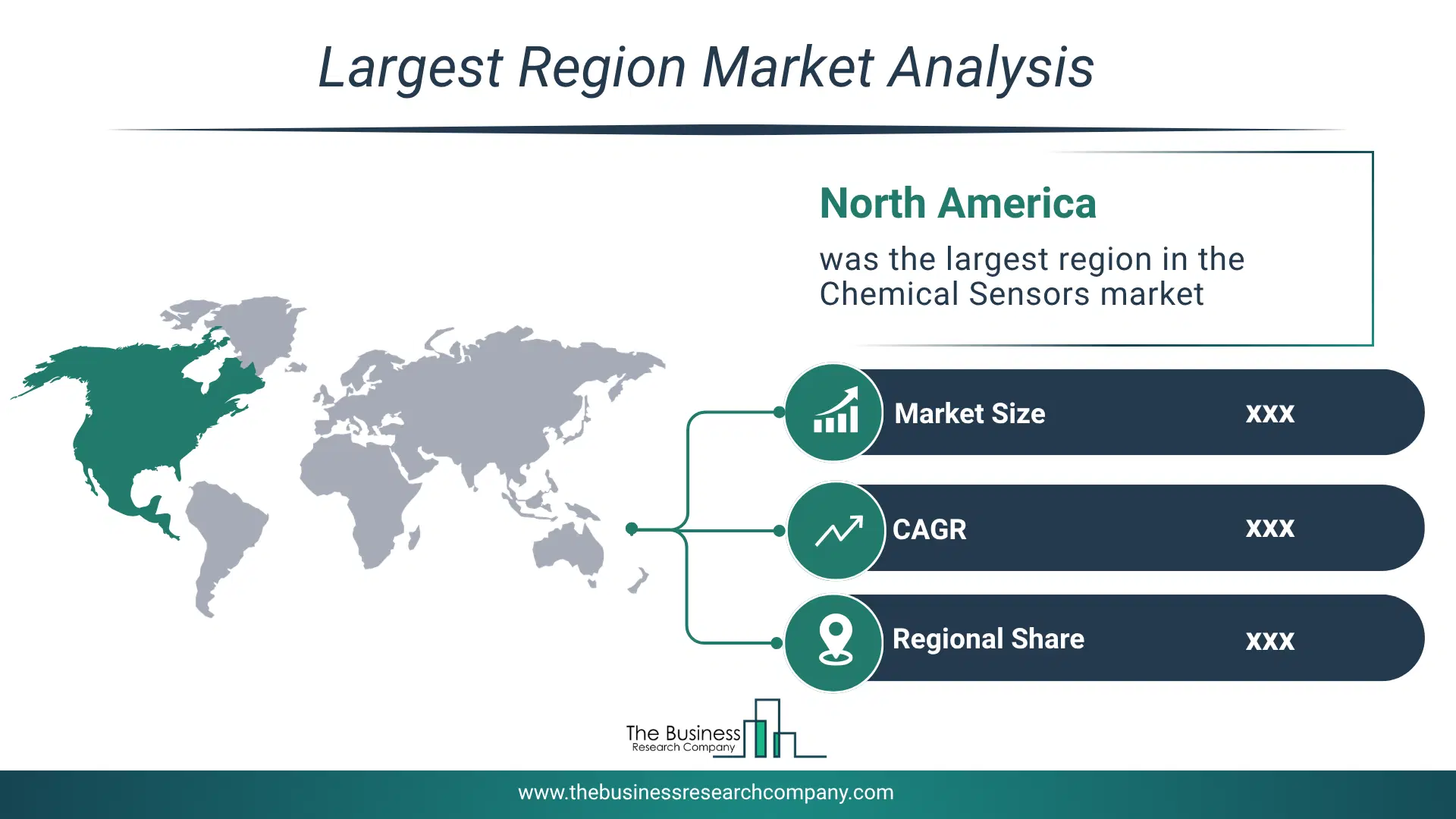
Regional Outlook
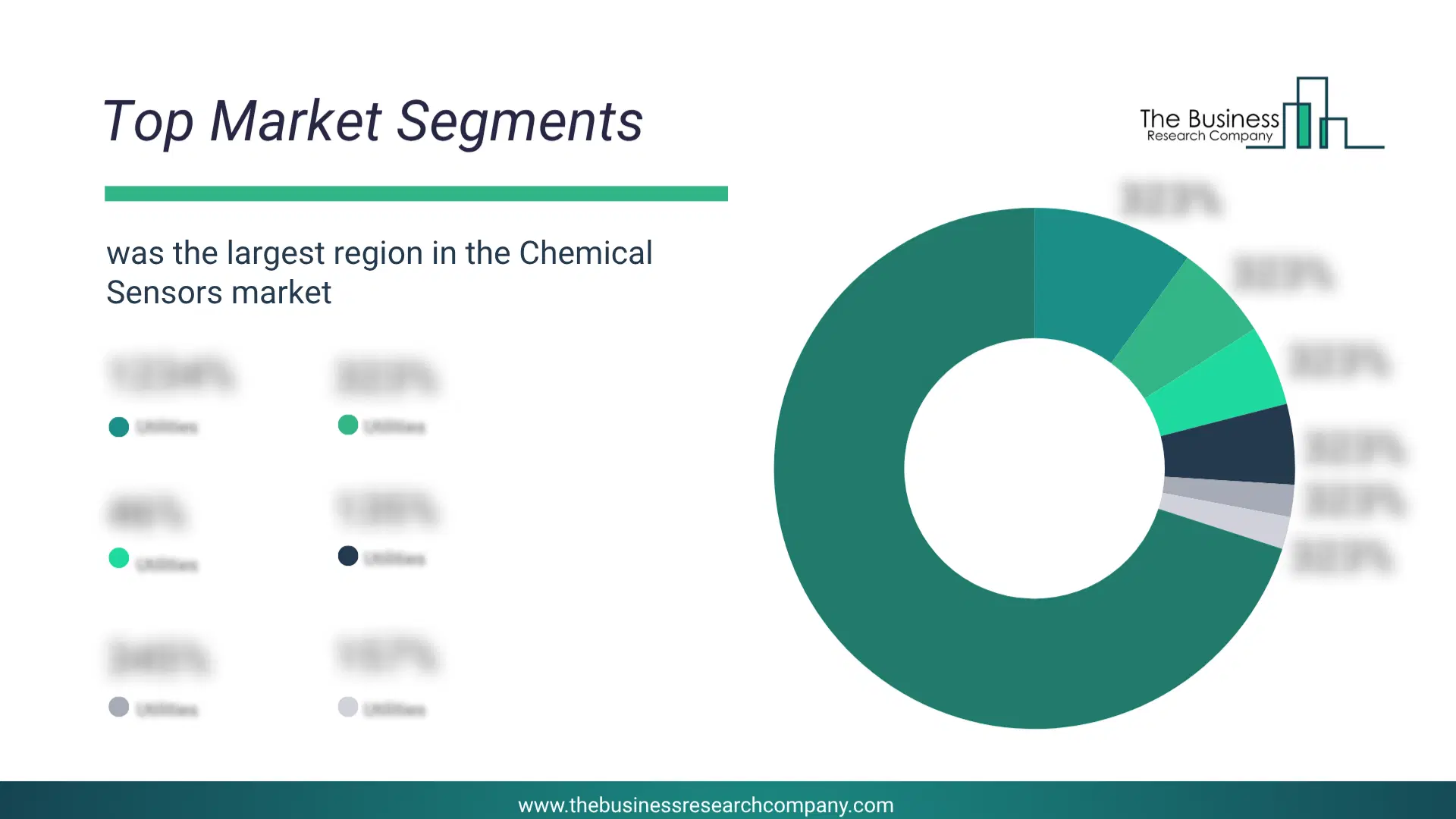
North America was the largest region in the chemical sensors market in 2025. Asia-Pacific is expected to be the fastest-growing region in the forecast period. The regions covered in this market report are Asia-Pacific, South East Asia, Western Europe, Eastern Europe, North America, South America, Middle East, Africa. The countries covered in this market report are Australia, Brazil, China, France, Germany, India, Indonesia, Japan, Taiwan, Russia, South Korea, UK, USA, Canada, Italy, Spain.What Defines the Chemical Sensors Market?
The chemical sensors market consists of sales of optical sensors, electrochemical, catalytic beads, and other chemical sensors. Values in this market are ‘factory gate’ values, that is the value of goods sold by the manufacturers or creators of the goods, whether to other entities (including downstream manufacturers, wholesalers, distributors, and retailers) or directly to end customers. The value of goods in this market includes related services sold by the creators of the goods.How is Market Value Defined and Measured?
The market value is defined as the revenues that enterprises gain from the sale of goods and/or services within the specified market and geography through sales, grants, or donations in terms of the currency (in USD unless otherwise specified). The revenues for a specified geography are consumption values that are revenues generated by organizations in the specified geography within the market, irrespective of where they are produced. It does not include revenues from resales along the supply chain, either further along the supply chain or as part of other products.
This chart presents market attractiveness based on a quantitative evaluation of growth, competition, strategic alignment, and risk, offering a clear view of opportunity areas for decision-making. This chart is for illustrative purposes; the full report contains the complete analysis.

This chart highlights the Total Addressable Market (TAM) by estimating the maximum revenue opportunity using an assumption-driven approach, supporting strategic planning and opportunity sizing across markets. The chart is illustrative; the full report provides a more comprehensive analysis.
What Key Data and Analysis Are Included in the Chemical Sensors Market Report 2026?
The chemical sensors market research report is one of a series of new reports from The Business Research Company that provides market statistics, including industry global market size, regional shares, competitors with the market share, detailed market segments, market trends and opportunities, and any further data you may need to thrive in the chemical sensors industry. The market research report delivers a complete perspective of everything you need, with an in-depth analysis of the current and future state of the industry.Chemical Sensors Market Report Forecast Analysis
| Report Attribute | Details |
|---|---|
| Market Size Value In 2026 | $38.75 billion |
| Revenue Forecast In 2030 | $55.46 billion |
| Growth Rate | CAGR of 9.4% from 2026 to 2030 |
| Base Year For Estimation | 2025 |
| Actual Estimates/Historical Data | 2020-2025 |
| Forecast Period | 2026 - 2030 |
| Market Representation | Revenue in USD Billion and CAGR from 2026 to 2030 |
| Segments Covered | Product Type, Particulate Type, Detection Method, End-User |
| Regional Scope | Asia-Pacific, Western Europe, Eastern Europe, North America, South America, Middle East, Africa |
| Country Scope | The countries covered in the report are Australia, Brazil, China, France, Germany, India, Indonesia, Japan, Taiwan, Russia, South Korea, UK, USA, Canada, Italy, Spain. |
| Key Companies Profiled | Honeywell International Inc., Siemens AG, Halma plc, Denso Corporation, Emerson Electric Co., General Electric Company, Intelligent Optical Systems Inc., SICK AG, Alpha MOS SA, Robert Bosch GmbH, Hans Turck GmbH & Co. KG, Owlstone Medical Ltd., SPEC Sensors LLC, Nemoto & Co. Ltd., SenseAir AB, Freescale Semiconductor Inc., JLM Innovation GmbH, ABB Group, BorgWarner Inc., Smiths Detection Inc., MSA Safety Incorporated, Pepperl+Fuchs Group, AirTest Technologies Inc., Yokogawa Electric Corporation, Thermo Fisher Scientific Inc., Pendar Technologies Inc., Intellisense Systems Inc., Lyten Inc., Physical Sciences Inc., Aerodyne Research Inc., Sensirion AG, City Technology Ltd., Figaro Engineering Inc. |
| Customization Scope | Request for Customization |
| Pricing And Purchase Options | Explore Purchase Options |