
Digital Biomarkers Market Report 2026
Global Outlook – By Type (Wearable, Mobile Based Applications, Sensors, Other Types), By Clinical Practice (Diagnostic Digital Biomarkers, Monitoring Digital Biomarkers, Predictive And Prognostic Digital Biomarkers, Other Clinical Practices), By Application (Oncology, Metabolic Disease, Neurological Disease, Cardiac Disease, Other Applications), By End User (Healthcare Companies, Healthcare Providers, Payers, Other End Users) - Market Size, Trends, Strategies, and Forecast to 2030
Digital Biomarkers Market Overview
• Digital Biomarkers market size has reached to $4.96 billion in 2025 • Expected to grow to $15.77 billion in 2030 at a compound annual growth rate (CAGR) of 26% • Growth Driver: Rising Chronic Disease Rates To Drive Growth In The Digital Biomarkers Market • Market Trend: Cloud-Based Platform Revolutionizing Digital Biomarkers For Remote Studies And Digital Health Research • North America was the largest region in 2025 and Asia-Pacific is the fastest growing region.What Is Covered Under Digital Biomarkers Market?
Digital biomarkers are objective, quantifiable physiological and behavioral data that are collected and measured using digital devices such as wearables, sensors, and mobile health applications. They are used to monitor and predict health outcomes, enabling more precise and personalized medical interventions. These biomarkers enable continuous and real-time health monitoring, leading to more personalized medical interventions and improved disease management. The main types of digital biomarkers include wearables, mobile-based applications, sensors, and others. Wearable digital biomarkers are devices worn on the body, such as smartwatches or fitness trackers, that monitor physiological signals like heart rate, activity levels, and sleep patterns. The clinical practices are categorized into diagnostic digital biomarkers, monitoring digital biomarkers, predictive and prognostic digital biomarkers, others for applications such as oncology, metabolic disease, neurological disease, and cardiac disease, and others. The end user includes healthcare companies, healthcare providers, payers, and others.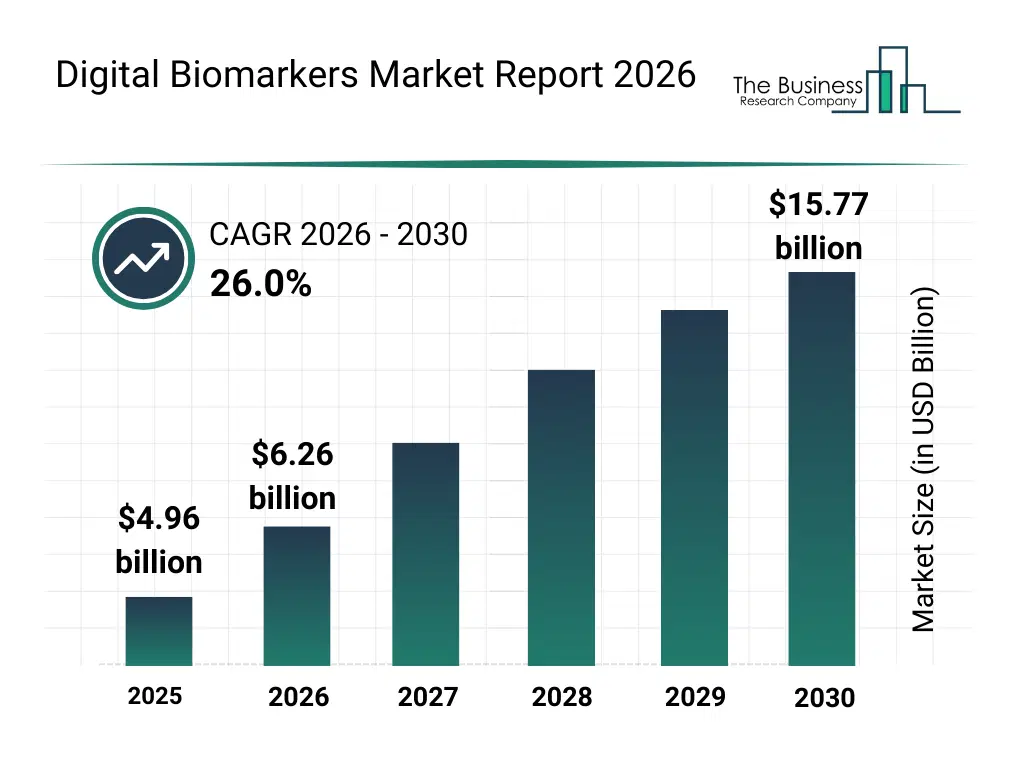
What Is The Digital Biomarkers Market Size and Share 2026?
The digital biomarkers market size has grown exponentially in recent years. It will grow from $4.96 billion in 2025 to $6.26 billion in 2026 at a compound annual growth rate (CAGR) of 26.3%. The growth in the historic period can be attributed to growth in consumer wearable adoption, expansion of mobile health applications, increasing prevalence of chronic diseases, availability of advanced biosensors, rising interest in preventive healthcare.What Is The Digital Biomarkers Market Growth Forecast?
The digital biomarkers market size is expected to see exponential growth in the next few years. It will grow to $15.77 billion in 2030 at a compound annual growth rate (CAGR) of 26.0%. The growth in the forecast period can be attributed to increasing investments in digital health platforms, rising demand for personalized healthcare monitoring, expansion of predictive health analytics, growing integration with electronic health records, increasing regulatory support for digital biomarkers. Major trends in the forecast period include increasing adoption of wearable health monitoring devices, rising use of continuous remote patient monitoring, growing integration of AI-based health analytics, expansion of sensor-based disease tracking, enhanced focus on real-time health data collection.
Global Digital Biomarkers Market Segmentation
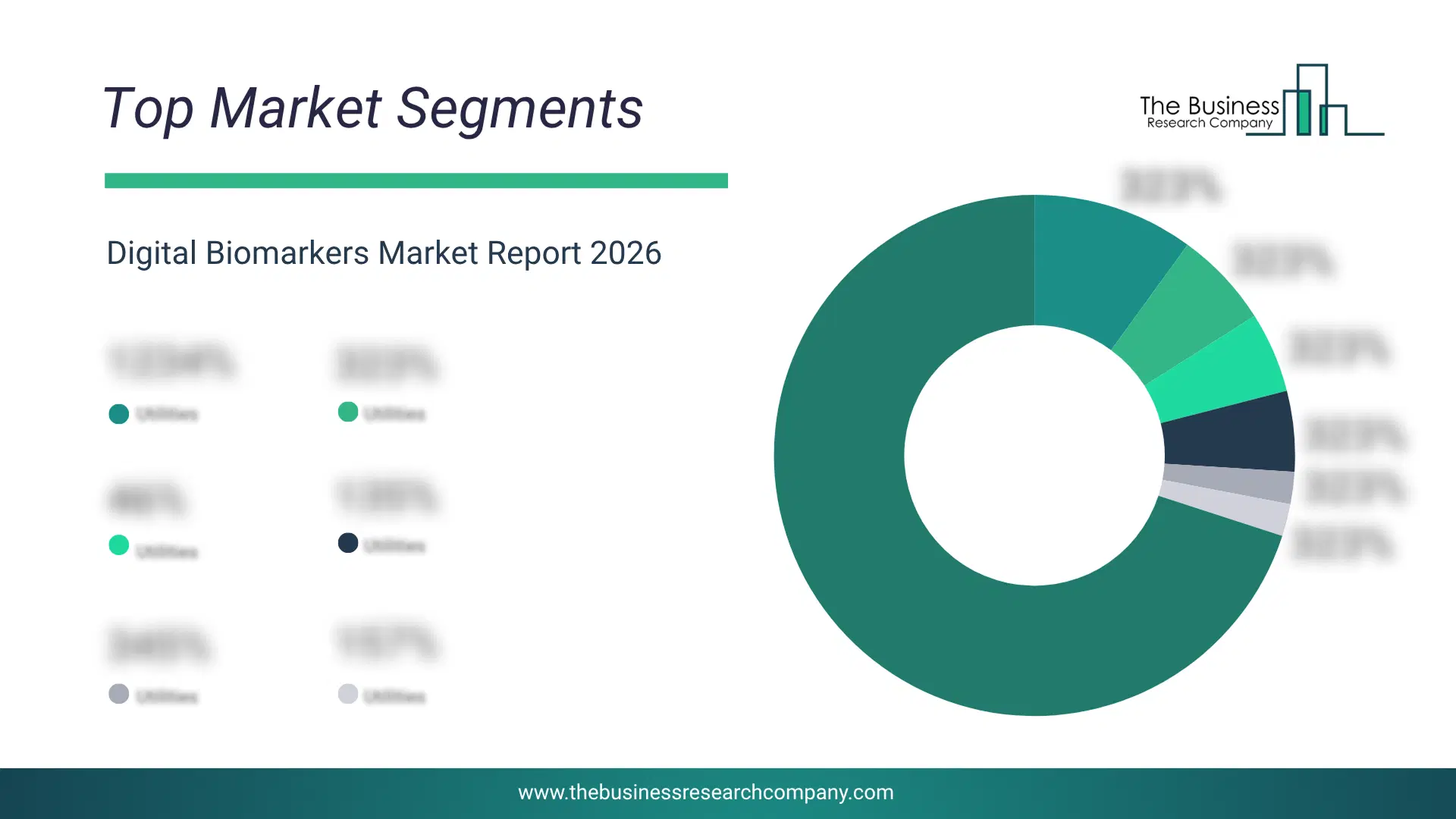
1) By Type: Wearable, Mobile Based Applications, Sensors, Other Types 2) By Clinical Practice: Diagnostic Digital Biomarkers, Monitoring Digital Biomarkers, Predictive And Prognostic Digital Biomarkers, Other Clinical Practices 3) By Application: Oncology, Metabolic Disease, Neurological Disease, Cardiac Disease, Other Applications 4) By End User: Healthcare Companies, Healthcare Providers, Payers, Other End Users Subsegments: 1) By Wearable: Smartwatches, Fitness Trackers, Wearable ECG Monitors, Continuous Glucose Monitors 2) By Mobile Based Applications: Health Monitoring Apps, Digital Therapeutics Apps, Symptom Tracking Apps, Remote Patient Monitoring Apps 3) By Sensors: Biosensors, Motion Sensors, Environmental Sensors, Implantable Sensors 4) By Other Types: Voice Biomarkers, Digital Imaging Biomarkers, Behavioral Biomarkers, Telemedicine ToolsWhat Is The Driver Of The Digital Biomarkers Market?
The higher prevalence of chronic diseases is expected to propel the growth of the digital biomarkers market going forward. Chronic diseases are long-term health conditions that typically progress slowly and last for an extended period, often for life. The incidence of chronic diseases with age-related chronic conditions such as osteoarthritis, Alzheimer's disease, and heart disease, along with high consumption of processed foods and reduced physical activity, increase the risk of chronic diseases. Digital biomarkers are used in chronic diseases to monitor health metrics and disease progression in real time, enabling more personalized and timely interventions.For instance, in April 2025, according to the Centers for Disease Control and Prevention, a US-based federal public health agency, 76.4% of US adults representing about 194 million people reported having one or more chronic conditions in 2023, with prevalence at 59.5% among young adults, 78.4% among midlife adults, and 93.0% among older adults. Therefore, the higher prevalence of chronic diseases will propel the growth of the digital biomarker industry.Key Players In The Global Digital Biomarkers Market
Major companies operating in the digital biomarkers market are Pfizer Inc, Bayer AG, F Hoffmann-La Roche Ltd, Eli Lilly and Company, Koninklijke Philips NV (Philips), GE Healthcare, Biogen Inc, Garmin Ltd., Clario, Verily Life Sciences LLC, Altoida Inc., BioSerenity, Ōura Health Oy., Evidation Health Inc, AliveCor Inc, Empatica Inc, ActiGraph LLC, VivoSense Inc, BioSensics LLC, Koneksa Health Inc, ATCOR Medical Pty Ltd, Brainomix Limited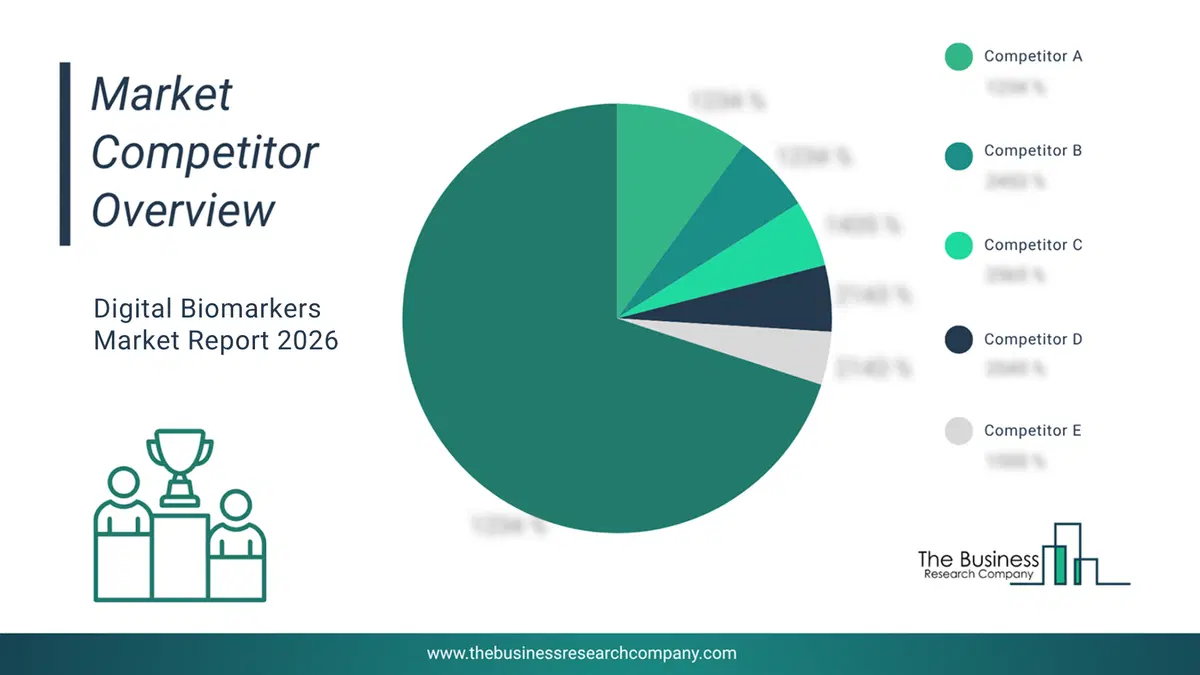
This chart is for illustrative purposes; the full report includes a detailed competitor analysis and comprehensive overview of the top 10 companies in the market.
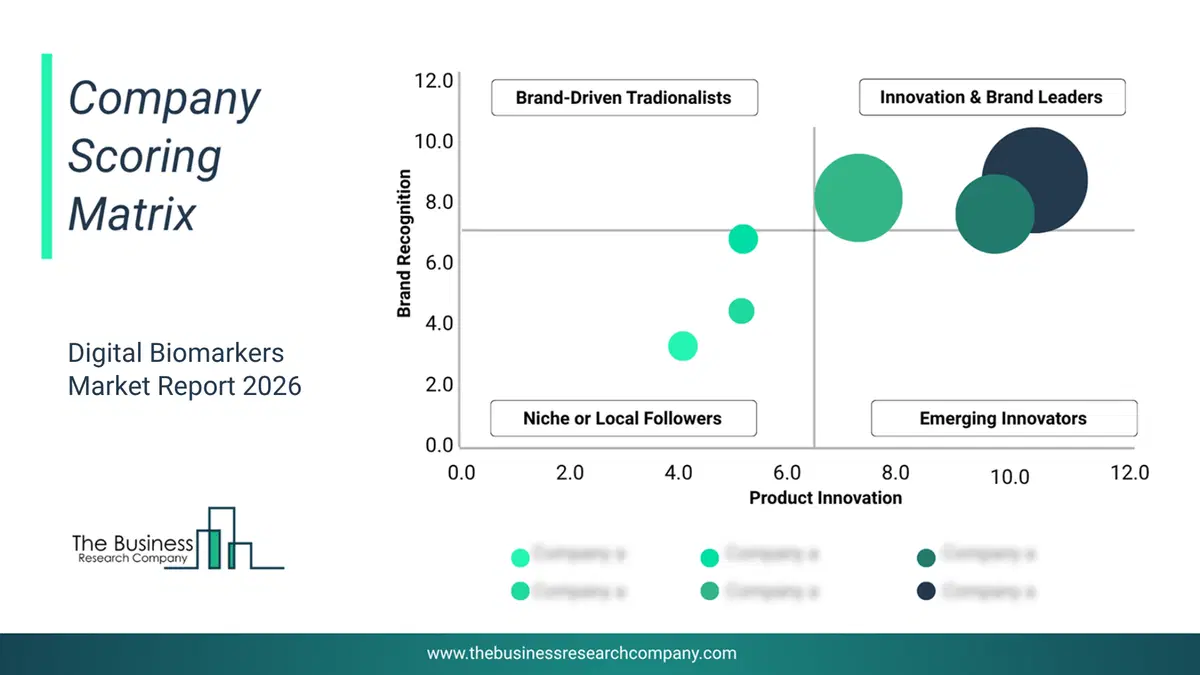
This chart maps companies by product innovation and brand strength, with bubble size indicating relative revenue, helping identify market leaders, challengers, and niche players. This is an illustrative chart; the full report provides a complete and accurate competitive analysis.
Global Digital Biomarkers Market Trends and Insights
Major companies operating in the digital biomarker market are adopting a strategic partnership approach to expand their reach and enhance their service offerings. A strategic partnership typically refers to a collaborative relationship between two or more organizations where they combine their resources, expertise, and efforts to achieve common goals or objectives. For instance, in September 2023, ProofPilot, a US-based clinical trial automation provider, formed a strategic partnership with Eli Lilly and Company, a US-based pharmaceutical company, to integrate Lilly’s innovative, patent-pending sensor cloud platform, Magnol.AI, into ProofPilot's technology suite. Magnol.AI is a cutting-edge platform designed to manage high-frequency sensor data with exceptional security and ease. This collaboration aims to enhance the execution of high-quality digital health research, accelerating pre-competitive biomedical studies. This integration allows researchers to utilize real-time data science capabilities and gain deep insights from sensor data, aligning with clinician and patient-reported outcomes to advance digital health and biomarker research.What Are Latest Mergers And Acquisitions In The Digital Biomarkers Market?
In March 2024, Indivi, a Switzerland-based MedTech company, partnered with Biogen to advance digital health technology and develop digital biomarkers for Parkinson’s disease. With this partnership, Indivi and Biogen aim to develop and validate novel digital endpoints for Parkinson’s disease, enable continuous remote assessment of neurological function, improve precision and frequency of disease-progression measurement, and expand the use of digital biomarker technology into new neurological disease areas. Biogen is a US-based global biotechnology company specializing in therapies for serious neurological diseases and in digital-health research in neuroscience.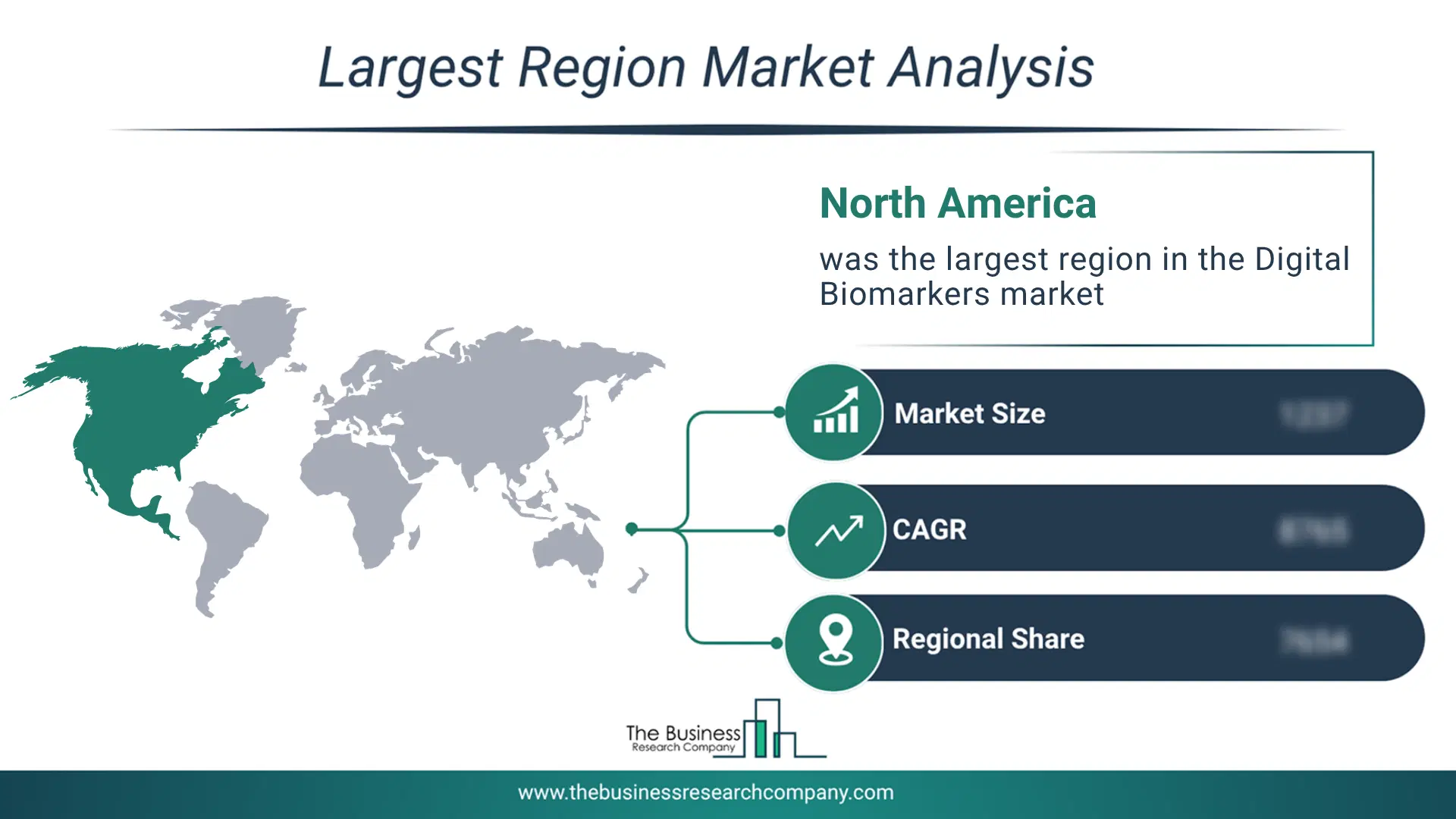
Regional Outlook
North America was the largest region in the digital biomarkers market in 2025. Asia-Pacific is expected to be the fastest-growing region in the forecast period. The regions covered in this market report are Asia-Pacific, South East Asia, Western Europe, Eastern Europe, North America, South America, Middle East, Africa. The countries covered in this market report are Australia, Brazil, China, France, Germany, India, Indonesia, Japan, Taiwan, Russia, South Korea, UK, USA, Canada, Italy, Spain.What Defines the Digital Biomarkers Market?
The digital biomarkers market consists of revenues earned by entities by providing services such as remote patient monitoring, health data analytics, disease prediction and management, and personalized medicine through the use of wearable devices, mobile health applications, and advanced sensors. The market value includes the value of related goods sold by the service provider or included within the service offering. The digital biomarkers market also includes sales of data analytics platforms, biometric sensors, smart glasses and headsets, voice and speech analysis tools, fitness trackers, and digital health platforms. Values in this market are ‘factory gate’ values, that is the value of goods sold by the manufacturers or creators of the goods, whether to other entities (including downstream manufacturers, wholesalers, distributors and retailers) or directly to end customers. The value of goods in this market includes related services sold by the creators of the goods.How is Market Value Defined and Measured?
The market value is defined as the revenues that enterprises gain from the sale of goods and/or services within the specified market and geography through sales, grants, or donations in terms of the currency (in USD unless otherwise specified). The revenues for a specified geography are consumption values that are revenues generated by organizations in the specified geography within the market, irrespective of where they are produced. It does not include revenues from resales along the supply chain, either further along the supply chain or as part of other products.
This chart presents market attractiveness based on a quantitative evaluation of growth, competition, strategic alignment, and risk, offering a clear view of opportunity areas for decision-making. This chart is for illustrative purposes; the full report contains the complete analysis.

This chart highlights the Total Addressable Market (TAM) by estimating the maximum revenue opportunity using an assumption-driven approach, supporting strategic planning and opportunity sizing across markets. The chart is illustrative; the full report provides a more comprehensive analysis.
What Key Data and Analysis Are Included in the Digital Biomarkers Market Report 2026?
The digital biomarkers market research report is one of a series of new reports from The Business Research Company that provides market statistics, including industry global market size, regional shares, competitors with the market share, detailed market segments, market trends and opportunities, and any further data you may need to thrive in the digital biomarkers industry. The market research report delivers a complete perspective of everything you need, with an in-depth analysis of the current and future state of the industry.Digital Biomarkers Market Report Forecast Analysis
| Report Attribute | Details |
|---|---|
| Market Size Value In 2026 | $6.26 billion |
| Revenue Forecast In 2030 | $15.77 billion |
| Growth Rate | CAGR of 26% from 2026 to 2030 |
| Base Year For Estimation | 2025 |
| Actual Estimates/Historical Data | 2020-2025 |
| Forecast Period | 2026 - 2030 |
| Market Representation | Revenue in USD Billion and CAGR from 2026 to 2030 |
| Segments Covered | Type, Clinical Practice, Application, End User |
| Regional Scope | Asia-Pacific, Western Europe, Eastern Europe, North America, South America, Middle East, Africa |
| Country Scope | The countries covered in the report are Australia, Brazil, China, France, Germany, India, Indonesia, Japan, Taiwan, Russia, South Korea, UK, USA, Canada, Italy, Spain |
| Key Companies Profiled | Pfizer Inc, Bayer AG, F Hoffmann-La Roche Ltd, Eli Lilly and Company, Koninklijke Philips NV (Philips), GE Healthcare, Biogen Inc, Garmin Ltd., Clario, Verily Life Sciences LLC, Altoida Inc., BioSerenity, Ōura Health Oy., Evidation Health Inc, AliveCor Inc, Empatica Inc, ActiGraph LLC, VivoSense Inc, BioSensics LLC, Koneksa Health Inc, ATCOR Medical Pty Ltd, Brainomix Limited |
| Customization Scope | Request for Customization |
| Pricing And Purchase Options | Explore Purchase Options |