
Digital Twin Stadium Lighting Market Report 2026
Global Outlook – By Component (Software, Hardware, Services), By Technology (Internet of Things (IoT), Artificial Intelligence (AI) And Analytics, Three-Dimensional (3D) Modeling, Other Technologies), By Deployment Mode (On-Premises, Cloud), By Application (Sports Arenas, Concert Venues, Multipurpose Stadiums, Other Applications), By End-User (Professional Sports Teams, Stadium Operators) – Market Size, Trends, Strategies, and Forecast to 2030
Digital Twin Stadium Lighting Market Overview
• Digital Twin Stadium Lighting market size has reached to $1.37 billion in 2025 • Expected to grow to $3.22 billion in 2030 at a compound annual growth rate (CAGR) of 18.6% • Growth Driver: The Increasing Number Of Sporting Events Is Fueling The Growth Of The Market Due To Rising Demand For Live Entertainment And Enhanced Stadium Experiences • Market Trend: Partnerships Driving Innovation In Next-Generation Stadium Experiences • North America was the largest region in 2025 and Asia-Pacific is the fastest growing region.What Is Covered Under Digital Twin Stadium Lighting Market?
Digital twin stadium lighting is a virtual replica technology of a stadium’s lighting system that mirrors real-world performance in real time. It allows operators to monitor, analyze, and optimize lighting conditions, energy consumption, and maintenance schedules. The digital twin stadium lighting system also enables virtual testing of lighting scenarios before on-site implementation, minimizing operational risks and costs. The main components of digital twin stadium lighting are software, hardware, and services. Software refers to platforms and applications that enable the simulation, monitoring, and optimization of lighting systems in stadiums. It utilizes various technologies such as the internet of things (IoT), artificial intelligence (AI) and analytics, three-dimensional (3D) modeling, and others, and isdeployed through several deployment modes, including on-premises and cloud. It is applicable in various applications, such as sports arenas, concert venues, multipurpose stadiums, and others, and is used by multiple end-users, including professional sports teams, stadium operators, event organizers, and others.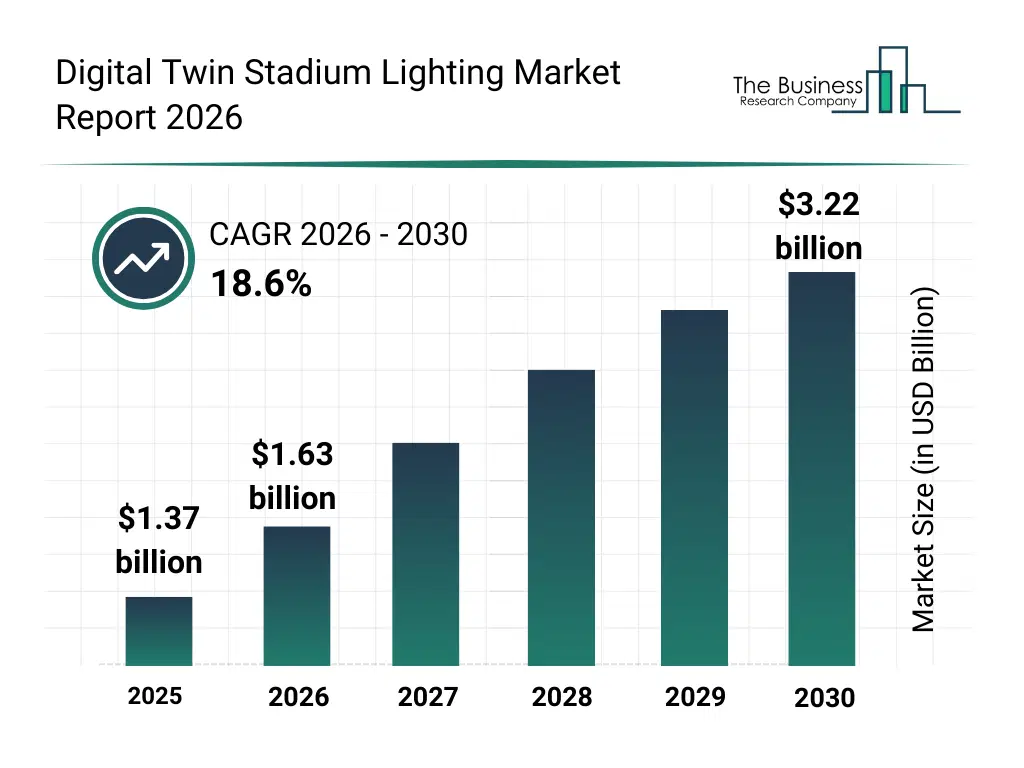
What Is The Digital Twin Stadium Lighting Market Size and Share 2026?
The digital twin stadium lighting market size has grown rapidly in recent years. It will grow from $1.37 billion in 2025 to $1.63 billion in 2026 at a compound annual growth rate (CAGR) of 19.0%. The growth in the historic period can be attributed to development of smart stadium infrastructure, increasing adoption of LED stadium lighting, rising complexity of large venue operations, growth of data-driven facility management, expansion of connected building technologies.What Is The Digital Twin Stadium Lighting Market Growth Forecast?
The digital twin stadium lighting market size is expected to see rapid growth in the next few years. It will grow to $3.22 billion in 2030 at a compound annual growth rate (CAGR) of 18.6%. The growth in the forecast period can be attributed to increasing investments in digital twin platforms, rising demand for sustainable stadium operations, expansion of cloud-based lighting management systems, growing use of AI-driven optimization tools, increasing focus on fan experience enhancement. Major trends in the forecast period include increasing adoption of real-time lighting simulation models, rising integration of iot-enabled smart lighting systems, expansion of predictive maintenance capabilities, growing focus on energy optimization and efficiency, enhanced virtual testing of lighting scenarios.
Global Digital Twin Stadium Lighting Market Segmentation
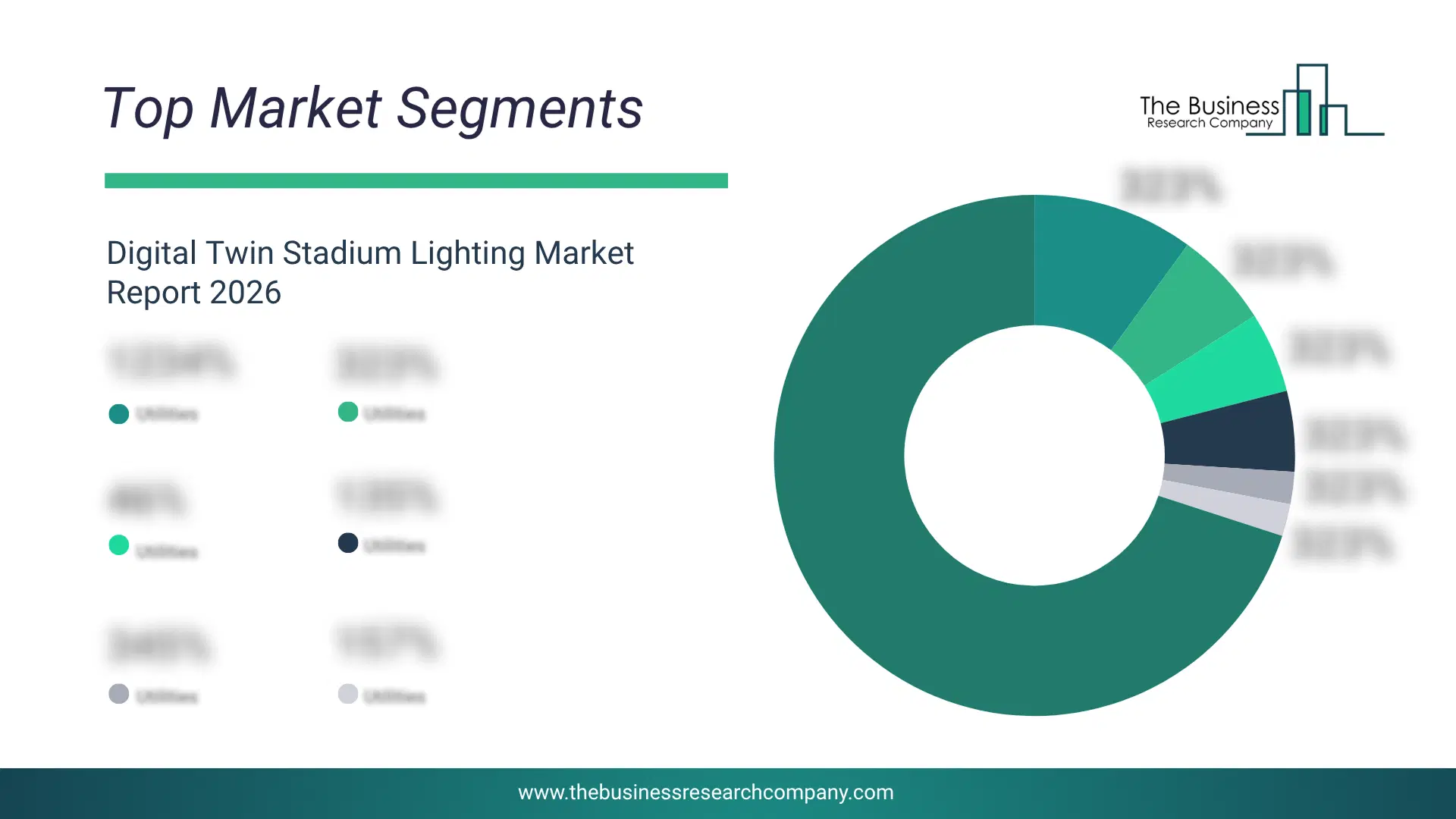
1) By Component: Software, Hardware, Services 2) By Technology: Internet of Things (IoT), Artificial Intelligence (AI) And Analytics, Three-Dimensional (3D) Modeling, Other Technologies 3) By Deployment Mode: On-Premises, Cloud 4) By Application: Sports Arenas, Concert Venues, Multipurpose Stadiums, Other Applications 5) By End-User: Professional Sports Teams, Stadium Operators Subsegments: 1) By Software: Simulation And Modeling Software, Lighting Management Software, Predictive Maintenance Software, Energy Optimization Software, Data Analytics And Visualization Tools 2) By Hardware: Light Emitting Diode (LED) Stadium Lights, Smart Sensors And Internet of Things (IoT) Devices, Controllers And Gateways, Networking Equipment 3) By Services: Installation And Integration Services, Consulting And System Design Services, Maintenance And Support Services, Training And Technical Support, Remote Monitoring And Management ServicesWhat Are The Drivers Of The Digital Twin Stadium Lighting Market?
The increasing number of sporting events is expected to propel the growth of the digital twin stadium lighting market going forward. Sporting events are organized competitions where athletes or teams compete in sports to showcase skill and entertain audiences. The rise in sporting events is driven by growing demand for live entertainment as audiences look for excitement, social interaction, and a shared sense of community through sports. Digital twin stadium lighting supports sporting events by replicating the lighting system virtually to allow real-time monitoring, predictive maintenance, and energy efficiency while ensuring optimal illumination that elevates player performance, audience experience, and event operations. For instance, in April 2025, according to the Department of Community Development, a UAE-based government office, in 2024, Abu Dhabi hosted 145 sports and community events that brought together participants from 122 nationalities. The number of people participating in these events increased by 33%, reaching 481,300 compared to 362,000 in 2023. Therefore, the increasing number of sporting events is driving the growth of the digital twin stadium lighting industry. The growth in construction of new stadiums is expected to propel the growth of the digital twin stadium lighting market. Construction of new stadiums involves a multi-phase process starting with detailed planning and site selection, where architects, engineers, and stakeholders assess capacity needs, location suitability based on access, soil stability, and environmental factors, followed by feasibility studies for budget and design concepts. The growth in construction of new stadiums is increasing due to rising investments by governments and private entities to support major sporting events and enhance urban infrastructure. The digital twin stadium lighting market supports the growth in construction of new stadiums by enabling advanced lighting design, real-time performance simulation, and energy optimization during planning and operational phases. For instance, in January 2024, according to the Sports Business Journal (SBJ), a US-based leading multiplatform media company, in 2024, cumulative construction spending on completed projects in the U.S. and Canada climbed to roughly $5.8 billion, an 18% increase compared with 2023.Key Players In The Global Digital Twin Stadium Lighting Market
Major companies operating in the digital twin stadium lighting market are Samsung Electronics Co Ltd, Panasonic Corporation, Eaton Corporation plc, Wipro Lighting Limited, Signify NV, ams OSRAM AG, Valmont Industries Inc, Acuity Brands Inc, GE Vernova Inc, Musco Lighting LLC, Schréder Group GIE, Thorn Lighting GmbH, Siteco Beleuchtungstechnik GmbH, Abacus Lighting Ltd, Aeon Lighting Technology Inc, OnePlan Limited, Simio LLC, Hakke India Private Limited, Veltrox Industries Private Limited, GS LIGHT.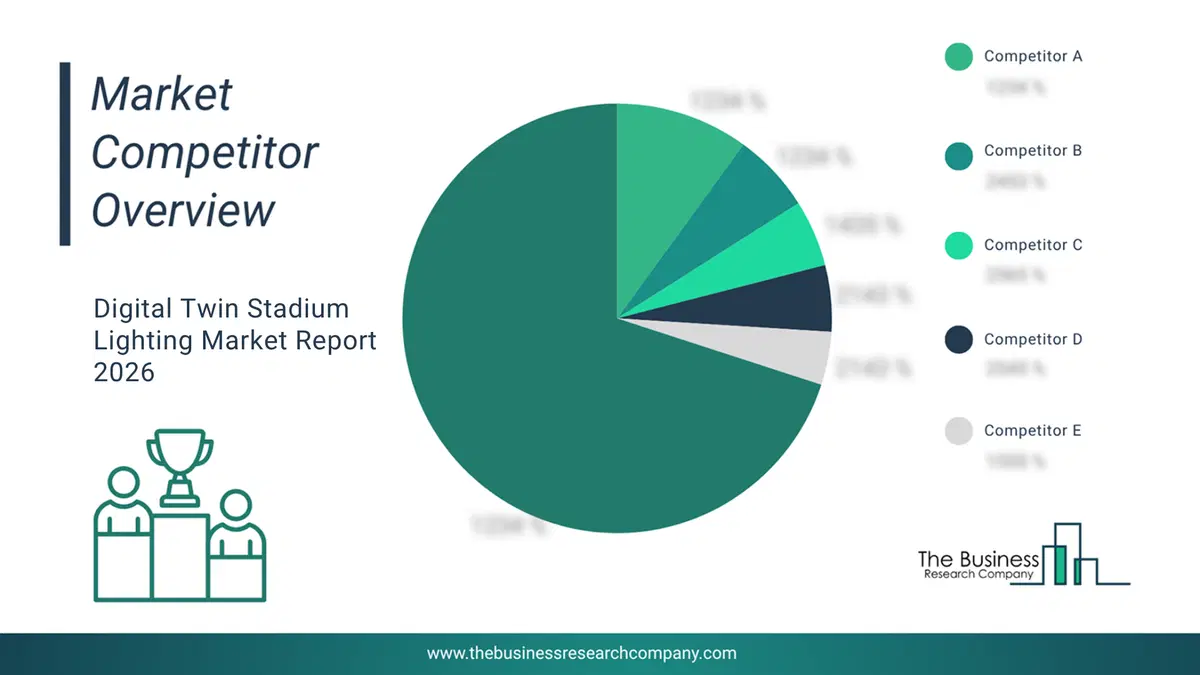
This chart is for illustrative purposes; the full report includes a detailed competitor analysis and comprehensive overview of the top 10 companies in the market.
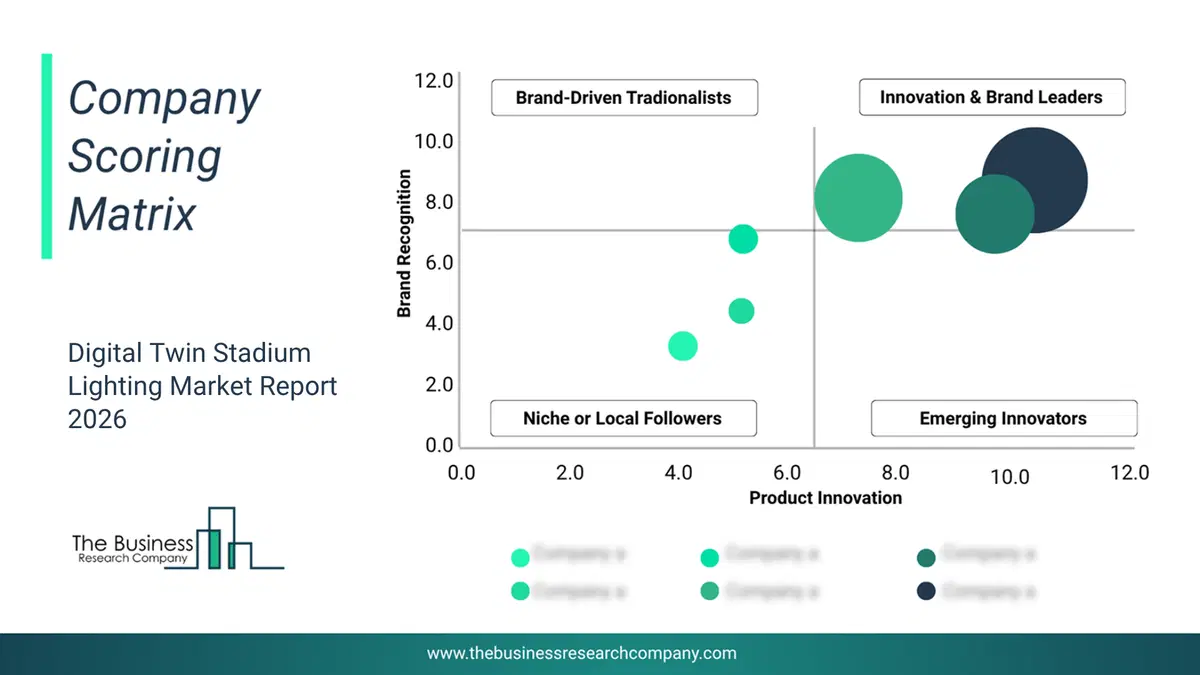
This chart maps companies by product innovation and brand strength, with bubble size indicating relative revenue, helping identify market leaders, challengers, and niche players. This is an illustrative chart; the full report provides a complete and accurate competitive analysis.
Global Digital Twin Stadium Lighting Market Trends and Insights
Major companies operating in the digital twin stadium lighting market are focusing on adopting strategic partnerships to deliver integrated lighting solutions for modern stadiums. Strategic partnerships involve collaboration between companies to leverage resources, expertise, and technologies for shared objectives, helping them expand market reach, accelerate innovation, and gain competitive advantages. For instance, in April 2024, The Kraft Group, a US-based, privately held holding company, partnered with Team D3, a US-based consulting and technology solutions firm, to create a comprehensive digital twin of Gillette Stadium and the adjacent Patriot Place complex. This digital twin uses advanced Building Information Modeling (BIM) and Geographic Information Systems (GIS) to create a data-rich virtual replica that enhances venue operations, security, safety planning, and guest experience year-round. The collaboration marks Team D3's first digital twin project for a sports venue and aims to optimize logistics, event planning, and immersive virtual experiences for Gillette Stadium, home to the New England Patriots and Revolution.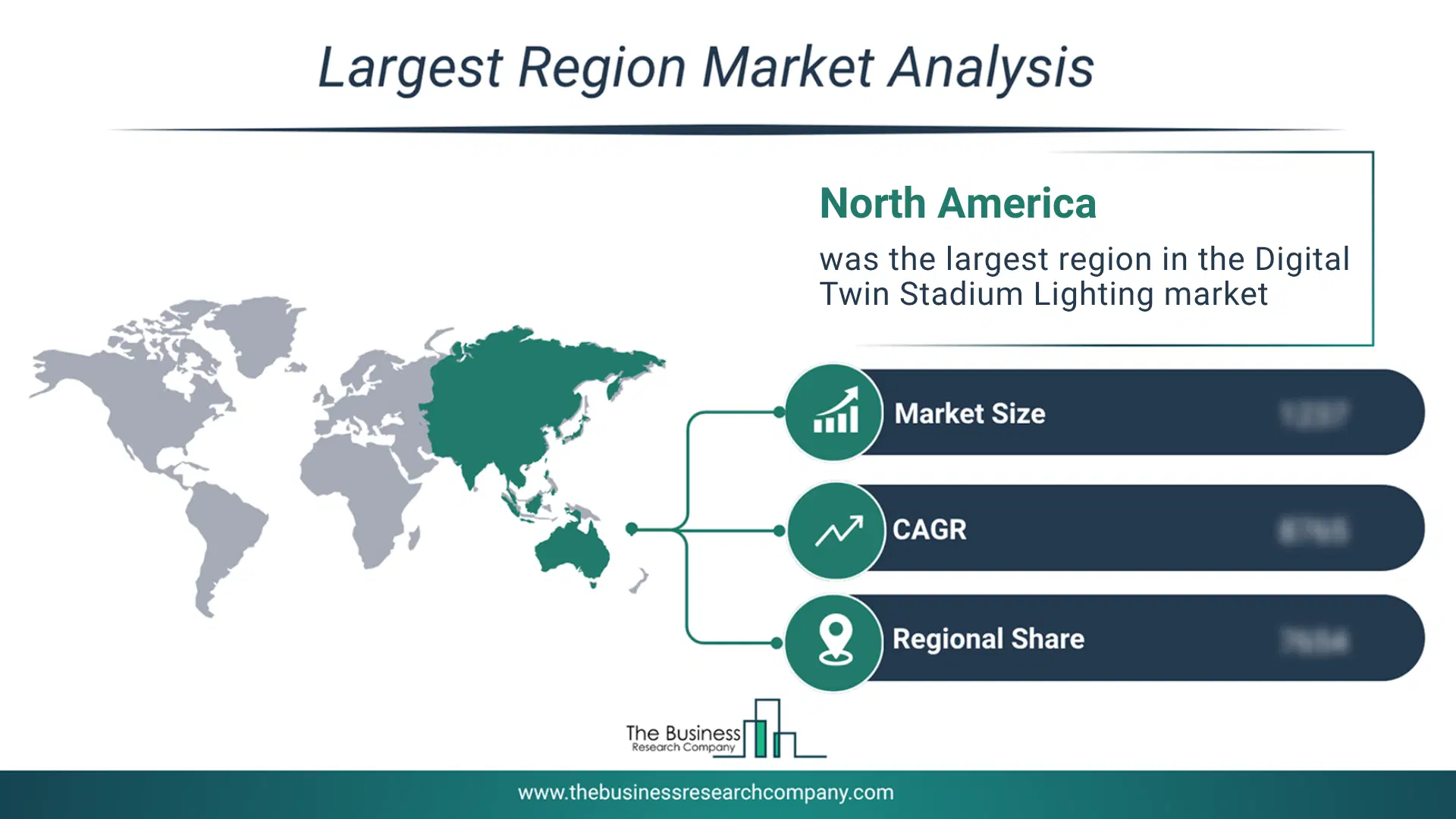
Regional Outlook
North America was the largest region in the digital twin stadium lighting market in 2025. Asia-Pacific is expected to be the fastest-growing region in the forecast period. The regions covered in this market report are Asia-Pacific, South East Asia, Western Europe, Eastern Europe, North America, South America, Middle East, Africa The countries covered in this market report are Australia, Brazil, China, France, Germany, India, Indonesia, Japan, Taiwan, Russia, South Korea, UK, USA, Canada, Italy, Spain.What Defines the Digital Twin Stadium Lighting Market?
The digital twin stadium lighting market consists of revenues earned by entities by providing services such as installation and integration services, remote monitoring and management services, predictive maintenance, energy management services, and training and support. The market value includes the value of related goods sold by the service provider or included within the service offering. The digital twin stadium lighting market also includes sales of light-emitting diode (LED) stadium lights, smart lighting controllers, light sensors, motion sensors, and digital twin software platforms. Values in this market are ‘factory gate’ values, that is, the value of goods sold by the manufacturers or creators of the goods, whether to other entities (including downstream manufacturers, wholesalers, distributors, and retailers) or directly to end customers. The value of goods in this market includes related services sold by the creators of the goods.How is Market Value Defined and Measured?
The market value is defined as the revenues that enterprises gain from the sale of goods and/or services within the specified market and geography through sales, grants, or donations in terms of the currency (in USD unless otherwise specified). The revenues for a specified geography are consumption values that are revenues generated by organizations in the specified geography within the market, irrespective of where they are produced. It does not include revenues from resales along the supply chain, either further along the supply chain or as part of other products.
This chart presents market attractiveness based on a quantitative evaluation of growth, competition, strategic alignment, and risk, offering a clear view of opportunity areas for decision-making. This chart is for illustrative purposes; the full report contains the complete analysis.

This chart highlights the Total Addressable Market (TAM) by estimating the maximum revenue opportunity using an assumption-driven approach, supporting strategic planning and opportunity sizing across markets. The chart is illustrative; the full report provides a more comprehensive analysis.
What Key Data and Analysis Are Included in the Digital Twin Stadium Lighting Market Report 2026?
The digital twin stadium lighting market research report is one of a series of new reports from The Business Research Company that provides market statistics, including Market Report 2026?global market size, regional shares, competitors with the market share, detailed market segments, market trends and opportunities, and any further data you may need to thrive in the digital twin stadium lighting Market Report 2026? The market research report delivers a complete perspective of everything you need, with an in-depth analysis of the current and future state of the Market Report 2026?Digital Twin Stadium Lighting Market Report Forecast Analysis
| Report Attribute | Details |
|---|---|
| Market Size Value In 2026 | $1.63 billion |
| Revenue Forecast In 2030 | $3.22 billion |
| Growth Rate | CAGR of 19.0% from 2026 to 2030 |
| Base Year For Estimation | 2025 |
| Actual Estimates/Historical Data | 2020-2025 |
| Forecast Period | 2026 - 2030 |
| Market Representation | Revenue in USD Billion and CAGR from 2026 to 2030 |
| Segments Covered | Component, Technology, Deployment Mode, Application, End-User |
| Regional Scope | Asia-Pacific, Western Europe, Eastern Europe, North America, South America, Middle East, Africa |
| Country Scope | The countries covered in the report are Australia, Brazil, China, France, Germany, India, Indonesia, Japan, Taiwan, Russia, South Korea, UK, USA, Canada, Italy, Spain. |
| Key Companies Profiled | Samsung Electronics Co Ltd, Panasonic Corporation, Eaton Corporation plc, Wipro Lighting Limited, Signify NV, ams OSRAM AG, Valmont Industries Inc, Acuity Brands Inc, GE Vernova Inc, Musco Lighting LLC, Schréder Group GIE, Thorn Lighting GmbH, Siteco Beleuchtungstechnik GmbH, Abacus Lighting Ltd, Aeon Lighting Technology Inc, OnePlan Limited, Simio LLC, Hakke India Private Limited, Veltrox Industries Private Limited, GS LIGHT. |
| Customization Scope | Request for Customization |
| Pricing And Purchase Options | Explore Purchase Options |