
Digital Twin Urban Lighting Network Market Report 2026
Global Outlook – By Component (Software, Hardware, Services), By Deployment Mode (On-Premises, Cloud), By Connectivity (Wired, Wireless), By Application (Energy Consumption Optimization, Fault Detection And Predictive Maintenance, Lighting Asset Management, Smart Street Lighting Control, Urban Infrastructure Planning And Simulation, Emergency Response And Safety Enhancements), By End-User (Municipalities, Utilities, Commercial Enterprises, Other End-Users) – Market Size, Trends, Strategies, and Forecast to 2030
Digital Twin Urban Lighting Network Market Overview
• Digital Twin Urban Lighting Network market size has reached to $2.35 billion in 2025 • Expected to grow to $7.29 billion in 2030 at a compound annual growth rate (CAGR) of 25.4% • Growth Driver: Budget Allocation Towards Smart Infrastructure Is Fueling The Growth Of The Market Due To Enhanced Efficiency And Optimized Resource Use • Market Trend: Looq AI Unveils DigitalTwinAI Platform To Revolutionize Smart City Lighting And Infrastructure Management • North America was the largest region in 2025 and Asia-Pacific is the fastest growing region.What Is Covered Under Digital Twin Urban Lighting Network Market?
Digital twin urban lighting network is a real-time digital replica of an urban lighting system, created using high-resolution geospatial data and light detection and ranging-based 3dimension mapping. It allows for accurate visualization, simulation, and analysis of lighting assets across city environments, enabling proactive management and optimization of performance. This virtual model enhances decision-making by providing a continuously updated, precise representation of the physical infrastructure. The main components of digital twin urban lighting networks are software, hardware, and services. Software is a set of instructions, programs, or data that enables a computer or device to perform specific tasks and operations. The different deployment modes are on-premises and cloud. The various connections are wired or wireless. The various applications involved are energy consumption optimization, fault detection and predictive maintenance, lighting asset management, smart street lighting control, urban infrastructure planning and simulation, and emergency response and safety enhancements, and they are used by several end-users, such as municipalities, utilities, commercial enterprises, and others.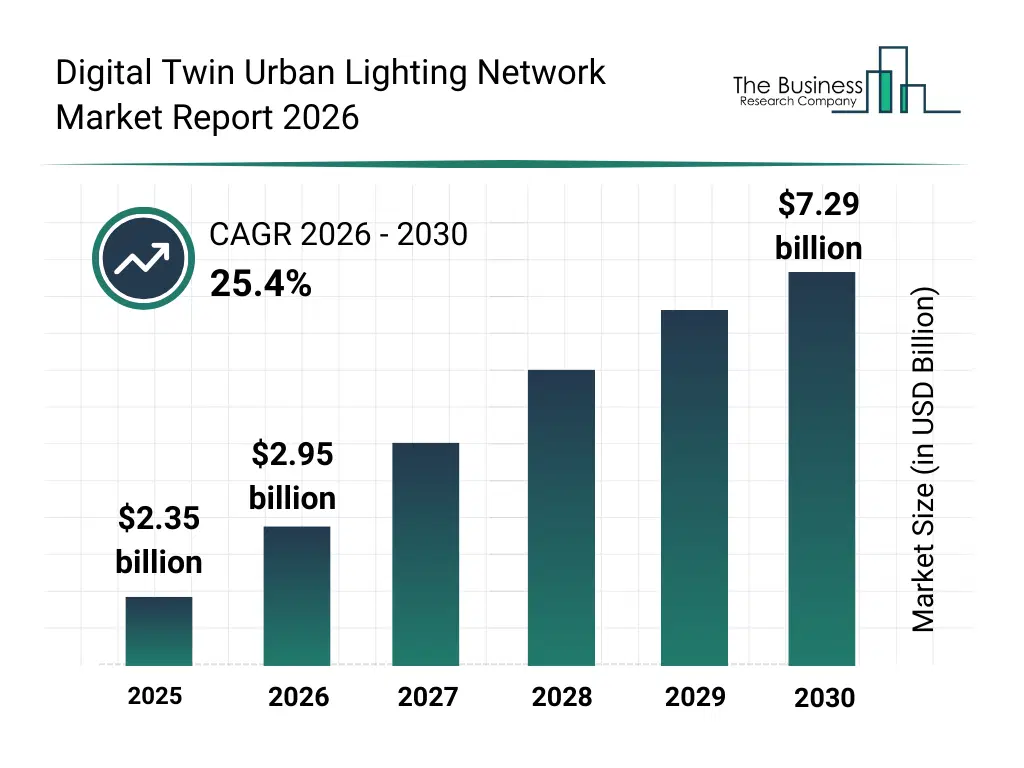
What Is The Digital Twin Urban Lighting Network Market Size and Share 2026?
The digital twin urban lighting network market size has grown exponentially in recent years. It will grow from $2.35 billion in 2025 to $2.95 billion in 2026 at a compound annual growth rate (CAGR) of 25.5%. The growth in the historic period can be attributed to expansion of smart city initiatives, replacement of legacy street lighting systems, increasing adoption of led lighting infrastructure, availability of urban iot sensor networks, early implementation of digital city models.What Is The Digital Twin Urban Lighting Network Market Growth Forecast?
The digital twin urban lighting network market size is expected to see exponential growth in the next few years. It will grow to $7.29 billion in 2030 at a compound annual growth rate (CAGR) of 25.4%. The growth in the forecast period can be attributed to increasing investments in smart urban infrastructure, rising demand for data-driven city management, expansion of cloud-native municipal platforms, growing focus on carbon-neutral cities, increasing use of ai-enabled urban analytics. Major trends in the forecast period include increasing deployment of real-time lighting digital twins, rising use of predictive maintenance for street lighting, growing integration of geospatial and lidar data, expansion of cloud-based urban lighting platforms, enhanced focus on energy consumption optimization.
Global Digital Twin Urban Lighting Network Market Segmentation
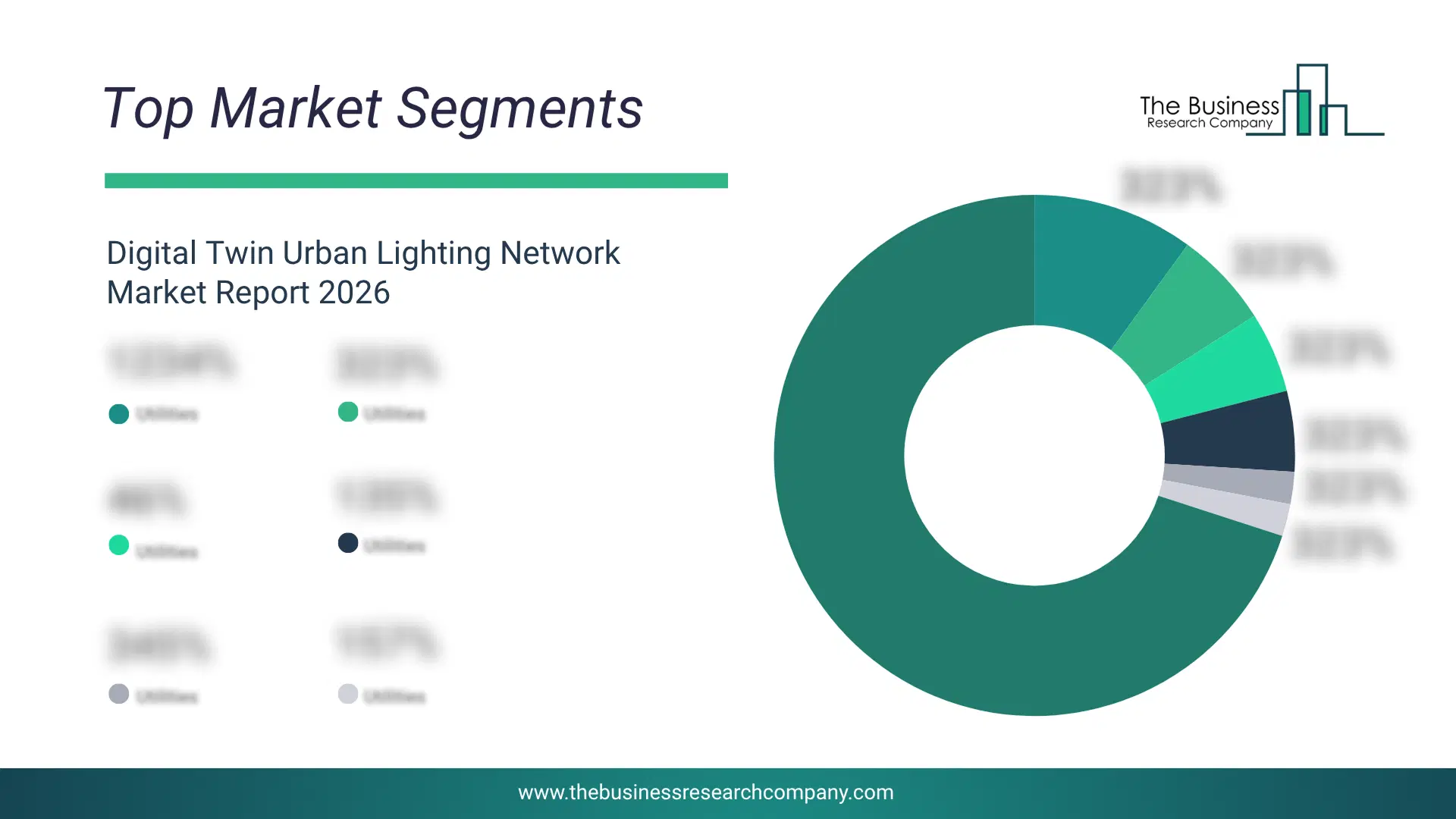
1) By Component: Software, Hardware, Services 2) By Deployment Mode: On-Premises, Cloud 3) By Connectivity: Wired, Wireless 4) By Application: Energy Consumption Optimization, Fault Detection And Predictive Maintenance, Lighting Asset Management, Smart Street Lighting Control, Urban Infrastructure Planning And Simulation, Emergency Response And Safety Enhancements 5) By End-User: Municipalities, Utilities, Commercial Enterprises, Other End-Users Subsegments: 1) By Software: Cloud-Based Platforms, Desktop Applications, Mobile Applications, Analytics And Reporting Tools, Security And Compliance Software 2) By Hardware: Internet Of Things (IoT) Devices, Edge Computing Devices, Networking Equipment, Smart Terminals, Data Storage Devices 3) By Services: Consulting And Implementation Services, Maintenance And Support Services, Training And Certification Services, Managed Services, Integration ServicesWhat Is The Driver Of The Digital Twin Urban Lighting Network Market?
The increasing allocation of budgetary resources towards smart infrastructure is expected to propel the growth of the digital twin urban lighting network going forward. Smart infrastructure refers to the integration of advanced technologies, such as sensors, IoT, and data analytics, into physical systems to enhance efficiency, safety, sustainability, and real-time decision-making. The increase in allocating budgetary resources towards smart infrastructure is rising due to the need for greater efficiency and cost savings, as smart infrastructure uses real-time data and automation to optimize resource use and reduce operational expenses. Directing budgetary resources to smart infrastructure supports digital twin urban lighting networks by enabling the deployment of IoT sensors, connectivity systems, and data platforms that allow real-time monitoring, predictive maintenance, and efficient energy management of city lighting. For instance, in July 2024, in July 2024, according to the Office for National Statistics (ONS), a UK-based government department, in 2023, total investment in the infrastructure sector reached £13.8 billion (around USD 17.3 billion) at constant prices, representing a 3.9% increase from 2022. Therefore, the increasing allocation of budgetary resources towards smart infrastructure is driving the growth of the digital twin urban lighting network industry.Key Players In The Global Digital Twin Urban Lighting Network Market
Major companies operating in the digital twin urban lighting network market are Siemens AG, Cisco Systems Inc, Ericsson, Signify N.V, Zumtobel Group AG, Schreder S.A, Quantela Inc, Ubicquia Inc, TOTEM S.A, Paradox Engineering SA, Juganu Ltd, Akselos SA, Eagleprojects Srl, BizzTech Solutions Pvt Ltd, blueOASIS Ltd, Looq AI Inc, Des Moines GIS Team, vCity Ltd, TwinUp S.A, Planète GreenLeaves S.A.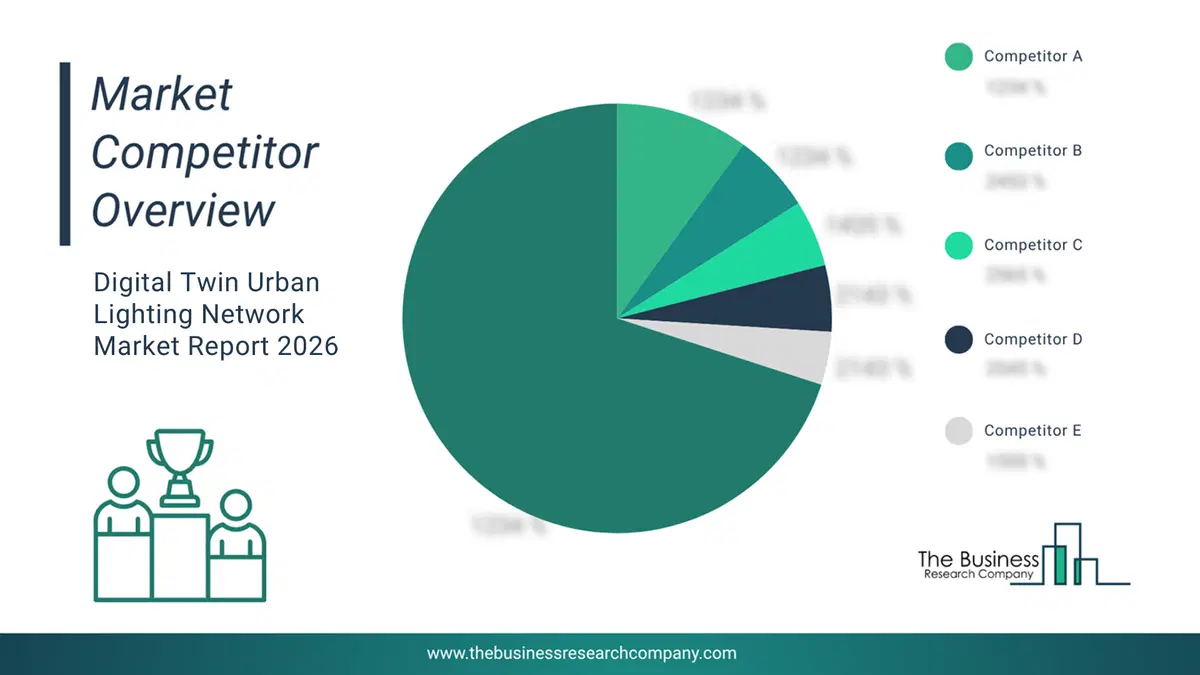
This chart is for illustrative purposes; the full report includes a detailed competitor analysis and comprehensive overview of the top 10 companies in the market.
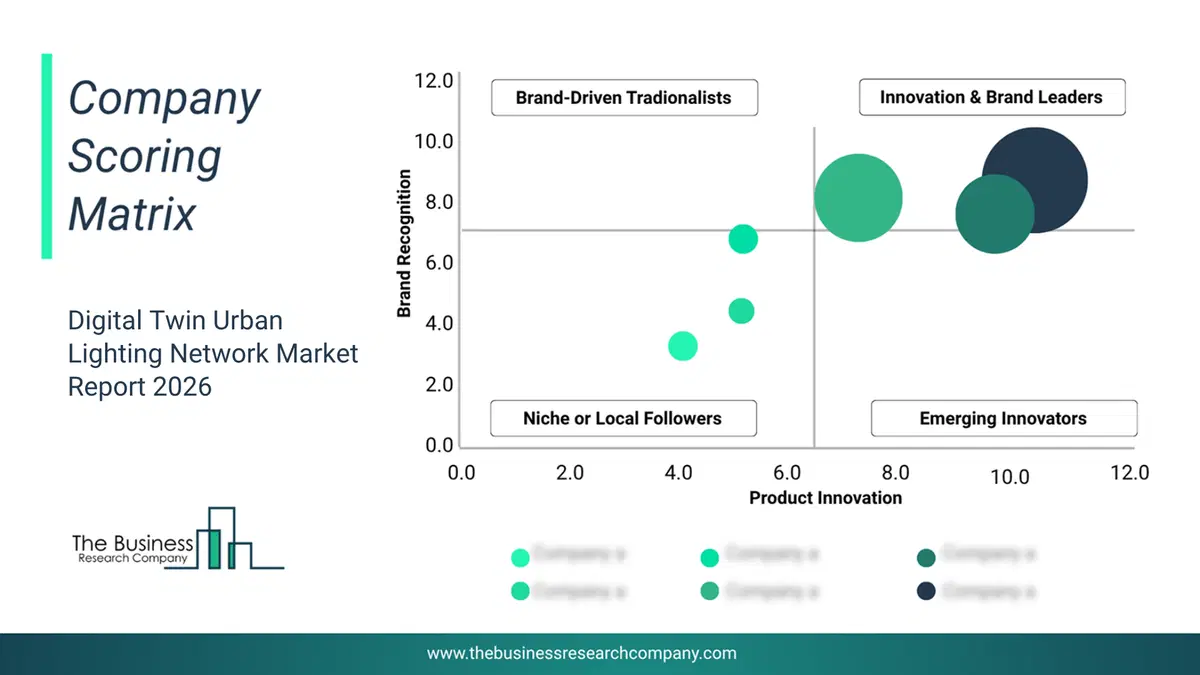
This chart maps companies by product innovation and brand strength, with bubble size indicating relative revenue, helping identify market leaders, challengers, and niche players. This is an illustrative chart; the full report provides a complete and accurate competitive analysis.
Global Digital Twin Urban Lighting Network Market Trends and Insights
Major companies operating in the digital twin urban lighting network market are focusing on developing advanced solutions, such as DigitalTwinAI, to enhance smart city infrastructure, internet of things (IoT) integration, and real-time lighting management. DigitalTwinAI refers to a technology platform that combines digital twin modelling with artificial intelligence to create virtual replicas of physical urban lighting systems. It enables real-time monitoring, predictive maintenance, optimization of energy usage, and enhanced internet of things (IoT)-driven smart city management. For instance, in February 2024, Looq AI, a US-based hardware-enabled, artificial intelligence (AI)-powered survey technology company, launched its groundbreaking artificial intelligence (AI)-enabled digital twin technology, the Looq platform, a one-stop solution for surveyors, engineers, contractors, and asset owners to digitally map the physical world infrastructure in minutes, with survey-grade accuracy, enabling them to build and uphold a safer, more sustainable, and electrified future. Powered by novel and fundamental computer vision and artificial intelligence (AI) technology, the Looq platform now enables the frequent and large-scale digitization of critical infrastructure for true asset intelligence.What Are Latest Mergers And Acquisitions In The Digital Twin Urban Lighting Network Market?
In Nivember 2024, MetaWorldX Inc., a leading provider of digital twin technology solutions, partnered with Libelium Comunicaciones Distribuidas S.L., to enhance smart city solutions worldwide. Through this partnership, MetaWorldX and Libelium aim to integrate digital twin technology with IoT devices, such as smart lighting, air quality sensors, and parking sensors, to provide city officials with real-time insights and predictive capabilities that optimize urban operations and improve sustainability. Libelium Comunicaciones Distribuidas S.L. is a Spain-based company that develops IoT devices and solutions, enabling cities to monitor and manage their infrastructure.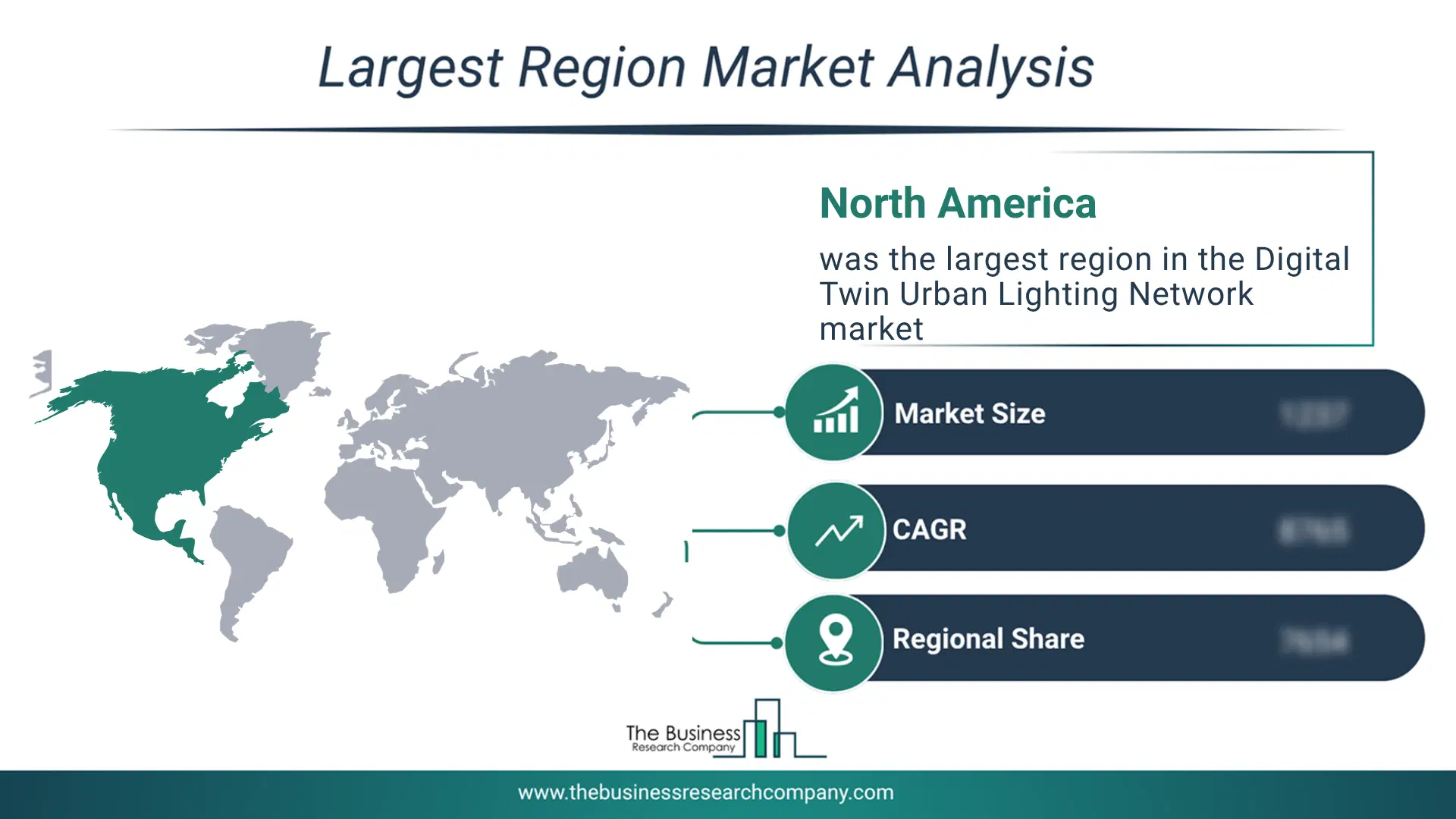
Regional Outlook
North America was the largest region in the digital twin urban lighting network market in 2025. Asia-Pacific is expected to be the fastest-growing region in the forecast period. The regions covered in this market report are Asia-Pacific, South East Asia, Western Europe, Eastern Europe, North America, South America, Middle East, Africa. The countries covered in this market report are Australia, Brazil, China, France, Germany, India, Indonesia, Japan, Taiwan, Russia, South Korea, UK, USA, Canada, Italy, SpainWhat Defines the Digital Twin Urban Lighting Network Market?
The digital twin urban lighting network market consists of revenues earned by entities by providing services such as system integration, maintenance and support, training and education, data analytics and reporting, remote monitoring services, and implementation services. The market value includes the value of related goods sold by the service provider or included within the service offering. The digital twin urban lighting network market also includes sales of smart street lights, sensors, controllers, and energy meters. Values in this market are ‘factory gate’ values—that is, the value of goods sold by the manufacturers or creators of the goods, whether to other entities (including downstream manufacturers, wholesalers, distributors, and retailers) or directly to end customers. The value of goods in this market includes related services sold by the creators of the goods.How is Market Value Defined and Measured?
The market value is defined as the revenues that enterprises gain from the sale of goods and/or services within the specified market and geography through sales, grants, or donations in terms of the currency (in USD unless otherwise specified). The revenues for a specified geography are consumption values that are revenues generated by organizations in the specified geography within the market, irrespective of where they are produced. It does not include revenues from resales along the supply chain, either further along the supply chain or as part of other products.
This chart presents market attractiveness based on a quantitative evaluation of growth, competition, strategic alignment, and risk, offering a clear view of opportunity areas for decision-making. This chart is for illustrative purposes; the full report contains the complete analysis.

This chart highlights the Total Addressable Market (TAM) by estimating the maximum revenue opportunity using an assumption-driven approach, supporting strategic planning and opportunity sizing across markets. The chart is illustrative; the full report provides a more comprehensive analysis.
What Key Data and Analysis Are Included in the Digital Twin Urban Lighting Network Market Report 2026?
The digital twin urban lighting network market research report is one of a series of new reports from The Business Research Company that provides market statistics, including Market Report 2026?global market size, regional shares, competitors with the market share, detailed market segments, market trends and opportunities, and any further data you may need to thrive in the digital twin urban lighting network Market Report 2026? The market research report delivers a complete perspective of everything you need, with an in-depth analysis of the current and future state of the Market Report 2026?Digital Twin Urban Lighting Network Market Report Forecast Analysis
| Report Attribute | Details |
|---|---|
| Market Size Value In 2026 | $2.95 billion |
| Revenue Forecast In 2030 | $7.29 billion |
| Growth Rate | CAGR of 25.5% from 2026 to 2030 |
| Base Year For Estimation | 2025 |
| Actual Estimates/Historical Data | 2020-2025 |
| Forecast Period | 2026 - 2030 - 2030 |
| Market Representation | Revenue in USD Billion and CAGR from 2026 to 2030 |
| Segments Covered | Component, Deployment Mode, Connectivity, Application, End-User |
| Regional Scope | Asia-Pacific, Western Europe, Eastern Europe, North America, South America, Middle East, Africa |
| Country Scope | The countries covered in the report are Australia, Brazil, China, France, Germany, India, Indonesia, Japan, Taiwan, Russia, South Korea, UK, USA, Canada, Italy, Spain. |
| Key Companies Profiled | Siemens AG, Cisco Systems Inc, Ericsson, Signify N.V, Zumtobel Group AG, Schreder S.A, Quantela Inc, Ubicquia Inc, TOTEM S.A, Paradox Engineering SA, Juganu Ltd, Akselos SA, Eagleprojects Srl, BizzTech Solutions Pvt Ltd, blueOASIS Ltd, Looq AI Inc, Des Moines GIS Team, vCity Ltd, TwinUp S.A, Planète GreenLeaves S.A. |
| Customization Scope | Request for Customization |
| Pricing And Purchase Options | Explore Purchase Options |