

Distributed Wind Market Report 2026
Global Outlook – By Turbine Type (Small (Under 100 kW), Mid-Size (100 kW - 500 MW), Large-Scale (Over 500 kW)), By Installation Type (On-Grid, Off-Grid), By Application (Residential, Agricultural, Industrial, Government, Institutional, Commercial) – Market Size, Trends, Strategies, and Forecast to 2030
Distributed Wind Market Overview
• Distributed Wind market size has reached to $5.24 billion in 2025 • Expected to grow to $6.97 billion in 2030 at a compound annual growth rate (CAGR) of 5.8% • Growth Driver: Increasing Demand for Local Energy Generation Drives Growth in the Distributed Wind Market • Market Trend: Strategic Partnerships Boost Technological Advancements and Market Expansion in the Distributed Wind Sector • North America was the largest region in 2025.Market Gains By 2030 – Top Opportunities By Segment
Market Gain identifies the most promising market opportunities by highlighting the segments or products expected to generate the highest incremental revenue growth over the next five years.
What Is Covered Under Distributed Wind Market?
Distributed wind refers to the generation of electricity from wind turbines that are located near the point of use, typically providing power directly to homes, businesses, farms, or small communities rather than to a large, centralized grid. The primary purpose of distributed wind is to generate renewable energy on-site or nearby to reduce dependence on grid-supplied electricity, lower energy costs, and decrease carbon emissions. The main types of turbines in the distributed wind market are small (under 100 kw), mid-size (100 kw - 500 mw), and large-scale (over 500 kw). Small distributed wind systems produce less than 100 kW of power and are mainly used for individual homes, farms, and small businesses. They can be installed either on-grid or off-grid, with applications spanning residential, agricultural, industrial, governmental, institutional, and commercial sectors.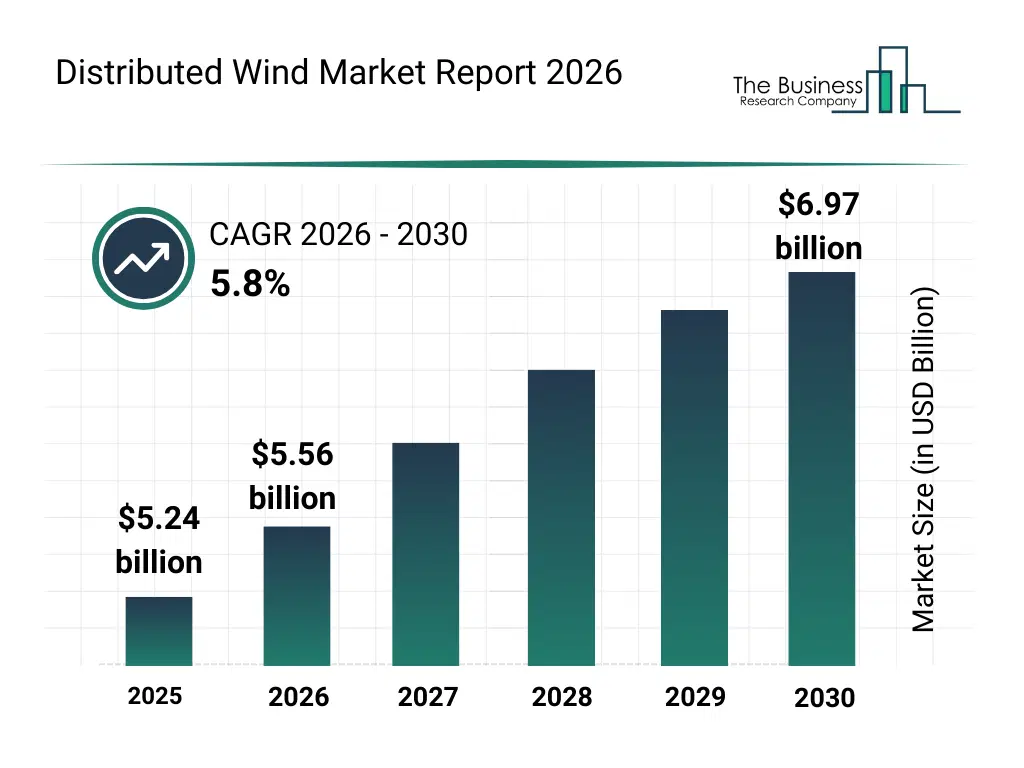
What Is The Distributed Wind Market Size and Share 2026?
The distributed wind market size has grown strongly in recent years. It will grow from $5.24 billion in 2025 to $5.56 billion in 2026 at a compound annual growth rate (CAGR) of 6.1%. The growth in the historic period can be attributed to rising electricity demand in rural areas, increasing interest in on-site renewable generation, availability of small wind turbine technologies, early government incentives for distributed energy, grid reliability concerns.What Is The Distributed Wind Market Growth Forecast?
The distributed wind market size is expected to see strong growth in the next few years. It will grow to $6.97 billion in 2030 at a compound annual growth rate (CAGR) of 5.8%. The growth in the forecast period can be attributed to increasing investments in decentralized energy systems, rising adoption of microgrids, growing demand for low-carbon electricity solutions, expansion of agricultural and industrial on-site generation, advancements in turbine efficiency and durability. Major trends in the forecast period include increasing adoption of small-scale wind turbines, rising deployment of hybrid wind-solar systems, growing use of community wind projects, expansion of off-grid wind installations, enhanced focus on grid-interactive distributed wind.
Global Distributed Wind Market Segmentation
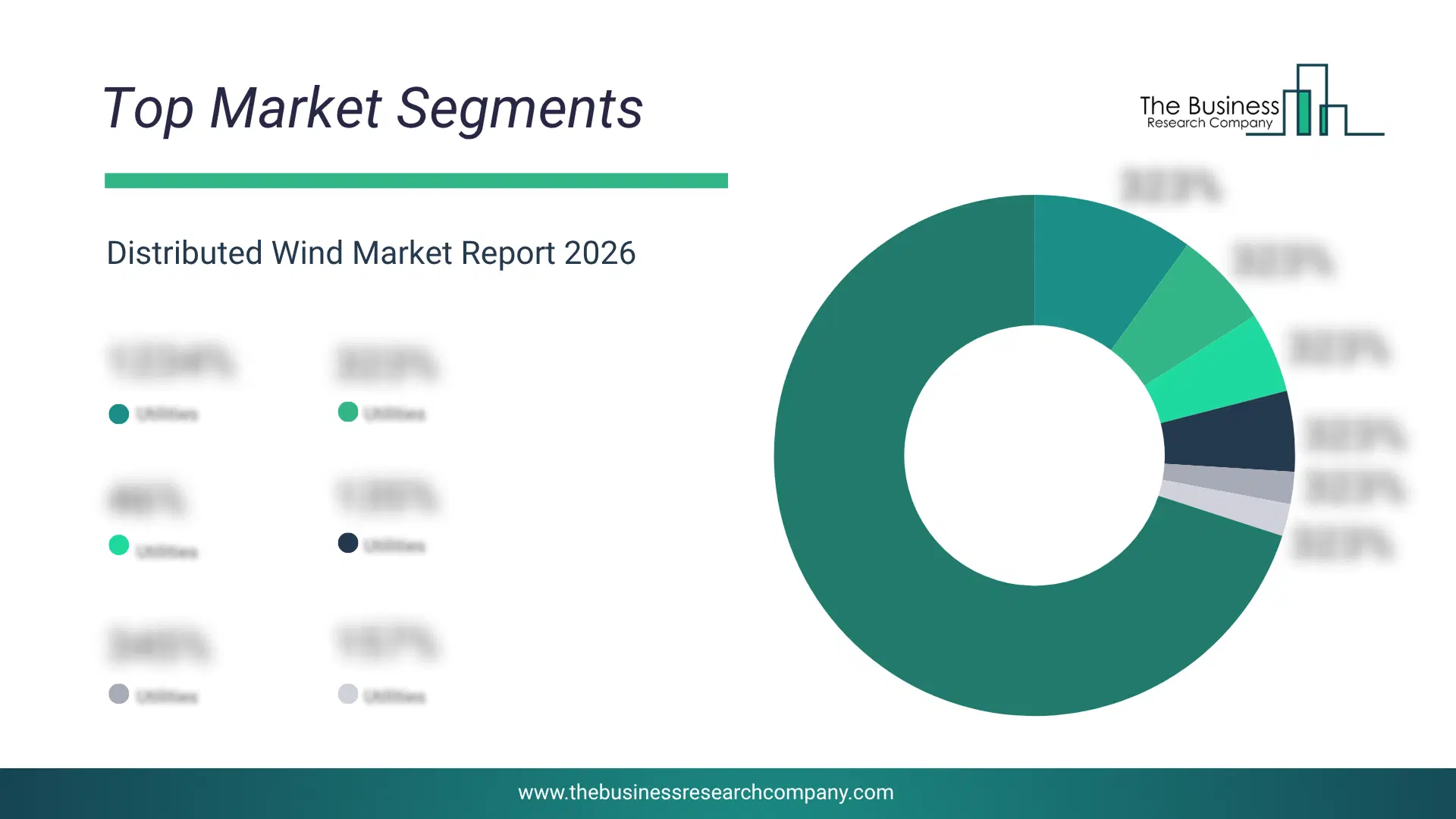
1) By Turbine Type: Small (Under 100 kW), Mid-Size (100 kW - 500 MW), Large-Scale (Over 500 kW) 2) By Installation Type: On-Grid, Off-Grid 3) By Application: Residential, Agricultural, Industrial, Government, Institutional, Commercial Subsegments: 1) By Small (Under 100 kW): Horizontal-Axis Wind Turbines (HAWT), Vertical-Axis Wind Turbines (VAWT), Micro Wind Turbines, Off-Grid Small Wind Turbines, Hybrid Wind-Solar Systems, Portable Wind Turbines 2) By Mid-Size (100 kW - 500 kW): Horizontal-Axis Wind Turbines (HAWT), Vertical-Axis Wind Turbines (VAWT), Grid-Connected Mid-Size Wind Turbines, Community Wind Systems, Distributed Generation Systems For Farms Or Factories 3) By Large-Scale (Over 500 kW): Horizontal-Axis Wind Turbines (HAWT), Grid-Connected Large-Scale Wind Turbines, Offshore Wind Turbines For Distributed Systems, Utility-Scale Distributed Wind Projects, Industrial And Commercial Large-Scale Wind Turbines, Repowering Of Existing Wind Projects The top segments in the distributed wind market will be: • Small (Under 100 kW) will reach $2.95 Billion by 2030. • Mid-Size (100 kW - 500 MW) will reach $2.41 Billion by 2030. • Large-Scale (Over 500 kW) will reach $1.29 Billion by 2030.What Is The Driver Of The Distributed Wind Market?
The increasing demand for renewable energy generation is expected to propel the growth of the distributed wind market going forward. Renewable energy generation refers to the process of producing electricity by using sources such as solar panels or wind turbines to improve reliability, reduce transmission losses, and increase energy independence. Renewable energy generation is primarily necessary due to environmental concerns, energy security, and economic benefits, enabling more sustainable and resilient energy systems. Renewable energy generation supports distributed wind by allowing the use of small-scale wind turbines closer to where the energy is consumed, reducing transmission losses, enhancing grid stability, and promoting energy independence and sustainability. For instance, in December 2024, according to the Eurostat, a Luxembourg-based government agency, in 2023, renewable energy represented 24.5% of total energy consumption in the EU, up from 23.0% in 2022. Therefore, the increasing demand for renewable energy generation is driving the growth of distributed wind industry.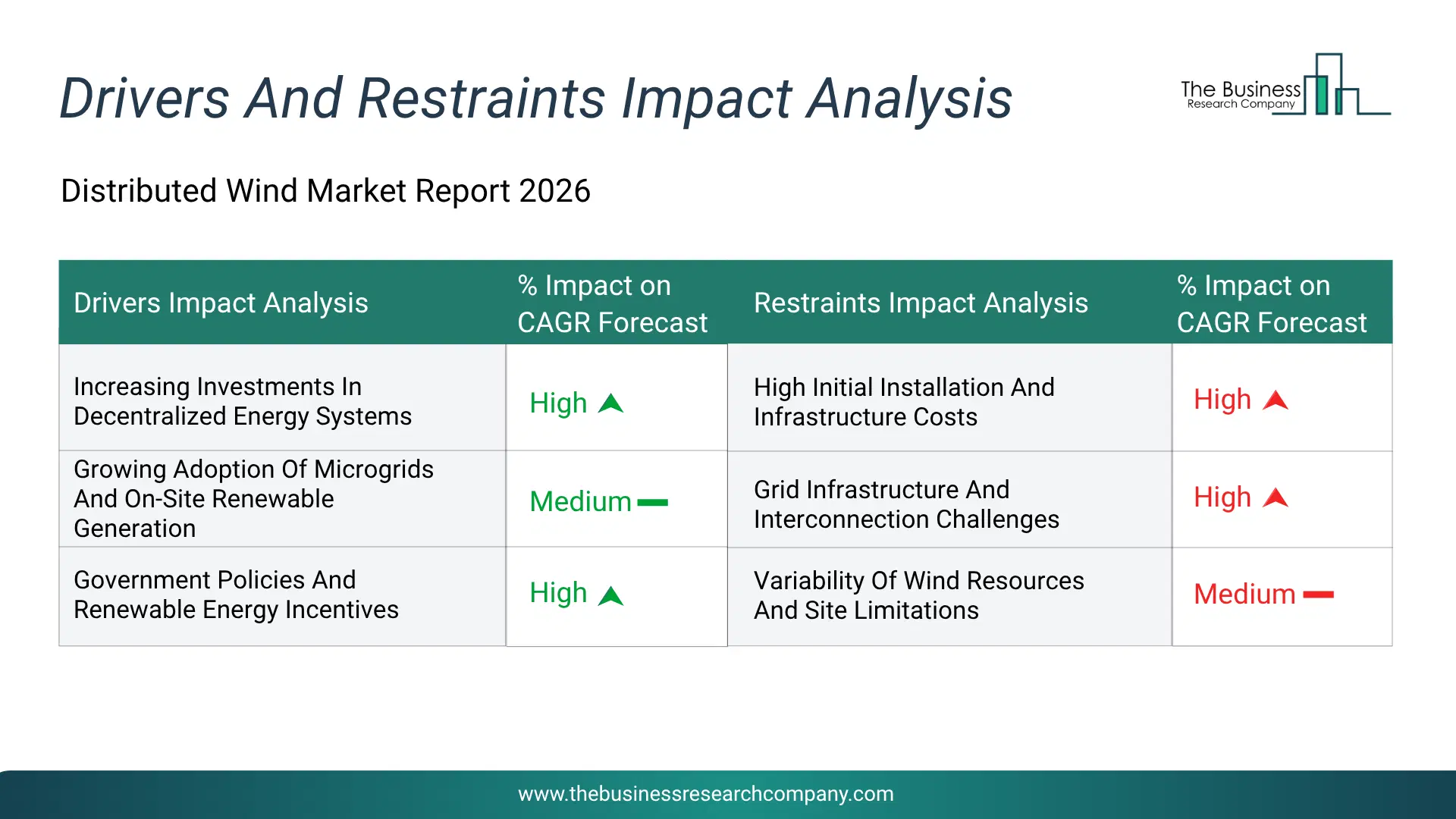
Infographic Chart Showing Key Market Drivers Analysis And Restraints For Distributed Wind Market
The chart presents an impact analysis of key drivers and restraints, quantifying their relative influence on the market's growth rate and helping assess the balance between growth enablers and limiting factors. This chart offers a high-level perspective; the full report contains more detailed insights.
How Will The Drivers Impact Growth In The Global Distributed Wind Market?
• Increasing Investments In Decentralized Energy Systems (High) – During the forecast period, the increasing investments in decentralized energy systems are expected to become a key growth driver for the distributed wind market by 2030. Governments, utilities, and private organizations are focusing on localized renewable energy infrastructure to enhance energy accessibility, improve power reliability, and reduce dependence on centralized electricity networks. Distributed wind installations enable farms, businesses, and communities to generate electricity near consumption points while lowering operational costs. Increasing funding for supporting technologies such as energy storage, smart controls, and grid integration solutions is further improving the efficiency and deployment of distributed wind projects. • Growing Adoption Of Microgrids And On-Site Renewable Generation (Medium) – During the forecast period,the growing adoption of microgrids and on-site renewable generation is expected to emerge as a major factor driving the expansion of the distributed wind market by 2030. Businesses, industrial facilities, agricultural users, and remote communities are increasingly implementing localized energy systems to improve electricity security and reduce transmission dependency. Distributed wind turbines are becoming an important part of hybrid energy networks by supporting reliable renewable power generation close to end users. Advancements in integrated wind, solar, and battery storage solutions are enhancing system performance and commercial feasibility. • Government Policies And Renewable Energy Incentives (High) – During the forecast period,the government policies and renewable energy incentives are expected to act as a key growth catalyst for the distributed wind market by 2030. Supportive programs including clean energy targets, financial incentives, rural electrification initiatives, and renewable power schemes are encouraging wider deployment of small and community-scale wind systems. These policies help reduce project costs and improve adoption among residential, commercial, and agricultural users. Increasing global focus on carbon reduction and sustainable energy transition is further strengthening regulatory support for distributed renewable technologies.How Will The Restraints Impact Growth In The Global Distributed Wind Market?
• High Initial Installation And Infrastructure Costs (High) – During the forecast period, the high initial installation and infrastructure costs represent a major restraint for the distributed wind market because the deployment of distributed wind systems requires substantial upfront capital investment. The costs associated with wind turbines, tower structures, inverters, battery storage systems, grid connection equipment, land preparation, and engineering services can be financially challenging for residential users, small businesses, and farming communities. In addition to equipment expenses, distributed wind projects often require site-specific wind resource assessments, permitting approvals, transportation logistics, and specialized installation services, all of which increase overall project costs. Maintenance requirements and periodic component replacement also add to long-term ownership expenses. In many regions, limited access to financing and inconsistent incentive structures further reduce the affordability of distributed wind projects. Smaller-scale distributed installations may also experience higher per-unit costs compared to utility-scale wind farms due to lower economies of scale. These financial barriers can delay investment decisions and limit market penetration, particularly in developing economies and cost-sensitive end-user segments. • Grid Infrastructure And Interconnection Challenges (Medium) – During the forecast period, the grid infrastructure and interconnection challenges are significant restraints for the distributed wind market because many electricity networks are not fully designed to accommodate decentralized renewable energy generation. Distributed wind systems require reliable interconnection processes to integrate locally generated electricity with existing power distribution networks, but outdated grid infrastructure and limited transmission capacity often create operational difficulties. Complex permitting procedures, lengthy approval timelines, inconsistent technical standards, and high interconnection costs can delay project implementation and increase development expenses. In rural and remote locations, insufficient grid availability may require additional investments in transmission lines and supporting electrical infrastructure. Voltage fluctuations, power quality concerns, and grid balancing requirements can also complicate distributed wind integration into local energy systems. Furthermore, regulatory uncertainty regarding net metering policies and electricity export compensation may discourage investment in distributed wind projects. These challenges reduce operational efficiency and create additional financial and technical risks for project developers and end users. • Variability Of Wind Resources And Site Limitations (High) – During the forecast period, the variability of wind resources and site limitations act as important restraints for the distributed wind market because the efficiency and economic viability of distributed wind systems depend heavily on local wind conditions. Wind speeds can vary significantly based on geographic location, seasonal weather patterns, terrain characteristics, and surrounding obstacles such as buildings and trees. In areas with inconsistent or low wind availability, distributed wind turbines may generate insufficient electricity output to justify installation and operational costs. Urban environments and densely populated regions often face additional space constraints, zoning restrictions, and noise-related concerns that limit turbine deployment opportunities. Site-specific assessments are therefore necessary to determine project feasibility, increasing development complexity and planning costs. In addition, unpredictable wind generation can create challenges for maintaining stable electricity supply without supplementary battery storage or backup power systems. These limitations reduce scalability and restrict the adoption of distributed wind technologies in regions lacking suitable wind resources or supportive installation conditions.Key Players In The Global Distributed Wind Market
Major companies operating in the distributed wind market are Siemens AG, General Electric Company, Vestas Wind Systems A/S, Goldwind Science & Technology Co. Ltd., Nordex SE, Enercon GmbH, Suzlon Energy Ltd., Boralex Inc., AeroVironment Inc., Envision Group, Sinovel Wind Group Co. Ltd., Emergya Wind Technologies B.V., Ming Yang Wind Power Group Limited, Clipper Windpower Plc, Guodian United Power Technology Co. Ltd, Northern Power Systems, Pika Energy Inc., Kestrel Renewable Energy, Bergey Windpower Co., Helix Wind Corp., Vortex Bladeless Ltd., Windstream Energy Technologies India Pvt.Ltd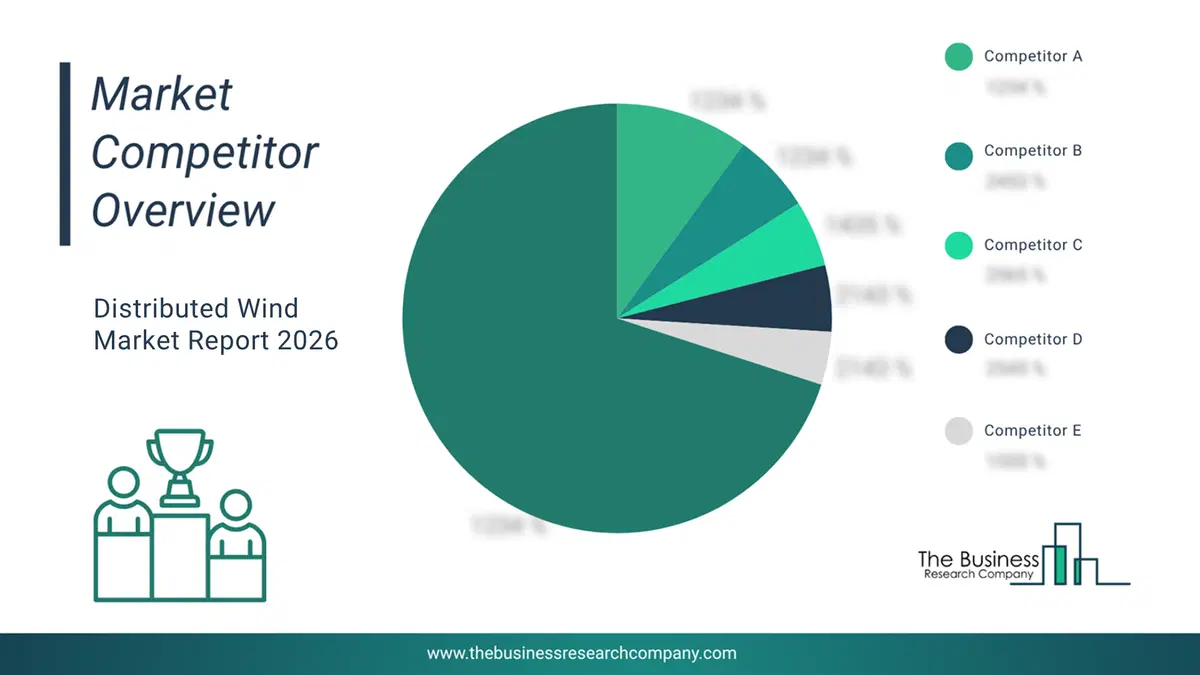
This chart is for illustrative purposes; the full report includes a detailed competitor analysis and comprehensive overview of the top 10 companies in the market.
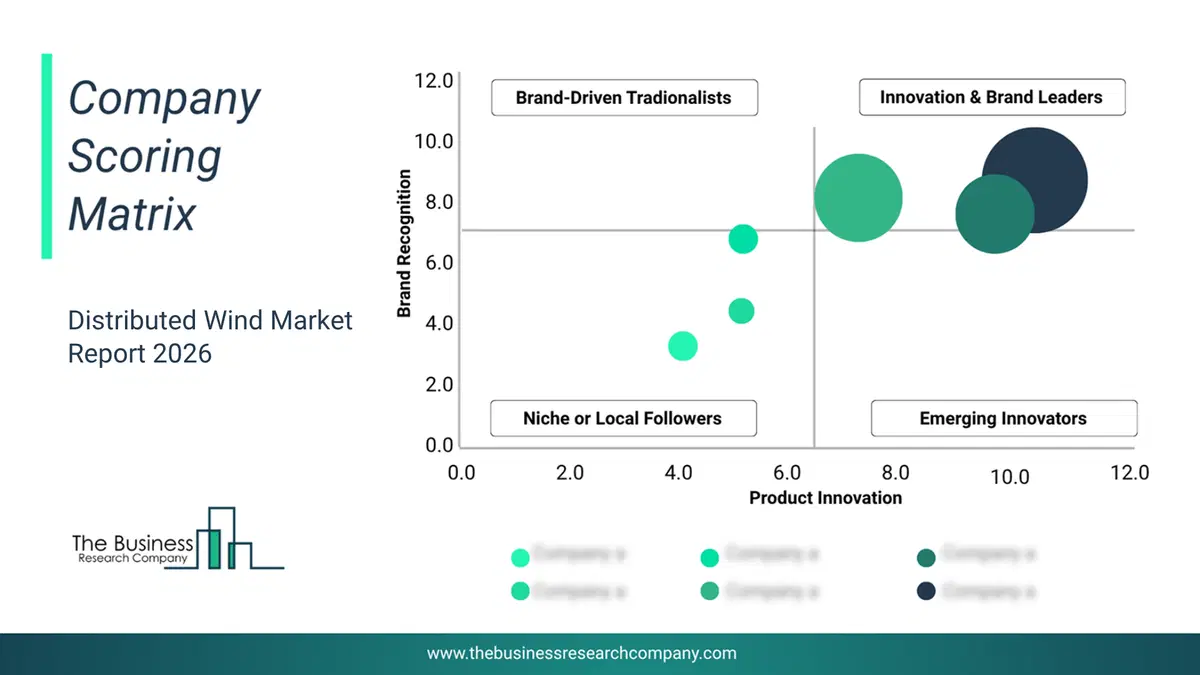
This chart maps companies by product innovation and brand strength, with bubble size indicating relative revenue, helping identify market leaders, challengers, and niche players. This is an illustrative chart; the full report provides a complete and accurate competitive analysis.
Global Distributed Wind Market Trends and Insights
Major companies operating in the distributed wind market are developing strategic partnerships to enhance their technological capabilities, expand market reach, and accelerate the adoption of distributed wind energy solutions. Strategic partnerships in the distributed wind market help by combining resources and expertise, enabling the development of more efficient technologies and expanding access to new markets, ultimately driving broader adoption of distributed wind energy. For instance, in March 2024, National Renewable Energy Laboratory (NREL), a US-based research institute, in collaboration with the Pacific Northwest National Laboratory (PNNL), a US-based laboratory, launched National Distributed Wind Network. This network aims to enhance the deployment of distributed wind energy across the United States by providing essential resources and support to various stakeholders, including farmers, municipalities, and businesses. The initiative will provide technical assistance to communities and organizations looking to implement distributed wind projects, helping to navigate regulatory and financial challenges.What Are Latest Mergers And Acquisitions In The Distributed Wind Market?
In July 2023, Ryse Energy Ltd., a UAE-based renewable energy semiconductor manufacturing company, acquired Primus Wind Power for an undisclosed amount. The acquisition allows Ryse Energy to integrate Primus Wind Power's proven AIR turbines into its existing lineup, expanding its range of high-performance small wind turbines. The acquisition paves the way for establishing manufacturing operations in the United States. Primus Wind Power Inc., is a US-based renewable energy technology manufacturing company specializing in the manufacture of micro wind turbines.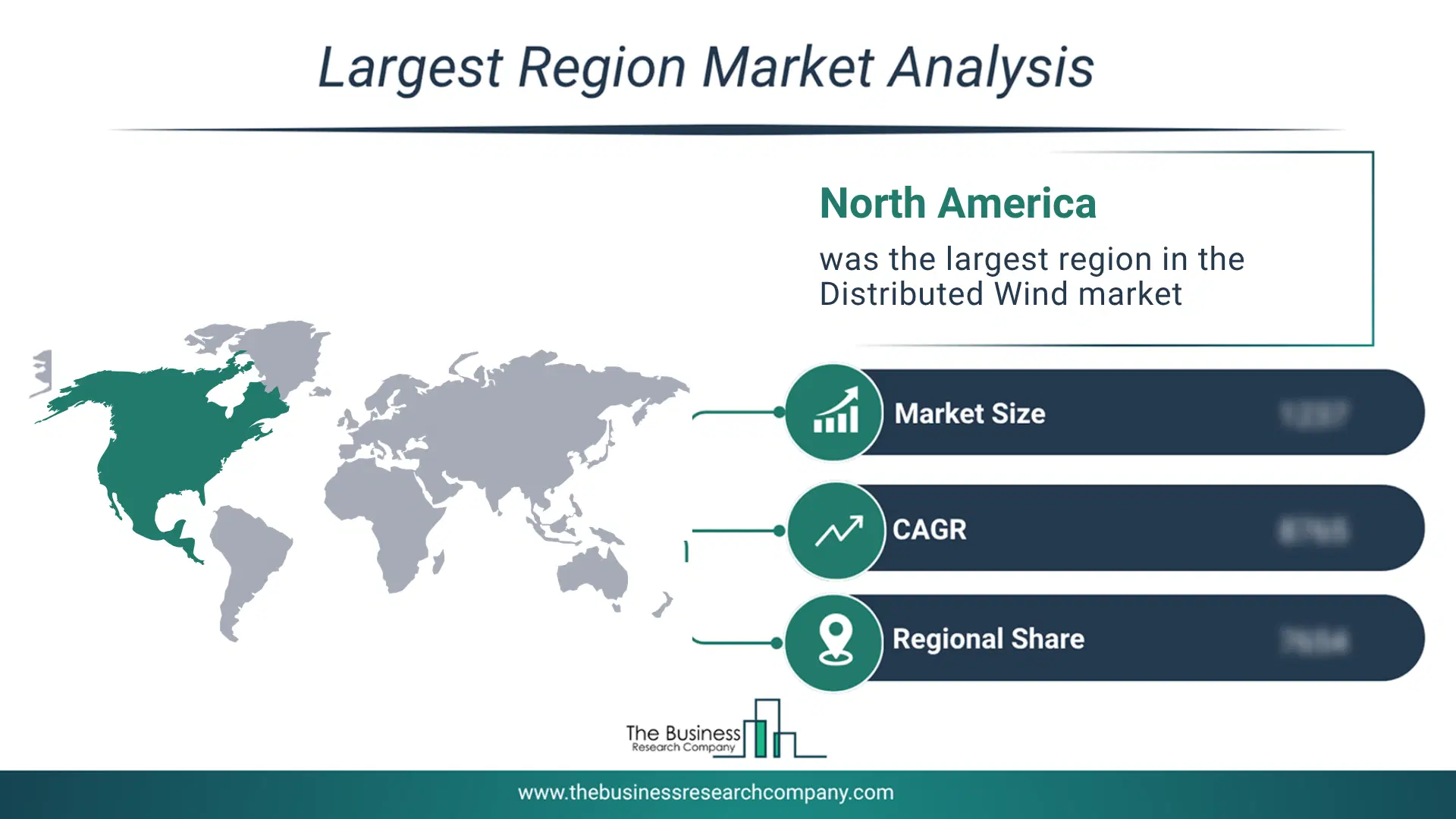
Regional Outlook
North America was the largest region in the distributed wind market in 2025. The regions covered in this market report are Asia-Pacific, South East Asia, Western Europe, Eastern Europe, North America, South America, Middle East, Africa. The countries covered in this market report are Australia, Brazil, China, France, Germany, India, Indonesia, Japan, Taiwan, Russia, South Korea, UK, USA, Canada, Italy, SpainWhat Defines the Distributed Wind Market?
The distributed wind market consists of revenues earned by entities by providing services such as site wind resource assessment, system design and consultation, and installation and construction. The market value includes the value of related goods sold by the service provider or included within the service offering. The distributed wind market also includes sales of wind turbines, inverters, battery storage systems, control systems, tower structures, and grid connection equipment. Values in this market are ‘factory gate’ values, that is the value of goods sold by the manufacturers or creators of the goods, whether to other entities (including downstream manufacturers, wholesalers, distributors and retailers) or directly to end customers. The value of goods in this market includes related services sold by the creators of the goods.How is Market Value Defined and Measured?
The market value is defined as the revenues that enterprises gain from the sale of goods and/or services within the specified market and geography through sales, grants, or donations in terms of the currency (in USD unless otherwise specified). The revenues for a specified geography are consumption values that are revenues generated by organizations in the specified geography within the market, irrespective of where they are produced. It does not include revenues from resales along the supply chain, either further along the supply chain or as part of other products.
This chart presents market attractiveness based on a quantitative evaluation of growth, competition, strategic alignment, and risk, offering a clear view of opportunity areas for decision-making. This chart is for illustrative purposes; the full report contains the complete analysis.

This chart highlights the Total Addressable Market (TAM) by estimating the maximum revenue opportunity using an assumption-driven approach, supporting strategic planning and opportunity sizing across markets. The chart is illustrative; the full report provides a more comprehensive analysis.
What Key Data and Analysis Are Included in the Distributed Wind Market Report 2026?
The distributed wind market research report is one of a series of new reports from The Business Research Company that provides market statistics, including Market Report 2026?global market size, regional shares, competitors with the market share, detailed market segments, market trends and opportunities, and any further data you may need to thrive in the distributed wind Market Report 2026? The market research report delivers a complete perspective of everything you need, with an in-depth analysis of the current and future state of the Market Report 2026?Distributed Wind Market Report Forecast Analysis
| Report Attribute | Details |
|---|---|
| Market Size Value In 2026 | $5.56 billion |
| Revenue Forecast In 2030 | $6.97 billion |
| Growth Rate | CAGR of 6.1% from 2026 to 2030 |
| Base Year For Estimation | 2025 |
| Actual Estimates/Historical Data | 2020-2025 |
| Forecast Period | 2026 - 2030 |
| Market Representation | Revenue in USD Billion and CAGR from 2026 to 2030 |
| Segments Covered | Turbine Type, Installation Type, Application |
| Regional Scope | Asia-Pacific, Western Europe, Eastern Europe, North America, South America, Middle East, Africa |
| Country Scope | The countries covered in the report are Australia, Brazil, China, France, Germany, India, ... |
| Key Companies Profiled | Siemens AG, General Electric Company, Vestas Wind Systems A/S, Goldwind Science & Technology Co. Ltd., Nordex SE, Enercon GmbH, Suzlon Energy Ltd., Boralex Inc., AeroVironment Inc., Envision Group, Sinovel Wind Group Co. Ltd., Emergya Wind Technologies B.V., Ming Yang Wind Power Group Limited, Clipper Windpower Plc, Guodian United Power Technology Co. Ltd, Northern Power Systems, Pika Energy Inc., Kestrel Renewable Energy, Bergey Windpower Co., Helix Wind Corp., Vortex Bladeless Ltd., Windstream Energy Technologies India Pvt.Ltd |
| Customization Scope | Request for Customization |
| Pricing And Purchase Options | Explore Purchase Options |