

DNA Modifying Enzymes Market Report 2026
Global Outlook – By Type (Restriction Enzymes, Polymerases, Ligases, Nucleases, Methylases, Other Enzyme Types), By Applications (Genomics And Gene Editing, Molecular Biology Research, Diagnostics And Forensics, Biotechnology And Synthetic Biology, Diagnostics, Drug Discovery And Development), By End User (Academics And Research Institutes, Pharmaceutical And Biotechnology Companies, Diagnostic Laboratories, Forensic Laboratories, Hospitals And Clinics, Contract Research Organizations) - Market Size, Trends, Strategies, and Forecast to 2030
DNA Modifying Enzymes Market Overview
• DNA Modifying Enzymes market size has reached to $5.08 billion in 2025 • Expected to grow to $10.91 billion in 2030 at a compound annual growth rate (CAGR) of 16.5% • Growth Driver: Rising Genetic Illnesses Fuel Growth In DNA Modifying Enzymes Market • Market Trend: Advancements In DNA Modifying Enzymes • North America was the largest region in 2025.What Is Covered Under DNA Modifying Enzymes Market?
Deoxyribonucleic acid (DNA) modifying enzymes are a group of enzymes that alter the structure or sequence of DNA. They are essential for processes such as DNA replication, repair, recombination, and transcription. DNA modifying enzymes are widely used in molecular biology for gene editing, cloning, and DNA sequencing. Their activity is highly specific, targeting certain DNA sequences or structures. The main types of DNA modifying enzymes are restriction enzymes, polymerases, ligases, nucleases, methylases, and others. Restriction enzymes, or restriction endonucleases, are proteins that cut DNA at specific recognition sequences or sites. The applications include genomics and gene editing, molecular biology research, diagnostics and forensics, biotechnology and synthetic biology, diagnostics, and drug discovery and development and are used by various end users, such as academics and research institutes, pharmaceutical and biotechnology companies, diagnostic laboratories, forensic laboratories, hospitals and clinics, and contract research organizations.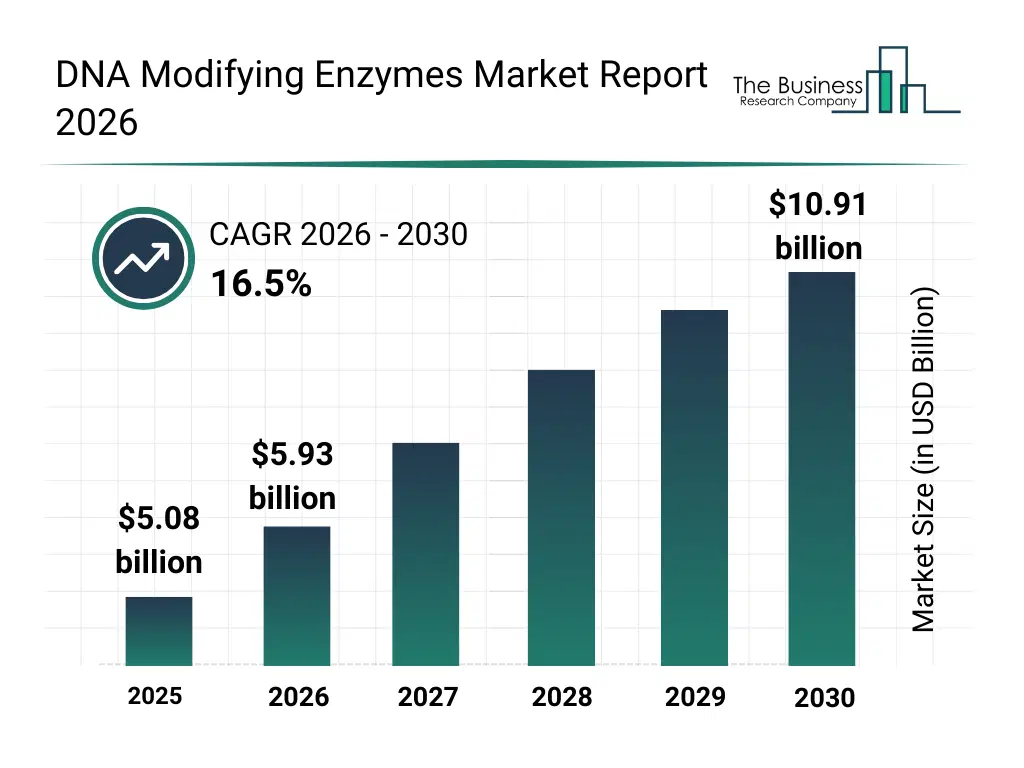
What Is The DNA Modifying Enzymes Market Size and Share 2026?
The dna modifying enzymes market size has grown rapidly in recent years. It will grow from $5.08 billion in 2025 to $5.93 billion in 2026 at a compound annual growth rate (CAGR) of 16.8%. The growth in the historic period can be attributed to expansion of molecular biology research activities, increasing use of enzymes in genomics, growth of academic and clinical research labs, rising adoption of dna sequencing technologies, availability of standardized enzyme kits.What Is The DNA Modifying Enzymes Market Growth Forecast?
The dna modifying enzymes market size is expected to see rapid growth in the next few years. It will grow to $10.91 billion in 2030 at a compound annual growth rate (CAGR) of 16.5%. The growth in the forecast period can be attributed to increasing investments in gene therapy research, rising demand for advanced gene editing tools, expansion of synthetic biology applications, growing use of enzymes in diagnostics, increasing focus on precision medicine development. Major trends in the forecast period include increasing demand for crispr-associated enzymes, rising use of high-fidelity polymerases, growing adoption of gene editing applications, expansion of enzyme-based diagnostics, enhanced focus on enzyme specificity and efficiency.
Global DNA Modifying Enzymes Market Segmentation
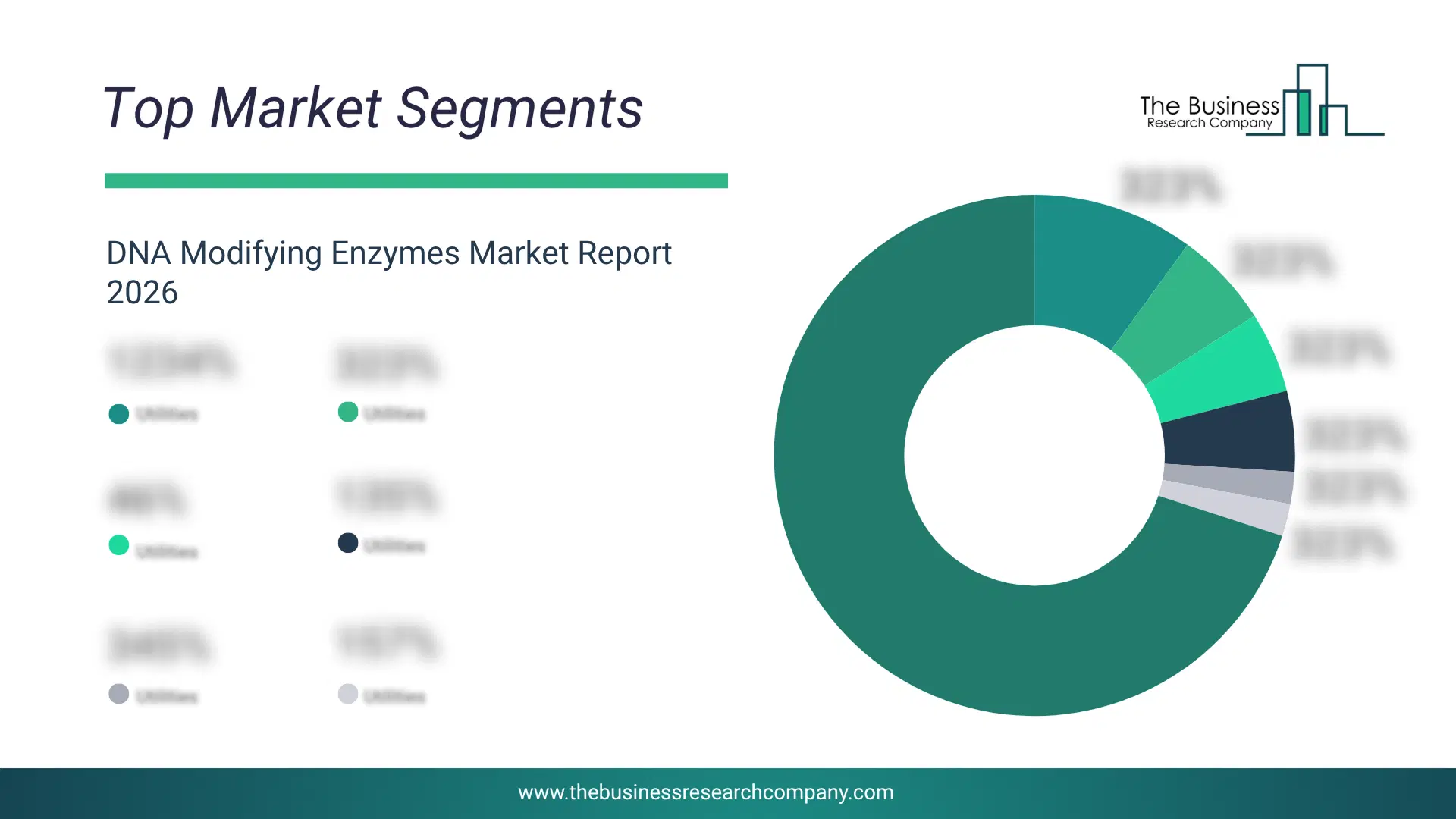
1) By Type: Restriction Enzymes, Polymerases, Ligases, Nucleases, Methylases, Other Enzyme Types 2) By Applications: Genomics And Gene Editing, Molecular Biology Research, Diagnostics And Forensics, Biotechnology And Synthetic Biology, Diagnostics, Drug Discovery And Development 3) By End User: Academics And Research Institutes, Pharmaceutical And Biotechnology Companies, Diagnostic Laboratories, Forensic Laboratories, Hospitals And Clinics, Contract Research Organizations Subsegments: 1) By Restriction Enzymes: Type I Restriction Enzymes, Type II Restriction Enzymes, Type III Restriction Enzymes, Type IV Restriction Enzymes, Type V Restriction Enzymes 2) By Polymerases: DNA Polymerases, RNA Polymerases, Reverse Transcriptases, High-Fidelity Polymerases, Taq Polymerase 3) By Ligases: T4 DNA Ligase, E. coli DNA Ligase, ATP-Dependent DNA Ligase, NAD+-Dependent DNA Ligase 4) By Nucleases: Exonucleases, Endonucleases, DNase I, RNase H, CRISPR-associated Nucleases 5) By Methylases: DNA Methyltransferases, Cytosine Methylases, Adenine Methylases, Restriction-Modification System Methylases 6) By Other Enzyme Types: Helicases, Topoisomerases, Kinases, Phosphatases, AcetylasesWhat Is The Driver Of The DNA Modifying Enzymes Market?
The increasing frequency of genetic illnesses is expected to propel the growth of the DNA modifying enzymes market going forward. Genetic illnesses, also known as genetic disorders, are health problems that arise from abnormalities in an individual's genetic material. The increasing frequency of genetic illnesses is due to several factors, such as genetic factors and inheritance, increased awareness and diagnosis, and environmental factors. DNA modifying enzymes such as DNA polymerase and DNA ligase are used in genetic testing to amplify and sequence DNA, enabling the identification of genetic mutations that cause disorders. For instance, in March 2024, according to the Gene People, a UK-based registered charity for people with genetic disorders, over 6,000 genetic conditions exist, with new ones discovered daily. In the UK, 1 in 25 children is affected, resulting in 30,000 new diagnoses annually and over 2.4 million individuals living with genetic conditions. Therefore, the increasing frequency of genetic illnesses is driving the growth of the DNA modifying enzymes industry.Key Players In The Global DNA Modifying Enzymes Market
Major companies operating in the dna modifying enzymes market are Merck & Co. Inc., Thermo Fisher Scientific Inc., F. Hoffmann-La Roche AG, Illumina Inc., Revvity Inc., Bio-Rad Laboratories Inc., QIAGEN N.V., Integrated DNA Technologies Inc., Promega Corporation, Aldevron LLC, Takara Bio Inc., New England Biolabs Inc., Diagenode SA, Zymo Research Corporation, Lucigen Corporation, Creative Diagnostics, Active Motif Inc., BPS Bioscience Inc., Abnova Corporation, Creative Biogene, Jena Bioscience GmbH, ABclonal Inc., EpiCypher Inc.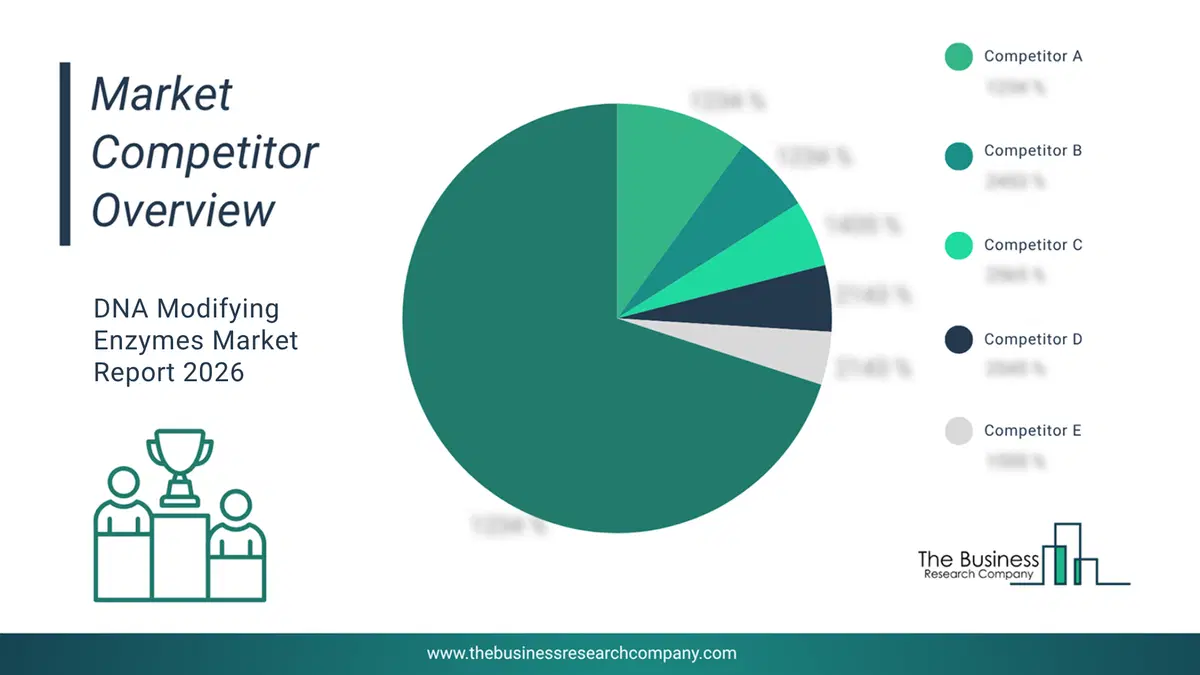
This chart is for illustrative purposes; the full report includes a detailed competitor analysis and comprehensive overview of the top 10 companies in the market.
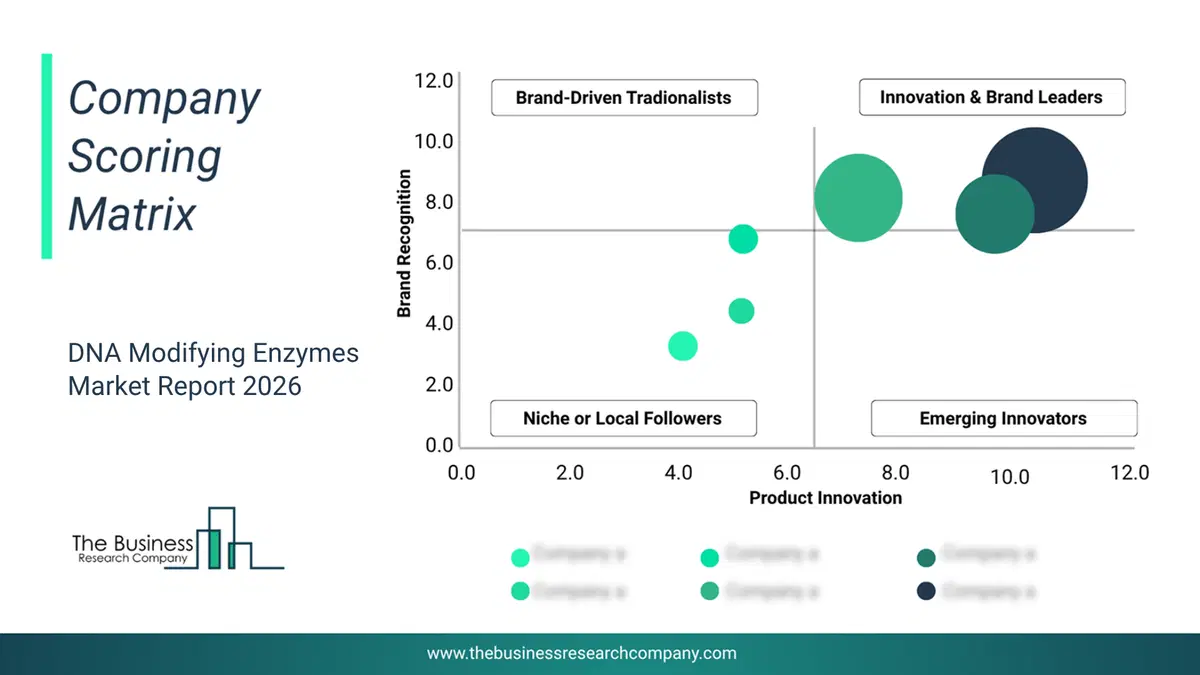
This chart maps companies by product innovation and brand strength, with bubble size indicating relative revenue, helping identify market leaders, challengers, and niche players. This is an illustrative chart; the full report provides a complete and accurate competitive analysis.
Global DNA Modifying Enzymes Market Trends and Insights
Major companies operating in the DNA modifying enzymes market are focusing on developing advanced solutions, such as a two-step enzymatic conversion workflow, to gain a competitive edge. A two-step enzymatic conversion workflow allows the specific detection of 5-hydroxymethylcytosine (5 hmC) at single-base resolution while minimizing DNA damage. For instance, in February 2024, New England Biolabs, a US-based life sciences company, launched the NEBNext Enzymatic 5hmC-seq Kit for enzyme-based 5hmC detection at single-base resolution. This kit represents a significant advancement in epigenetic research, particularly in the study of DNA modifications that play crucial roles in gene regulation. The NEBNext Enzymatic 5hmC-seq Kit utilizes a unique enzymatic approach that allows researchers to map 5hmC across the genome without the drawbacks associated with traditional bisulfite sequencing methods.What Are Latest Mergers And Acquisitions In The DNA Modifying Enzymes Market?
In February 2024, Codexis, Inc., a US based enzyme engineering company, partnered with Roche to license a newly engineered double stranded DNA ligase along with its existing EvoT4 DNA ligase for next generation sequencing (NGS) library preparation. With this partnership, Codexis and Roche aim to improve NGS workflows by increasing ligation efficiency of DNA fragments and adapters, boosting library yields and complexity, reducing reaction times enabling higher throughput, and minimizing sequence bias. Roche Sequencing Solutions, Inc. is a Switzerland based diagnostics and sequencing specialist company with global reach in NGS technologies and sequencing kit distribution.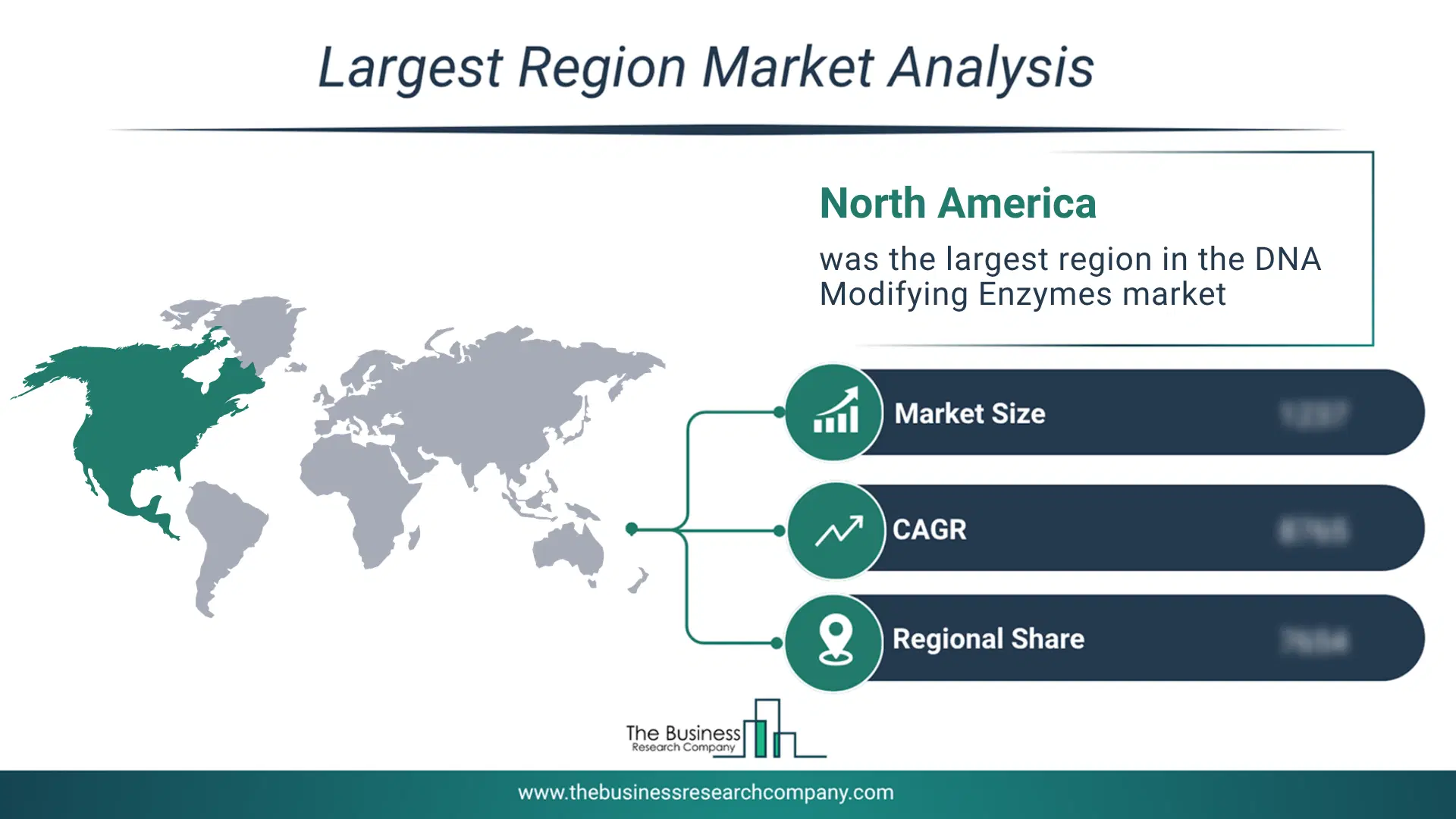
Regional Outlook
North America was the largest region in the DNA modifying enzymes market in 2025. The regions covered in this market report are Asia-Pacific, South East Asia, Western Europe, Eastern Europe, North America, South America, Middle East, Africa. The countries covered in this market report are Australia, Brazil, China, France, Germany, India, Indonesia, Japan, Taiwan, Russia, South Korea, UK, USA, Canada, Italy, Spain.What Defines the DNA Modifying Enzymes Market?
The DNA modifying enzymes market consists of sales of methyltransferases, topoisomerases, and phosphatases. Values in this market are ‘factory gate’ values, that is the value of goods sold by the manufacturers or creators of the goods, whether to other entities (including downstream manufacturers, wholesalers, distributors and retailers) or directly to end customers. The value of goods in this market includes related services sold by the creators of the goods.How is Market Value Defined and Measured?
The market value is defined as the revenues that enterprises gain from the sale of goods and/or services within the specified market and geography through sales, grants, or donations in terms of the currency (in USD unless otherwise specified). The revenues for a specified geography are consumption values that are revenues generated by organizations in the specified geography within the market, irrespective of where they are produced. It does not include revenues from resales along the supply chain, either further along the supply chain or as part of other products.
This chart presents market attractiveness based on a quantitative evaluation of growth, competition, strategic alignment, and risk, offering a clear view of opportunity areas for decision-making. This chart is for illustrative purposes; the full report contains the complete analysis.

This chart highlights the Total Addressable Market (TAM) by estimating the maximum revenue opportunity using an assumption-driven approach, supporting strategic planning and opportunity sizing across markets. The chart is illustrative; the full report provides a more comprehensive analysis.
What Key Data and Analysis Are Included in the DNA Modifying Enzymes Market Report 2026?
The dna modifying enzymes market research report is one of a series of new reports from The Business Research Company that provides market statistics, including industry global market size, regional shares, competitors with the market share, detailed market segments, market trends and opportunities, and any further data you may need to thrive in the dna modifying enzymes industry. The market research report delivers a complete perspective of everything you need, with an in-depth analysis of the current and future state of the industry.DNA Modifying Enzymes Market Report Forecast Analysis
| Report Attribute | Details |
|---|---|
| Market Size Value In 2026 | $5.93 billion |
| Revenue Forecast In 2030 | $10.91 billion |
| Growth Rate | CAGR of 16.5% from 2026 to 2030 |
| Base Year For Estimation | 2025 |
| Actual Estimates/Historical Data | 2020-2025 |
| Forecast Period | 2026 - 2030 |
| Market Representation | Revenue in USD Billion and CAGR from 2026 to 2030 |
| Segments Covered | Type, Applications, End User |
| Regional Scope | Asia-Pacific, Western Europe, Eastern Europe, North America, South America, Middle East, Africa |
| Country Scope | The countries covered in the report are Australia, Brazil, China, France, Germany, India, Indonesia, Japan, Taiwan, Russia, South Korea, UK, USA, Canada, Italy, Spain |
| Key Companies Profiled | Merck & Co. Inc., Thermo Fisher Scientific Inc., F. Hoffmann-La Roche AG, Illumina Inc., Revvity Inc., Bio-Rad Laboratories Inc., QIAGEN N.V., Integrated DNA Technologies Inc., Promega Corporation, Aldevron LLC, Takara Bio Inc., New England Biolabs Inc., Diagenode SA, Zymo Research Corporation, Lucigen Corporation, Creative Diagnostics, Active Motif Inc., BPS Bioscience Inc., Abnova Corporation, Creative Biogene, Jena Bioscience GmbH, ABclonal Inc., EpiCypher Inc. |
| Customization Scope | Request for Customization |
| Pricing And Purchase Options | Explore Purchase Options |