
Ear-Worn Core-Temp Sensor Market Report 2026
Global Outlook – By Product Type (Disposable, Reusable), By Sensor Technology (Infrared, Thermistor, Other Sensor Technologies), By Distribution Channel (Online, Offline), By Application (Healthcare Monitoring, Sports And Fitness, Military And Defense, Industrial, Other Applications), By End-User (Hospitals And Clinics, Homecare, Athletes, Military Personnel, Industrial Workers, Other End Users) – Market Size, Trends, Strategies, and Forecast to 2030
Ear-Worn Core-Temp Sensor Market Overview
• Ear-Worn Core-Temp Sensor market size has reached to $0.75 billion in 2025 • Expected to grow to $1.57 billion in 2030 at a compound annual growth rate (CAGR) of 15.9% • Growth Driver: Rising Diabetes Rates Fueling The Growth Of The Market Due To Increasing Need For Continuous Health Monitoring • Market Trend: Next-Generation Embedded Performance Monitoring Processors In Ear-Worn Core-Temperature Sensors To Enhance Athletic Performance And System Efficiency • North America was the largest region in 2025 and Asia-Pacific is the fastest growing region.Market Gains By 2030 – Top Opportunities By Segment
Market Gain identifies the most promising market opportunities by highlighting the segments or products expected to generate the highest incremental revenue growth over the next five years.
What Is Covered Under Ear-Worn Core-Temp Sensor Market?
An ear-worn core-temperature sensor is a wearable device designed to continuously measure the body’s internal temperature through the ear canal, using advanced infrared or thermistor-based technology to provide readings that closely reflect the core body temperature. It offers a non-invasive and convenient solution for accurate health monitoring, early fever detection, and clinical applications, enabling real-time tracking without the discomfort or limitations of traditional measurement methods. The main types of products in ear-worn core-temp sensors are disposable and reusable. A disposable ear-worn core-temperature sensor refers to a single-use wearable device designed to measure the body’s core temperature through the ear canal. It includes various sensor technologies, such as infrared, thermistor, and others, and is distributed online and offline. It finds applications in healthcare monitoring, sports and fitness, military and defense, industrial, and other fields, serving end-users such as hospitals and clinics, homecare, athletes, military personnel, industrial workers, and others.
What Is The Ear-Worn Core-Temp Sensor Market Size and Share 2026?
The ear-worn core-temp sensor market size has grown rapidly in recent years. It will grow from $0.75 billion in 2025 to $0.87 billion in 2026 at a compound annual growth rate (CAGR) of 16.2%. The growth in the historic period can be attributed to early adoption in healthcare monitoring, advances in infrared sensor technology, growing awareness of non-invasive diagnostics, rising demand in sports medicine, integration with clinical monitoring devices.What Is The Ear-Worn Core-Temp Sensor Market Growth Forecast?
The ear-worn core-temp sensor market size is expected to see rapid growth in the next few years. It will grow to $1.57 billion in 2030 at a compound annual growth rate (CAGR) of 15.9%. The growth in the forecast period can be attributed to expansion in homecare and remote monitoring, integration with ai-driven health platforms, adoption in military and industrial sectors, enhanced connectivity with iot devices, development of multi-functional health wearables. Major trends in the forecast period include continuous core temperature monitoring, remote health alerts, integration with wearable ecosystems, predictive fever detection, personalized health tracking.
Global Ear-Worn Core-Temp Sensor Market Segmentation
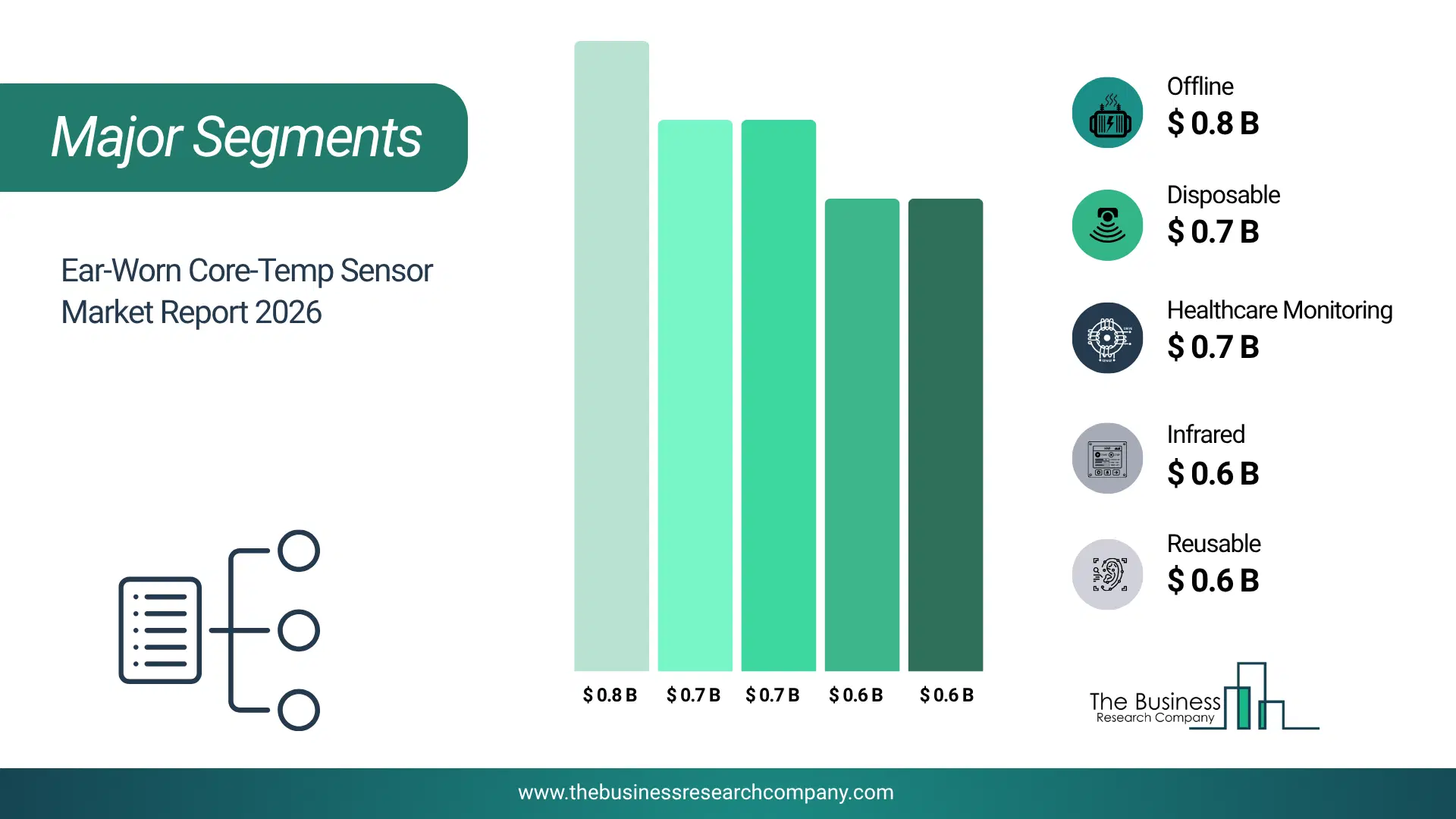
1) By Product Type: Disposable, Reusable 2) By Sensor Technology: Infrared, Thermistor, Other Sensor Technologies 3) By Distribution Channel: Online, Offline 4) By Application: Healthcare Monitoring, Sports And Fitness, Military And Defense, Industrial, Other Applications 5) By End-User: Hospitals And Clinics, Homecare, Athletes, Military Personnel, Industrial Workers, Other End Users Subsegments: 1) By Disposable: Single Use, Sterile 2) By Reusable: Sterilizable, Multi Use The top segments in the ear-worn core-temp sensor market will be: • Offline will reach $862.21 Million by 2030. • Disposable will reach $719.64 Million by 2030. • Healthcare Monitoring will reach $739.02 Million by 2030. • Infrared will reach $608.79 Million by 2030. • Reusable will reach $621.53 Million by 2030.What Is The Driver Of The Ear-Worn Core-Temp Sensor Market?
The rising prevalence of diabetes is expected to propel the growth of the ear-worn core-temp sensor market going forward. Diabetes is a long-term condition in which the body either doesn’t make enough insulin or can’t use it properly, leading to elevated blood sugar levels. Diabetes is rising mainly due to unhealthy lifestyles, as increasing consumption of high-calorie foods and physical inactivity lead to obesity, which significantly raises the risk of developing the disease. An ear-worn core-temperature sensor benefits diabetes patients by continuously tracking body temperature, helping detect early signs of infection or metabolic imbalance, which are common complications in diabetic individuals. For instance, in March 2025, according to the Office for Health Improvement & Disparities, a UK-based government department, in England, the prevalence of type 2 diabetes among adults aged 17 and over was 7.0% in March 2024, rising from 6.8% in March 2023. Therefore, the rising prevalence of diabetes is driving the growth of the ear-worn core-temp sensor industry.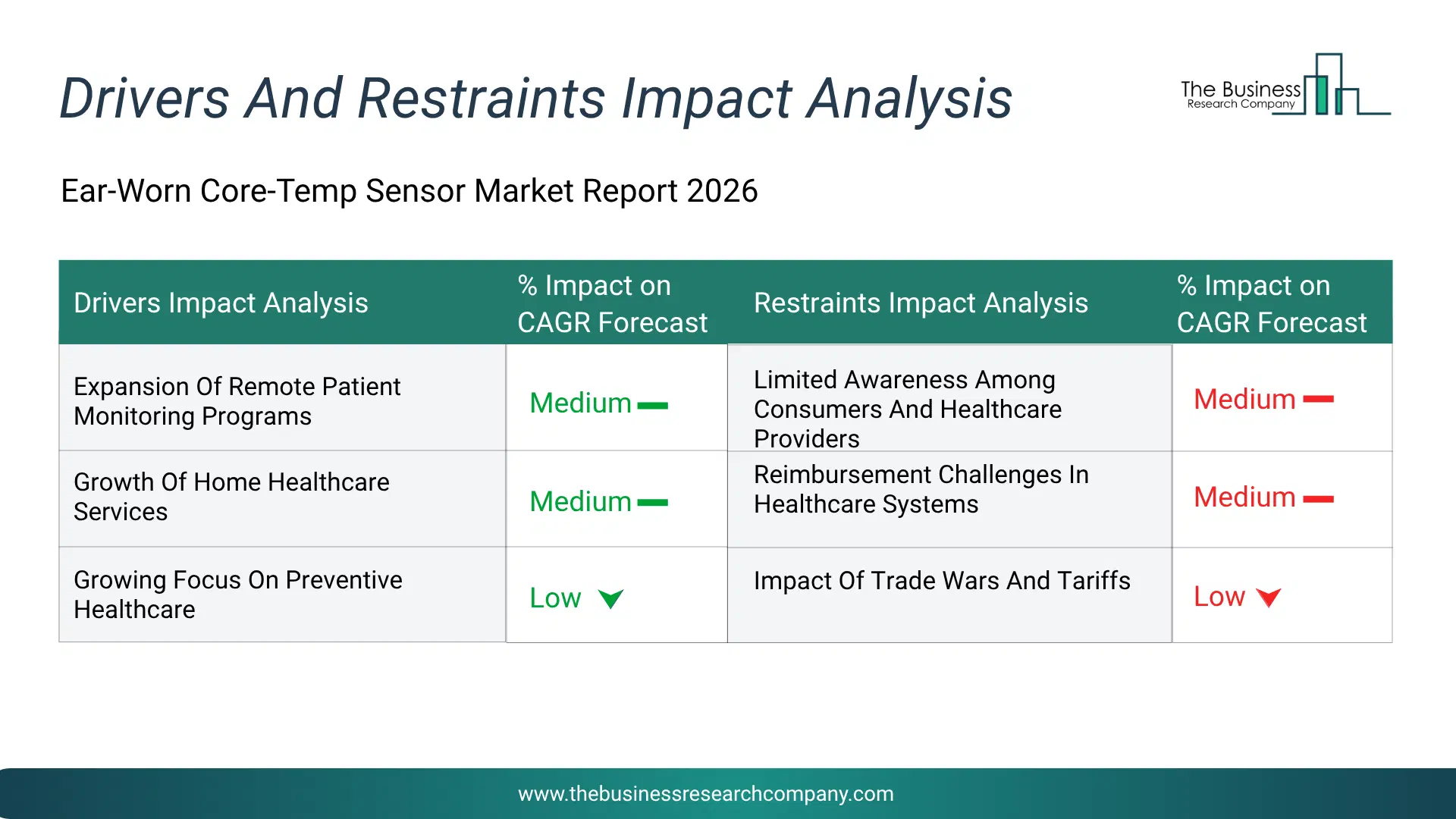
Infographic Chart Showing Key Market Drivers Analysis And Restraints For Ear-Worn Core-Temp Sensor Market
The chart presents an impact analysis of key drivers and restraints, quantifying their relative influence on the market's growth rate and helping assess the balance between growth enablers and limiting factors. This chart offers a high-level perspective; the full report contains more detailed insights.
How Will The Drivers Impact Growth In The Global Ear-Worn Core-Temp Sensor Market?
• Expansion Of Remote Patient Monitoring Programs (Medium) – During the forecast period, the expansion of remote patient monitoring programs is expected to be a key driver propelling expansion in the ear-worn core-temperature sensor market. Remote monitoring programs are designed to track vital signs and physiological parameters in real time while patients remain in their homes or community settings, reducing the need for frequent hospital visits and improving access to care. Ear-worn core-temperature sensors support this model by providing accurate measurement of internal body temperature through the ear canal, allowing healthcare providers to observe temperature fluctuations that may indicate infection, inflammation, or other health changes. The compact and comfortable nature of ear-worn sensors makes them suitable for long-term use, enabling continuous data collection without disrupting daily activities. The expansion of remote patient monitoring programs growth contribution during the forecast period in 2025 is 1.5%. • Growth Of Home Healthcare Services (Medium) – During the forecast period, the expansion of growth of home healthcare services is expected to be a key driver propelling growth in the ear-worn core-temperature sensor market. Home healthcare services focus on enabling patients to manage health conditions, recover from illness and receive medical supervision without prolonged hospitalization. In such settings, continuous monitoring of vital parameters becomes critical for ensuring patient safety and detecting potential complications at an early stage. Ear-worn core-temperature sensors provide a practical and non-invasive solution for tracking internal body temperature continuously while remaining comfortable and easy for patients or caregivers to use. Their wearable design allows individuals to monitor temperature over extended periods without relying on repeated manual measurements, which can be inconvenient in homecare environments. The expansion of growth of home healthcare services growth contribution during the forecast period in 2025 is 1.0%. • Growing Focus On Preventive Healthcare (Low) – During the forecast period, the growing focus on preventive healthcare is expected to be a key driver propelling growth in the ear-worn core-temperature sensor market. Preventive healthcare strategies aim to identify physiological changes before they develop into serious medical issues, enabling timely intervention and reducing long-term healthcare costs. Continuous monitoring of core body temperature plays an important role in detecting early signs of infection, inflammation and abnormal physiological responses that may indicate underlying health problems. Ear-worn sensors that measure temperature from within the ear canal provide highly reliable readings that closely reflect internal body temperature, making them valuable tools for ongoing health surveillance. The growing focus on preventive healthcare growth contribution during the forecast period in 2025 is 0.8%. • Increasing Demand For Workplace Health Monitoring (Low) – During the forecast period, the growth in increasing demand for workplace health monitoring is expected to be a key driver propelling growth in the ear-worn core-temperature sensor market. Workers in physically demanding environments or high-temperature conditions, such as industrial settings, construction sites and other labor-intensive workplaces, face risks associated with heat stress and fatigue. Continuous monitoring of core body temperature helps employers and safety managers detect early signs of heat-related health issues, allowing preventive measures to be taken before serious conditions develop. Ear-worn core-temperature sensors provide an effective solution for workplace health monitoring because they can measure internal body temperature accurately while remaining lightweight, wearable and unobtrusive during work activities. The growth in increasing demand for workplace health monitoring growth contribution during the forecast period in 2025 is 0.5%.How Will The Restraints Impact Growth In The Global Ear-Worn Core-Temp Sensor Market?
• Limited Awareness Among Consumers And Healthcare Providers (Medium) – During the forecast period, limited awareness among consumers and healthcare providers are restricting the growth of the ear-worn core-temperature sensor market. Many individuals and even some healthcare professionals remain more familiar with traditional temperature measurement methods such as oral, forehead, or handheld thermometers, which have been widely used for decades. As a result, awareness about advanced wearable technologies that enable continuous monitoring of core body temperature through the ear canal remains relatively limited in many regions. Without adequate understanding of how these devices function and the advantages they offer for continuous monitoring, early detection of health changes and remote health management, potential users may not actively seek out or adopt such solutions. Growth affected by the limited awareness among consumers and healthcare providers during the forecast period in 2025 is -1.5%. • Reimbursement Challenges In Healthcare Systems (Medium) – During the forecast period, reimbursement challenges in healthcare systems is restricting the growth of the ear-worn core-temperature sensor market. In many healthcare systems, reimbursement policies determine whether new medical technologies are covered by insurance programs or government-funded healthcare plans. When wearable monitoring devices are not clearly categorized within reimbursement frameworks or lack established billing codes, healthcare providers may be reluctant to incorporate them into patient care programs. Without reimbursement support, patients may be required to pay for these devices out of pocket, which can discourage widespread use, particularly among individuals who require long-term health monitoring but cannot afford the additional cost. Furthermore, reimbursement approval processes for new medical technologies can take considerable time and require extensive clinical validation, which may delay the integration of ear-worn monitoring devices into standard healthcare services. Growth affected by the reimbursement challenges in healthcare systems during the forecast period in 2025 is -1.0%. • Impact Of Trade Wars And Tariffs (Low) – During the forecast period, the impact of trade wars and tariffs is restricting the growth of the ear-worn core-temperature sensor market. Many electronic components used in wearable devices, including sensors, semiconductors, microprocessors and wireless communication modules are manufactured and sourced through complex international supply networks. When trade tensions arise between major economies, tariffs imposed on electronic components or finished wearable devices can raise production costs for manufacturers and reduce profit margins. Companies may be forced to increase product prices to offset higher import costs, which can make ear-worn core-temperature sensors less affordable for consumers and healthcare providers. Growth affected by the impact of trade wars and tariffs during the forecast period in 2025 is -0.3%.Key Players In The Global Ear-Worn Core-Temp Sensor Market
Major companies operating in the ear-worn core-temp sensor market are Cosinuss GmbH, Bodytrak, GreenTEG AG, BodyCap Technologies, Equivital Ltd., Tempdrop Ltd., CORE Sensors Inc., VivaLNK Inc., Kenzen Inc., Epicore Biosystems Inc., Nix Biosensors Inc., Valencell Inc., Biofourmis Inc., Empatica Inc., Preventice Solutions Inc., Lief Therapeutics Inc., Oura Health Oy, Bloomlife Inc., Neteera Technologies Ltd., VivaQuant Inc.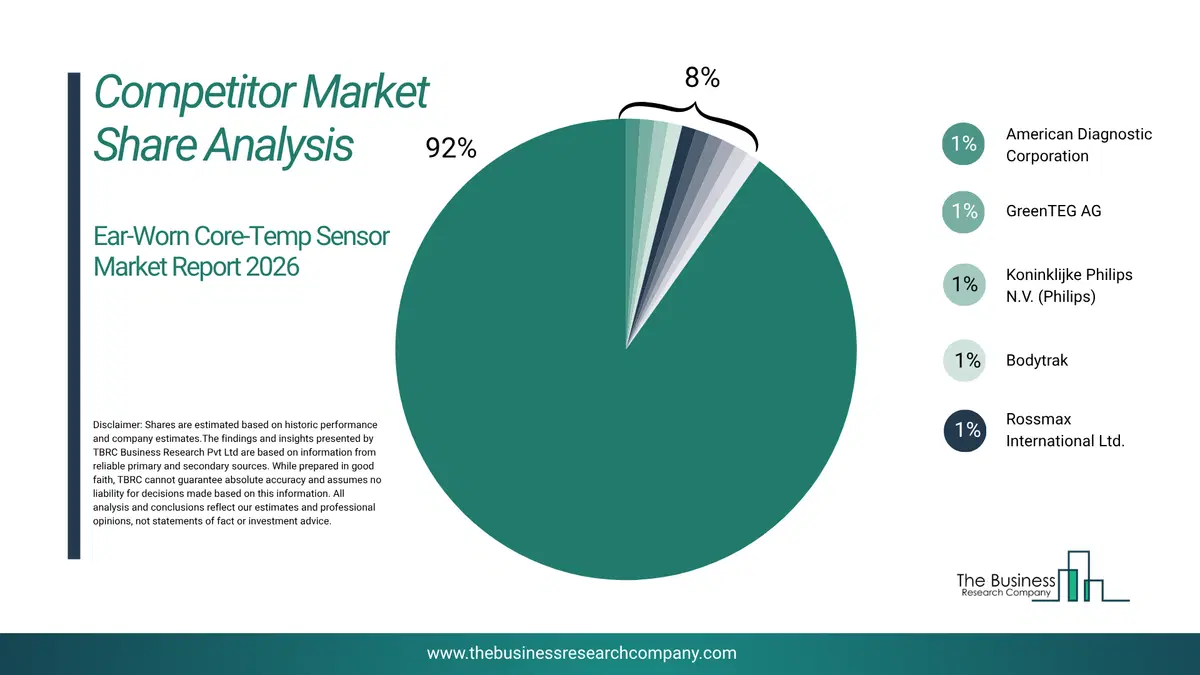
This chart is for illustrative purposes; the full report includes a detailed competitor analysis and comprehensive overview of the top 10 companies in the market.
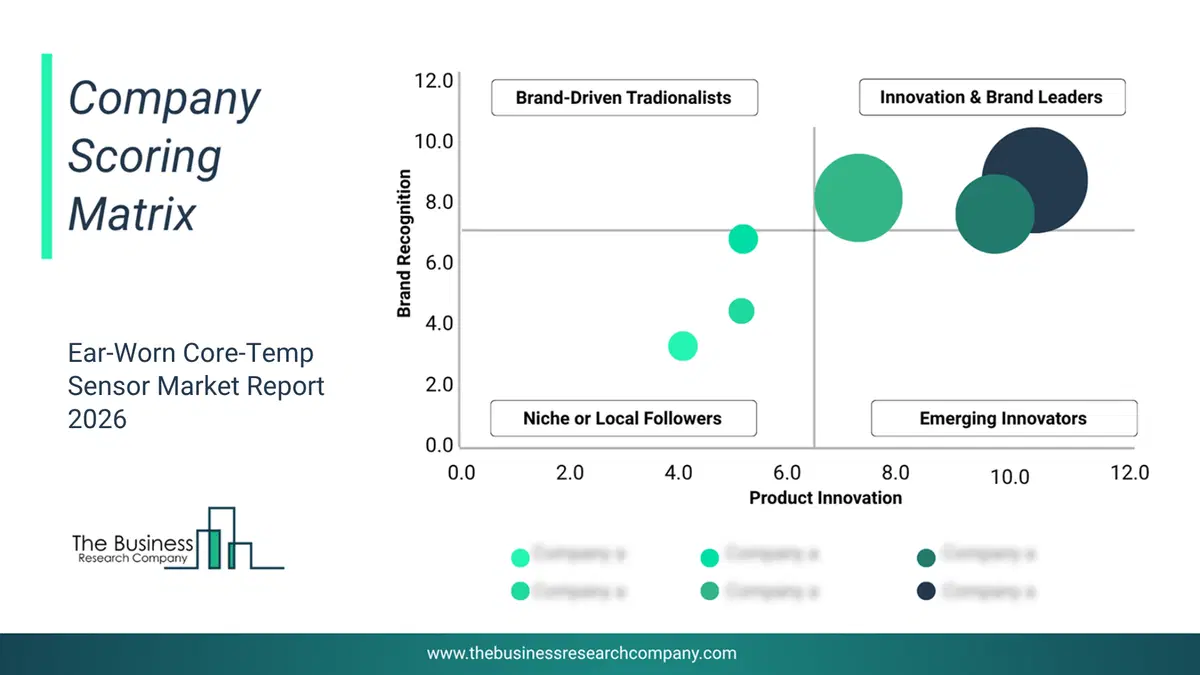
This chart maps companies by product innovation and brand strength, with bubble size indicating relative revenue, helping identify market leaders, challengers, and niche players. This is an illustrative chart; the full report provides a complete and accurate competitive analysis.
Global Ear-Worn Core-Temp Sensor Market Trends and Insights
Major companies operating in the ear-worn core-temp sensor market are focusing on technological innovations, such as next-generation wearable body temperature sensors, to enhance real-time health monitoring accuracy, ensure user comfort, and enable continuous, non-invasive temperature tracking. Next-generation wearable body temperature sensors refer to advanced, miniaturized devices that continuously and accurately measure body temperature in real time using innovative materials and wireless technologies for improved health monitoring and performance tracking. For instance, in January 2025, CORE, a Switzerland-based developer of advanced thermal monitoring solutions, launched CORE 2, a next-generation wearable body temperature sensor designed to help athletes monitor and manage their core body temperature in real time. Built in Switzerland, CORE 2 is 48% smaller and 30% lighter than its predecessor, yet more powerful, offering smarter features like LED indicators, a modular attachment system, and BLE/ANT+ connectivity for seamless integration with Garmin, Wahoo, iOS, and Android devices. It uses advanced thermal energy transfer technology for AI-enhanced accuracy, enabling athletes to optimize performance and heat adaptation during training and races.What Are Latest Mergers And Acquisitions In The Ear-Worn Core-Temp Sensor Market?
In June 2025, Corpuls, a Germany-based provider of emergency and critical-care medical devices, acquired Cosinuss GmbH for an undisclosed amount. With this acquisition, corpuls aims to strengthen its portfolio by integrating cosinuss’s in-ear vital-sign sensor technology to enhance continuous mobile patient monitoring and expand into remote and tactical monitoring use cases. Cosinuss GmbH is a Germany-based provider of health-platforms for continuous mobile and remote vital-sign monitoring, including ear-worn core-temp sensors.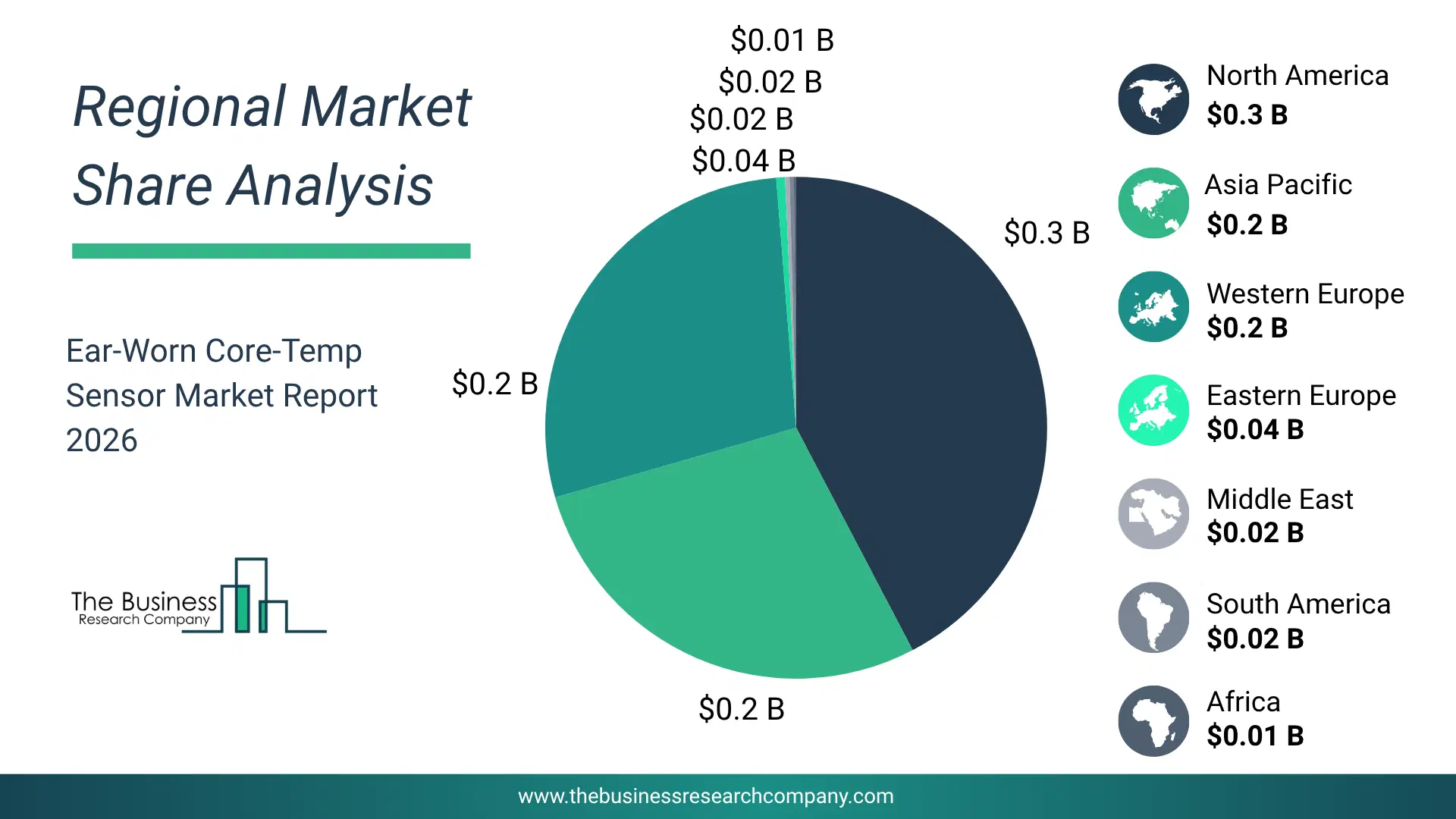
Regional Outlook
North America was the largest region in the ear-worn core-temp sensor market in 2025. Asia-Pacific is expected to be the fastest-growing region in the forecast period. The regions covered in this market report are Asia-Pacific, South East Asia, Western Europe, Eastern Europe, North America, South America, Middle East, Africa. The countries covered in this market report are Australia, Brazil, China, France, Germany, India, Indonesia, Japan, Taiwan, Russia, South Korea, UK, USA, Canada, Italy, SpainWhat Defines the Ear-Worn Core-Temp Sensor Market?
The ear-worn core-temp sensor market consists of sales of ear-worn temperature monitoring devices, ear thermometers, wireless earbuds with temperature sensors, in-ear medical sensors, fitness wearables with ear sensors, and industrial safety ear sensors. Values in this market are ‘factory gate’ values; that is, the value of goods sold by the manufacturers or creators of the goods, whether to other entities (including downstream manufacturers, wholesalers, distributors and retailers) or directly to end customers. The value of goods in this market includes related services sold by the creators of the goods.How is Market Value Defined and Measured?
The market value is defined as the revenues that enterprises gain from the sale of goods and/or services within the specified market and geography through sales, grants, or donations in terms of the currency (in USD unless otherwise specified). The revenues for a specified geography are consumption values that are revenues generated by organizations in the specified geography within the market, irrespective of where they are produced. It does not include revenues from resales along the supply chain, either further along the supply chain or as part of other products.
This chart presents market attractiveness based on a quantitative evaluation of growth, competition, strategic alignment, and risk, offering a clear view of opportunity areas for decision-making. This chart is for illustrative purposes; the full report contains the complete analysis.

This chart highlights the Total Addressable Market (TAM) by estimating the maximum revenue opportunity using an assumption-driven approach, supporting strategic planning and opportunity sizing across markets. The chart is illustrative; the full report provides a more comprehensive analysis.
What Key Data and Analysis Are Included in the Ear-Worn Core-Temp Sensor Market Report 2026?
The ear-worn core-temp sensor market research report is one of a series of new reports from The Business Research Company that provides market statistics, including industry global market size, regional shares, competitors with the market share, detailed market segments, market trends and opportunities, and any further data you may need to thrive in the ear-worn core-temp sensor industry. The market research report delivers a complete perspective of everything you need, with an in-depth analysis of the current and future state of the industry.Ear-Worn Core-Temp Sensor Market Report Forecast Analysis
| Report Attribute | Details |
|---|---|
| Market Size Value In 2026 | $0.87 billion |
| Revenue Forecast In 2030 | $1.57 billion |
| Growth Rate | CAGR of 16.2% from 2026 to 2030 |
| Base Year For Estimation | 2025 |
| Actual Estimates/Historical Data | 2020-2025 |
| Forecast Period | 2026 - 2030 - 2035 |
| Market Representation | Revenue in USD Billion and CAGR from 2026 to 2030 |
| Segments Covered | Product Type, Sensor Technology, Distribution Channel, Application, End-User |
| Regional Scope | Asia-Pacific, Western Europe, Eastern Europe, North America, South America, Middle East, Africa |
| Country Scope | The countries covered in the report are Australia, Brazil, China, France, Germany, India, Indonesia, Japan, Taiwan, Russia, South Korea, UK, USA, Canada, Italy, Spain. |
| Key Companies Profiled | Cosinuss GmbH, Bodytrak, GreenTEG AG, BodyCap Technologies, Equivital Ltd., Tempdrop Ltd., CORE Sensors Inc., VivaLNK Inc., Kenzen Inc., Epicore Biosystems Inc., Nix Biosensors Inc., Valencell Inc., Biofourmis Inc., Empatica Inc., Preventice Solutions Inc., Lief Therapeutics Inc., Oura Health Oy, Bloomlife Inc., Neteera Technologies Ltd., VivaQuant Inc. |
| Customization Scope | Request for Customization |
| Pricing And Purchase Options | Explore Purchase Options |