
eCommerce Fraud Detection And Prevention Market Report 2026
Global Outlook – By Type (Cloud Based, On-Premise), By Fraud Type (Card Testing, Credit Card Fraud, Friendly Fraud, Identity Theft, Merchant Fraud, Phishing, Refund Fraud), By Organization Size (SME, Large Enterprise), By Industry (Automotive And Transportation, Banking, Financial Services And Insurance, Consumer Goods And Retail, Education, Government And Public Sector, Healthcare And Life Sciences, Information Technology, Media And Entertainment, Telecommunication, Travel And Hospitality) – Market Size, Trends, Strategies, and Forecast to 2030
eCommerce Fraud Detection And Prevention Market Overview
• eCommerce Fraud Detection And Prevention market size has reached to $73.5 billion in 2025 • Expected to grow to $188.62 billion in 2030 at a compound annual growth rate (CAGR) of 20.7% • Growth Driver: Rising e-commerce Transactions Fuel Growth In Ecommerce Fraud Detection And Prevention Market • Market Trend: AI-Powered Cloud-Based Solutions Transforming Ecommerce Fraud Detection And Prevention • North America was the largest region in 2025 and Europe is the fastest growing region.Market Gains By 2030 – Top Opportunities By Segment
Market Gain identifies the most promising market opportunities by highlighting the segments or products expected to generate the highest incremental revenue growth over the next five years.
What Is Covered Under eCommerce Fraud Detection And Prevention Market?
eCommerce fraud detection and prevention involves utilizing machine learning algorithms, real-time monitoring, and strategies like multi-factor authentication to identify and mitigate fraudulent activities, ensuring the security of online transactions and protecting both businesses and consumers. Effective eCommerce fraud detection and prevention are essential for safeguarding online transactions, maintaining customer trust, and minimizing financial losses due to fraudulent activities. The main types of e-commerce fraud detection and prevention are cloud-based and on-premise. Cloud-based refers to the programs, services, or assets that customers can access on demand through the internet from a cloud computing provider’s server. Cloud-based eCommerce fraud detection and prevention is used to systematize fraud prevention, assisting organizations in growing their revenue through real-time machine learning. The various fraud types involved are card testing, credit card fraud, friendly fraud, identity theft, merchant fraud, phishing, and refund fraud that are detected by SMEs, and large enterprises for automotive and transportation, banking, financial services, and insurance, consumer goods, and retail, education, government, and public sector, healthcare, and life sciences, information technology, media and entertainment, telecommunication, travel, and hospitality industries.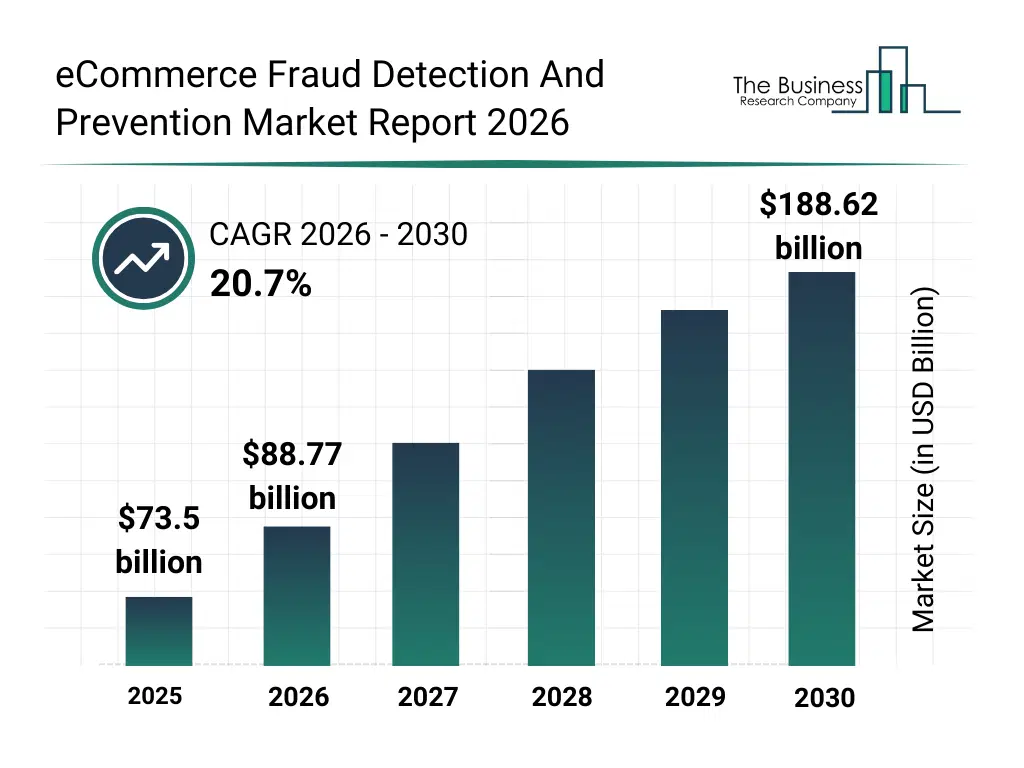
What Is The eCommerce Fraud Detection And Prevention Market Size and Share 2026?
The ecommerce fraud detection and prevention market size has grown exponentially in recent years. It will grow from $73.5 billion in 2025 to $88.77 billion in 2026 at a compound annual growth rate (CAGR) of 20.8%. The growth in the historic period can be attributed to increasing growth of online retail transactions, rising incidents of digital payment fraud, adoption of eCommerce platforms by enterprises, expansion of online payment ecosystems, increasing availability of transaction data.What Is The eCommerce Fraud Detection And Prevention Market Growth Forecast?
The ecommerce fraud detection and prevention market size is expected to see exponential growth in the next few years. It will grow to $188.62 billion in 2030 at a compound annual growth rate (CAGR) of 20.7%. The growth in the forecast period can be attributed to increasing adoption of advanced machine learning models, rising demand for cloud-based fraud prevention solutions, expansion of cross-border eCommerce transactions, growing focus on customer identity protection, increasing regulatory scrutiny on digital payments. Major trends in the forecast period include increasing deployment of ai-based fraud detection tools, rising adoption of real-time transaction monitoring, growing use of behavioral analytics in fraud prevention, expansion of multi-factor authentication systems, enhanced focus on regulatory compliance and risk management.
Global eCommerce Fraud Detection And Prevention Market Segmentation
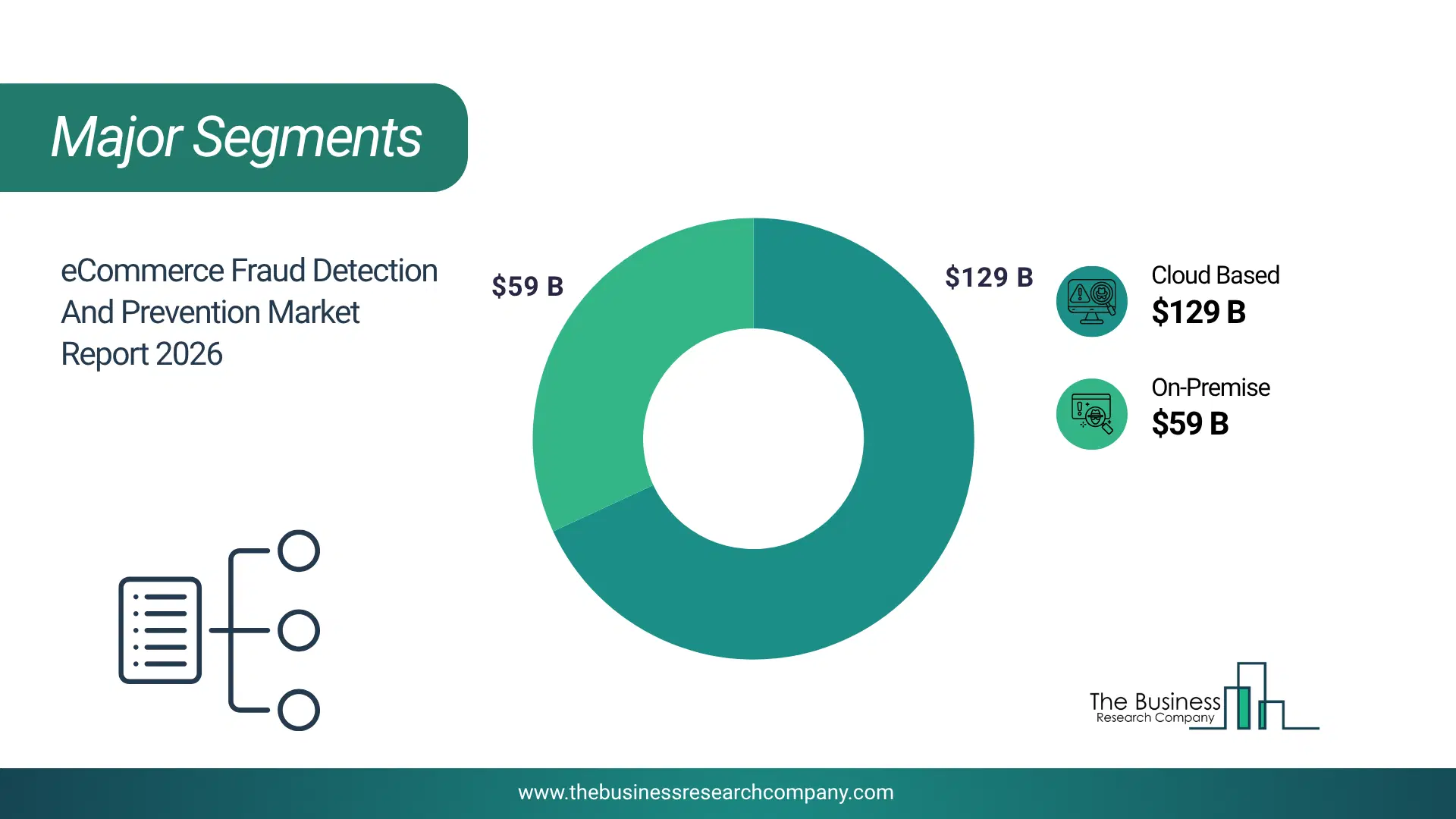
1) By Type: Cloud Based, On-Premise 2) By Fraud Type: Card Testing, Credit Card Fraud, Friendly Fraud, Identity Theft, Merchant Fraud, Phishing, Refund Fraud 3) By Organization Size: SME, Large Enterprise 4) By Industry: Automotive And Transportation, Banking, Financial Services And Insurance, Consumer Goods And Retail, Education, Government And Public Sector, Healthcare And Life Sciences, Information Technology, Media And Entertainment, Telecommunication, Travel And Hospitality Subsegments: 1) By Cloud-Based: Software As A Service (SaaS), Platform As A Service (PaaS) 2) By On-Premise: On-Premise Software, Custom Solutions The top segments in the ecommerce fraud detection and prevention market will be: • Cloud Based will reach $128.93 Billion by 2030. • On-Premise will reach $58.95 Billion by 2030.What Is The Driver Of The eCommerce Fraud Detection And Prevention Market?
Rising transactions on ecommerce platforms are expected to propel the growth of the ecommerce fraud detection and prevention market going forward. E-commerce platforms describe business transactions that are predominantly conducted electronically through the internet. Rising transactions on ecommerce platforms increase the need for ecommerce fraud detection and prevention tools and services as they help to evaluate the possible risk of each transaction and aid in the detection of high-risk transactions using algorithm-based analysis. For instance, in November 2023 according to a govt report by the United Kingdom e-commerce revenues in the UK are projected to grow at an annual average rate of 12.6% by 2025, the UK ranks as the third-largest e-commerce market globally, following China and the U.S. The revenues is expected to reach $285.60 billion by 2025. Therefore, rising eCommerce platforms are driving the growth of the eCommerce fraud detection and prevention industry.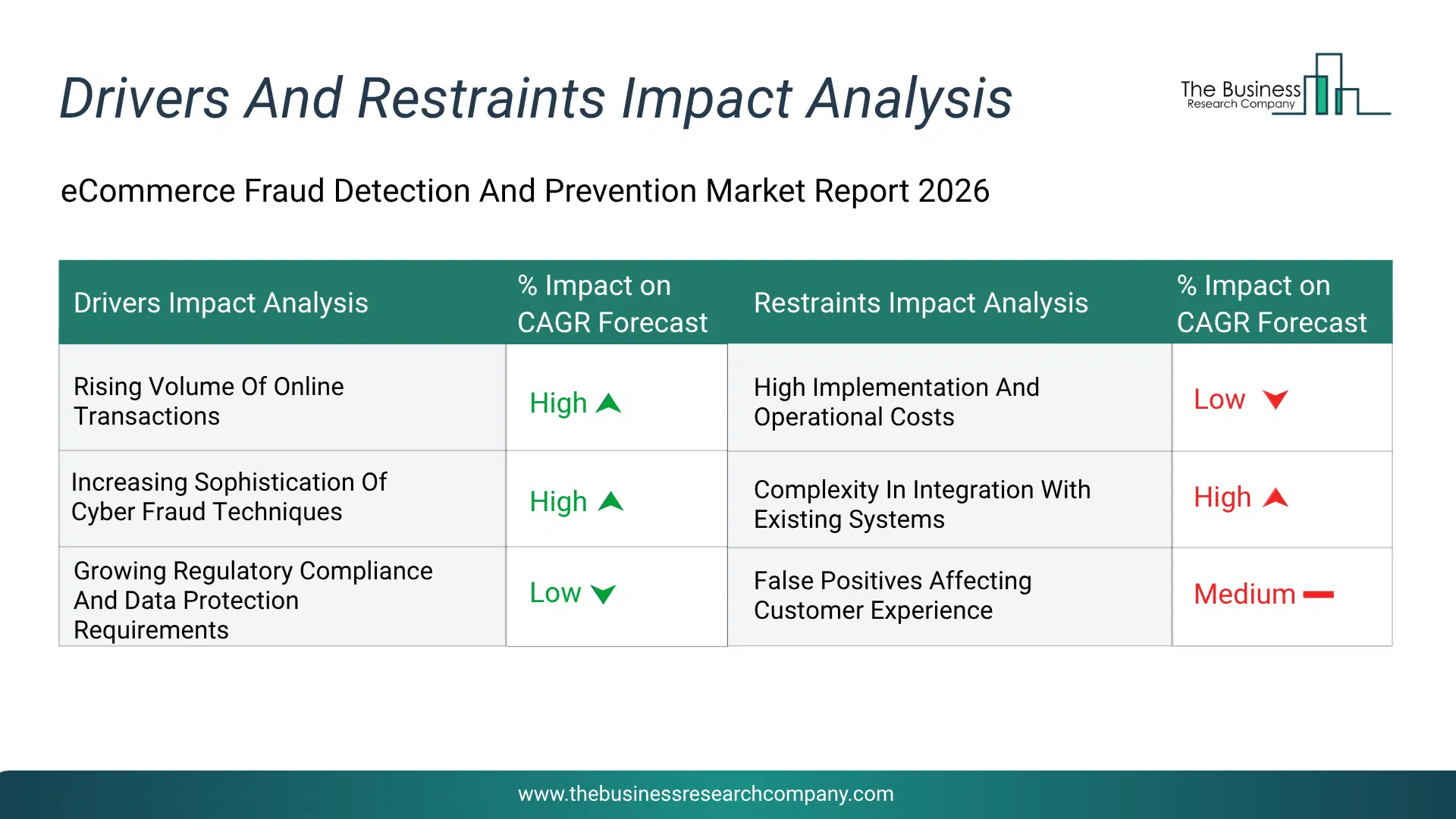
Infographic Chart Showing Key Market Drivers Analysis And Restraints For Ecommerce Fraud Detection And Prevention Market
The chart presents an impact analysis of key drivers and restraints, quantifying their relative influence on the market's growth rate and helping assess the balance between growth enablers and limiting factors. This chart offers a high-level perspective; the full report contains more detailed insights.
How Will The Drivers Impact Growth In The Global eCommerce Fraud Detection And Prevention Market?
• Rising Volume Of Online Transactions (High) – During the forecast period, the rising volume of online transactions is expected to become a major growth driver for the eCommerce fraud detection and prevention market by 2030. The continuous expansion of digital commerce platforms, mobile shopping applications, and cross-border eCommerce activities is significantly increasing the number of daily transactions processed worldwide. This surge in transaction volume creates a broader attack surface for fraudulent activities, prompting businesses to adopt advanced fraud detection systems capable of handling high data throughput with minimal latency. Organizations are increasingly deploying real-time monitoring tools and AI-powered analytics to detect anomalies and prevent unauthorized transactions. As digital payment adoption continues to accelerate, the demand for robust fraud prevention solutions is expected to grow steadily. • Increasing Sophistication Of Cyber Fraud Techniques (High) – During the forecast period, the increasing sophistication of cyber fraud techniques is expected to emerge as a critical factor driving the expansion of the eCommerce fraud detection and prevention market by 2030. Fraudsters are leveraging advanced methods such as AI-driven attacks, account takeovers, synthetic identity fraud, and automated bot-based card testing to bypass traditional security systems. This evolving threat landscape is compelling organizations to invest in next-generation fraud detection technologies that incorporate behavioral analytics, device fingerprinting, and machine learning-based pattern recognition. Continuous innovation in fraud tactics requires equally adaptive and intelligent prevention systems to ensure secure transactions. • Growing Regulatory Compliance And Data Protection Requirements (Low) – During the forecast period, the growing regulatory compliance and data protection requirements are expected to act as a key growth catalyst for the eCommerce fraud detection and prevention market by 2030. Governments and regulatory bodies across regions are implementing stringent data privacy laws and payment security standards to safeguard consumer information and reduce financial fraud. Compliance with frameworks such as data protection regulations and secure payment protocols is pushing enterprises to strengthen their fraud prevention infrastructure. Businesses are prioritizing secure authentication mechanisms, encryption technologies, and audit-ready systems to meet regulatory mandates and avoid financial penalties. As compliance requirements continue to evolve, organizations are increasingly investing in comprehensive fraud management solutions.How Will The Restraints Impact Growth In The Global eCommerce Fraud Detection And Prevention Market?
• High Implementation And Operational Costs (High) – During the forecast period, high implementation and operational costs are significantly restricting the growth of the eCommerce fraud detection and prevention market. The need for advanced analytics tools, AI-based detection systems, continuous model training, and infrastructure upgrades is increasing financial burden on businesses, particularly small and mid-sized eCommerce players. • Complexity In Integration With Existing Systems (High) – During the forecast period, complexity in integration with existing systems is restricting the growth of the eCommerce fraud detection and prevention market. Compatibility issues with legacy payment systems, ERP platforms, and multiple eCommerce channels are creating deployment challenges and slowing down the adoption of advanced fraud prevention solutions. • False Positives Affecting Customer Experience (Low) – During the forecast period, false positives affecting customer experience are restricting the growth of the eCommerce fraud detection and prevention market. Incorrect fraud flags can lead to declined legitimate transactions, customer dissatisfaction, and loss of trust, thereby requiring continuous model refinement and balancing between security and user experience.Key Players In The Global eCommerce Fraud Detection And Prevention Market
Major companies operating in the ecommerce fraud detection and prevention market are Forter; Riskified; Signifyd; Kount; Sift; ACI Worldwide; Fiserv PLC; LexisNexis Risk Solutions; Experian; ClearSale; Accertify; FICO; TransUnion; PayPal; ThreatMetrix; Cybersource; RSA Security; IDology; NoFraud; Emailage; Fraud.net; Radial; Pipl; Ekata; iovation; NS8 Inc.; Seon; BioCatch; FeedzAI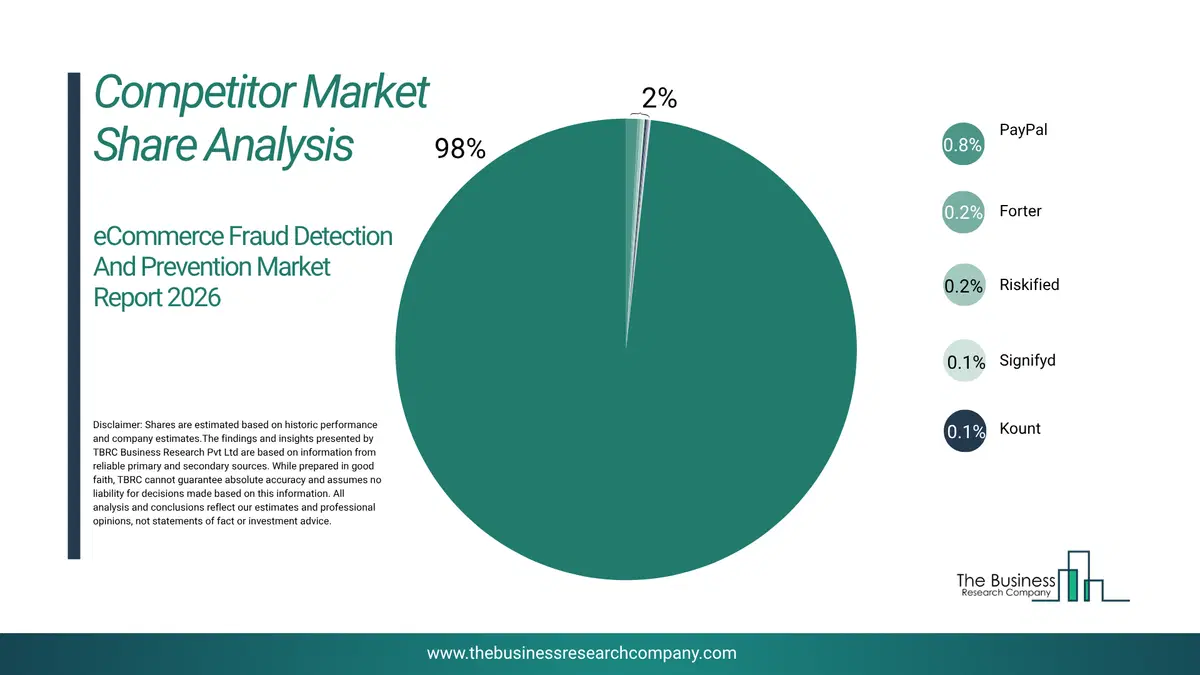
This chart is for illustrative purposes; the full report includes a detailed competitor analysis and comprehensive overview of the top 10 companies in the market.
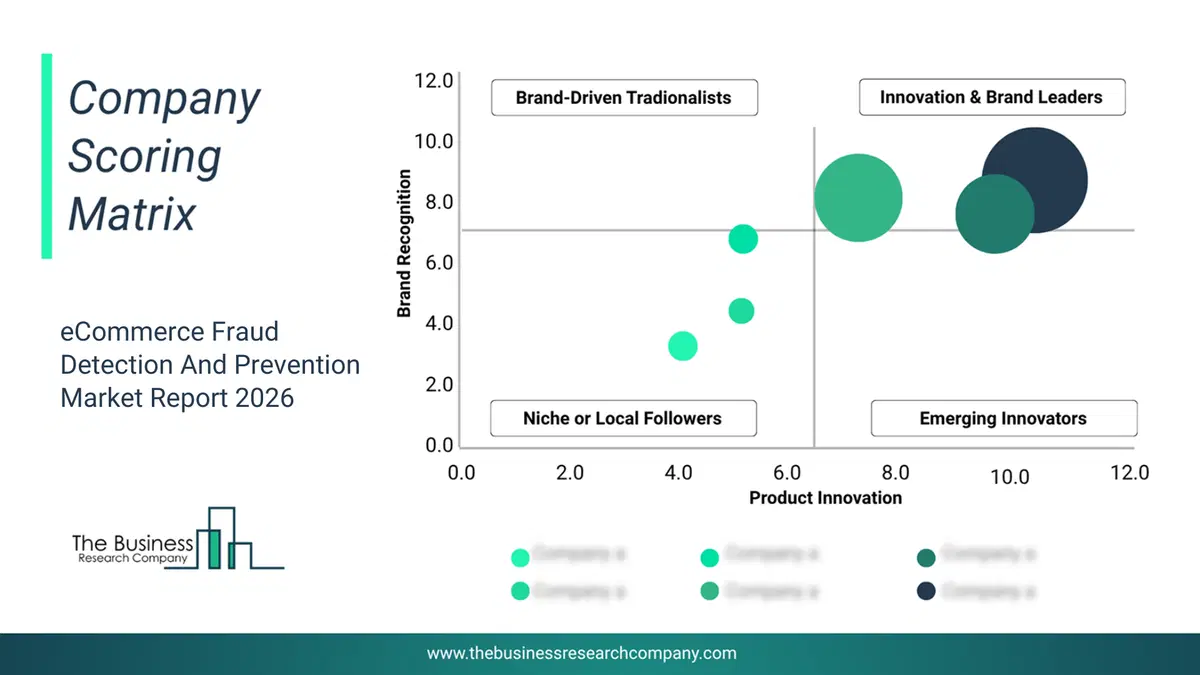
This chart maps companies by product innovation and brand strength, with bubble size indicating relative revenue, helping identify market leaders, challengers, and niche players. This is an illustrative chart; the full report provides a complete and accurate competitive analysis.
Global eCommerce Fraud Detection And Prevention Market Trends and Insights
Major companies operating in the ecommerce fraud detection and prevention market are focusing on developing AI-powered fraud detection, to enhance accuracy in identifying fraudulent transactions, reduce chargebacks, improve customer trust, and streamline the overall payment and checkout experience. AI-powered fraud detection uses artificial intelligence to analyze data patterns and behaviors in real time to identify and stop fraudulent activities. For instance, in April 2023, Experian Plc, an Ireland-based information services company, launched Aidrian, an advanced AI fraud solution designed to combat online fraud and enhance revenue growth. Aidrian integrates machine learning models with extensive data analytics to detect anomalies, assess transaction risks, and provide actionable insights to businesses, reducing the likelihood of fraud and associated financial losses. The platform supports multiple applications, including eCommerce, banking, and payment processing, and stands out for its adaptive learning capabilities and scalability across industries.What Are Latest Mergers And Acquisitions In The eCommerce Fraud Detection And Prevention Market?
In August 2024, Experian Plc, an Ireland‑based provider of data, analytics and software solutions acquired NeuroID for an undisclosed amount. With this acquisition, Experian aims to strengthen its fraud‑detection capabilities by layering advanced behavioural analytics into its service offering. NeuroID Inc. is a US‑based provider of fraud detection and prevention solutions for e-commerce.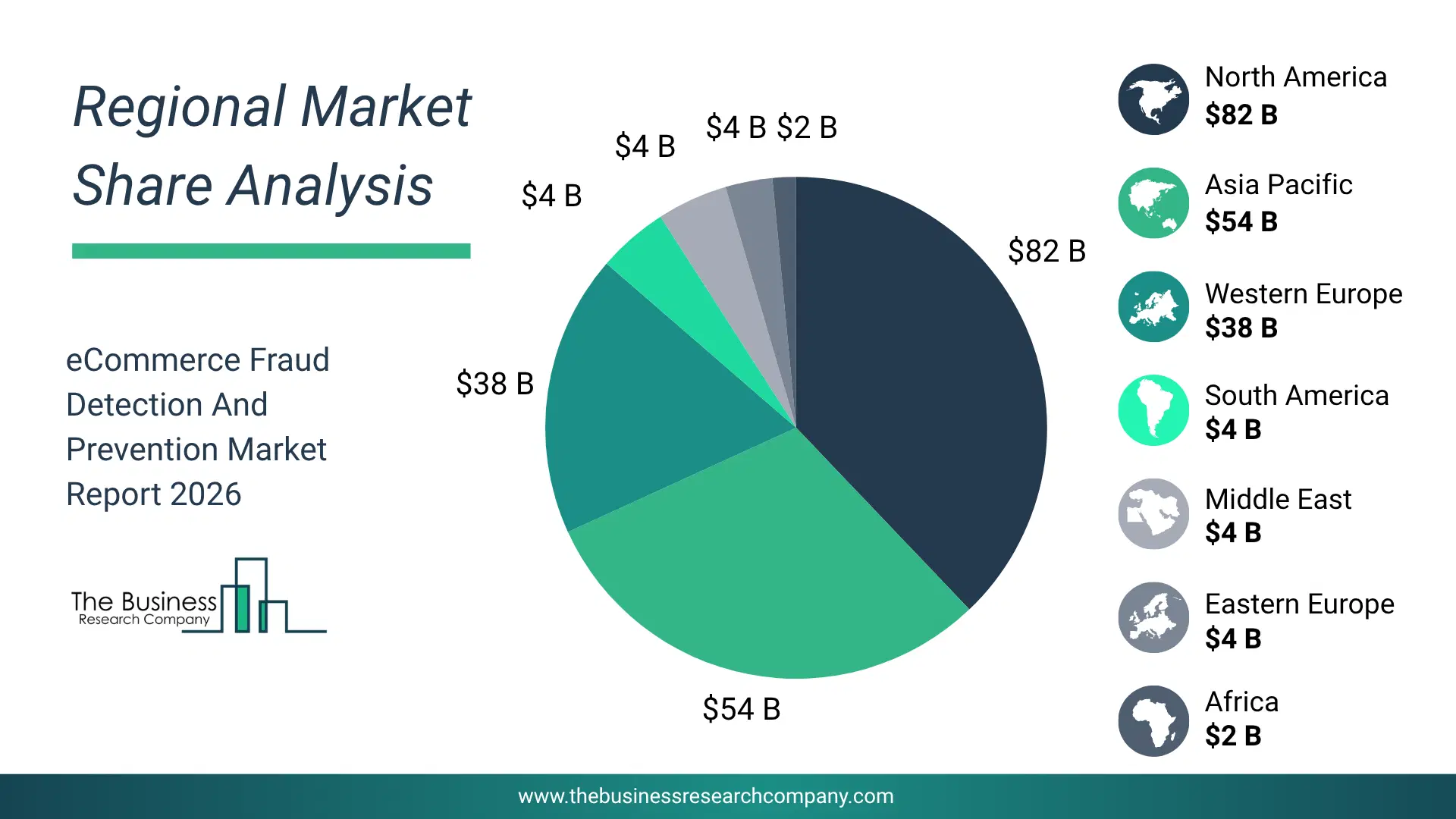
Regional Insights
North America was the largest region in the ecommerce fraud detection and prevention market share in 2025. Europe is expected to be the fastest-growing region in the forecast period. The regions covered in this market report are Asia-Pacific, South East Asia, Western Europe, Eastern Europe, North America, South America, Middle East, Africa. The countries covered in this market report are Australia, Brazil, China, France, Germany, India, Indonesia, Japan, Taiwan, Russia, South Korea, UK, USA, Canada, Italy, SpainWhat Defines the eCommerce Fraud Detection And Prevention Market?
The ecommerce fraud detection and prevention market includes revenues earned by entities by preventing various e-commerce frauds such as pyramid schemes, dubious phone calls, and charities fraud. The market value includes the value of related goods sold by the service provider or included within the service offering. Only goods and services traded between entities or sold to end consumers are included.How is Market Value Defined and Measured?
The market value is defined as the revenues that enterprises gain from the sale of goods and/or services within the specified market and geography through sales, grants, or donations in terms of the currency (in USD unless otherwise specified). The revenues for a specified geography are consumption values that are revenues generated by organizations in the specified geography within the market, irrespective of where they are produced. It does not include revenues from resales along the supply chain, either further along the supply chain or as part of other products.
This chart presents market attractiveness based on a quantitative evaluation of growth, competition, strategic alignment, and risk, offering a clear view of opportunity areas for decision-making. This chart is for illustrative purposes; the full report contains the complete analysis.

This chart highlights the Total Addressable Market (TAM) by estimating the maximum revenue opportunity using an assumption-driven approach, supporting strategic planning and opportunity sizing across markets. The chart is illustrative; the full report provides a more comprehensive analysis.
What Key Data and Analysis Are Included in the eCommerce Fraud Detection And Prevention Market Report 2026?
The ecommerce fraud detection and prevention market research report is one of a series of new reports from The Business Research Company that provides market statistics, including industry global market size, regional shares, competitors with the market share, detailed market segments, market trends and opportunities, and any further data you may need to thrive in the ecommerce fraud detection and prevention industry. The market research report delivers a complete perspective of everything you need, with an in-depth analysis of the current and future state of the industry.eCommerce Fraud Detection And Prevention Market Report Forecast Analysis
| Report Attribute | Details |
|---|---|
| Market Size Value In 2026 | $88.77 billion |
| Revenue Forecast In 2030 | $188.62 billion |
| Growth Rate | CAGR of 20.8% from 2026 to 2030 |
| Base Year For Estimation | 2025 |
| Actual Estimates/Historical Data | 2020-2025 |
| Forecast Period | 2026 - 2030 |
| Market Representation | Revenue in USD Billion and CAGR from 2026 to 2030 |
| Segments Covered | Type, Fraud Type, Organization Size, Industry |
| Regional Scope | Asia-Pacific, Western Europe, Eastern Europe, North America, South America, Middle East, Africa |
| Country Scope | The countries covered in the report are Australia, Brazil, China, France, Germany, India, Indonesia, Japan, Taiwan, Russia, South Korea, UK, USA, Canada, Italy, Spain. |
| Key Companies Profiled | Forter; Riskified; Signifyd; Kount; Sift; ACI Worldwide; Fiserv PLC; LexisNexis Risk Solutions; Experian; ClearSale; Accertify; FICO; TransUnion; PayPal; ThreatMetrix; Cybersource; RSA Security; IDology; NoFraud; Emailage; Fraud.net; Radial; Pipl; Ekata; iovation; NS8 Inc.; Seon; BioCatch; FeedzAI |
| Customization Scope | Request for Customization |
| Pricing And Purchase Options | Explore Purchase Options |