
Embedded Systems Market Report 2026
Global Outlook – By Component (Hardware, Software, Services), By Function (Real-Time, Standalone, Mobile, Networked), By System Size (Small Size, Medium Size, Large Size), By End-Use Industry (Automotive, Consumer Electronics, Aerospace And Defense, Healthcare, Telecommunication, Industrial, Other End-Use Industries) – Market Size, Trends, Strategies, and Forecast to 2030
Embedded Systems Market Overview
• Embedded Systems market size has reached to $120.56 billion in 2025 • Expected to grow to $180.07 billion in 2030 at a compound annual growth rate (CAGR) of 8.1% • Growth Driver: Energy Efficiency and Sustainability Fueling Growth in the Embedded Systems Market • Market Trend: Strengthening Embedded Systems Security Innovations And Solutions • North America was the largest region in 2025 and Asia-Pacific is the fastest growing region.Market Gains By 2030 – Top Opportunities By Segment
Market Gain identifies the most promising market opportunities by highlighting the segments or products expected to generate the highest incremental revenue growth over the next five years.
What Is Covered Under Embedded Systems Market?
Embedded systems are specialized computing systems designed to perform specific tasks within larger systems or devices. They are typically dedicated to a particular function or set of functions, often with real-time computing constraints. Embedded systems often operate within resource-constrained environments, requiring efficient use of processing power, memory, and energy. The main components of embedded systems are hardware, software, and services. Embedded systems hardware refers to the physical components of embedded systems, including microcontrollers or microprocessors, memory (RAM and ROM), input/output interfaces, sensors, actuators, and communication modules. The functionality includes real-time, standalone, mobile, and networked in small size, medium size, and large size systems of automotive, consumer electronics, aerospace and defense, healthcare, telecommunication, industrial, other end-use industries.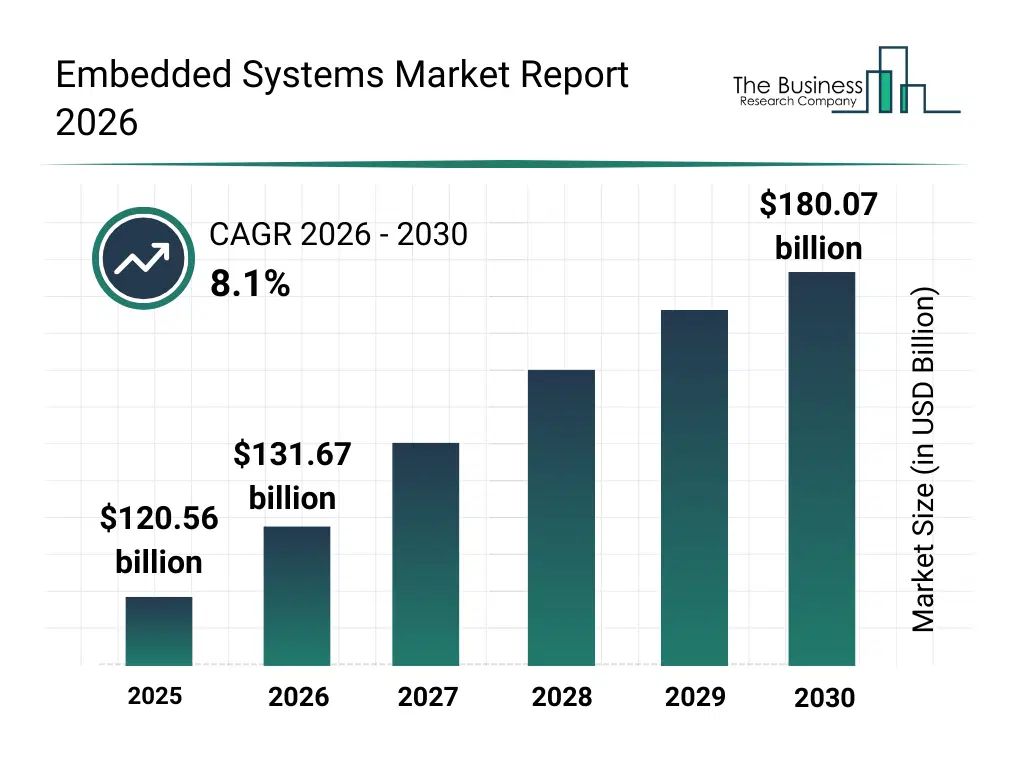
What Is The Embedded Systems Market Size and Share 2026?
The embedded systems market size has grown strongly in recent years. It will grow from $120.56 billion in 2025 to $131.67 billion in 2026 at a compound annual growth rate (CAGR) of 9.2%. The growth in the historic period can be attributed to expansion of consumer electronics manufacturing, rising adoption of embedded controllers in automotive systems, growth of industrial automation, increasing deployment in telecommunications infrastructure, availability of advanced microcontrollers.What Is The Embedded Systems Market Growth Forecast?
The embedded systems market size is expected to see strong growth in the next few years. It will grow to $180.07 billion in 2030 at a compound annual growth rate (CAGR) of 8.1%. The growth in the forecast period can be attributed to increasing adoption of autonomous systems, rising demand for edge AI applications, expansion of connected device ecosystems, growing focus on functional safety standards, increasing investments in embedded software platforms. Major trends in the forecast period include increasing integration of AI in embedded processing, rising demand for real-time embedded computing, growing adoption of edge computing architectures, expansion of energy-efficient embedded designs, enhanced focus on system reliability and safety.
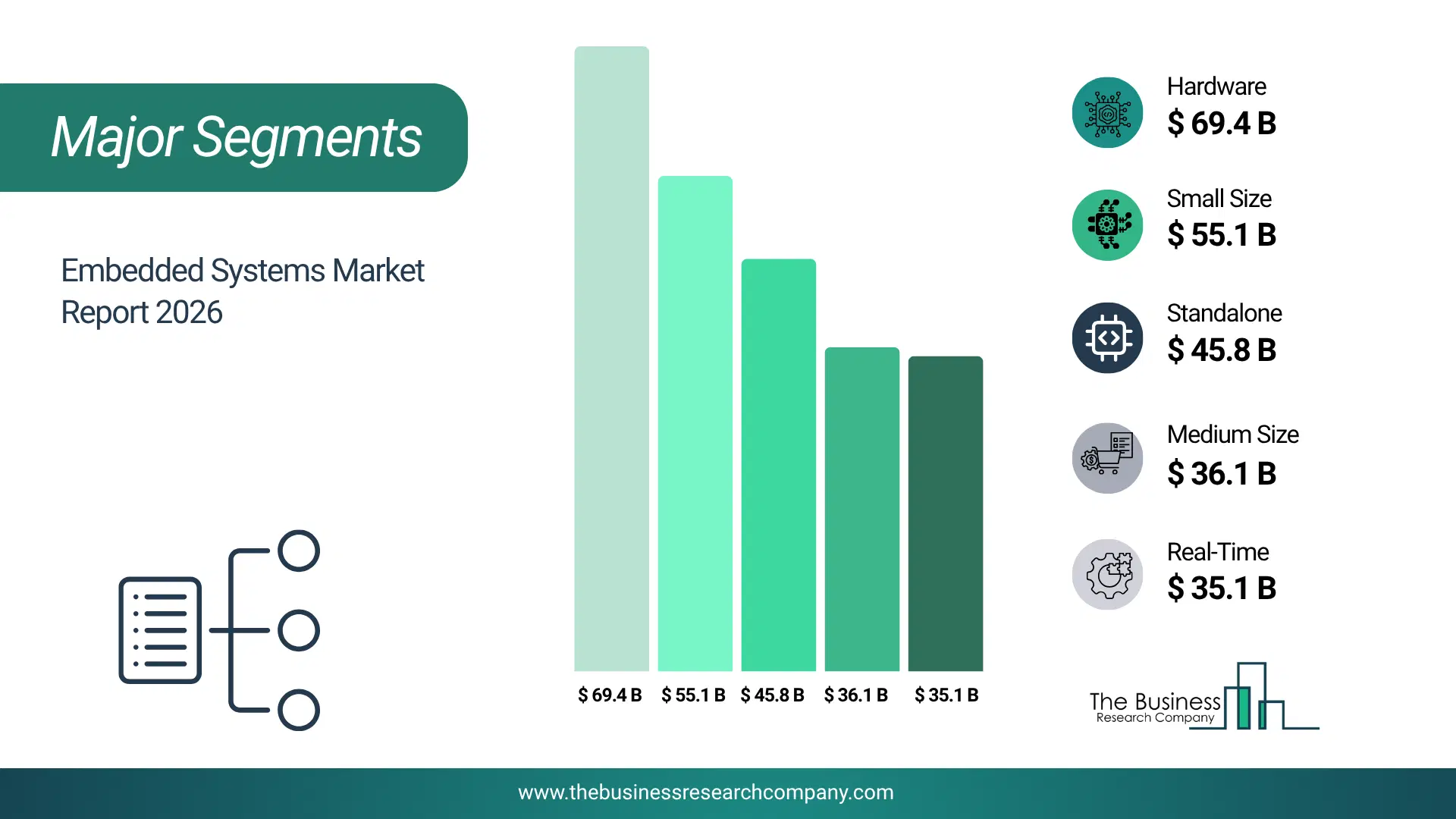
Global Embedded Systems Market Segmentation
1) By Component: Hardware, Software, Services 2) By Function: Real-Time, Standalone, Mobile, Networked 3) By System Size: Small Size, Medium Size, Large Size 4) By End-Use Industry: Automotive, Consumer Electronics, Aerospace And Defense, Healthcare, Telecommunication, Industrial, Other End-Use Industries Subsegments: 1) By Hardware: Microcontrollers (MCUs), Microprocessors (MPUs), Digital Signal Processors (DSPs), Application-Specific Integrated Circuits (ASICs), Field-Programmable Gate Arrays (FPGAs), Sensors, Power Management ICs 2) By Software: Real-Time Operating Systems (RTOS), Embedded Software Development Tools, Middleware, Firmware 3) By Services: Design And Development Services, Consulting Services, Maintenance And Support Services The top segments in the embedded systems market will be: • Hardware will reach $69407.27 Million by 2025. • Small Size will reach $55140.05 Million by 2025. • Standalone will reach $45871.68 Million by 2025. • Medium Size will reach $36117.67 Million by 2025. • Real-Time will reach $35143.34 Million by 2025.What Is The Driver Of The Embedded Systems Market?
The increasing focus on energy efficiency and sustainability is expected to propel the growth of the embedded systems market going forward. Energy efficiency and sustainability refer to the practice of using less energy to perform the same tasks, thereby reducing energy waste, and adopting methods and technologies that meet present needs without compromising the ability of future generations to meet their own needs. Energy efficiency and sustainability are in need due to increasing concerns over environmental degradation, resource depletion, and climate change. Embedded systems contribute to energy efficiency and sustainability by optimizing energy usage, integrating renewable energy sources, and enabling intelligent grid technologies. For instance, in May 2023, according to the International Energy Agency (IEA), a France-based intergovernmental organization, global energy investment rose to $1,740 billion in 2023 from $1,617 billion in 2022. Around USD 2.8 trillion will be invested in energy in 2023. More than USD 1.7 trillion is being allocated to clean energy initiatives, encompassing renewable power, nuclear, grids, storage, low-emission fuels, efficiency enhancements, end-use renewables, and electrification. Therefore, the increasing focus on energy efficiency and sustainability is driving the growth of the embedded systems industry.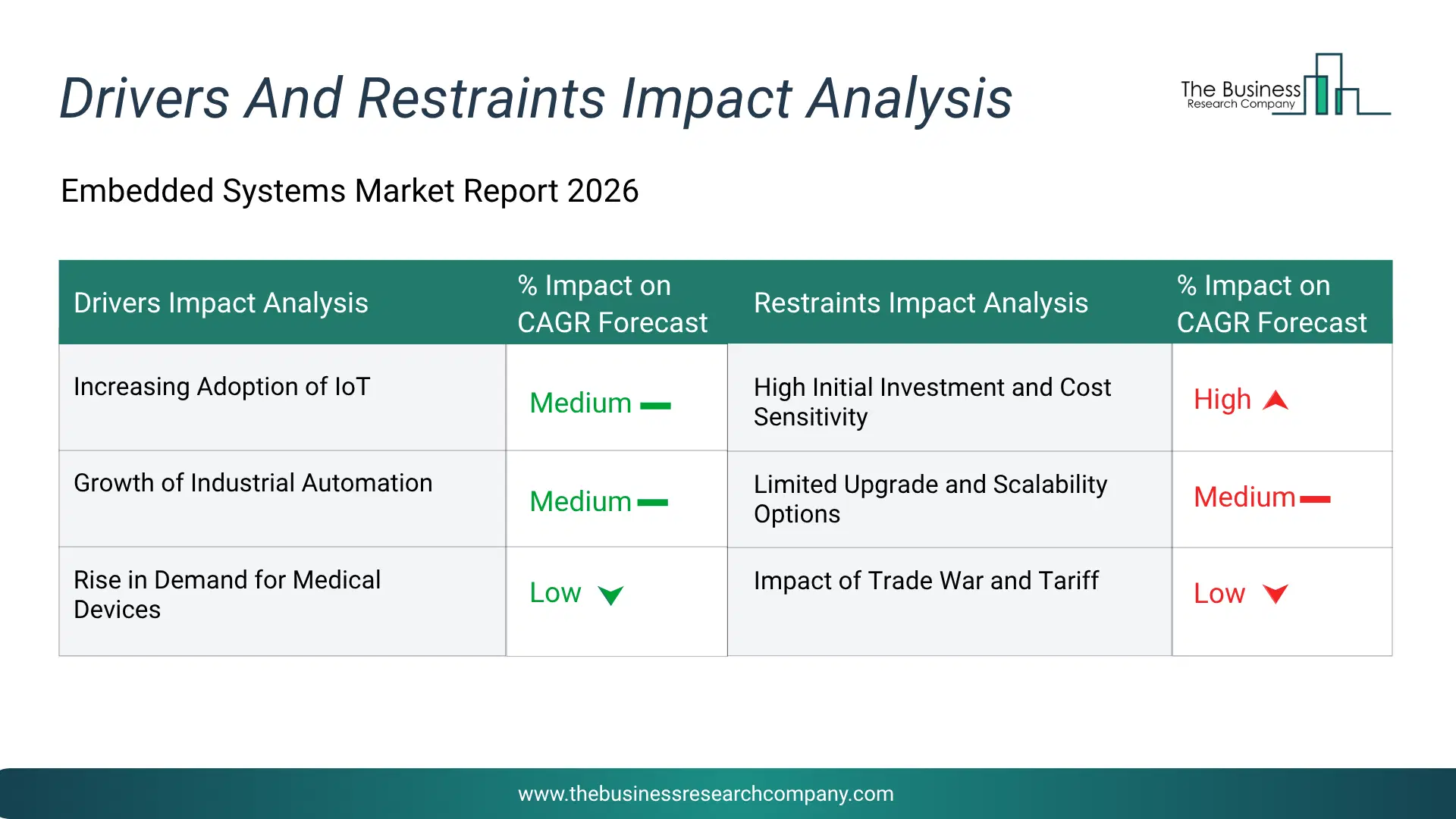
Infographic Chart Showing Key Market Drivers Analysis And Restraints For Embedded Systems Market
The chart presents an impact analysis of key drivers and restraints, quantifying their relative influence on the market's growth rate and helping assess the balance between growth enablers and limiting factors. This chart offers a high-level perspective; the full report contains more detailed insights.
How Will The Drivers Impact Growth In The Global Embedded Systems Market?
• Increasing Adoption of IoT (Medium) – The increasing emphasis internet of things (iot) will become a key driver of growth in the embedded systems market by 2030. Embedded systems are the foundation of all IoT devices from smart thermostats and fitness trackers to industrial sensors and smart meters integrating microcontrollers, sensors, software and communication modules to collect, process and transmit data. With billions of connected devices emerging across homes, factories, cities and vehicles, the demand for compact, low-power and efficient embedded systems is rapidly increasing. Many IoT applications require real-time decision-making at the edge, particularly in industrial automation, healthcare monitoring and autonomous systems. Embedded systems enable this local processing, minimizing latency and reducing reliance on constant network connectivity, which is critical for timely and reliable operation. As a result, the growing deployment of internet of things (IoT) is anticipated to contributing to a 1.8% annual growth in the market. • Growth of Industrial Automation (Medium) – The growing focus on industrial automation will emerge as a major factor driving the expansion of the embedded systems market by 2030 Embedded systems serve as the backbone of industrial automation by controlling machinery, robots, sensors and conveyor belts, enabling real-time monitoring, process control and data acquisition for efficient and reliable operations. With the rising adoption of Industrial IoT (IoT) and smart manufacturing, these systems facilitate device connectivity, communication and edge data analysis, enhancing operational efficiency, predictive maintenance and quality control. Their real-time processing capabilities ensure precise timing and immediate response to sensor inputs, which are critical for seamless automation. Additionally, embedded systems offer scalable and customizable platforms to support diverse applications, from simple assembly lines to complex robotics. Designed for low power consumption and high reliability, they minimize downtime and reduce operational costs, driving broader adoption of automated industrial solutions. Consequently, the accelerating adoption of industrial automation capabilities is projected to contributing to a 1.0% annual growth in the market. • Rise in Demand for Medical Devices (Low) – The expanding integration of demand for medical devices processes will serve as a key growth catalyst for the embedded systems market by 2030, . Embedded systems are critical to the functionality of modern medical devices such as portable diagnostic tools, wearable health monitors, infusion pumps and imaging systems, enabling precise data collection, hardware control and specialized software operations. The rising demand for portable and wearable devices like glucose monitors and smart inhalers drives the need for compact, energy-efficient and reliable embedded solutions capable of continuous, real-time health monitoring. Additionally, advancements in remote patient monitoring and telemedicine, accelerated by the growing healthcare accessibility, rely on embedded systems to integrate sensors and wireless communication modules, enhancing patient care beyond traditional clinical settings. Therefore, this growing integration of demand for medical devices operations is projected to supporting to a 0.8% annual growth in the market. • Increased Adoption in Avionics and Defense Technologies (Low) – The increasing emphasis on avionics and defense technologies will become a significant driver contributing to the growth of the embedded systems market by 2030 Embedded systems play a crucial role in avionics and defense equipment, powering navigation, control, real-time data processing, targeting and communication in aircraft, drones, missile systems and radar units. These applications demand advanced, real-time and deterministic computing to process sensor data and execute critical commands with high precision and reliability under strict safety constraints. The growing adoption of autonomous technologies and unmanned aerial vehicles (UAVs) further drives the need for sophisticated embedded hardware and software to support flight control, obstacle detection and secure data encryption. Additionally, rising government investments in modernizing military infrastructure such as missile guidance, electronic warfare and secure communication networks are fueling continuous. Consequently, the rising adoption of avionics and defense technologies strategies is projected to contributing to a 0.5% annual growth in the market.How Will The Restraints Impact Growth In The Global Embedded Systems Market?
• High Initial Investment and Cost Sensitivity (Medium) – High Initial Investment and Cost Sensitivity will restrict the growth of the Embedded Systems market during the forecast period. Embedded system development requires significant upfront investment in hardware design, software development, and testing infrastructure. The cost-sensitive nature of many embedded applications, particularly in consumer electronics and industrial sensors, creates pressure on profit margins. This cost sensitivity can limit the adoption of advanced embedded systems in price-competitive markets. • Limited Upgrade and Scalability Options (Medium) – Limited Upgrade and Scalability Options will restrict the growth of the Embedded Systems market during the forecast period. Embedded systems often have limited upgrade and scalability options compared to general-purpose computing platforms. Once deployed, embedded systems may be difficult to update or adapt to changing requirements, particularly in resource-constrained applications. This lack of flexibility can limit the useful life of embedded systems and discourage investment in long-term projects. • Impact of Trade War and Tariff (Low) – Impact of Trade War and Tariff will restrict the growth of the Embedded Systems market during the forecast period. Embedded systems rely on global supply chains for semiconductors, microprocessors, and other components. Trade tariffs and restrictions increase component costs and can lead to supply chain disruptions. These factors increase the cost of embedded systems and create uncertainty for manufacturers.Key Players In The Global Embedded Systems Market
Major companies operating in the embedded systems market are Samsung Electronics, Sony Semiconductor Solutions Corporation, Siemens AG, Intel Corporation, Qualcomm Technologies Inc., Honeywell International Inc., Broadcom Inc., Nvidia Corporation, Advanced Micro Devices Inc., Texas Instruments, STMicroelectronics, Infineon Technologies AG, NXP Semiconductors, Analog Devices Inc., Renesas Electronics Corporation, ON Semiconductor, Microchip Technology Inc., Marvell, Vishay Intertechnology Inc., Arm Limited, Silicon Labs, Nordic Semiconductor, Lattice Semiconductor, Raspberry Pi Foundation, Arduino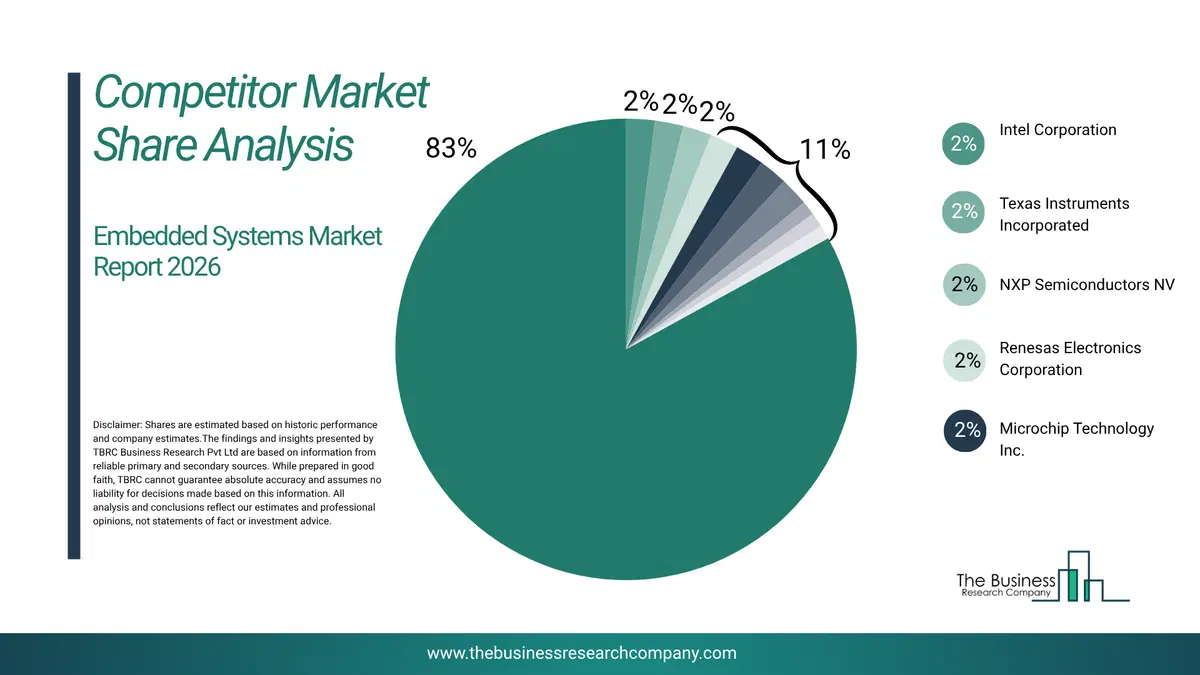
This chart is for illustrative purposes; the full report includes a detailed competitor analysis and comprehensive overview of the top 10 companies in the market.
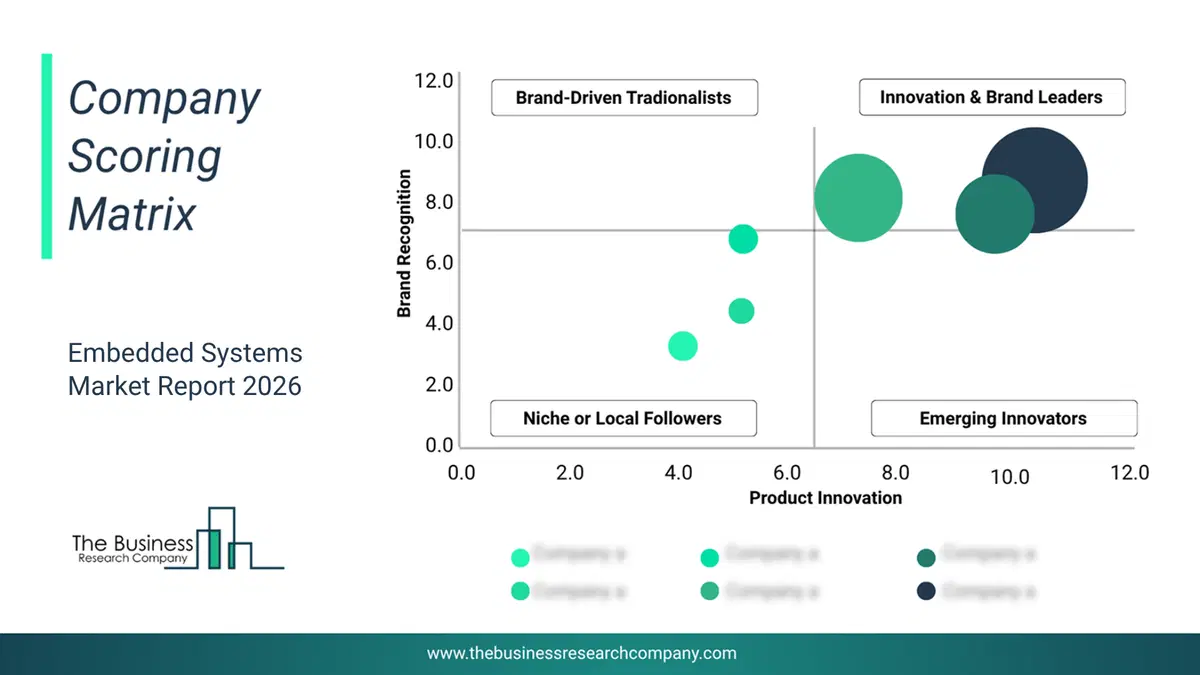
This chart maps companies by product innovation and brand strength, with bubble size indicating relative revenue, helping identify market leaders, challengers, and niche players. This is an illustrative chart; the full report provides a complete and accurate competitive analysis.
Global Embedded Systems Market Trends and Insights
Major companies operating in the embedded systems market are developing security solutions to protect embedded devices and systems from cyber threats. Security solutions help to protect embedded devices and systems from cyber threats by implementing various measures such as encryption, authentication, and secure boot mechanisms. For instance, in July 2023, Kaspersky, a Russia-based cybersecurity and anti-virus software company, launched Kaspersky Embedded Systems Security. Kaspersky Embedded Systems Security offers robust protection for Linux-based embedded devices tailored to their specific security needs. It features multi-layered defenses, application controls, and integrity monitoring, ensuring compliance and protection against evolving threats.What Are Latest Mergers And Acquisitions In The Embedded Systems Market?
In May 2024, Accenture, an Ireland-based professional services company, acquired Teamexpat, for an undisclosed amount. This acquisition aligns with Accenture's strategy to enhance its capabilities in digital engineering, particularly in the semiconductor sector. The Teamexpat team will join Accenture’s digital engineering division in the Netherlands, strengthening the company's expertise in smart, connected products for clients across semiconductor and discrete manufacturing industries. Teamexpat, a Netherlands-based embedded software specialist.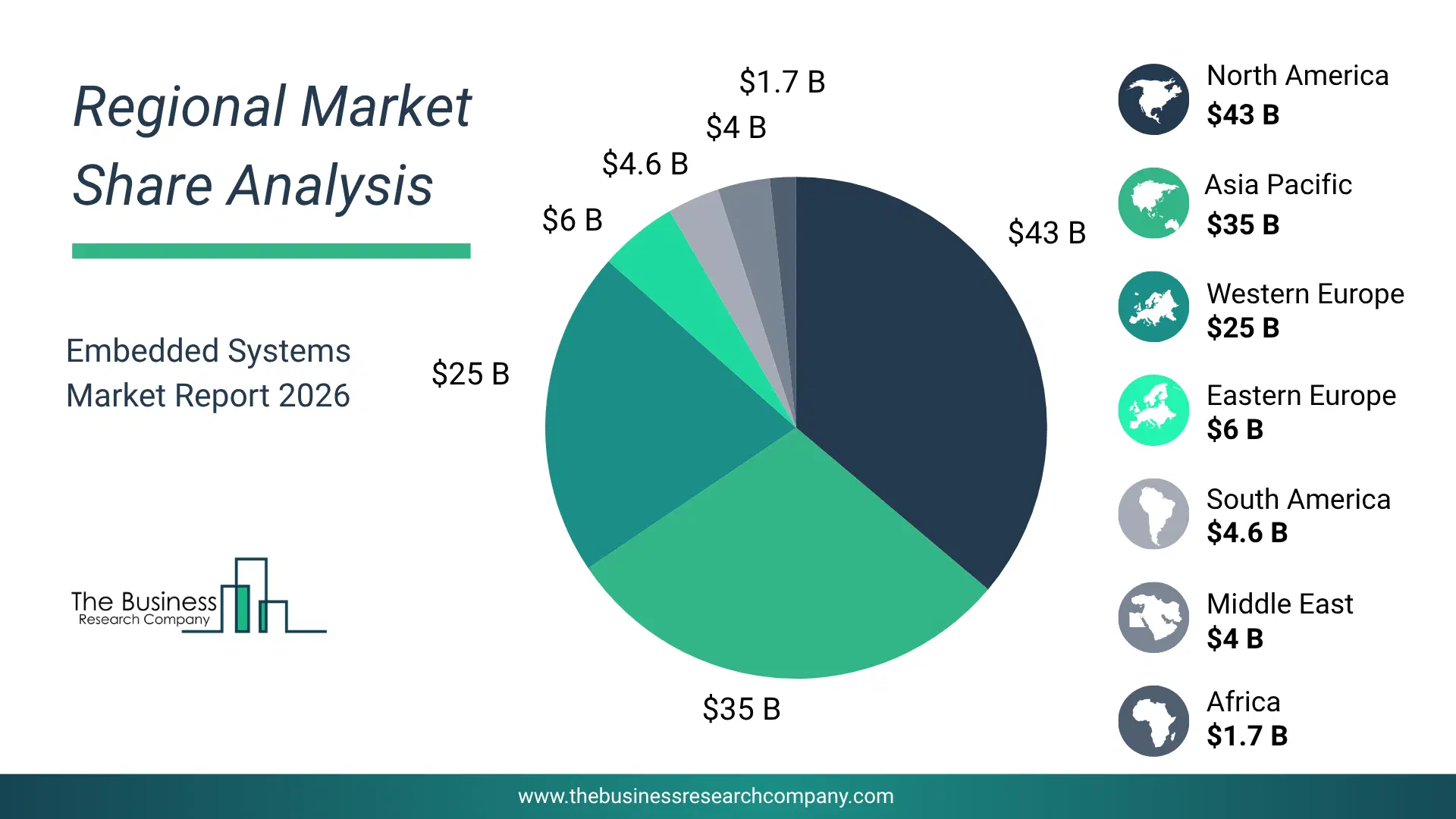
Regional Insights
North America was the largest region in the embedded systems market in 2025. Asia-Pacific is expected to be the fastest-growing region in the forecast period. The regions covered in this market report are Asia-Pacific, South East Asia, Western Europe, Eastern Europe, North America, South America, Middle East, Africa. The countries covered in this market report are Australia, Brazil, China, France, Germany, India, Indonesia, Japan, Taiwan, Russia, South Korea, UK, USA, Canada, Italy, Spain.What Defines the Embedded Systems Market?
The embedded systems market consists of revenues earned by entities by providing services such as custom hardware design, firmware development, software integration, system testing. The market value includes the value of related goods sold by the service provider or included within the service offering. The embedded systems market also includes sales of stm32 microcontrollers, processors and microchip pic microcontrollers. Values in this market are ‘factory gate’ values, that is the value of goods sold by the manufacturers or creators of the goods, whether to other entities (including downstream manufacturers, wholesalers, distributors and retailers) or directly to end customers. The value of goods in this market includes related services sold by the creators of the goods.How is Market Value Defined and Measured?
The market value is defined as the revenues that enterprises gain from the sale of goods and/or services within the specified market and geography through sales, grants, or donations in terms of the currency (in USD unless otherwise specified). The revenues for a specified geography are consumption values that are revenues generated by organizations in the specified geography within the market, irrespective of where they are produced. It does not include revenues from resales along the supply chain, either further along the supply chain or as part of other products.
This chart presents market attractiveness based on a quantitative evaluation of growth, competition, strategic alignment, and risk, offering a clear view of opportunity areas for decision-making. This chart is for illustrative purposes; the full report contains the complete analysis.

This chart highlights the Total Addressable Market (TAM) by estimating the maximum revenue opportunity using an assumption-driven approach, supporting strategic planning and opportunity sizing across markets. The chart is illustrative; the full report provides a more comprehensive analysis.
What Key Data and Analysis Are Included in the Embedded Systems Market Report 2026?
The embedded systems market research report is one of a series of new reports from The Business Research Company that provides market statistics, including industry global market size, regional shares, competitors with the market share, detailed market segments, market trends and opportunities, and any further data you may need to thrive in the embedded systems industry. The market research report delivers a complete perspective of everything you need, with an in-depth analysis of the current and future state of the industry.Embedded Systems Market Report Forecast Analysis
| Report Attribute | Details |
|---|---|
| Market Size Value In 2026 | $131.67 billion |
| Revenue Forecast In 2030 | $180.07 billion |
| Growth Rate | CAGR of 9.2% from 2026 to 2030 |
| Base Year For Estimation | 2025 |
| Actual Estimates/Historical Data | 2020-2025 |
| Forecast Period | 2026 - 2030 |
| Market Representation | Revenue in USD Billion and CAGR from 2026 to 2030 |
| Segments Covered | Component, Function, System Size, End-Use Industry |
| Regional Scope | Asia-Pacific, Western Europe, Eastern Europe, North America, South America, Middle East, Africa |
| Country Scope | The countries covered in the report are Australia, Brazil, China, France, Germany, India, Indonesia, Japan, Taiwan, Russia, South Korea, UK, USA, Canada, Italy, Spain. |
| Key Companies Profiled | Samsung Electronics, Sony Semiconductor Solutions Corporation, Siemens AG, Intel Corporation, Qualcomm Technologies Inc., Honeywell International Inc., Broadcom Inc., Nvidia Corporation, Advanced Micro Devices Inc., Texas Instruments, STMicroelectronics, Infineon Technologies AG, NXP Semiconductors, Analog Devices Inc., Renesas Electronics Corporation, ON Semiconductor, Microchip Technology Inc., Marvell, Vishay Intertechnology Inc., Arm Limited, Silicon Labs, Nordic Semiconductor, Lattice Semiconductor, Raspberry Pi Foundation, Arduino |
| Customization Scope | Request for Customization |
| Pricing And Purchase Options | Explore Purchase Options |