
Feta Cheese Market Report 2026
Global Outlook – By Product Classification (PDO Greek Feta, Feta-Style Cheese (Non-PDO)), By Milk Source (Sheep Milk, Sheep & Goat Milk Blend, Goat Milk, Cow Milk ), By Nature (Conventional, Organic), By Distribution Channel (Business-to-Business (B2B), Foodservice, Food Processing Or Ingredient Use, Business-to-Consumer (B2C), Supermarkets And Hypermarkets, Specialty Stores, Online Retail, Convenience Stores) – Market Size, Trends, Strategies, and Forecast to 2030
Feta Cheese Market Overview
• Feta Cheese market size has reached to $15.3 billion in 2025 • Expected to grow to $21.53 billion in 2030 at a compound annual growth rate (CAGR) of 7.2% • Growth Driver: Surge In Sheep And Goat Milk Production Boosts Growth Of The Feta Cheese Market • Market Trend: Technological Advancements Drive Growth Of Versatile Feta Cheese Products • Europe was the largest region in 2025 and Asia-Pacific is the fastest growing region.Market Gains By 2030 – Top Opportunities By Segment
Market Gain identifies the most promising market opportunities by highlighting the segments or products expected to generate the highest incremental revenue growth over the next five years.
What Is Covered Under Feta Cheese Market?
Feta cheese refers to soft, white-colored cheese containing high amounts of sodium and saturated fat. Feta cheese has a tangy, sharp flavor and a creamy mouthfeel typically produced from made from the milk of sheep and goats. The main types of feta cheese are Bulgarian feta, French feta, German feta, and others. Bulgarian feta refers to a white brined cheese with a creamy texture produced from sheep milk often used in grilling and barbecuing salads and cooked dishes including pies and pastries. These are taken from various sources such as cow milk, sheep milk, and goat milk, and are distributed through B2B and B2C channel.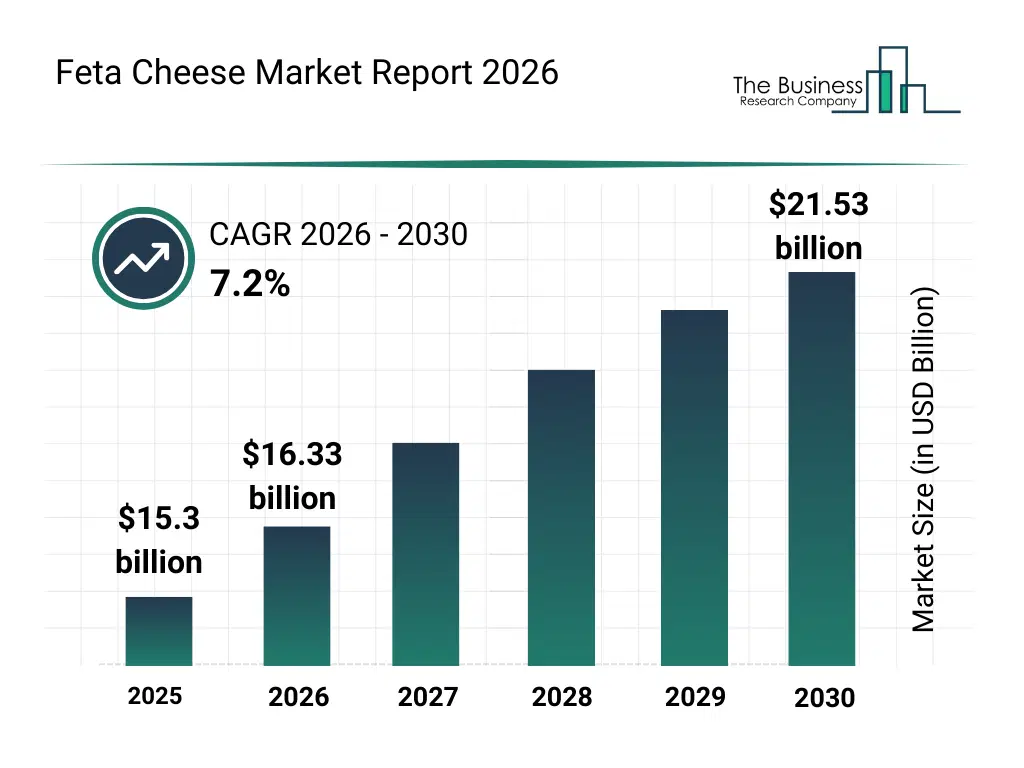
What Is The Feta Cheese Market Size and Share 2026?
The feta cheese market size has grown strongly in recent years. It will grow from $15.3 billion in 2025 to $16.33 billion in 2026 at a compound annual growth rate (CAGR) of 6.7%. The growth in the historic period can be attributed to expansion of mediterranean cuisine adoption, strong demand from foodservice sector, traditional cheese-making practices, rising consumption of soft cheeses, established retail distribution networks.What Is The Feta Cheese Market Growth Forecast?
The feta cheese market size is expected to see strong growth in the next few years. It will grow to $21.53 billion in 2030 at a compound annual growth rate (CAGR) of 7.2%. The growth in the forecast period can be attributed to growing demand for premium dairy products, rising health-conscious consumption patterns, expansion of international cheese trade, increasing use in ready-to-eat meals, product innovation in reduced-fat variants. Major trends in the forecast period include growing demand for authentic regional cheese varieties, rising preference for sheep and goat milk-based products, expansion of premium and artisanal feta offerings, increasing focus on clean label and traditional processing, wider adoption of packaged and branded feta products.
Global Feta Cheese Market Segmentation
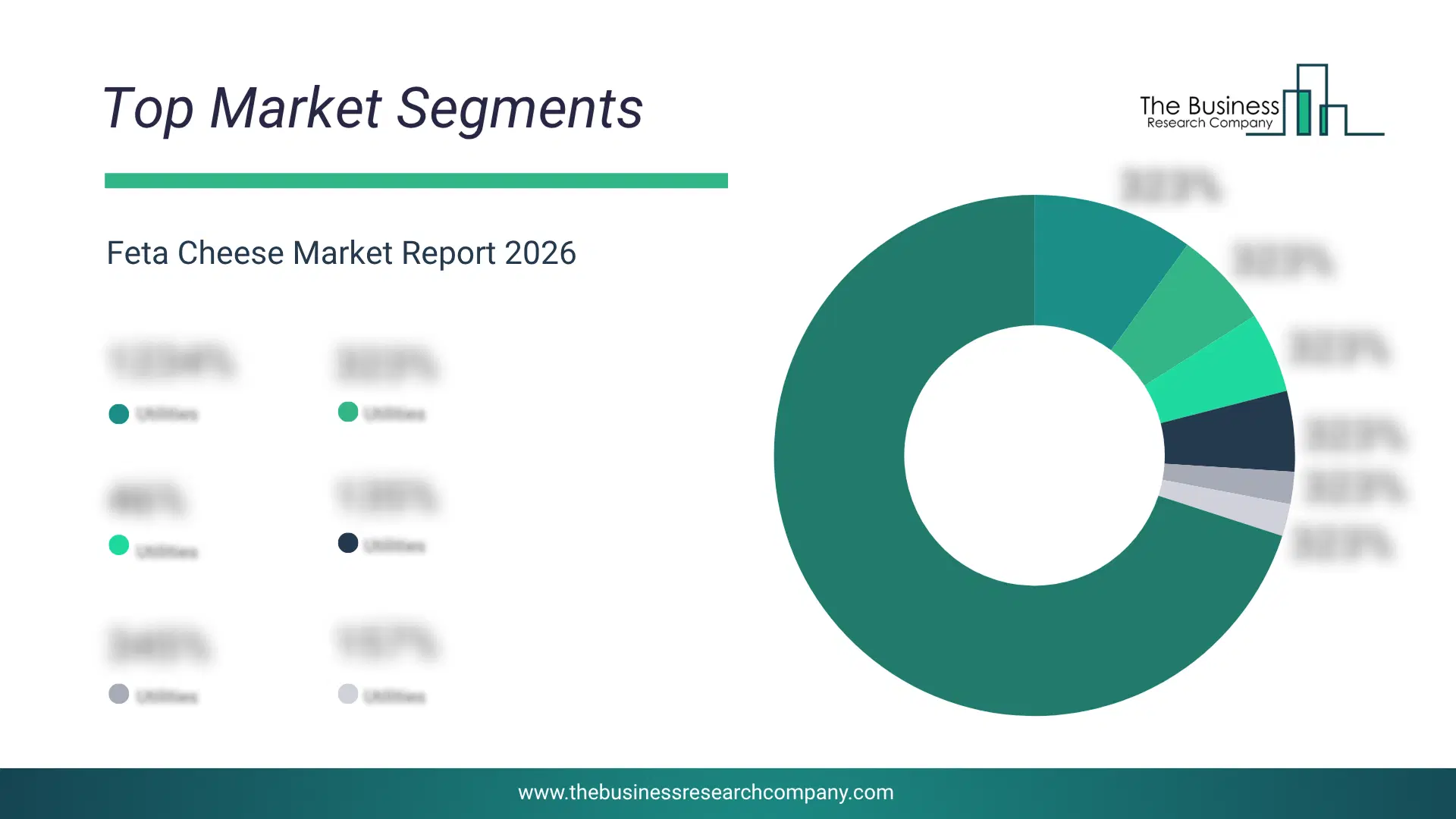
1) By Product Classification: PDO Greek Feta, Feta-Style Cheese (Non-PDO) 2) By Milk Source: Sheep Milk, Sheep & Goat Milk Blend, Goat Milk, Cow Milk 3) By Nature: Conventional, Organic 4) By Distribution Channel: Business-to-Business (B2B), Foodservice, Food Processing Or Ingredient Use, Business-to-Consumer (B2C), Supermarkets And Hypermarkets, Specialty Stores, Online Retail, Convenience Stores Subsegments: 1) By PDO Greek Feta: PDO Greek Feta, Sheep Milk Feta (PDO), Sheep And Goat Milk Blend Feta (PDO), Traditional Brined Greek Feta, Aged Greek Feta, Organic Greek Feta (PDO) 2) By Feta-Style Cheese (Non-PDO): Cow Milk Feta-Style, Sheep Milk Feta-Style, Goat Milk Feta-Style, Mixed Milk Feta-Style, Bulgarian-Style Feta, French-Style Feta, German-Style Feta, American-Style Feta, Artisanal And Farmstead Feta-Style, Organic Feta-Style The top segments in the feta cheese market will be: • PDO Greek Feta will reach $16.24 Billion by 2030. • Feta-Style Cheese (Non-PDO) will reach $8.06 Billion by 2030.What Is The Driver Of The Feta Cheese Market?
An increase in milk production such as sheep and goats are expected to propel the feta cheese market going forward. Milk refers to a liquid produced by cows, goats, and some other animals, which is used for drinking and making butter, cheese, yogurt, and other dairy product. Generally, feta cheese is made entirely of sheep milk, but it may also be prepared using 30% goat milk and 70% sheep milk. Therefore, a rise in goat and sheep milk production raises demand for the feta cheese market. For instance, in February 2024, according to the Department for Environment, Food & Rural Affairs, a UK-based government department, In July, UK dairies processed 1,203 million litres of milk. The 12-month rolling average up to July showed a 0.1% increase compared to the milk processed in the 12 months leading up to June. Thus, an increase in milk production of sheep and goats drives the feta cheese industry.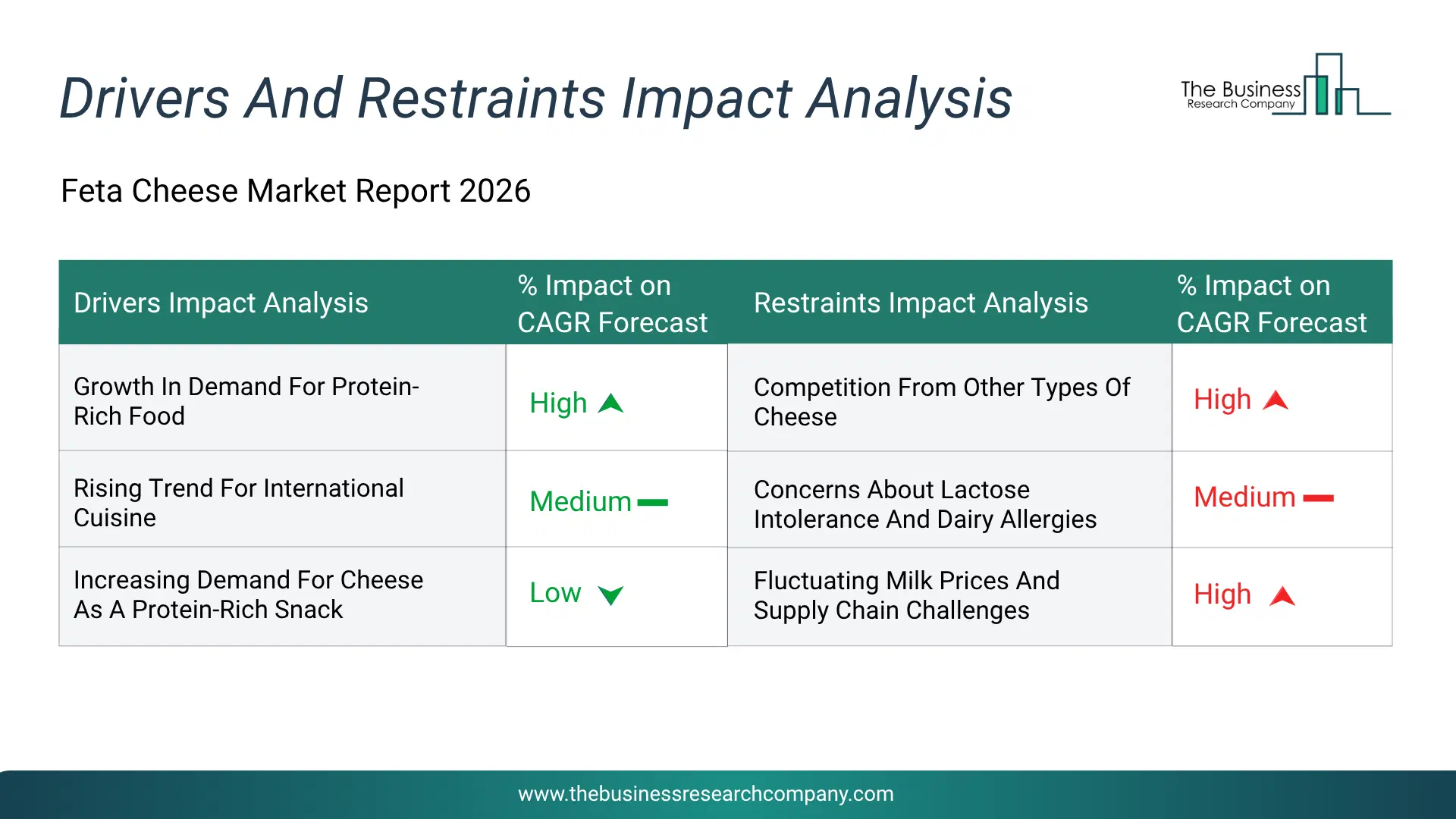
Infographic Chart Showing Key Market Drivers Analysis And Restraints For Feta Cheese Market
The chart presents an impact analysis of key drivers and restraints, quantifying their relative influence on the market's growth rate and helping assess the balance between growth enablers and limiting factors. This chart offers a high-level perspective; the full report contains more detailed insights.
How Will The Drivers Impact Growth In The Global Feta Cheese Market?
• Growth In Demand For Protein-Rich Food (High) – During the forecast period, the growth in demand for protein-rich food is expected to become a key growth driver for the feta cheese market by 2030. The growing consumer preference for protein-rich foods is a major driver of the feta cheese market. As awareness regarding balanced nutrition and muscle health increases, consumers are actively seeking foods that provide high-quality protein. Feta cheese is recognized as a convenient source of protein while also offering essential nutrients such as calcium and vitamins. Health-conscious individuals are incorporating feta into salads, sandwiches, and meal preparations as part of their daily diet. The rise of fitness-oriented lifestyles and weight-management programs further supports demand for protein-rich dairy products. Additionally, consumers are replacing highly processed snacks with nutrient-dense alternatives, creating new consumption opportunities for feta cheese. • Rising Trend For International Cuisine (Medium) – During the forecast period, the rising trend for international cuisine is expected to emerge as a major factor driving the expansion of the feta cheese market by 2030. The increasing popularity of international cuisine has significantly contributed to the expansion of the feta cheese market. Consumers are becoming more adventurous in their food choices and are exploring Mediterranean, Greek, and other global culinary traditions where feta cheese is a key ingredient. Restaurants, cafes, and foodservice operators are introducing diverse menu offerings that feature feta in salads, wraps, pizzas, and baked dishes. Social media and food-related content have also accelerated awareness of authentic international recipes. As consumers attempt to recreate restaurant-style meals at home, demand for specialty cheeses such as feta continues to rise. The availability of global food products through supermarkets and online retail channels further enhances accessibility. • Increasing Demand For Cheese As A Protein-Rich Snack (Low) – During the forecast period, the increasing demand for cheese as a protein-rich snack is expected to act as a key growth catalyst for the feta cheese market by 2030. The rising demand for convenient and protein-rich snacks is driving growth in the feta cheese market. Modern consumers increasingly prefer nutritious snack options that can fit into busy lifestyles without compromising health goals. Feta cheese serves as an appealing snack ingredient due to its rich protein content, distinctive flavor, and versatility. Manufacturers are introducing portion-controlled packaging and ready-to-eat snack combinations that include cheese, fruits, and vegetables. The trend toward healthy snacking among working professionals and younger consumers has expanded the market potential for feta products. Furthermore, growing awareness of the benefits of protein for energy and satiety supports frequent consumption.How Will The Restraints Impact Growth In The Global Feta Cheese Market?
• Competition From Other Types Of Cheese (High) – During the forecast period, the competition from other types of cheese acts as a significant restraint on the feta cheese market by limiting its market share and consumer reach. The global cheese industry offers a wide variety of alternatives, including mozzarella, cheddar, parmesan, gouda, and cream cheese, each catering to different taste preferences and culinary applications. Many consumers choose these alternatives due to greater familiarity, broader availability, or lower prices in certain regions. Food manufacturers and restaurants may also prefer other cheese varieties that have wider consumer acceptance and versatility across menu offerings. In addition, aggressive marketing and product innovation by competing cheese producers intensify competitive pressure on feta cheese brands. The presence of numerous substitutes makes it challenging for feta cheese manufacturers to differentiate their products effectively. As a result, competition from alternative cheese products can restrict the pace of market growth. • Concerns About Lactose Intolerance And Dairy Allergies (Medium) – During the forecast period, the concerns about lactose intolerance and dairy allergies are restraining the growth of the feta cheese market by reducing its potential consumer base. A growing number of consumers are becoming aware of digestive issues and allergic reactions associated with dairy consumption. Individuals with lactose intolerance often limit or avoid cheese products, including feta, to prevent discomfort and health complications. Similarly, consumers with dairy allergies must completely eliminate dairy-based foods from their diets. The increasing popularity of plant-based and dairy-free alternatives has provided these consumers with substitute options, reducing demand for traditional cheese products. Health-conscious buyers may also perceive dairy-free products as healthier alternatives, further influencing purchasing decisions. Consequently, rising concerns regarding lactose intolerance and dairy allergies create challenges for the long-term expansion of the feta cheese market. • Fluctuating Milk Prices And Supply Chain Challenges (Low) – During the forecast period, the fluctuating milk prices and supply chain challenges act as a significant restraint on the feta cheese market because dairy production costs are highly influenced by changes in raw milk prices, feed costs, weather conditions, and livestock availability. Variations in milk supply can increase production expenses and affect the profitability of feta cheese manufacturers. Additionally, disruptions in transportation, cold chain logistics, and dairy ingredient availability can impact production schedules and product distribution. Manufacturers may face difficulties in maintaining stable pricing strategies due to unpredictable input costs. These supply chain uncertainties can reduce operational efficiency and create challenges for market expansion. As a result, fluctuations in milk prices and supply chain disruptions can limit the growth potential of the feta cheese market.Key Players In The Global Feta Cheese Market
Major companies operating in the feta cheese market are Arla Foods amba, Lactalis American Group Inc., Fonterra Co-operative Group Limited, Saputo Inc., The Kraft Heinz Company, Dodoni S.A., Kolios S.A, Mevgal, Saudia Dairy and Foodstuff Company, Clover Leaf Cheese Ltd., Carr Valley Cheese, Agropur Cooperative, Churney Company Inc., Organic Valley, Amul, Bel Brands USA Inc., Fage International S.A., Epirus S.A., Karoun Dairies LLC, Vermont Creamery, Lemnos Foods, Mt Vikos, Pastures of Eden, Olympus Dairy, Crystal Farms, Arahova Products Distribution Inc., Old Europe Cheese, Bethel Creamery, Klondike Cheese Company, Sierra Nevada Cheese Co., Makedonia S.A., Valbreso, Verde Farm, Domi Greece, Kasseri S.A., Naxos Dairy, Tresomega Nutrition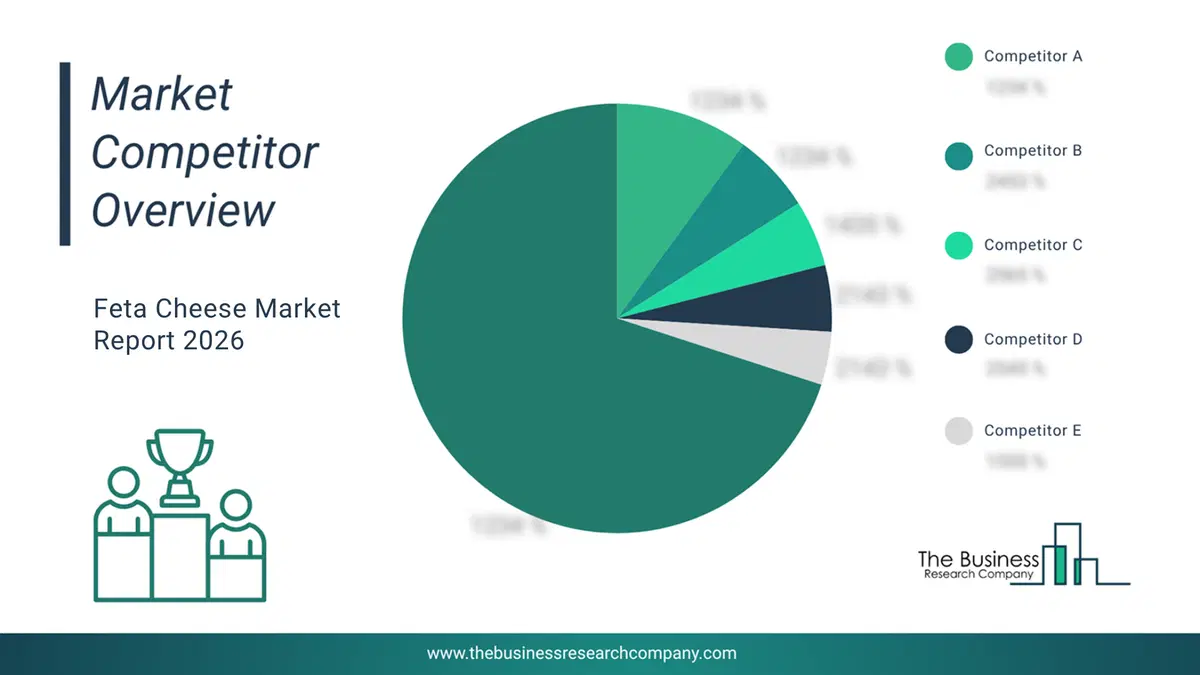
This chart is for illustrative purposes; the full report includes a detailed competitor analysis and comprehensive overview of the top 10 companies in the market.
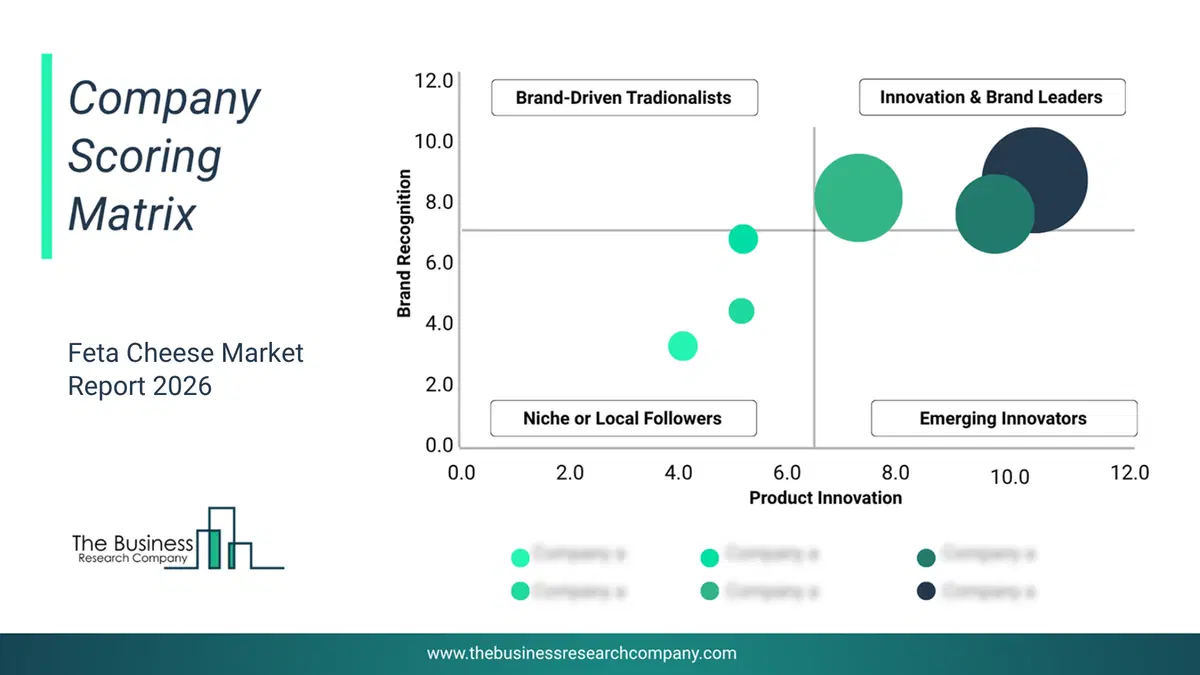
This chart maps companies by product innovation and brand strength, with bubble size indicating relative revenue, helping identify market leaders, challengers, and niche players. This is an illustrative chart; the full report provides a complete and accurate competitive analysis.
Global Feta Cheese Market Trends and Insights
Major companies operating in the feta cheese market are focused on developing technologically advanced products, such as feta SKU to enhance product versatility, improve texture, and meet growing consumer demand for innovative and convenient cheese options. The introduction of Whipped Feta SKUs into Tesco reflects a growing consumer demand for convenient and versatile cheese products, allowing shoppers to enjoy a creamy, ready-to-use option that enhances meal preparation and offers unique flavor profiles. For instance, in July 2024, Yamas, a UK-based cheese company, launched Whipped Feta SKUs. It boasts a creamy texture that makes it perfect for spreading, along with a rich flavor profile that elevates a wide range of dishes. The convenient packaging is designed for easy use, whether as a dip or as an ingredient in salads and pasta. Additionally, it aligns with the growing trend for innovative, premium dairy options.What Are Latest Mergers And Acquisitions In The Feta Cheese Market?
In October 2023, Atalanta Corp., a US-based food importer, acquired Mt. Vikos for an undisclosed amount. As a result of the acquisition, Atalanta is now able to enhance its product portfolio by offering a selection of PDO (Protected Designation of Origin) imported Greek specialty cheeses made with non-GMO sheep and goat’s milk, all crafted using traditional production methods, underscoring its commitment to delivering exceptional quality to consumers. Mt. Vikos is a US-based company known for its Greek Feta and spreads.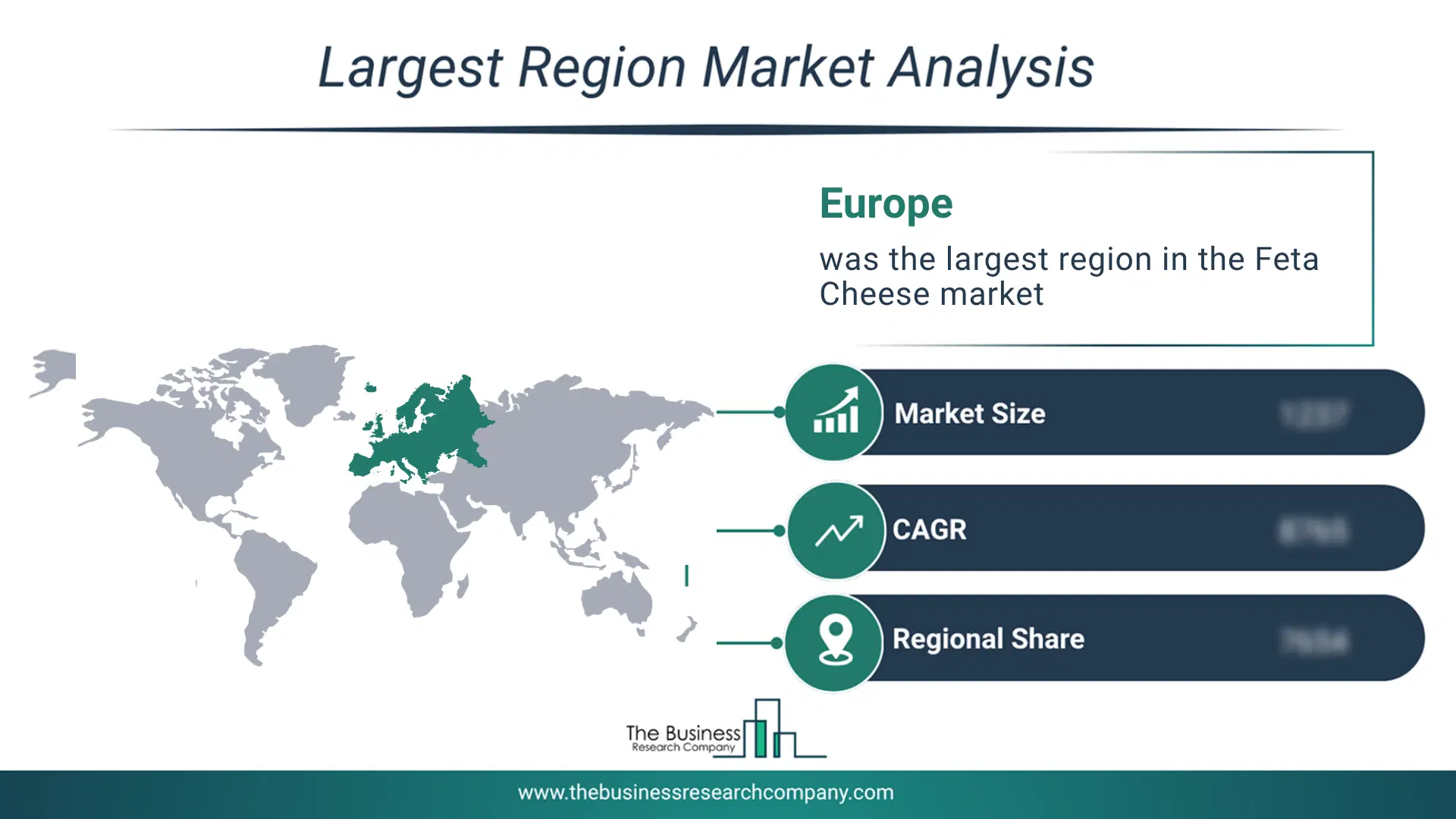
Regional Outlook
Europe was the largest region in the feta cheese market in 2025. Asia-Pacific is expected to be the fastest-growing region in the feta cheese market during the forecast period. The regions covered in this market report are Asia-Pacific, South East Asia, Western Europe, Eastern Europe, North America, South America, Middle East and Africa. The countries covered in this market report are Australia, Brazil, China, France, Germany, India, Indonesia, Japan, Taiwan, Russia, South Korea, UK, USA, Italy, Spain, CanadaWhat Defines the Feta Cheese Market?
The feta cheese market consists of sales of crumbled feta, marinated feta, and vegan feta. Values in this market are ‘factory gate’ values, that is the value of goods sold by the manufacturers or creators of the goods, whether to other entities (including downstream manufacturers, wholesalers, distributors, and retailers) or directly to end customers. The value of goods in this market includes related services sold by the creators of the goods.How is Market Value Defined and Measured?
The market value is defined as the revenues that enterprises gain from the sale of goods and/or services within the specified market and geography through sales, grants, or donations in terms of the currency (in USD unless otherwise specified). The revenues for a specified geography are consumption values that are revenues generated by organizations in the specified geography within the market, irrespective of where they are produced. It does not include revenues from resales along the supply chain, either further along the supply chain or as part of other products.
This chart presents market attractiveness based on a quantitative evaluation of growth, competition, strategic alignment, and risk, offering a clear view of opportunity areas for decision-making. This chart is for illustrative purposes; the full report contains the complete analysis.

This chart highlights the Total Addressable Market (TAM) by estimating the maximum revenue opportunity using an assumption-driven approach, supporting strategic planning and opportunity sizing across markets. The chart is illustrative; the full report provides a more comprehensive analysis.
What Key Data and Analysis Are Included in the Feta Cheese Market Report 2026?
The feta cheese market research report is one of a series of new reports from The Business Research Company that provides market statistics, including industry global market size, regional shares, competitors with the market share, detailed market segments, market trends and opportunities, and any further data you may need to thrive in the feta cheese industry. The market research report delivers a complete perspective of everything you need, with an in-depth analysis of the current and future state of the industry.Feta Cheese Market Report Forecast Analysis
| Report Attribute | Details |
|---|---|
| Market Size Value In 2026 | $16.33 billion |
| Revenue Forecast In 2030 | $21.53 billion |
| Growth Rate | CAGR of 6.7% from 2026 to 2030 |
| Base Year For Estimation | 2025 |
| Actual Estimates/Historical Data | 2020-2025 |
| Forecast Period | 2026 - 2030 |
| Market Representation | Revenue in USD Billion and CAGR from 2026 to 2030 |
| Segments Covered | Product Classification, Milk Source, Nature, Distribution Channel |
| Regional Scope | Asia-Pacific, Western Europe, Eastern Europe, North America, South America, Middle East, Africa |
| Country Scope | The countries covered in the report are Australia, Brazil, China, France, Germany, India, ... |
| Key Companies Profiled | Arla Foods amba, Lactalis American Group Inc., Fonterra Co-operative Group Limited, Saputo Inc., The Kraft Heinz Company, Dodoni S.A., Kolios S.A, Mevgal, Saudia Dairy and Foodstuff Company, Clover Leaf Cheese Ltd., Carr Valley Cheese, Agropur Cooperative, Churney Company Inc., Organic Valley, Amul, Bel Brands USA Inc., Fage International S.A., Epirus S.A., Karoun Dairies LLC, Vermont Creamery, Lemnos Foods, Mt Vikos, Pastures of Eden, Olympus Dairy, Crystal Farms, Arahova Products Distribution Inc., Old Europe Cheese, Bethel Creamery, Klondike Cheese Company, Sierra Nevada Cheese Co., Makedonia S.A., Valbreso, Verde Farm, Domi Greece, Kasseri S.A., Naxos Dairy, Tresomega Nutrition |
| Customization Scope | Request for Customization |
| Pricing And Purchase Options | Explore Purchase Options |