
Dairy Products Market Report 2026
Global Outlook – By Product Type (Milk, Cheese, Butter, Desserts, Yogurt, Other Types), By Distribution Channel (Supermarket, Hypermarket, Specialty Store, Online Retail, Other Channels), By Application (Bakery And Confectionary, Clinical Nutrition, Frozen Foods, Other Applications) – Market Size, Trends, Strategies, and Forecast to 2030
Dairy Products Market Overview
• Dairy Products market size has reached to $544.2 billion in 2025 • Expected to grow to $680.06 billion in 2030 at a compound annual growth rate (CAGR) of 4.6% • Growth Driver: Surging Demand Propels Growth In The Dairy Products Market • Market Trend: Surge in High-Protein Dairy Products as Consumers Seek Nutrition + Convenience • Asia-Pacific was the largest region and fastest growing region.What Is Covered Under Dairy Products Market?
Dairy products refer to food products that contain or are derived from milk and its derivatives by secretion of the glands of mammals, such as cows, sheep, or goats. The milk is processed and turned into a variety of products. They are used for nutrients and health benefits that help in building and maintaining strong bones. The major types of dairy products are milk, cheese, butter, desserts, yogurt, and others. Milk refers to a liquid that is secreted by the mammary glands of female mammals and that nourishes their young immediately after birth. These are sold through various distribution channels, such as supermarkets, hypermarkets, specialty stores, online retail, and others. Several applications include bakery and confectionary, clinical nutrition, frozen foods, and others.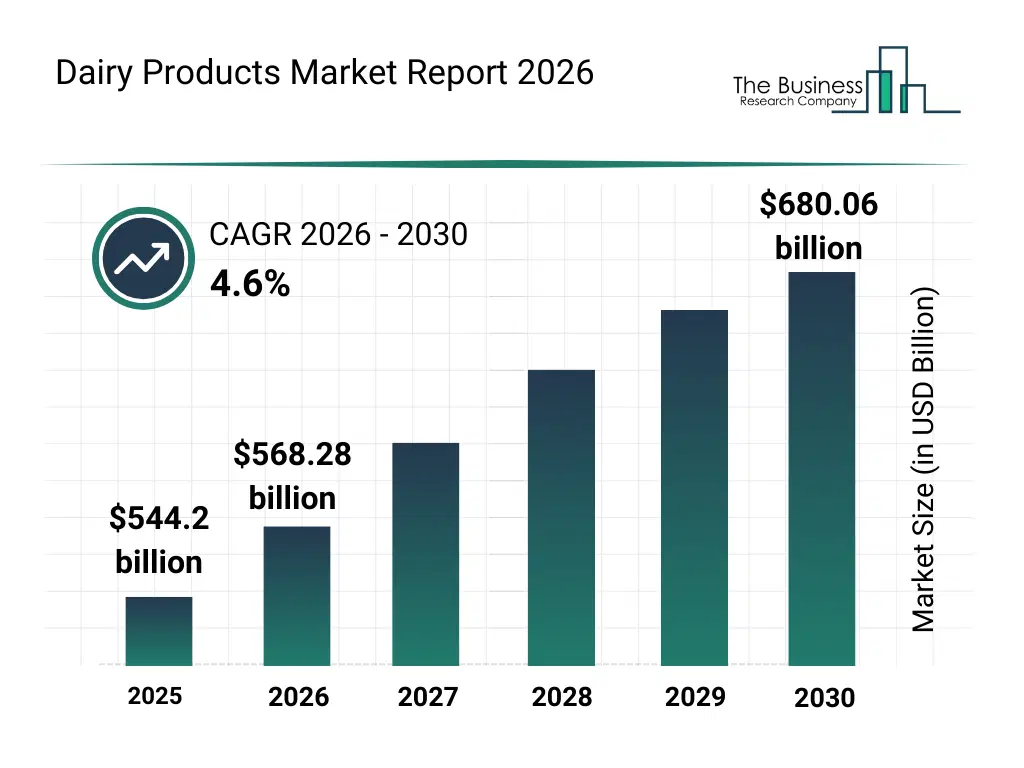
What Is The Dairy Products Market Size and Share 2026?
The dairy products market size has grown steadily in recent years. It will grow from $544.2 billion in 2025 to $568.28 billion in 2026 at a compound annual growth rate (CAGR) of 4.4%. The growth in the historic period can be attributed to expansion of global milk production, growth of packaged dairy consumption, increasing urbanization, development of cold storage infrastructure, rising nutritional awareness.What Is The Dairy Products Market Growth Forecast?
The dairy products market size is expected to see steady growth in the next few years. It will grow to $680.06 billion in 2030 at a compound annual growth rate (CAGR) of 4.6%. The growth in the forecast period can be attributed to increasing demand for plant-based and hybrid dairy alternatives, growing focus on protein-rich diets, expansion of online dairy retail, rising investment in sustainable dairy farming, innovation in dairy processing technologies. Major trends in the forecast period include rising demand for value-added dairy products, increasing adoption of fortified and functional dairy items, expansion of yogurt and fermented dairy consumption, growing focus on clean-label dairy processing, enhanced emphasis on cold chain optimization.
Global Dairy Products Market Segmentation
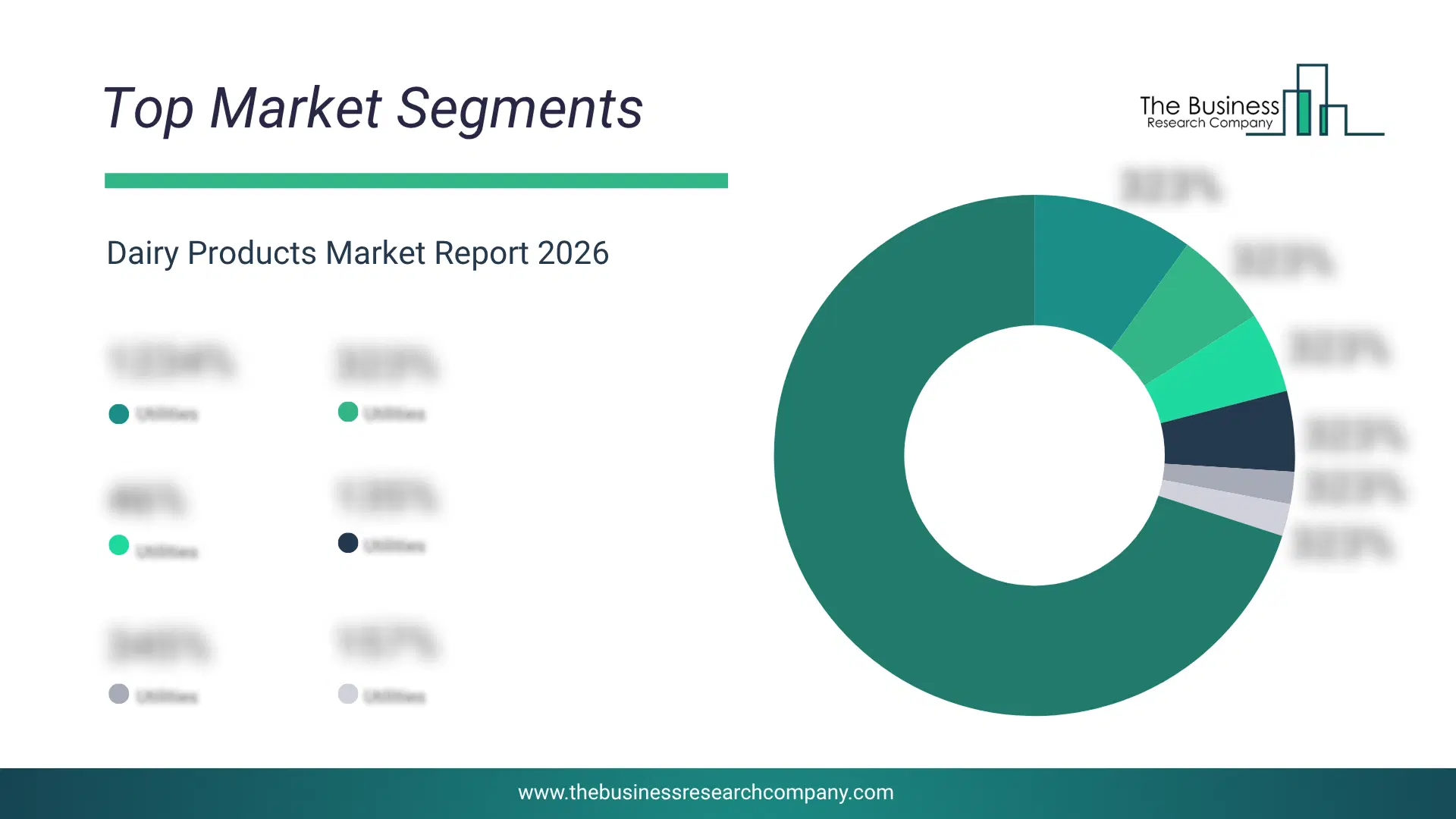
1) By Product Type: Milk, Cheese, Butter, Desserts, Yogurt, Other Types 2) By Distribution Channel: Supermarket, Hypermarket, Specialty Store, Online Retail, Other Channels 3) By Application: Bakery And Confectionary, Clinical Nutrition, Frozen Foods, Other Applications Subsegments: 1) By Milk: Whole Milk, Skim Milk, Low-Fat Milk, Flavored Milk 2) By Cheese: Cheddar, Mozzarella, Processed Cheese, Cream Cheese, Feta, Blue Cheese 3) By Butter: Salted Butter, Unsalted Butter, Whipped Butter, Clarified Butter 4) By Desserts: Puddings, Ice Cream, Custards, Cheesecakes 5) By Yogurt: Plain Yogurt, Flavored Yogurt, Greek Yogurt, Low-Fat Yogurt 6) By Other Types: Cream, Sour Cream, Buttermilk, Cottage Cheese, KefirWhat Is The Driver Of The Dairy Products Market?
Rising demand for cheese is expected to propel the dairy products market going forward. Cheese refers to a dairy product that is made from curds of soured milk that are pressed together and form a soft or hard solid when allowed to ripen. It often consists of coagulated, compressed milk and usually ripened curd. Cheese is a dairy product that is formed by milk that has been separated from whey and by pressing ripe curds; thus, increasing demand for cheese will propel market growth. For instance, in November 2023, according to the Cheese Reporter, a US-based publication focusing specifically on cheese and related products, US cheese production reached 1.15 billion pounds in 2023, which is a slight increase of 0.1% compared to September 2022. For the first nine months of 2023, cheese production totaled 10.55 billion pounds, marking a 0.2% rise from the same period in 2022. This trend indicates a steady growth in cheese output amid various market dynamics. Therefore, the rising demand for cheese is driving the dairy products industry.Key Players In The Global Dairy Products Market
Major companies operating in the dairy products market are Arla Foods amba, Fonterra Co-operative Group Limited, Nestlé S.A., Danone S.A., Royal FrieslandCampina N.V., Dairy Farmers of America Inc., DMK Group, Gujarat Cooperative Milk Marketing Federation Ltd., Meiji Holdings Co. Ltd., Parmalat S.p.A., Sodiaal Group, Inner Mongolia Yili Industrial Group Co. Ltd., China Mengniu Dairy Co. Ltd., Megmilk Snow Brand Co. Ltd., Saputo Inc., Lactalis International, Agropur Cooperative, Kaira District Co-operative Milk Producers' Union Limited, Arion Dairy Products BV, Bel Group S.A., Savencia SA, Cabot Creamery Cooperative Inc., California Dairies Inc., Clover Sonoma Inc., Darigold Inc., Davisco Foods International Inc., Foremost Farms USA, Glanbia plc, Hilmar Cheese Company Inc., Idaho Milk Products, Kerry Group plc, Land O'Lakes Inc., Leprino Foods Company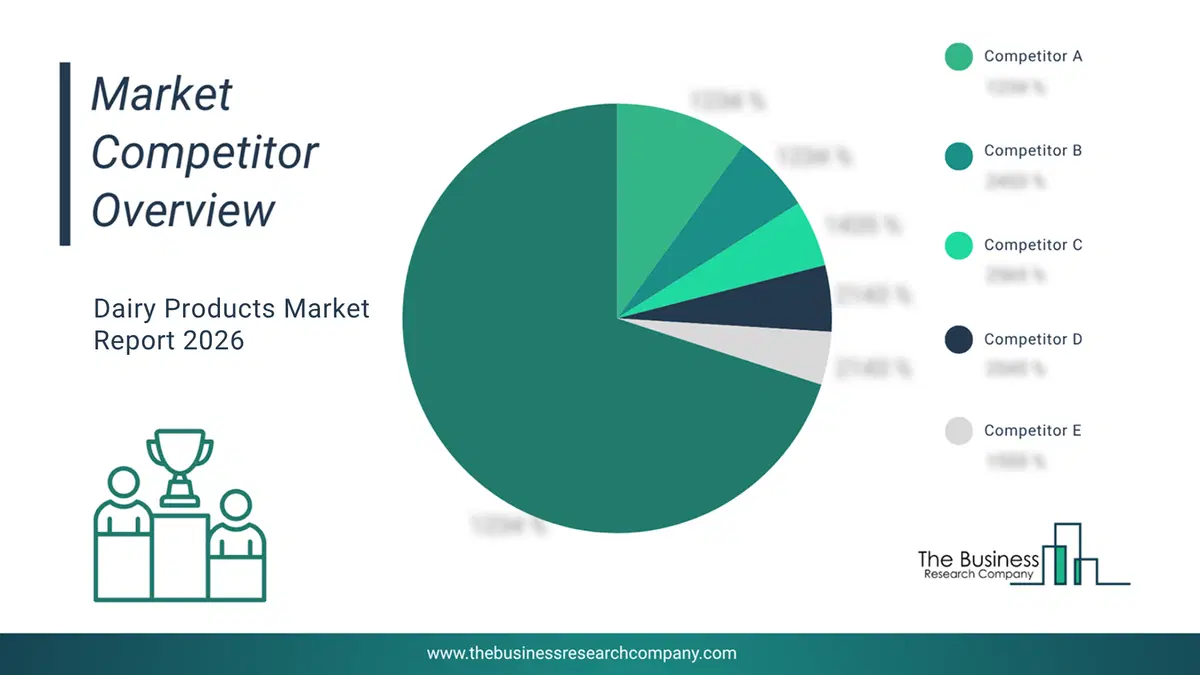
This chart is for illustrative purposes; the full report includes a detailed competitor analysis and comprehensive overview of the top 10 companies in the market.
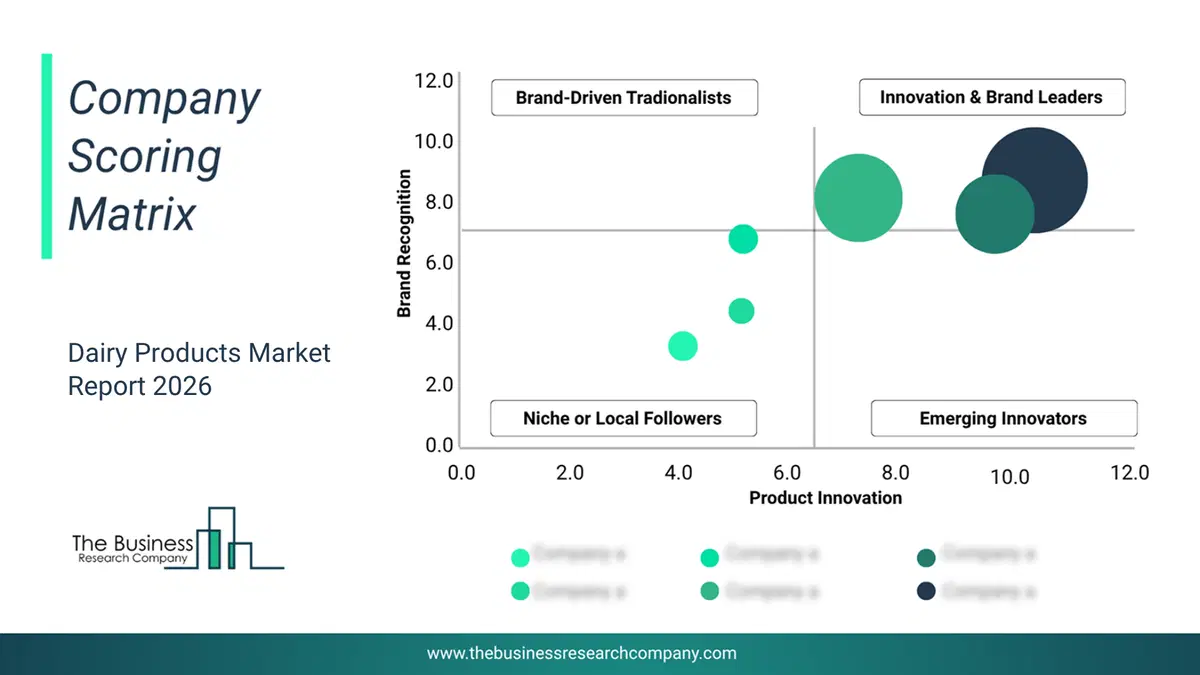
This chart maps companies by product innovation and brand strength, with bubble size indicating relative revenue, helping identify market leaders, challengers, and niche players. This is an illustrative chart; the full report provides a complete and accurate competitive analysis.
Global Dairy Products Market Trends and Insights
Major companies operating in the global dairy products market are focusing on rolling out high-protein dairy variants, such as protein-rich drinking yogurts and ready-to-consume dairy drinks, to meet rising consumer demand for nutritious, convenient dairy options that support active lifestyles and health-conscious diets. High-protein drinking yogurts and dairy beverages provide elevated levels of complete dairy protein per serving often 15–25 g while maintaining dairy’s nutrient profile, offering a convenient meal-or-snack alternative for on-the-go consumers and fitness-oriented demographics. For instance, in September 2023, Danone S.A., a France-based food and beverage company, introduced GetPRO, a high-protein dairy range in the UK that includes yogurts, puddings, mousses, and drinks, each containing 15–25 g of protein per serving; the launch reflects the company’s commitment to meet growing global demand for protein-enriched dairy options.What Are Latest Mergers And Acquisitions In The Dairy Products Market?
In January 2024, Royal FrieslandCampina N.V., a Netherlands-based dairy cooperative, partnered with Selecta Group to enhance the quality and consistency of Selecta’s coffee and beverage offerings across Europe. With this partnership, FrieslandCampina will supply Selecta with liquid milk, creamers, and its professional Lattiz® dairy system across 16 European markets to strengthen Selecta’s premium beverage portfolio. Selecta Group is a Switzerland-based food tech and self-service coffee solutions provider serving workplace, hospitality, and on-the-go segments across Europe.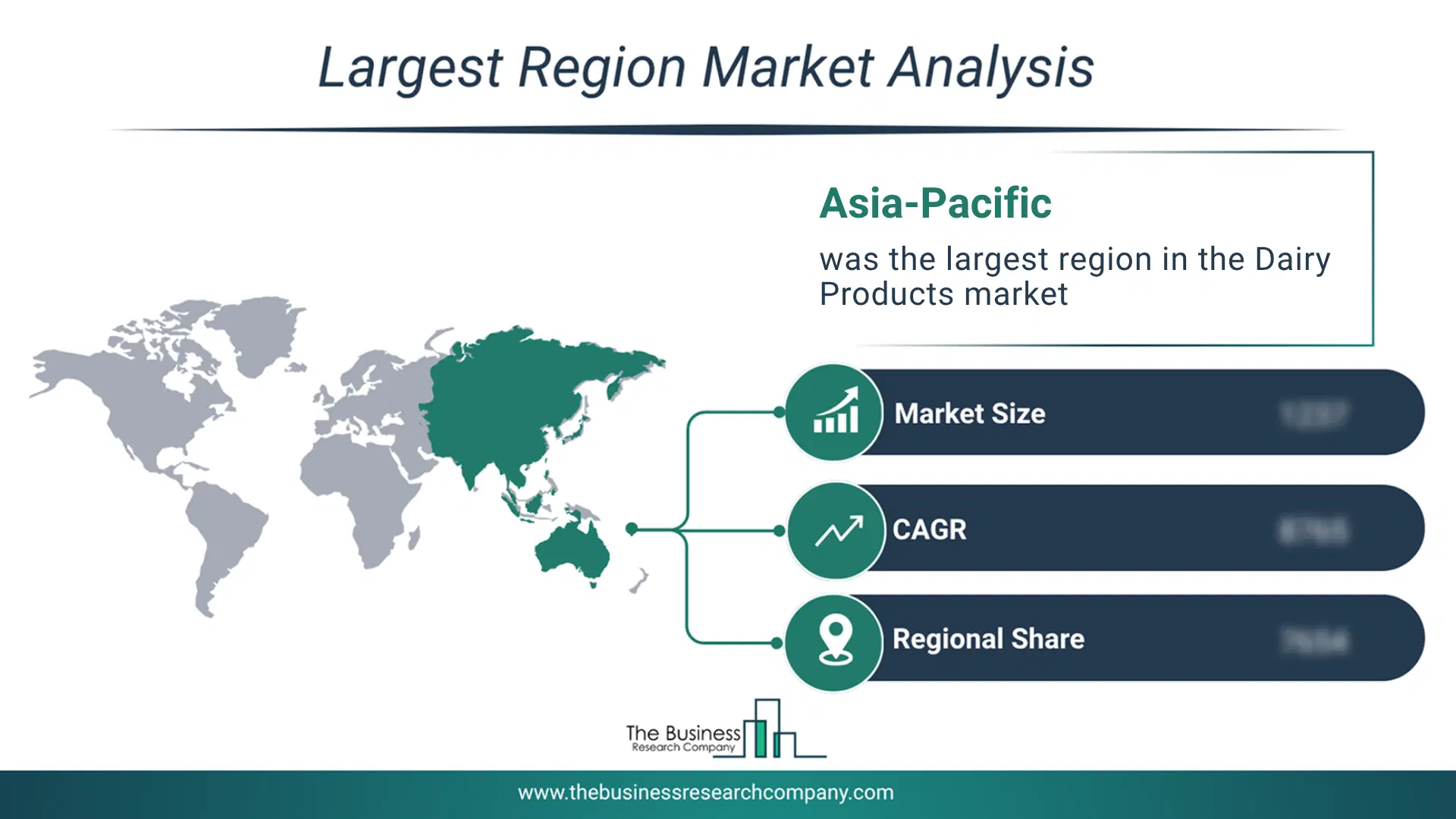
Regional Outlook
Asia-Pacific was the largest region in the dairy products market in 2025. Asia-Pacific is expected to be the fastest-growing region in the dairy products market during the forecast period. The regions covered in this market report are Asia-Pacific, South East Asia, Western Europe, Eastern Europe, North America, South America, Middle East and Africa. The countries covered in this market report are Australia, Brazil, China, France, Germany, India, Indonesia, Japan, Taiwan, Russia, South Korea, UK, USA, Italy, Spain, CanadaWhat Defines the Dairy Products Market?
The dairy products market consists of sales of paneer, ice cream, whey protein, and condensed milk. Values in this market are ‘factory gate’ values, that is the value of goods sold by the manufacturers or creators of the goods, whether to other entities (including downstream manufacturers, wholesalers, distributors and retailers) or directly to end customers. The value of goods in this market includes related services sold by the creators of the goods.How is Market Value Defined and Measured?
The market value is defined as the revenues that enterprises gain from the sale of goods and/or services within the specified market and geography through sales, grants, or donations in terms of the currency (in USD unless otherwise specified). The revenues for a specified geography are consumption values that are revenues generated by organizations in the specified geography within the market, irrespective of where they are produced. It does not include revenues from resales along the supply chain, either further along the supply chain or as part of other products.
This chart presents market attractiveness based on a quantitative evaluation of growth, competition, strategic alignment, and risk, offering a clear view of opportunity areas for decision-making. This chart is for illustrative purposes; the full report contains the complete analysis.

This chart highlights the Total Addressable Market (TAM) by estimating the maximum revenue opportunity using an assumption-driven approach, supporting strategic planning and opportunity sizing across markets. The chart is illustrative; the full report provides a more comprehensive analysis.
What Key Data and Analysis Are Included in the Dairy Products Market Report 2026?
The dairy products market research report is one of a series of new reports from The Business Research Company that provides market statistics, including industry global market size, regional shares, competitors with the market share, detailed market segments, market trends and opportunities, and any further data you may need to thrive in the dairy products industry. The market research report delivers a complete perspective of everything you need, with an in-depth analysis of the current and future state of the industry.Dairy Products Market Report Forecast Analysis
| Report Attribute | Details |
|---|---|
| Market Size Value In 2026 | $568.28 billion |
| Revenue Forecast In 2030 | $680.06 billion |
| Growth Rate | CAGR of 4.4% from 2026 to 2030 |
| Base Year For Estimation | 2025 |
| Actual Estimates/Historical Data | 2020-2025 |
| Forecast Period | 2026 - 2030 |
| Market Representation | Revenue in USD Billion and CAGR from 2026 to 2030 |
| Segments Covered | Product Type, Distribution Channel, Application |
| Regional Scope | Asia-Pacific, Western Europe, Eastern Europe, North America, South America, Middle East, Africa |
| Country Scope | The countries covered in the report are Australia, Brazil, China, France, Germany, India, Indonesia, Japan, Taiwan, Russia, South Korea, UK, USA, Canada, Italy, Spain. |
| Key Companies Profiled | Arla Foods amba, Fonterra Co-operative Group Limited, Nestlé S.A., Danone S.A., Royal FrieslandCampina N.V., Dairy Farmers of America Inc., DMK Group, Gujarat Cooperative Milk Marketing Federation Ltd., Meiji Holdings Co. Ltd., Parmalat S.p.A., Sodiaal Group, Inner Mongolia Yili Industrial Group Co. Ltd., China Mengniu Dairy Co. Ltd., Megmilk Snow Brand Co. Ltd., Saputo Inc., Lactalis International, Agropur Cooperative, Kaira District Co-operative Milk Producers' Union Limited, Arion Dairy Products BV, Bel Group S.A., Savencia SA, Cabot Creamery Cooperative Inc., California Dairies Inc., Clover Sonoma Inc., Darigold Inc., Davisco Foods International Inc., Foremost Farms USA, Glanbia plc, Hilmar Cheese Company Inc., Idaho Milk Products, Kerry Group plc, Land O'Lakes Inc., Leprino Foods Company |
| Customization Scope | Request for Customization |
| Pricing And Purchase Options | Explore Purchase Options |