
Fibroblast Cells Market Report 2026
Global Outlook – By Type (Tissue-Specific Fibroblasts, Disease-Specific Fibroblasts, Serum-Free Fibroblast Culture Medium), By Application (Adults, Neonatal), By End-Users (Hospitals, Clinics, Research And Academic Institutes, Other End-Users) - Market Size, Trends, Strategies, and Forecast to 2030
Fibroblast Cells Market Overview
• Fibroblast Cells market size has reached to $0.76 billion in 2025 • Expected to grow to $1.18 billion in 2030 at a compound annual growth rate (CAGR) of 9.3% • Growth Driver: Surge In Skin Disorders Fueling The Growth Of The Market Due To Rising Environmental Pollutants And Increasing Skin Cancer Cases • Market Trend: Innovations In Fibroblast Growth And Macrophage Identification Boost Regenerative Medicine Advances • North America was the largest region in 2025.What Is Covered Under Fibroblast Cells Market?
Fibroblast cells are a type of cell found in connective tissue that play a crucial role in wound healing and tissue repair. They produce and maintain the extracellular matrix, including collagen and other structural proteins. The main function of fibroblasts is to support and repair tissues by synthesizing collagen and other fibers. They are essential in maintaining skin strength and structure, and they actively respond to injury by promoting tissue regeneration and healing. The main types of fibroblast cells are tissue-specific fibroblasts, disease-specific fibroblasts, and serum-free fibroblast culture medium. Tissue-specific fibroblasts, taken from healthy organs, retain unique features of where they come from, which helps build and repair tissues and study diseases accurately. It is applicable for different applications, such as adults and neonates, and is used by various end-users, including hospitals, clinics, research and academic institutes, and others.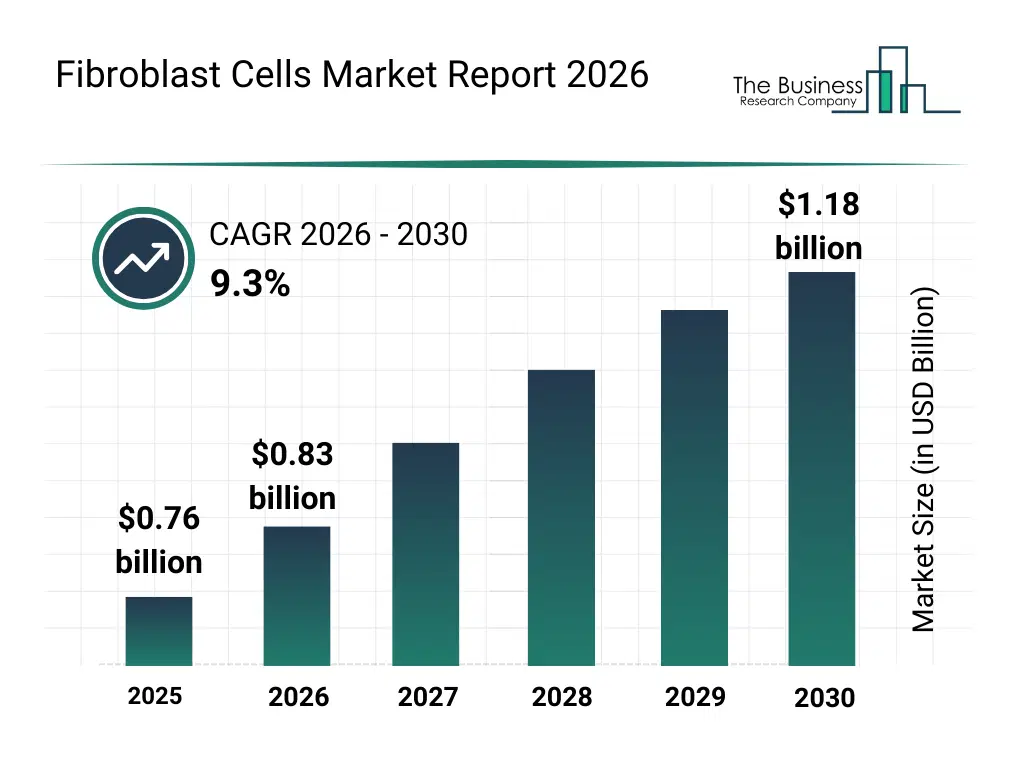
What Is The Fibroblast Cells Market Size and Share 2026?
The fibroblast cells market size has grown strongly in recent years. It will grow from $0.76 billion in 2025 to $0.83 billion in 2026 at a compound annual growth rate (CAGR) of 9.7%. The growth in the historic period can be attributed to increasing incidence of chronic wounds, expansion of regenerative medicine research, growing use of cell-based assays, rising demand for tissue engineering solutions, improved availability of primary cell culture techniques.What Is The Fibroblast Cells Market Growth Forecast?
The fibroblast cells market size is expected to see strong growth in the next few years. It will grow to $1.18 billion in 2030 at a compound annual growth rate (CAGR) of 9.3%. The growth in the forecast period can be attributed to increasing investments in cell therapy development, rising focus on personalized medicine approaches, expansion of fibroblast use in drug screening, growing adoption of xeno-free media, increasing clinical translation of regenerative therapies. Major trends in the forecast period include increasing adoption of fibroblast-based regenerative therapies, rising demand for disease-specific fibroblast models, growing use of serum-free culture media, expansion of fibroblast applications in wound healing, enhanced focus on standardized cell expansion protocols.
Global Fibroblast Cells Market Segmentation
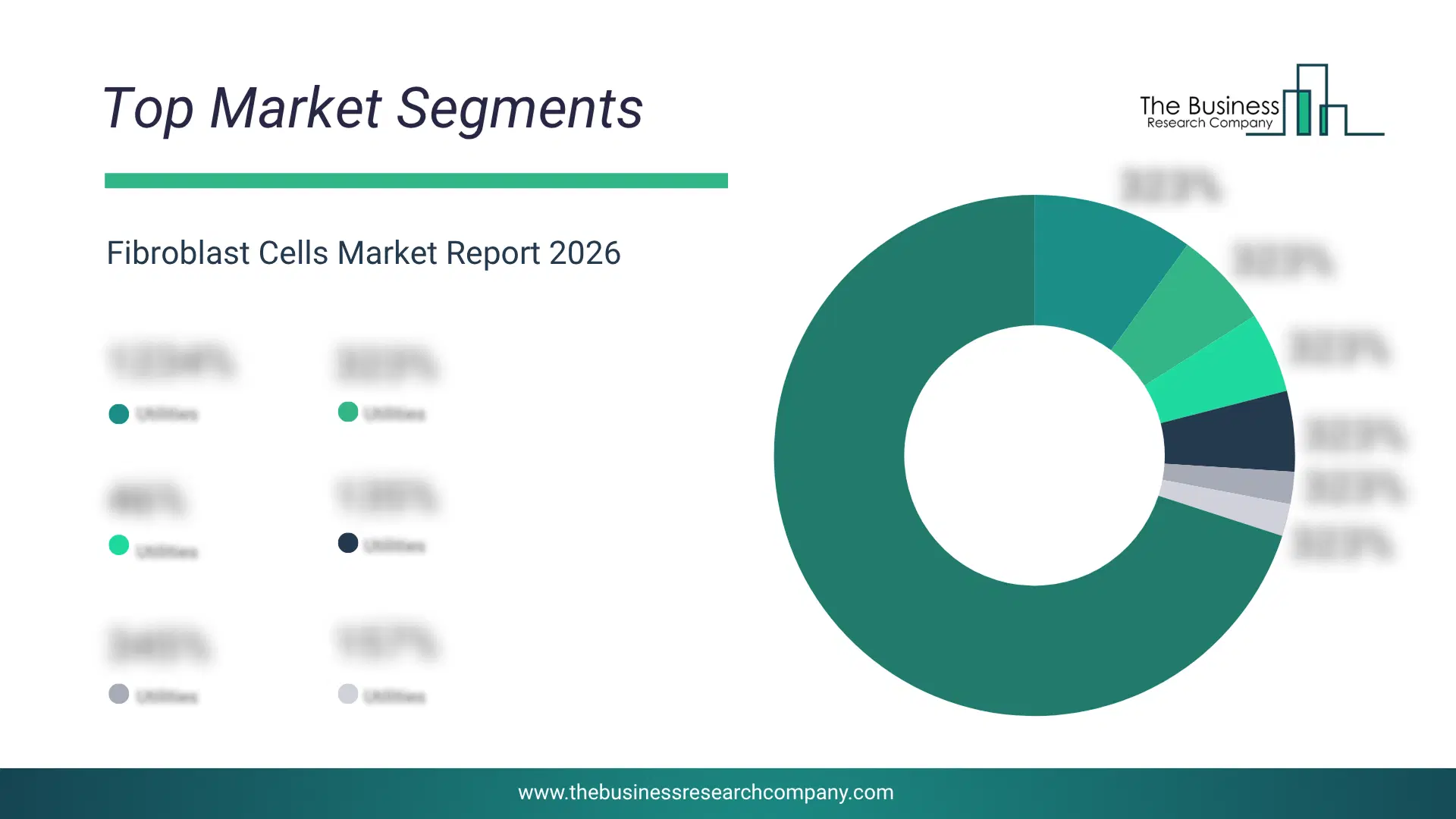
1) By Type: Tissue-Specific Fibroblasts, Disease-Specific Fibroblasts, Serum-Free Fibroblast Culture Medium 2) By Application: Adults, Neonatal 3) By End-Users: Hospitals, Clinics, Research And Academic Institutes, Other End-Users Subsegments: 1) By Tissue-Specific Fibroblasts: Dermal Fibroblasts, Lung Fibroblasts, Cardiac Fibroblasts, Gingival Fibroblasts, Corneal Fibroblasts, Mammary Fibroblasts, Intestinal Fibroblasts, Foreskin Fibroblasts 2) By Disease-Specific Fibroblasts: Cancer-Associated Fibroblasts (CAFs), Idiopathic Pulmonary Fibrosis Fibroblasts, Scleroderma Fibroblasts, Diabetic Wound Fibroblasts, Rheumatoid Arthritis Fibroblasts, Keloid Fibroblasts, Psoriatic Fibroblasts 3) By Serum-Free Fibroblast Culture Medium: Dermal Fibroblast Medium, Lung Fibroblast Medium, Cardiac Fibroblast Medium, Cancer-Associated Fibroblast Medium, Human Gingival Fibroblast Medium, Fibroblast Growth Medium (Xeno-Free), Custom Or Defined Media For Fibroblast ExpansionWhat Is The Driver Of The Fibroblast Cells Market?
The increasing prevalence of various skin disorders is expected to propel the growth of the fibroblast cells market going forward. Skin disorders are any conditions or diseases that affect the skin, causing symptoms like rashes, itching, inflammation, redness, dryness, or lesions. The rise in skin disorders is due to increasing exposure to environmental pollutants, which damage the skin barrier, leading to inflammation and greater vulnerability to skin issues. Fibroblast cells help skin disorders by promoting tissue repair and regeneration by producing collagen and other extracellular matrix components, which restore skin strength and elasticity. For instance, in February 2025, according to Cancer Australia, an Australia-based government agency, there were 18,257 new cases of melanoma of the skin diagnosed in 2023. Therefore, the increasing prevalence of various skin disorders drives the growth of the fibroblast cells industry.Key Players In The Global Fibroblast Cells Market
Major companies operating in the fibroblast cells market are Thermo Fisher Scientific Inc., Lonza Group AG, Sigma-Aldrich Corporation, Bio-Techne Corporation, STEMCELL Technologies Inc., American Type Culture Collection, Creative Bioarray, PromoCell GmbH, Coriell Institute for Medical Research, REPROCELL Inc., Axol Bioscience Ltd., ScienCell Research Laboratories Inc., Cell Applications Inc., ZenBio Inc., Cell Biologics Inc., Lifeline Cell Technology, Celprogen Inc., AMS Biotechnology (Europe) Ltd., Neuromics Inc., Evercyte GmbH, FUJIFILM Irvine Scientific Inc.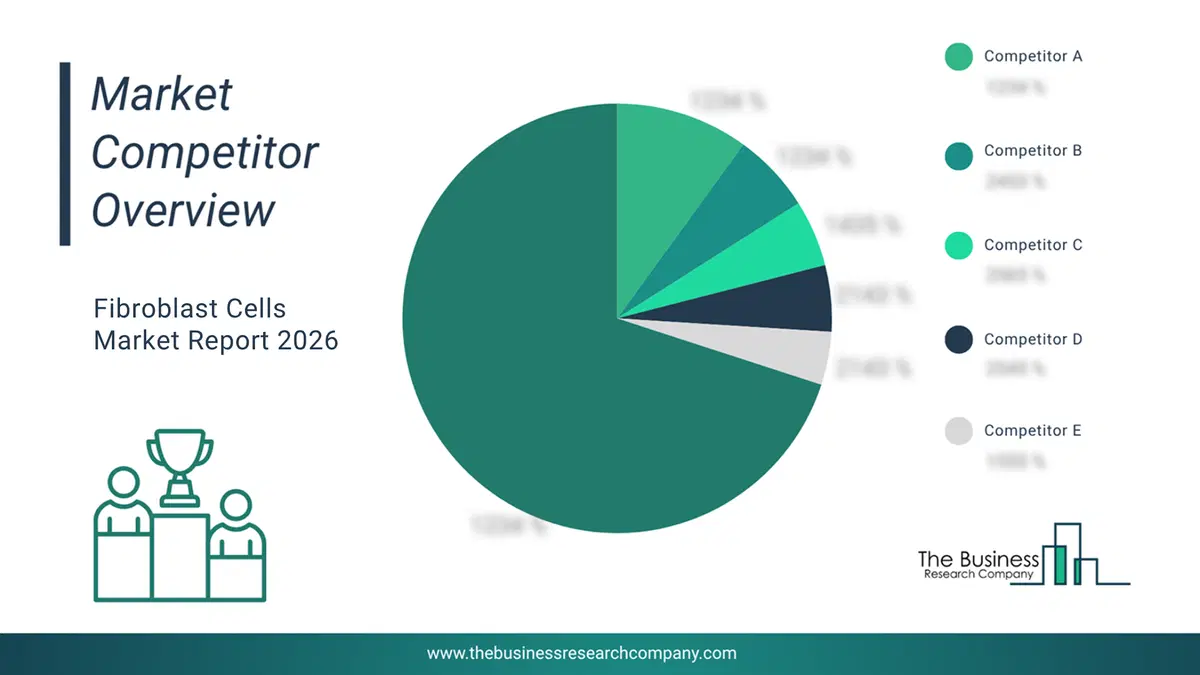
This chart is for illustrative purposes; the full report includes a detailed competitor analysis and comprehensive overview of the top 10 companies in the market.
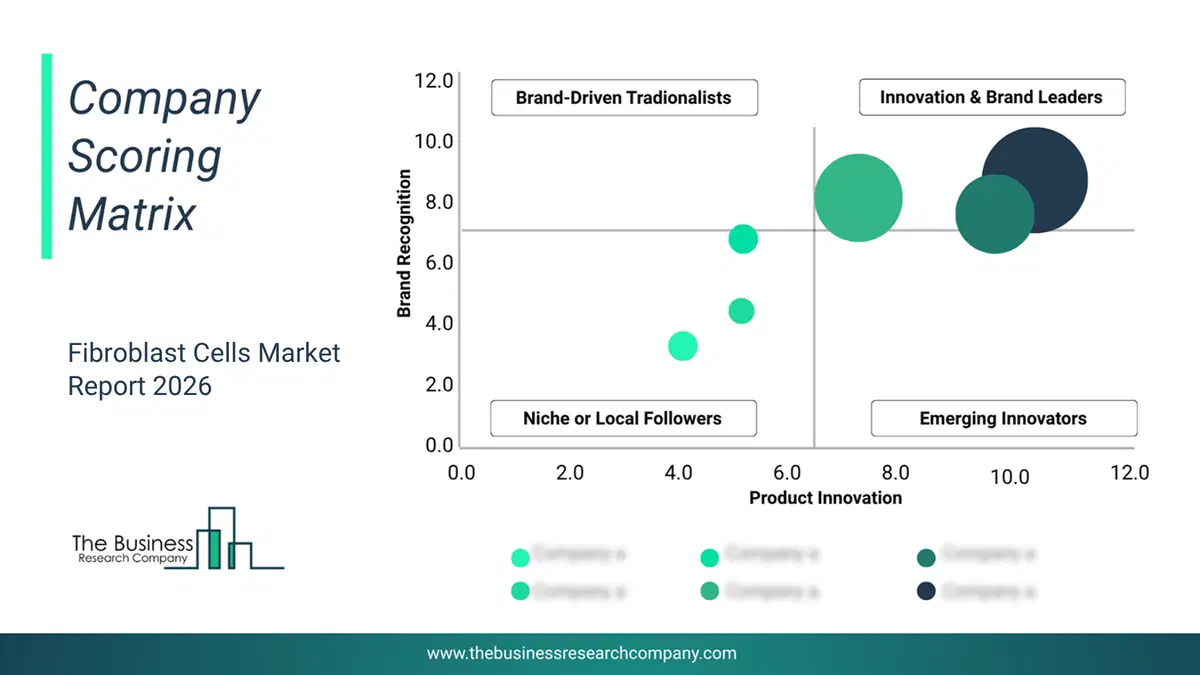
This chart maps companies by product innovation and brand strength, with bubble size indicating relative revenue, helping identify market leaders, challengers, and niche players. This is an illustrative chart; the full report provides a complete and accurate competitive analysis.
Global Fibroblast Cells Market Trends and Insights
Major companies in the fibroblast cells market are focused on developing advanced solutions, such as macrophage phenotype identification, to deepen understanding of cell interactions and enhance the effectiveness of fibroblast-based therapies. Macrophage phenotype identification refers to the process of distinguishing between different types of macrophages, primarily M1 and M2, based on their functional roles and molecular markers. For instance, in December 2024, Creative Biolabs, a US-based biotech company, launched Fibroblast Growth Factor 2. It includes two versions, Fibroblast Growth Factor 2 and Fibroblast Growth Factor 2 STAB, which were designed to promote the growth and proliferation of human mesenchymal stem cells (MSCs) and normal human dermal fibroblasts (NHDFs), supporting advancements in stem cell and regenerative medicine research.What Are Latest Mergers And Acquisitions In The Fibroblast Cells Market?
In October 2024, Fibrobiologics Inc., a US-based provider of fibroblast cell-based therapies for chronic diseases, partnered with Charles River Laboratories to advance regenerative therapies through science and collaboration. The partnership aims to accelerate the development and clinical readiness of fibroblast cell-based therapies, including CYWC628, by leveraging Charles River’s manufacturing and testing expertise to support FibroBiologics’ upcoming trials for chronic diseases like diabetic foot ulcers. Charles River Laboratories is a US-based company specializing in preclinical and clinical laboratory services and gene and cell therapy services.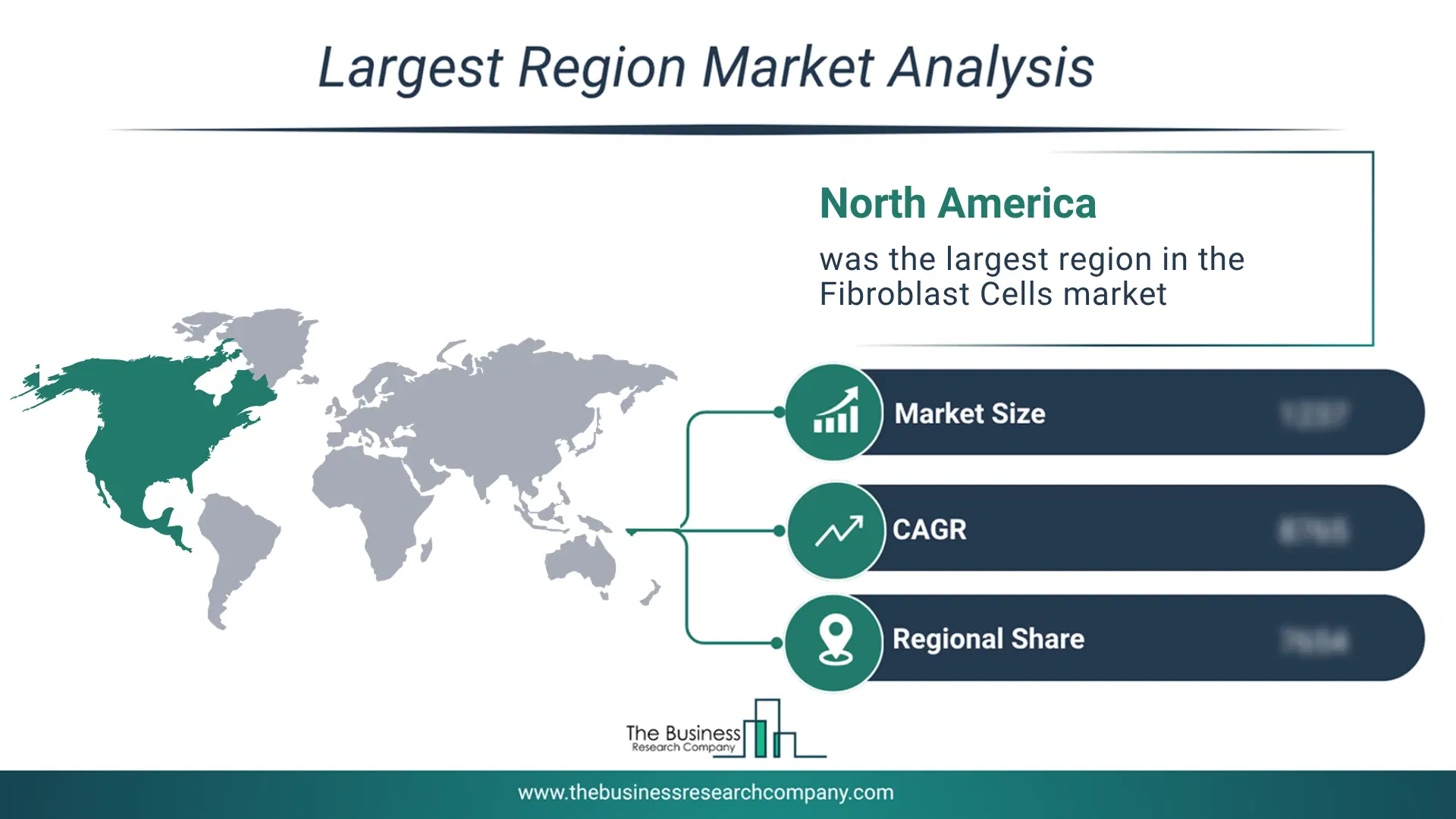
Regional Outlook
North America was the largest region in the fibroblast cells market in 2025. The regions covered in this market report are Asia-Pacific, South East Asia, Western Europe, Eastern Europe, North America, South America, Middle East, Africa. The countries covered in this market report are Australia, Brazil, China, France, Germany, India, Indonesia, Japan, Taiwan, Russia, South Korea, UK, USA, Canada, Italy, Spain.What Defines the Fibroblast Cells Market?
The fibroblast cells market consists of sales of normal human fibroblasts (NHF), immortalized fibroblast cell lines, cryopreserved fibroblasts, fibroblast growth media, fibroblast differentiation kits, and 3D fibroblast culture systems. Values in this market are ‘factory gate’ values, that is, the value of goods sold by the manufacturers or creators of the goods, whether to other entities (including downstream manufacturers, wholesalers, distributors, and retailers) or directly to end customers. The value of goods in this market includes related services sold by the creators of the goods.How is Market Value Defined and Measured?
The market value is defined as the revenues that enterprises gain from the sale of goods and/or services within the specified market and geography through sales, grants, or donations in terms of the currency (in USD unless otherwise specified). The revenues for a specified geography are consumption values that are revenues generated by organizations in the specified geography within the market, irrespective of where they are produced. It does not include revenues from resales along the supply chain, either further along the supply chain or as part of other products.
This chart presents market attractiveness based on a quantitative evaluation of growth, competition, strategic alignment, and risk, offering a clear view of opportunity areas for decision-making. This chart is for illustrative purposes; the full report contains the complete analysis.

This chart highlights the Total Addressable Market (TAM) by estimating the maximum revenue opportunity using an assumption-driven approach, supporting strategic planning and opportunity sizing across markets. The chart is illustrative; the full report provides a more comprehensive analysis.
What Key Data and Analysis Are Included in the Fibroblast Cells Market Report 2026?
The fibroblast cells market research report is one of a series of new reports from The Business Research Company that provides market statistics, including industry global market size, regional shares, competitors with the market share, detailed market segments, market trends and opportunities, and any further data you may need to thrive in the fibroblast cells industry. The market research report delivers a complete perspective of everything you need, with an in-depth analysis of the current and future state of the industry.Fibroblast Cells Market Report Forecast Analysis
| Report Attribute | Details |
|---|---|
| Market Size Value In 2026 | $0.83 billion |
| Revenue Forecast In 2030 | $1.18 billion |
| Growth Rate | CAGR of 9.3% from 2026 to 2030 |
| Base Year For Estimation | 2025 |
| Actual Estimates/Historical Data | 2020-2025 |
| Forecast Period | 2026 - 2030 |
| Market Representation | Revenue in USD Billion and CAGR from 2026 to 2030 |
| Segments Covered | Type, Application, End-Users |
| Regional Scope | Asia-Pacific, Western Europe, Eastern Europe, North America, South America, Middle East, Africa |
| Country Scope | The countries covered in the report are Australia, Brazil, China, France, Germany, India, Indonesia, Japan, Taiwan, Russia, South Korea, UK, USA, Canada, Italy, Spain |
| Key Companies Profiled | Thermo Fisher Scientific Inc., Lonza Group AG, Sigma-Aldrich Corporation, Bio-Techne Corporation, STEMCELL Technologies Inc., American Type Culture Collection, Creative Bioarray, PromoCell GmbH, Coriell Institute for Medical Research, REPROCELL Inc., Axol Bioscience Ltd., ScienCell Research Laboratories Inc., Cell Applications Inc., ZenBio Inc., Cell Biologics Inc., Lifeline Cell Technology, Celprogen Inc., AMS Biotechnology (Europe) Ltd., Neuromics Inc., Evercyte GmbH, FUJIFILM Irvine Scientific Inc. |
| Customization Scope | Request for Customization |
| Pricing And Purchase Options | Explore Purchase Options |