
Floating Offshore Wind Power Market Report 2026
Global Outlook – By Component (Mooring Systems, Platforms, Subsea Cables, Turbines), By Technology (Floating Wind Turbine, Hydrodynamic Floating Structure, Other Technologies), By Water Depth (Shallow Water, Transitional Water, Deep Water), By Turbine Capacity (Up To 3 MW, 3 MW – 5 MW, Above 5 MW), By Application (Hydrogen Production, Off-Grid Power Generation, Utility-Scale Power Generation) – Market Size, Trends, Strategies, and Forecast to 2030
Floating Offshore Wind Power Market Overview
• Floating Offshore Wind Power market size has reached to $0.36 billion in 2025 • Expected to grow to $2.27 billion in 2030 at a compound annual growth rate (CAGR) of 47.5% • Growth Driver: Surge In Renewable Energy Demand Fueling The Growth Of The Market Due To The Need To Combat Climate Change And Reduce Greenhouse Gas Emissions • Market Trend: Advancements In Floating Wind Farms Boosting Efficiency And Reducing Costs Through Wind Farm Clusters • Europe was the largest region in 2025 and Asia-Pacific is the fastest growing region.Market Gains By 2030 – Top Opportunities By Segment
Market Gain identifies the most promising market opportunities by highlighting the segments or products expected to generate the highest incremental revenue growth over the next five years.
What Is Covered Under Floating Offshore Wind Power Market?
Floating offshore wind power is a renewable energy technology with wind turbines installed on floating platforms rather than being fixed directly to the seabed. These floating platforms are anchored to the ocean floor with mooring lines, allowing the turbines to operate in deeper water areas where traditional fixed-bottom structures are not feasible. This technology enables access to stronger and more consistent wind resources far offshore, potentially increasing the efficiency and capacity of wind power generation while minimizing environmental and visual impacts near the coast. The main components of floating offshore wind power are mooring systems, platforms, subsea cables, and turbines. Mooring systems are structures that anchor floating wind turbines to the seabed. These systems use chains, wires, or synthetic ropes to secure stability in varying water depths and ensure the turbines remain stationary against strong winds and currents. The various technologies involved are floating wind turbines, hydrodynamic floating structures, and other technologies. The water depths involved are shallow water, transitional water, and deep water with turbine capacities of up to 3 MW, 3 MW – 5 MW, and above 5 MW used for hydrogen production, off-grid power generation, and utility-scale power generation.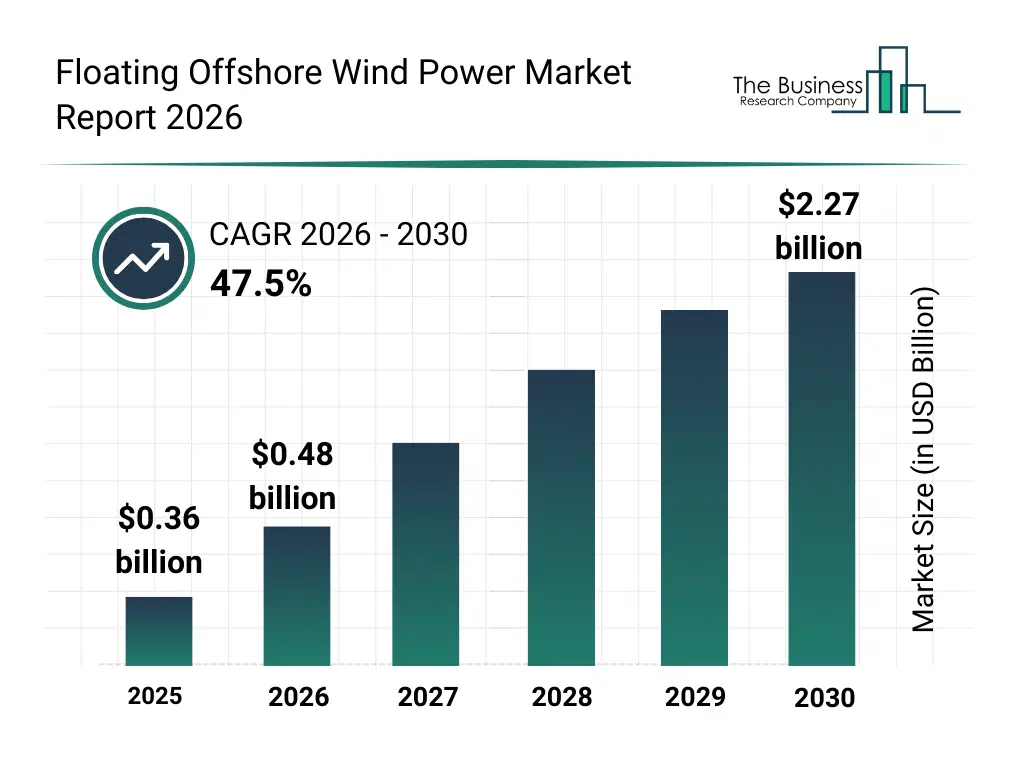
What Is The Floating Offshore Wind Power Market Size and Share 2026?
The floating offshore wind power market size has grown exponentially in recent years. It will grow from $0.36 billion in 2025 to $0.48 billion in 2026 at a compound annual growth rate (CAGR) of 33.5%. The growth in the historic period can be attributed to growing offshore wind investments, technological limitations of fixed-bottom turbines, government incentives for renewable energy, increasing energy demand, advancements in turbine design.What Is The Floating Offshore Wind Power Market Growth Forecast?
The floating offshore wind power market size is expected to see exponential growth in the next few years. It will grow to $2.27 billion in 2030 at a compound annual growth rate (CAGR) of 47.5%. The growth in the forecast period can be attributed to expansion in deep-water wind projects, supportive policies for renewable energy, innovations in floating platform technology, integration with hydrogen production, increasing focus on carbon neutrality. Major trends in the forecast period include adoption of spar-buoy, semi-submersible, and tlp platforms, development of high-capacity floating wind turbines, integration of advanced mooring and dynamic positioning systems, deployment of hvdc, hvac, and inter-array subsea cables, expansion of utility-scale and off-grid floating wind farms.
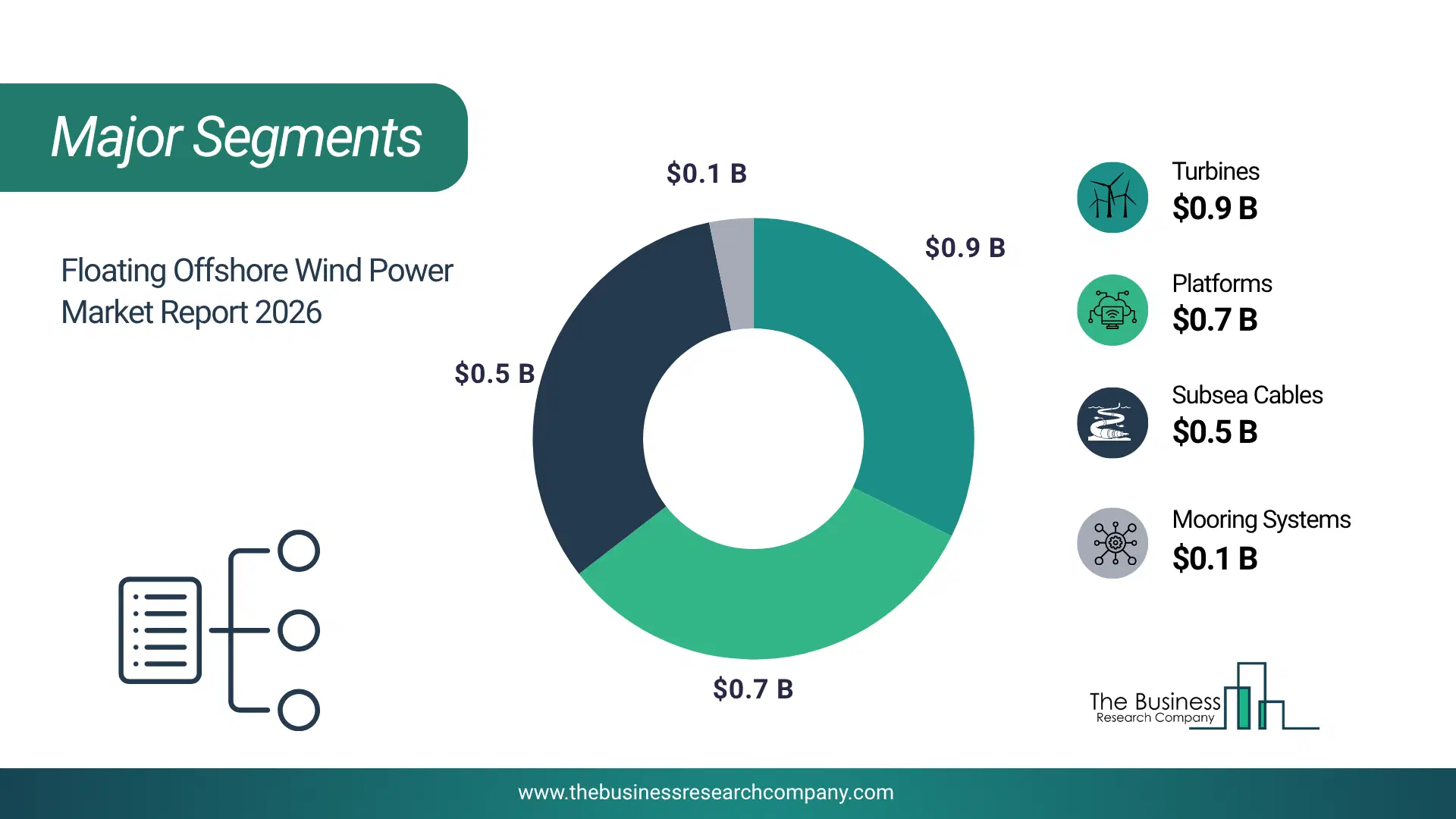
Global Floating Offshore Wind Power Market Segmentation
1) By Component: Mooring Systems, Platforms, Subsea Cables, Turbines 2) By Technology: Floating Wind Turbine, Hydrodynamic Floating Structure, Other Technologies 3) By Water Depth: Shallow Water, Transitional Water, Deep Water 4) By Turbine Capacity: Up To 3 MW, 3 MW – 5 MW, Above 5 MW 5) By Application: Hydrogen Production, Off-Grid Power Generation, Utility-Scale Power Generation Subsegments: 1) By Mooring Systems: Tension Leg Mooring, Catenary Mooring, Semi-Taut Mooring, Single Point Mooring, Spread Mooring, Dynamic Positioning Mooring 2) By Platforms: Spar-Buoy Platform, Semi-Submersible Platform, Tension Leg Platform (TLP), Barge Platform, Hybrid Floating Platform 3) By Subsea Cables: Inter-Array Cables, Export Cables, Dynamic Cables, HVAC (High Voltage Alternating Current) Cables, HVDC (High Voltage Direct Current) Cables 4) By Turbines: Horizontal-Axis Wind Turbines (HAWT), Vertical-Axis Wind Turbines (VAWT), Direct Drive Turbines, Gearbox-Based Turbines, Variable Speed Turbines The top segments in the floating offshore wind power market will be: • Utility-Scale Power Generation will reach $312.58 Million by 2025. • Above 5 MW will reach $207.24 Million by 2025. • Hydrodynamic Floating Structure will reach $190.66 Million by 2025. • Transitional Water will reach $161.92 Million by 2025. • Turbines will reach $147.18 Million by 2025.What Is The Driver Of The Floating Offshore Wind Power Market?
The rising demand for renewable energy is expected to propel the growth of the floating offshore wind power market going forward. Renewable energy refers to energy derived from natural sources that are constantly replenished, such as sunlight, wind, rain, tides, geothermal heat, and biomass. The rising demand for renewable energy is due to the need to reduce greenhouse gas emissions and combat climate change. As the negative impacts of fossil fuel consumption, such as air pollution and rising global temperatures, become more evident, governments, businesses, and individuals are seeking cleaner energy alternatives. For instance, in December 2024, Eurostat, a UK-based government agency, reported that renewable energy made up 24.5% of the European Union's total energy consumption in 2023, up from 23.0% in 2022. Therefore, the rising demand for renewable energy is driving the growth of the floating offshore wind power industry.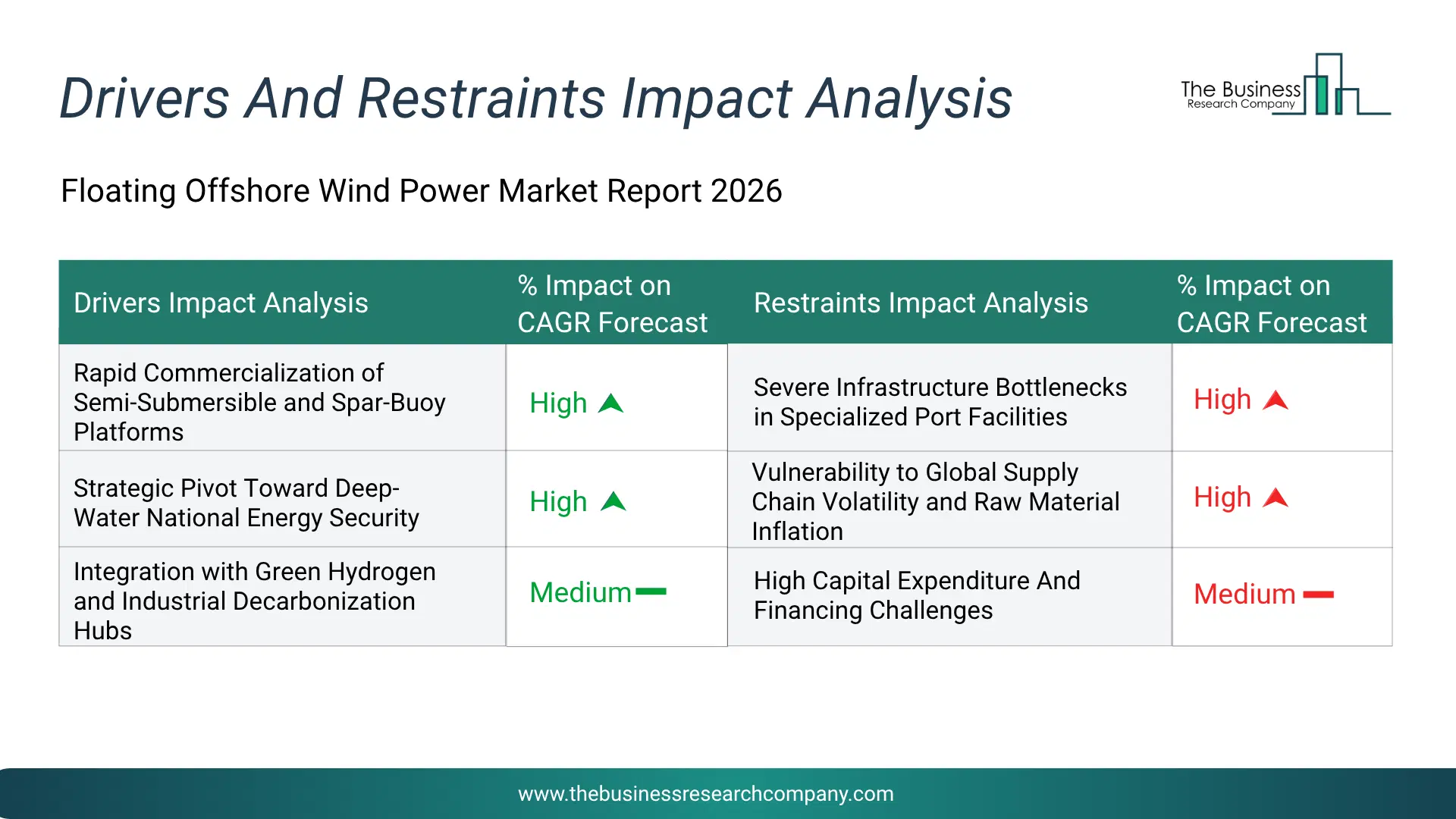
Infographic Chart Showing Key Market Drivers Analysis And Restraints For Floating Offshore Wind Power Market
The chart presents an impact analysis of key drivers and restraints, quantifying their relative influence on the market's growth rate and helping assess the balance between growth enablers and limiting factors. This chart offers a high-level perspective; the full report contains more detailed insights.
How Will The Drivers Impact Growth In The Global Floating Offshore Wind Power Market?
• High Integration Of Renewable Energy Sources (Medium) – The high integration of renewable energy sources will become a key driver of growth in the floating offshore wind power market by 2030. As nations accelerate their transition toward low-carbon energy systems, floating wind provides a reliable and scalable solution to meet rising renewable energy quotas, especially in regions where shallow-water sites are limited. By complementing solar, onshore wind and other renewable sources, floating offshore wind contributes to a more resilient and diversified energy mix. This high integration encourages investment in offshore wind infrastructure, supports grid flexibility and enhances overall system stability, positioning floating wind as a critical contributor to future energy portfolios while meeting ambitious climate and decarbonization targets. • Expansion Of Offshore Wind Projects (Low) – The expansion of offshore wind projects will emerge as a major factor driving the expansion of the market by 2030. As demand for clean, large-scale electricity grows, developers are increasingly exploring deep-water locations unsuitable for fixed-bottom turbines, which has heightened the need for floating wind solutions. Expansion of offshore projects drives the development of entire value chains, from turbine manufacturing to platform deployment and subsea cable installation. This growth also promotes economies of scale, reduces per-unit costs and encourages innovation in design, construction and operations. • Expanding Industrial And Port Infrastructure For Floating Wind (Low) – The expanding industrial and port infrastructure for floating wind will serve as a key growth catalyst for the market by 2030. The development and enhancement of industrial and port infrastructure are forecast to be key drivers of the floating offshore wind market. Specialized port facilities, shipyards and assembly yards capable of handling large turbines and floating platforms are essential for efficient manufacturing, transport and deployment. As industrial infrastructure expands, it reduces logistical challenges, shortens installation timelines and lowers operational costs, making floating wind projects more economically viable. Well-developed ports and support facilities also facilitate maintenance and repair activities, enabling long-term operational efficiency. • Rising Connection To Offshore Transmission Hubs And Grids (Low) – The rising connection to offshore transmission hubs and grids will become a significant driver contributing to the growth of the market by 2030 Reliable transmission infrastructure is crucial for efficiently transporting electricity generated in deep-water sites to end-users while minimizing losses. As countries invest in offshore grid networks and interconnectors, floating wind farms become more accessible and financially attractive for developers and investors. Improved grid connectivity supports the scaling of projects, enables integration with other renewable sources and strengthens energy security.How Will The Restraints Impact Growth In The Global Floating Offshore Wind Power Market?
• Supply Chain And Component Cost Volatility (Medium) – Supply Chain And Component Cost Volatility will restrict the growth of the Floating Offshore Wind Power market during the forecast period. Floating offshore wind projects depend on specialized components including turbines, floating platforms, mooring systems, and subsea cables, many of which face supply chain constraints and price volatility. Limited manufacturing capacity for large-scale floating wind components can lead to price fluctuations and project delays. This uncertainty complicates project planning and financing. • Environmental And Regulatory Approval Barriers (Low) – Environmental And Regulatory Approval Barriers will restrict the growth of the Floating Offshore Wind Power market during the forecast period. Floating offshore wind projects require extensive environmental assessments and lengthy permitting processes, often taking several years to complete. Concerns about impacts on marine ecosystems, fisheries, and shipping lanes can lead to project delays or denials. The complex regulatory landscape across different jurisdictions creates additional challenges for project developers.Key Players In The Global Floating Offshore Wind Power Market
Major companies operating in the floating offshore wind power market are Equinor ASA, Iberdrola S.A., RWE, Vestas Wind Systems A/S, Doosan Corporation, Siemens Gamesa, Ørsted A/S, Nexans SA, TechnipFMC plc, Nordex SE, SBM Offshore, MODEC Inc., Ming Yang Smart Energy Group, DNV AS, Hitachi ABB, Naval Energies, Ocean Winds, BW Ideol, Principle Power, Gazelle Wind Power Limited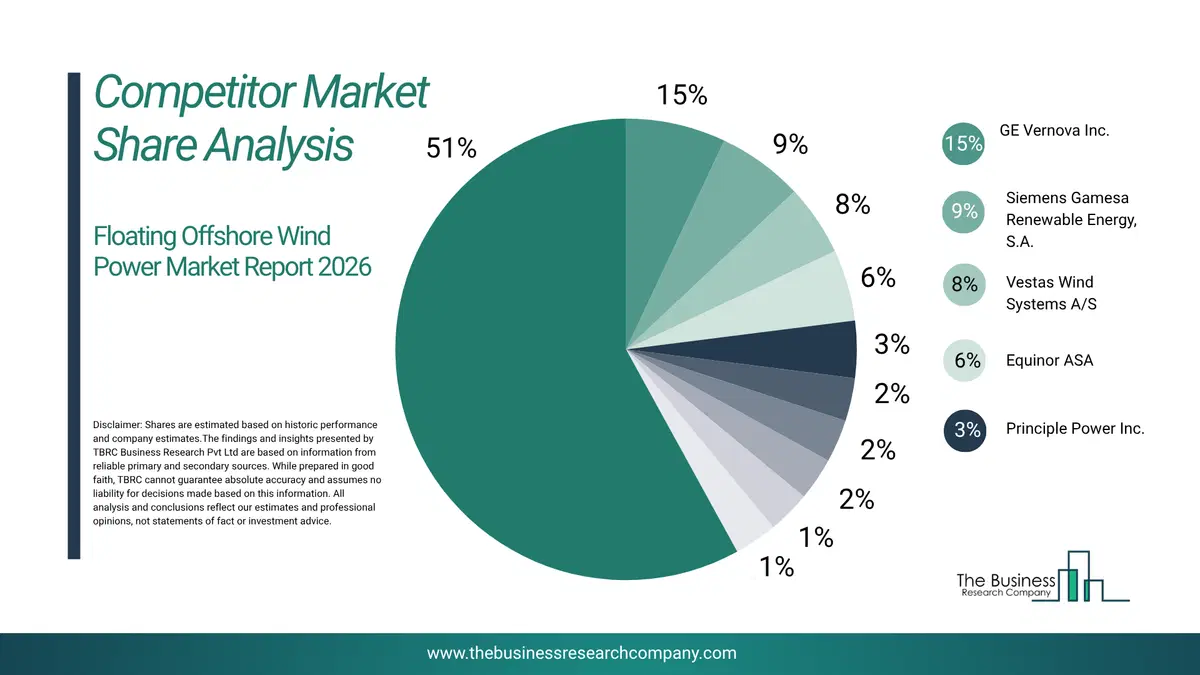
This chart is for illustrative purposes; the full report includes a detailed competitor analysis and comprehensive overview of the top 10 companies in the market.
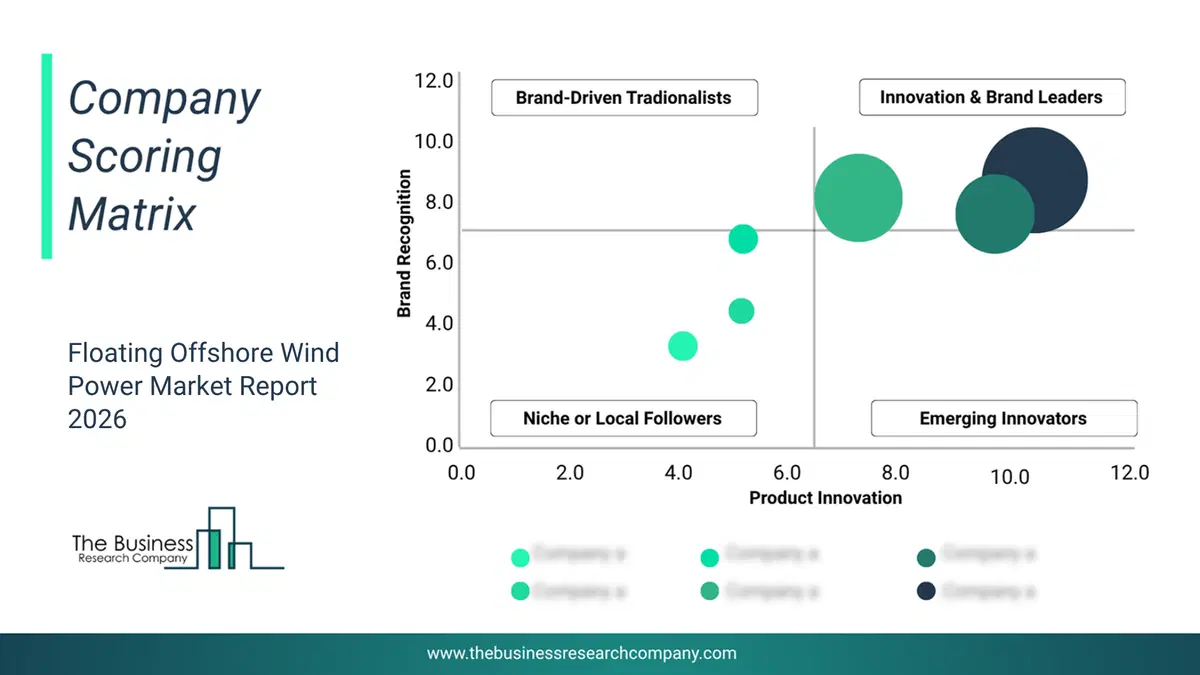
This chart maps companies by product innovation and brand strength, with bubble size indicating relative revenue, helping identify market leaders, challengers, and niche players. This is an illustrative chart; the full report provides a complete and accurate competitive analysis.
Global Floating Offshore Wind Power Market Trends and Insights
Major companies operating in the floating offshore wind power market are focusing on developing innovative products, such as floating wind farm clusters, to optimize energy production and lower costs. The floating wind farm clusters allow multiple turbines to share infrastructure like mooring systems and subsea cables, enhancing efficiency and scalability. For instance, in March 2025, ECO TLP, a US-based company specializing in deep-water offshore wind tension leg platforms (TLPs), introduced a new floating offshore wind turbine platform designed to improve efficiency and scalability in offshore wind energy production. The platform features advanced stability enhancements, allowing deployment in deeper waters and reducing installation and maintenance costs. This innovation aims to boost the economic feasibility of floating wind farms, accelerating the shift to renewable energy.What Are Latest Mergers And Acquisitions In The Floating Offshore Wind Power Market?
In November 2024, TechnipFMC, a UK-based technology company, partnered with Prysmian to improve project delivery using an integrated engineering, procurement, construction, and installation model. The partnership between TechnipFMC and Prysmian aims to accelerate the development of floating offshore wind projects by providing a comprehensive, integrated solution. Prysmian is an Italy-based manufacturing company involved in developing floating offshore wind power, contributing significantly to this emerging sector through innovative cable solutions.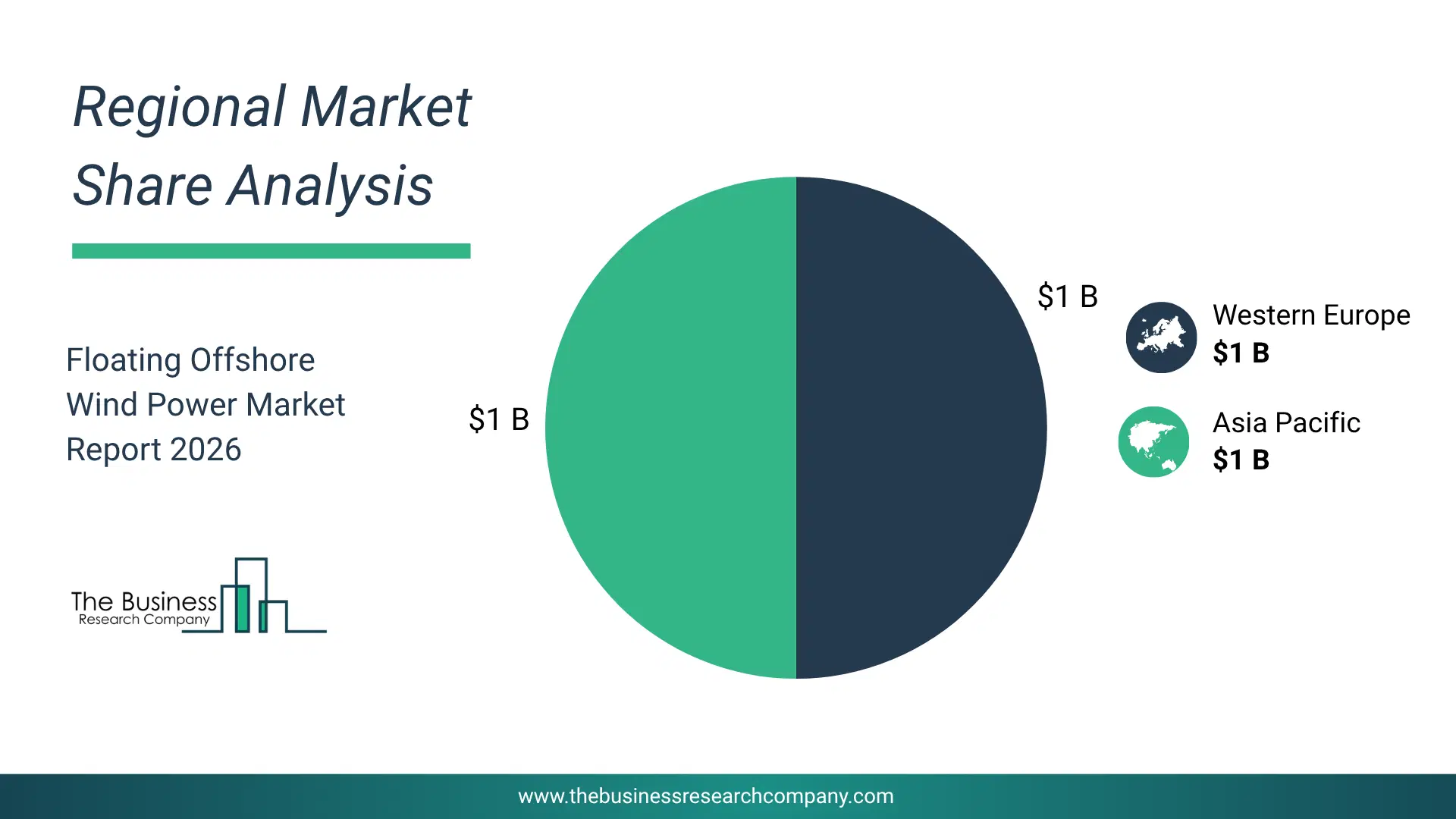
Regional Outlook
Europe was the largest region in the floating offshore wind power market in 2025. Asia-Pacific is expected to be the fastest-growing region in the forecast period. The regions covered in this market report are Asia-Pacific, South East Asia, Western Europe, Eastern Europe, North America, South America, Middle East, Africa. The countries covered in this market report are Australia, Brazil, China, France, Germany, India, Indonesia, Japan, Taiwan, Russia, South Korea, UK, USA, Canada, Italy, SpainWhat Defines the Floating Offshore Wind Power Market?
The floating offshore wind power market consists of revenues generated by entities by providing services such as production, installation, and maintenance of floating wind turbines. The market value includes the value of related goods sold by the service provider or contained within the service offering. The floating offshore wind power market also includes sales of floating platforms, anchoring and mooring systems, subsea cables, electrical infrastructure, and advanced control systems that ensure the efficient operation of floating turbines. Values in this market are ‘factory gate’ values, that is, the value of goods sold by the manufacturers or creators of the goods, whether to other entities (including downstream manufacturers, wholesalers, distributors, and retailers) or directly to end customers. The value of goods in this market includes related services sold by the creators of the goods.How is Market Value Defined and Measured?
The market value is defined as the revenues that enterprises gain from the sale of goods and/or services within the specified market and geography through sales, grants, or donations in terms of the currency (in USD unless otherwise specified). The revenues for a specified geography are consumption values that are revenues generated by organizations in the specified geography within the market, irrespective of where they are produced. It does not include revenues from resales along the supply chain, either further along the supply chain or as part of other products.
This chart presents market attractiveness based on a quantitative evaluation of growth, competition, strategic alignment, and risk, offering a clear view of opportunity areas for decision-making. This chart is for illustrative purposes; the full report contains the complete analysis.

This chart highlights the Total Addressable Market (TAM) by estimating the maximum revenue opportunity using an assumption-driven approach, supporting strategic planning and opportunity sizing across markets. The chart is illustrative; the full report provides a more comprehensive analysis.
What Key Data and Analysis Are Included in the Floating Offshore Wind Power Market Report 2026?
The floating offshore wind power market research report is one of a series of new reports from The Business Research Company that provides market statistics, including Market Report 2026?global market size, regional shares, competitors with the market share, detailed market segments, market trends and opportunities, and any further data you may need to thrive in the floating offshore wind power Market Report 2026? The market research report delivers a complete perspective of everything you need, with an in-depth analysis of the current and future state of the Market Report 2026?Floating Offshore Wind Power Market Report Forecast Analysis
| Report Attribute | Details |
|---|---|
| Market Size Value In 2026 | $0.48 billion |
| Revenue Forecast In 2030 | $2.27 billion |
| Growth Rate | CAGR of 33.5% from 2026 to 2030 |
| Base Year For Estimation | 2025 |
| Actual Estimates/Historical Data | 2020-2025 |
| Forecast Period | 2026 - 2030 |
| Market Representation | Revenue in USD Billion and CAGR from 2026 to 2030 |
| Segments Covered | Component, Technology, Water Depth, Turbine Capacity, Application |
| Regional Scope | Asia-Pacific, Western Europe, Eastern Europe, North America, South America, Middle East, Africa |
| Country Scope | The countries covered in the report are Australia, Brazil, China, France, Germany, India, Indonesia, Japan, Taiwan, Russia, South Korea, UK, USA, Canada, Italy, Spain. |
| Key Companies Profiled | Equinor ASA, Iberdrola S.A., RWE, Vestas Wind Systems A/S, Doosan Corporation, Siemens Gamesa, Ørsted A/S, Nexans SA, TechnipFMC plc, Nordex SE, SBM Offshore, MODEC Inc., Ming Yang Smart Energy Group, DNV AS, Hitachi ABB, Naval Energies, Ocean Winds, BW Ideol, Principle Power, Gazelle Wind Power Limited |
| Customization Scope | Request for Customization |
| Pricing And Purchase Options | Explore Purchase Options |