
Food Encapsulation Market Report 2026
Global Outlook – By Technology (Micro Encapsulation, Nano Encapsulation, Hybrid Technology), By Shell Material (Polysaccharides, Proteins, Lipids, Emulsifiers, Other Shell Materials), By Core Phase (Minerals, Organic Acids, Vitamins, Enzymes, Probiotics, Additives, Essential Oils, Prebiotics), By Application (Functional Food Products, Bakery Products, Confectionery, Beverages, Dairy Products, Other Applications ) – Market Size, Trends, Strategies, and Forecast to 2030
Food Encapsulation Market Overview
• Food Encapsulation market size has reached to $44.32 billion in 2025 • Expected to grow to $61.29 billion in 2030 at a compound annual growth rate (CAGR) of 6.7% • Growth Driver: Increasing Demand For Fortified And Functional Foods Boosts The Food Encapsulation Market • Market Trend: Innovations In Functional Dairy Delivery And Shelf-Life Enhancement • North America was the largest region in 2025 and Asia-Pacific is the fastest growing region.What Is Covered Under Food Encapsulation Market?
The food encapsulation technique is used for incorporating food ingredients, cells, enzymes, and certain other materials into small capsules as the encapsulated materials are protected from heat, moisture, or other extreme condition. Food encapsulation is used to mask taste, color, flavor, and odor, and enhance the viability and stability of the food product. The main food encapsulation technologies include micro encapsulation, nano encapsulation, hybrid technology, and macro encapsulation. Microencapsulation is the process of reducing the volatility, adverse aroma, and reactivity of food products. When exposed to heat, light, moisture, or other adverse conditions, it offers greater stability to food products. The different shell materials in food encapsulation are polysaccharides, proteins, lipids, emulsifiers, and other shell materials. The different food encapsulation core phases are minerals, organic acids, vitamins, enzymes, probiotics, additives, essential oils, prebiotics, and other substances, which are used for applications in dietary supplements, functional food products, bakery products, confectionery, beverages, dairy products, and other applications.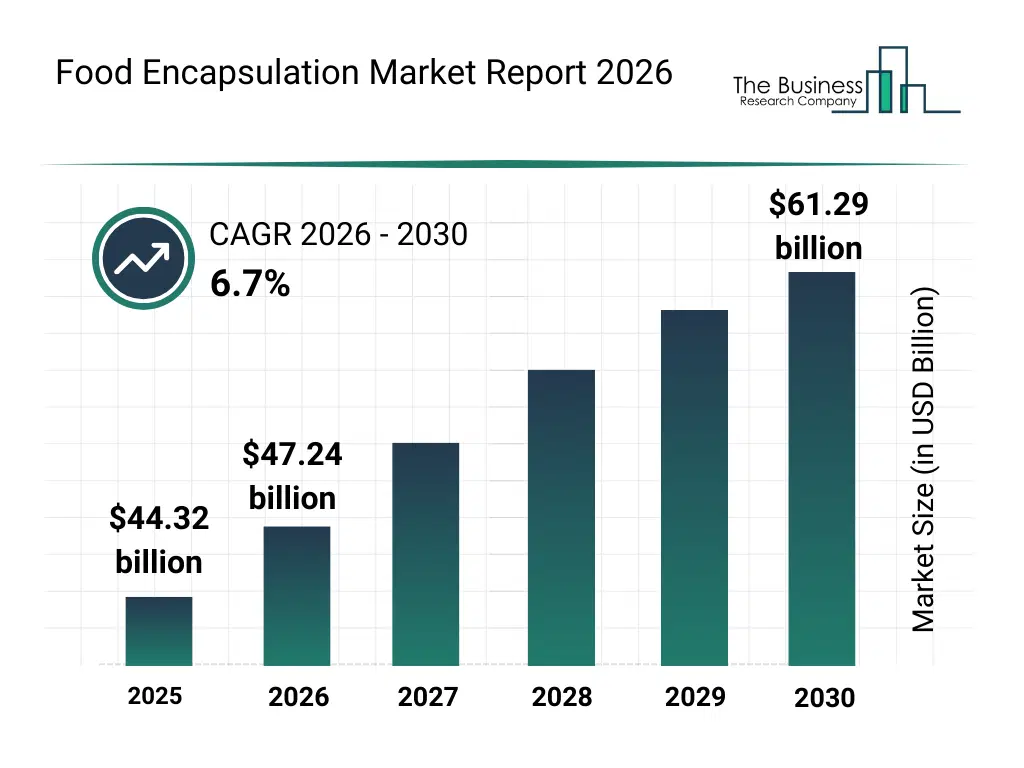
What Is The Food Encapsulation Market Size and Share 2026?
The food encapsulation market size has grown strongly in recent years. It will grow from $44.32 billion in 2025 to $47.24 billion in 2026 at a compound annual growth rate (CAGR) of 6.6%. The growth in the historic period can be attributed to growth of functional food consumption, expansion of dietary supplement manufacturing, rising demand for fortified food products, increased focus on ingredient stability, adoption of spray drying technologies.What Is The Food Encapsulation Market Growth Forecast?
The food encapsulation market size is expected to see strong growth in the next few years. It will grow to $61.29 billion in 2030 at a compound annual growth rate (CAGR) of 6.7%. The growth in the forecast period can be attributed to increasing demand for personalized nutrition, rising investments in food innovation, expansion of plant-based food formulations, growing use of nanoencapsulation techniques, increasing regulatory focus on ingredient efficacy. Major trends in the forecast period include increasing use of microencapsulation in functional foods, rising demand for probiotic and vitamin protection, growing adoption of controlled release ingredients, expansion of clean-label encapsulation materials, enhanced stability of sensitive food actives.
Global Food Encapsulation Market Segmentation
1) By Technology: Micro Encapsulation, Nano Encapsulation, Hybrid Technology 2) By Shell Material: Polysaccharides, Proteins, Lipids, Emulsifiers, Other Shell Materials 3) By Core Phase: Minerals, Organic Acids, Vitamins, Enzymes, Probiotics, Additives, Essential Oils, Prebiotics 4) By Application: Functional Food Products, Bakery Products, Confectionery, Beverages, Dairy Products, Other Applications Subsegments: 1) By Micro Encapsulation: Spray Drying, Coacervation, Fluid Bed Coating 2) By Nano Encapsulation: Nanoprecipitation, Liposome Encapsulation 3) By Hybrid Technology: Combination of Micro and Nano Techniques, Multi-layer EncapsulationWhat Is The Driver Of The Food Encapsulation Market?
The rising demand for fortified and functional foods is expected to propel the growth of the food encapsulation market. Fortified food has added nutrients that do not occur in the food naturally. Functional food reduces the risk of disease and promotes optimal health beyond basic nutrition. Fortified and functional foods are widely used in the food encapsulation market, as they offer added nutrients or healthy ingredients. For instance, in July 2025, according to the Foodmanufacture.co.uk is a UK-based, website and media platform for the UK's food and drink manufacturing industry, health considerations have significantly influenced the soft drinks, with growth mainly driven by functional beverages such as kombucha, which saw a 30% year-on-year increase, and health shots such as ginger and turmeric, which surged by 92% year-on-year for the week ending 22 February 2025. Therefore, the rising demand for fortified and functional foods is driving the growth of the food encapsulation industry.Key Players In The Global Food Encapsulation Market
Major companies operating in the food encapsulation market are Cargill Incorporated, Kerry Group plc, International Flavors & Fragrances Inc., Givaudan SA, Symrise AG, Koninklijke DSM N.V., Roquette Frères SA, Balchem Corporation, CP Kelco, Lycored Ltd., Fuji Chemical Industry Co., Ltd., T. Hasegawa Co., Ltd., Blue California Company, Tastetech Ltd., Firmenich International SA, Ingredion Incorporated, Glanbia plc, Archer Daniels Midland Company, Sensient Technologies Corporation, BASF SE, Mitsubishi Chemical Corporation, Sumitomo Chemical Co., Ltd., Aveka Group, Encapsys LLC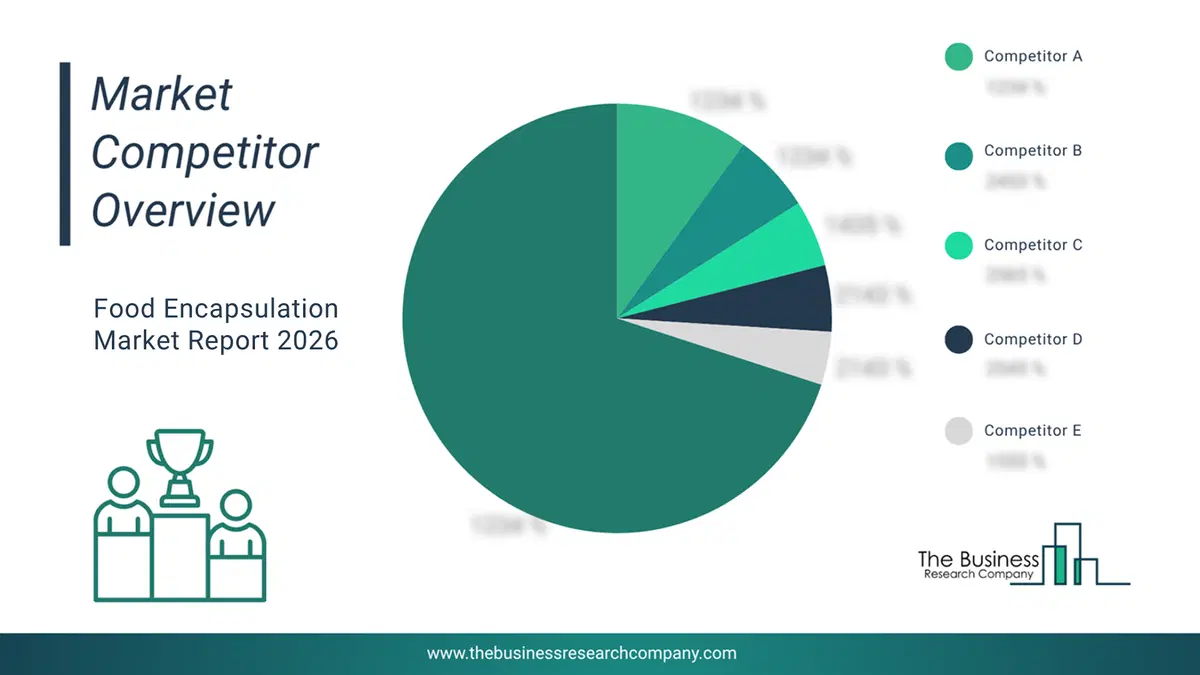
This chart is for illustrative purposes; the full report includes a detailed competitor analysis and comprehensive overview of the top 10 companies in the market.
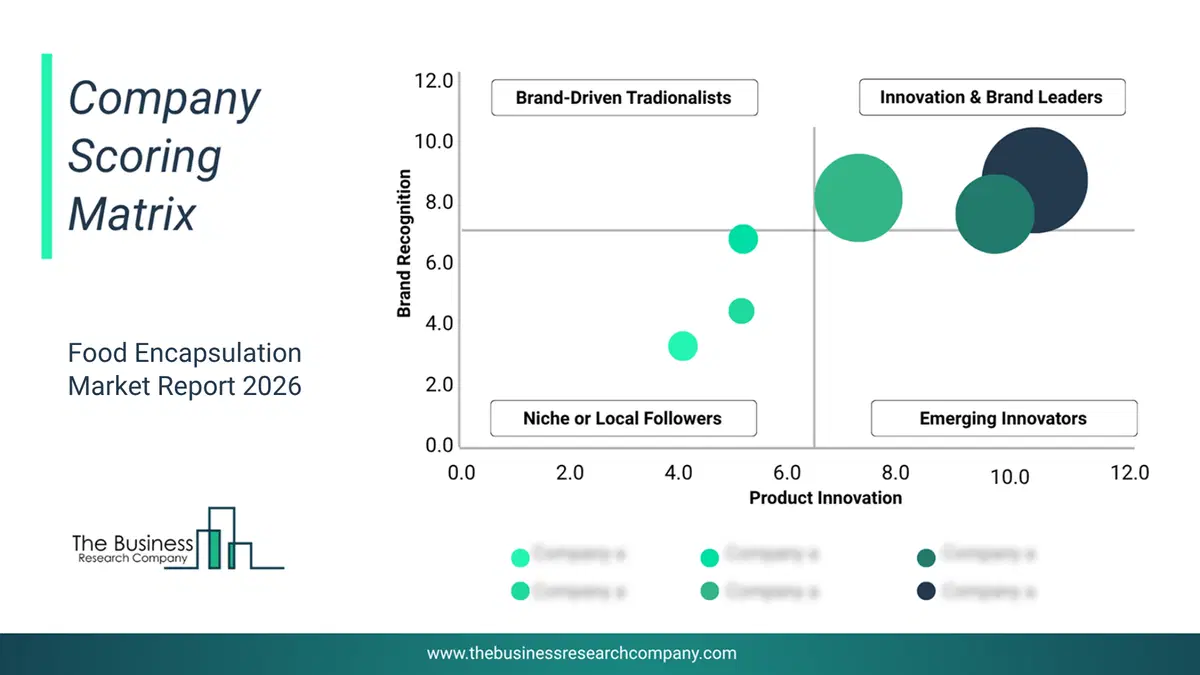
This chart maps companies by product innovation and brand strength, with bubble size indicating relative revenue, helping identify market leaders, challengers, and niche players. This is an illustrative chart; the full report provides a complete and accurate competitive analysis.
Global Food Encapsulation Market Trends and Insights
Major companies operating in the food encapsulation market are focusing on developing innovative solutions such as aseptic probiotic dairy beverages to enhance shelf life, product stability, and probiotic efficacy in dairy-based functional beverages. Aseptic probiotic dairy beverages are shelf-stable products processed and packaged under sterile conditions, allowing them to retain probiotic viability without refrigeration while ensuring safety, convenience, and extended shelf life. For instance, in November 2024, MilkyMist, an India-based dairy company, partnered with SIG, a Switzerland-based global aseptic packaging solutions provider, and AnaBio Technologies, an India-based specialist in probiotic formulations, to launch the world’s first long-life probiotic buttermilk in aseptic carton packs. The product ensures extended shelf life without refrigeration, maintains the viability of probiotics, and offers convenient, safe consumption for consumers seeking functional dairy beverages. The launch provides MilkyMist a competitive edge by combining health benefits with on-the-go convenience, catering to the growing demand for functional and long-lasting dairy products.What Are Latest Mergers And Acquisitions In The Food Encapsulation Market?
In August 2024, Mars Inc., a US-based food company that manufactures confectionery, pet food, and other food products and provides animal care services, acquired Kellanova for $36 billion. Mars Inc.'s acquisition of Kellanova enhances its position in the global food market by diversifying its product range and strengthening its presence in the breakfast and snack segments. This acquisition also fosters greater innovation and operational synergies, helping Mars meet evolving consumer demands more effectively. Kellanova is a US-based food manufacturing company that is involved in food encapsulation.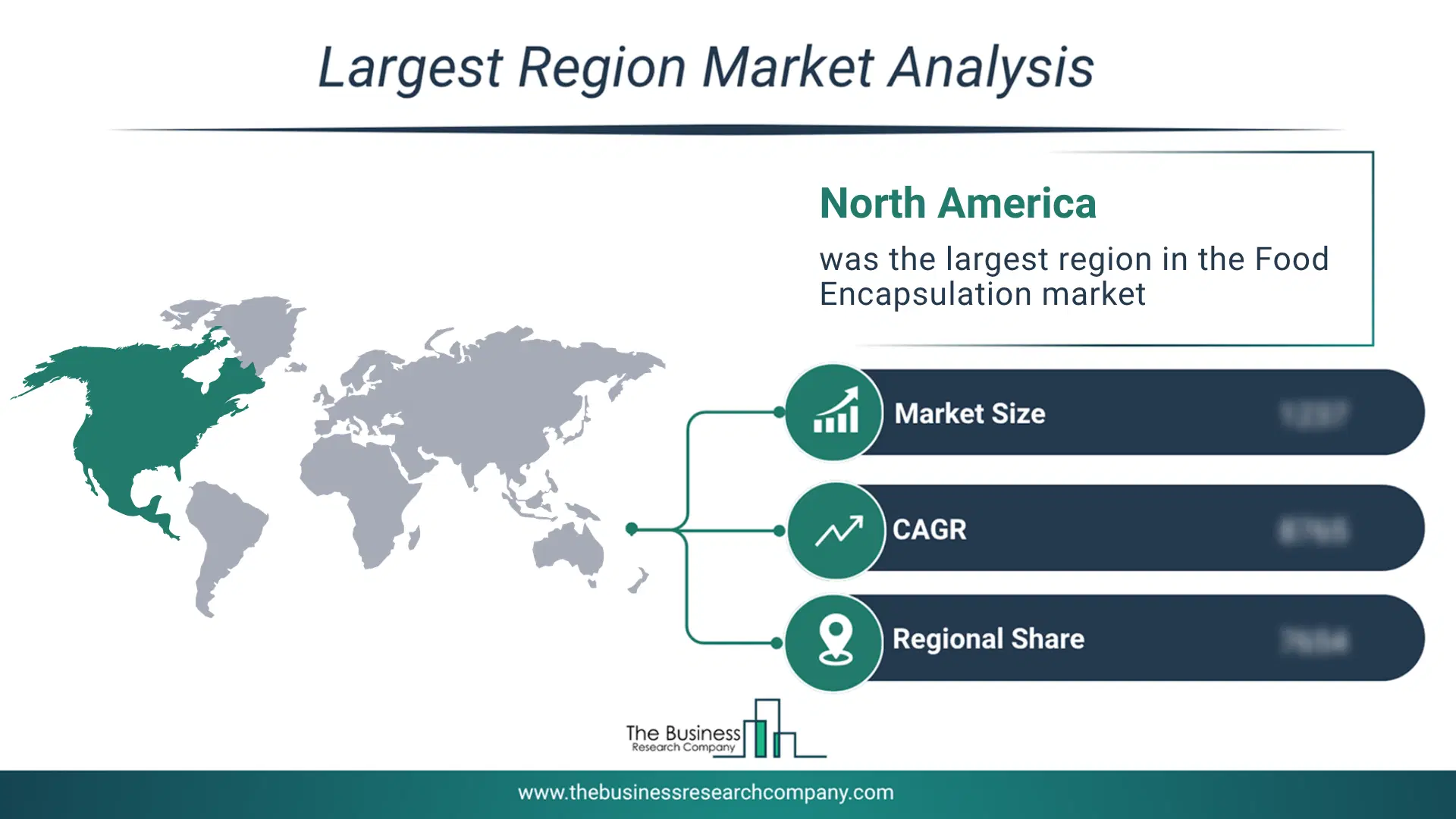
Regional Insights
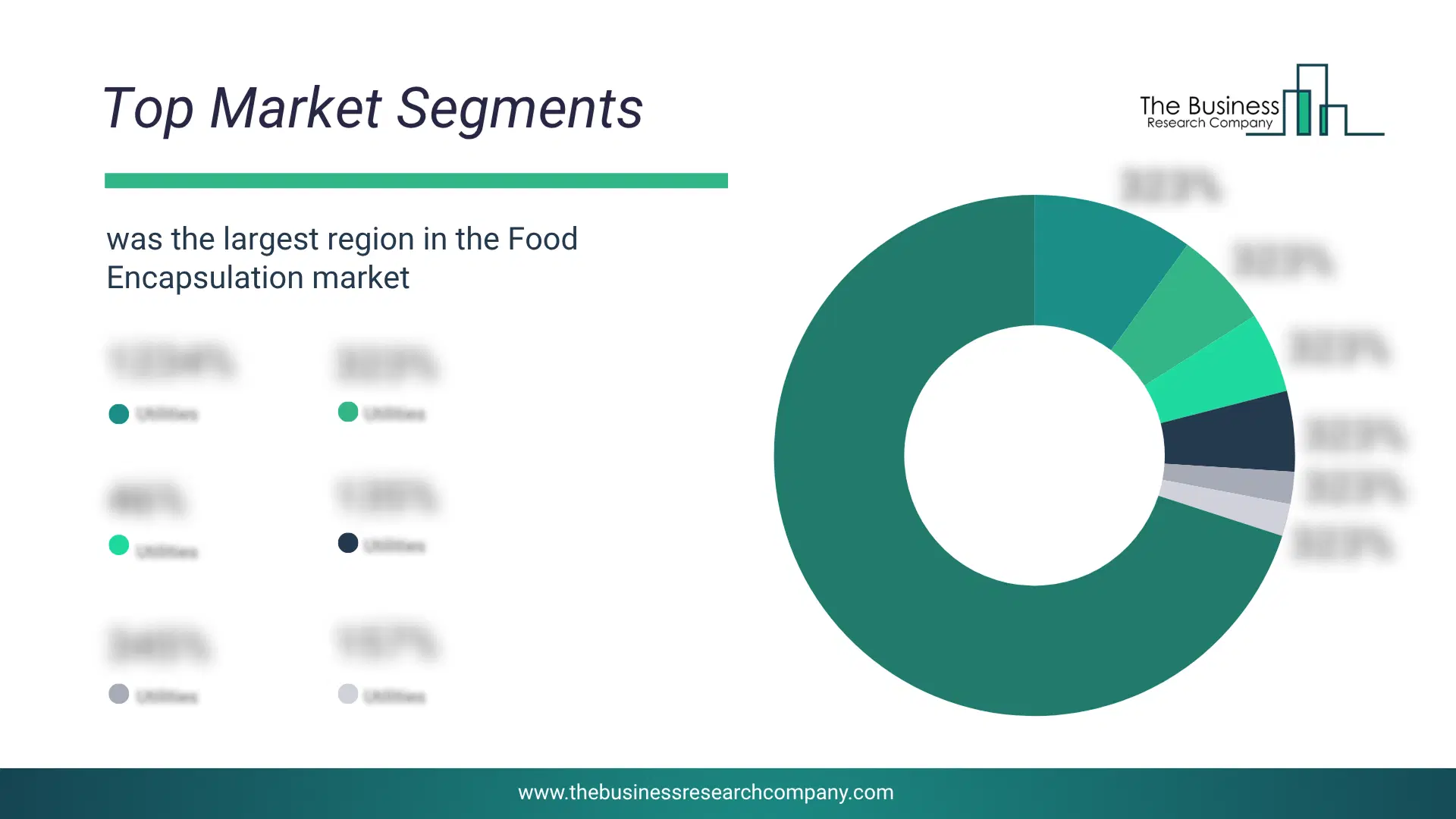
North America was the largest region in the food encapsulation market in 2025. Asia-Pacific is expected to be the fastest-growing region in the forecast period. The regions covered in this market report are Asia-Pacific, South East Asia, Western Europe, Eastern Europe, North America, South America, Middle East, Africa The countries covered in this market report are Australia, Brazil, China, France, Germany, India, Indonesia, Japan, Taiwan, Russia, South Korea, UK, USA, Canada, Italy, SpainWhat Defines the Food Encapsulation Market?
The food encapsulation market consists of sales of microencapsulation, nanoencapsulation, hybrid technology, and macro encapsulation. Values in this market are ‘factory gate’ values, that is the value of goods sold by the manufacturers or creators of the goods, whether to other entities (including downstream manufacturers, wholesalers, distributors and retailers) or directly to end customers. The value of goods in this market includes related services sold by the creators of the goods.How is Market Value Defined and Measured?
The market value is defined as the revenues that enterprises gain from the sale of goods and/or services within the specified market and geography through sales, grants, or donations in terms of the currency (in USD unless otherwise specified). The revenues for a specified geography are consumption values that are revenues generated by organizations in the specified geography within the market, irrespective of where they are produced. It does not include revenues from resales along the supply chain, either further along the supply chain or as part of other products.
This chart presents market attractiveness based on a quantitative evaluation of growth, competition, strategic alignment, and risk, offering a clear view of opportunity areas for decision-making. This chart is for illustrative purposes; the full report contains the complete analysis.

This chart highlights the Total Addressable Market (TAM) by estimating the maximum revenue opportunity using an assumption-driven approach, supporting strategic planning and opportunity sizing across markets. The chart is illustrative; the full report provides a more comprehensive analysis.
What Key Data and Analysis Are Included in the Food Encapsulation Market Report 2026?
The food encapsulation market research report is one of a series of new reports from The Business Research Company that provides market statistics, including industry global market size, regional shares, competitors with the market share, detailed market segments, market trends and opportunities, and any further data you may need to thrive in the food encapsulation industry. The market research report delivers a complete perspective of everything you need, with an in-depth analysis of the current and future state of the industry.Food Encapsulation Market Report Forecast Analysis
| Report Attribute | Details |
|---|---|
| Market Size Value In 2026 | $47.24 billion |
| Revenue Forecast In 2030 | $61.29 billion |
| Growth Rate | CAGR of 6.6% from 2026 to 2030 |
| Base Year For Estimation | 2025 |
| Actual Estimates/Historical Data | 2020-2025 |
| Forecast Period | 2026 - 2030 |
| Market Representation | Revenue in USD Billion and CAGR from 2026 to 2030 |
| Segments Covered | Technology, Shell Material, Core Phase, Application |
| Regional Scope | Asia-Pacific, Western Europe, Eastern Europe, North America, South America, Middle East, Africa |
| Country Scope | The countries covered in this market report are Australia, Brazil, China, France, Germany, India, Indonesia, Japan, Taiwan, Russia, South Korea, UK, USA, Canada, Italy, Spain |
| Key Companies Profiled | Cargill Incorporated, Kerry Group plc, International Flavors & Fragrances Inc., Givaudan SA, Symrise AG, Koninklijke DSM N.V., Roquette Frères SA, Balchem Corporation, CP Kelco, Lycored Ltd., Fuji Chemical Industry Co., Ltd., T. Hasegawa Co., Ltd., Blue California Company, Tastetech Ltd., Firmenich International SA, Ingredion Incorporated, Glanbia plc, Archer Daniels Midland Company, Sensient Technologies Corporation, BASF SE, Mitsubishi Chemical Corporation, Sumitomo Chemical Co., Ltd., Aveka Group, Encapsys LLC |
| Customization Scope | Request for Customization |
| Pricing And Purchase Options | Explore Purchase Options |