
Food And Beverages Market Report 2026
Global Outlook – By Type (Alcoholic – Beverages, Non-Alcoholic – Beverages, Grain Products, Bakery And Confectionery, Frozen, Other Types), By Nature (Organic, Conventional), By Distribution Channel (Supermarkets Or Hypermarkets, Convenience Stores, E-Commerce, Other Distribution Channels) – Market Size, Trends, Strategies, and Forecast to 2030
Food And Beverages Market Overview
• Food And Beverages market size has reached to $7042.76 billion in 2025 • Expected to grow to $9315.48 billion in 2030 at a compound annual growth rate (CAGR) of 5.9% • Growth Driver: Rising Disposable Income Fuels Food And Beverage Market Growth • Market Trend: Shift Toward Low- And No-Sugar Refreshments Driven By Health-Focused Beverage Innovation • Asia-Pacific was the largest region in 2025 and Western Europe is the fastest growing region.Market Gains By 2030 – Top Opportunities By Segment
Market Gain identifies the most promising market opportunities by highlighting the segments or products expected to generate the highest incremental revenue growth over the next five years.
What Is Covered Under Food And Beverages Market?
Foods are defined as processed products of plants, and animals that contain essential nutrients such as protein, carbohydrates, fat, and other nutrients consumed by humans. Beverages are defined as potable drinks which have thirst quenching refreshing, stimulating, and nourishing properties. The main types of food and beverages are alcoholic – beverages, non-alcoholic – beverages, grain products, bakery & confectionary, frozen, and others. Alcoholic beverages include beverages that contain varying amounts of alcohol (ethanol). The nature of food and beverages includes organic and conventional and is distributed by various channels such as supermarkets/hypermarkets, convenience stores, e-commerce, and others.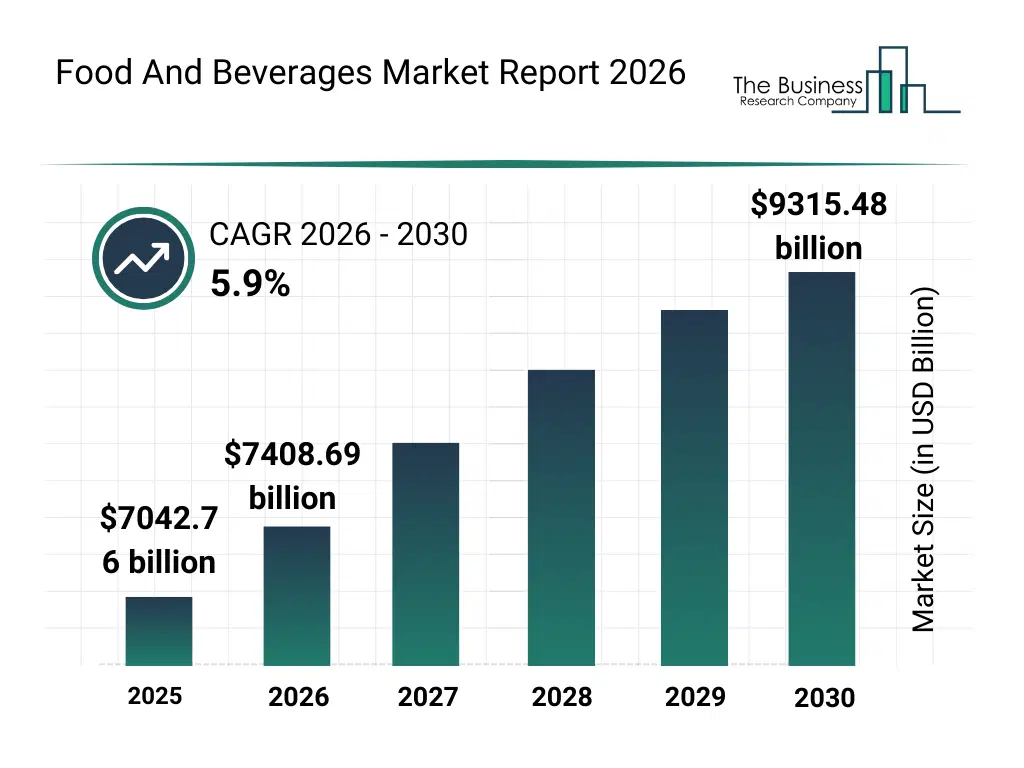
What Is The Food And Beverages Market Size and Share 2026?
The food and beverages market size has grown strongly in recent years. It will grow from $7042.76 billion in 2025 to $7408.69 billion in 2026 at a compound annual growth rate (CAGR) of 5.2%. The growth in the historic period can be attributed to expansion of global food consumption, growth of packaged and processed foods, rising urban population, increasing cold chain infrastructure, improved food preservation technologies.What Is The Food And Beverages Market Growth Forecast?
The food and beverages market size is expected to see strong growth in the next few years. It will grow to $9315.48 billion in 2030 at a compound annual growth rate (CAGR) of 5.9%. The growth in the forecast period can be attributed to increasing demand for personalized nutrition, rising investments in food innovation, expansion of plant-based food categories, growing focus on supply chain transparency, increasing adoption of smart retail technologies. Major trends in the forecast period include increasing demand for organic and clean-label products, rising adoption of smart food processing systems, growing focus on functional and nutrient-enriched foods, expansion of e-commerce food distribution channels, enhanced emphasis on sustainable packaging.
Global Food And Beverages Market Segmentation
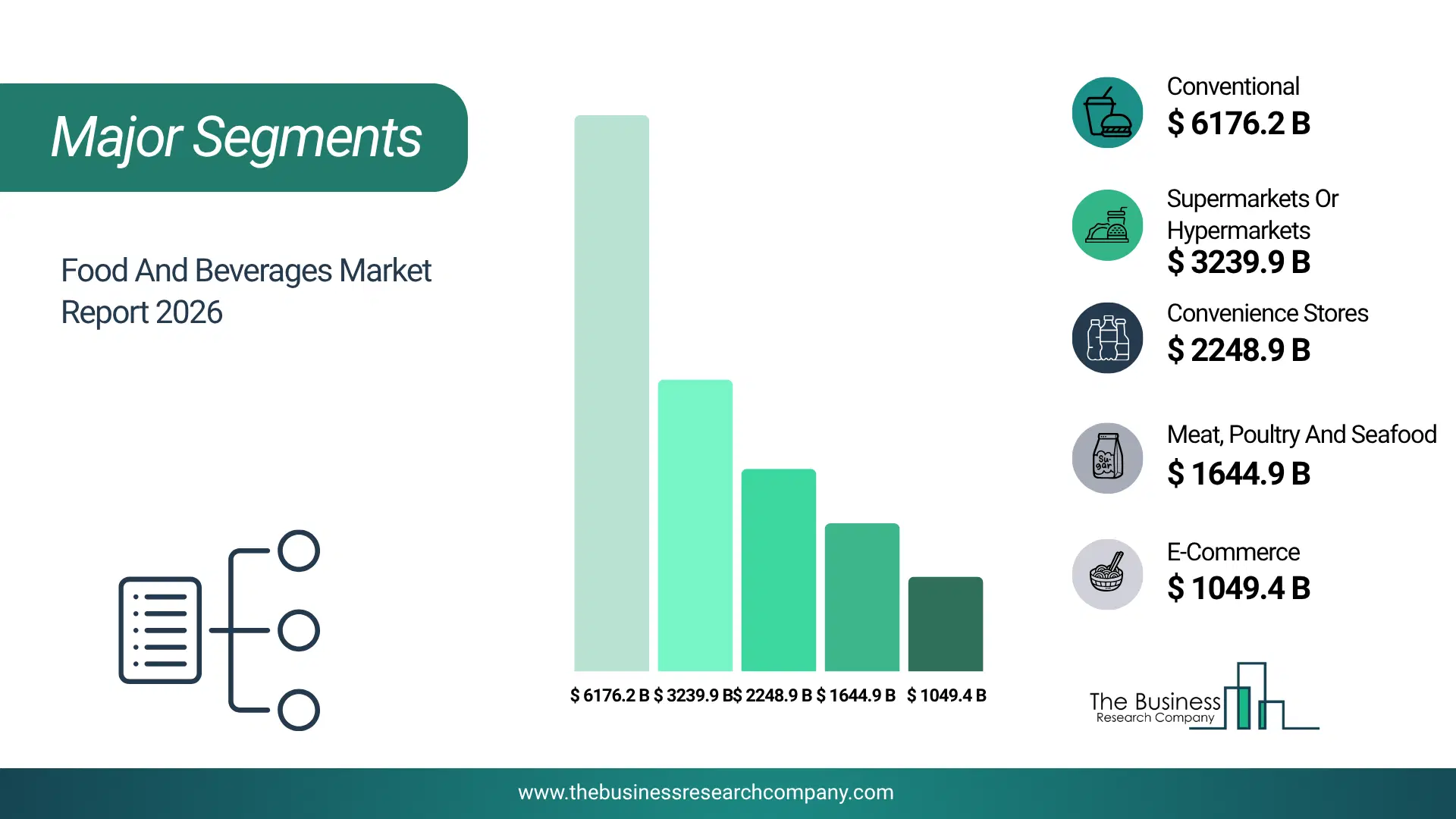
1) By Type: Alcoholic – Beverages, Non-Alcoholic – Beverages, Grain Products, Bakery And Confectionery, Frozen, Other Types 2) By Nature: Organic, Conventional 3) By Distribution Channel: Supermarkets Or Hypermarkets, Convenience Stores, E-Commerce, Other Distribution Channels Subsegments: 1) By Alcoholic Beverages: Beer, Wine, Spirits, Ciders, Ready-To-Drink Cocktails 2) By Non-Alcoholic Beverages: Soft Drinks, Juices, Bottled Water, Coffee And Tea, Energy Drinks 3) By Grain Products: Rice, Wheat, Oats, Barley, Corn-Based Products 4) By Bakery And Confectionery: Bread, Cakes And Pastries, Biscuits And Cookies, Chocolates And Candies, Doughnuts 5) By Frozen Foods: Frozen Vegetables, Frozen Meat And Seafood, Frozen Ready Meals, Frozen Desserts, Frozen Pizzas 6) By Other Types: Dairy Products, Sauces And Condiments, Snack Foods, Spices And Seasonings, Packaged Meals The top segments in the food and beverages market will be: • Conventional will reach $6176254.11 Million by 2025. • Supermarkets Or Hypermarkets will reach $3239943.4 Million by 2025. • Convenience Stores will reach $2248907.77 Million by 2025. • Meat, Poultry And Seafood will reach $1644941.77 Million by 2025. • E-Commerce will reach $1049483.7 Million by 2025.What Is The Driver Of The Food And Beverages Market?
The rising disposable income is expected to propel the growth of the food and beverage market. Disposable income refers to the amount of money an individual or household has available for spending and saving after taxes have been deducted from their gross income. People who have more money prefer to spend it on premium, specialty, and healthier food and drinks. This results in increased consumer spending, dining out, and the discovery of new gastronomic experiences. For instance, in September 2024, according to the Office for National Statistics, a UK-based Government agency, the median household disposable income rose by 2.3% to $ 17.73 ($16,400) due to government support measures to alleviate the cost of living. In contrast, the mean household disposable income for the richest fifth was six times higher than that of the poorest fifth, with figures of approximately $82,900 and $15,000, respectively. Therefore, the rise in disposable income is driving the growth of the food and beverages industry going forward.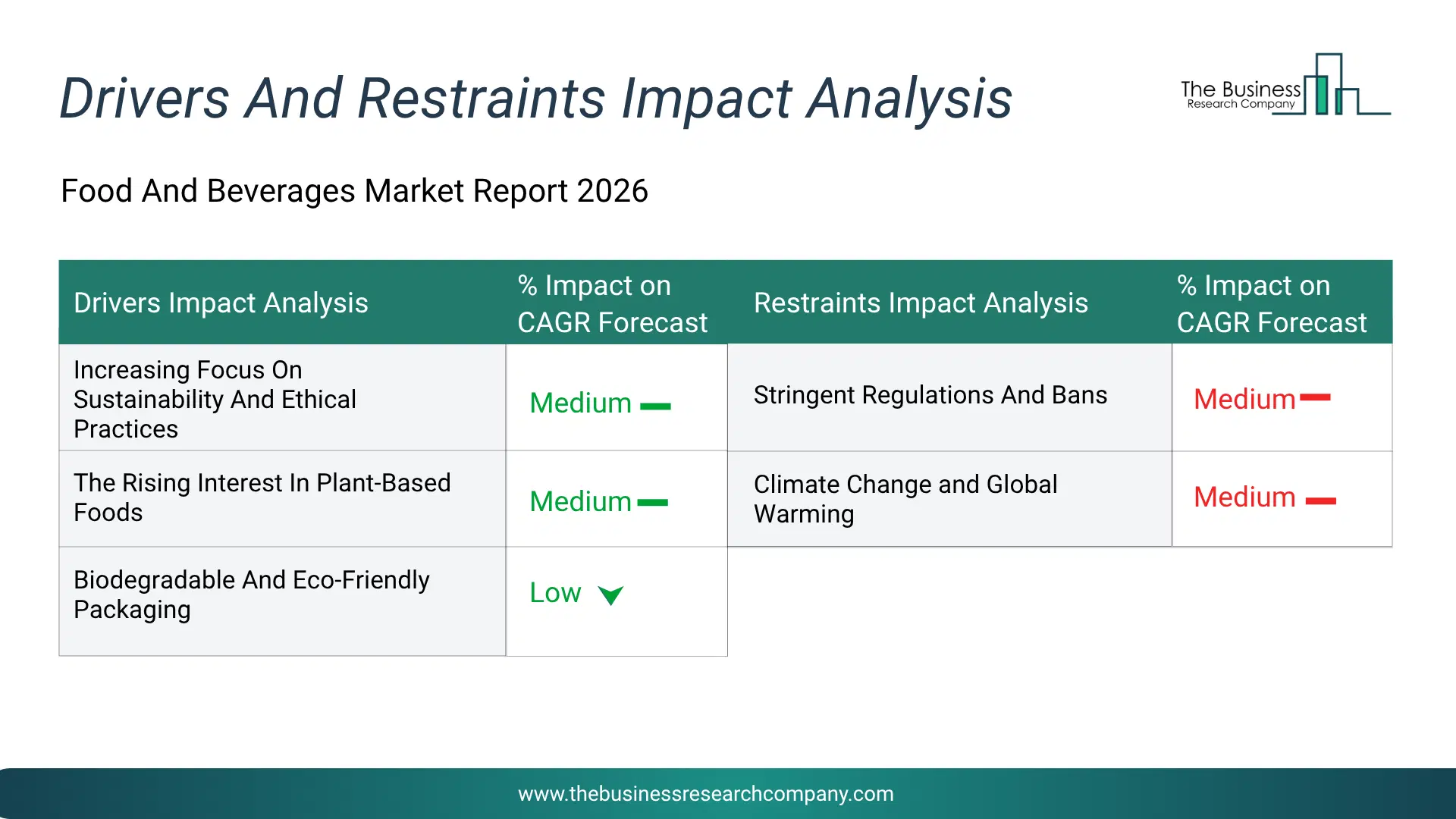
Infographic Chart Showing Key Market Drivers Analysis And Restraints For Food And Beverages Market
The chart presents an impact analysis of key drivers and restraints, quantifying their relative influence on the market's growth rate and helping assess the balance between growth enablers and limiting factors. This chart offers a high-level perspective; the full report contains more detailed insights.
How Will The Drivers Impact Growth In The Global Food And Beverages Market?
• Increasing Focus On Sustainability And Ethical Practices (Medium) – The increasing focus on sustainability and ethical practices will become a key driver of growth in the food and beverages market by 2030. Governments and global organizations are enforcing stricter regulations related to sustainability and ethical sourcing within the food industry. These regulations push businesses to adopt more eco-friendly practices to stay compliant, fostering innovation in production methods, waste reduction, and energy efficiency. As a result, companies that prioritize sustainability and ethical practices are likely to gain a competitive edge in the market. As a result, the increasing focus on sustainability and ethical practices is anticipated to contributing to a 1.3% annual growth in the market. • The Rising Interest In Plant-Based Foods (Medium) – The rising interest in plant-based foods will emerge as a major factor driving the expansion of the food and beverages market by 2030. As consumers place greater emphasis on health, environmental, and ethical factors, the popularity of plant-based options continues to rise. In response, manufacturers are expanding their product offerings to include plant-based meats, dairy alternatives, and snacks. This shift is sparking innovation, appealing to new customer segments, and contributing to the overall growth of the market. Consequently, the rising interest in plant-based foods is projected to contributing to a 1.0% annual growth in the market. • Biodegradable And Eco-Friendly Packaging (Low) – The biodegradable and eco-friendly packaging will serve as a key growth catalyst for the food and beverages market by 2030. As consumers become increasingly focused on sustainability, they are opting for products with a lower environmental impact. Brands that adopt biodegradable packaging are meeting this demand, attracting eco-conscious customers. This shift not only helps reduce plastic pollution and landfill waste but also aligns with environmental goals, fuelling growth in the food and beverage sector—particularly for brands dedicated to minimizing their carbon footprint. Therefore, this biodegradable and eco-friendly packaging is projected to supporting to a 0.8% annual growth in the market. • Expansion Of Alternative Protein Option (Low) – The expansion of alternative protein option will become a significant driver contributing to the growth of the food and beverages market by 2030. This shift is fuelling significant advancements in the industry by meeting the rising demand for sustainable, plant-based, and lab-grown protein sources. By reducing reliance on traditional animal agriculture, this transition supports a more environmentally sustainable food system. Moreover, it aligns with changing consumer preferences for healthier, cruelty-free, and allergen-friendly alternatives, encouraging innovation and creating new opportunities for a broader variety of food products. Consequently, the expansion of alternative protein option strategies is projected to contributing to a 0.5% annual growth in the market.How Will The Restraints Impact Growth In The Global Food And Beverages Market?
• Stringent Regulations And Bans (Medium) – Stringent Regulations And Bans will restrict the growth of the Food And Beverages market during the forecast period. Increasing government regulations on food additives, labeling, and marketing restrict product development and market access. Bans on certain ingredients and packaging materials require product reformulation and affect production costs. Regulatory pressures to reduce sugar, salt, and fat content affect product formulations and consumer acceptance, limiting market growth. • Climate Change and Global Warming (Medium) – Climate Change and Global Warming will restrict the growth of the Food And Beverages market during the forecast period. Climate change affects agricultural productivity, crop yields, and food supply chains. Extreme weather events can disrupt production and increase raw material costs. Climate impacts on food availability and prices affect the food and beverage industry's growth and profitability, particularly in regions vulnerable to climate variability.Key Players In The Global Food And Beverages Market
Major companies operating in the food and beverages market are Nestlé S.A, PepsiCo Inc, JBS S.A, Anheuser-Busch InBev, Tyson Foods Inc, Archer-Daniels-Midland Company, Mars Incorporated, The Coca-Cola Company, Cargill, Dabur, Amul, Red Bull, Del Monte Fresh Produce Ltd, Fonterra, Dali Foods Group, Hangzhou Wahaha Group, Nongfu Spring, Britannia Industries Ltd, Otsuka Holdings Co Ltd, Suntory Beverage & Food Ltd, Glanbia Plc, Royal FrieslandCampina N.V, Associated British Foods, Arla Foods, Südzucker AG, Tönnies Group, Dr. August Oetker KG, Mondelez, Diageo, General Mills, The Hain Celestial Group, Campbell Soup Company, Maple Leaf Foods, Olymel, Adams & Brooks Inc, The Kraft Heinz Company, Monster Energy Company, Unilever, Arcor, Starbucks, Ambev, Almarai Company, Agthia Group PJSC, Lifeway Foods, Arizona Beverages Company, Cadbury Nigeria, FrieslandCampina WAMCO Nigeria PLC, CHI Limited, Nigerian Breweries Plc, SABMiller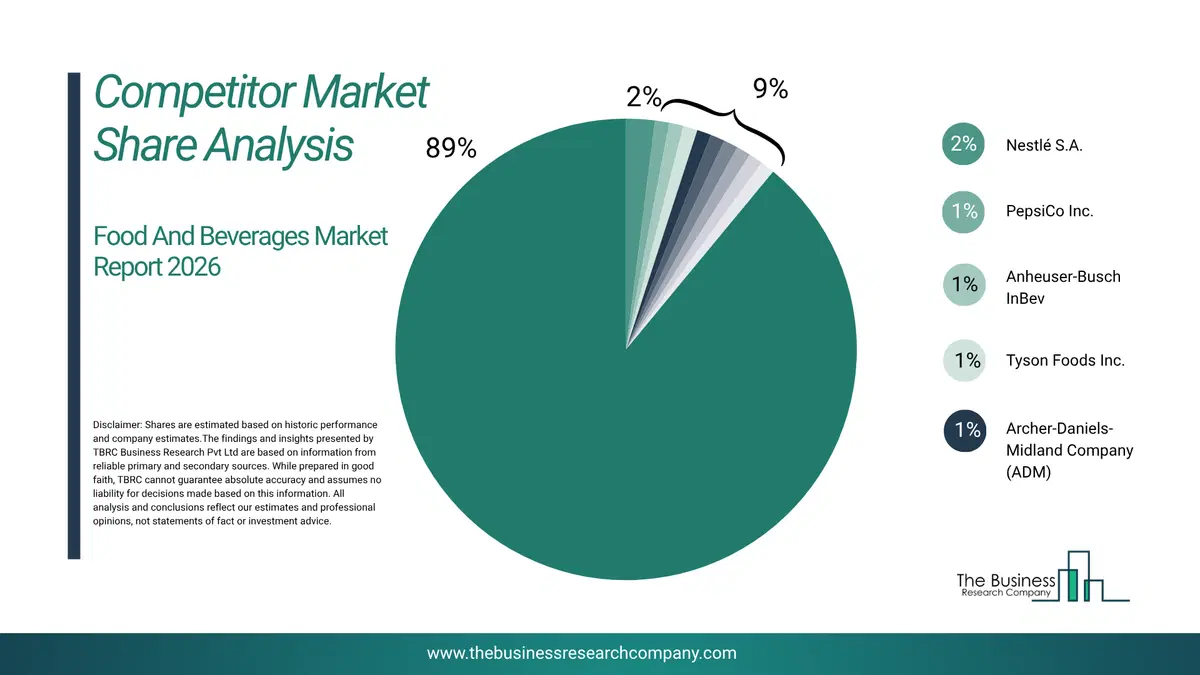
This chart is for illustrative purposes; the full report includes a detailed competitor analysis and comprehensive overview of the top 10 companies in the market.
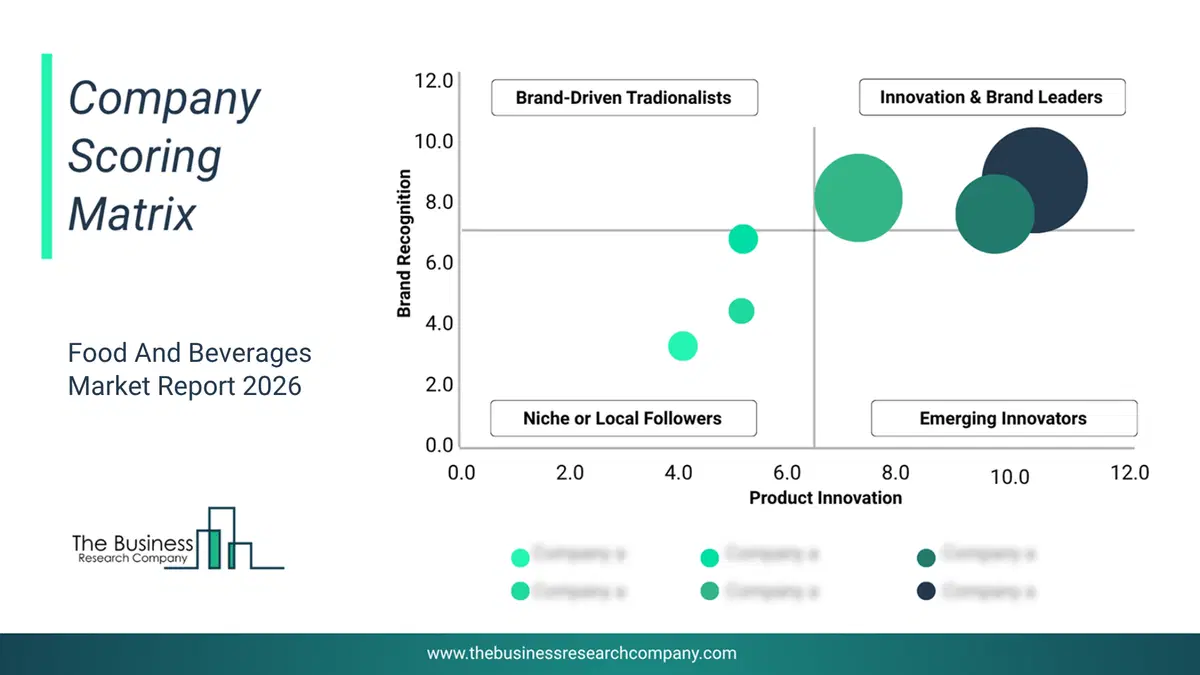
This chart maps companies by product innovation and brand strength, with bubble size indicating relative revenue, helping identify market leaders, challengers, and niche players. This is an illustrative chart; the full report provides a complete and accurate competitive analysis.
Global Food And Beverages Market Trends and Insights
Major companies operating in the food and beverages market are focusing on developing healthy beverages, such as low- and no-sugar refreshments, to gain a competitive edge in the market. Low-sugar and no-sugar refreshments refer to beverages with reduced or zero sugar content, providing options for individuals seeking healthier alternatives with a lower sugar intake. For instance, in August 2024, Citizen Spritz's, a UK-based company that specializes in crafting non-alcoholic spritz beverages, launched ready-to-drink (RTD) non-alcoholic spritzes. This launch marks Citizen Spritz's entry into the burgeoning RTD market, following their earlier introduction of instant spritz mixes in bottles. The RTD format is designed for convenience, appealing to consumers looking for ready-made options for various drinking occasions, such as outdoor celebrations or at-home relaxation.What Are Latest Mergers And Acquisitions In The Food And Beverages Market?
In January 2023, Lucas Bols N.V., a Netherlands-based beverage company, acquired Fluere Drinks B.V. for $1.05 million (€1 million). With this acquisition, Lucas Bols N.V. aimed to boost the brand’s presence among bartenders and on-trade, as well as strengthen its retail position and accelerate its variety of productions to serve customers. Fluere Drinks B.V. is a Netherlands-based non-alcoholic beverage company that offers a wide range of non-alcoholic drinks.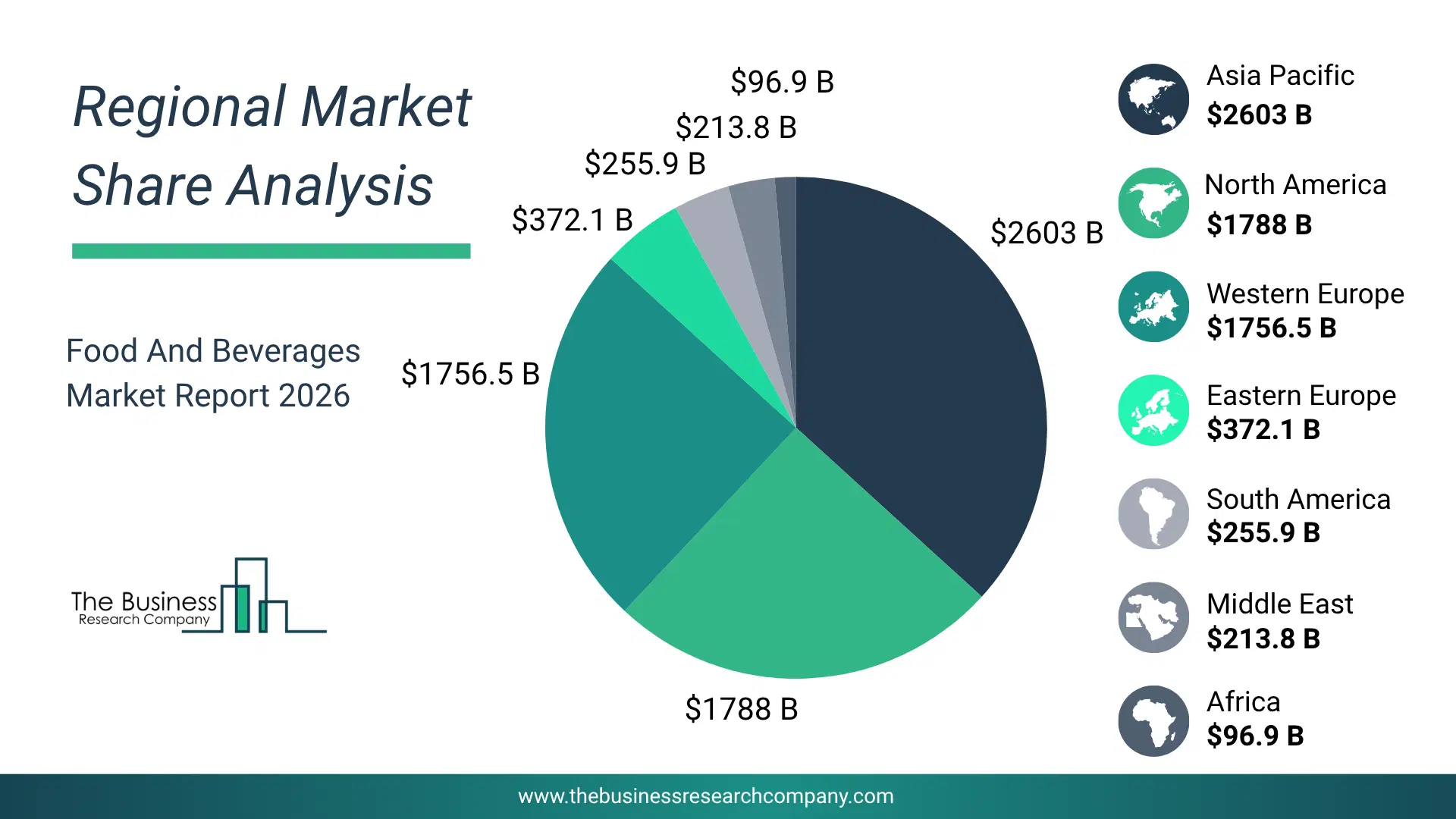
Regional Outlook
Asia-Pacific was the largest region in the food and beverages market in 2025. Western Europe was the second-largest region of the food and beverages market. The regions covered in this market report are Asia-Pacific, South East Asia, Western Europe, Eastern Europe, North America, South America, Middle East and Africa. The countries covered in this market report are China, India, Japan, Australia, Indonesia, South Korea, Bangladesh, Thailand, Vietnam, Malaysia, Singapore, Philippines, Hong Kong, Taiwan, New Zealand, UK, Germany, France, Italy, Spain, Austria, Belgium, Denmark, Finland, Ireland, Netherlands, Norway, Portugal, Sweden, Switzerland, Russia, Czech Republic, Poland, Romania, Ukraine, USA, Canada, Mexico, Brazil, Chile, Argentina, Colombia, Peru, Saudi Arabia, Israel, Iran, Turkey, UAE, Egypt, Nigeria, South Africa.What Defines the Food And Beverages Market?
The food and beverages market consists of sales of beer, wine and brandy, spirits, coffee and tea, soft drink and ice, flour, rice and malt, breakfast cereal, sugar and confectionery products, bread and bakery products, cookie, cracker, pasta, and tortilla, perishable prepared food, snack food, frozen food, canned and ambient food, milk and butter, cheese, dry, condensed, and evaporated dairy products, ice cream and frozen dessert, meat products, poultry, seafood, flavoring syrup and concentrate, seasoning and dressing, fats and oils, pet food, animal food, cigarettes, cigars and cigarillos, smoking and other tobacco products. The companies in the food and beverages industry process raw materials into food, pet food and tobacco products, package and distribute them through various distribution channels to both on-trade and off-trade establishments. Values in this market are ‘factory gate’ values, that is the value of goods sold by the manufacturers or creators of the goods, whether to other entities (including downstream manufacturers, wholesalers, distributors and retailers) or directly to end customers. The value of goods in this market includes related services sold by the creators of the goods.How is Market Value Defined and Measured?
The market value is defined as the revenues that enterprises gain from the sale of goods and/or services within the specified market and geography through sales, grants, or donations in terms of the currency (in USD unless otherwise specified). The revenues for a specified geography are consumption values that are revenues generated by organizations in the specified geography within the market, irrespective of where they are produced. It does not include revenues from resales along the supply chain, either further along the supply chain or as part of other products.
This chart presents market attractiveness based on a quantitative evaluation of growth, competition, strategic alignment, and risk, offering a clear view of opportunity areas for decision-making. This chart is for illustrative purposes; the full report contains the complete analysis.

This chart highlights the Total Addressable Market (TAM) by estimating the maximum revenue opportunity using an assumption-driven approach, supporting strategic planning and opportunity sizing across markets. The chart is illustrative; the full report provides a more comprehensive analysis.
What Key Data and Analysis Are Included in the Food And Beverages Market Report 2026?
The food and beverages market research report is one of a series of new reports from The Business Research Company that provides market statistics, including industry global market size, regional shares, competitors with the market share, detailed market segments, market trends and opportunities, and any further data you may need to thrive in the food and beverages industry. The market research report delivers a complete perspective of everything you need, with an in-depth analysis of the current and future state of the industry.Food And Beverages Market Report Forecast Analysis
| Report Attribute | Details |
|---|---|
| Market Size Value In 2026 | $7408.69 billion |
| Revenue Forecast In 2030 | $9315.48 billion |
| Growth Rate | CAGR of 5.2% from 2026 to 2030 |
| Base Year For Estimation | 2025 |
| Actual Estimates/Historical Data | 2020-2025 |
| Forecast Period | 2026 - 2030 |
| Market Representation | Revenue in USD Billion and CAGR from 2026 to 2030 |
| Segments Covered | Type, Nature, Distribution Channel |
| Regional Scope | Asia-Pacific, Western Europe, Eastern Europe, North America, South America, Middle East, Africa |
| Country Scope | The countries covered in the report are Australia, Brazil, China, France, Germany, India, Indonesia, Japan, Taiwan, Russia, South Korea, UK, USA, Canada, Italy, Spain. |
| Key Companies Profiled | Nestlé S.A, PepsiCo Inc, JBS S.A, Anheuser-Busch InBev, Tyson Foods Inc, Archer-Daniels-Midland Company, Mars Incorporated, The Coca-Cola Company, Cargill, Dabur, Amul, Red Bull, Del Monte Fresh Produce Ltd, Fonterra, Dali Foods Group, Hangzhou Wahaha Group, Nongfu Spring, Britannia Industries Ltd, Otsuka Holdings Co Ltd, Suntory Beverage & Food Ltd, Glanbia Plc, Royal FrieslandCampina N.V, Associated British Foods, Arla Foods, Südzucker AG, Tönnies Group, Dr. August Oetker KG, Mondelez, Diageo, General Mills, The Hain Celestial Group, Campbell Soup Company, Maple Leaf Foods, Olymel, Adams & Brooks Inc, The Kraft Heinz Company, Monster Energy Company, Unilever, Arcor, Starbucks, Ambev, Almarai Company, Agthia Group PJSC, Lifeway Foods, Arizona Beverages Company, Cadbury Nigeria, FrieslandCampina WAMCO Nigeria PLC, CHI Limited, Nigerian Breweries Plc, SABMiller |
| Customization Scope | Request for Customization |
| Pricing And Purchase Options | Explore Purchase Options |