
Food Intolerance Products Market Report 2026
Global Outlook – By Product Type (Diabetic Food, Gluten-free Food, Lactose-free Food), By Food Category (Bakery Products, Confectionery Products, Dairy and Dairy Alternatives, Meat and Seafood Products, Other By Food Categories), By Distribution Channel (Hypermarkets Or Supermarkets, Convenience Stores, Online Channels, Other Distribution Channels) – Market Size, Trends, Strategies, and Forecast to 2030
Food Intolerance Products Market Overview
• Food Intolerance Products market size has reached to $20.41 billion in 2025 • Expected to grow to $29.09 billion in 2030 at a compound annual growth rate (CAGR) of 7.3% • Growth Driver: The Rising Prevalence Of Food Allergies Fuels Growth In The Food Intolerance Products Market • Market Trend: Innovative Lactose-Free Solutions Drive Growth In Food Intolerance Products Market • North America was the largest region in 2025 and Asia-Pacific is the fastest growing region.What Is Covered Under Food Intolerance Products Market?
Food intolerance products refer to food products consumed by individuals with various types of food intolerance, such as lactose intolerance, wheat intolerance, and others. Food intolerance is a condition of the digestive system in which a person is unable to effectively digest or break down food. Individuals with specific food intolerance conditions consume food intolerance products based on the severity of their medical condition. The main product types of food intolerance products include diabetic food, gluten-free food, and lactose-free food. The term ‘diabetic food’ refers to foods for people who have glucose intolerance that are high in whole grains, low in sugar, salt, and saturated fats. The types of food intolerance products include bakery products, confectionery products, dairy and dairy alternatives, meat and seafood, and others, and they are distributed through supermarkets and hypermarkets, convenience stores, online stores, and others.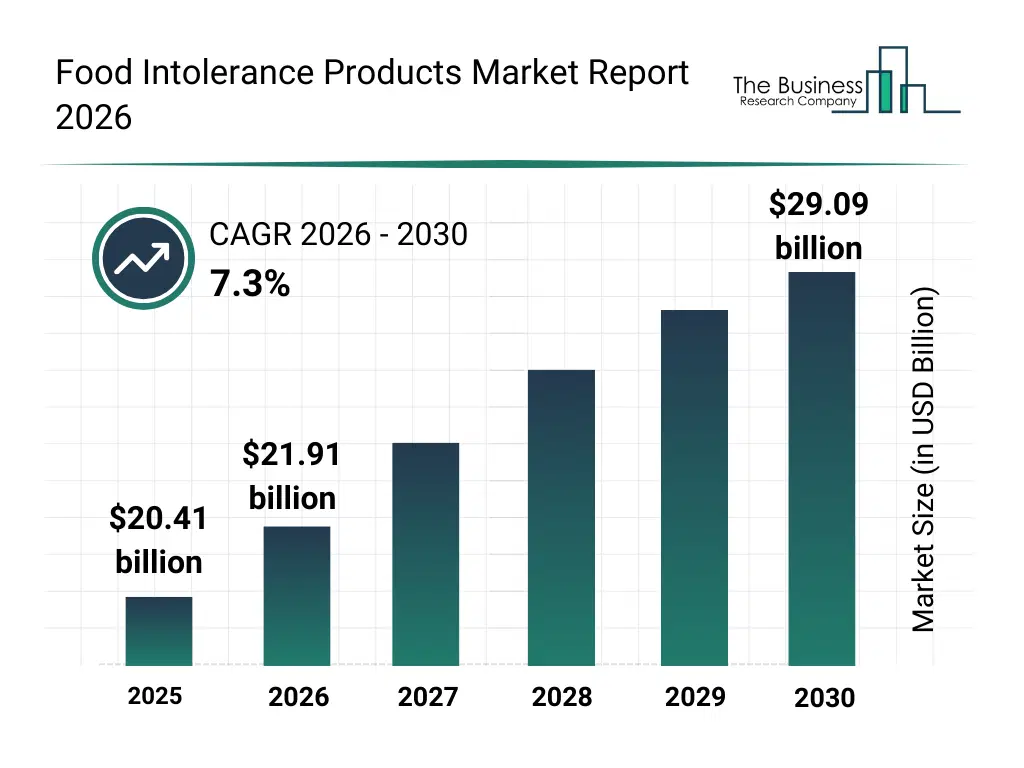
What Is The Food Intolerance Products Market Size and Share 2026?
The food intolerance products market size has grown strongly in recent years. It will grow from $20.41 billion in 2025 to $21.91 billion in 2026 at a compound annual growth rate (CAGR) of 7.3%. The growth in the historic period can be attributed to rising awareness of food intolerances, increasing diagnosis of digestive disorders, expansion of specialty food retail channels, growth of packaged health food segments, availability of alternative ingredient formulations.What Is The Food Intolerance Products Market Growth Forecast?
The food intolerance products market size is expected to see strong growth in the next few years. It will grow to $29.09 billion in 2030 at a compound annual growth rate (CAGR) of 7.3%. The growth in the forecast period can be attributed to increasing focus on personalized nutrition, rising demand for allergen-free food products, expansion of e-commerce food distribution, growing innovation in functional food ingredients, increasing consumer spending on health-oriented diets. Major trends in the forecast period include increasing demand for gluten-free and lactose-free products, rising adoption of low-glycemic and diabetic-friendly foods, expansion of plant-based food alternatives, growing product personalization for dietary needs, enhanced focus on digestive health formulations.
Global Food Intolerance Products Market Segmentation
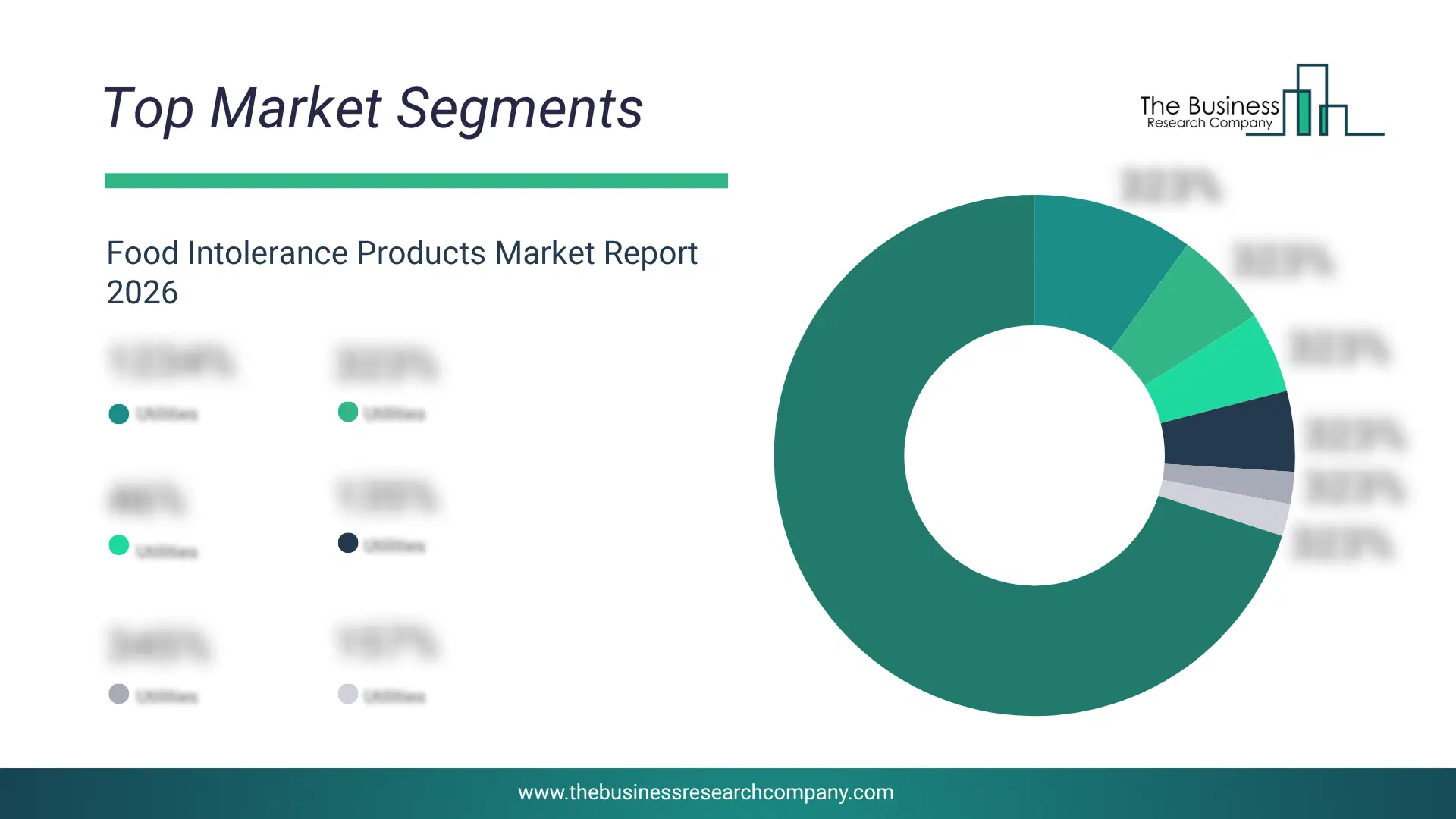
1) By Product Type: Diabetic Food, Gluten-free Food, Lactose-free Food 2) By Food Category: Bakery Products, Confectionery Products, Dairy and Dairy Alternatives, Meat and Seafood Products, Other By Food Categories 3) By Distribution Channel: Hypermarkets Or Supermarkets, Convenience Stores, Online Channels, Other Distribution Channels Subsegments: 1) By Diabetic Food: Sugar-Free Snacks, Low Glycemic Index Foods, Sugar Substitutes 2) By Gluten-Free Food: Gluten-Free Breads And Baked Goods, Gluten-Free Pasta And Grains, Gluten-Free Snacks 3) By Lactose-Free Food: Lactose-Free Milk And Dairy Products, Lactose-Free Ice Cream And Yogurt, Lactose-Free CheeseWhat Is The Driver Of The Food Intolerance Products Market?
The increasing prevalence of food allergies is expected to propel the growth of the food intolerance products market going forward. A food allergy is an abnormal response of the body's immune system to certain foods. It occurs when the immune system mistakenly identifies a specific food or a substance in food as something harmful and triggers cells to release an antibody to neutralize the allergy-causing food. Food intolerance products are designed to be free from allergens, gluten, lactose, and other ingredients that can cause food intolerances. These products can also be free from common food allergens, such as milk, eggs, peanuts, tree nuts, soy, wheat, fish, shellfish, and sesame. For instance, in May 2024, according to the Food Standards Agency, a UK-based government department, the PAFA project reported that over 30% of adults experienced some form of adverse reaction after eating certain foods, such as illness or discomfort. However, further investigation through clinical assessment showed that only about 6% of UK adults have a medically confirmed food allergy. This represents approximately 2.4 million adults in the UK. Therefore, the increasing prevalence of food allergies is driving the growth of the food intolerance products industry.Key Players In The Global Food Intolerance Products Market
Major companies operating in the food intolerance products market are Nestlé SA, General Mills Inc., Kraft Heinz Company, Dr. Schär AG/SPA, Danone SA, Beyond Meat Inc., Blue Diamond Growers, Kellanova, Oatly Group AB, Boulder Brands Inc., Conagra Brands Inc., Hain Celestial Group Inc., Amy's Kitchen Inc., Monde Nissin Corp, Arla Foods amba, Ecotone, Chobani LLC, Doves Farm Foods Ltd., Bob's Red Mill Natural Foods Inc., Freedom Foods Group Ltd., Enjoy Life Foods, Glutino Food Group, Udi's Gluten Free, Mead Johnson & Company LLC, Abbott Laboratories, Organic Gemini, 50/50 Foods Inc.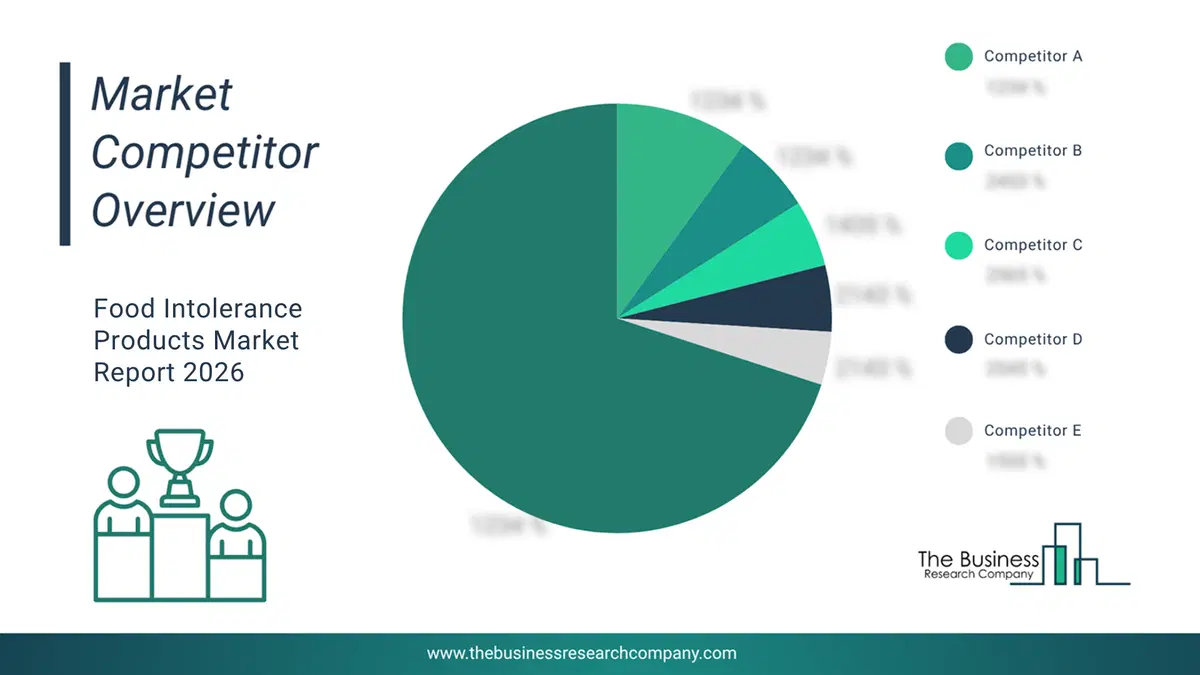
This chart is for illustrative purposes; the full report includes a detailed competitor analysis and comprehensive overview of the top 10 companies in the market.
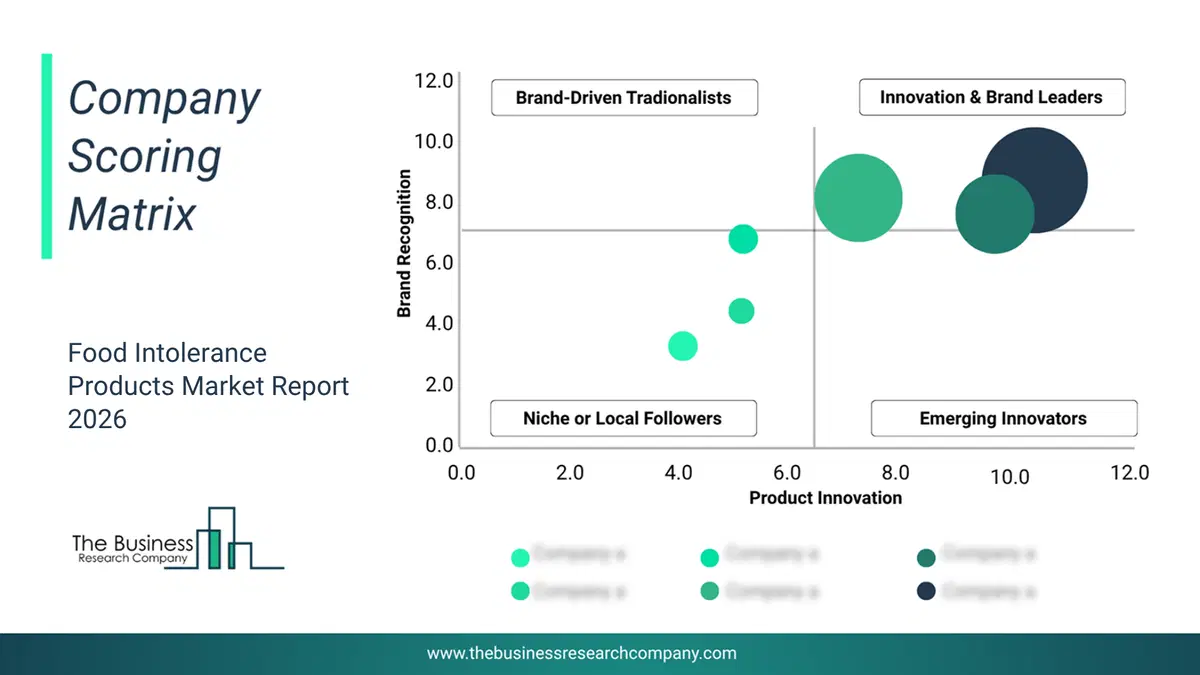
This chart maps companies by product innovation and brand strength, with bubble size indicating relative revenue, helping identify market leaders, challengers, and niche players. This is an illustrative chart; the full report provides a complete and accurate competitive analysis.
Global Food Intolerance Products Market Trends and Insights
Major companies operating in the food intolerance products market are focused on developing innovative food intolerance products, such as lactose-free solutions, to gain a competitive edge in the market. Lactose-free products are food products that are free from lactose, a sugar found in dairy foods such as milk, cheese, and yogurt. For instance, in August 2023, Bharat Skyr & Doodh Products Private Limited, an India-based food and beverage company, launched Lactose-Free Greek Yogurt through its brand Skyrrup. Made with the deliciousness of A2 cow milk, the yogurt includes 7.5 grams of protein. Greek yogurt from Skyrrup not only satisfies the palate but also replenishes the body. Skyrrup Greek yogurt stands out for its delicate texture and its careful extraction of lactose and whey. This results in a delightful dairy experience. It appeals especially to people who are lactose intolerant because of this quality.What Are Latest Mergers And Acquisitions In The Food Intolerance Products Market?
In December 2023, Kerry Group plc., an Ireland-based taste and nutrition company, acquired the lactase enzyme business from two companies Chr. Hansen Holding A/S and Novozymes A/S, producing lactase enzymes for an undisclosed amount. Aim of the Acquisition is to strengthen Kerry Group's biotechnology expertise and expand its range of lactose-free and reduced-sugar dairy products to address increasing consumer demand. Chr. Hansen Holding A/S is a Denmark-based bioscience company that specializes in natural solutions for the food, beverage, pharmaceutical, and agricultural industries., and Novozymes A/S is a Denmark-based biotechnology company that specializes in producing enzymes and microorganisms for diverse industries, such as agriculture, bioenergy, food and beverages, and household care, with a focus on enhancing industrial efficiency, sustainability, and reducing environmental impact.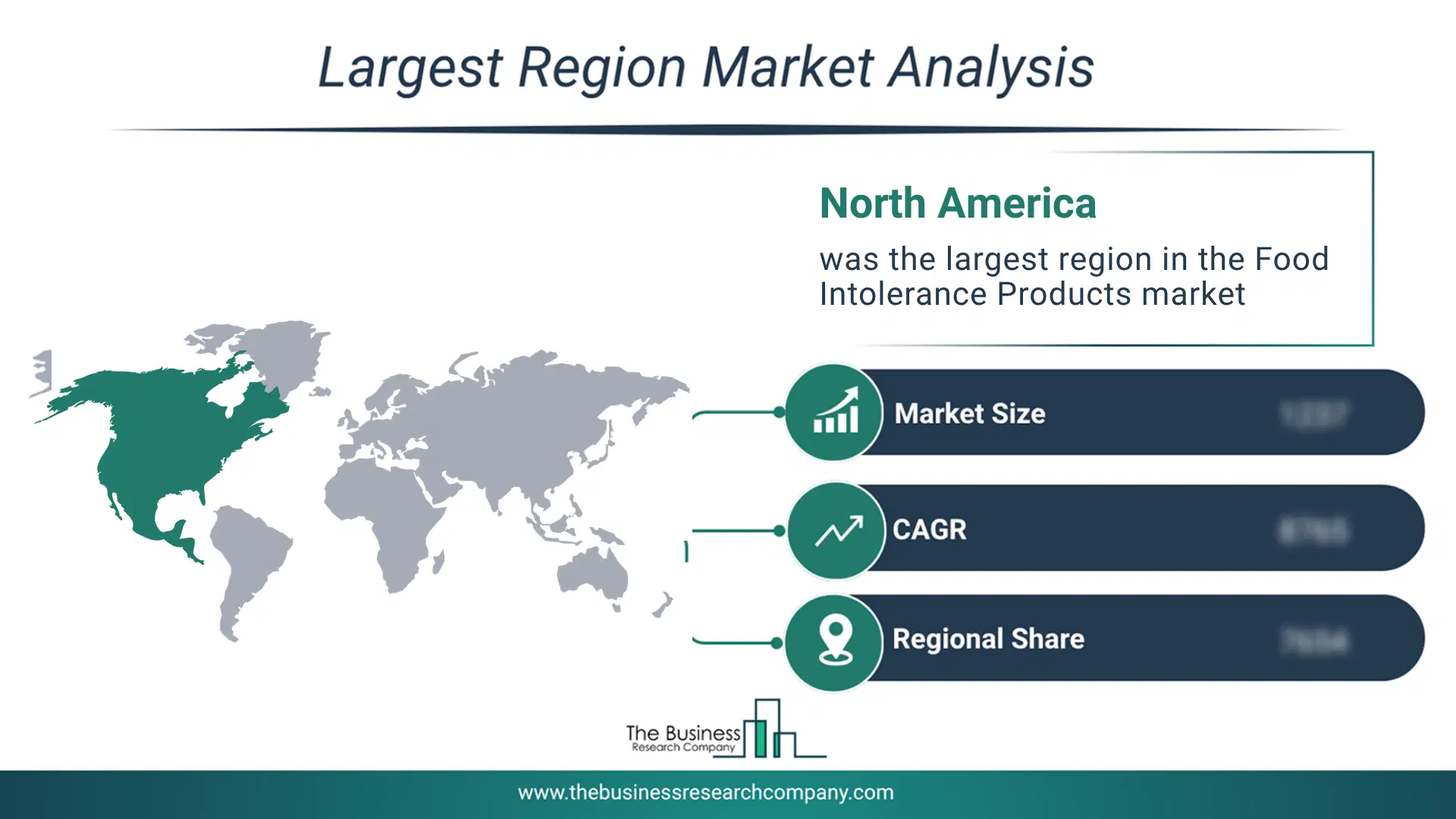
Regional Outlook
North America was the largest region in the food intolerance market in 2025. Asia-Pacific is expected to be the fastest-growing region in the forecast period. The regions covered in this market report are Asia-Pacific, South East Asia, Western Europe, Eastern Europe, North America, South America, Middle East and Africa. The countries covered in this market report are Australia, Brazil, China, France, Germany, India, Indonesia, Japan, Taiwan, Russia, South Korea, UK, USA, Italy, Spain, CanadaWhat Defines the Food Intolerance Products Market?
The food intolerance products market consists of sales of wine, dried fruits, fresh shrimp, jams and jellies. Values in this market are ‘factory gate’ values, that is the value of goods sold by the manufacturers or creators of the goods, whether to other entities (including downstream manufacturers, wholesalers, distributors and retailers) or directly to end customers. The value of goods in this market includes related services sold by the creators of the goods.How is Market Value Defined and Measured?
The market value is defined as the revenues that enterprises gain from the sale of goods and/or services within the specified market and geography through sales, grants, or donations in terms of the currency (in USD unless otherwise specified). The revenues for a specified geography are consumption values that are revenues generated by organizations in the specified geography within the market, irrespective of where they are produced. It does not include revenues from resales along the supply chain, either further along the supply chain or as part of other products.
This chart presents market attractiveness based on a quantitative evaluation of growth, competition, strategic alignment, and risk, offering a clear view of opportunity areas for decision-making. This chart is for illustrative purposes; the full report contains the complete analysis.

This chart highlights the Total Addressable Market (TAM) by estimating the maximum revenue opportunity using an assumption-driven approach, supporting strategic planning and opportunity sizing across markets. The chart is illustrative; the full report provides a more comprehensive analysis.
What Key Data and Analysis Are Included in the Food Intolerance Products Market Report 2026?
The food intolerance products market research report is one of a series of new reports from The Business Research Company that provides market statistics, including industry global market size, regional shares, competitors with the market share, detailed market segments, market trends and opportunities, and any further data you may need to thrive in the food intolerance products industry. The market research report delivers a complete perspective of everything you need, with an in-depth analysis of the current and future state of the industry.Food Intolerance Products Market Report Forecast Analysis
| Report Attribute | Details |
|---|---|
| Market Size Value In 2026 | $21.91 billion |
| Revenue Forecast In 2030 | $29.09 billion |
| Growth Rate | CAGR of 7.3% from 2026 to 2030 |
| Base Year For Estimation | 2025 |
| Actual Estimates/Historical Data | 2020-2025 |
| Forecast Period | 2026 - 2030 |
| Market Representation | Revenue in USD Billion and CAGR from 2026 to 2030 |
| Segments Covered | Product Type, Food Category, Distribution Channel |
| Regional Scope | Asia-Pacific, Western Europe, Eastern Europe, North America, South America, Middle East, Africa |
| Country Scope | The countries covered in the report are Australia, Brazil, China, France, Germany, India, Indonesia, Japan, Taiwan, Russia, South Korea, UK, USA, Canada, Italy, Spain. |
| Key Companies Profiled | Nestlé SA, General Mills Inc., Kraft Heinz Company, Dr. Schär AG/SPA, Danone SA, Beyond Meat Inc., Blue Diamond Growers, Kellanova, Oatly Group AB, Boulder Brands Inc., Conagra Brands Inc., Hain Celestial Group Inc., Amy's Kitchen Inc., Monde Nissin Corp, Arla Foods amba, Ecotone, Chobani LLC, Doves Farm Foods Ltd., Bob's Red Mill Natural Foods Inc., Freedom Foods Group Ltd., Enjoy Life Foods, Glutino Food Group, Udi's Gluten Free, Mead Johnson & Company LLC, Abbott Laboratories, Organic Gemini, 50/50 Foods Inc. |
| Customization Scope | Request for Customization |
| Pricing And Purchase Options | Explore Purchase Options |