
Ethical Food Market Report 2026
Global Outlook – By Type (Organic And Natural, Fairtrade, Free Range Animal Welfare Friendly And Environmentally Responsible, Sustainably Produced), By Process (Processed, Unprocessed), By Mode Of Distribution (Online, Offline) – Market Size, Trends, Strategies, and Forecast to 2030
Ethical Food Market Overview
• Ethical Food market size has reached to $146.58 billion in 2025 • Expected to grow to $207.14 billion in 2030 at a compound annual growth rate (CAGR) of 7.2% • Growth Driver: Environmental Imperative Driving The Surge In Demand For Ethical Food • Market Trend: Innovative Snack With A Tasty Fusion Of Dried Fruits For On-The-Go Nutrition • Asia-Pacific was the largest region in 2025 and Western Europe is the fastest growing region.What Is Covered Under Ethical Food Market?
Ethical or sustainable food refers to food produced using processes and systems that are non-polluting, economically efficient, conserve non-renewable natural resources and energy, safe for workers, consumers, and communities, and do not compromise on the future generation needs. It uses a method of food production wherein the people (small farmers, producer co-operatives, large estates), the environment (environment sustainability), and animals (concerned with animal rights and welfare) are given considerable importance. The main types of ethical food are organic and natural, fairtrade, free-range animal welfare-friendly, environmentally responsible, and sustainably produced. Foods that are grown without artificial pesticides, fertilizers, or herbicides are called organic food or natural food. Natural or organic foods are free of synthetic ingredients or additives. It is made with different processes such as processed and unprocessed, that are distributed in various modes of distribution channels including online and offline.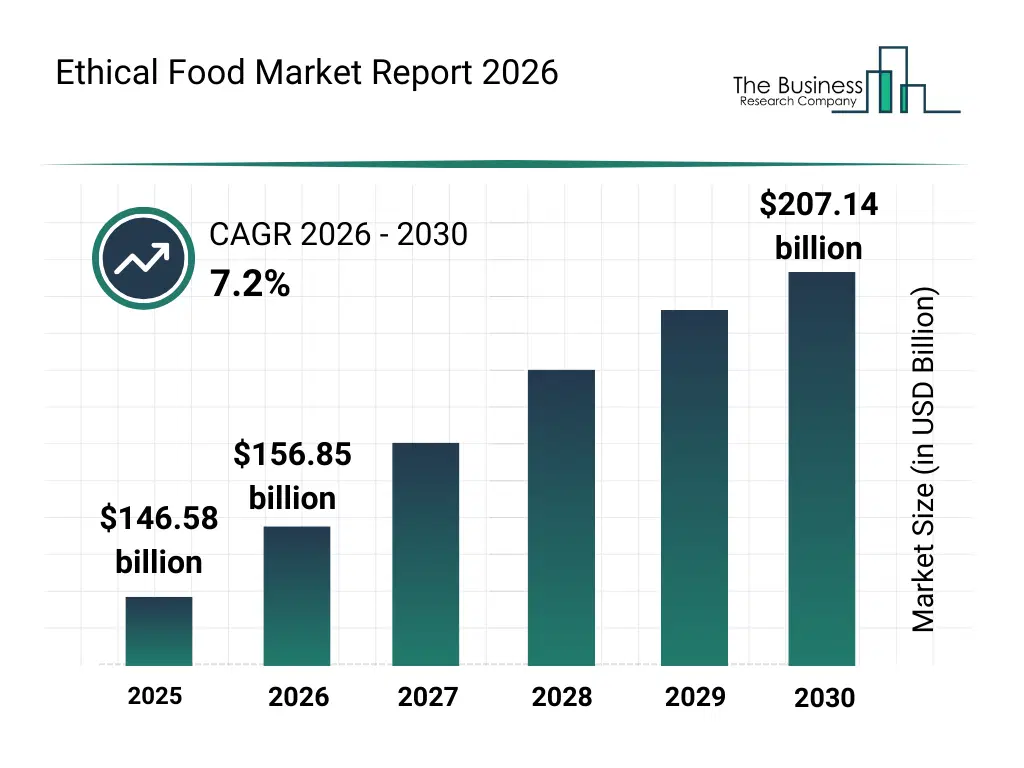
What Is The Ethical Food Market Size and Share 2026?
The ethical food market size has grown strongly in recent years. It will grow from $146.58 billion in 2025 to $156.85 billion in 2026 at a compound annual growth rate (CAGR) of 7.0%. The growth in the historic period can be attributed to growth of organic farming practices, increasing consumer awareness of ethical consumption, expansion of specialty food retail channels, rising certification and labeling adoption, development of fairtrade supply networks.What Is The Ethical Food Market Growth Forecast?
The ethical food market size is expected to see strong growth in the next few years. It will grow to $207.14 billion in 2030 at a compound annual growth rate (CAGR) of 7.2%. The growth in the forecast period can be attributed to growing demand for sustainable diets, increasing digital transparency tools in food supply chains, expansion of ethical food e-commerce platforms, rising corporate sustainability commitments, growth in regenerative agriculture adoption. Major trends in the forecast period include increasing demand for certified organic and ethical food products, rising consumer focus on transparency and traceability, growing adoption of fairtrade and animal welfare standards, expansion of locally sourced and regenerative food systems, enhanced emphasis on sustainable packaging practices.
Global Ethical Food Market Segmentation
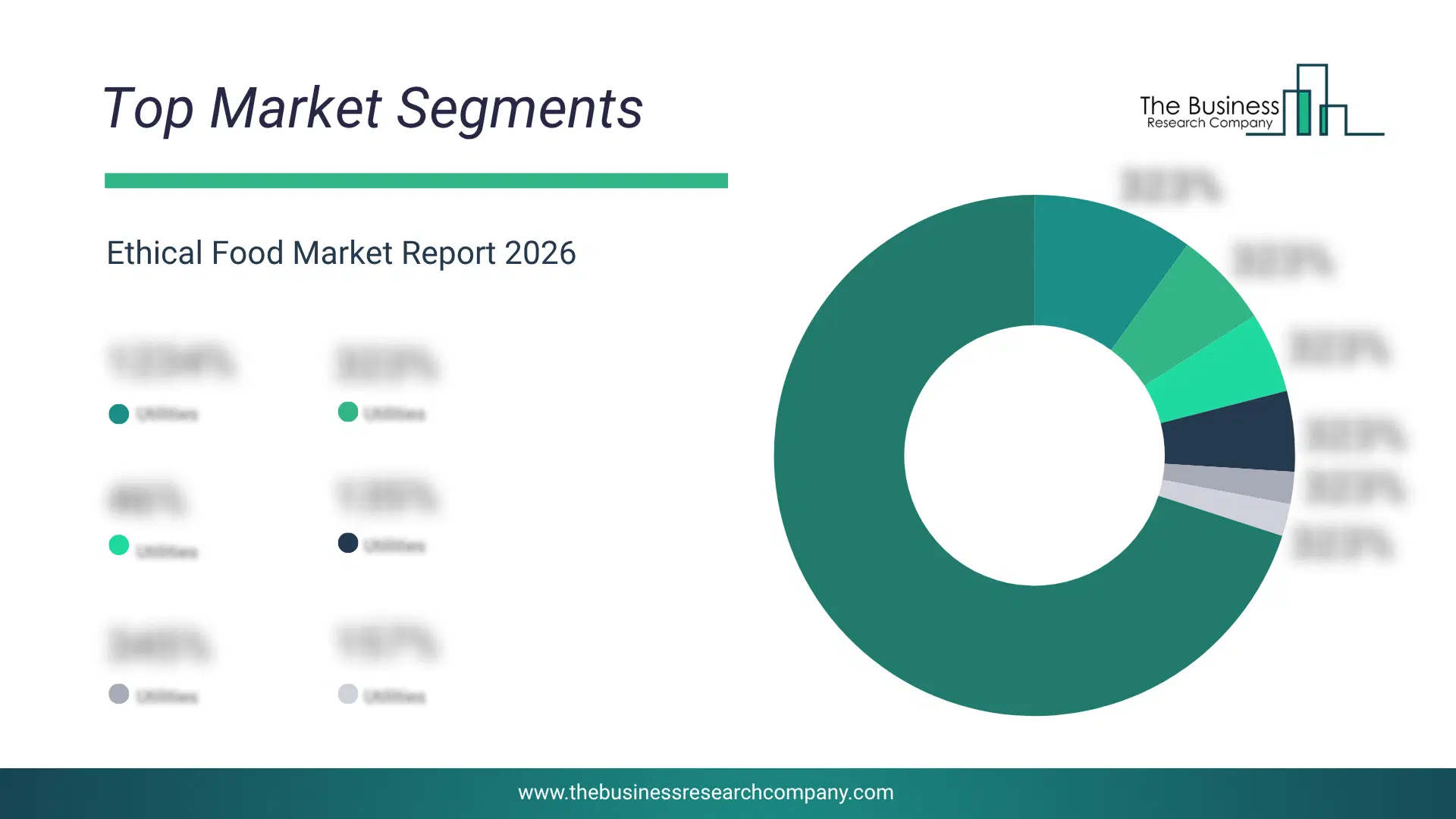
1) By Type: Organic And Natural, Fairtrade, Free Range Animal Welfare Friendly And Environmentally Responsible, Sustainably Produced 2) By Process: Processed, Unprocessed 3) By Mode Of Distribution: Online, Offline Subsegments: 1) By Organic and Natural: Certified Organic Produce, Organic Grains and Cereals, Organic Dairy Products, Natural Snacks and Beverages 2) By Fairtrade: Fairtrade Certified Coffee, Fairtrade Certified Tea, Fairtrade Certified Chocolate, Fairtrade Certified Fruits and Vegetables 3) By Free Range, Animal Welfare Friendly, and Environmentally Responsible: Free-Range Poultry Products, Grass-Fed Beef and Lamb, Cage-Free Eggs, Animal Welfare Approved Dairy Products 4) By Sustainably Produced: Sustainably Sourced Seafood, Locally Sourced Produce, Regenerative Agriculture Products, Products with Low Carbon FootprintWhat Is The Driver Of The Ethical Food Market?
The increasing concern about the environment is expected to contribute to a higher demand for ethical food. The recent climate changes and environmental issues such as carbon emission, global warming, plastic, and food waste are forcing companies to concentrate on sustainable products. Rising environmental concerns are shifting companies and shoppers towards ethical or sustainable-certified products. For instance, in March 2023, according to the International Energy Agency, a France-based intergovernmental organization, global energy-related CO2 emissions rose by 1.1%, adding 410 million tonnes (Mt) and reaching a record high of 37.4 billion tonnes (Gt) in 2023. Therefore, the growing impact of food production on the environment and the increasing demand for sustainable food are encouraging companies to focus on sustainable production, which in turn is expected to drive the demand for the ethical food industry in the forecast period.Key Players In The Global Ethical Food Market
Major companies operating in the ethical food market are United Natural Foods Inc, The Hain Celestial Group, Organic Valley, Amy’s Kitchen, Whole Foods Market, Alnatura Produktions und Handels GmbH, HiPP GmbH & Co Vertrieb KG, Eden Foods Inc, Daiya Foods Inc, Earth’s Own Food Company Inc, SunOpta Inc, Blue Diamond Growers Inc, Ripple Foods, Impossible Foods, Gardein, SmartSweets, Uncle Matt’s Organic Inc, Suja Life, Mother Raw, Lufa Farms, Sustainable Produce Urban Delivery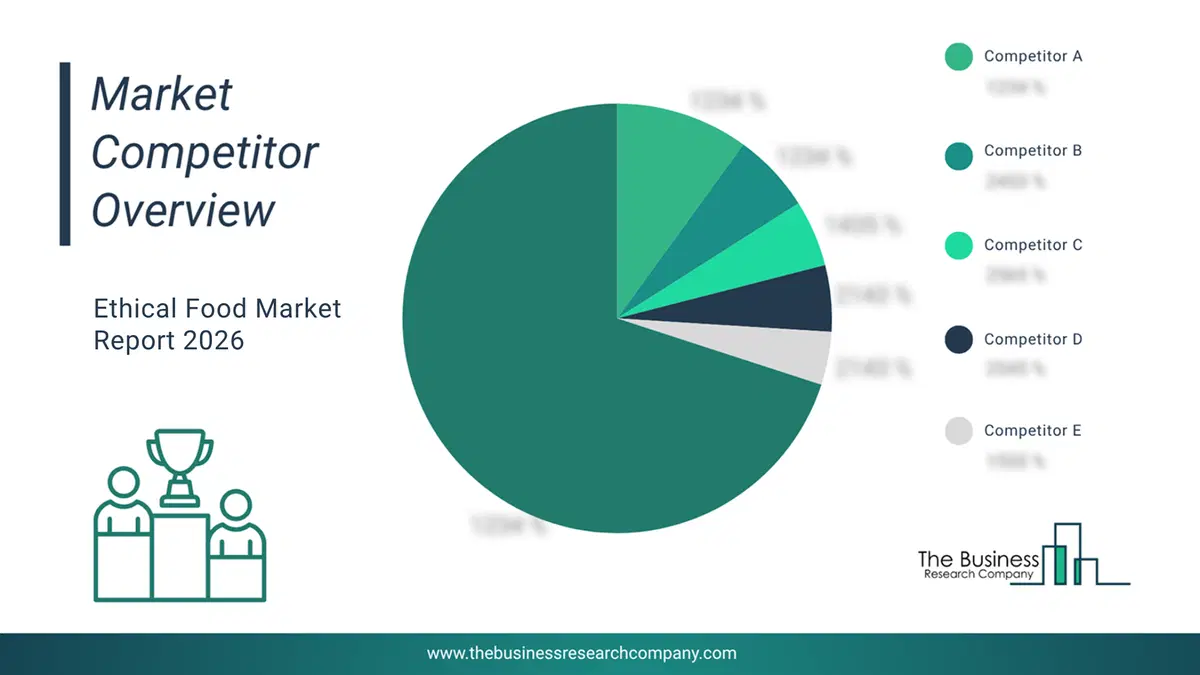
This chart is for illustrative purposes; the full report includes a detailed competitor analysis and comprehensive overview of the top 10 companies in the market.
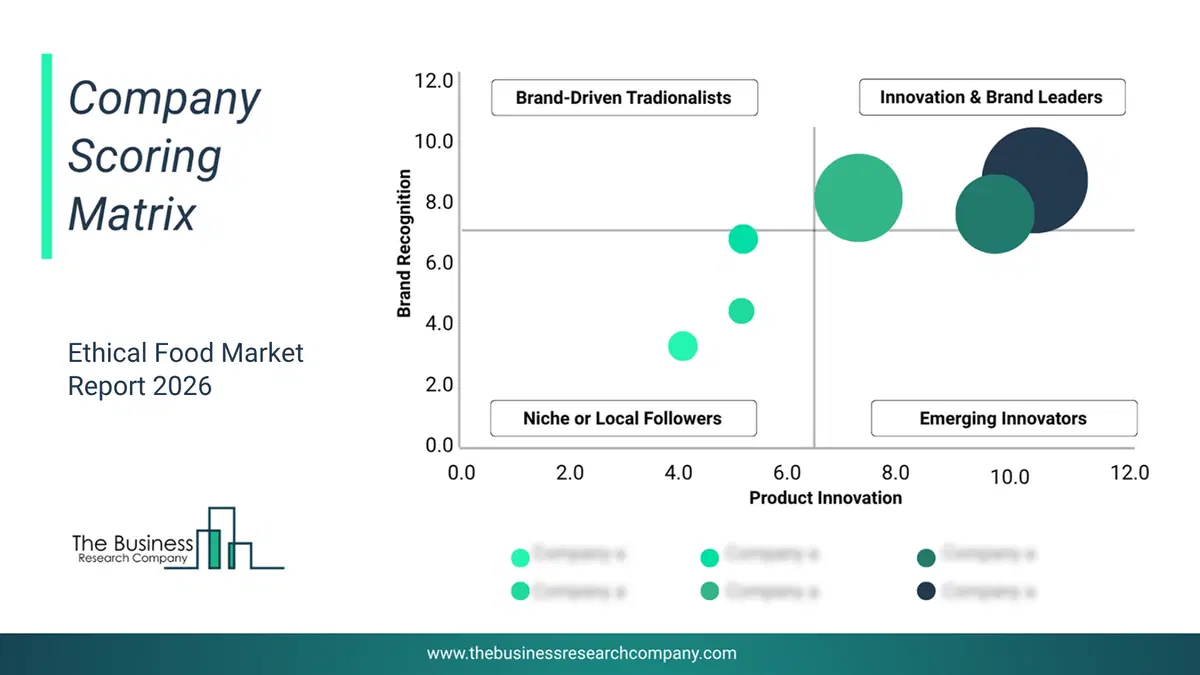
This chart maps companies by product innovation and brand strength, with bubble size indicating relative revenue, helping identify market leaders, challengers, and niche players. This is an illustrative chart; the full report provides a complete and accurate competitive analysis.
Global Ethical Food Market Trends and Insights
Major companies operating in the ethical food market are focusing on developing innovative products, such as snack medleys, to sustain their position in the market. Snack medleys are assortments or mixtures of different snacks combined into one package or serving. For instance, in June 2023, Ocean Spray Cranberries Inc., a US-based producer of fruit-based beverages, launched Snack Medley, a delicious pairing of dried fruits. The item is produced with high-quality ingredients and is offered in three delectable combinations that are sure to satiate your palate. It is an excellent and nutritious snack choice that is ideal for families that are constantly on the move.What Are Latest Mergers And Acquisitions In The Ethical Food Market?
In July 2024, Probios, an Italy-based manufacturer of fermented foods, acquired BiotoBio for an undisclosed amount. With this acquisition, Probios seeks to enhance its presence in the European health and wellness food market through BiotoBio, a prominent Italian supplier of organic, healthy, and natural foods and cosmetics. The acquired portfolio features well-known brands such as Baule Volante, Finestra sul Cielo, Fior di Loto, and Vivibio. BiotoBio, an Italian based company, specializes in the production of organic and sustainable food products.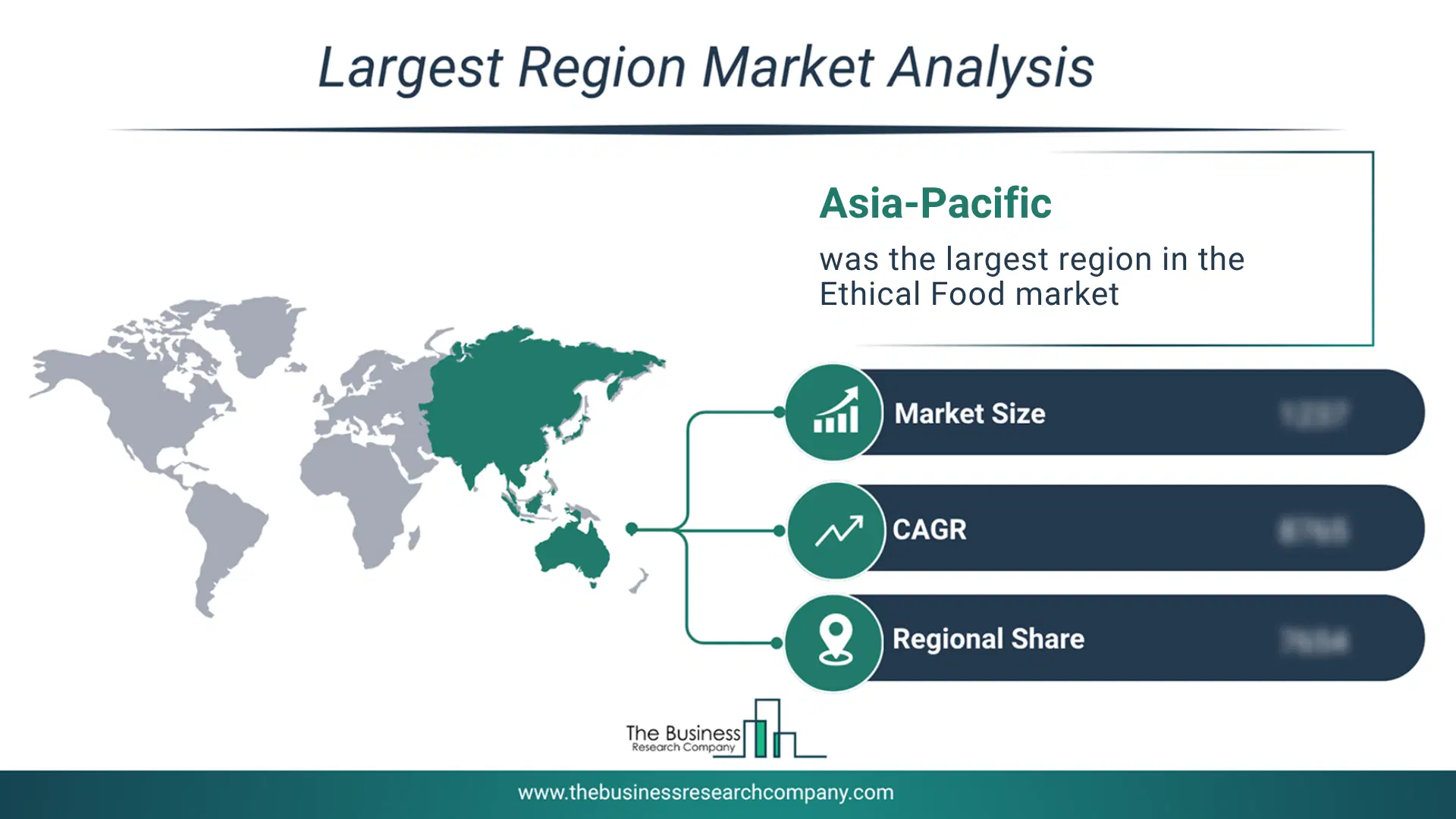
Regional Outlook
Asia-Pacific was the largest region in the ethical food market in 2025. Western Europe was the second-largest region in the global ethical food market. The regions covered in this market report are Asia-Pacific, South East Asia, Western Europe, Eastern Europe, North America, South America, Middle East and Africa. The countries covered in this market report are Australia, Brazil, China, France, Germany, India, Indonesia, Japan, Taiwan, Russia, South Korea, UK, USA, Italy, Spain, CanadaWhat Defines the Ethical Food Market?
The ethical food market consists of sales of organic fruits and vegetables, honey, coffee, tea, meat(chicken, pork, lamb, others), sustainable seafood, chocolate, sugar, and other ethical foods. Values in this market are factory gate values, that is the value of goods sold by the manufacturers or creators of the goods, whether to other entities (including downstream manufacturers, wholesalers, distributors and retailers) or directly to end customers. The value of goods in this market includes related services sold by the creators of the goods.How is Market Value Defined and Measured?
The market value is defined as the revenues that enterprises gain from the sale of goods and/or services within the specified market and geography through sales, grants, or donations in terms of the currency (in USD unless otherwise specified). The revenues for a specified geography are consumption values that are revenues generated by organizations in the specified geography within the market, irrespective of where they are produced. It does not include revenues from resales along the supply chain, either further along the supply chain or as part of other products.
This chart presents market attractiveness based on a quantitative evaluation of growth, competition, strategic alignment, and risk, offering a clear view of opportunity areas for decision-making. This chart is for illustrative purposes; the full report contains the complete analysis.

This chart highlights the Total Addressable Market (TAM) by estimating the maximum revenue opportunity using an assumption-driven approach, supporting strategic planning and opportunity sizing across markets. The chart is illustrative; the full report provides a more comprehensive analysis.
What Key Data and Analysis Are Included in the Ethical Food Market Report 2026?
The ethical food market research report is one of a series of new reports from The Business Research Company that provides market statistics, including industry global market size, regional shares, competitors with the market share, detailed market segments, market trends and opportunities, and any further data you may need to thrive in the ethical food industry. The market research report delivers a complete perspective of everything you need, with an in-depth analysis of the current and future state of the industry.Ethical Food Market Report Forecast Analysis
| Report Attribute | Details |
|---|---|
| Market Size Value In 2026 | $156.85 billion |
| Revenue Forecast In 2030 | $207.14 billion |
| Growth Rate | CAGR of 7.0% from 2026 to 2030 |
| Base Year For Estimation | 2025 |
| Actual Estimates/Historical Data | 2020-2025 |
| Forecast Period | 2026 - 2030 |
| Market Representation | Revenue in USD Billion and CAGR from 2026 to 2030 |
| Segments Covered | Type, Process, Mode Of Distribution |
| Regional Scope | Asia-Pacific, Western Europe, Eastern Europe, North America, South America, Middle East, Africa |
| Country Scope | The countries covered in the report are Australia, Brazil, China, France, Germany, India, Indonesia, Japan, Taiwan, Russia, South Korea, UK, USA, Canada, Italy, Spain. |
| Key Companies Profiled | United Natural Foods Inc, The Hain Celestial Group, Organic Valley, Amy’s Kitchen, Whole Foods Market, Alnatura Produktions und Handels GmbH, HiPP GmbH & Co Vertrieb KG, Eden Foods Inc, Daiya Foods Inc, Earth’s Own Food Company Inc, SunOpta Inc, Blue Diamond Growers Inc, Ripple Foods, Impossible Foods, Gardein, SmartSweets, Uncle Matt’s Organic Inc, Suja Life, Mother Raw, Lufa Farms, Sustainable Produce Urban Delivery |
| Customization Scope | Request for Customization |
| Pricing And Purchase Options | Explore Purchase Options |