
Environmental Friendly And Sustainable Food Market Report 2026
Global Outlook – By Product Type (Organic Food, Plant-Based Or Alternative Proteins, Sustainable Seafood, Other Products), By Distribution Channel (Supermarkets And Hypermarkets, Specialty Stores, Online Retailers, Foodservice Providers, Other Channels), By Application (Household Consumption, Commercial Foodservice (Restaurants, Cafés, QSRs), Institutional Consumption) – Market Size, Trends, Strategies, and Forecast to 2030
Environmental Friendly And Sustainable Food Market Overview
• Environmental Friendly And Sustainable Food market size has reached to $132.02 billion in 2025 • Expected to grow to $181.69 billion in 2030 at a compound annual growth rate (CAGR) of 6.6% • Growth Driver: Consumer Demand For Organic Produce Fuels The Environmental Friendly And Sustainable Food Market • Market Trend: Advancing Sustainable Nutrition Through Next-Generation Food Innovation • North America was the largest region in 2025 and Asia-Pacific is the fastest growing region.Market Gains By 2030 – Top Opportunities By Segment
Market Gain identifies the most promising market opportunities by highlighting the segments or products expected to generate the highest incremental revenue growth over the next five years.
What Is Covered Under Environmental Friendly And Sustainable Food Market?
Environmental friendly and sustainable food refers to food products and practices that prioritize minimizing environmental impact, promoting biodiversity, and supporting social equity throughout the production, distribution, and consumption processes. It is used to promote healthier ecosystems and communities through responsible production and consumption practices. The main products of environmental friendly and sustainable food are organic food, plant-based or alternative proteins, sustainable seafood, and others. Organic food refers to products grown or produced without synthetic pesticides, fertilizers, or genetically modified organisms (GMOs), following strict guidelines set by organic certification organizations. They are distributed through supermarkets and hypermarkets, specialty stores, online retailers, foodservice providers, and other channels for 16-34 years old, 35-54 years old, and over 55 years old applications.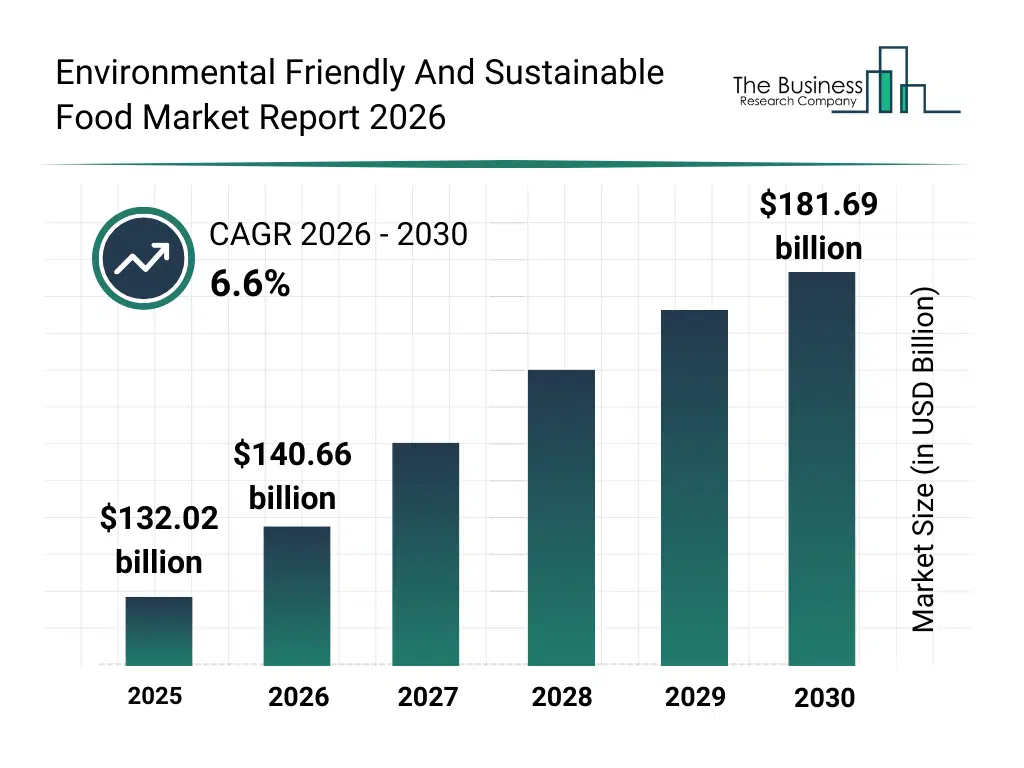
What Is The Environmental Friendly And Sustainable Food Market Size and Share 2026?
The environmental friendly and sustainable food market size has grown strongly in recent years. It will grow from $132.02 billion in 2025 to $140.66 billion in 2026 at a compound annual growth rate (CAGR) of 6.5%. The growth in the historic period can be attributed to growing consumer awareness of environmental impact, expansion of organic farming practices, rising health-conscious consumption patterns, availability of certification standards, increased retail shelf space for sustainable products.What Is The Environmental Friendly And Sustainable Food Market Growth Forecast?
The environmental friendly and sustainable food market size is expected to see strong growth in the next few years. It will grow to $181.69 billion in 2030 at a compound annual growth rate (CAGR) of 6.6%. The growth in the forecast period can be attributed to growing demand for low-carbon food products, rising investments in regenerative agriculture, expansion of alternative protein innovation, increasing use of digital traceability tools, stronger regulatory support for sustainable food systems. Major trends in the forecast period include increasing demand for organic and clean-label foods, rising adoption of plant-based protein alternatives, expansion of sustainable seafood consumption, increased focus on ethical sourcing and transparency, enhanced use of eco-friendly packaging.
Global Environmental Friendly And Sustainable Food Market Segmentation
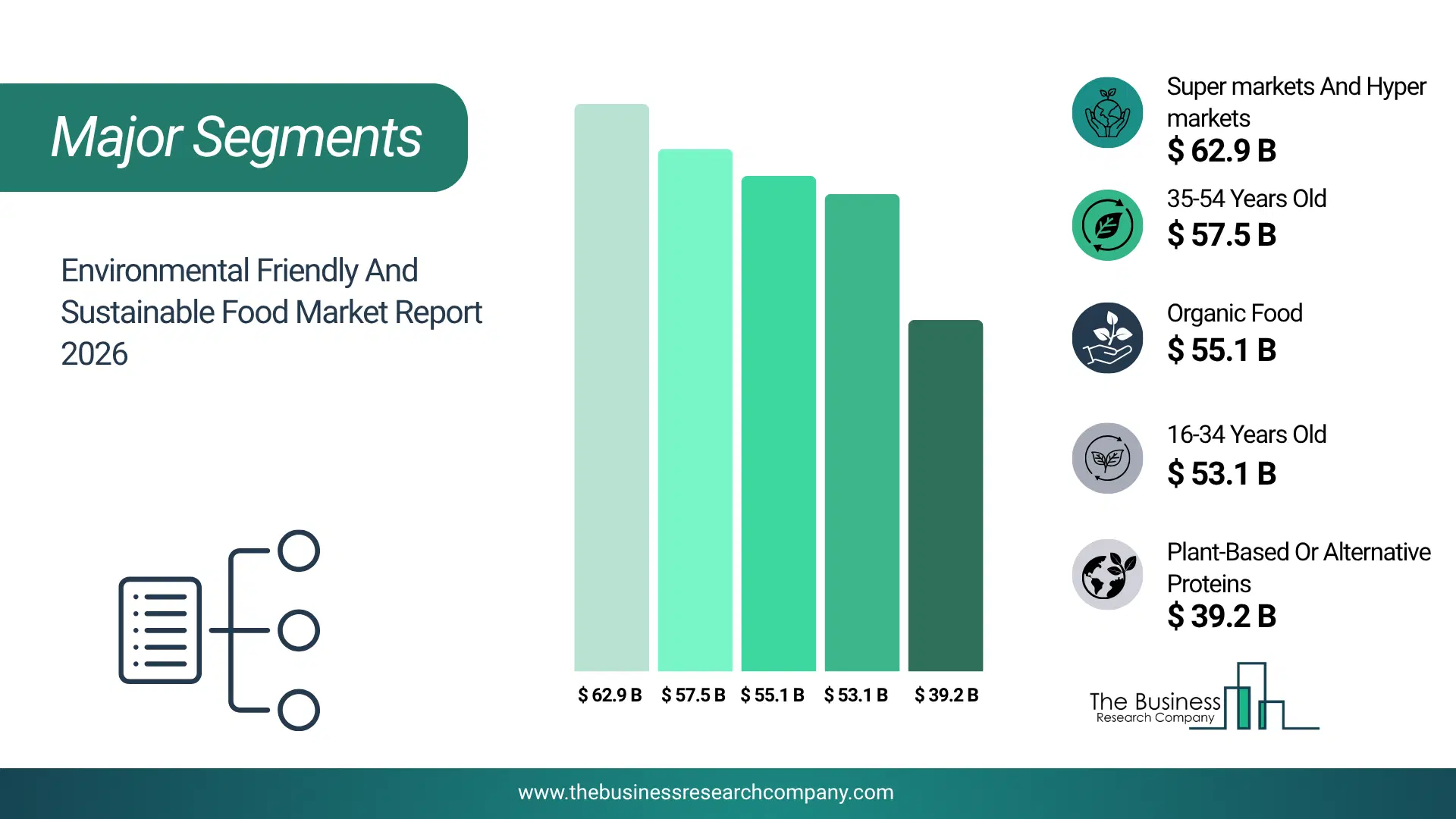
1) By Product Type: Organic Food, Plant-Based Or Alternative Proteins, Sustainable Seafood, Other Products 2) By Distribution Channel: Supermarkets And Hypermarkets, Specialty Stores, Online Retailers, Foodservice Providers, Other Channels 3) By Application: Household Consumption, Commercial Foodservice (Restaurants, Cafés, QSRs), Institutional Consumption Subsegments: 1) By Organic Food: Organic Fruits And Vegetables, Organic Grains And Cereals, Organic Dairy Products, Organic Meat And Poultry 2) By Plant-Based Or Alternative Proteins: Plant-Based Meat Alternatives, Plant-Based Dairy Alternatives, Legumes And Pulses 3) By Sustainable Seafood: Wild-Caught Seafood, Farmed Seafood, Seafood Alternatives 4) By Other Products: Eco-Friendly Packaged Foods, Locally Sourced Foods, Upcycled Foods The top segments in the environmental friendly and sustainable food market will be: • Super markets And Hyper markets will reach $62951.51 Million by 2025. • 35-54 Years Old will reach $57581.43 Million by 2025. • Organic Food will reach $55111.84 Million by 2025. • 16-34 Years Old will reach $53113.82 Million by 2025. • Plant-Based Or Alternative Proteins will reach $39203.93 Million by 2025.What Is The Driver Of The Environmental Friendly And Sustainable Food Market?
The growing demand for organic produce is expected to propel the growth of the environmentally friendly and sustainable food market going forward. The demand for organic produce is increasing due to growing awareness among consumers about the health and environmental benefits of organic products. Organic produce is environmentally friendly and sustainable as it is produced in a way that minimizes negative impacts on the environment, promotes ecological balance, and supports long-term agricultural sustainability. For instance, in May 2024, according to the Organic Trade Association, a US-based trade association for the organic sector, U.S. sales of certified organic products hit $69.7 billion in 2023, up 3.4 percent compared to 2022. Therefore, the growing demand for organic produce is driving the growth of the environmentally friendly and sustainable food market.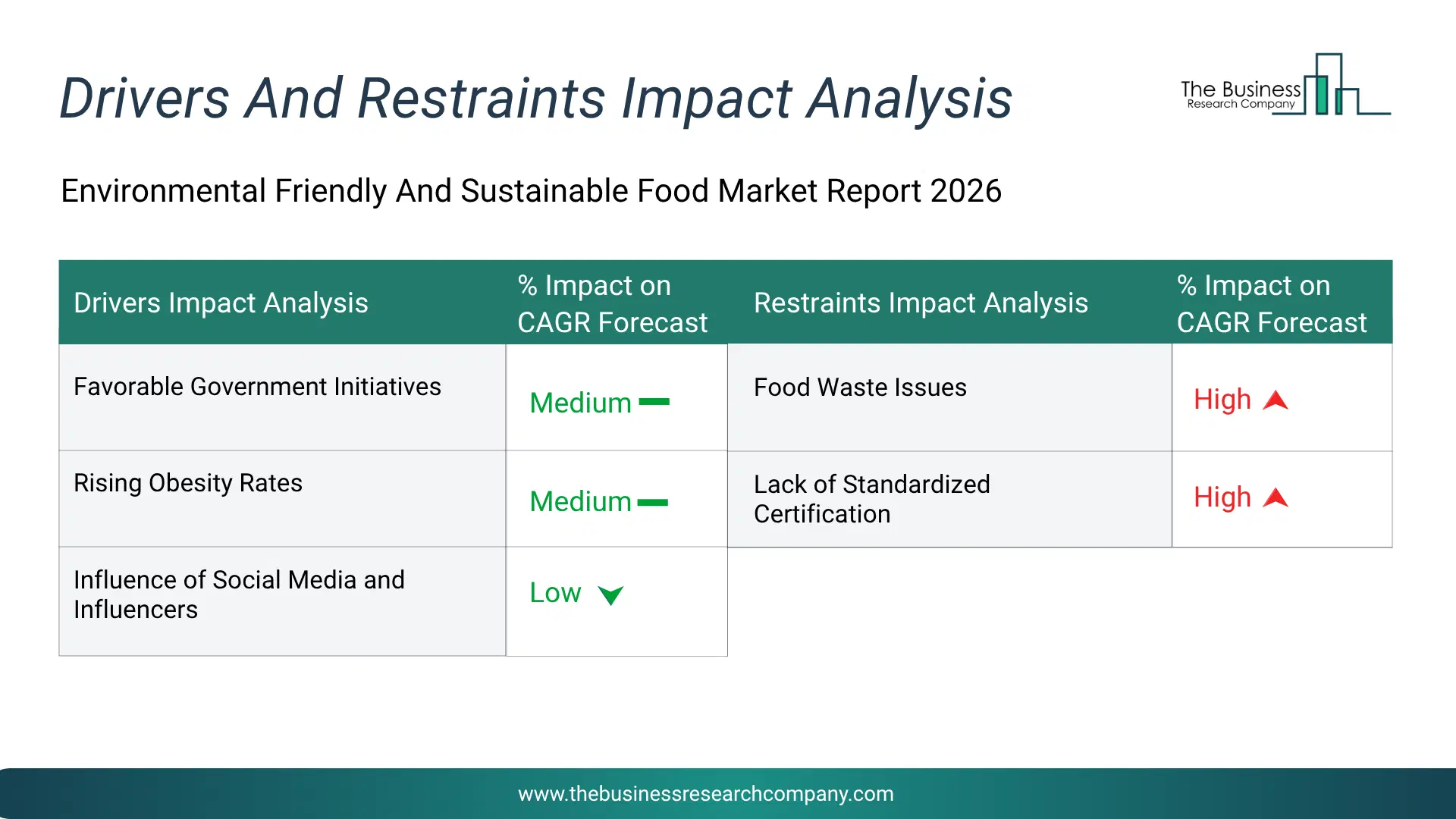
Infographic Chart Showing Key Market Drivers Analysis And Restraints For Environmental Friendly And Sustainable Food Market
The chart presents an impact analysis of key drivers and restraints, quantifying their relative influence on the market's growth rate and helping assess the balance between growth enablers and limiting factors. This chart offers a high-level perspective; the full report contains more detailed insights.
How Will The Drivers Impact Growth In The Global Environmental Friendly And Sustainable Food Market?
• Favorable Government Initiatives (Medium) – The favorable government initiatives will become a significant driver contributing to the growth of the environmental friendly and sustainable food market by 2030. Governments establish clear certification systems to enhance transparency and prevent misleading sustainability claims. Policies aimed at reducing pesticide use promote eco-friendly farming practices and encourage safer agricultural methods. These initiatives include reducing chemical use, encouraging alternative pest control methods and investing in research for safer agricultural practices. Consequently, the favorable government initiatives is projected to contributing to a 0.4% annual growth in the market. • Rising Obesity Rates (Medium) – The rising obesity rates will become a key driver of growth in the environmental friendly and sustainable food market by 2030. Rising health concerns around obesity, linked to processed foods, sugars and unhealthy fats, are driving a shift in consumer preferences. As consumers become increasingly health-conscious, there is a growing demand for organic, plant-based and nutrient-dense foods that support weight management. This trend is fueling growth in the market for sustainable and eco-friendly products, such as organic produce, whole grains and plant-based proteins. As a result, the rising obesity rates is anticipated to contributing to a 2.0% annual growth in the market. • Influence of Social Media and Influencers (Low) – The influence of social media and influencers will serve as a key growth catalyst for the environmental friendly and sustainable food market by 2030. Influencers have a significant impact on consumer choices, encouraging the adoption of sustainable food habits by promoting eco-friendly brands, meat alternatives and zero-waste cooking. Social media campaigns have popularized trends like "Meatless Mondays" and "Sustainable Eating Challenges," making sustainable diets more accessible and appealing. To enhance credibility and reach, sustainable food brands collaborate with influencers, leveraging sponsored posts, product reviews and testimonials to build trust and encourage consumers to explore eco-friendly options. Therefore, this influence of social media and influencers is projected to supporting to a 0.9% annual growth in the market. • Expansion of the E-Commerce Industry (Low) – The expansion of the e-commerce industry will emerge as a major factor driving the expansion of the environmental friendly and sustainable food market by 2030. E-commerce platforms enhance consumer access to sustainable food products, even in regions where such options are limited in physical stores. These digital marketplaces also serve an educational role, providing detailed product descriptions, eco-certifications and customer reviews to inform purchasing decisions. To align with sustainability goals, many e-commerce businesses prioritize biodegradable or recyclable packaging, carbon-neutral delivery and emission-reducing logistics strategies. Consequently, the expansion of the e-commerce industry is projected to contributing to a 1.4% annual growth in the market.How Will The Restraints Impact Growth In The Global Environmental Friendly And Sustainable Food Market?
• Food Waste Issues (Medium) – Food Waste Issues will restrict the growth of the Environmental Friendly And Sustainable Food market during the forecast period. Sustainable food products often have shorter shelf lives and higher spoilage rates due to reduced preservative use and natural ingredients. Higher spoilage rates contribute to food waste throughout the supply chain, increasing costs and environmental impact. The economics of waste management challenge the viability of sustainable food production and may limit market expansion. • Lack of Standardized Certification (Medium) – Lack of Standardized Certification will restrict the growth of the Environmental Friendly And Sustainable Food market during the forecast period. Multiple certification schemes for sustainable and eco-friendly food products exist with varying criteria and credibility. This proliferation of certifications creates confusion among consumers and complicates purchasing decisions. The absence of standardized definitions and certification requirements can undermine consumer trust and limit market growth, as consumers struggle to identify genuinely sustainable products.Key Players In The Global Environmental Friendly And Sustainable Food Market
Major companies operating in the environmental friendly and sustainable food market are WhiteWave Foods Company, Amy's Kitchen, Earthbound Farm, Ben & Jerry's Homemade Holdings Inc., Beyond Meat Inc., Organic Valley Cooperative, Clif Bar & Company, Nature's Path Foods, Impossible Foods Inc., Patagonia Provisions, Nutiva, Eden Foods Inc., Applegate Farms LLC, Annie's Homegrown, Lundberg Family Farms, Stonyfield Organic, Honest Tea, Newman's Own Inc., Sir Kensington's, Alter Eco, Kashi Company, Cascadian Farm Organic, Simply Organic, Organic Gemini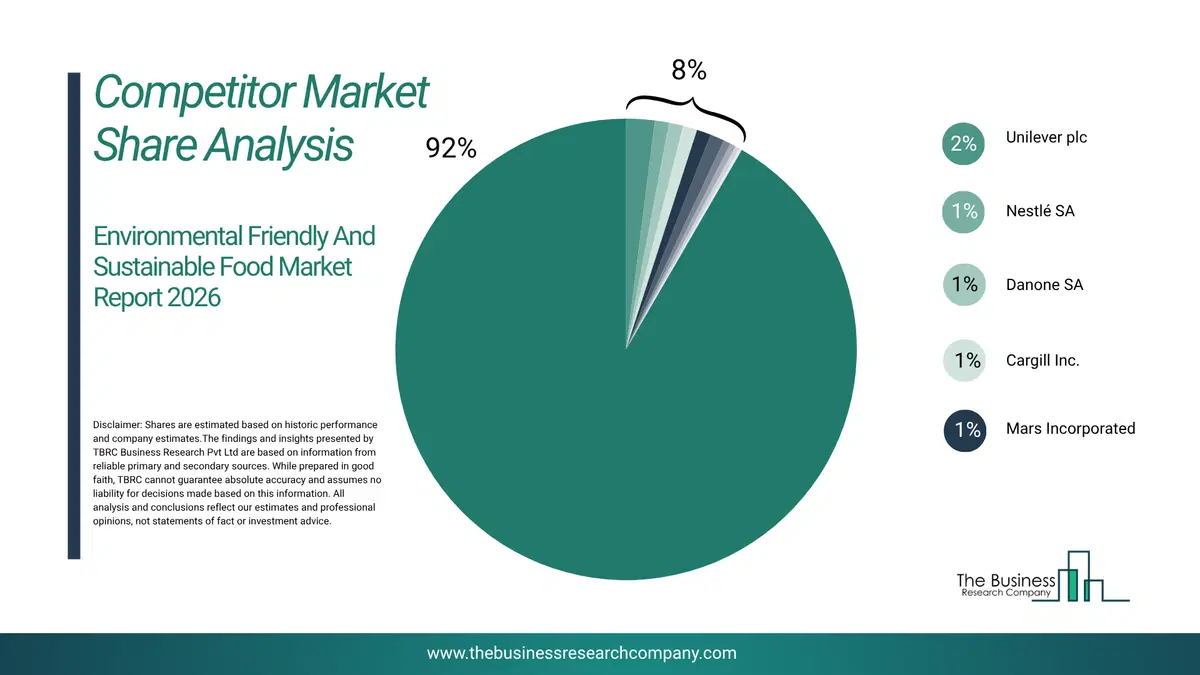
This chart is for illustrative purposes; the full report includes a detailed competitor analysis and comprehensive overview of the top 10 companies in the market.
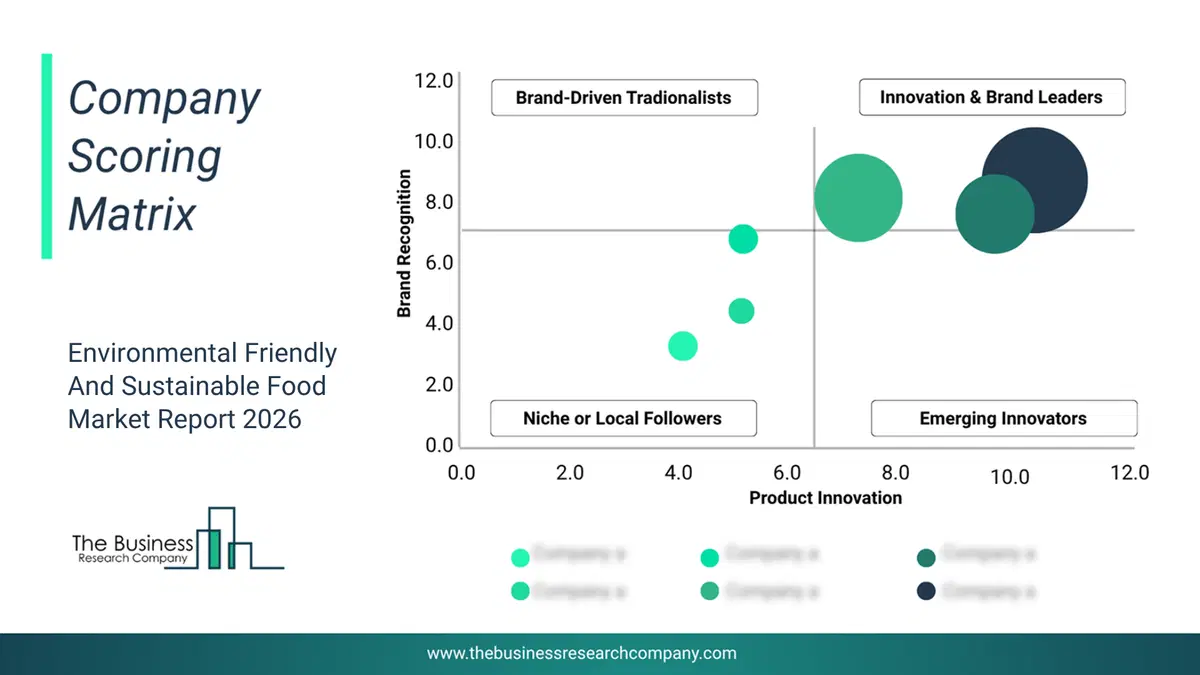
This chart maps companies by product innovation and brand strength, with bubble size indicating relative revenue, helping identify market leaders, challengers, and niche players. This is an illustrative chart; the full report provides a complete and accurate competitive analysis.
Global Environmental Friendly And Sustainable Food Market Trends and Insights
Major companies operating in the environmentally friendly and sustainable food market are focusing on developing innovative solutions such as precision-fermented animal-free dairy proteins to enhance sustainability, resource efficiency, and the nutritional quality of high-protein foods. Precision-fermented animal-free dairy proteins are produced by engineered microorganisms that are programmed to create dairy-identical proteins inside stainless-steel fermenters, resulting in the same functional and nutritional properties as traditional milk proteins but without cows, pasture land, or feed crops. For instance, in March 2025, Vivici B.V., a Netherlands-based ingredients startup, launched Vivitein BLG, a precision-fermented beta-lactoglobulin designed for clear protein beverages, clean-label protein powders, and vegan-friendly protein bars, featuring high solubility, strong foaming, and gelation performance comparable to conventional whey. Vivitein BLG improves environmental impact and market differentiation by enabling lactose-free, animal-free formulations with significantly lower water use and carbon emissions than standard dairy protein production.What Are Latest Mergers And Acquisitions In The Environmental Friendly And Sustainable Food Market?
In January 2024, Generation Food Rural Partners (GFRP), a US-based inception-stage venture fund focused on commercializing university-developed intellectual property in food, protein, and agriculture technologies, acquired DisSolves Inc. for an undisclosed amount. The aim of this acquisition is to advance the development and commercialization of environmentally friendly and sustainable food packaging solutions. This acquisition aligns with GFRP's focus on driving economic growth and development in rural communities by investing in innovations in the agriculture, food, and protein sectors. DisSolves, Inc. is a US-based edible packaging startup company, offers a patented technology that utilizes biodegradable and edible components.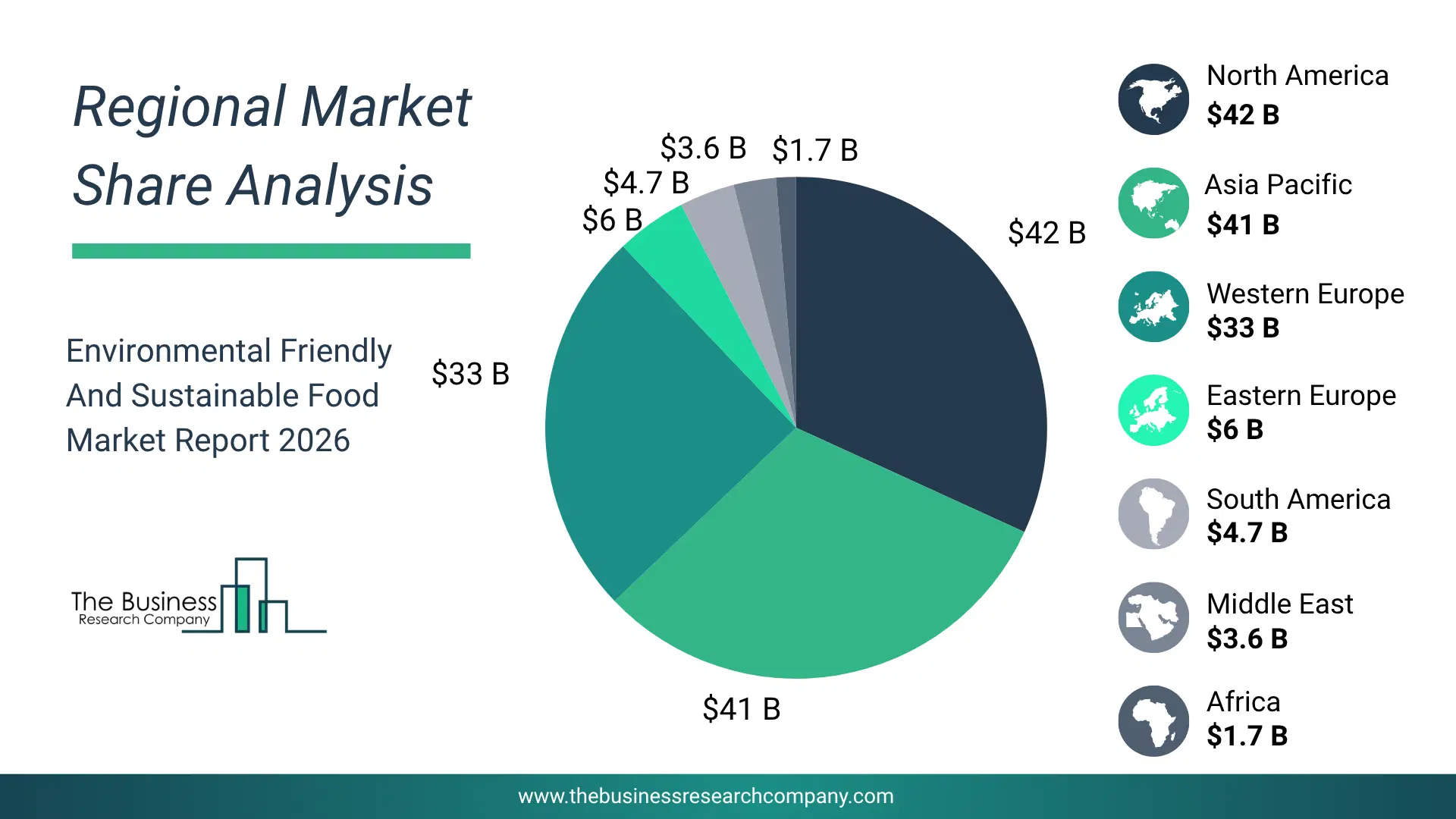
Regional Outlook
North America was the largest region in the environmental friendly and sustainable food market in 2025. Asia-Pacific is expected to be the fastest-growing region in the forecast period. The regions covered in this market report are Asia-Pacific, South East Asia, Western Europe, Eastern Europe, North America, South America, Middle East and Africa. The countries covered in this market report are Australia, Brazil, China, France, Germany, India, Indonesia, Japan, Taiwan, Russia, South Korea, UK, USA, Italy, Spain, CanadaWhat Defines the Environmental Friendly And Sustainable Food Market?
The environmental friendly and sustainable food market consists of sales of seasonal eating, food preservation, and edible insects. Values in this market are ‘factory gate’ values, that is the value of goods sold by the manufacturers or creators of the goods, whether to other entities (including downstream manufacturers, wholesalers, distributors and retailers) or directly to end customers. The value of goods in this market includes related services sold by the creators of the goods.How is Market Value Defined and Measured?
The market value is defined as the revenues that enterprises gain from the sale of goods and/or services within the specified market and geography through sales, grants, or donations in terms of the currency (in USD unless otherwise specified). The revenues for a specified geography are consumption values that are revenues generated by organizations in the specified geography within the market, irrespective of where they are produced. It does not include revenues from resales along the supply chain, either further along the supply chain or as part of other products.
This chart presents market attractiveness based on a quantitative evaluation of growth, competition, strategic alignment, and risk, offering a clear view of opportunity areas for decision-making. This chart is for illustrative purposes; the full report contains the complete analysis.

This chart highlights the Total Addressable Market (TAM) by estimating the maximum revenue opportunity using an assumption-driven approach, supporting strategic planning and opportunity sizing across markets. The chart is illustrative; the full report provides a more comprehensive analysis.
What Key Data and Analysis Are Included in the Environmental Friendly And Sustainable Food Market Report 2026?
The environmental friendly and sustainable food market research report is one of a series of new reports from The Business Research Company that provides market statistics, including industry global market size, regional shares, competitors with the market share, detailed market segments, market trends and opportunities, and any further data you may need to thrive in the environmental friendly and sustainable food industry. The market research report delivers a complete perspective of everything you need, with an in-depth analysis of the current and future state of the industry.Environmental Friendly And Sustainable Food Market Report Forecast Analysis
| Report Attribute | Details |
|---|---|
| Market Size Value In 2026 | $140.66 billion |
| Revenue Forecast In 2030 | $181.69 billion |
| Growth Rate | CAGR of 6.5% from 2026 to 2030 |
| Base Year For Estimation | 2025 |
| Actual Estimates/Historical Data | 2020-2025 |
| Forecast Period | 2026 - 2030 |
| Market Representation | Revenue in USD Billion and CAGR from 2026 to 2030 |
| Segments Covered | Product Type, Distribution Channel, Application |
| Regional Scope | Asia-Pacific, Western Europe, Eastern Europe, North America, South America, Middle East, Africa |
| Country Scope | The countries covered in the report are Australia, Brazil, China, France, Germany, India, Indonesia, Japan, Taiwan, Russia, South Korea, UK, USA, Canada, Italy, Spain. |
| Key Companies Profiled | WhiteWave Foods Company, Amy's Kitchen, Earthbound Farm, Ben & Jerry's Homemade Holdings Inc., Beyond Meat Inc., Organic Valley Cooperative, Clif Bar & Company, Nature's Path Foods, Impossible Foods Inc., Patagonia Provisions, Nutiva, Eden Foods Inc., Applegate Farms LLC, Annie's Homegrown, Lundberg Family Farms, Stonyfield Organic, Honest Tea, Newman's Own Inc., Sir Kensington's, Alter Eco, Kashi Company, Cascadian Farm Organic, Simply Organic, Organic Gemini |
| Customization Scope | Request for Customization |
| Pricing And Purchase Options | Explore Purchase Options |