
Frozen Food Market Report 2026
Global Outlook – By Type (Frozen Fruit, Juice, And Vegetable, Frozen Specialty Food ), By User (Food Service Industry, Retail Users), By Distribution Channel (Supermarkets Or Hypermarkets, Convenience Stores, E-Commerce, Other Distribution Channels ) – Market Size, Trends, Strategies, and Forecast to 2030
Frozen Food Market Overview
• Frozen Food market size has reached to $237.05 billion in 2025 • Expected to grow to $313.86 billion in 2030 at a compound annual growth rate (CAGR) of 5.9% • Growth Driver: Surge In Demand For Convenience Foods Fueling The Growth Of The Market Due To Rising Need For Quick And Easy Meal Solutions • Market Trend: Beyond Meat's Plant-Based Ready Meals Bring Convenience And Variety To The Market • Asia-Pacific was the largest region in 2025 and North America is the fastest growing region.What Is Covered Under Frozen Food Market?
Frozen foods refer to food products that have been preserved through freezing, which helps maintain their quality, flavor, and nutritional value over time. They are used for a variety of purposes, including convenient meal preparation, extended shelf life, and minimizing food waste. Frozen foods encompass a wide range of items, such as fruits, vegetables, meats, seafood, and prepared meals, making them a popular choice for consumers looking for quick and easy cooking options. The main types of frozen food are frozen fruit, juice, vegetables, and frozen specialty foods. Frozen fruits are quickly frozen and packaged under a nitrogen environment after being selected at their height of ripeness. The different users include the food service industry and retail users and are distributed through various channels such as supermarkets and hypermarkets, convenience stores, e-commerce, and other distribution channels.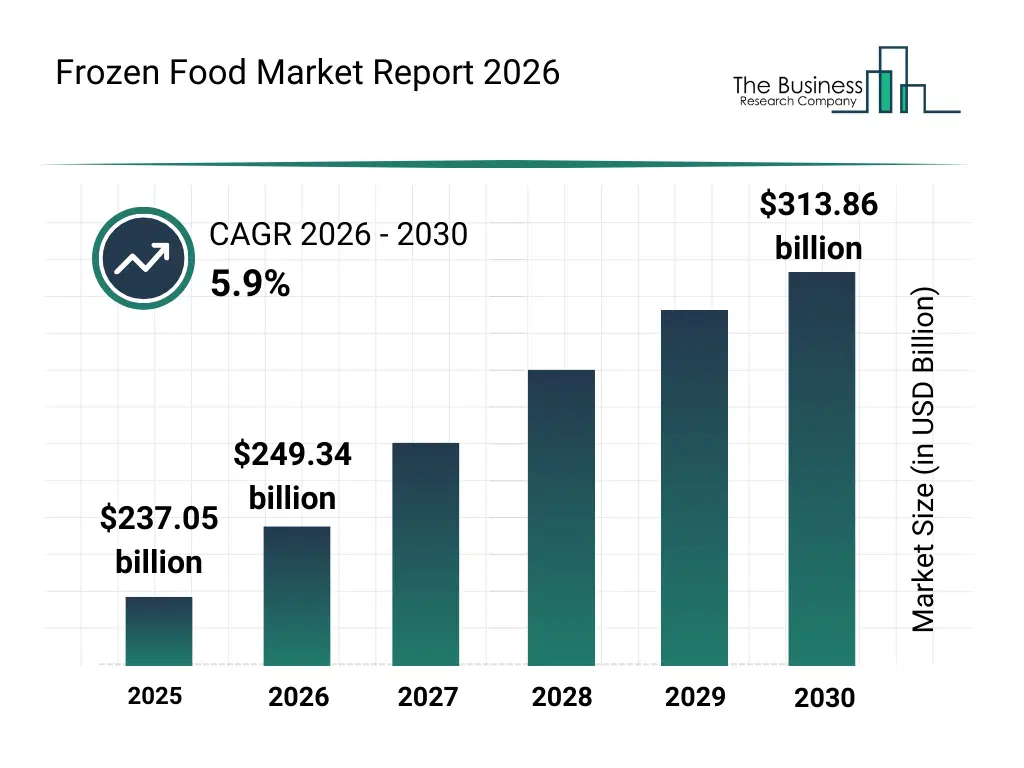
What Is The Frozen Food Market Size and Share 2026?
The frozen food market size has grown strongly in recent years. It will grow from $237.05 billion in 2025 to $249.34 billion in 2026 at a compound annual growth rate (CAGR) of 5.2%. The growth in the historic period can be attributed to growth in dual-income households, expansion of modern retail infrastructure, rising adoption of freezers in households, growth of packaged food consumption, improved freezing technologies.What Is The Frozen Food Market Growth Forecast?
The frozen food market size is expected to see strong growth in the next few years. It will grow to $313.86 billion in 2030 at a compound annual growth rate (CAGR) of 5.9%. The growth in the forecast period can be attributed to increasing demand for convenience foods, expansion of e-commerce grocery sales, rising investments in cold chain infrastructure, growing focus on food waste reduction, increasing demand for premium frozen foods. Major trends in the forecast period include rising demand for ready-to-eat frozen meals, expansion of frozen fruit and vegetable consumption, growing focus on extended shelf life solutions, increasing use of advanced cold chain logistics, higher adoption of portion-controlled products.
Global Frozen Food Market Segmentation
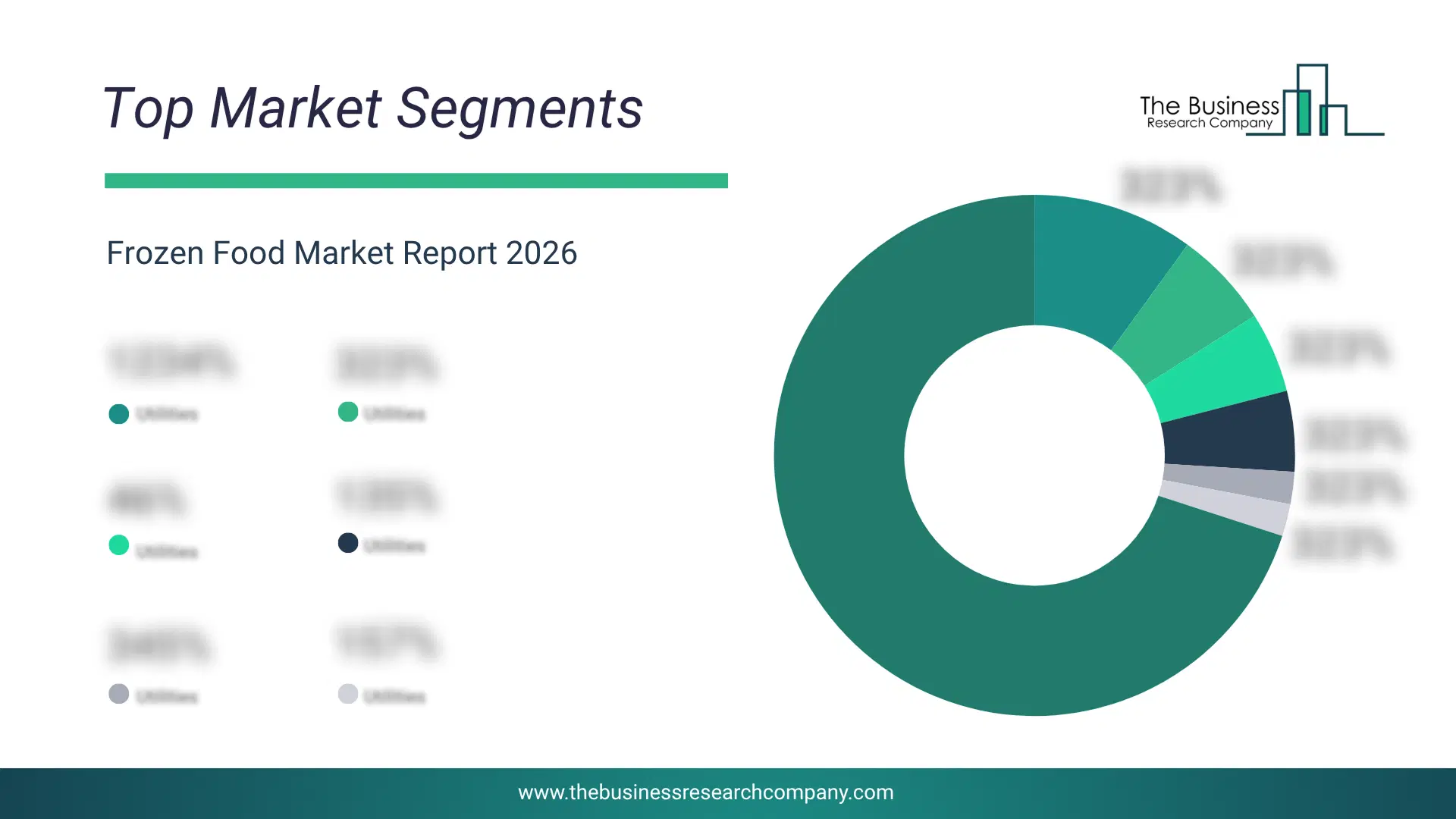
1) By Type: Frozen Fruit, Juice, And Vegetable, Frozen Specialty Food 2) By User: Food Service Industry, Retail Users 3) By Distribution Channel: Supermarkets Or Hypermarkets, Convenience Stores, E-Commerce, Other Distribution Channels Subsegments: 1) By Frozen Fruit, Juice, And Vegetable: Frozen Fruits, Frozen Vegetables, Frozen Fruit Juices 2) By Frozen Specialty Food: Frozen Ready Meals, Frozen Snacks, Frozen Breakfast FoodsWhat Are The Drivers Of The Frozen Food Market?
The increasing consumer demand for convenience foods is expected to drive the growth of the frozen food market going forward. Convenience foods are pre-packaged or pre-prepared food products designed for quick and easy consumption, requiring minimal cooking, preparation, or effort. The increasing demand for convenience foods is driven by busy lifestyles, rising urbanization, and the need for quick, easy-to-prepare meal options without compromising taste or nutrition. Frozen food serves as convenience food by offering ready-to-cook or ready-to-eat options that save time and simplify meal preparation. For instance, in April 2024, according to the National Association of Convenience Stores, a US-based trade association, reported that in 2023, foodservice sales, including prepared foods, commissary items, and dispensed beverages, accounted for 26.9% of in-store sales, up from 25.6% in 2022. Additionally, sales of prepared foods per store per month rose by 12.2% in 2023 compared to 2022. Therefore, the increasing consumer demand for convenience foods is driving the growth of the frozen food industry. The increasing demand for food safety is driving the growth of the frozen food market going forward. Food safety refers to the practices and conditions that ensure food is safe for consumption, free from contamination, and does not pose a risk to human health. Food safety is a critical factor that can help boost the frozen food market by increasing consumer confidence, ensuring product quality, and reducing the risk of foodborne illness. For instance, in June 2023, according to the World Health Organization, a Switzerland-based public health agency, about 1 in 10 people worldwide roughly 600 million annually fall ill from contaminated food, underscoring rising global concern for food safety. Therefore, the increasing demand for food safety is driving the growth of the frozen market.Key Players In The Global Frozen Food Market
Major companies operating in the frozen food market are Nippon Suisan Kaisha Ltd, Frosta Aktiengesellschaft, Nestle SA, Unilever PLC, Tyson Foods Inc, The Kraft Heinz Company, General Mills Inc, Kelloggs Company, Conagra Brands Inc, McCain Foods Limited, Ajinomoto Co Inc, BRF SA, J R Simplot Company, On Cor Frozen Foods Inc, Lamb Weston Holdings Inc, Rich Products Corporation, Nomad Foods Ltd, J and J Snack Foods Corp, Schwans Company, Wawona Frozen Foods Inc, Bellisio Foods Inc, Oregon Ice Cream Co LLC, Amys Kitchen Inc, Goya Foods Inc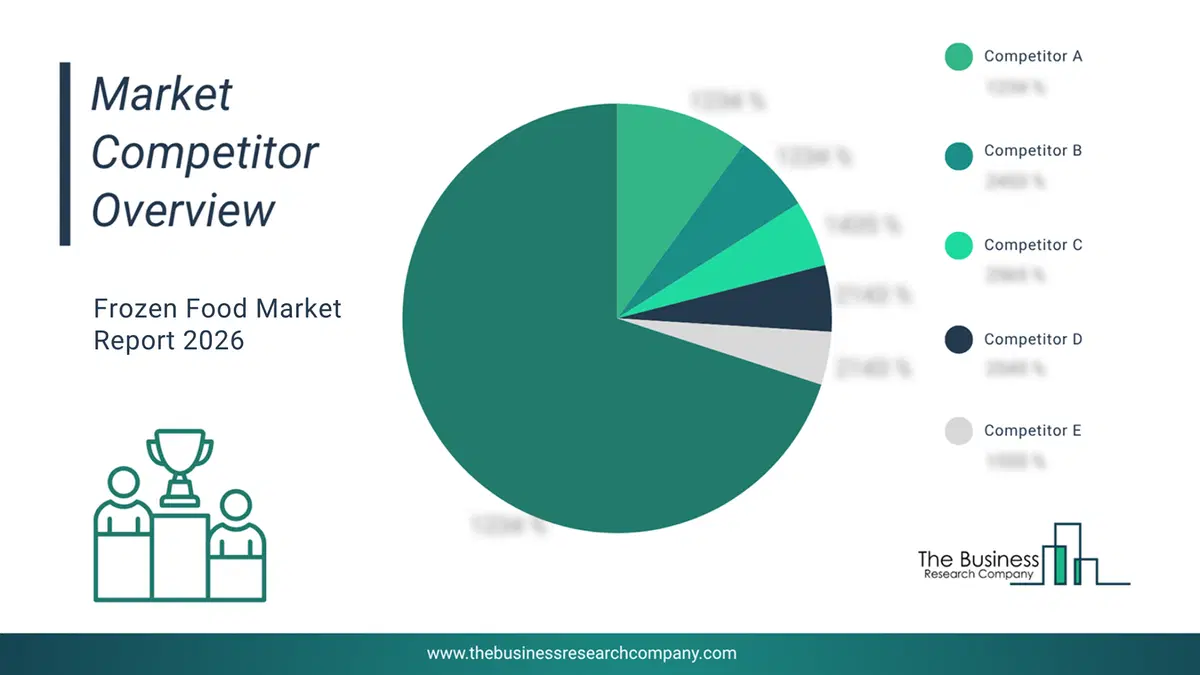
This chart is for illustrative purposes; the full report includes a detailed competitor analysis and comprehensive overview of the top 10 companies in the market.
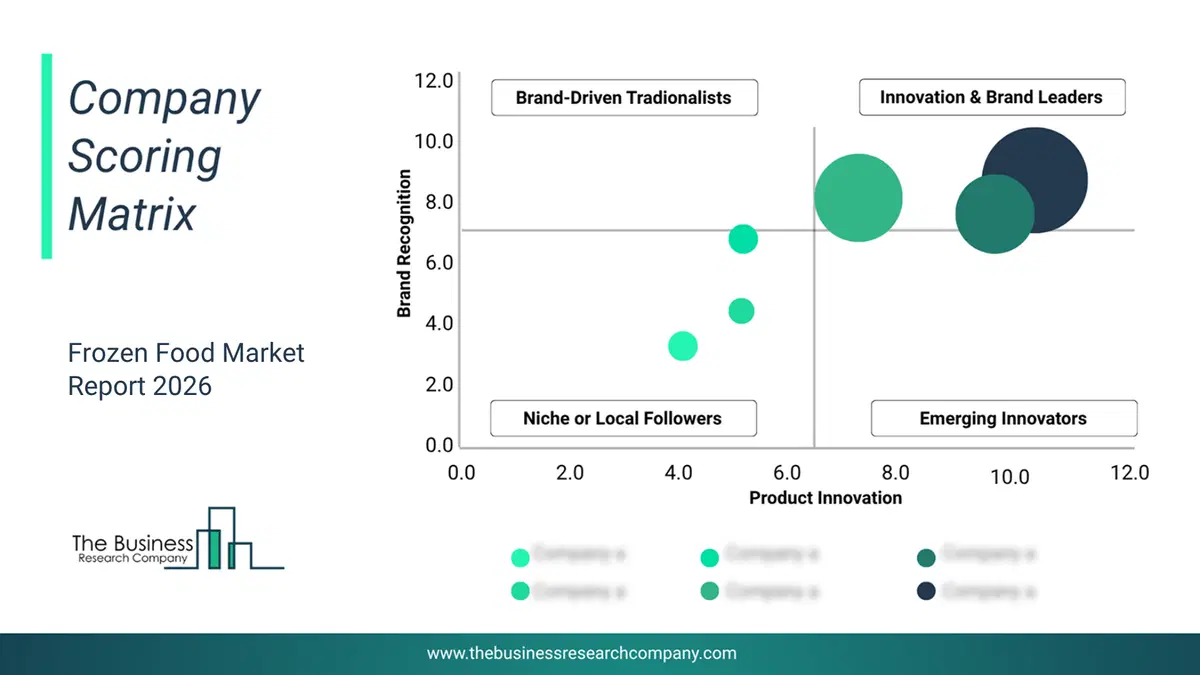
This chart maps companies by product innovation and brand strength, with bubble size indicating relative revenue, helping identify market leaders, challengers, and niche players. This is an illustrative chart; the full report provides a complete and accurate competitive analysis.
What Are Latest Mergers And Acquisitions In The Frozen Food Market?
Regional Outlook
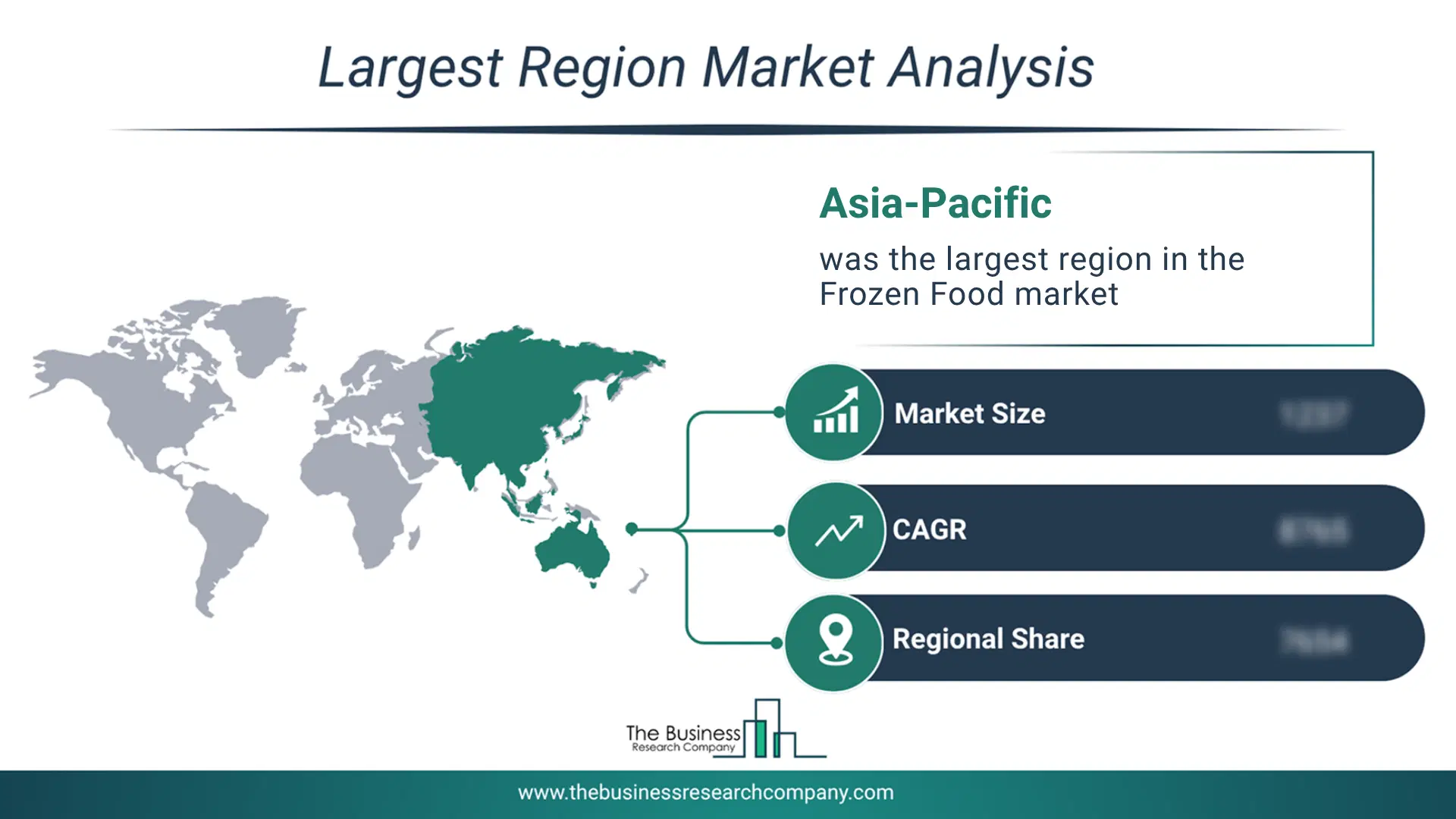
Asia-Pacific was the largest region in the frozen food market in 2025. North America was the second-largest region in the frozen food market. The regions covered in this market report are Asia-Pacific, South East Asia, Western Europe, Eastern Europe, North America, South America, Middle East and Africa. The countries covered in this market report are China, India, Japan, Australia, Indonesia, South Korea, Bangladesh, Thailand, Vietnam, Malaysia, Singapore, Philippines, Hong Kong, Taiwan, New Zealand, UK, Germany, France, Italy, Spain, Austria, Belgium, Denmark, Finland, Ireland, Netherlands, Norway, Portugal, Sweden, Switzerland, Russia, Czech Republic, Poland, Romania, Ukraine, USA, Canada, Mexico, Brazil, Chile, Argentina, Colombia, Peru, Saudi Arabia, Israel, Iran, Turkey, UAE, Egypt, Nigeria, South Africa.What Defines the Frozen Food Market?
The frozen food market consists of sales of frozen fruit, frozen juices, frozen vegetables, frozen dinners, entrees, frozen side dishes, frozen pizza, frozen whipped toppings, frozen waffles, frozen pancakes, French toast. Values in this market are ‘factory gate’ values, that is the value of goods sold by the manufacturers or creators of the goods, whether to other entities (including downstream manufacturers, wholesalers, distributors and retailers) or directly to end customers. The value of goods in this market includes related services sold by the creators of the goods.How is Market Value Defined and Measured?
The market value is defined as the revenues that enterprises gain from the sale of goods and/or services within the specified market and geography through sales, grants, or donations in terms of the currency (in USD unless otherwise specified). The revenues for a specified geography are consumption values that are revenues generated by organizations in the specified geography within the market, irrespective of where they are produced. It does not include revenues from resales along the supply chain, either further along the supply chain or as part of other products.
This chart presents market attractiveness based on a quantitative evaluation of growth, competition, strategic alignment, and risk, offering a clear view of opportunity areas for decision-making. This chart is for illustrative purposes; the full report contains the complete analysis.

This chart highlights the Total Addressable Market (TAM) by estimating the maximum revenue opportunity using an assumption-driven approach, supporting strategic planning and opportunity sizing across markets. The chart is illustrative; the full report provides a more comprehensive analysis.
What Key Data and Analysis Are Included in the Frozen Food Market Report 2026?
The frozen food market research report is one of a series of new reports from The Business Research Company that provides market statistics, including industry global market size, regional shares, competitors with the market share, detailed market segments, market trends and opportunities, and any further data you may need to thrive in the frozen food industry. The market research report delivers a complete perspective of everything you need, with an in-depth analysis of the current and future state of the industry.Frozen Food Market Report Forecast Analysis
| Report Attribute | Details |
|---|---|
| Market Size Value In 2026 | $249.34 billion |
| Revenue Forecast In 2030 | $313.86 billion |
| Growth Rate | CAGR of 5.2% from 2026 to 2030 |
| Base Year For Estimation | 2025 |
| Actual Estimates/Historical Data | 2020-2025 |
| Forecast Period | 2026 - 2030 |
| Market Representation | Revenue in USD Billion and CAGR from 2026 to 2030 |
| Segments Covered | Type, User, Distribution Channel |
| Regional Scope | Asia-Pacific, Western Europe, Eastern Europe, North America, South America, Middle East, Africa |
| Country Scope | The countries covered in the report are Australia, Brazil, China, France, Germany, India, Indonesia, Japan, Taiwan, Russia, South Korea, UK, USA, Canada, Italy, Spain. |
| Key Companies Profiled | Nippon Suisan Kaisha Ltd, Frosta Aktiengesellschaft, Nestle SA, Unilever PLC, Tyson Foods Inc, The Kraft Heinz Company, General Mills Inc, Kelloggs Company, Conagra Brands Inc, McCain Foods Limited, Ajinomoto Co Inc, BRF SA, J R Simplot Company, On Cor Frozen Foods Inc, Lamb Weston Holdings Inc, Rich Products Corporation, Nomad Foods Ltd, J and J Snack Foods Corp, Schwans Company, Wawona Frozen Foods Inc, Bellisio Foods Inc, Oregon Ice Cream Co LLC, Amys Kitchen Inc, Goya Foods Inc |
| Customization Scope | Request for Customization |
| Pricing And Purchase Options | Explore Purchase Options |