

Genitourinary Drugs Market Report 2026
Global Outlook – By Product (Urologicals, Hormonal Therapy, Gynecological, Anti-Infectives, Other Products), By Route Of Administration (Oral, Parenteral, Topical), By Application (Urinary Tract Infections (UTIs), Benign Prostatic Hyperplasia (BPH), Prostate Cancer, Overactive Bladder, Bladder Cancer, Other Applications), By Distribution Channel (Hospital Pharmacies, Drug Store And Retail Pharmacies, Online Pharmacies) – Market Size, Trends, Strategies, and Forecast to 2030
Genitourinary Drugs Market Overview
• Genitourinary Drugs market size has reached to $31.02 billion in 2025 • Expected to grow to $35.69 billion in 2030 at a compound annual growth rate (CAGR) of 2.8% • Growth Driver: Growing Prevalence Of Genitourinary Disorders Fueling The Growth Of The Market Due To Rising Aging Population And Cancer Burden • Market Trend: First-In-Class Oral Therapy Approved For Adolescent And Adult UTI Care • North America was the largest region in 2025 and Asia-Pacific is the fastest growing region.What Is Covered Under Genitourinary Drugs Market?
Genitourinary drugs are medications used to treat conditions affecting the urinary and reproductive organs, including the kidneys, bladder, urethra, and genital organs. Their main purpose is to manage infections, control overactive bladder, treat erectile dysfunction, relieve urinary pain, or regulate hormonal functions. These drugs help restore normal genitourinary function and improve patient quality of life. The main product types of genitourinary drugs include urologicals, hormonal therapy, gynecological, anti-infectives, and others. Urologicals refer to pharmaceutical drugs used for the treatment of disorders affecting the urinary tract and male reproductive organs. These are administered through various routes, such as oral, parenteral, and topical methods, catering to a range of applications such as urinary tract infections (UTIs), benign prostatic hyperplasia (BPH), prostate cancer, overactive bladder, bladder cancer, and others. Genitourinary drugs are distributed through various channels, including hospital pharmacies, drugstore and retail pharmacies, and online pharmacies.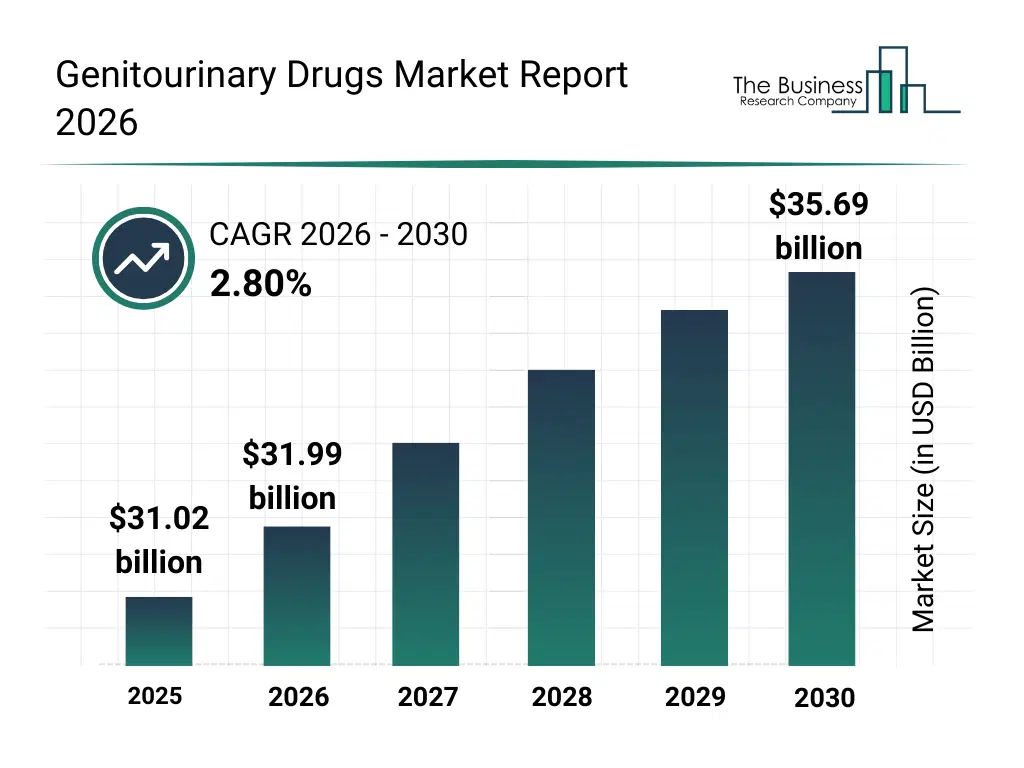
What Is The Genitourinary Drugs Market Size and Share 2026?
The genitourinary drugs market size has grown steadily in recent years. It will grow from $31.02 billion in 2025 to $31.99 billion in 2026 at a compound annual growth rate (CAGR) of 3.1%. The growth in the historic period can be attributed to urinary tract infection prevalence, aging population, hormonal disorder incidence, hospital pharmacy expansion, prescription drug adoption.What Is The Genitourinary Drugs Market Growth Forecast?
The genitourinary drugs market size is expected to see steady growth in the next few years. It will grow to $35.69 billion in 2030 at a compound annual growth rate (CAGR) of 2.8%. The growth in the forecast period can be attributed to personalized urology treatments, digital health platforms, reproductive health awareness, minimally invasive therapies, specialty clinic growth. Major trends in the forecast period include rising demand for uti and bph treatments, growing use of hormonal and fertility therapies, expansion of oral and topical drug forms, increased focus on women’s and men’s urological health, growth of online pharmacy distribution.
Global Genitourinary Drugs Market Segmentation
1) By Product: Urologicals, Hormonal Therapy, Gynecological, Anti-Infectives, Other Products 2) By Route Of Administration: Oral, Parenteral, Topical 3) By Application: Urinary Tract Infections (UTIs), Benign Prostatic Hyperplasia (BPH), Prostate Cancer, Overactive Bladder, Bladder Cancer, Other Applications 4) By Distribution Channel: Hospital Pharmacies, Drug Store And Retail Pharmacies, Online Pharmacies Subsegments: 1) By Urologicals: Benign Prostatic Hyperplasia (BPH) Drugs, Urinary Incontinence Drugs, Overactive Bladder (OAB) Drugs, Urolithiasis (Kidney Stone) Drugs, Erectile Dysfunction Drugs 2) By Hormonal Therapy: Estrogen Therapy, Progestin Therapy, Gonadotropin-Releasing Hormone (GnRH) Agonists/Antagonists, Androgen Replacement Therapy, Selective Estrogen Receptor Modulators (SERMs) 3) By Gynecological: Contraceptives, Menopausal Hormone Therapy, Fertility Drugs, Drugs for Endometriosis, Drugs for Polycystic Ovary Syndrome (PCOS) 4) By Anti-Infectives: Urinary Tract Infection (UTI) Drugs, Sexually Transmitted Infection (STI) Drugs, Vaginal Antifungals, Antivirals 5) By Other Products: Drugs for Chronic Pelvic Pain, Bladder Cancer Therapies, Interstitial Cystitis Drugs, Pelvic Organ Prolapse Treatment Drugs, Adjunctive TherapiesWhat Is The Driver Of The Genitourinary Drugs Market?
The growing prevalence of genitourinary disorders is expected to propel the growth of the genitourinary drugs market going forward. Genitourinary disorders are medical conditions that affect the genitourinary system, which comprises both the urinary and reproductive organs, including infections, cancers, and functional or structural issues. The growing prevalence of genitourinary disorders is due to the aging population, as age-related changes increase the risk of urinary and reproductive health conditions. Genitourinary drugs help manage genitourinary disorders by targeting urinary and reproductive system conditions, offering relief from infections, inflammation, and dysfunction. They improve patient outcomes by enabling effective, convenient, and condition-specific treatment, enhancing overall quality of life. For instance, in April 2024, according to the report by the American Cancer Society, a US-based non-profit organization, approximately 20 million new cancer cases were diagnosed globally in 2022, with 9.7 million deaths, and the number of cancer cases is projected to rise to 35 million by 2050. Therefore, the growing prevalence of genitourinary disorders is driving the growth of the genitourinary drugs industry.Key Players In The Global Genitourinary Drugs Market
Major companies operating in the genitourinary drugs market are Pfizer Inc., Johnson & Johnson, F. Hoffmann-La Roche AG, Merck & Co. Inc., Bayer AG, Novartis AG, Sanofi S.A., Bristol Myers Squibb, AstraZeneca plc, Abbott Laboratories, GSK plc, Eli Lilly and Company, Amgen Inc., Teva Pharmaceutical Industries Ltd., Astellas Pharma Inc., Ipsen Société Anonyme, Aurobindo Pharma Limited, Dr. Reddy's Laboratories Limited, Cipla Limited, Hikma Pharmaceuticals Public Limited Company, Endo International Public Limited Company, Takeda Pharmaceutical Company Limited, Zydus Lifesciences Limited, Melinta Therapeutics Inc., Asieris Pharmaceuticals, Sun Pharmaceutical Industries Ltd.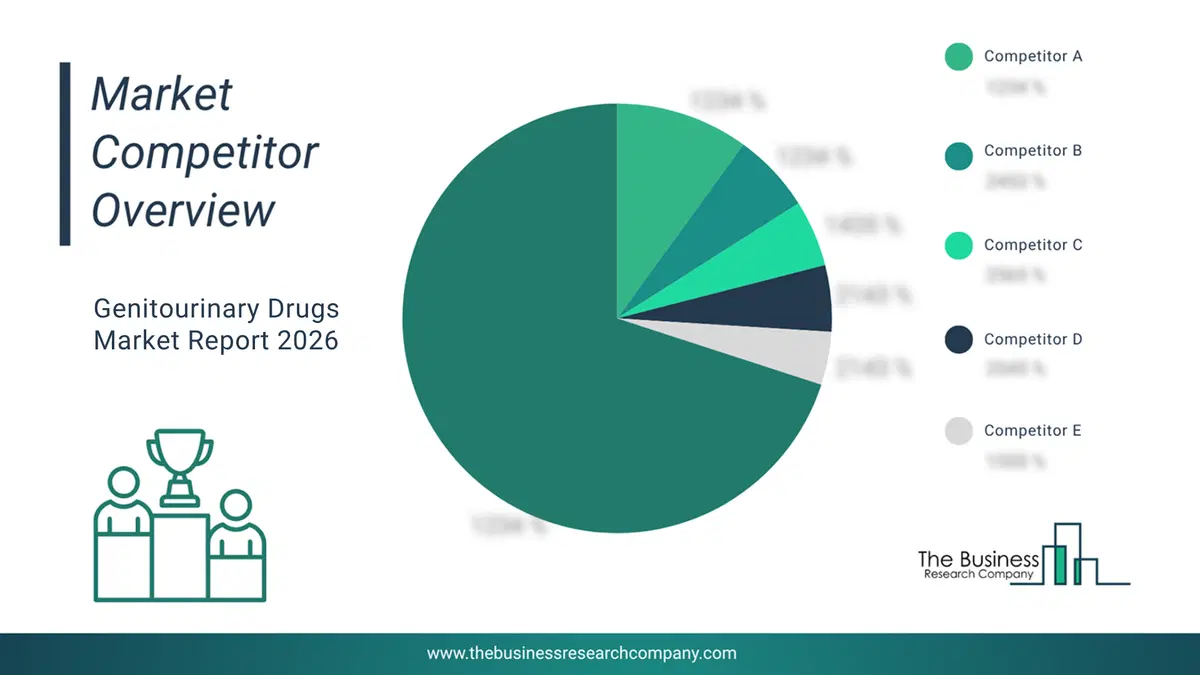
This chart is for illustrative purposes; the full report includes a detailed competitor analysis and comprehensive overview of the top 10 companies in the market.
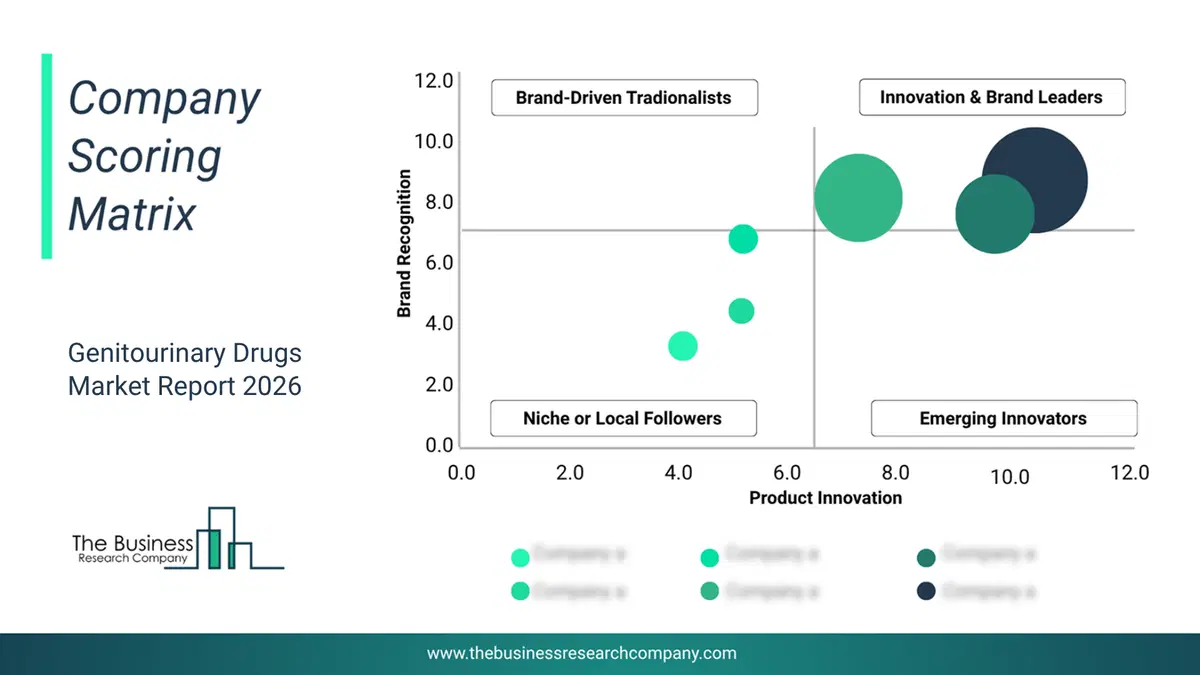
This chart maps companies by product innovation and brand strength, with bubble size indicating relative revenue, helping identify market leaders, challengers, and niche players. This is an illustrative chart; the full report provides a complete and accurate competitive analysis.
Global Genitourinary Drugs Market Trends and Insights
Major companies operating in the genitourinary drugs market are focusing on developing innovative products, such as oral antibiotics, to enhance treatment convenience, improve patient adherence, and combat infections effectively. Oral antibiotics refer to antibacterial medications taken by mouth to treat infections caused by bacteria. For instance, in March 2025, GSK plc, a UK-based pharmaceutical company, received approval from the US Food and Drug Administration (FDA) for Blujepa (gepotidacin) for treating uncomplicated urinary tract infections caused by susceptible bacteria in women and girls aged 12 and older. It is a novel, first-in-class oral antibiotic that works by inhibiting bacterial DNA replication, targeting two critical enzymes, namely DNA gyrase and topoisomerase IV. Unlike traditional antibiotics, it binds to unique sites to overcome resistance, offering a targeted mechanism with improved safety and efficacy.What Are Latest Mergers And Acquisitions In The Genitourinary Drugs Market?
In December 2023, Pfizer Inc., a US-based pharmaceutical company, acquired Seagen Inc. for $43 billion. With this acquisition, Pfizer aims to transform cancer treatment by integrating antibody-drug conjugate (ADC) technology with its global scale and expertise. Seagen Inc. is a US-based biotechnology company specializing in innovative genitourinary cancer drugs, notably Padcev for advanced bladder cancer.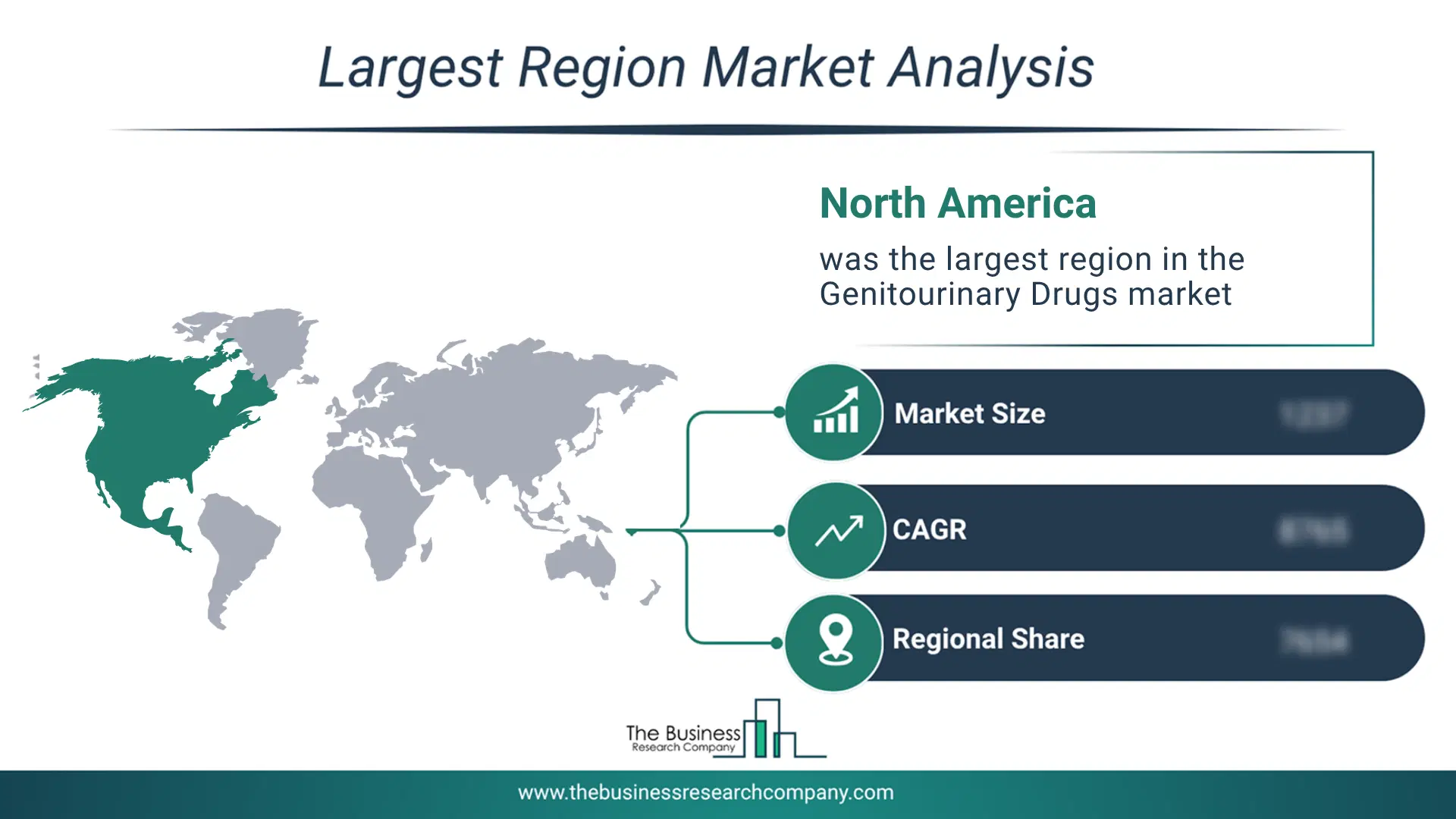
Regional Insights
North America was the largest region in the genitourinary drugs market in 2025. Asia-Pacific is expected to be the fastest-growing region in the forecast period. The regions covered in this market report are Asia-Pacific, South East Asia, Western Europe, Eastern Europe, North America, South America, Middle East, Africa. The countries covered in this market report are Australia, Brazil, China, France, Germany, India, Indonesia, Japan, Taiwan, Russia, South Korea, UK, USA, Canada, Italy, Spain.What Defines the Genitourinary Drugs Market?
The genitourinary drugs market consists of sales of urinary acidifiers and alkalinizers, desmopressin, diuretics, urinary antispasmodics, anti-infectives, and hormone replacement therapies. Values in this market are ‘factory gate’ values, that is the value of goods sold by the manufacturers or creators of the goods, whether to other entities (including downstream manufacturers, wholesalers, distributors and retailers) or directly to end customers. The value of goods in this market includes related services sold by the creators of the goods.How is Market Value Defined and Measured?
The market value is defined as the revenues that enterprises gain from the sale of goods and/or services within the specified market and geography through sales, grants, or donations in terms of the currency (in USD unless otherwise specified). The revenues for a specified geography are consumption values that are revenues generated by organizations in the specified geography within the market, irrespective of where they are produced. It does not include revenues from resales along the supply chain, either further along the supply chain or as part of other products.
This chart presents market attractiveness based on a quantitative evaluation of growth, competition, strategic alignment, and risk, offering a clear view of opportunity areas for decision-making. This chart is for illustrative purposes; the full report contains the complete analysis.

This chart highlights the Total Addressable Market (TAM) by estimating the maximum revenue opportunity using an assumption-driven approach, supporting strategic planning and opportunity sizing across markets. The chart is illustrative; the full report provides a more comprehensive analysis.
What Key Data and Analysis Are Included in the Genitourinary Drugs Market Report 2026?
The genitourinary drugs market research report is one of a series of new reports from The Business Research Company that provides market statistics, including industry global market size, regional shares, competitors with the market share, detailed market segments, market trends and opportunities, and any further data you may need to thrive in the genitourinary drugs industry. The market research report delivers a complete perspective of everything you need, with an in-depth analysis of the current and future state of the industry.Genitourinary Drugs Market Report Forecast Analysis
| Report Attribute | Details |
|---|---|
| Market Size Value In 2026 | $31.99 billion |
| Revenue Forecast In 2030 | $35.69 billion |
| Growth Rate | CAGR of 3.1% from 2026 to 2030 |
| Base Year For Estimation | 2025 |
| Actual Estimates/Historical Data | 2020-2025 |
| Forecast Period | 2026 - 2030 |
| Market Representation | Revenue in USD Billion and CAGR from 2026 to 2030 |
| Segments Covered | Product, Route Of Administration, Application, Distribution Channel |
| Regional Scope | Asia-Pacific, Western Europe, Eastern Europe, North America, South America, Middle East, Africa |
| Country Scope | The countries covered in the report are Australia, Brazil, China, France, Germany, India, Indonesia, Japan, Taiwan, Russia, South Korea, UK, USA, Canada, Italy, Spain. |
| Key Companies Profiled | Pfizer Inc., Johnson & Johnson, F. Hoffmann-La Roche AG, Merck & Co. Inc., Bayer AG, Novartis AG, Sanofi S.A., Bristol Myers Squibb, AstraZeneca plc, Abbott Laboratories, GSK plc, Eli Lilly and Company, Amgen Inc., Teva Pharmaceutical Industries Ltd., Astellas Pharma Inc., Ipsen Société Anonyme, Aurobindo Pharma Limited, Dr. Reddy's Laboratories Limited, Cipla Limited, Hikma Pharmaceuticals Public Limited Company, Endo International Public Limited Company, Takeda Pharmaceutical Company Limited, Zydus Lifesciences Limited, Melinta Therapeutics Inc., Asieris Pharmaceuticals, Sun Pharmaceutical Industries Ltd. |
| Customization Scope | Request for Customization |
| Pricing And Purchase Options | Explore Purchase Options |