
Antibody Production Market Report 2026
Global Outlook – By Type (Monoclonal Antibody, Polyclonal Antibody), By Process (Upstream Processing, Downstream Processing), By End-User (Pharmaceutical and Biotechnology Companies, Research Laboratories, Contract Research Organizations And Contract Development And Manufacturing Organizations) - Market Size, Trends, Strategies, and Forecast to 2030
Antibody Production Market Overview
• Antibody Production market size has reached to $25.89 billion in 2025 • Expected to grow to $53.78 billion in 2030 at a compound annual growth rate (CAGR) of 15.7% • Growth Driver: Rising Prevalence Of Chronic Diseases Fueling The Growth Of The Market Due To Increasing Demand For Targeted Therapeutics And Diagnostics • Market Trend: Innovative Services Facilitate Rapid Access To Bispecific Antibody Technologies • North America was the largest region in 2025 and Asia-Pacific is the fastest growing region.What Is Covered Under Antibody Production Market?
Antibody production is the process of generating antibodies, which are proteins that specifically recognize and bind to target molecules, known as antigens. This process involves the stimulation of immune cells to produce highly specific antibodies for research, diagnostic, or therapeutic purposes. It encompasses both in vivo and in vitro methods to achieve efficient, reproducible, and high-quality antibody generation. The main types of antibody production are monoclonal antibodies and polyclonal antibodies. Monoclonal antibodies refer to laboratory-produced molecules engineered to bind to a specific epitope on an antigen, providing high specificity, reproducibility, and consistency. It includes processes such as upstream processing and downstream processing, and includes products such as instruments and consumables. The key end-users include pharmaceutical and biotechnology companies, research laboratories, and contract research organizations and contract development and manufacturing organizations.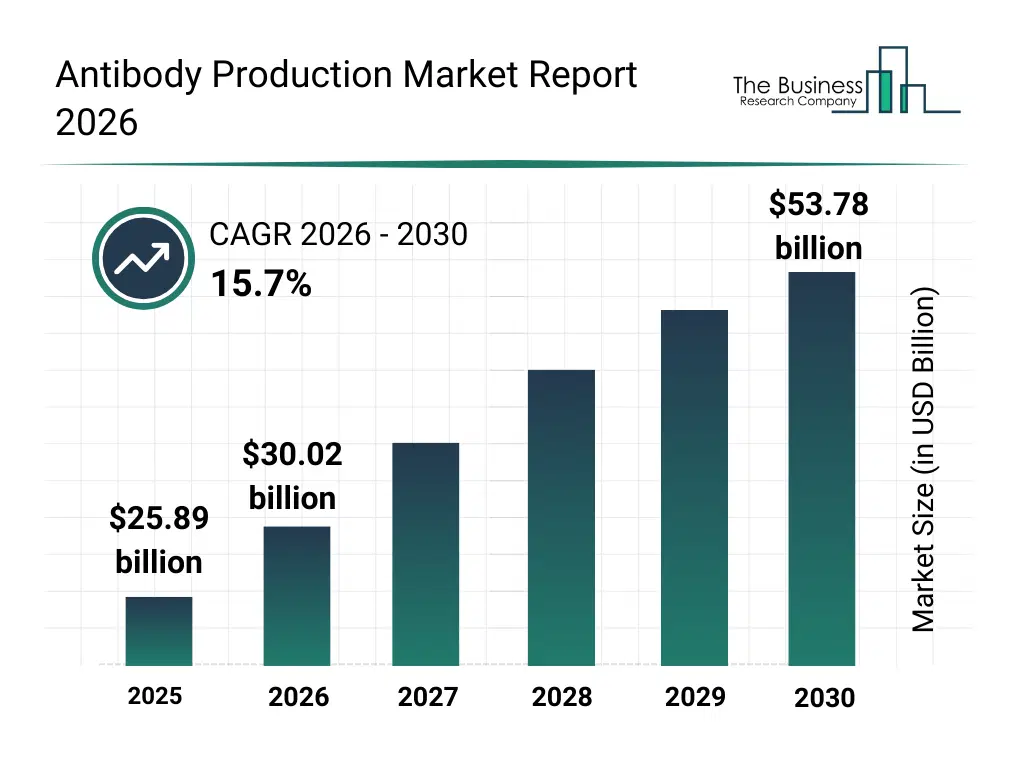
What Is The Antibody Production Market Size and Share 2026?
The antibody production market size has grown rapidly in recent years. It will grow from $25.89 billion in 2025 to $30.02 billion in 2026 at a compound annual growth rate (CAGR) of 16.0%. The growth in the historic period can be attributed to expansion of pharmaceutical and biotechnology research, increasing use of monoclonal antibodies in therapeutics, advancements in bioprocessing technologies, rising demand for research-grade antibodies, growth of CRO and CDMO services.What Is The Antibody Production Market Growth Forecast?
The antibody production market size is expected to see rapid growth in the next few years. It will grow to $53.78 billion in 2030 at a compound annual growth rate (CAGR) of 15.7%. The growth in the forecast period can be attributed to increasing investments in biologics manufacturing, rising adoption of continuous bioprocessing, expansion of therapeutic antibody pipelines, growing demand for cost-efficient antibody production, increasing integration of digital biomanufacturing systems. Major trends in the forecast period include increasing adoption of recombinant antibody production methods, rising demand for high-yield expression systems, growing automation of upstream and downstream processing, expansion of contract antibody manufacturing services, enhanced focus on scalability and reproducibility.
Global Antibody Production Market Segmentation
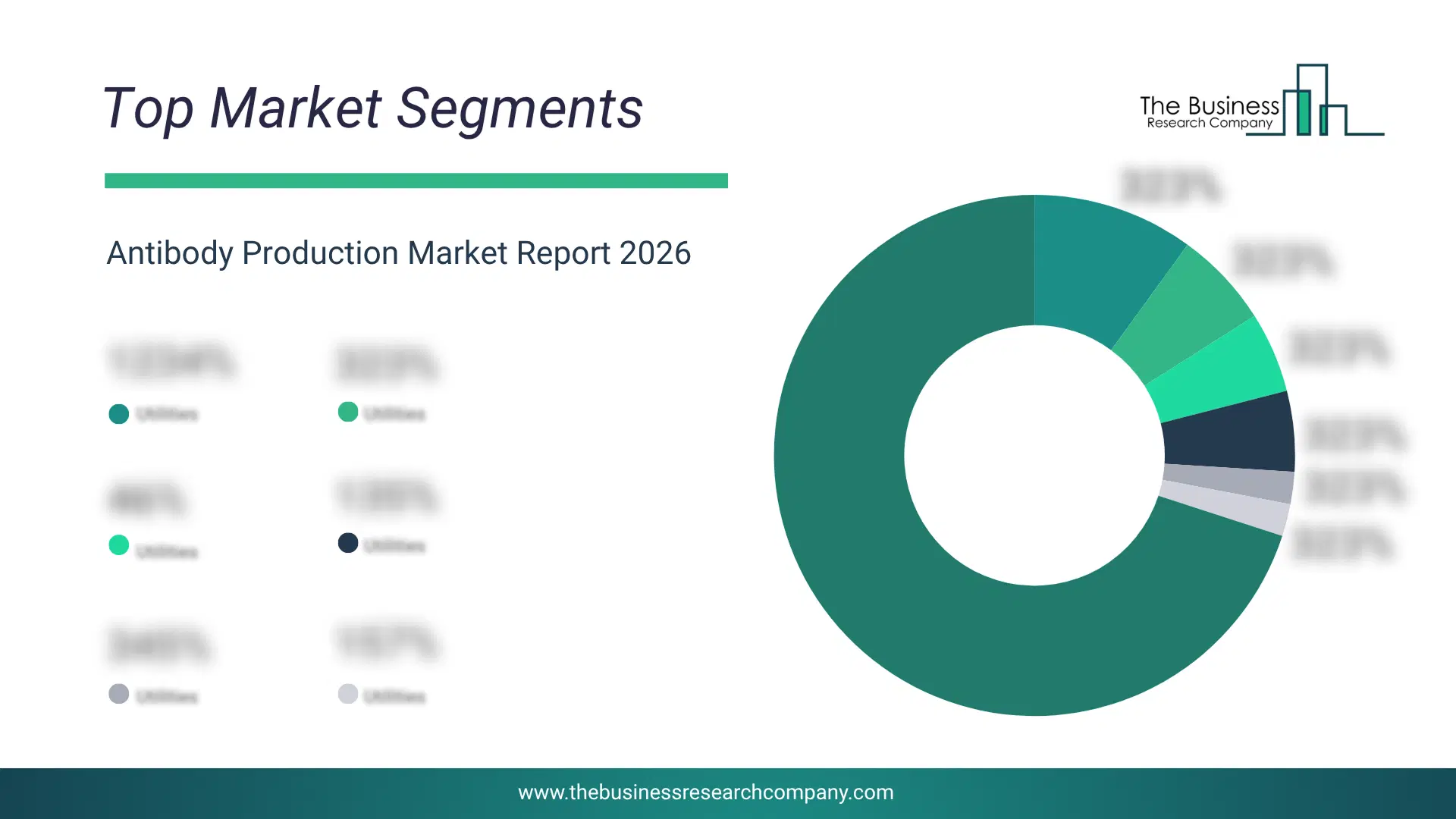
1) By Type: Monoclonal Antibody, Polyclonal Antibody 2) By Process: Upstream Processing, Downstream Processing 3) By End-User: Pharmaceutical and Biotechnology Companies, Research Laboratories, Contract Research Organizations And Contract Development And Manufacturing Organizations Subsegments: 1) By Monoclonal Antibody: Mouse Monoclonal Antibody, Human Monoclonal Antibody, Rabbit Monoclonal Antibody, Rat Monoclonal Antibody 2) By Polyclonal Antibody: Rabbit Polyclonal Antibody, Goat Polyclonal Antibody, Sheep Polyclonal Antibody, Donkey Polyclonal AntibodyWhat Is The Driver Of The Antibody Production Market?
The rising prevalence of chronic diseases is expected to propel the growth of the antibody production market going forward. Chronic diseases are persistent health conditions that develop slowly and last for an extended period, often requiring continuous medical care. The growing prevalence of chronic diseases is partly due to inactive lifestyles, as prolonged sitting and minimal physical activity raise the risk of diseases such as heart conditions and diabetes. Antibody production aids chronic disease management by providing targeted therapeutic and diagnostic solutions, making them essential for conditions like cancer, autoimmune disorders, and diabetes. They improve treatment efficacy and patient monitoring by enabling precise intervention and early detection, enhancing overall healthcare outcomes. For instance, in June 2024, according to the National Health Service, a UK-based government department, 3,615,330 individuals registered with a general practitioner (GP) were diagnosed with non-diabetic hyperglycemia or pre-diabetes (a condition with elevated blood sugar levels, not high enough to be classified as diabetes) in 2023, marking an 18% increase from 3,065,825 cases in 2022. Therefore, the rising prevalence of chronic diseases is driving the growth of the antibody production industry.Key Players In The Global Antibody Production Market
Major companies operating in the antibody production market are Johnson & Johnson, Roche Holding AG, Merck & Co. Inc., Pfizer Inc., AbbVie Inc., Bayer AG, Novartis AG, Thermo Fisher Scientific Inc., Amgen Inc., Danaher Corporation, Agilent Technologies Inc., Bio-Rad Laboratories Inc., Azenta Inc., GenScript Biotech Corporation, Sino Biological Inc., Proteintech Group Inc., Rapid Novor, Rockland Immunochemicals Inc., Biorbyt Ltd., Invenra Inc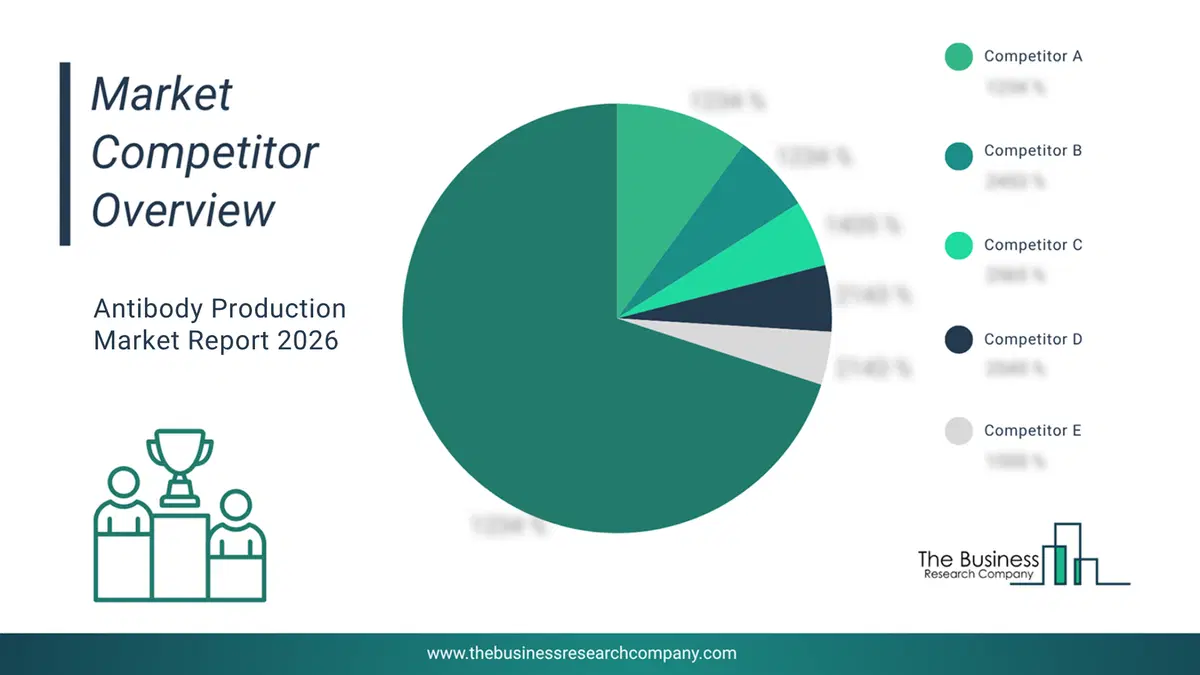
This chart is for illustrative purposes; the full report includes a detailed competitor analysis and comprehensive overview of the top 10 companies in the market.
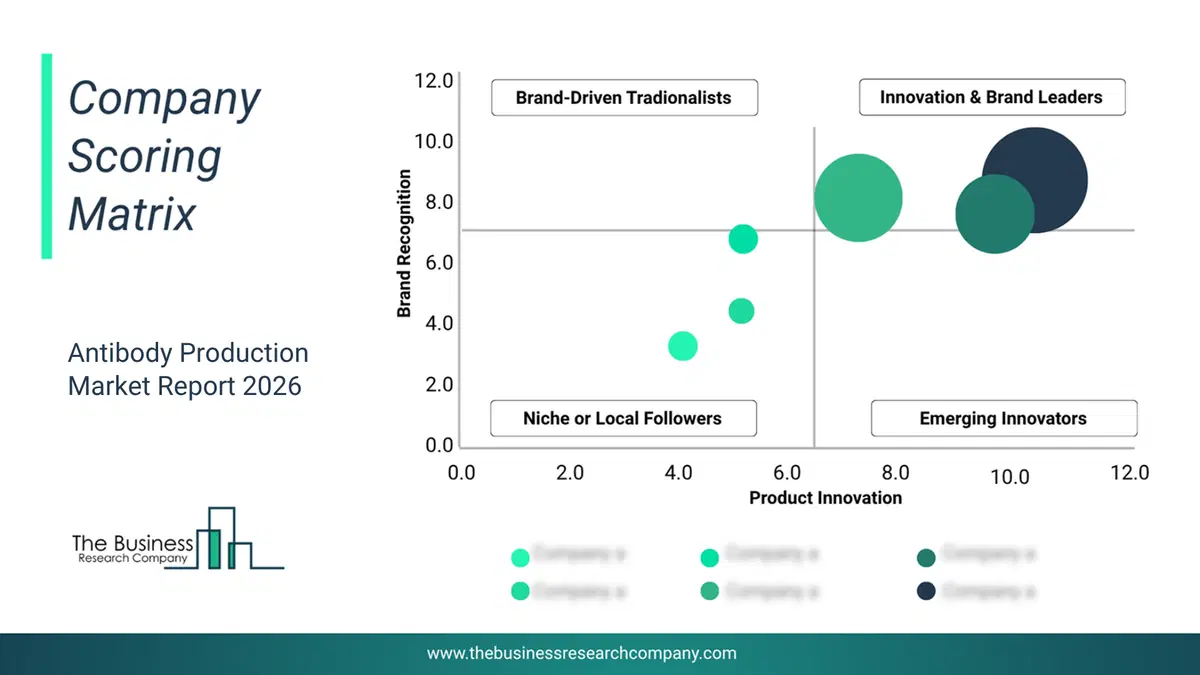
This chart maps companies by product innovation and brand strength, with bubble size indicating relative revenue, helping identify market leaders, challengers, and niche players. This is an illustrative chart; the full report provides a complete and accurate competitive analysis.
Global Antibody Production Market Trends and Insights
Major companies operating in the antibody production market are focusing on developing advanced service models, such as rapid-access platforms, to accelerate research, enhance collaboration, and reduce development timelines. Rapid-access platforms refer to streamlined service offerings that allow partner companies to quickly evaluate and utilize a proprietary technology for their own drug development programs. For instance, in April 2025, Invenra Inc., a US-based biotechnology company, launched the B-Body Express Service. This service provides rapid access to Invenra's premier B-Body bispecific antibody platform, enabling researchers to expedite the early stages of therapeutic discovery. The offering includes a standardized process for generating functional bispecific antibodies against a partner's targets of interest, significantly shortening the typical wait time to begin testing novel drug candidates.What Are Latest Mergers And Acquisitions In The Antibody Production Market?
In March 2024, Sino Biological Inc., a China-based biotechnology company, partnered with Rapid Novor Inc. With this partnership, Sino Biological aims to strengthen its custom monoclonal antibody development and production services by integrating Rapid Novor’s REmAb sequencing technology. The collaboration enables clients to access both accurate antibody sequence data and purified bioactive antibodies, enhancing research efficiency. Rapid Novor Inc. is a Canada based biotechnology company specializing in protein and antibody sequencing technologies.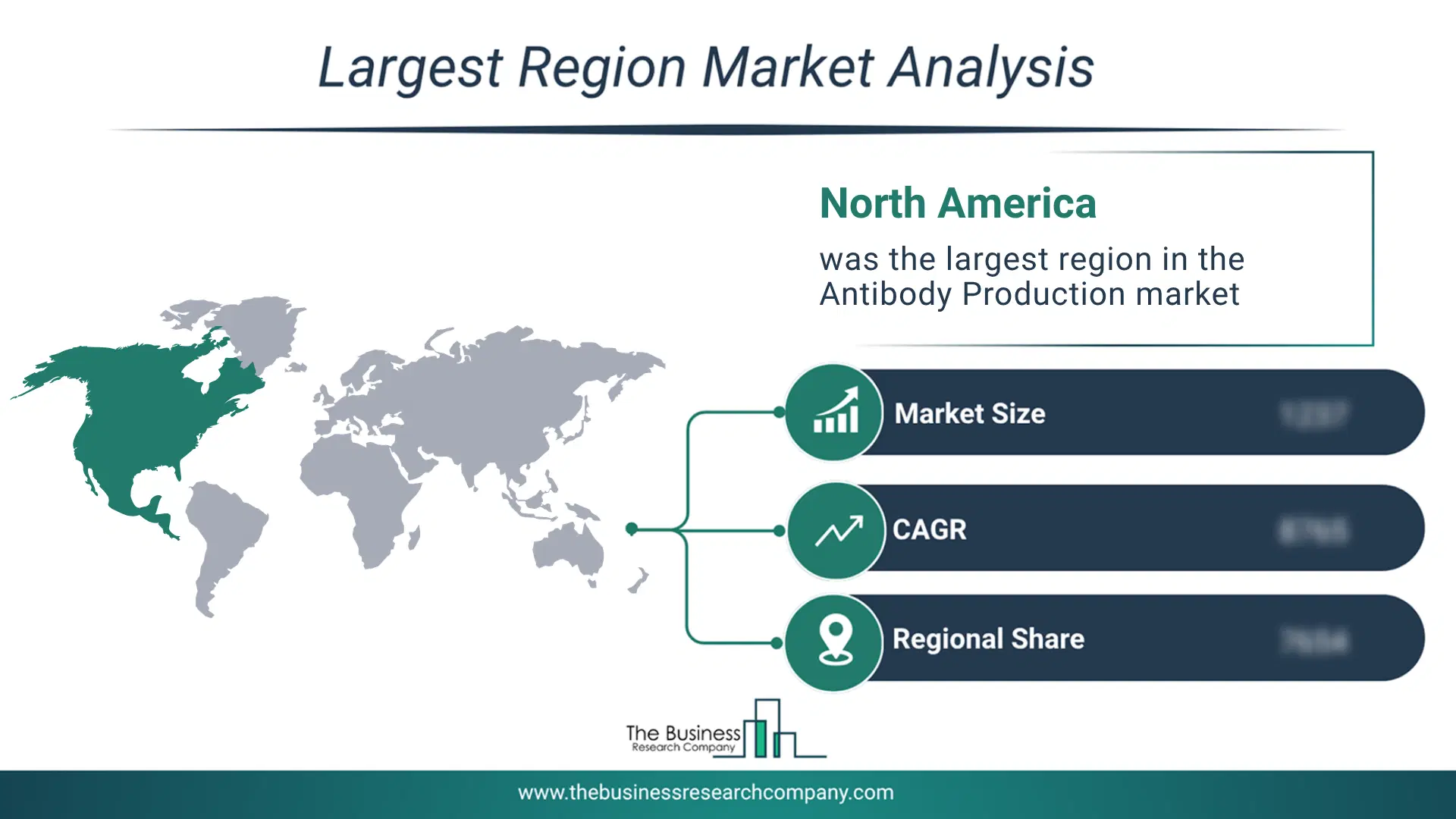
Regional Outlook
North America was the largest region in the antibody production market in 2025. Asia-Pacific is expected to be the fastest-growing region in the forecast period. The regions covered in this market report are Asia-Pacific, South East Asia, Western Europe, Eastern Europe, North America, South America, Middle East, Africa. The countries covered in this market report are Australia, Brazil, China, France, Germany, India, Indonesia, Japan, Taiwan, Russia, South Korea, UK, USA, Canada, Italy, Spain.What Defines the Antibody Production Market?
The antibody production market consists of sales of recombinant antibodies, humanized antibodies, antibody fragments (Fab, scFv), conjugated antibodies, and antibody kits. Values in this market are ‘factory gate’ values, that is, the value of goods sold by the manufacturers or creators of the goods, whether to other entities (including downstream manufacturers, wholesalers, distributors, and retailers) or directly to end customers. The value of goods in this market includes related services sold by the creators of the goods.How is Market Value Defined and Measured?
The market value is defined as the revenues that enterprises gain from the sale of goods and/or services within the specified market and geography through sales, grants, or donations in terms of the currency (in USD unless otherwise specified). The revenues for a specified geography are consumption values that are revenues generated by organizations in the specified geography within the market, irrespective of where they are produced. It does not include revenues from resales along the supply chain, either further along the supply chain or as part of other products.
This chart presents market attractiveness based on a quantitative evaluation of growth, competition, strategic alignment, and risk, offering a clear view of opportunity areas for decision-making. This chart is for illustrative purposes; the full report contains the complete analysis.

This chart highlights the Total Addressable Market (TAM) by estimating the maximum revenue opportunity using an assumption-driven approach, supporting strategic planning and opportunity sizing across markets. The chart is illustrative; the full report provides a more comprehensive analysis.
What Key Data and Analysis Are Included in the Antibody Production Market Report 2026?
The antibody production market research report is one of a series of new reports from The Business Research Company that provides market statistics, including industry global market size, regional shares, competitors with the market share, detailed market segments, market trends and opportunities, and any further data you may need to thrive in the antibody production industry. The market research report delivers a complete perspective of everything you need, with an in-depth analysis of the current and future state of the industry.Antibody Production Market Report Forecast Analysis
| Report Attribute | Details |
|---|---|
| Market Size Value In 2026 | $30.02 billion |
| Revenue Forecast In 2030 | $53.78 billion |
| Growth Rate | CAGR of 15.7% from 2026 to 2030 |
| Base Year For Estimation | 2025 |
| Actual Estimates/Historical Data | 2020-2025 |
| Forecast Period | 2026 - 2030 |
| Market Representation | Revenue in USD Billion and CAGR from 2026 to 2030 |
| Segments Covered | Type, Process, End-User |
| Regional Scope | Asia-Pacific, Western Europe, Eastern Europe, North America, South America, Middle East, Africa |
| Country Scope | The countries covered in the report are Australia, Brazil, China, France, Germany, India, Indonesia, Japan, Taiwan, Russia, South Korea, UK, USA, Canada, Italy, Spain |
| Key Companies Profiled | Johnson & Johnson, Roche Holding AG, Merck & Co. Inc., Pfizer Inc., AbbVie Inc., Bayer AG, Novartis AG, Thermo Fisher Scientific Inc., Amgen Inc., Danaher Corporation, Agilent Technologies Inc., Bio-Rad Laboratories Inc., Azenta Inc., GenScript Biotech Corporation, Sino Biological Inc., Proteintech Group Inc., Rapid Novor, Rockland Immunochemicals Inc., Biorbyt Ltd., Invenra Inc |
| Customization Scope | Request for Customization |
| Pricing And Purchase Options | Explore Purchase Options |