
Polyclonal Antibodies Market Report 2026
Global Outlook – By Product Type (Primary Antibody, Secondary Antibody), By Source (Rabbits, Goats, Sheep, Other Sources), By Application (Research, Diagnostics, Therapy), By End-User (Academic and Research Center , Pharmaceutical and Biotechnology Companies, Diagnostic Centers , Hospitals) – Market Size, Trends, Strategies, and Forecast to 2030
Polyclonal Antibodies Market Overview
• Polyclonal Antibodies market size has reached to $1.48 billion in 2025 • Expected to grow to $2.1 billion in 2030 at a compound annual growth rate (CAGR) of 7.3% • Growth Driver: The Increasing Prevalence Of Cancer Driving The Growth Of The Polyclonal Antibodies Market Due To Expanding Research And Treatment Applications • Market Trend: Polyclonal Antibodies Offer Promising Therapeutic Options for High-Risk COVID-19 Patients • North America was the largest region in 2025 and Asia-Pacific is the fastest growing region.Market Gains By 2030 – Top Opportunities By Segment
Market Gain identifies the most promising market opportunities by highlighting the segments or products expected to generate the highest incremental revenue growth over the next five years.
What Is Covered Under Polyclonal Antibodies Market?
Polyclonal antibodies are a type of antibody that is derived from multiple clones of B-cells, each producing a unique antibody molecule. Life science and translational medicine researchers frequently employ them because of their ease of handling for immunization and bleeding purposes. The main products of polyclonal antibodies are primary antibodies and secondary antibodies. A primary antibody refers to one of the antibodies present in the polyclonal mixture that specifically binds to the target antigen. Primary antibodies play a crucial role in various applications, including immunohistochemistry, Western blotting, ELISA, and other immunological assays. The sources of polyclonal antibodies are rabbits, goats, sheep, and others that are used for research, diagnostics, and therapy by academic and research centers, pharmaceutical and biotechnology companies, diagnostic centers, and hospitals.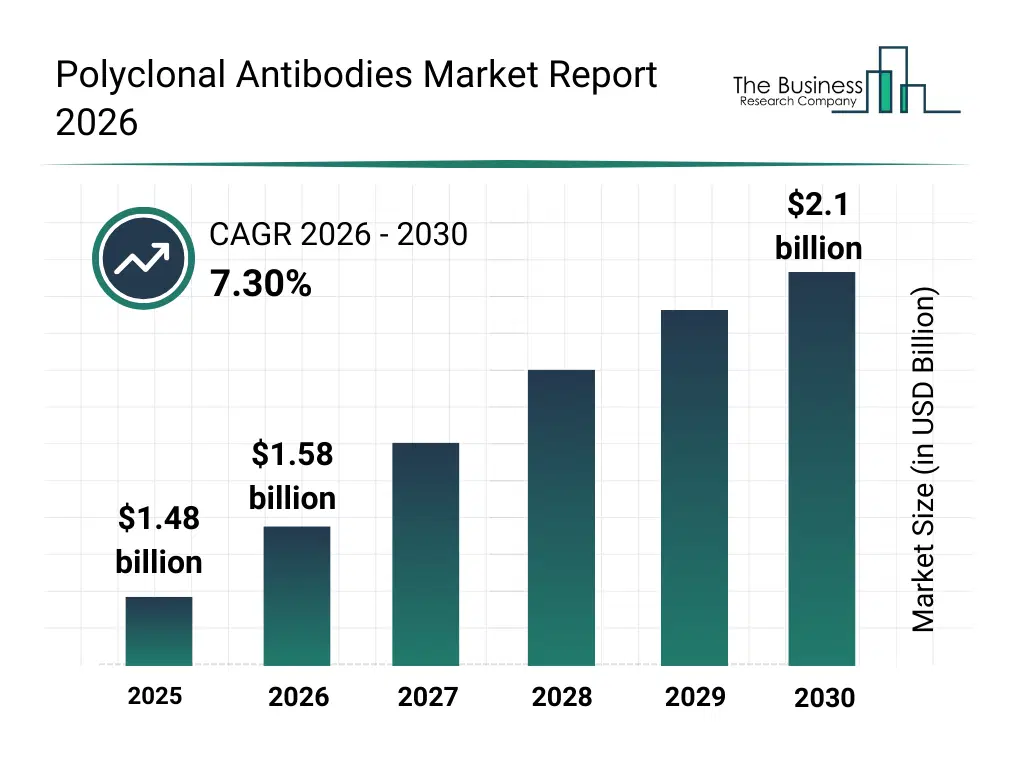
What Is The Polyclonal Antibodies Market Size and Share 2026?
The polyclonal antibodies market size has grown strongly in recent years. It will grow from $1.48 billion in 2025 to $1.58 billion in 2026 at a compound annual growth rate (CAGR) of 6.4%. The growth in the historic period can be attributed to rising demand for immunoassays, adoption of polyclonal antibodies in research, growth in biotechnology sector, increasing academic research activities, availability of animal models for antibody production.What Is The Polyclonal Antibodies Market Growth Forecast?
The polyclonal antibodies market size is expected to see strong growth in the next few years. It will grow to $2.1 billion in 2030 at a compound annual growth rate (CAGR) of 7.3%. The growth in the forecast period can be attributed to expansion of precision medicine initiatives, growth in therapeutic antibody applications, technological advancements in antibody production, rising investments in diagnostics research, increasing collaborations between pharma and research institutes. Major trends in the forecast period include advanced polyclonal antibody production techniques, custom antibody development services, increasing use in diagnostic applications, growth in therapeutic research applications, expansion of academic and pharmaceutical research collaborations.
Global Polyclonal Antibodies Market Segmentation
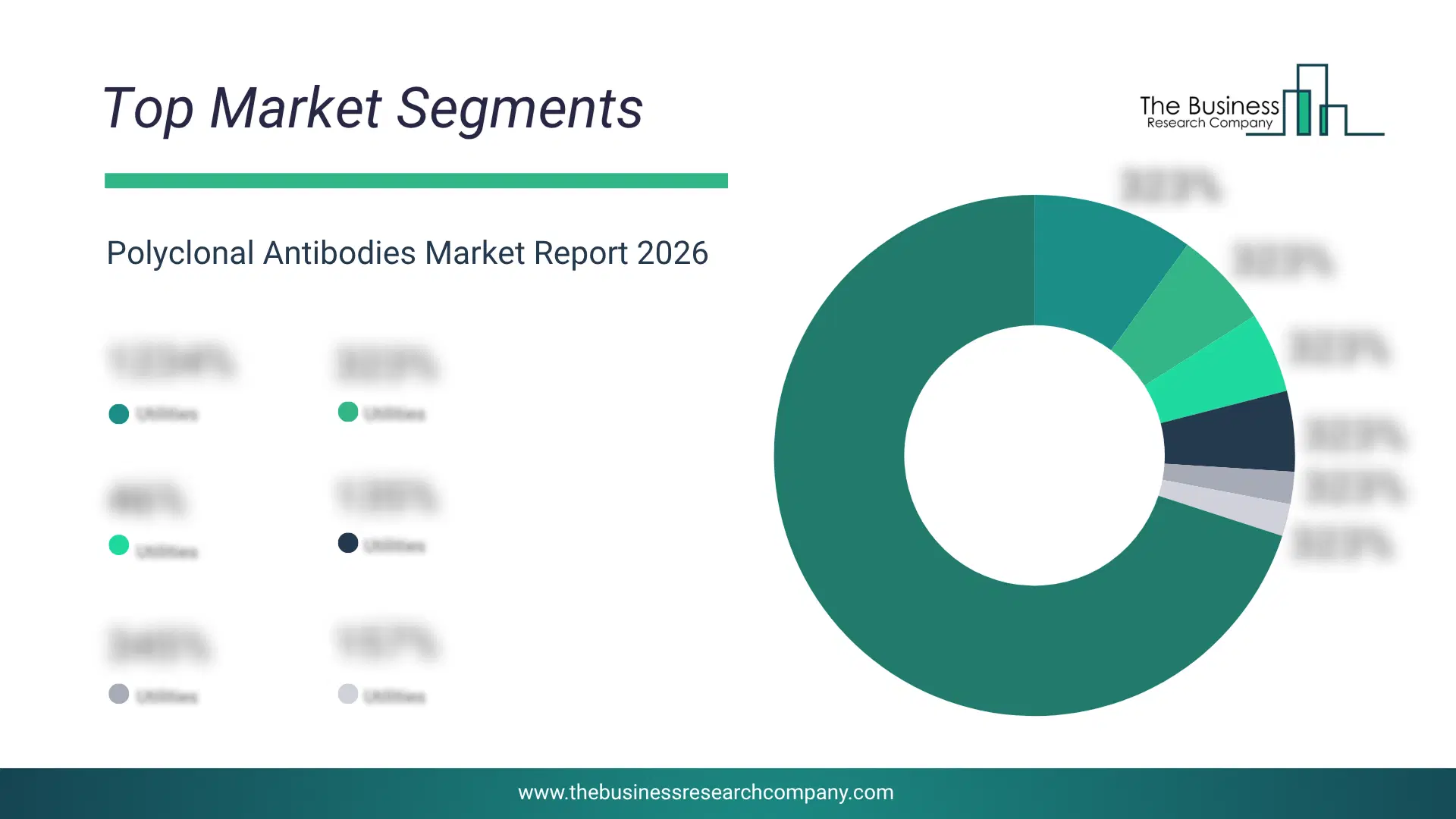
1) By Product Type: Primary Antibody, Secondary Antibody 2) By Source: Rabbits, Goats, Sheep, Other Sources 3) By Application: Research, Diagnostics, Therapy 4) By End-User: Academic and Research Center , Pharmaceutical and Biotechnology Companies, Diagnostic Centers , Hospitals Subsegments: 1) By Primary Antibody: Immunoglobulin G (IgG), Immunoglobulin M (IgM), Immunoglobulin A (IgA), Immunoglobulin E (IgE) 2) By Secondary Antibody: Anti-Mouse IgG, Anti-Rabbit IgG, Anti-Goat IgG, Other Secondary Antibodies The top segments in the polyclonal antibodies market will be: • Secondary Antibody will reach $1.22 billion by 2030. • Primary Antibody will reach $0.91 billion by 2030.What Is The Driver Of The Polyclonal Antibodies Market?
The increasing prevalence of cancer is expected to propel the growth of the polyclonal antibodies market going forward. Cancer is a group of diseases characterized by uncontrolled cell growth and proliferation, leading to tissue damage and potential metastasis, and it remains a major cause of morbidity and mortality worldwide. The rise in cancer cases is driven by factors such as aging populations, lifestyle changes, and environmental exposures. Polyclonal antibodies are widely used in cancer research and treatment for biomarker detection, immunohistochemistry, targeted therapy, and immunotherapy, improving diagnosis, treatment, and patient outcomes. For instance, in February 2024, according to the World Health Organization, a Switzerland-based intergovernmental organization, by 2050, over 35 million new cancer cases are projected, representing a 77% increase compared to the estimated 20 million cases in 2022. Therefore, the increasing prevalence of cancer is driving the growth of the polyclonal antibodies industry.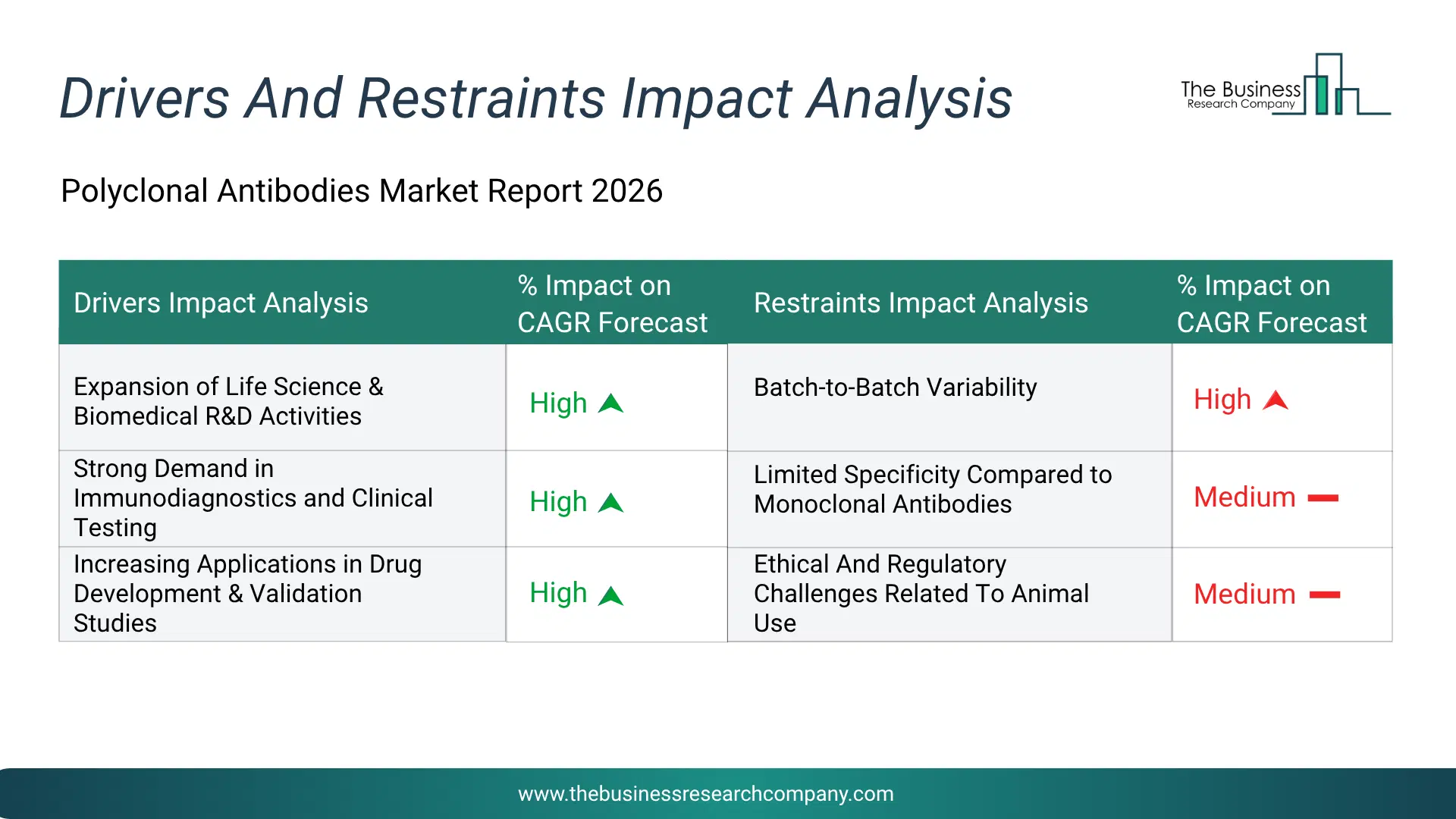
Infographic Chart Showing Key Market Drivers Analysis And Restraints For Polyclonal Antibodies Market
The chart presents an impact analysis of key drivers and restraints, quantifying their relative influence on the market's growth rate and helping assess the balance between growth enablers and limiting factors. This chart offers a high-level perspective; the full report contains more detailed insights.
How Will The Drivers Impact Growth In The Global Polyclonal Antibodies Market?
• Expansion of Life Science & Biomedical R&D Activities (High) – During the forecast period, the expansion of life science and biomedical r&d activities is expected to become a key growth driver for the polyclonal antibodies market by 2030. Increasing investments by governments, academic institutions, and private organizations are accelerating research in areas such as proteomics, genomics, and cell biology. Polyclonal antibodies play a critical role in these studies due to their ability to detect multiple epitopes, enhancing experimental sensitivity and reliability. Researchers are therefore increasingly adopting these antibodies for diverse applications. • Strong Demand in Immunodiagnostics and Clinical Testing (High) – During the forecast period, the strong demand in immunodiagnostics and clinical testing is expected to emerge as a major factor driving the expansion of the polyclonal antibodies market by 2030. The growing prevalence of infectious and chronic diseases is increasing the need for accurate and rapid diagnostic solutions. Polyclonal antibodies are widely used in diagnostic assays due to their high sensitivity and ability to bind multiple antigens. Advancements in diagnostic platforms and increasing adoption of point-of-care testing are further supporting market growth. • Increasing Applications in Drug Development & Validation Studies (High) – During the forecast period, the increasing applications in drug development and validation studies are expected to act as a key growth catalyst for the polyclonal antibodies market by 2030. These antibodies are extensively used in preclinical and clinical research for target identification, biomarker validation, and therapeutic efficacy studies. Pharmaceutical and biotechnology companies rely on polyclonal antibodies for reliable and cost-effective experimental outcomes. Additionally, the growing pipeline of biologics and personalized medicine is further driving their usage.How Will The Restraints Impact Growth In The Global Polyclonal Antibodies Market?
• Batch-to-Batch Variability (High) – During the forecast period, the since polyclonal antibodies are produced from multiple b-cell clones, their composition can vary between batches. This inconsistency can affect reproducibility of experimental results. Researchers may face challenges in maintaining uniformity across studies. It limits their reliability in highly standardized applications. Such variability reduces their preference in critical experiments. • Limited Specificity Compared to Monoclonal Antibodies (Medium) – During the forecast period, the polyclonal antibodies bind to multiple epitopes, which can sometimes lead to cross-reactivity. This reduces their specificity when precise antigen targeting is required. In applications demanding high accuracy, monoclonal antibodies are often preferred. The risk of non-specific binding can affect experimental outcomes. This limits their use in advanced diagnostic and therapeutic settings. • Ethical And Regulatory Challenges Related To Animal Use (Medium) – During the forecast period, the the production of polyclonal antibodies typically involves immunizing animals and collecting biological samples, which raises ethical concerns and regulatory scrutiny. Increasing emphasis on animal welfare standards requires manufacturers to adopt strict monitoring and compliance measures. Regulatory requirements can increase production costs and administrative burdens. These challenges may limit scalability and encourage the adoption of alternative antibody technologies.Key Players In The Global Polyclonal Antibodies Market
Major companies operating in the polyclonal antibodies market are Abcam plc, GenScript Biotech Corporation, Merck KGaA, Thermo Fisher Scientific Inc., Becton Dickinson and Company, BioLegend Inc., Bio-Rad Laboratories Inc., Cell Signaling Technology Inc., F. Hoffmann-La Roche Ltd., PerkinElmer Inc., Creative Diagnostics, Agilent Technologies, Analytik Jena GmbH, Atlas Antibodies, Danaher Corporation, DC Biosciences Ltd., ImmonoPresice Antibodies Ltd, Fujirebio, Omega BioTek Inc., Abnova Corporation, Santa Cruz Biotechnology Inc., Enzo Life Sciences Inc., Rockland Immunochemicals Inc., IGY Life Sciences, Genway Biotech, Good Biotech, Gallus Immunotech Inc., BioGenes GmbH, Capralogics Inc., Bio X Cell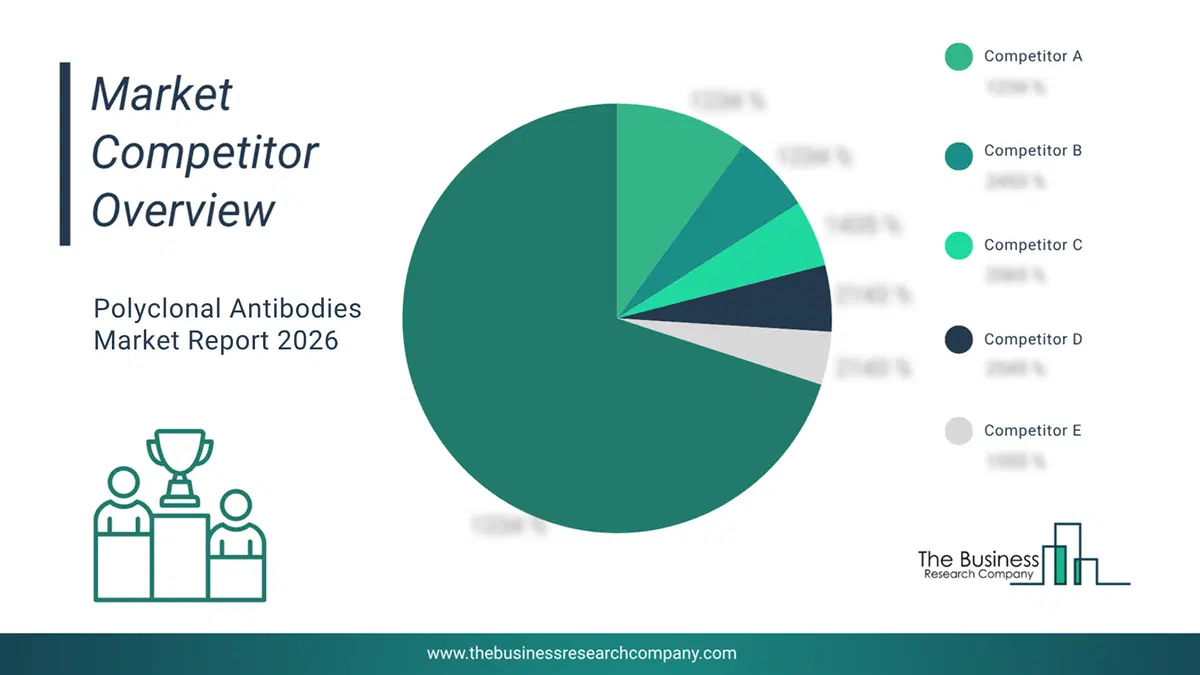
This chart is for illustrative purposes; the full report includes a detailed competitor analysis and comprehensive overview of the top 10 companies in the market.
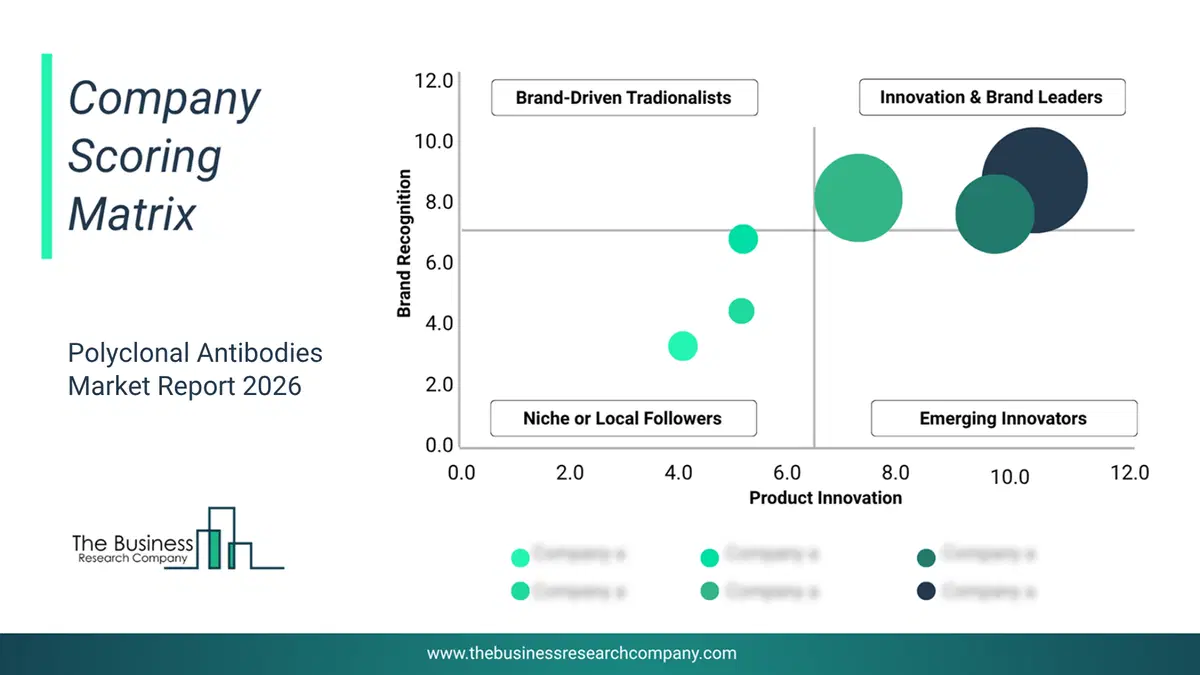
This chart maps companies by product innovation and brand strength, with bubble size indicating relative revenue, helping identify market leaders, challengers, and niche players. This is an illustrative chart; the full report provides a complete and accurate competitive analysis.
Global Polyclonal Antibodies Market Trends and Insights
Major companies operating in the polyclonal antibodies market are focusing on developing advanced solutions, such as hyperimmune antibody therapies, to enhance patient outcomes, reduce severe complications, and improve immune responses. Hyperimmune antibody therapies involve the use of polyclonal antibodies derived from plasma donors with high levels of neutralizing antibodies, providing targeted immune protection against viral infections. For instance, in April 2023, SAB Biotherapeutics, a US-based biotechnology company, announced positive Phase 3 trial results for SAB-185, its fully human polyclonal antibody therapy, in patients at high risk for severe COVID-19 complications. Designed to neutralize SARS-CoV-2 effectively, SAB-185 demonstrated safety and efficacy, highlighting the potential of polyclonal antibody therapies to improve treatment outcomes in vulnerable patient populations.What Are Latest Mergers And Acquisitions In The Polyclonal Antibodies Market?
In September 2024, Leinco Technologies, a US-based biotech company, acquired QED Biosciences for an undisclosed amount. Through this acquisition, Leinco aims to enhance and expand its collection of antibodies (both monoclonal and polyclonal), along with its related products and services for research and diagnostic uses. QED Biosciences is a US-based company that offers polyclonal rabbit antibody production.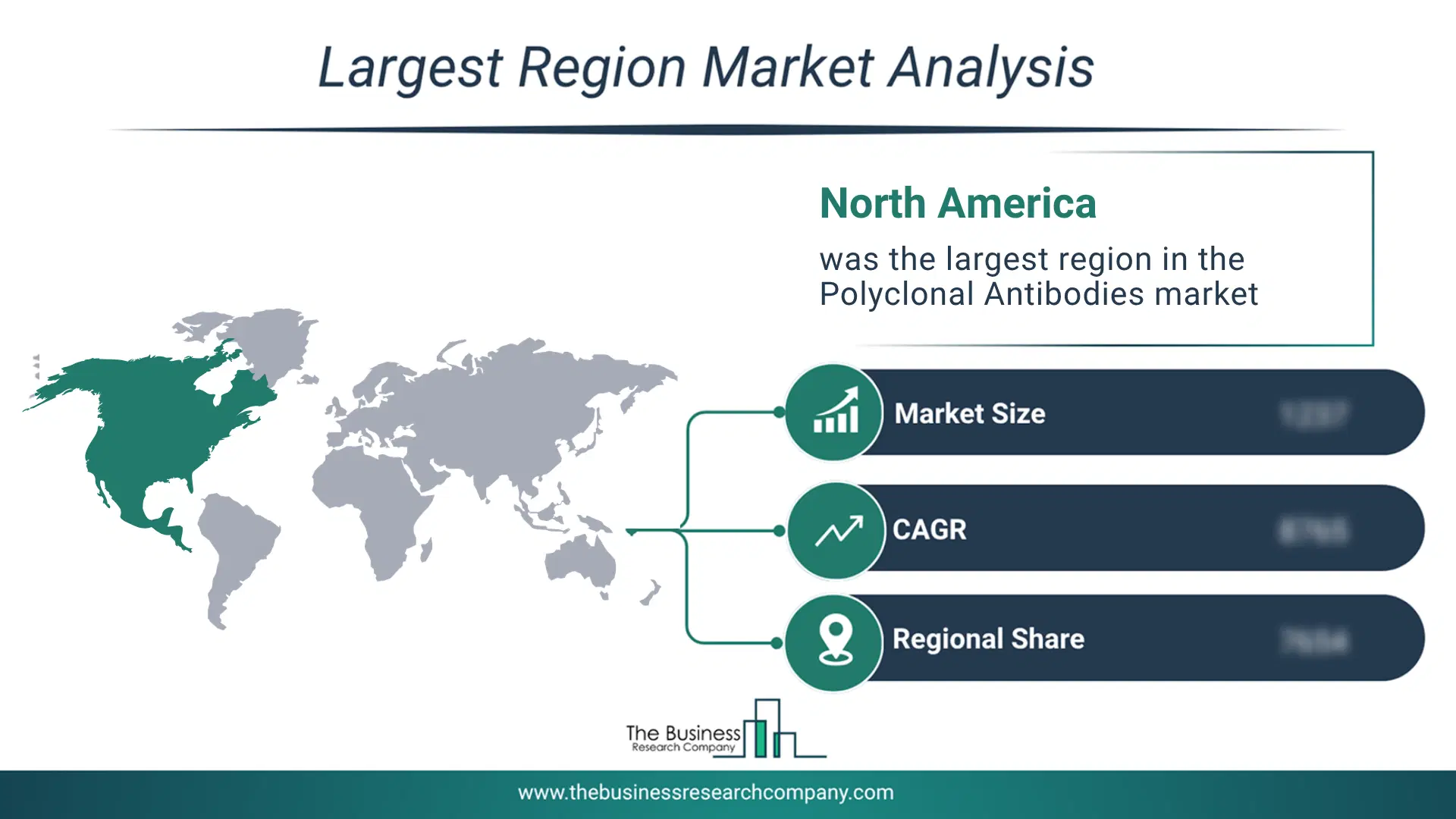
Regional Insights
North America was the largest region in the polyclonal antibodies market in 2025. Asia-Pacific is expected to be the fastest-growing region in the global polyclonal antibodies market size forecast period. The regions covered in this market report are Asia-Pacific, South East Asia, Western Europe, Eastern Europe, North America, South America, Middle East, Africa. The countries covered in this market report are Australia, Brazil, China, France, Germany, India, Indonesia, Japan, Taiwan, Russia, South Korea, UK, USA, Canada, Italy, Spain.What Defines the Polyclonal Antibodies Market?
The polyclonal antibodies market consists of sales of anti-cd4 polyclonal antibodies, anti-her2 polyclonal antibodies, and anti-insulin polyclonal antibodies. Values in this market are ‘factory gate’ values, that is the value of goods sold by the manufacturers or creators of the goods, whether to other entities (including downstream manufacturers, wholesalers, distributors, and retailers) or directly to end customers. The value of goods in this market includes related services sold by the creators of the goods.How is Market Value Defined and Measured?
The market value is defined as the revenues that enterprises gain from the sale of goods and/or services within the specified market and geography through sales, grants, or donations in terms of the currency (in USD unless otherwise specified). The revenues for a specified geography are consumption values that are revenues generated by organizations in the specified geography within the market, irrespective of where they are produced. It does not include revenues from resales along the supply chain, either further along the supply chain or as part of other products.
This chart presents market attractiveness based on a quantitative evaluation of growth, competition, strategic alignment, and risk, offering a clear view of opportunity areas for decision-making. This chart is for illustrative purposes; the full report contains the complete analysis.

This chart highlights the Total Addressable Market (TAM) by estimating the maximum revenue opportunity using an assumption-driven approach, supporting strategic planning and opportunity sizing across markets. The chart is illustrative; the full report provides a more comprehensive analysis.
What Key Data and Analysis Are Included in the Polyclonal Antibodies Market Report 2026?
The polyclonal antibodies market research report is one of a series of new reports from The Business Research Company that provides market statistics, including industry global market size, regional shares, competitors with the market share, detailed market segments, market trends and opportunities, and any further data you may need to thrive in the polyclonal antibodies industry. The market research report delivers a complete perspective of everything you need, with an in-depth analysis of the current and future state of the industry.Polyclonal Antibodies Market Report Forecast Analysis
| Report Attribute | Details |
|---|---|
| Market Size Value In 2026 | $1.58 billion |
| Revenue Forecast In 2030 | $2.1 billion |
| Growth Rate | CAGR of 6.4% from 2026 to 2030 |
| Base Year For Estimation | 2025 |
| Actual Estimates/Historical Data | 2020-2025 |
| Forecast Period | 2026 - 2030 |
| Market Representation | Revenue in USD Billion and CAGR from 2026 to 2030 |
| Segments Covered | Product Type, Source, Application, End-User |
| Regional Scope | Asia-Pacific, Western Europe, Eastern Europe, North America, South America, Middle East, Africa |
| Country Scope | The countries covered in the report are Australia, Brazil, China, France, Germany, India, Indonesia, Japan, Taiwan, Russia, South Korea, UK, USA, Canada, Italy, Spain. |
| Key Companies Profiled | Abcam plc, GenScript Biotech Corporation, Merck KGaA, Thermo Fisher Scientific Inc., Becton Dickinson and Company, BioLegend Inc., Bio-Rad Laboratories Inc., Cell Signaling Technology Inc., F. Hoffmann-La Roche Ltd., PerkinElmer Inc., Creative Diagnostics, Agilent Technologies, Analytik Jena GmbH, Atlas Antibodies, Danaher Corporation, DC Biosciences Ltd., ImmonoPresice Antibodies Ltd, Fujirebio, Omega BioTek Inc., Abnova Corporation, Santa Cruz Biotechnology Inc., Enzo Life Sciences Inc., Rockland Immunochemicals Inc., IGY Life Sciences, Genway Biotech, Good Biotech, Gallus Immunotech Inc., BioGenes GmbH, Capralogics Inc., Bio X Cell |
| Customization Scope | Request for Customization |
| Pricing And Purchase Options | Explore Purchase Options |