
Diabetes Stem Cell Therapy Market Report 2026
Global Outlook – By Type (Preclinical, Clinical Phase 1 And 2), By Therapy Type (Autologous Stem Cell Therapy, Allogeneic Stem Cell Therapy, Induced Pluripotent Stem Cell Therapy, Mesenchymal Stem Cell Therapy, Hematopoietic Stem Cell Therapy), By Delivery Method (Intravenous Injection, Intramuscular Injection, Intra-Pancreatic Injection, Local Tissue Delivery), By Application (Type 1 Diabetes Treatment, Type 2 Diabetes Management, Diabetic Complications Treatment, Islet Cell Transplantation), By End-User (Hospitals, Research Institutes, Diabetes Clinics, Pharmaceutical Companies) - Market Size, Trends, Strategies, and Forecast to 2030
Diabetes Stem Cell Therapy Market Overview
• Diabetes Stem Cell Therapy market size has reached to $3.01 billion in 2025 • Expected to grow to $5.29 billion in 2030 at a compound annual growth rate (CAGR) of 11.9% • Growth Driver: Surge In Need For Novel Treatments Fueling The Growth Of The Market Due To Rising Prevalence Of Complex And Chronic Diseases • Market Trend: Innovative Biotechnologies Aim To Restore Insulin Production In Chronic Diabetes • North America was the largest region in 2025 and Asia-Pacific is the fastest growing region.What Is Covered Under Diabetes Stem Cell Therapy Market?
Diabetes stem cell therapy refers to the medical approach of using stem cells to treat or manage diabetes by regenerating, replacing, or repairing damaged pancreatic cells, particularly insulin-producing beta cells. It is widely applied across clinical research and regenerative medicine, enabling improved blood glucose regulation, reduction of diabetes-related complications, and potential long-term disease management. The main types of the diabetes stem cell therapy market include preclinical and clinical phase 1,2 therapies. Preclinical therapies refer to treatments that are in the experimental stage, typically tested in laboratory and animal models to evaluate safety, efficacy, and potential therapeutic benefits before advancing to human clinical trials. These therapies encompass autologous, allogeneic, induced pluripotent, mesenchymal, and hematopoietic stem cell therapies, delivered through methods such as intravenous injection, intramuscular injection, intra-pancreatic injection, and local tissue delivery. They are applied in areas including type 1 diabetes treatment, type 2 diabetes management, diabetic complications treatment, and islet cell transplantation, and are primarily utilized by hospitals, research institutes, diabetes clinics, and pharmaceutical companies.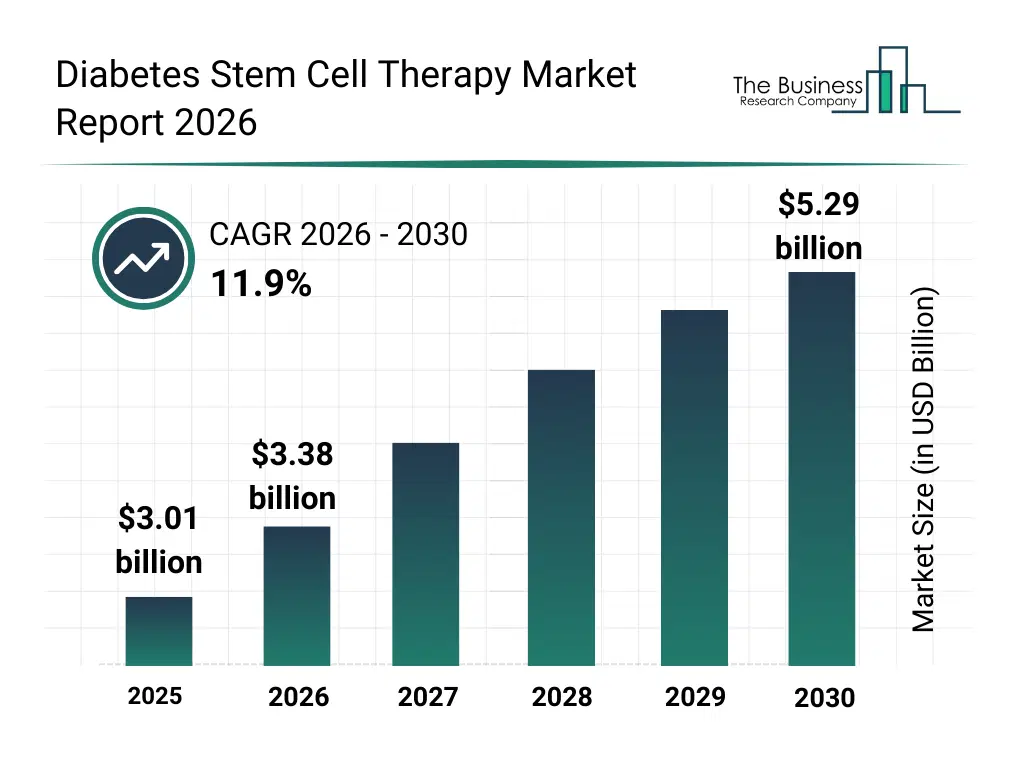
What Is The Diabetes Stem Cell Therapy Market Size and Share 2026?
The diabetes stem cell therapy market size has grown rapidly in recent years. It will grow from $3.01 billion in 2025 to $3.38 billion in 2026 at a compound annual growth rate (CAGR) of 12.2%. The growth in the historic period can be attributed to rising prevalence of type 1 and type 2 diabetes, early-stage success of stem cell research programs, growth of regenerative medicine funding, increasing clinical trial activity, expanding academic research collaborations.What Is The Diabetes Stem Cell Therapy Market Growth Forecast?
The diabetes stem cell therapy market size is expected to see rapid growth in the next few years. It will grow to $5.29 billion in 2030 at a compound annual growth rate (CAGR) of 11.9%. The growth in the forecast period can be attributed to expansion of advanced clinical trials, increasing regulatory approvals for cell therapies, rising investment from pharmaceutical companies, growing adoption of personalized regenerative treatments, technological progress in scalable cell manufacturing. Major trends in the forecast period include increasing development of beta cell replacement therapies, rising focus on immune modulation approaches, expansion of allogeneic stem cell platforms, growing use of encapsulation technologies, advancement of gene-modified stem cell solutions.
Global Diabetes Stem Cell Therapy Market Segmentation
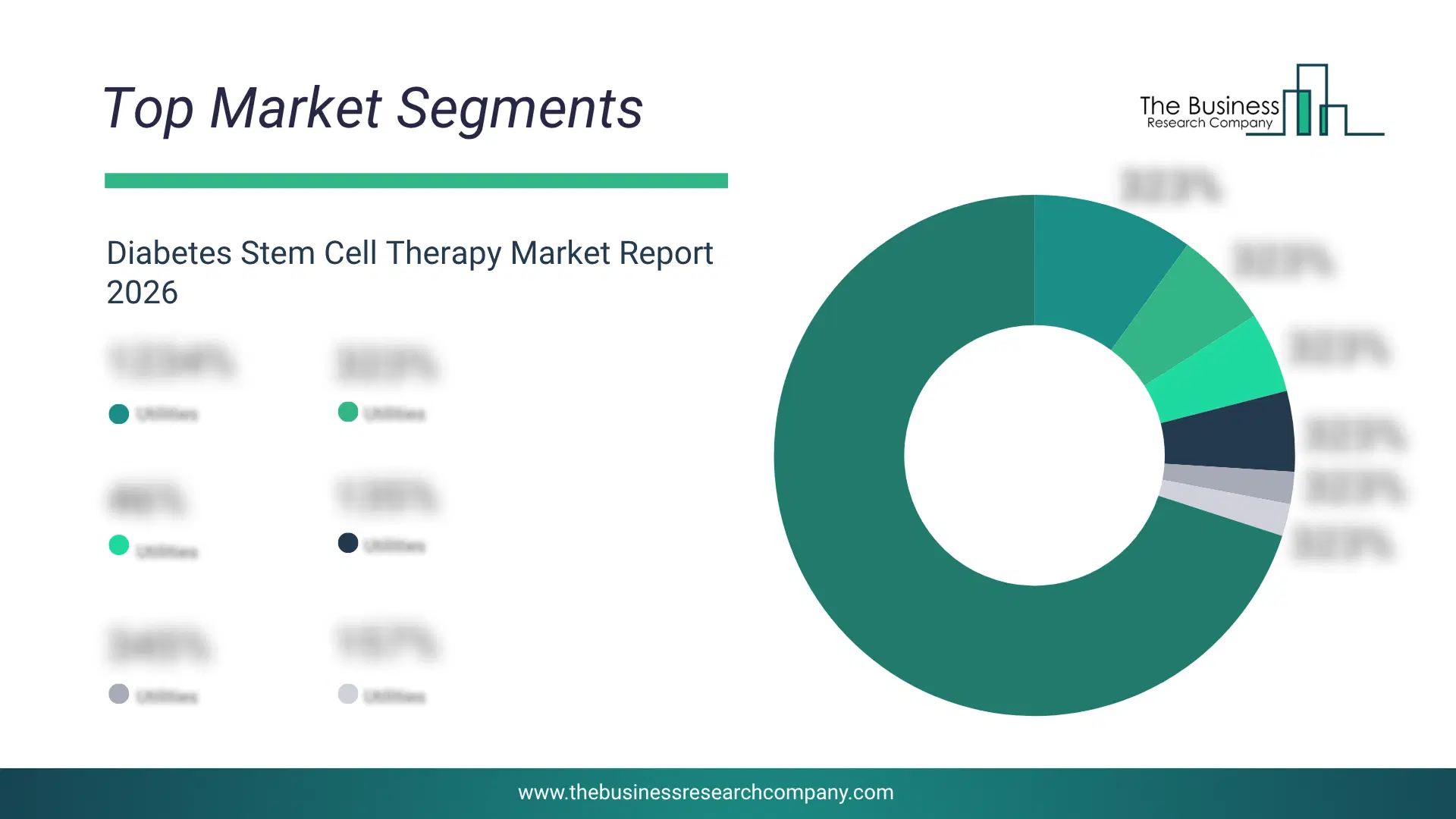
1) By Type: Preclinical, Clinical Phase 1 And 2 2) By Therapy Type: Autologous Stem Cell Therapy, Allogeneic Stem Cell Therapy, Induced Pluripotent Stem Cell Therapy, Mesenchymal Stem Cell Therapy, Hematopoietic Stem Cell Therapy 3) By Delivery Method: Intravenous Injection, Intramuscular Injection, Intra-Pancreatic Injection, Local Tissue Delivery 4) By Application: Type 1 Diabetes Treatment, Type 2 Diabetes Management, Diabetic Complications Treatment, Islet Cell Transplantation 5) By End-User: Hospitals, Research Institutes, Diabetes Clinics, Pharmaceutical Companies Subsegments: 1) By Preclinical: Embryonic Stem Cell Therapy, Induced Pluripotent Stem Cell Therapy, Mesenchymal Stem Cell Therapy, Hematopoietic Stem Cell Therapy 2) By Clinical Phase 1 And 2: Autologous Stem Cell Therapy, Allogeneic Stem Cell Therapy, Pancreatic Islet Cell Therapy, Encapsulated Cell Therapy, Beta Cell Replacement Therapy, Immune Modulation Therapy, Gene-Modified Stem Cell Therapy, Combination Stem Cell TherapyWhat Is The Driver Of The Diabetes Stem Cell Therapy Market?
The growing need for novel treatments is expected to propel the growth of the diabetes stem cell therapy market going forward. Novel treatments refer to therapies that use new mechanisms, targets, or approaches not previously available for disease management. The growing need for novel treatments is driven by the increasing prevalence of complex and chronic diseases, as conventional therapies often fail to provide effective or long-term solutions. Diabetes stem cell therapy helps novel treatments by offering regenerative solutions that can restore pancreatic function, reduce dependence on insulin, and provide a potential long-term cure for diabetes. For instance, in January 2025, according to the National Center for Biotechnology Information (NCBI), a US-based National Library of Medicine, 1,035 new drugs were approved, of which 337 were actual novel drugs, including 81 first-in-class drugs, accounting for 24% of the novel approvals. Therefore, the growing need for novel treatments is driving the growth of the diabetes stem cell therapy industry.Key Players In The Global Diabetes Stem Cell Therapy Market
Major companies operating in the diabetes stem cell therapy market are Mesoblast Limited, Swiss Medica Stem Cells SA, Aspect Biosystems Ltd., Celltex Therapeutics Corporation, Seraxis Inc., BrainStorm Cell Therapeutics Inc., Sernova Corporation, Betalin Therapeutics Ltd., NextCell Pharma AB, PharmaCyte Biotech Inc., Global Institute for Stem Cell Therapy and Research, Throne Biotechnologies Inc., Orgenesis Inc., Holostem Terapie Avanzate S.r.l., Anterogen Co. Ltd., Juventa Regenerative Medicine Inc., Cytori Therapeutics Inc., Pluristem Therapeutics Inc., ReNeuron Group Plc, Athersys Inc.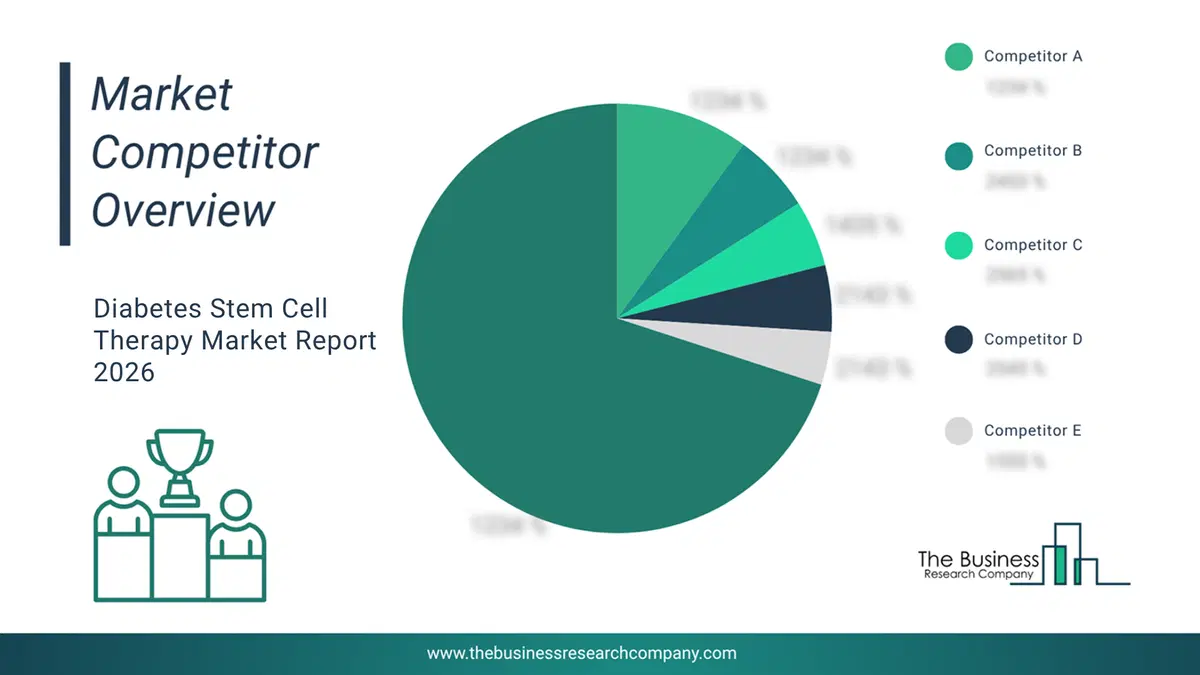
This chart is for illustrative purposes; the full report includes a detailed competitor analysis and comprehensive overview of the top 10 companies in the market.
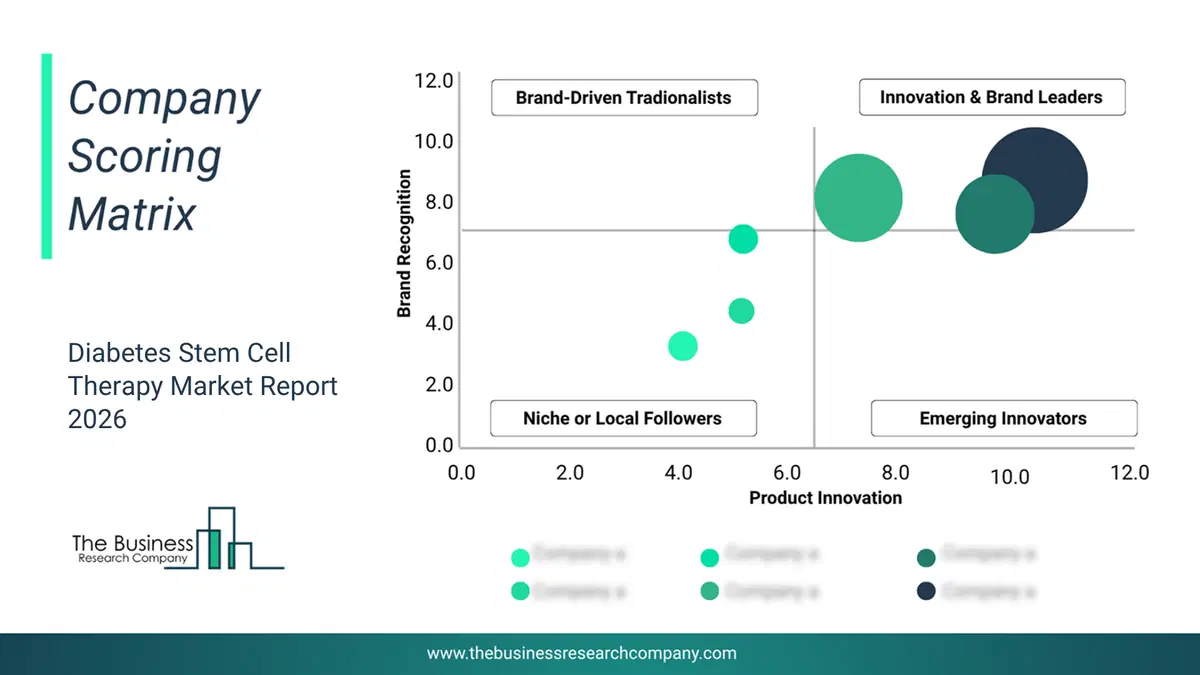
This chart maps companies by product innovation and brand strength, with bubble size indicating relative revenue, helping identify market leaders, challengers, and niche players. This is an illustrative chart; the full report provides a complete and accurate competitive analysis.
Global Diabetes Stem Cell Therapy Market Trends and Insights
Major companies operating in the diabetes stem cell therapy market are focusing on developments in biotechnology, stem cell research, and regenerative medicine to provide innovative cellular therapies that can restore insulin production and improve glycemic control in patients with type 1 diabetes. Biotechnology, stem cell research, and regenerative medicine involve the use of living cells, tissues, and molecular techniques to repair, replace, or regenerate damaged organs or cells, offering advanced therapeutic solutions for chronic diseases. For instance, in June 2023, CellTrans Inc., a US-based biotechnology company, received FDA approval for Lantidra, the first allogeneic pancreatic islet cellular therapy made from deceased donor pancreatic cells for adults with type 1 diabetes experiencing recurrent severe hypoglycemia, which is administered via a single infusion into the hepatic portal vein where the transplanted islet beta cells secrete insulin, enabling some patients to achieve insulin independence for one year or more, with cases up to five years, thereby significantly improving disease management, quality of life, and glycemic control.What Are Latest Mergers And Acquisitions In The Diabetes Stem Cell Therapy Market?
In June 2023, Eli Lilly and Company, a US-based pharmaceutical company, acquired Sigilon Therapeutics Inc. for $309.6 million. Through this acquisition, Eli Lilly aimed to enhance its capabilities in encapsulated cell-therapy solutions for type 1 diabetes by integrating Sigilon’s shielded-cell technology into its portfolio. Sigilon Therapeutics Inc. is a US-based biopharmaceutical company developing a stem cell-based therapy for type 1 diabetes.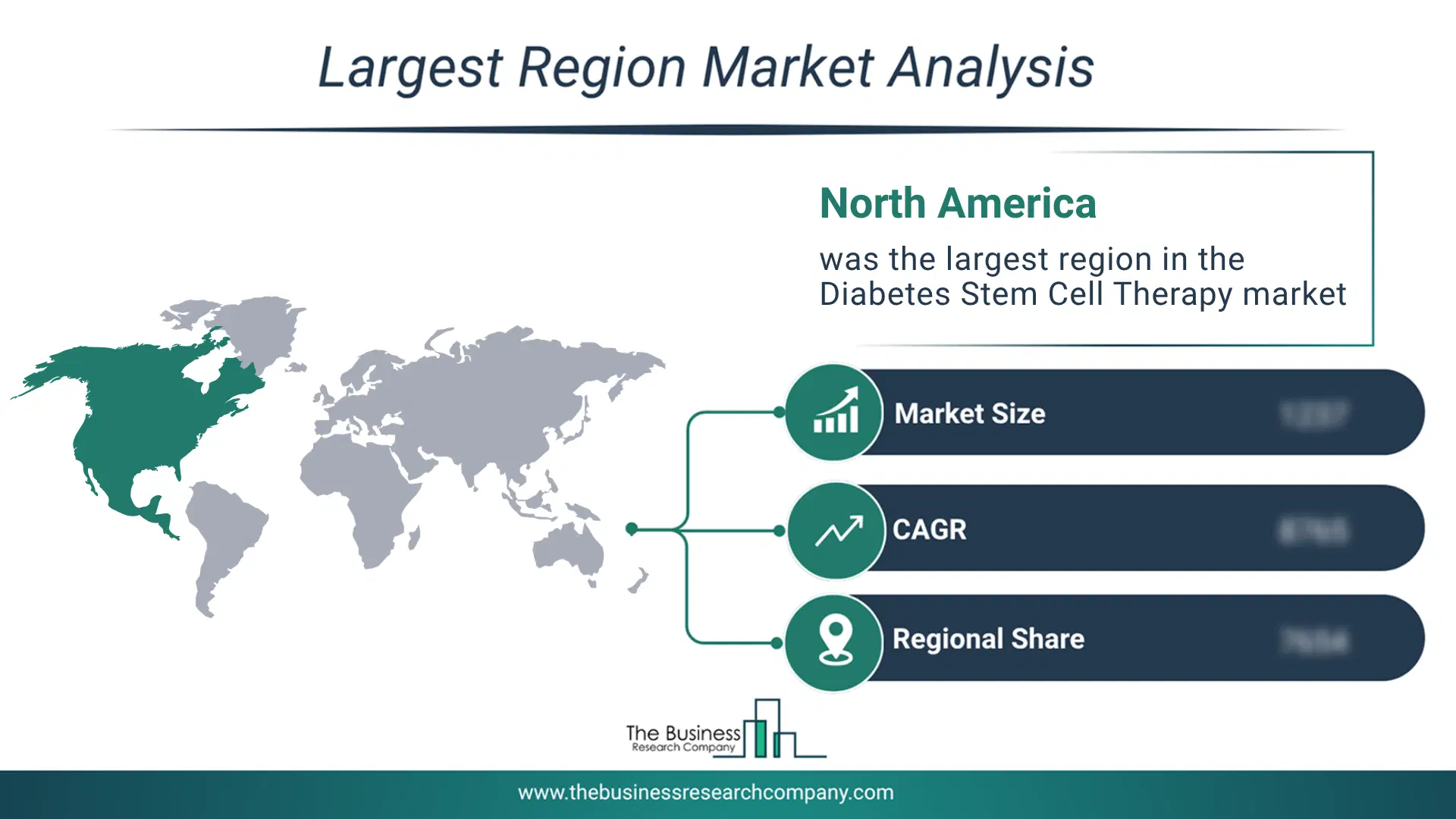
Regional Outlook
North America was the largest region in the diabetes stem cell therapy market in 2025. Asia-Pacific is expected to be the fastest-growing region in the forecast period. The regions covered in this market report are Asia-Pacific, South East Asia, Western Europe, Eastern Europe, North America, South America, Middle East, Africa. The countries covered in this market report are Australia, Brazil, China, France, Germany, India, Indonesia, Japan, Taiwan, Russia, South Korea, UK, USA, Canada, Italy, Spain.What Defines the Diabetes Stem Cell Therapy Market?
The diabetes stem cell therapy market consists of revenues earned by entities by providing services such as stem cell transplantation services, quality control testing, logistics and cryopreservation services, and patient monitoring services. The market value includes the value of related goods sold by the service provider or included within the service offering. The diabetes stem cell therapy market also includes sales of bioreactors, syringes, cell therapy kits, diagnostic kits, and laboratory consumables. Values in this market are ‘factory gate’ values, that is, the value of goods sold by the manufacturers or creators of the goods, whether to other entities (including downstream manufacturers, wholesalers, distributors, and retailers) or directly to end customers. The value of goods in this market includes related services sold by the creators of the goods.How is Market Value Defined and Measured?
The market value is defined as the revenues that enterprises gain from the sale of goods and/or services within the specified market and geography through sales, grants, or donations in terms of the currency (in USD unless otherwise specified). The revenues for a specified geography are consumption values that are revenues generated by organizations in the specified geography within the market, irrespective of where they are produced. It does not include revenues from resales along the supply chain, either further along the supply chain or as part of other products.
This chart presents market attractiveness based on a quantitative evaluation of growth, competition, strategic alignment, and risk, offering a clear view of opportunity areas for decision-making. This chart is for illustrative purposes; the full report contains the complete analysis.

This chart highlights the Total Addressable Market (TAM) by estimating the maximum revenue opportunity using an assumption-driven approach, supporting strategic planning and opportunity sizing across markets. The chart is illustrative; the full report provides a more comprehensive analysis.
What Key Data and Analysis Are Included in the Diabetes Stem Cell Therapy Market Report 2026?
The diabetes stem cell therapy market research report is one of a series of new reports from The Business Research Company that provides market statistics, including industry global market size, regional shares, competitors with the market share, detailed market segments, market trends and opportunities, and any further data you may need to thrive in the diabetes stem cell therapy industry. The market research report delivers a complete perspective of everything you need, with an in-depth analysis of the current and future state of the industry.Diabetes Stem Cell Therapy Market Report Forecast Analysis
| Report Attribute | Details |
|---|---|
| Market Size Value In 2026 | $3.38 billion |
| Revenue Forecast In 2030 | $5.29 billion |
| Growth Rate | CAGR of 11.9% from 2026 to 2030 |
| Base Year For Estimation | 2025 |
| Actual Estimates/Historical Data | 2020-2025 |
| Forecast Period | 2026 - 2030 |
| Market Representation | Revenue in USD Billion and CAGR from 2026 to 2030 |
| Segments Covered | Type, Therapy Type, Delivery Method, Application, End-User |
| Regional Scope | Asia-Pacific, Western Europe, Eastern Europe, North America, South America, Middle East, Africa |
| Country Scope | The countries covered in the report are Australia, Brazil, China, France, Germany, India, Indonesia, Japan, Taiwan, Russia, South Korea, UK, USA, Canada, Italy, Spain |
| Key Companies Profiled | Mesoblast Limited, Swiss Medica Stem Cells SA, Aspect Biosystems Ltd., Celltex Therapeutics Corporation, Seraxis Inc., BrainStorm Cell Therapeutics Inc., Sernova Corporation, Betalin Therapeutics Ltd., NextCell Pharma AB, PharmaCyte Biotech Inc., Global Institute for Stem Cell Therapy and Research, Throne Biotechnologies Inc., Orgenesis Inc., Holostem Terapie Avanzate S.r.l., Anterogen Co. Ltd., Juventa Regenerative Medicine Inc., Cytori Therapeutics Inc., Pluristem Therapeutics Inc., ReNeuron Group Plc, Athersys Inc. |
| Customization Scope | Request for Customization |
| Pricing And Purchase Options | Explore Purchase Options |