
Histidine Tag (His-Tag) Antibody Market Report 2026
Global Outlook – By Product Type (Monoclonal Antibodies, Polyclonal Antibodies, Recombinant Antibodies, Nanobodies, Other Product Types), By Application (Western Blotting, Immunoprecipitation, Flow Cytometry, Other Applications), By End-User (Pharmaceutical Companies, Biotechnology Companies, Academic and Research Institutions, Contract Research Organizations (CROs), Other End-Users) - Market Size, Trends, Strategies, and Forecast to 2030
Histidine Tag (His-Tag) Antibody Market Overview
• Histidine Tag (His-Tag) Antibody market size has reached to $1.43 billion in 2025 • Expected to grow to $2.48 billion in 2030 at a compound annual growth rate (CAGR) of 11.5% • Growth Driver: Rising Demand For Biopharmaceuticals Fueling The Growth Of The Market Due To Increasing Need For Targeted Therapeutics And Recombinant Protein Research • Market Trend: Automated Biosensor Kits Enable Rapid His-Tagged Protein Quantification • North America was the largest region in 2025 and Asia-Pacific is the fastest growing region.What Is Covered Under Histidine Tag (His-Tag) Antibody Market?
Histidine tag (His-Tag) antibody is a specialized antibody that specifically binds to the histidine tag, a short sequence of histidine residues genetically attached to recombinant proteins. It enables researchers to identify, isolate, and analyze His-tagged proteins with high specificity and efficiency in molecular and biochemical experiments. The main product types of histidine tag (His-Tag) antibody are monoclonal antibodies, polyclonal antibodies, recombinant antibodies, nanobodies, and other product types. Monoclonal antibodies represent highly specific antibodies produced from a single clone and are used for the precise detection of His-tagged recombinant proteins. It finds applications in western blotting, immunoprecipitation, flow cytometry, and others, supporting end users such as research and development in pharmaceutical, biotechnology, academic, and contract research organizations.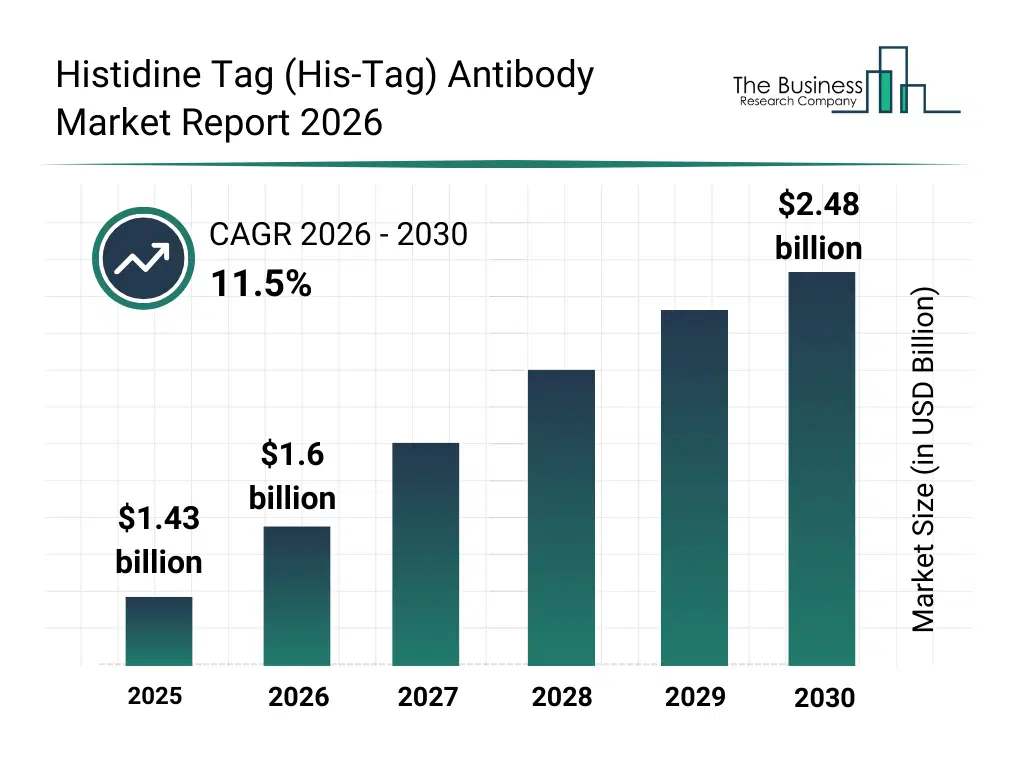
What Is The Histidine Tag (His-Tag) Antibody Market Size and Share 2026?
The histidine tag (his-tag) antibody market size has grown rapidly in recent years. It will grow from $1.43 billion in 2025 to $1.6 billion in 2026 at a compound annual growth rate (CAGR) of 11.8%. The growth in the historic period can be attributed to growth in recombinant protein research, expansion of academic life science laboratories, increasing use of affinity purification techniques, availability of standardized tagging methods, rising funding for molecular biology research.What Is The Histidine Tag (His-Tag) Antibody Market Growth Forecast?
The histidine tag (his-tag) antibody market size is expected to see rapid growth in the next few years. It will grow to $2.48 billion in 2030 at a compound annual growth rate (CAGR) of 11.5%. The growth in the forecast period can be attributed to increasing demand for advanced protein analysis tools, expansion of biopharmaceutical research pipelines, growing adoption of recombinant and nanobody formats, rising focus on assay sensitivity and accuracy, increasing automation in laboratory workflows. Major trends in the forecast period include increasing demand for high-specificity research antibodies, rising use of his-tag antibodies in protein purification, growing adoption of recombinant antibody formats, expansion of tagged protein expression studies, enhanced focus on reproducibility in life science research.
Global Histidine Tag (His-Tag) Antibody Market Segmentation
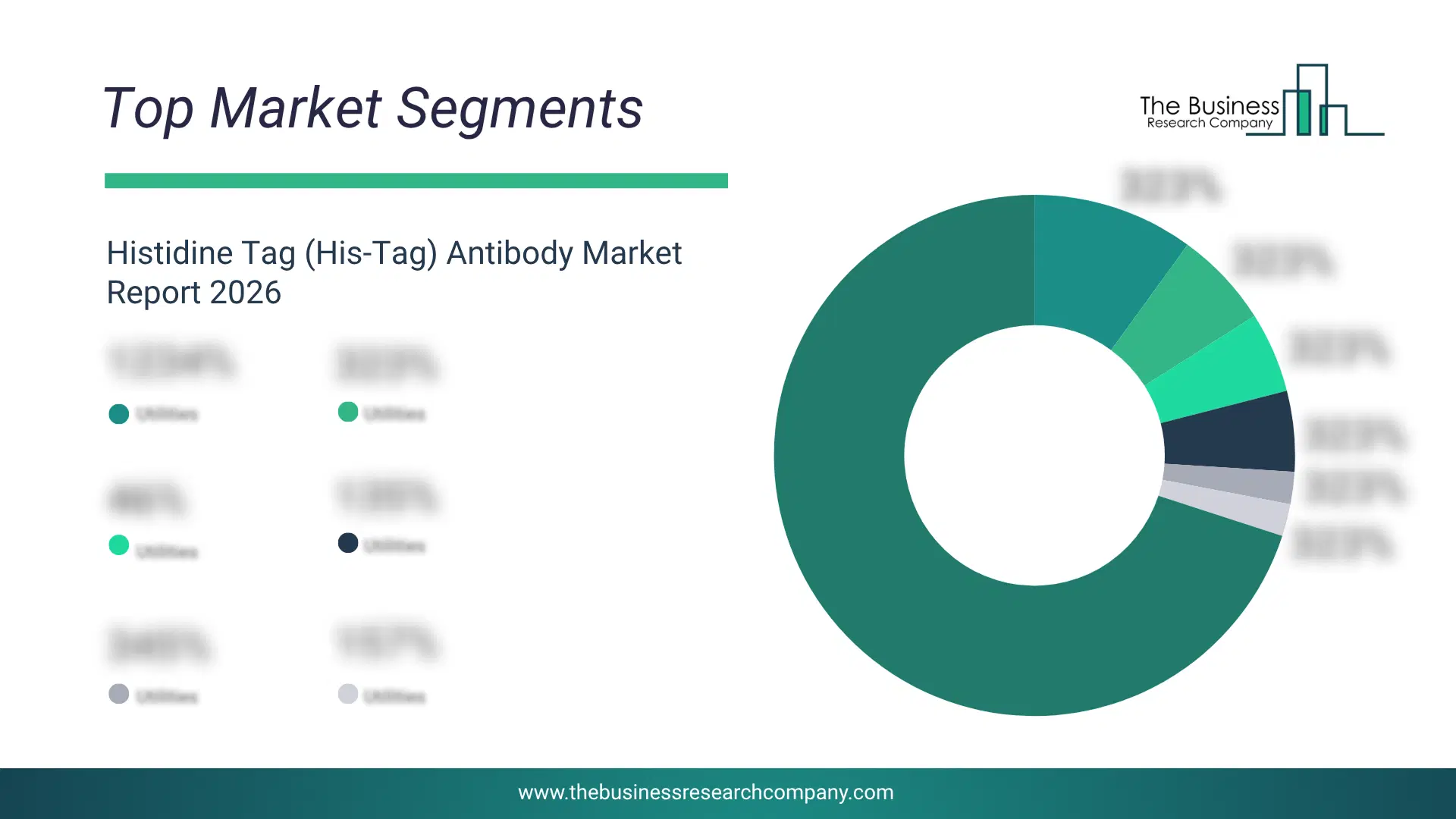
1) By Product Type: Monoclonal Antibodies, Polyclonal Antibodies, Recombinant Antibodies, Nanobodies, Other Product Types 2) By Application: Western Blotting, Immunoprecipitation, Flow Cytometry, Other Applications 3) By End-User: Pharmaceutical Companies, Biotechnology Companies, Academic and Research Institutions, Contract Research Organizations (CROs), Other End-Users Subsegments: 1) By Monoclonal Antibodies: Mouse Monoclonal, Rabbit Monoclonal, Rat Monoclonal, Humanized Monoclonal, Chimeric Monoclonal, Isotype Control Monoclonal 2) By Polyclonal Antibodies: Rabbit Polyclonal, Goat Polyclonal, Chicken Polyclonal, Donkey Polyclonal, Sheep Polyclonal, Serum Free Polyclonal 3) By Recombinant Antibodies: Recombinant Rabbit Monoclonal, Recombinant Mouse Monoclonal, Single Chain Variable Fragment, Fragment Antigen Binding, Multispecific Engineered Antibody, Recombinant Antibody Pair Capture And Detection 4) By Nanobodies: Single Domain Antibody Camelid, Single Domain Antibody Alpaca, Fluorescent Protein Fused Nanobody, Enzyme Conjugated Nanobody, Immobilized Nanobody For Affinity Purification, Intrabody Nanobody For Intracellular Detection 5) By Other Product Types: Secondary Antibodies Against Histidine Tag, Conjugated Secondary Antibodies Against Histidine Tag, Magnetic Beads Nickel Nitrilotriacetic Acid, Agarose Beads Nickel Nitrilotriacetic Acid, Enzyme Linked Immunosorbent Assay Kits For Histidine Tag, Lateral Flow Assays For Histidine TagWhat Is The Driver Of The Histidine Tag (His-Tag) Antibody Market?
The rising demand for biopharmaceuticals is expected to propel the growth of the histidine tag (His-Tag) antibody market going forward. Biopharmaceuticals refer to therapeutic products that are produced using biological sources or biotechnology methods rather than traditional chemical synthesis. The increasing demand for biopharmaceuticals is due to the rising prevalence of chronic and complex diseases, which drives the need for advanced targeted therapies that conventional drugs cannot effectively treat. Histidine tag (His-Tag) antibodies support biopharmaceutical research by enabling precise detection and purification of recombinant proteins, making them essential for drug development and therapeutic protein production. They reduce experimental errors by providing high specificity and reproducibility, improving research efficiency and bioprocess reliability. For instance, in June 2025, according to the Centers for Medicare & Medicaid Services (CMS), a US-based federal agency, prescription drug outlays rose 11.4% in 2023 to $449.7 billion, accelerating from 7.8% growth in 2022. Therefore, the rising demand for biopharmaceuticals is driving the growth of the histidine tag (His-Tag) antibody industry.Key Players In The Global Histidine Tag (His-Tag) Antibody Market
Major companies operating in the histidine tag (his-tag) antibody market are Thermo Fisher Scientific Inc., Danaher Corporation, Merck KGaA, Bio-Rad Laboratories Inc., GeneTex Inc., Bio-Techne Corporation, GenScript Biotech Corporation, Sino Biological Inc., Cell Signaling Technology Inc., Wuhan Elabscience Biotechnology Co. Ltd., ABclonal Technology Co. Ltd., Proteintech Group Inc., Santa Cruz Biotechnology Inc., Rockland Immunochemicals Inc., Creative Diagnostics Inc., Aviva Systems Biology Corporation, Abnova Corporation, Boster Biological Technology Co. Ltd., Columbia Biosciences Corporation, NSJ Bioreagents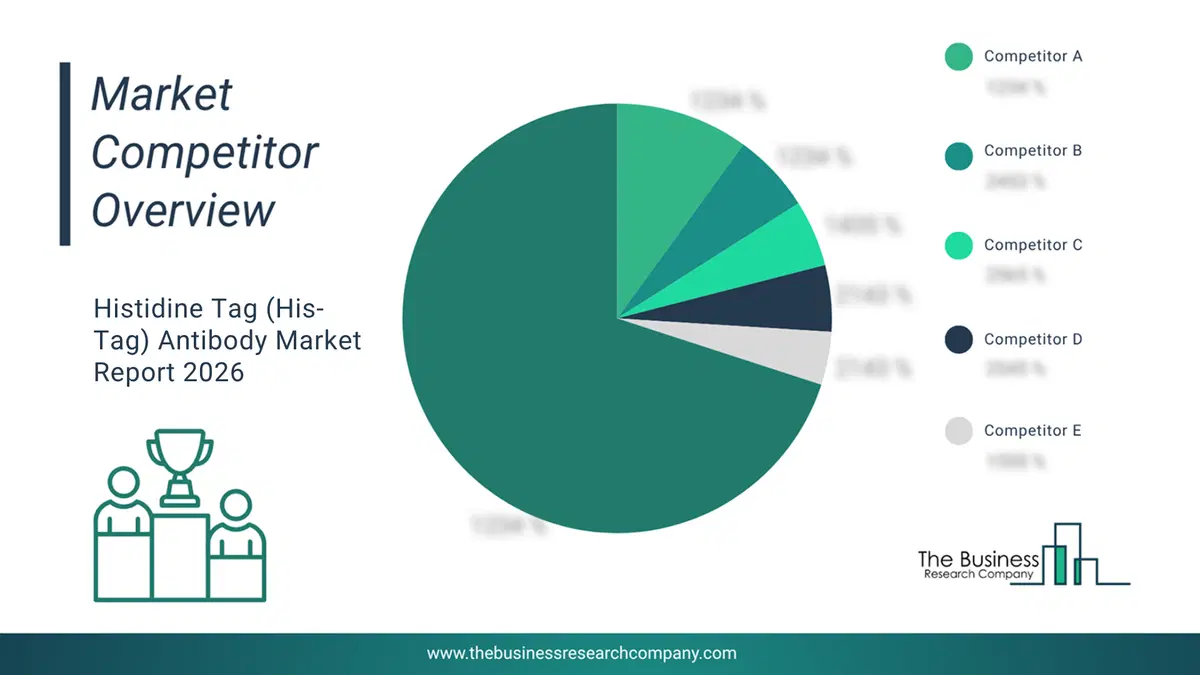
This chart is for illustrative purposes; the full report includes a detailed competitor analysis and comprehensive overview of the top 10 companies in the market.
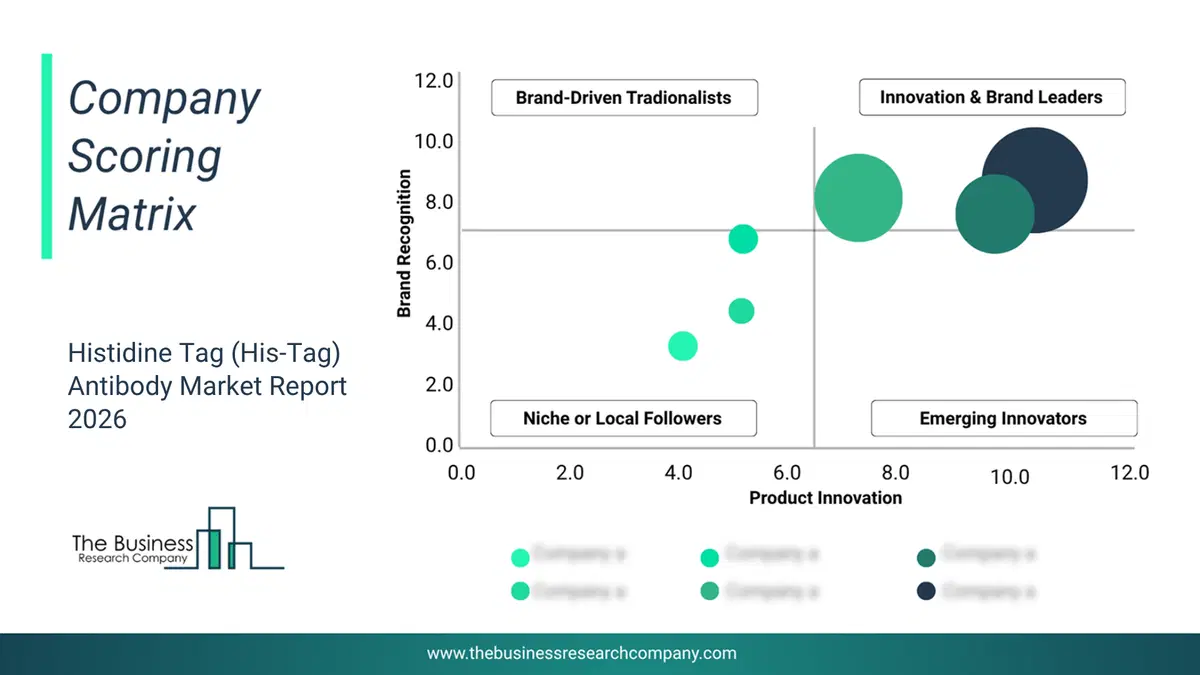
This chart maps companies by product innovation and brand strength, with bubble size indicating relative revenue, helping identify market leaders, challengers, and niche players. This is an illustrative chart; the full report provides a complete and accurate competitive analysis.
Global Histidine Tag (His-Tag) Antibody Market Trends and Insights
Major companies operating in the histidine tag (His-Tag) antibody market are focusing on developing advanced products, such as automated biosensor-based His-tag quantification kits, to accelerate and standardize protein detection from crude and purified samples. Automated biosensor-based His Tag quantification kits refer to commercial assay kits that use biosensor technology to detect and measure His-tagged proteins automatically. For instance, in November 2025, HexagonFab Limited (trading as Abselion), a UK-based life-science tools company, launched the Tagged Protein Quantification Kit or His-tag and Tagged Protein Sensor or His-tag Quantification. It is built for the Amperia platform and developed with GenScript’s THE His Tag monoclonal antibodies. The automated biosensor-based His-tag quantification kit provides a rapid, mix-and-read, antibody-free method for quantifying His-tagged proteins directly in crude samples. When used with Abselion's Amperia biosensors, the system enables real-time, label-free analysis, streamlining the protein characterization workflow without the need for multiple, separate instruments. Its main purpose is to accelerate expression screening, bioprocess optimization, and quality control by providing dependable His-tagged protein measurements without specialist training.What Are Latest Mergers And Acquisitions In The Histidine Tag (His-Tag) Antibody Market?
In December 2023, Danaher Corporation, a US-based biotechnology company, acquired Abcam plc for $5.7 billion. With this acquisition, Danaher aims to strengthen its position in the life sciences and proteomics market, expanding its portfolio of research reagents, antibodies, and related solutions for drug discovery and diagnostics. Abcam plc is a UK-based life sciences company that produces His-Tag antibodies for detecting and purifying recombinant proteins.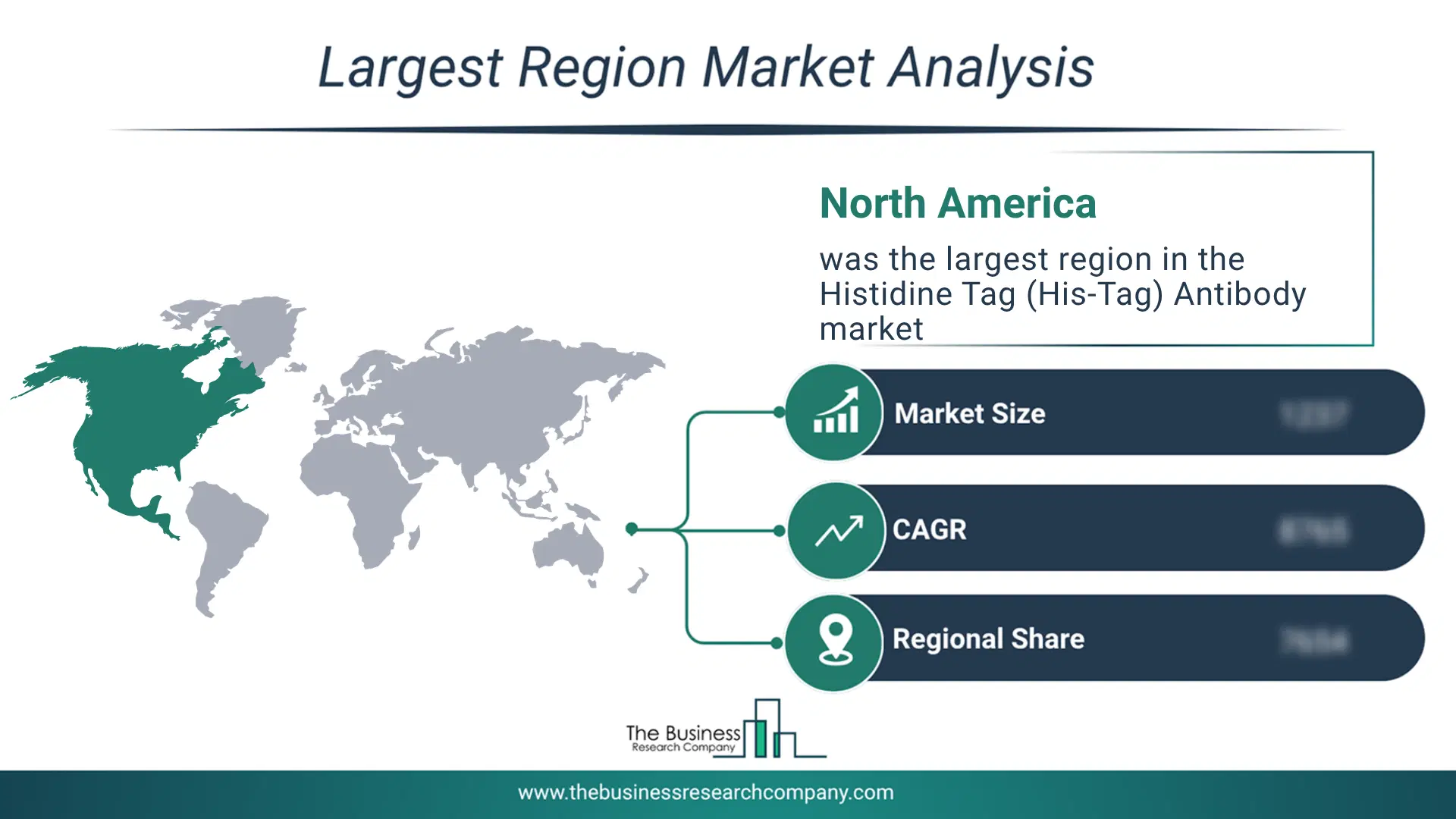
Regional Outlook
North America was the largest region in the histidine tag (His-Tag) antibody market in 2025. Asia-Pacific is expected to be the fastest-growing region in the forecast period. The regions covered in this market report are Asia-Pacific, South East Asia, Western Europe, Eastern Europe, North America, South America, Middle East, Africa. The countries covered in this market report are Australia, Brazil, China, France, Germany, India, Indonesia, Japan, Taiwan, Russia, South Korea, UK, USA, Canada, Italy, Spain.What Defines the Histidine Tag (His-Tag) Antibody Market?
The histidine tag (His-Tag) antibody market consists of sales of primary antibodies, secondary antibodies, antibody conjugates, antibody kits, and purification resins. Values in this market are ‘factory gate’ values, that is, the value of goods sold by the manufacturers or creators of the goods, whether to other entities (including downstream manufacturers, wholesalers, distributors, and retailers) or directly to end customers. The value of goods in this market includes related services sold by the creators of the goods.How is Market Value Defined and Measured?
The market value is defined as the revenues that enterprises gain from the sale of goods and/or services within the specified market and geography through sales, grants, or donations in terms of the currency (in USD unless otherwise specified). The revenues for a specified geography are consumption values that are revenues generated by organizations in the specified geography within the market, irrespective of where they are produced. It does not include revenues from resales along the supply chain, either further along the supply chain or as part of other products.
This chart presents market attractiveness based on a quantitative evaluation of growth, competition, strategic alignment, and risk, offering a clear view of opportunity areas for decision-making. This chart is for illustrative purposes; the full report contains the complete analysis.

This chart highlights the Total Addressable Market (TAM) by estimating the maximum revenue opportunity using an assumption-driven approach, supporting strategic planning and opportunity sizing across markets. The chart is illustrative; the full report provides a more comprehensive analysis.
What Key Data and Analysis Are Included in the Histidine Tag (His-Tag) Antibody Market Report 2026?
The histidine tag (his-tag) antibody market research report is one of a series of new reports from The Business Research Company that provides market statistics, including industry global market size, regional shares, competitors with the market share, detailed market segments, market trends and opportunities, and any further data you may need to thrive in the histidine tag (his-tag) antibody industry. The market research report delivers a complete perspective of everything you need, with an in-depth analysis of the current and future state of the industry.Histidine Tag (His-Tag) Antibody Market Report Forecast Analysis
| Report Attribute | Details |
|---|---|
| Market Size Value In 2026 | $1.6 billion |
| Revenue Forecast In 2030 | $2.48 billion |
| Growth Rate | CAGR of 11.5% from 2026 to 2030 |
| Base Year For Estimation | 2025 |
| Actual Estimates/Historical Data | 2020-2025 |
| Forecast Period | 2026 - 2030 |
| Market Representation | Revenue in USD Billion and CAGR from 2026 to 2030 |
| Segments Covered | Product Type, Application, End-User |
| Regional Scope | Asia-Pacific, Western Europe, Eastern Europe, North America, South America, Middle East, Africa |
| Country Scope | The countries covered in the report are Australia, Brazil, China, France, Germany, India, Indonesia, Japan, Taiwan, Russia, South Korea, UK, USA, Canada, Italy, Spain |
| Key Companies Profiled | Thermo Fisher Scientific Inc., Danaher Corporation, Merck KGaA, Bio-Rad Laboratories Inc., GeneTex Inc., Bio-Techne Corporation, GenScript Biotech Corporation, Sino Biological Inc., Cell Signaling Technology Inc., Wuhan Elabscience Biotechnology Co. Ltd., ABclonal Technology Co. Ltd., Proteintech Group Inc., Santa Cruz Biotechnology Inc., Rockland Immunochemicals Inc., Creative Diagnostics Inc., Aviva Systems Biology Corporation, Abnova Corporation, Boster Biological Technology Co. Ltd., Columbia Biosciences Corporation, NSJ Bioreagents |
| Customization Scope | Request for Customization |
| Pricing And Purchase Options | Explore Purchase Options |