
Humanized Antibody Market Report 2026
Global Outlook – By Antibody Type (Humanized Antibodies, Chimeric Antibodies, Fully Human Antibodies, Murine Antibodies), By Application (Cancer, Autoimmune Diseases, Infectious Diseases, Cardiovascular Diseases, Other Applications), By End-User (Hospitals, Research Institutes, Diagnostic Laboratories, Other End-Users) - Market Size, Trends, Strategies, and Forecast to 2030
Humanized Antibody Market Overview
• Humanized Antibody market size has reached to $39.7 billion in 2025 • Expected to grow to $72.47 billion in 2030 at a compound annual growth rate (CAGR) of 12.7% • Growth Driver: Increasing Prevalence Of Infectious Diseases Is Fueling The Growth Of The Market Due To Rising Disease Burden And Demand For Targeted Therapeutics • Market Trend: Regulatory Approval Expands Treatment Options For HER2-Positive Cancer • North America was the largest region in 2025 and Asia-Pacific is the fastest growing region.What Is Covered Under Humanized Antibody Market?
Humanized antibody is a type of monoclonal antibody engineered to closely resemble human antibodies while retaining the antigen-binding specificity of the original non-human antibody. It is produced by replacing most of the non-human antibody’s protein sequences with corresponding human sequences, minimizing immune reactions. It is widely used in research and therapy to target specific molecules with high precision and reduced immunogenicity. The main antibody types of humanized antibodies include humanized antibodies, chimeric antibodies, fully human antibodies, and murine antibodies. Humanized antibodies refer to laboratory-engineered antibodies originally derived from non-human species in which most of the molecular structure is replaced with human antibody components while preserving only the antigen-binding regions needed for target recognition. The various product types include monoclonal antibodies, polyclonal antibodies, and antibody-drug conjugates, and find applications in cancer, autoimmune diseases, infectious diseases, cardiovascular diseases, and others, serving end users such as hospitals, research institutes, diagnostic laboratories, and others.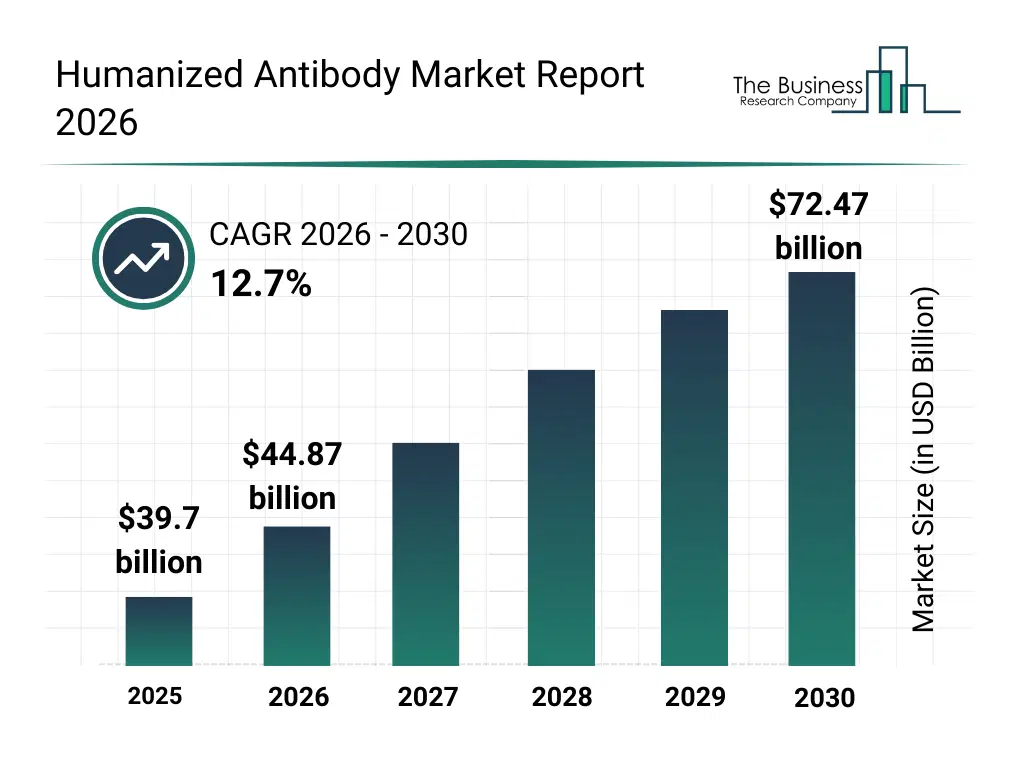
What Is The Humanized Antibody Market Size and Share 2026?
The humanized antibody market size has grown rapidly in recent years. It will grow from $39.7 billion in 2025 to $44.87 billion in 2026 at a compound annual growth rate (CAGR) of 13.0%. The growth in the historic period can be attributed to advancements in monoclonal antibody engineering, early clinical success of antibody therapies, expansion of oncology drug development, increasing biologics manufacturing capacity, growth of translational research programs.What Is The Humanized Antibody Market Growth Forecast?
The humanized antibody market size is expected to see rapid growth in the next few years. It will grow to $72.47 billion in 2030 at a compound annual growth rate (CAGR) of 12.7%. The growth in the forecast period can be attributed to increasing demand for personalized cancer therapies, rising investments in next-generation biologics, expansion of autoimmune and infectious disease indications, growing adoption of precision medicine approaches, increasing regulatory approvals for antibody-based drugs. Major trends in the forecast period include increasing development of targeted antibody therapies, rising focus on reducing immunogenicity in biologics, growing adoption of antibody drug conjugates, expansion of bispecific and multispecific antibody formats, enhanced emphasis on precision oncology applications.
Global Humanized Antibody Market Segmentation
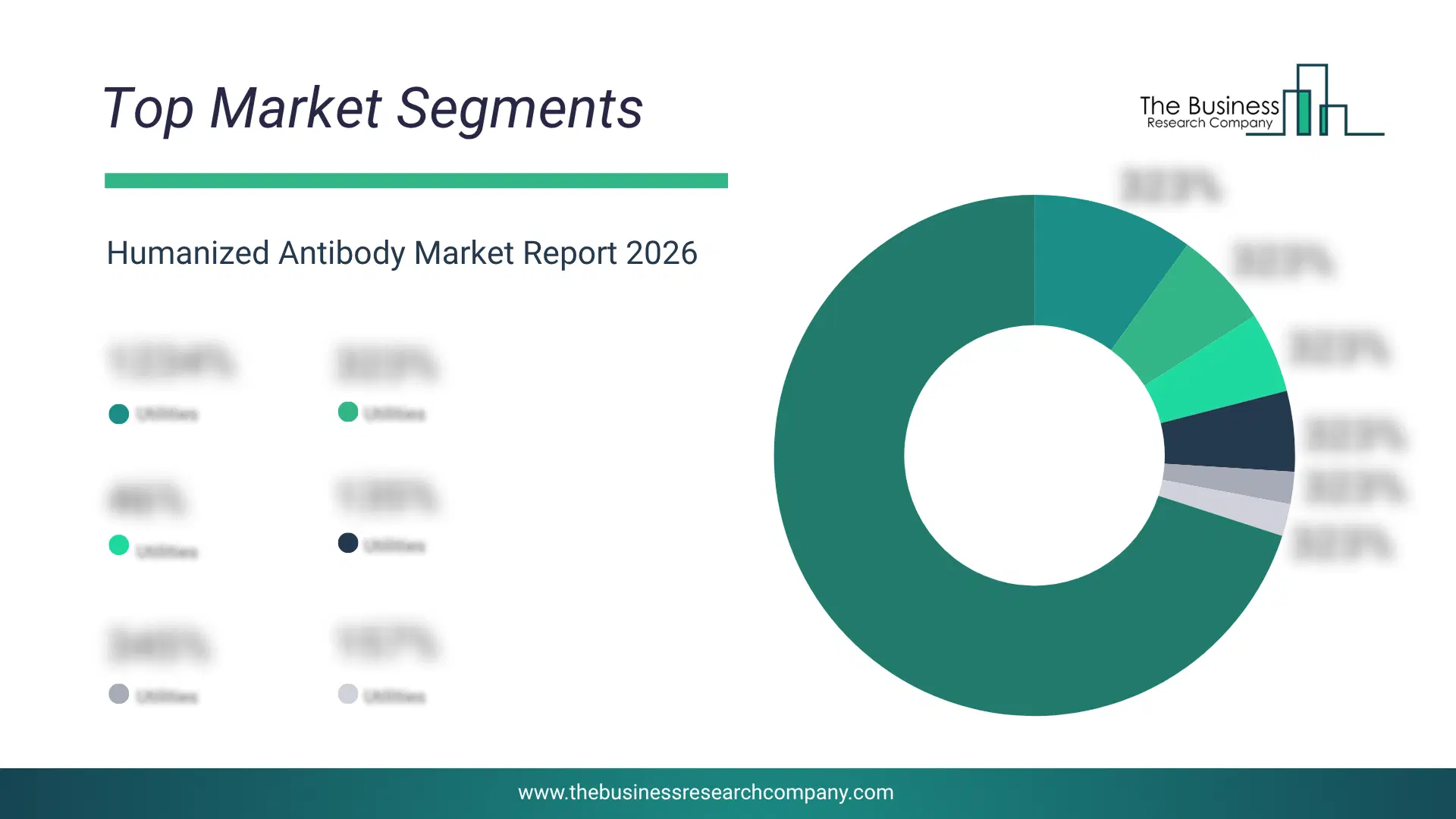
1) By Antibody Type: Humanized Antibodies, Chimeric Antibodies, Fully Human Antibodies, Murine Antibodies 2) By Application: Cancer, Autoimmune Diseases, Infectious Diseases, Cardiovascular Diseases, Other Applications 3) By End-User: Hospitals, Research Institutes, Diagnostic Laboratories, Other End-Users Subsegments: 1) By Humanized Antibodies: Monospecific Therapeutic Antibodies, Bispecific And Multispecific Antibodies, Antibody Drug Conjugates, Single Chain Variable Fragment Based Antibodies, Fragment Antigen Binding Based Antibodies 2) By Chimeric Antibodies: Monospecific Therapeutic Antibodies, Bispecific And Multispecific Antibodies, Antibody Drug Conjugates, Single Chain Variable Fragment Based Antibodies, Fragment Antigen Binding Based Antibodies 3) By Fully Human Antibodies: Monospecific Therapeutic Antibodies, Bispecific And Multispecific Antibodies, Antibody Drug Conjugates, Single Chain Variable Fragment Based Antibodies, Long Acting Half Life Extended Antibodies 4) By Murine Antibodies: Monospecific Research Grade Antibodies, Hybridoma Derived Antibodies, Antibody Drug Conjugate Precursors, Single Chain Variable Fragment Based Antibodies, Fragment Antigen Binding Based AntibodiesWhat Is The Driver Of The Humanized Antibody Market?
The growing prevalence of infectious diseases is expected to propel the growth of the humanized antibody market going forward. Infectious diseases are illnesses caused by pathogenic microorganisms, such as bacteria, viruses, fungi, or parasites, that can be transmitted directly or indirectly from one individual to another. The rate of infectious disease incidence is rising due to increased travel, which facilitates the rapid spread of pathogens across borders. Humanized antibody aids in infectious diseases treatment by providing targeted immune responses, making it ideal for combating specific pathogens. It reduces the risk of immune rejection by closely resembling natural human antibodies, improving treatment safety and therapeutic effectiveness. For instance, in February 2024, according to the UK Health Security Agency, a UK-based government agency, tuberculosis (a contagious bacterial infection that primarily affects the lungs) cases in England rose to 4,850 in 2023, an increase of 10.7% from 4,380 cases in 2022. Therefore, the growing prevalence of infectious diseases is driving the growth of the humanized antibody industry.Key Players In The Global Humanized Antibody Market
Major companies operating in the humanized antibody market are Johnson & Johnson, Roche Holding AG, Merck & Co. Inc., Pfizer Inc., AbbVie Inc., Sanofi S.A., Novartis AG, AstraZeneca PLC, Bristol-Myers Squibb Company, GlaxoSmithKline plc, Eli Lilly and Company, Takeda Pharmaceutical Company Limited, Amgen Inc., Biogen Inc., Daiichi Sankyo Company Limited, UCB S.A., Genmab A/S, Xencor Inc., Zymeworks Inc., MacroGenics Inc.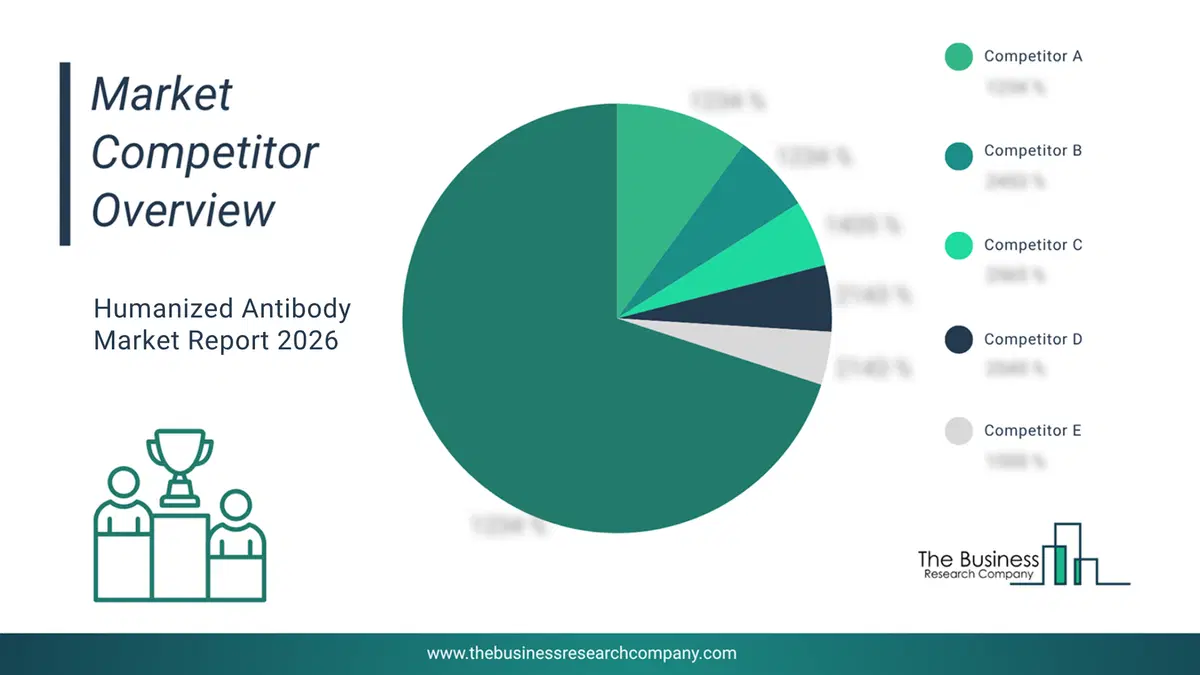
This chart is for illustrative purposes; the full report includes a detailed competitor analysis and comprehensive overview of the top 10 companies in the market.
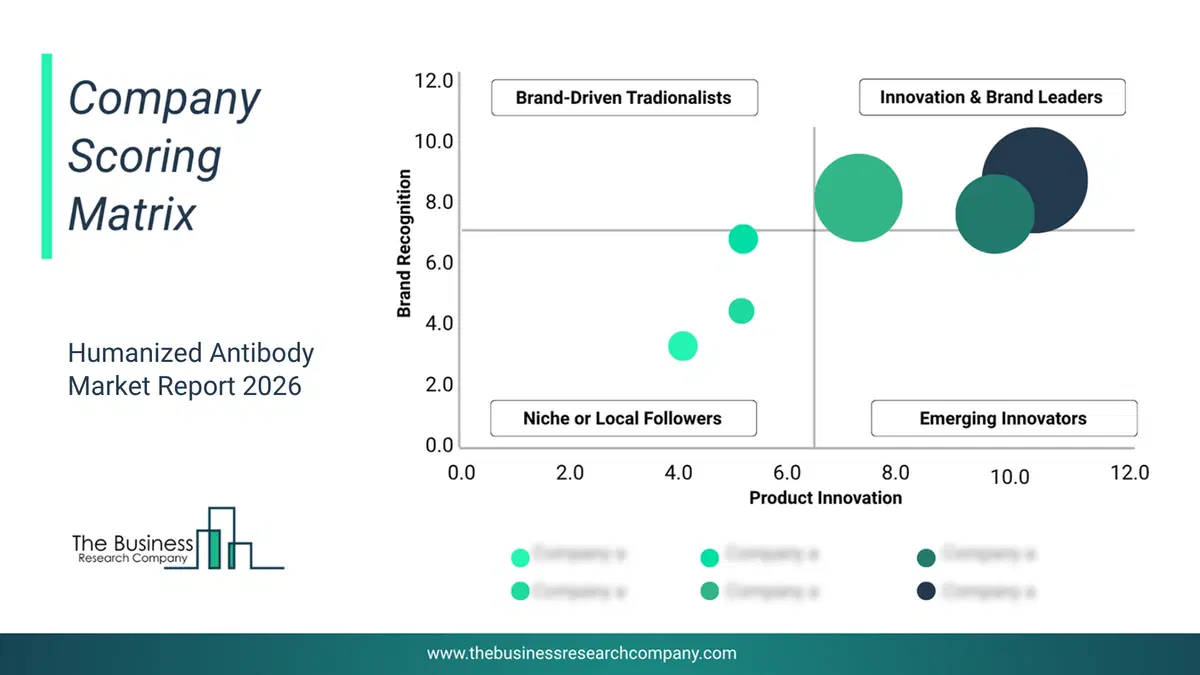
This chart maps companies by product innovation and brand strength, with bubble size indicating relative revenue, helping identify market leaders, challengers, and niche players. This is an illustrative chart; the full report provides a complete and accurate competitive analysis.
Global Humanized Antibody Market Trends and Insights
Major companies operating in the humanized antibody market are focusing on developing innovative products, such as humanized bispecific antibodies, to rapidly expand labelable indications and deliver stronger, more durable antitumor activity. Humanized Bispecific Antibodies are engineered antibodies that can simultaneously bind to two different antigens or two distinct epitopes on the same antigen, while being modified to closely resemble natural human antibodies. For instance, in November 2024, Jazz Pharmaceuticals plc, an Ireland-based biopharmaceutical company, received accelerated approval from the Food and Drug Administration for Ziihera (zanidatamab-hrii) in the U.S. for previously treated, unresectable, or metastatic HER2-positive (IHC 3+) biliary tract cancer. It is a humanized, immunoglobulin G (IgG)-like, bispecific human epidermal growth factor receptor 2 (HER2)-directed antibody that binds two extracellular human epidermal growth factor receptor 2 (HER2) sites. It includes a proprietary mechanism of action that engages both immune effector cells and directly induces apoptosis in cancer cells, enabling a targeted attack on malignant blasts without the need for prior immune activation.What Are Latest Mergers And Acquisitions In The Humanized Antibody Market?
In September 2024, Valerio Therapeutics S.A., a France-based clinical-stage biotechnology company, acquired Emglev Therapeutics for an undisclosed amount. With this acquisition, Valerio Therapeutics aims to strengthen its antibody discovery capabilities by integrating Emglev Therapeutics humanized single-domain antibody (sdAb) technology to accelerate the development of next-generation therapeutic candidates across multiple disease areas. Emglev Therapeutics is a France-based biotechnology company specializing in humanized single-domain antibody (sdAb) development.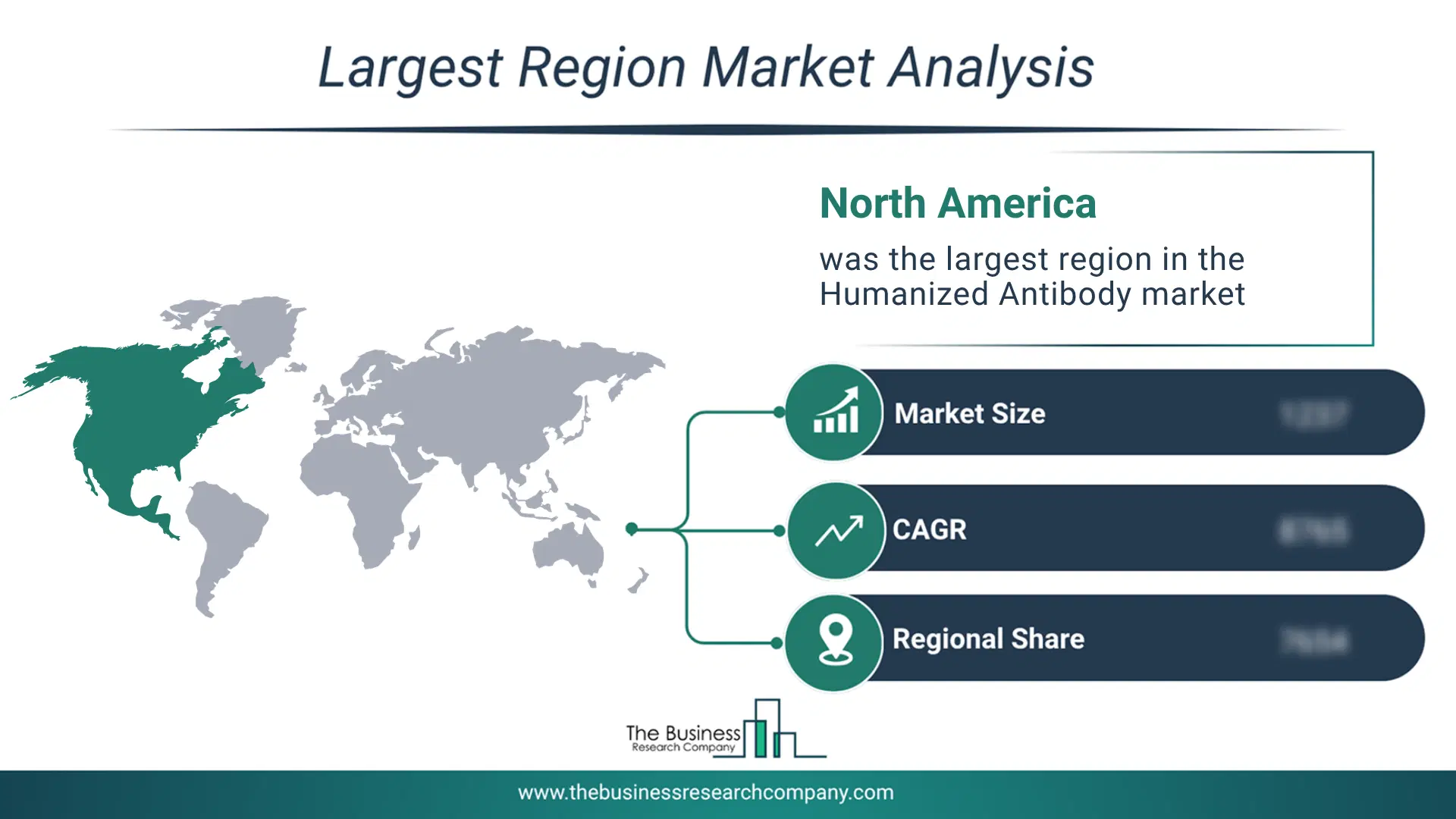
Regional Outlook
North America was the largest region in the humanized antibody market in 2025. Asia-Pacific is expected to be the fastest-growing region in the forecast period. The regions covered in this market report are Asia-Pacific, South East Asia, Western Europe, Eastern Europe, North America, South America, Middle East, Africa. The countries covered in this market report are Australia, Brazil, China, France, Germany, India, Indonesia, Japan, Taiwan, Russia, South Korea, UK, USA, Canada, Italy, Spain.What Defines the Humanized Antibody Market?
The humanized antibody market consists of sales of humanized bispecific antibodies, humanized antibody fragments, humanized antibody libraries, and antibody humanization kits and reagents. Values in this market are ‘factory gate’ values, that is, the value of goods sold by the manufacturers or creators of the goods, whether to other entities (including downstream manufacturers, wholesalers, distributors, and retailers) or directly to end customers. The value of goods in this market includes related services sold by the creators of the goods.How is Market Value Defined and Measured?
The market value is defined as the revenues that enterprises gain from the sale of goods and/or services within the specified market and geography through sales, grants, or donations in terms of the currency (in USD unless otherwise specified). The revenues for a specified geography are consumption values that are revenues generated by organizations in the specified geography within the market, irrespective of where they are produced. It does not include revenues from resales along the supply chain, either further along the supply chain or as part of other products.
This chart presents market attractiveness based on a quantitative evaluation of growth, competition, strategic alignment, and risk, offering a clear view of opportunity areas for decision-making. This chart is for illustrative purposes; the full report contains the complete analysis.

This chart highlights the Total Addressable Market (TAM) by estimating the maximum revenue opportunity using an assumption-driven approach, supporting strategic planning and opportunity sizing across markets. The chart is illustrative; the full report provides a more comprehensive analysis.
What Key Data and Analysis Are Included in the Humanized Antibody Market Report 2026?
The humanized antibody market research report is one of a series of new reports from The Business Research Company that provides market statistics, including industry global market size, regional shares, competitors with the market share, detailed market segments, market trends and opportunities, and any further data you may need to thrive in the humanized antibody industry. The market research report delivers a complete perspective of everything you need, with an in-depth analysis of the current and future state of the industry.Humanized Antibody Market Report Forecast Analysis
| Report Attribute | Details |
|---|---|
| Market Size Value In 2026 | $44.87 billion |
| Revenue Forecast In 2030 | $72.47 billion |
| Growth Rate | CAGR of 12.7% from 2026 to 2030 |
| Base Year For Estimation | 2025 |
| Actual Estimates/Historical Data | 2020-2025 |
| Forecast Period | 2026 - 2030 |
| Market Representation | Revenue in USD Billion and CAGR from 2026 to 2030 |
| Segments Covered | Antibody Type, Application, End-User |
| Regional Scope | Asia-Pacific, Western Europe, Eastern Europe, North America, South America, Middle East, Africa |
| Country Scope | The countries covered in the report are Australia, Brazil, China, France, Germany, India, Indonesia, Japan, Taiwan, Russia, South Korea, UK, USA, Canada, Italy, Spain |
| Key Companies Profiled | Johnson & Johnson, Roche Holding AG, Merck & Co. Inc., Pfizer Inc., AbbVie Inc., Sanofi S.A., Novartis AG, AstraZeneca PLC, Bristol-Myers Squibb Company, GlaxoSmithKline plc, Eli Lilly and Company, Takeda Pharmaceutical Company Limited, Amgen Inc., Biogen Inc., Daiichi Sankyo Company Limited, UCB S.A., Genmab A/S, Xencor Inc., Zymeworks Inc., MacroGenics Inc. |
| Customization Scope | Request for Customization |
| Pricing And Purchase Options | Explore Purchase Options |