
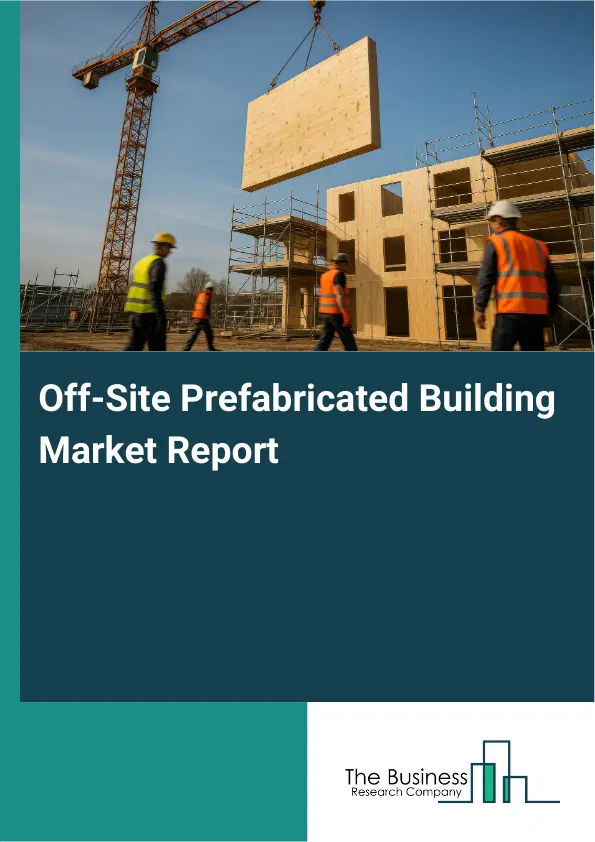
Off-Site Prefabricated Building Market Report 2026
Global Outlook – By Product Type (Modular Buildings, Panelized Structures, Portable Buildings, Mobile Homes, Container Homes), By Material Type (Wood, Steel, Concrete, Composite Materials, Insulated Panels), By Construction Method (Off-Site Fabrication, On-Site Construction), By Customer Type (Government Agencies, Private Developers, Non-Profit Organizations, Individual Homeowners, Corporations), By End-User (Residential, Commercial, Industrial, Educational, Healthcare) – Market Size, Trends, Strategies, and Forecast to 2030
Off-Site Prefabricated Building Market Overview
• Off-Site Prefabricated Building market size has reached to $120.78 billion in 2025 • Expected to grow to $169.7 billion in 2030 at a compound annual growth rate (CAGR) of 7% • Growth Driver: Increasing Focus On Sustainable Building Practices Driving The Market Growth Due To Stringent Environmental Regulations • Market Trend: Innovating The Construction Landscape With Off-Site Strategies • Asia-Pacific was the largest region and fastest growing region.What Is Covered Under Off-Site Prefabricated Building Market?
An off-site prefabricated building is a structure that is manufactured and partially or fully assembled in a factory before being transported to its final location. It is designed to accelerate construction, reduce on-site labor, and minimize material waste. The building is composed of modular components that can be efficiently joined together, allowing for flexible design, easy scalability, and consistent quality control throughout the construction process. The main product types of off-site prefabricated building are modular buildings, panelized structures, portable buildings, mobile homes, and container homes. Modular buildings are factory-made sections (modules) assembled on-site to create complete structures, enabling faster and more flexible construction than traditional methods. They use various material types, including wood, steel, concrete, composite materials, and insulated panels, and incorporate construction methods such as off-site fabrication and on-site assembly. These buildings serve various customer types, including government agencies, private developers, non-profit organizations, individual homeowners, and corporations, and are used by end users across residential, commercial, industrial, educational, and healthcare sectors.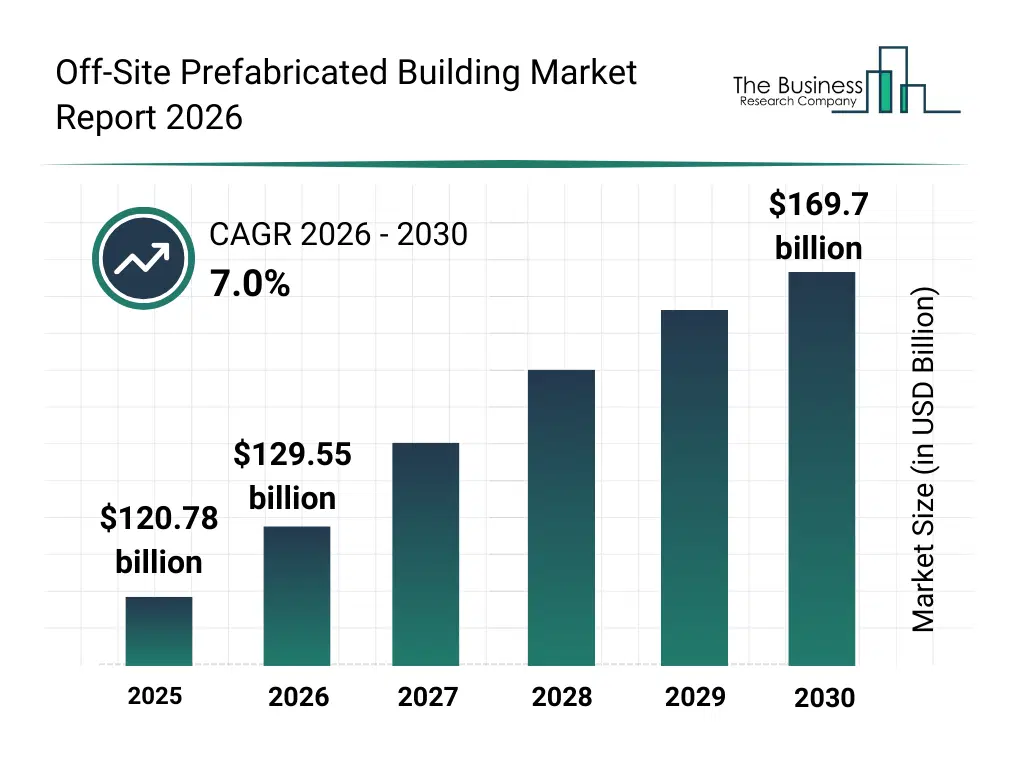
What Is The Off-Site Prefabricated Building Market Size and Share 2026?
The off-site prefabricated building market size has grown strongly in recent years. It will grow from $120.78 billion in 2025 to $129.55 billion in 2026 at a compound annual growth rate (CAGR) of 7.3%. The growth in the historic period can be attributed to rising adoption of modular construction, increasing use of panelized building systems, growth in off-site construction methods, expansion of residential and commercial projects, rising demand for faster project delivery.What Is The Off-Site Prefabricated Building Market Growth Forecast?
The off-site prefabricated building market size is expected to see strong growth in the next few years. It will grow to $169.7 billion in 2030 at a compound annual growth rate (CAGR) of 7.0%. The growth in the forecast period can be attributed to increasing deployment of off-site prefabricated buildings, development of hybrid modular systems, adoption of smart factory fabrication, growth in educational and healthcare construction, integration of digital monitoring and assembly systems. Major trends in the forecast period include implementation of off-site prefabricated buildings, adoption of modular construction techniques, deployment of panelized and portable structures, expansion of smart fabrication and assembly systems, integration of connected building components.
Global Off-Site Prefabricated Building Market Segmentation
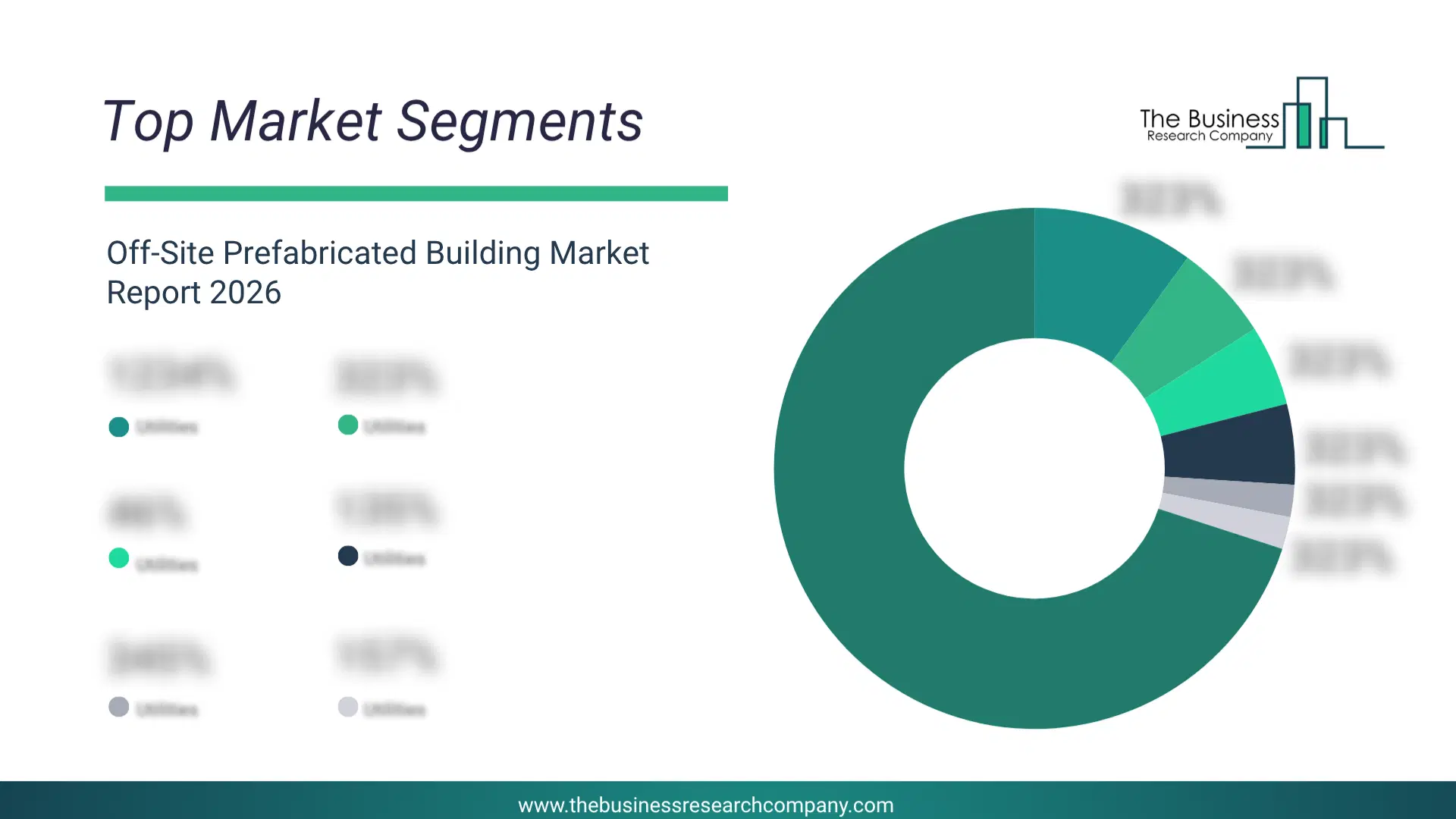
1) By Product Type: Modular Buildings, Panelized Structures, Portable Buildings, Mobile Homes, Container Homes 2) By Material Type: Wood, Steel, Concrete, Composite Materials, Insulated Panels 3) By Construction Method: Off-Site Fabrication, On-Site Construction 4) By Customer Type: Government Agencies, Private Developers, Non-Profit Organizations, Individual Homeowners, Corporations 5) By End-User: Residential, Commercial, Industrial, Educational, Healthcare Subsegments: 1) By Modular Buildings: Steel Modular Buildings, Concrete Modular Buildings, Timber Modular Buildings, Hybrid Modular Buildings 2) By Panelized Structures: Wall Panel Systems, Floor Panel Systems, Roof Panel Systems, Hybrid Panelized Structures 3) By Portable Buildings: Temporary Offices, Construction Site Cabins, Mobile Classrooms, Emergency Shelters 4) By Mobile Homes: Single-Wide Mobile Homes, Double-Wide Mobile Homes, Triple-Wide Mobile Homes, Luxury Mobile Homes 5) By Container Homes: Standard Shipping Container Homes, Modified Shipping Container Homes, Stacked Container Homes, Luxury Container HomesWhat Is The Driver Of The Off-Site Prefabricated Building Market?
The increasing focus on sustainable building practices is expected to propel the growth of the off-site prefabricated building market going forward. Sustainable building practices refer to construction methods and design strategies that minimize environmental impact while maximizing resource efficiency and occupant well-being. The emphasis on sustainable building practices is rising due to stringent government regulations and environmental policies aimed at reducing carbon emissions, as governments worldwide implement mandatory building codes and certification requirements to combat climate change. Increasing focus on sustainable building practices supports the adoption of off-site prefabricated construction by promoting resource efficiency, minimizing material waste, reducing on-site environmental impact, and enabling better quality control and energy performance throughout the building lifecycle. For instance, in July 2024, according to the U.S. Green Building Council, a US-based non-profit organization, they were part of over 46,000 residential projects certified under the leadership in energy and environmental design (LEED) green building rating system, with 2023 seeing nearly a 5% rise in new LEED residential project registrations. Therefore, the increasing focus on sustainable building practices is driving the growth of the off-site prefabricated building industry.Key Players In The Global Off-Site Prefabricated Building Market
Major companies operating in the off-site prefabricated building market are China Railway Group Limited, Bouygues Construction S.A., Daiwa House Industry Co. Ltd., Skanska AB, Balfour Beatty plc, Royal BAM Group NV, Lendlease Group, Dorce Construction Pvt. Ltd., Clark Pacific Inc., Z Modular Inc., Red Sea Housing Services Co. Ltd., Lester Building Systems Inc., Palomar Modular Buildings Inc., Allied Modular Building Systems Inc., Inland Buildings Inc., Modern Building Systems Inc., Dvele Inc., PortaFab Corporation, Alan Pre-Fab Building Corp, Turner Construction Company.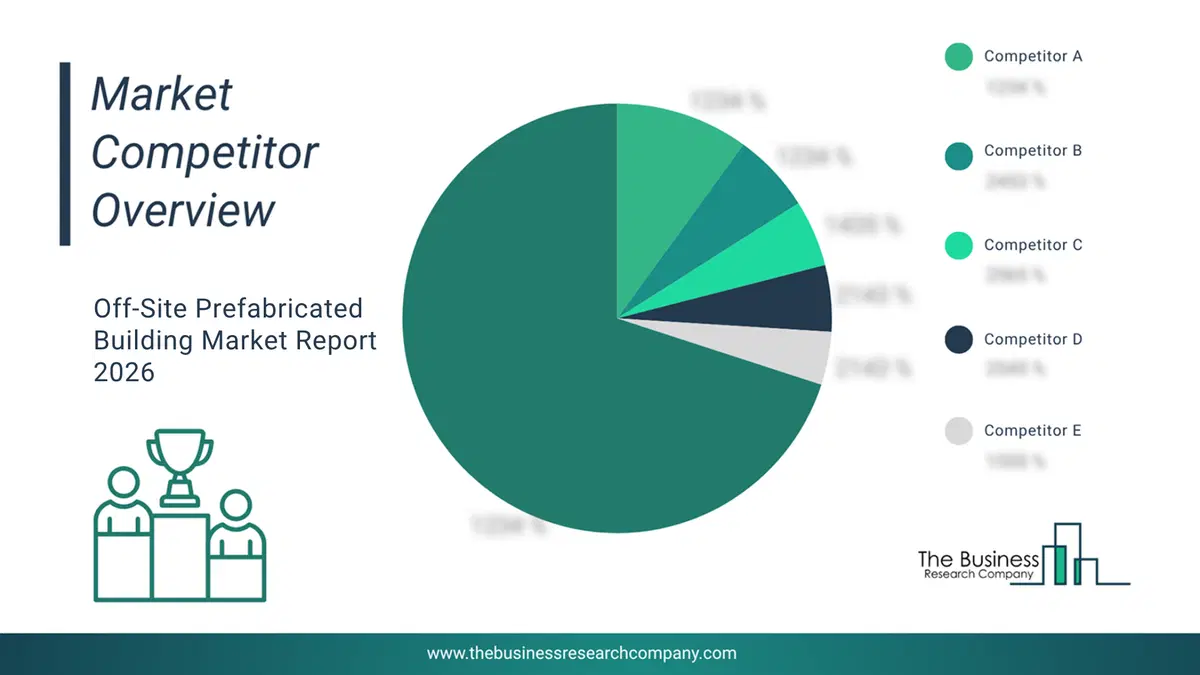
This chart is for illustrative purposes; the full report includes a detailed competitor analysis and comprehensive overview of the top 10 companies in the market.
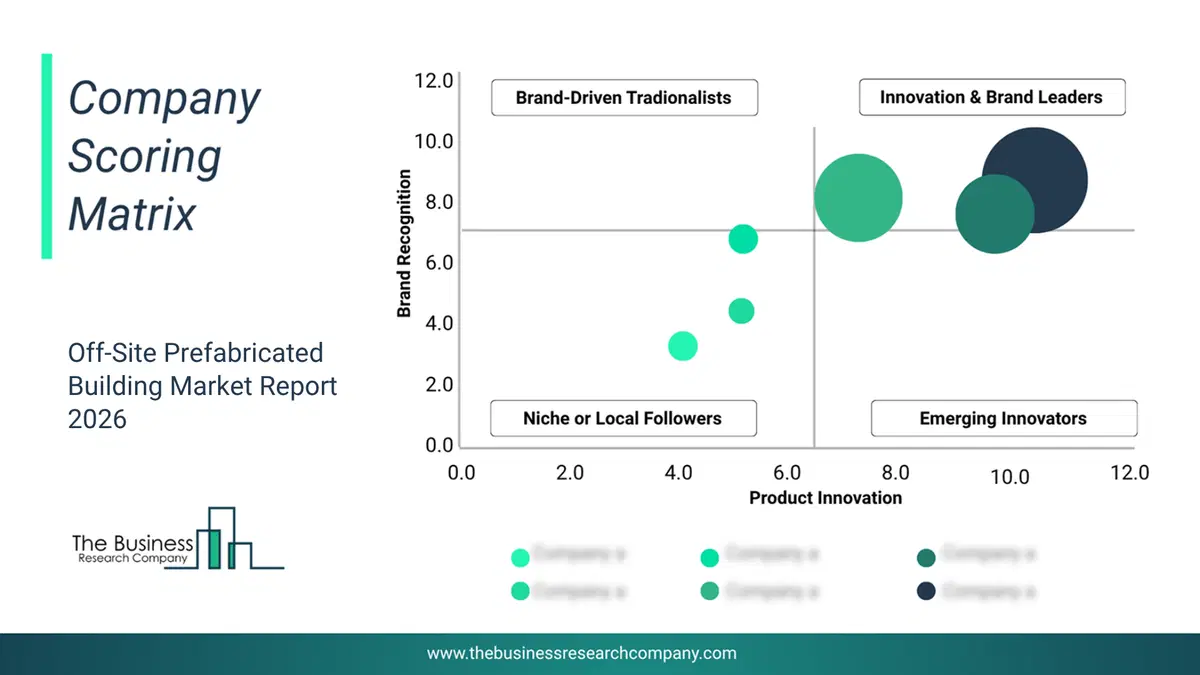
This chart maps companies by product innovation and brand strength, with bubble size indicating relative revenue, helping identify market leaders, challengers, and niche players. This is an illustrative chart; the full report provides a complete and accurate competitive analysis.
Global Off-Site Prefabricated Building Market Trends and Insights
Major companies operating in the off-site prefabricated building market are focusing on developing innovative solutions such as modular construction systems to speed up project delivery and improve efficiency. Modular construction systems are methods where building sections are made off-site and assembled on-site, helping to reduce construction time, improve quality, cut costs, and enhance safety while ensuring greater sustainability and efficiency in project delivery. For instance, in May 2025, Turner Construction Company, a US-based international construction services firm, launched xPL Offsite, an innovative off-site manufacturing business focused on high-complexity projects. The venture leverages advanced design for manufacturing and assembly (DfMA) and off-site manufacturing (OSM) strategies to streamline project delivery, enhance safety and quality, and reduce construction timelines. xPL Offsite combines Turner’s deep expertise in prefabrication, modular construction, and supply chain management to provide efficient, scalable solutions for complex projects such as data centers, airports, and large industrial facilities, enabling clients to achieve greater cost certainty, improved productivity, and accelerated schedules while maintaining the highest standards of performance and sustainability.What Are Latest Mergers And Acquisitions In The Off-Site Prefabricated Building Market?
In November 2024, B.PUBLIC PBC, a US-based manufacturing company specializing in off-site prefabricated buildings, partnered with the Santa Fe Institute to design and build a new lecture hall on SFI’s Miller campus in Tesuque, New Mexico. With this partnership, B.PUBLIC, PBC, and the Santa Fe Institute aim to create a sustainable, prefabricated lecture hall that fosters innovative research, inspires creativity, and integrates seamlessly with the natural environment. The Santa Fe Institute is a US-based research foundation that focuses on the study of complex systems and interdisciplinary scientific research.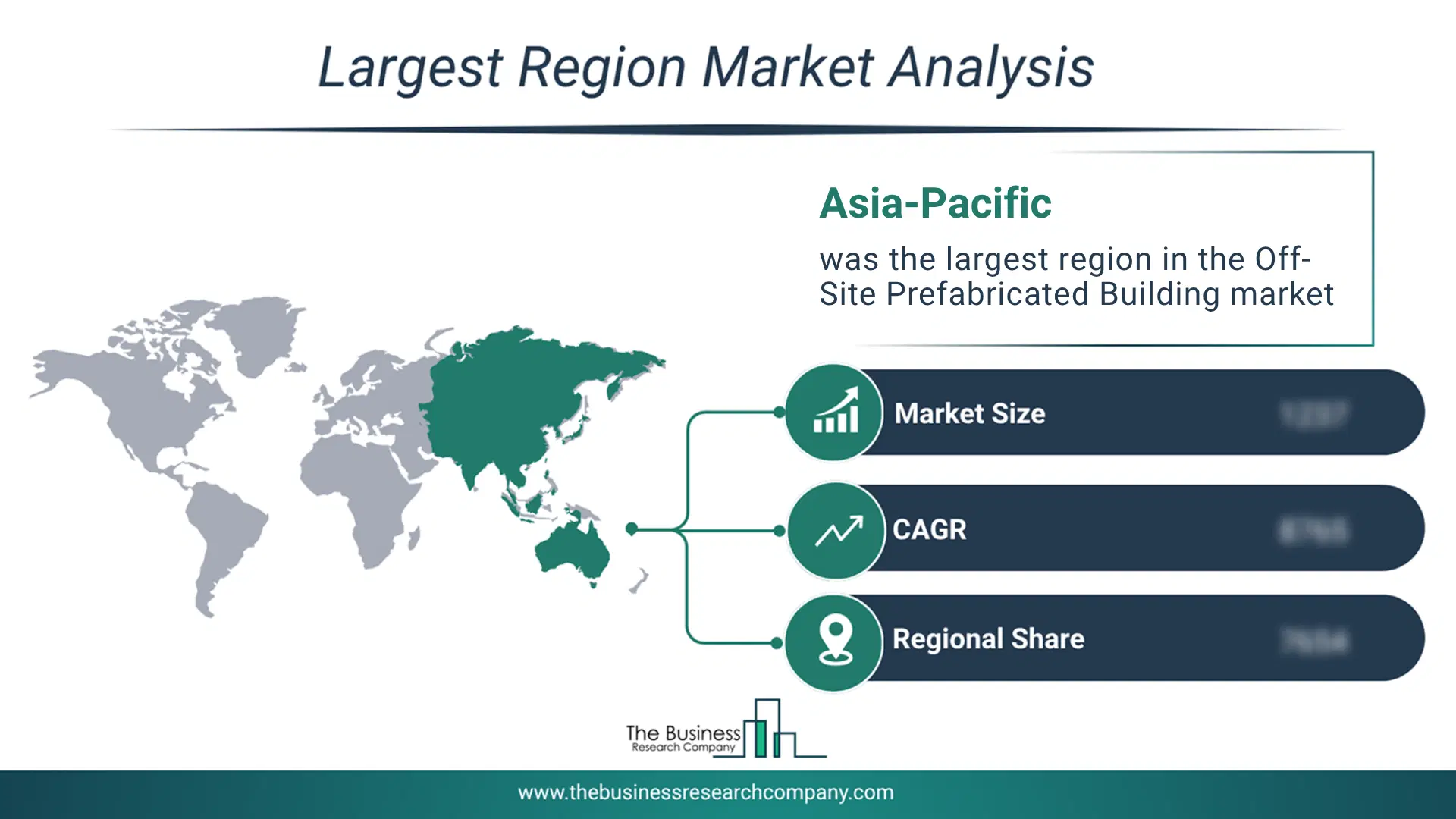
Regional Insights
Asia-Pacific was the largest region in the off-site prefabricated building market in 2025, and it is expected to be the fastest-growing region in the forecast period. The regions covered in this market report are Asia-Pacific, South East Asia, Western Europe, Eastern Europe, North America, South America, Middle East, Africa. The countries covered in this market report are Australia, Brazil, China, France, Germany, India, Indonesia, Japan, Taiwan, Russia, South Korea, UK, USA, Canada, Italy, Spain.What Defines the Off-Site Prefabricated Building Market?
The off-site prefabricated building market consists of sales of wall panels, roof panels, floor slabs, steel frames, concrete modules, prefabricated bathrooms, kitchen pods, container units, insulated sandwich panels, structural beams, façade systems, stair modules, window units, door assemblies, ceiling panels, utility cores, building envelopes, timber frames, and foundation blocks. Values in this market are ‘factory gate’ values, that is, the value of goods sold by the manufacturers or creators of the goods, whether to other entities (including downstream manufacturers, wholesalers, distributors, and retailers) or directly to end customers. The value of goods in this market includes related services sold by the creators of the goods.How is Market Value Defined and Measured?
The market value is defined as the revenues that enterprises gain from the sale of goods and/or services within the specified market and geography through sales, grants, or donations in terms of the currency (in USD unless otherwise specified). The revenues for a specified geography are consumption values that are revenues generated by organizations in the specified geography within the market, irrespective of where they are produced. It does not include revenues from resales along the supply chain, either further along the supply chain or as part of other products.
This chart presents market attractiveness based on a quantitative evaluation of growth, competition, strategic alignment, and risk, offering a clear view of opportunity areas for decision-making. This chart is for illustrative purposes; the full report contains the complete analysis.

This chart highlights the Total Addressable Market (TAM) by estimating the maximum revenue opportunity using an assumption-driven approach, supporting strategic planning and opportunity sizing across markets. The chart is illustrative; the full report provides a more comprehensive analysis.
What Key Data and Analysis Are Included in theOff-Site Prefabricated Building Market Report 2026?
The off-site prefabricated building market research report is one of a series of new reports from The Business Research Company that provides market statistics, including industry global market size, regional shares, competitors with the market share, detailed market segments, market trends and opportunities, and any further data you may need to thrive in the off-site prefabricated building industry. The market research report delivers a complete perspective of everything you need, with an in-depth analysis of the current and future state of the industry.Off-Site Prefabricated Building Market Report Forecast Analysis
| Report Attribute | Details |
|---|---|
| Market Size Value In 2026 | $129.55 billion |
| Revenue Forecast In 2030 | $169.7 billion |
| Growth Rate | CAGR of 7.3% from 2026 to 2030 |
| Base Year For Estimation | 2025 |
| Actual Estimates/Historical Data | 2020-2025 |
| Forecast Period | 2026 - 2030 |
| Market Representation | Revenue in USD Billion and CAGR from 2026 to 2030 |
| Segments Covered | Product Type, Material Type, Construction Method, Customer Type, End-User |
| Regional Scope | Asia-Pacific, Western Europe, Eastern Europe, North America, South America, Middle East, Africa |
| Country Scope | The countries covered in this market report are Australia, Brazil, China, France, Germany, India, Indonesia, Japan, Taiwan, Russia, South Korea, UK, USA, Canada, Italy, Spain |
| Key Companies Profiled | China Railway Group Limited, Bouygues Construction S.A., Daiwa House Industry Co. Ltd., Skanska AB, Balfour Beatty plc, Royal BAM Group NV, Lendlease Group, Dorce Construction Pvt. Ltd., Clark Pacific Inc., Z Modular Inc., Red Sea Housing Services Co. Ltd., Lester Building Systems Inc., Palomar Modular Buildings Inc., Allied Modular Building Systems Inc., Inland Buildings Inc., Modern Building Systems Inc., Dvele Inc., PortaFab Corporation, Alan Pre-Fab Building Corp, Turner Construction Company. |
| Customization Scope | Request for Customization |
| Pricing And Purchase Options | Explore Purchase Options |