
Tropomyosin Receptor Kinase C (TrkC) Antibody Market Report 2026
Global Outlook – By Product Type (Monoclonal Antibodies, Polyclonal Antibodies, Recombinant Antibodies ), By Application (Basic Research, Drug Discovery ), By End-User (Pharmaceutical And Biotechnology Companies, Academic And Research Institutes, Diagnostic Laboratories, Other End-Users) - Market Size, Trends, Strategies, and Forecast to 2030
Tropomyosin Receptor Kinase C (TrkC) Antibody Market Overview
• Tropomyosin Receptor Kinase C (TrkC) Antibody market size has reached to $1.62 billion in 2025 • Expected to grow to $2.87 billion in 2030 at a compound annual growth rate (CAGR) of 12.1% • Growth Driver: Rising Prevalence Of Neurological Disorders Fueling The Growth Of The Market Due To Increasing Need For Targeted Neurotherapeutics • North America was the largest region in 2025 and Asia-Pacific is the fastest growing region.What Is Covered Under Tropomyosin Receptor Kinase C (TrkC) Antibody Market?
A tropomyosin receptor kinase C (TrkC) antibody is a protein developed to specifically bind to the TrkC receptor, which is a member of the receptor tyrosine kinase family involved in neural development, function, and certain disease mechanisms. It is used in research to detect or modulate TrkC receptor activity, playing a role in studying neurotrophin signaling and immune responses, and is also applied in diagnostic or experimental contexts. The main product types of tropomyosin receptor kinase C (TrkC) antibody are monoclonal antibodies, polyclonal antibodies, and recombinant antibodies. Monoclonal antibodies (mAbs) refer to laboratory-produced antibodies that are identical and specific to a single epitope on a target antigen. It is utilized across several applications, such as basic research and drug discovery, serving end-users such as pharmaceutical and biotechnology companies, academic and research institutes, diagnostic laboratories, and others.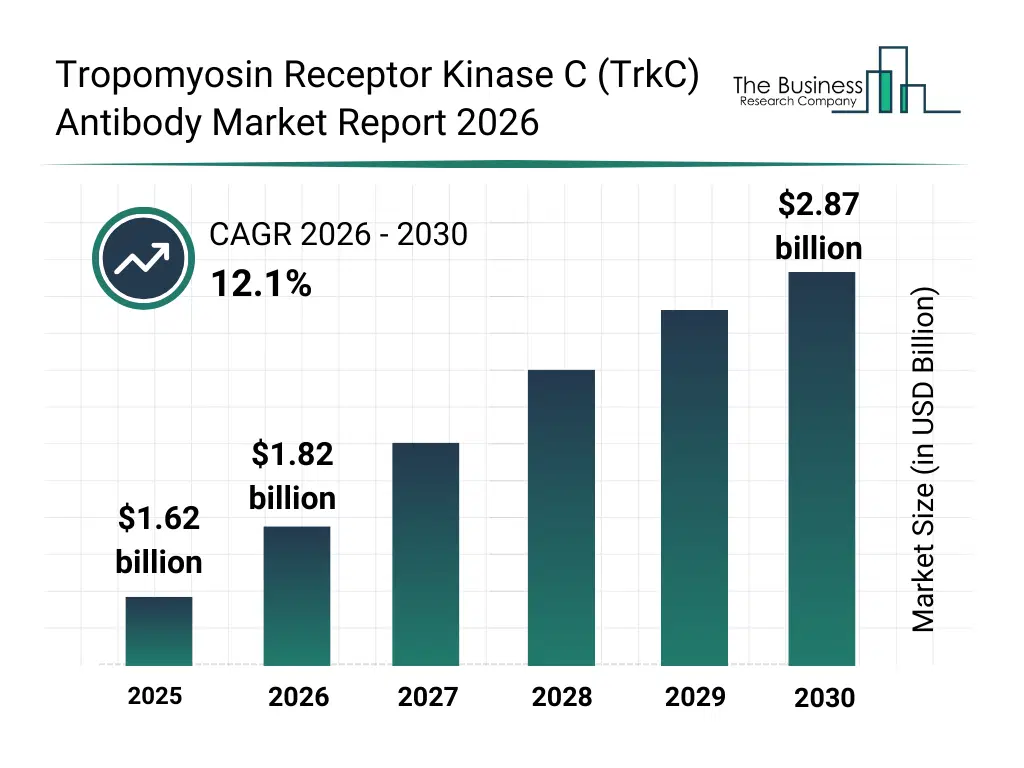
What Is The Tropomyosin Receptor Kinase C (TrkC) Antibody Market Size and Share 2026?
The tropomyosin receptor kinase c (trkc) antibody market size has grown rapidly in recent years. It will grow from $1.62 billion in 2025 to $1.82 billion in 2026 at a compound annual growth rate (CAGR) of 12.4%. The growth in the historic period can be attributed to increasing research focus on neurotrophin signaling pathways, expansion of academic neuroscience research, rising availability of advanced antibody engineering techniques, growth in molecular biology research funding, increasing use of antibodies in diagnostic research.What Is The Tropomyosin Receptor Kinase C (TrkC) Antibody Market Growth Forecast?
The tropomyosin receptor kinase c (trkc) antibody market size is expected to see rapid growth in the next few years. It will grow to $2.87 billion in 2030 at a compound annual growth rate (CAGR) of 12.1%. The growth in the forecast period can be attributed to increasing integration of antibodies in targeted drug discovery, rising investments in neurological disorder research, expansion of precision medicine initiatives, growing adoption of advanced immunoassay techniques, increasing demand for highly selective research antibodies. Major trends in the forecast period include increasing adoption of highly specific trkc antibodies, rising use of recombinant antibody formats, growing demand for neurobiology research tools, expansion of targeted signaling pathway studies, enhanced focus on antibody validation standards.
Global Tropomyosin Receptor Kinase C (TrkC) Antibody Market Segmentation
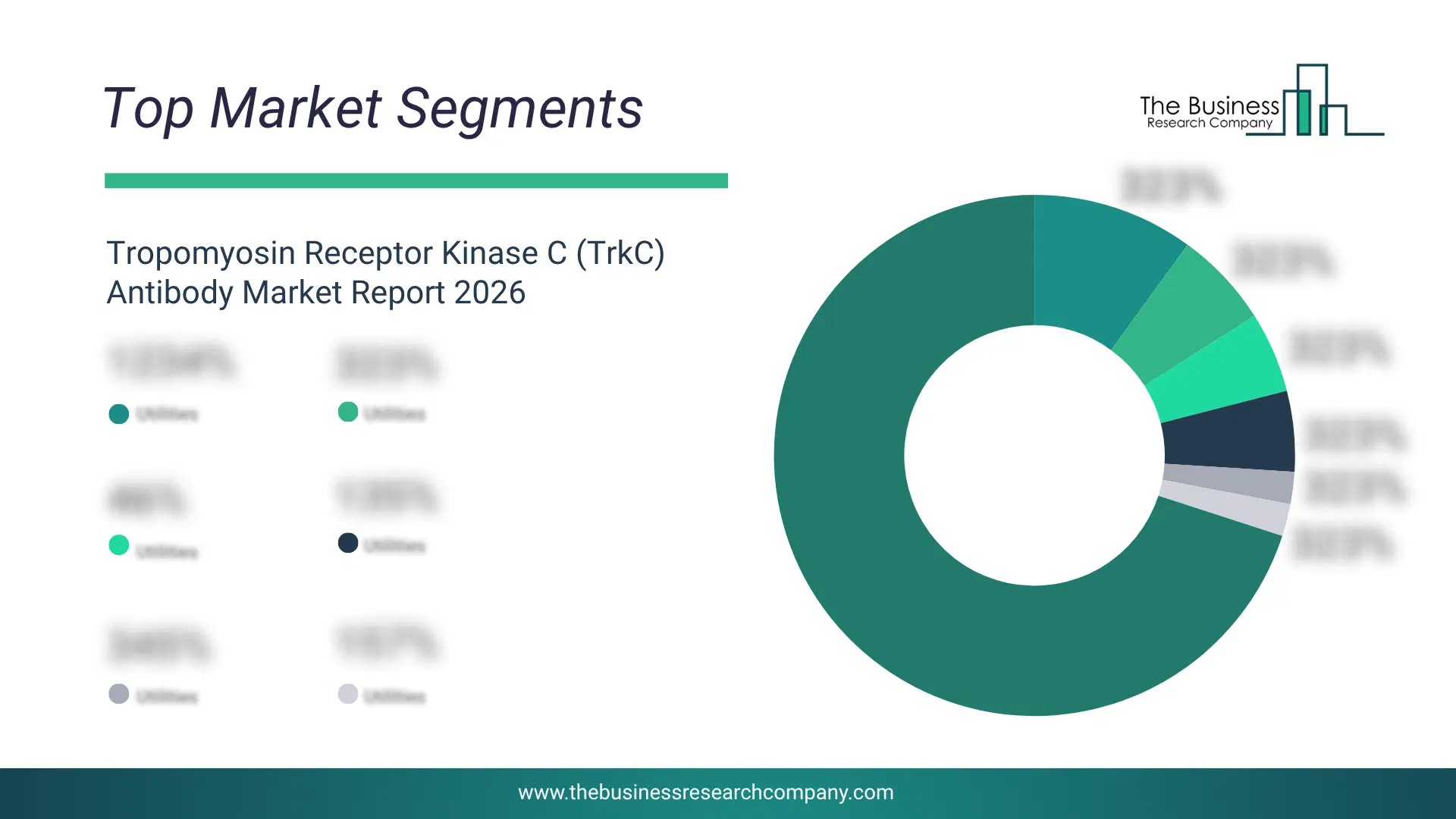
1) By Product Type: Monoclonal Antibodies, Polyclonal Antibodies, Recombinant Antibodies 2) By Application: Basic Research, Drug Discovery 3) By End-User: Pharmaceutical And Biotechnology Companies, Academic And Research Institutes, Diagnostic Laboratories, Other End-Users Subsegments: 1) By Monoclonal Antibodies: Human Monoclonal Antibodies, Humanized Monoclonal Antibodies, Chimeric Monoclonal Antibodies, Murine Monoclonal Antibodies 2) By Polyclonal Antibodies: Animal-Derived Polyclonal Antibodies, Recombinant Polyclonal Antibodies, Serum-Based Polyclonal Antibodies, Plant-Derived Polyclonal Antibodies 3) By Recombinant Antibodies: Single Chain Variable Fragment Antibodies, Fragment Antigen Binding Antibodies, Full-Length Recombinant Antibodies, Engineered Recombinant AntibodiesWhat Are The Drivers Of The Tropomyosin Receptor Kinase C (TrkC) Antibody Market?
The rising prevalence of neurological disorders is expected to propel the growth of the tropomyosin receptor kinase C (TrkC) antibody market going forward. Neurological disorders are medical conditions that affect the brain, spinal cord, and nerves, leading to a range of symptoms including cognitive, motor, and sensory impairments. The increasing prevalence of neurological disorders is linked to the aging population, as aging gradually impairs neuronal function, reduces brain plasticity, and elevates oxidative stress, contributing to the development and progression of these conditions. Tropomyosin receptor kinase C (TrkC) antibody aids in neurological disorder treatment by specifically targeting TrkC receptors, which play a key role in neuronal growth, survival, and differentiation. It helps modulate and study TrkC signaling pathways, supporting the development of targeted therapies and improving understanding of neurodegenerative and neurodevelopmental conditions. For instance, in July 2024, according to the National Health Service, a UK-based government agency, there were 487,432 patients diagnosed with dementia (a progressive brain disorder affecting memory, thinking, and daily activities) by June 30, 2024, an increase of 3,155 cases compared to May 31, 2024. Therefore, the rising prevalence of neurological disorders is driving the growth of the tropomyosin receptor kinase C (TrkC) antibody industry. The rise in demand for personalized medicine is expected to propel the growth of the tropomyosin receptor kinase C (TrkC) antibody market going forward. Personalized medicine is a medical approach that involves tailoring treatments to individual patients based on their genetic, environmental, and lifestyle factors to optimize outcomes and improve care. The demand for personalized medicine is increasing due to advancements in genomic technologies, which enable the precise identification of genetic variations and tailored treatments for individuals. Tropomyosin receptor kinase C (TrkC) antibody enhances personalized medicine by enabling precise detection and targeting of TrkC receptors, making it ideal for tailoring treatments to individual patients. It improves therapeutic accuracy by supporting the development of targeted interventions and optimizing outcomes in neurological and cancer-related disorders. For instance, in February 2024, according to the Personalized Medicine Coalition (PMC), a US-based nonprofit organization, the U.S. Food and Drug Administration (FDA) approved 26 new personalized medicines in 2023, a significant increase from the 12 approved in 2022. Therefore, the rise in demand for personalized medicine is driving the growth of the tropomyosin receptor kinase C (TrkC) antibody industry. The increasing prevalence of cancer is expected to propel the growth of the tropomyosin receptor kinase C (TrkC) antibody market going forward. Prevalence of cancer refers to the total number of people, both newly diagnosed and previously diagnosed, who are alive with a history of cancer at a specific point in time. The prevalence of cancer is increasing due to lifestyle-related risks such as poor diet, smoking, alcohol consumption, and exposure to environmental pollutants, elevating the risk of developing various cancers. Tropomyosin receptor kinase C (TrkC) antibody helps in cancer treatment by specifically targeting TrkC receptors, making it ideal for detecting and modulating tumor growth pathways. It supports precise therapeutic interventions by enabling targeted therapies and improving treatment outcomes in TrkC-related cancers. For instance, in July 2024, according to the Australian Institute of Health and Welfare, an Australia-based government agency, the number of cancer cases diagnosed in Australia reached 160,570 in 2022, marking an increase of 3,789 cases from 156,781 in 2021. Therefore, the increasing prevalence of cancer is driving the growth of the tropomyosin receptor kinase C (TrkC) antibody industry.Key Players In The Global Tropomyosin Receptor Kinase C (TrkC) Antibody Market
Major companies operating in the tropomyosin receptor kinase c (trkc) antibody market are Merck & Co. Inc., Thermo Fisher Scientific Inc., Becton Dickinson and Company, GeneTex Inc., Bio-Techne Corporation, GenScript Biotech Corporation, Cell Signaling Technology Inc, Sino Biological Inc., ACROBiosystems Inc., Proteintech Group Inc., Abclonal Inc., OriGene Technologies Inc., Santa Cruz Biotechnology Inc., Rockland Immunochemicals Inc., Novus Biologicals LLC, Abnova Corporation, Aviva Systems Biology Corporation, MyBioSource Inc., Alomone Labs, LifeSpan BioSciences Inc.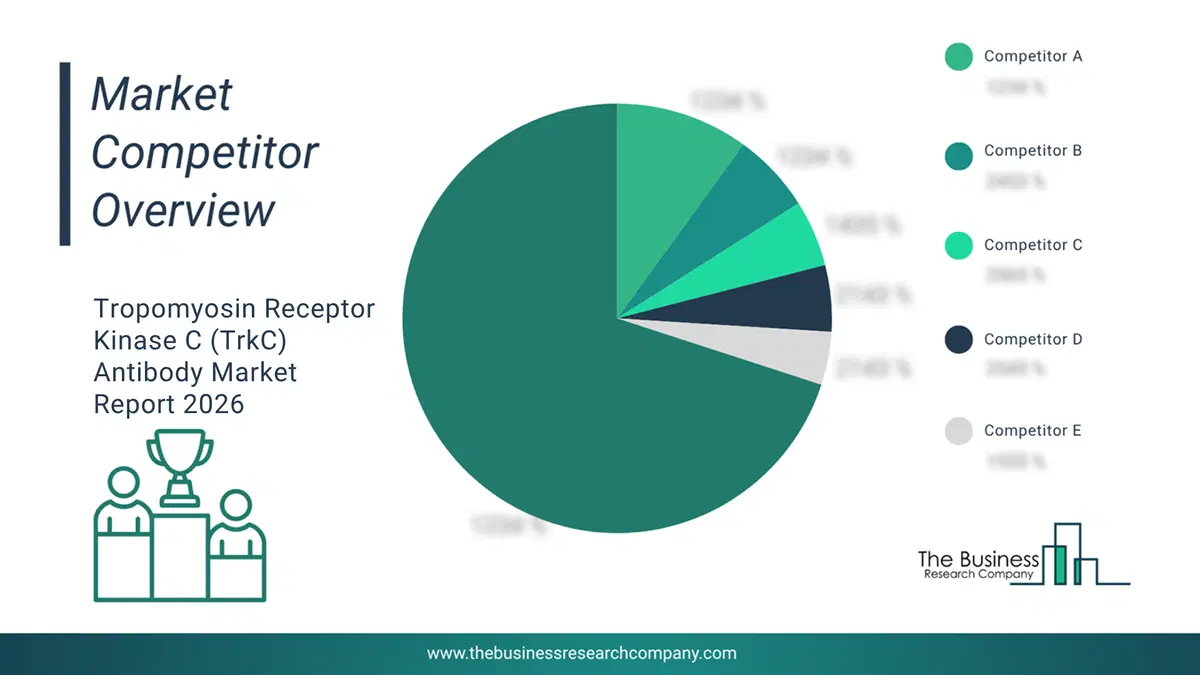
This chart is for illustrative purposes; the full report includes a detailed competitor analysis and comprehensive overview of the top 10 companies in the market.
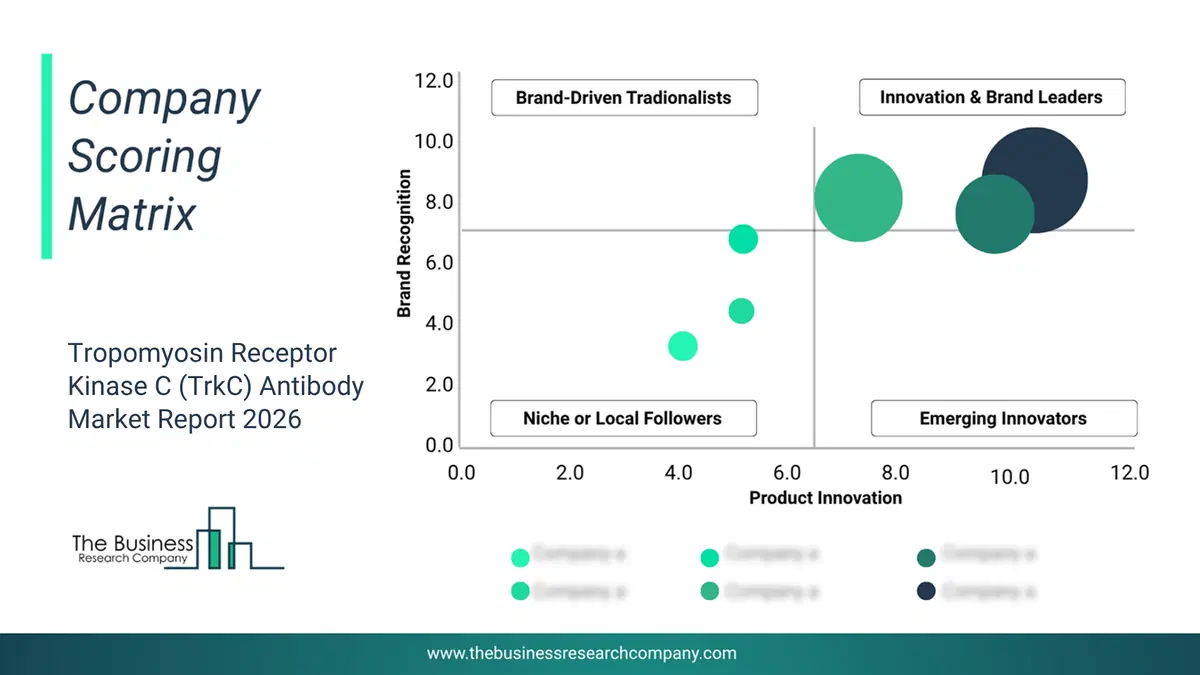
This chart maps companies by product innovation and brand strength, with bubble size indicating relative revenue, helping identify market leaders, challengers, and niche players. This is an illustrative chart; the full report provides a complete and accurate competitive analysis.
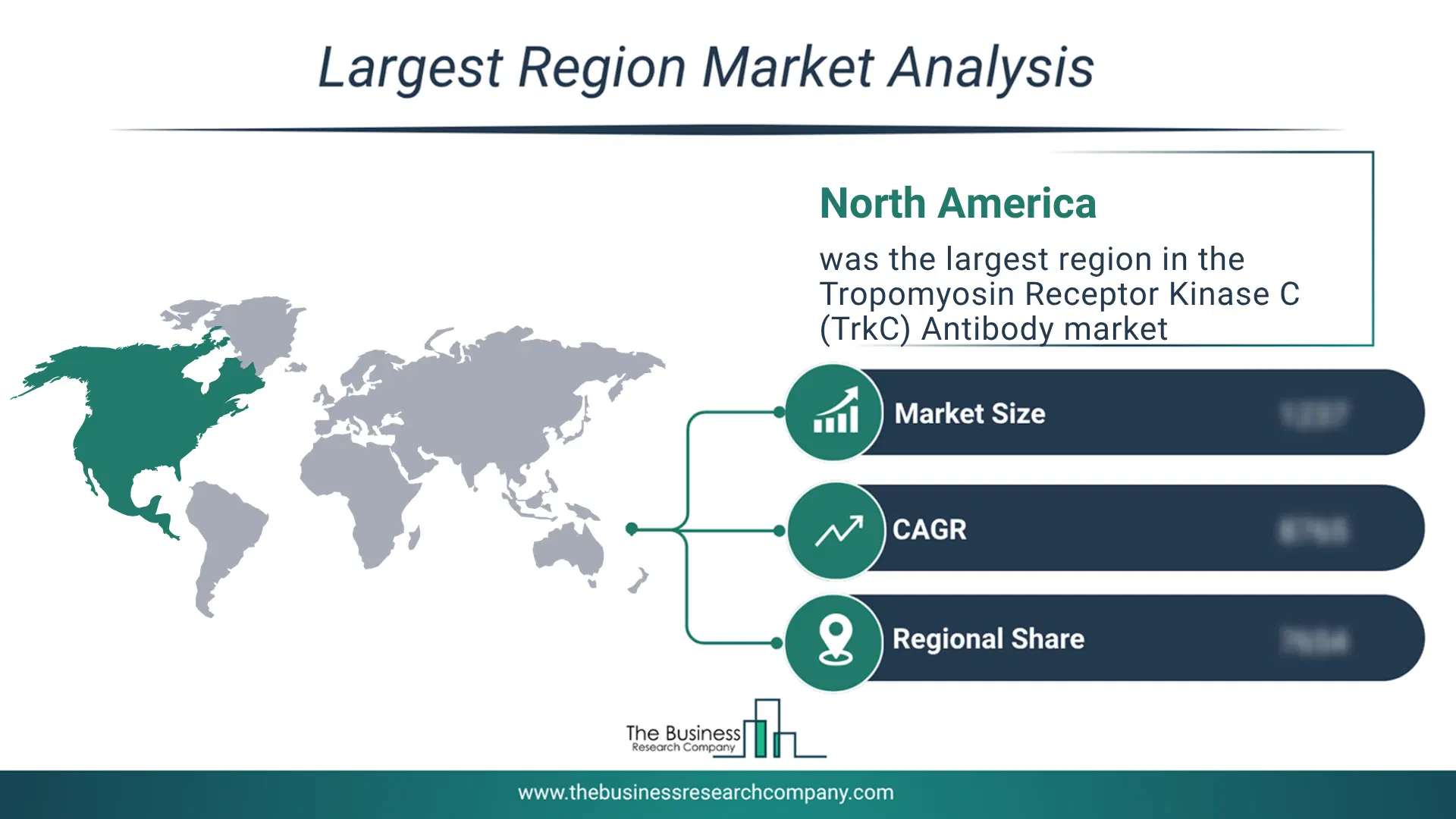
Regional Outlook
North America was the largest region in the tropomyosin receptor kinase C (TrkC) antibody market in 2025. Asia-Pacific is expected to be the fastest-growing region in the forecast period. The regions covered in this market report are Asia-Pacific, South East Asia, Western Europe, Eastern Europe, North America, South America, Middle East, Africa. The countries covered in this market report are Australia, Brazil, China, France, Germany, India, Indonesia, Japan, Taiwan, Russia, South Korea, UK, USA, Canada, Italy, Spain.What Defines the Tropomyosin Receptor Kinase C (TrkC) Antibody Market?
The tropomyosin receptor kinase C (TrkC) antibody market consists of sales of conjugated antibodies, antibody fragments, custom antibodies, kits, secondary antibodies, and antibody cocktails. Values in this market are ‘factory gate’ values, that is, the value of goods sold by the manufacturers or creators of the goods, whether to other entities (including downstream manufacturers, wholesalers, distributors, and retailers) or directly to end customers. The value of goods in this market includes related services sold by the creators of the goods.How is Market Value Defined and Measured?
The market value is defined as the revenues that enterprises gain from the sale of goods and/or services within the specified market and geography through sales, grants, or donations in terms of the currency (in USD unless otherwise specified). The revenues for a specified geography are consumption values that are revenues generated by organizations in the specified geography within the market, irrespective of where they are produced. It does not include revenues from resales along the supply chain, either further along the supply chain or as part of other products.
This chart presents market attractiveness based on a quantitative evaluation of growth, competition, strategic alignment, and risk, offering a clear view of opportunity areas for decision-making. This chart is for illustrative purposes; the full report contains the complete analysis.

This chart highlights the Total Addressable Market (TAM) by estimating the maximum revenue opportunity using an assumption-driven approach, supporting strategic planning and opportunity sizing across markets. The chart is illustrative; the full report provides a more comprehensive analysis.
What Key Data and Analysis Are Included in the Tropomyosin Receptor Kinase C (TrkC) Antibody Market Report 2026?
The tropomyosin receptor kinase c (trkc) antibody market research report is one of a series of new reports from The Business Research Company that provides market statistics, including industry global market size, regional shares, competitors with the market share, detailed market segments, market trends and opportunities, and any further data you may need to thrive in the tropomyosin receptor kinase c (trkc) antibody industry. The market research report delivers a complete perspective of everything you need, with an in-depth analysis of the current and future state of the industry.Tropomyosin Receptor Kinase C (TrkC) Antibody Market Report Forecast Analysis
| Report Attribute | Details |
|---|---|
| Market Size Value In 2026 | $1.82 billion |
| Revenue Forecast In 2030 | $2.87 billion |
| Growth Rate | CAGR of 12.1% from 2026 to 2030 |
| Base Year For Estimation | 2025 |
| Actual Estimates/Historical Data | 2020-2025 |
| Forecast Period | 2026 - 2030 |
| Market Representation | Revenue in USD Billion and CAGR from 2026 to 2030 |
| Segments Covered | Product Type, Application, End-User |
| Regional Scope | Asia-Pacific, Western Europe, Eastern Europe, North America, South America, Middle East, Africa |
| Country Scope | The countries covered in the report are Australia, Brazil, China, France, Germany, India, Indonesia, Japan, Taiwan, Russia, South Korea, UK, USA, Canada, Italy, Spain |
| Key Companies Profiled | Merck & Co. Inc., Thermo Fisher Scientific Inc., Becton Dickinson and Company, GeneTex Inc., Bio-Techne Corporation, GenScript Biotech Corporation, Cell Signaling Technology Inc, Sino Biological Inc., ACROBiosystems Inc., Proteintech Group Inc., Abclonal Inc., OriGene Technologies Inc., Santa Cruz Biotechnology Inc., Rockland Immunochemicals Inc., Novus Biologicals LLC, Abnova Corporation, Aviva Systems Biology Corporation, MyBioSource Inc., Alomone Labs, LifeSpan BioSciences Inc. |
| Customization Scope | Request for Customization |
| Pricing And Purchase Options | Explore Purchase Options |