
Glucaric Acid Market Report 2026
Global Outlook – By Type (Calcium D-Glucarate, Pure Glucaric Acid, D-Glucaric Acid-1,4-Lactone, Potassium Sodium D-Glucarate, Other Types), By Application (Detergents, Healthcare, Corrosion Inhibitors, Other Applications), By Sales Channel (Direct Sale, Indirect Sale) – Market Size, Trends, Strategies, and Forecast to 2030
Glucaric Acid Market Overview
• Glucaric Acid market size has reached to $1.14 billion in 2025 • Expected to grow to $1.67 billion in 2030 at a compound annual growth rate (CAGR) of 7.6% • Growth Driver: Eco-Friendly Chemical Demand Boosts Glucaric Acid Market Growth • Market Trend: Strategic Investments Support Scalable And Efficient Production Of Biobased Chemicals Sustainably • North America was the largest region in 2025 and Asia-Pacific is the fastest growing region.What Is Covered Under Glucaric Acid Market?
Glucaric acid, also known as saccharic acid, is a chemical compound derived from glucose oxidation. It is a naturally occurring substance found in small quantities in many fruits and vegetables, such as oranges, apples, and broccoli. The main types of glucaric acid include calcium D-glucarate, pure glucaric acid, D-glucaric acid-1,4-lactone, potassium sodium D-glucarate, and others. Calcium D-glucarate is a blend of glucaric acid and calcium, which aids detox by blocking beta-glucuronidase. The applications include detergents, healthcare, food manufacturing, corrosion inhibitors, and others, and sales channels are categorized into direct sale and indirect sale.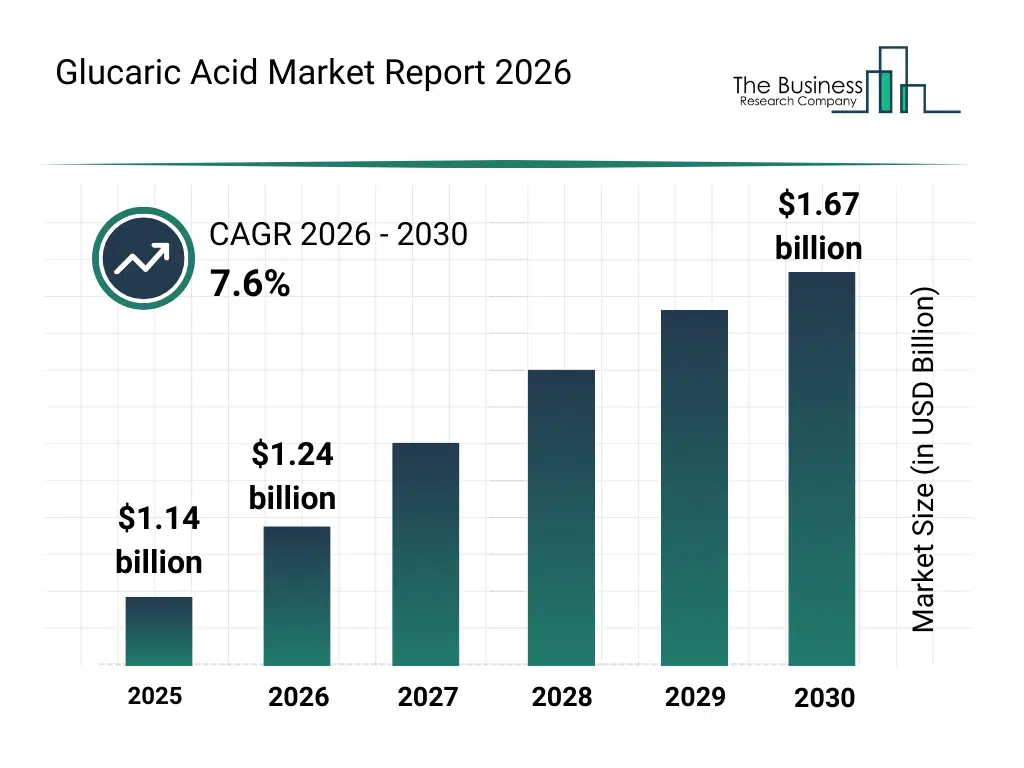
What Is The Glucaric Acid Market Size and Share 2026?
The glucaric acid market size has grown strongly in recent years. It will grow from $1.14 billion in 2025 to $1.24 billion in 2026 at a compound annual growth rate (CAGR) of 8.6%. The growth in the historic period can be attributed to growth of detergent manufacturing, demand for food derived acids, expansion of dietary supplements, use in industrial corrosion control, availability of glucose feedstock.What Is The Glucaric Acid Market Growth Forecast?
The glucaric acid market size is expected to see strong growth in the next few years. It will grow to $1.67 billion in 2030 at a compound annual growth rate (CAGR) of 7.6%. The growth in the forecast period can be attributed to increasing demand for green chemicals, growth of nutraceutical markets, stricter environmental regulations, expansion of bio-refinery technologies, rising industrial sustainability initiatives. Major trends in the forecast period include rising use of bio-based chemical intermediates, growing adoption in detergent formulations, expansion of calcium d-glucarate supplements, increasing application in corrosion inhibitors, focus on renewable feedstock utilization.
Global Glucaric Acid Market Segmentation
1) By Type: Calcium D-Glucarate, Pure Glucaric Acid, D-Glucaric Acid-1,4-Lactone, Potassium Sodium D-Glucarate, Other Types 2) By Application: Detergents, Healthcare, Corrosion Inhibitors, Other Applications 3) By Sales Channel: Direct Sale, Indirect Sale Subsegments: 1) By Calcium D-Glucarate: Calcium D-Glucarate Powder, Calcium D-Glucarate Capsules Or Tablets 2) By Pure Glucaric Acid: Pharmaceutical Grade Pure Glucaric Acid, Industrial Grade Pure Glucaric Acid 3) By D-Glucaric Acid-1,4-Lactone: Food Grade D-Glucaric Acid-1,4-Lactone, Pharmaceutical Grade D-Glucaric Acid-1,4-Lactone 4) By Potassium Sodium D-Glucarate: Potassium Sodium D-Glucarate Powder, Potassium Sodium D-Glucarate Tablets 5) By Other Types: Liquid D-Glucaric Acid, Other Specialized FormsWhat Is The Driver Of The Glucaric Acid Market?
The rising demand for eco-friendly and bio-based chemicals is expected to propel the growth of the glucaric acid market going forward. Eco-friendly and bio-based chemicals refer to substances produced from renewable resources using processes that have minimal environmental impact, promote sustainability, and reduce reliance on fossil fuels. The rising demand for eco-friendly and bio-based chemicals is driven by increasing environmental concerns and regulatory pressures to reduce carbon footprints and pollution. Glucaric acid is used in eco-friendly and bio-based chemicals as a biodegradable alternative for various applications, including detergents, corrosion inhibitors, and food additives. For instance, in 2023, according to the International Energy Agency, a France-based government agency, biofuel production reaches over 10 EJ by 2030 in the NZE Scenario, requiring an average growth of around 11% per year. Further, biofuels produced from waste and residues and nonfood energy crops meet over 40% of total biofuel demand by 2030. Therefore, the rising demand for eco-friendly and bio-based chemicals will drive the growth of the glucaric acid industry.Key Players In The Global Glucaric Acid Market
Major companies operating in the glucaric acid market are The Archer Daniels Midland Company, BASF SE, LyondellBasell Industries, Merck KGaA, Koninklijke DSM N.V, Sinochem Group, Roquette Frères SA, Novozymes A/S, Jungbunzlauer Suisse AG, Toronto Research Chemicals Inc, Codexis Inc., Cayman Chemical Company, Tokyo Chemical Industry Co. Ltd, Biosynth Ltd, Chemrez Technologies Inc, Parchem Fine & Specialty Chemicals, Santa Cruz Biotechnology Inc, Rennovia Inc, Alfa Chemistry, Rivertop Renewables, Haihang Industry Co Ltd, CHEMOS GmbH & Co KG, AK Scientific Inc, Kalion Inc, PMP Inc, Shandong Baovi Energy Technology Co Ltd, Otto Chemie Pvt Ltd, Glentham Life Sciences Limited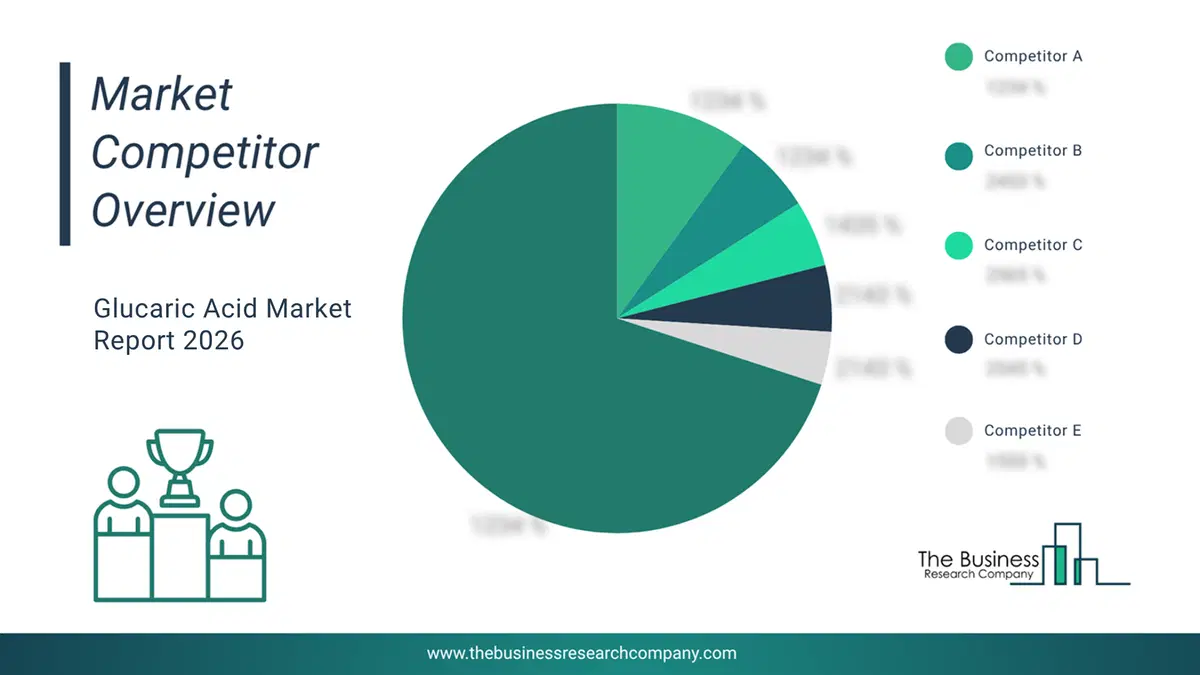
This chart is for illustrative purposes; the full report includes a detailed competitor analysis and comprehensive overview of the top 10 companies in the market.
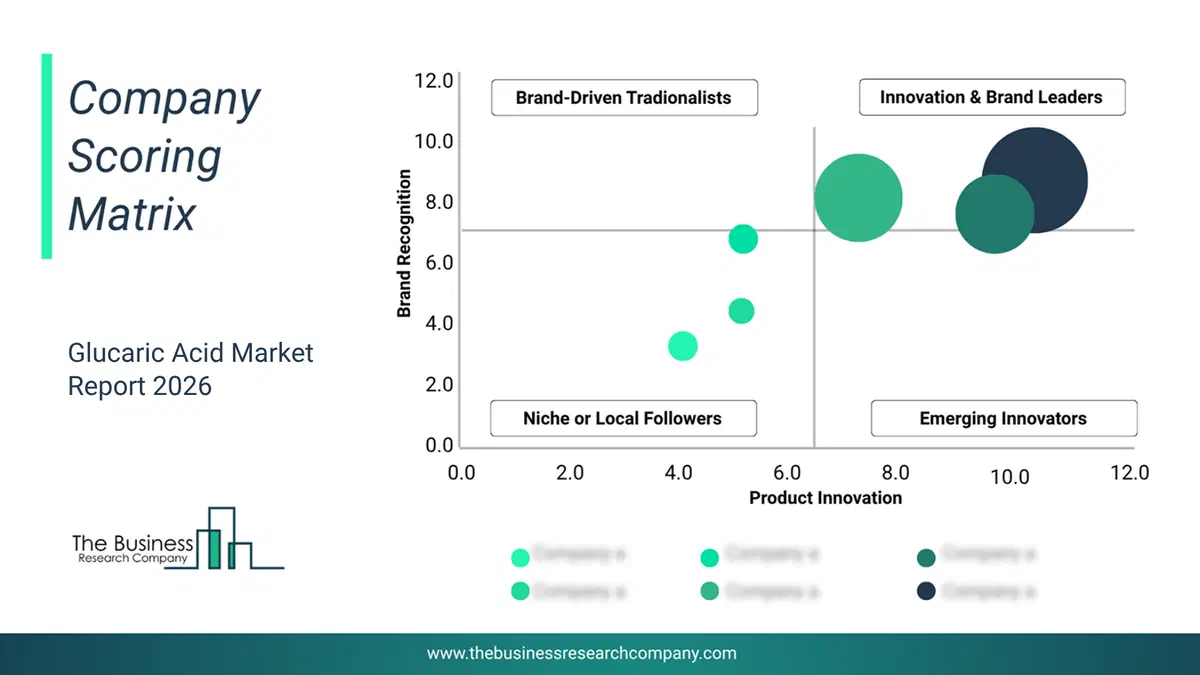
This chart maps companies by product innovation and brand strength, with bubble size indicating relative revenue, helping identify market leaders, challengers, and niche players. This is an illustrative chart; the full report provides a complete and accurate competitive analysis.
Global Glucaric Acid Market Trends and Insights
Major companies operating in the glucaric acid market are focusing on strategic investments to enhance the scalability and efficiency of production. Strategic investments are targeted financial commitments made to achieve long-term goals, such as enhancing operational capabilities, expanding market presence, or advancing innovation in specific areas of business. For instance, in June 2024, Solugen, a US-based biomanufacturing firm, announced it would receive a $214 million loan from the US Department of Energy to finance a biobased chemical plant in Minnesota. The plant will use enzymatic and chemical processes to produce glucaric acid, gluconic acid, and hydrogen peroxide for industries such as concrete, cleaning, agriculture, and oil, contributing to more sustainable and efficient manufacturing processes.What Are Latest Mergers And Acquisitions In The Glucaric Acid Market?
In January 2024, Chr Hansen Holding A/S, a Denmark-based provider of natural solutions for the food, nutritional, pharmaceutical, and agricultural industries, merged with Novozymes A/S for an undisclosed amount. The merger aims to establish Novonesis as a world-leading bio solutions partner, leveraging combined expertise and resources to address global challenges and promote sustainability across various industries. Novozymes A/S is a Denmark-based biotechnology company providing glucaric acid products.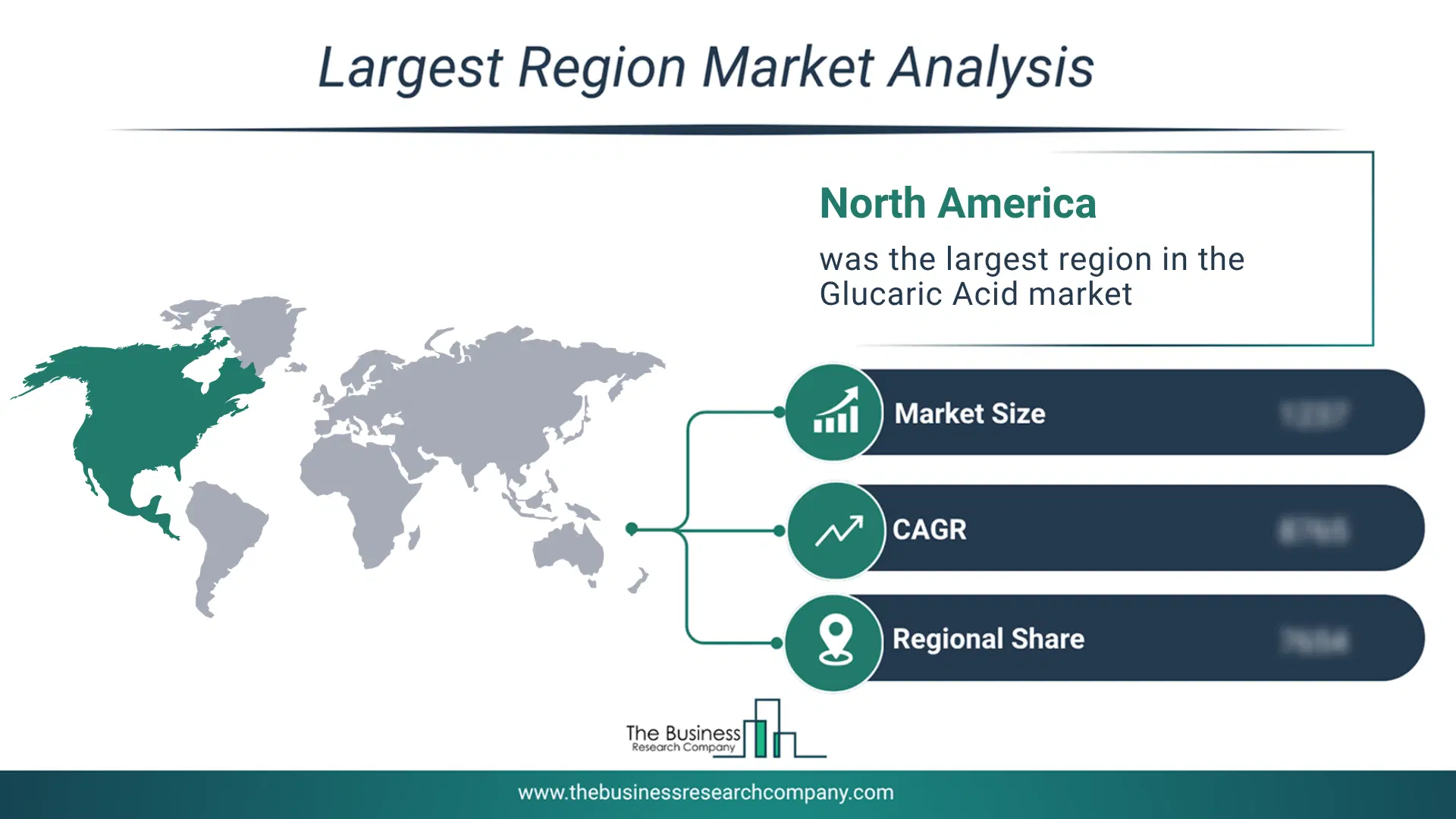
Regional Insights
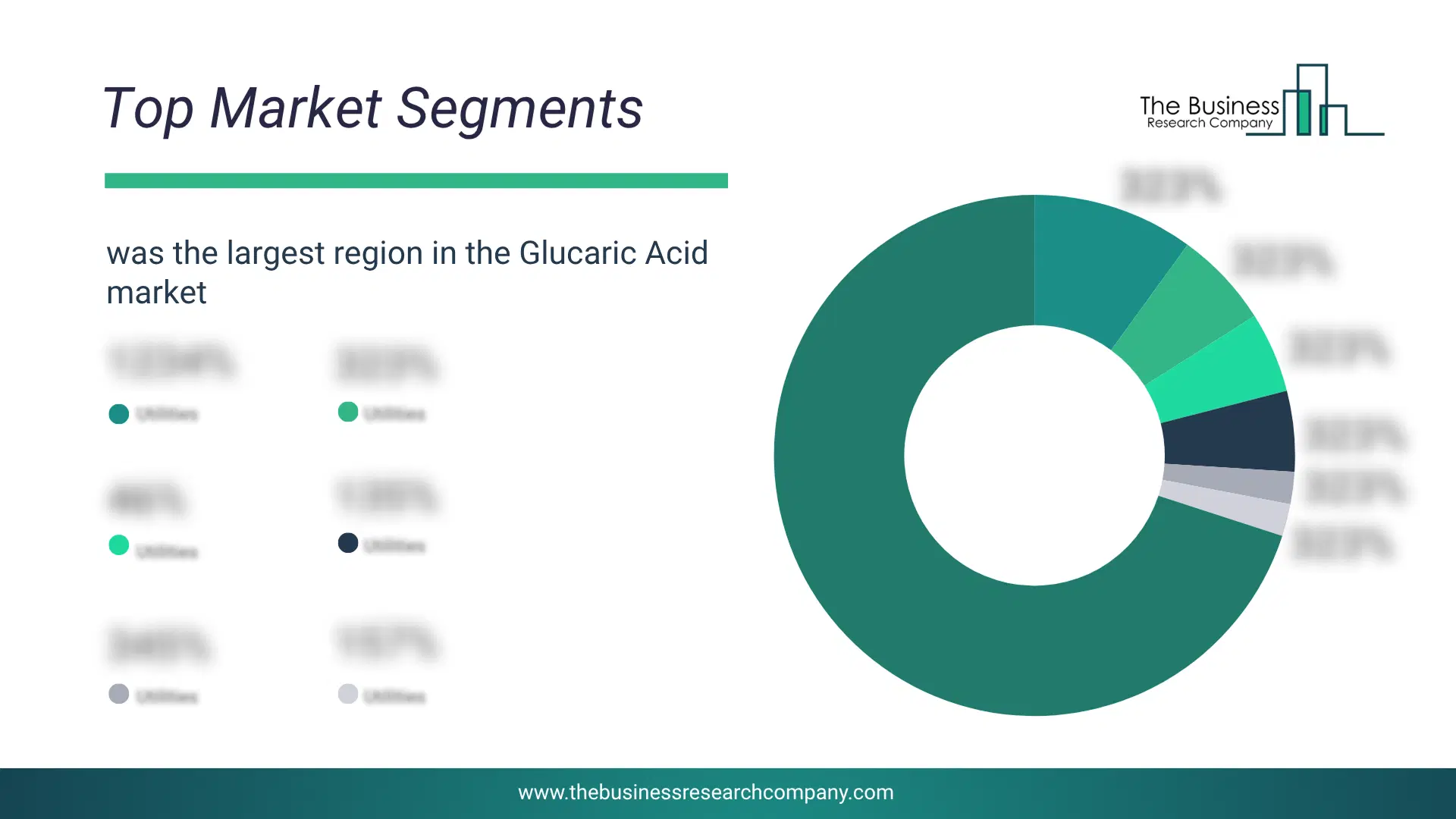
North America was the largest region in the glucaric acid market in 2025. Asia-Pacific is expected to be the fastest-growing region in the forecast period. The regions covered in this market report are Asia-Pacific, South East Asia, Western Europe, Eastern Europe, North America, South America, Middle East, Africa The countries covered in this market report are Australia, Brazil, China, France, Germany, India, Indonesia, Japan, Taiwan, Russia, South Korea, UK, USA, Canada, Italy, SpainWhat Defines the Glucaric Acid Market?
The glucaric acid market consists of sales of L-glucaric acid, meso-glucaric acid, and glucaric acid dimers. Values in this market are ‘factory gate’ values, that is the value of goods sold by the manufacturers or creators of the goods, whether to other entities (including downstream manufacturers, wholesalers, distributors and retailers) or directly to end customers. The value of goods in this market includes related services sold by the creators of the goods.How is Market Value Defined and Measured?
The market value is defined as the revenues that enterprises gain from the sale of goods and/or services within the specified market and geography through sales, grants, or donations in terms of the currency (in USD unless otherwise specified). The revenues for a specified geography are consumption values that are revenues generated by organizations in the specified geography within the market, irrespective of where they are produced. It does not include revenues from resales along the supply chain, either further along the supply chain or as part of other products.
This chart presents market attractiveness based on a quantitative evaluation of growth, competition, strategic alignment, and risk, offering a clear view of opportunity areas for decision-making. This chart is for illustrative purposes; the full report contains the complete analysis.

This chart highlights the Total Addressable Market (TAM) by estimating the maximum revenue opportunity using an assumption-driven approach, supporting strategic planning and opportunity sizing across markets. The chart is illustrative; the full report provides a more comprehensive analysis.
What Key Data and Analysis Are Included in the Glucaric Acid Market Report 2026?
The glucaric acid market research report is one of a series of new reports from The Business Research Company that provides market statistics, including industry global market size, regional shares, competitors with the market share, detailed market segments, market trends and opportunities, and any further data you may need to thrive in the glucaric acid industry. The market research report delivers a complete perspective of everything you need, with an in-depth analysis of the current and future state of the industry.Glucaric Acid Market Report Forecast Analysis
| Report Attribute | Details |
|---|---|
| Market Size Value In 2026 | $1.24 billion |
| Revenue Forecast In 2030 | $1.67 billion |
| Growth Rate | CAGR of 8.6% from 2026 to 2030 |
| Base Year For Estimation | 2025 |
| Actual Estimates/Historical Data | 2020-2025 |
| Forecast Period | 2026 - 2030 |
| Market Representation | Revenue in USD Billion and CAGR from 2026 to 2030 |
| Segments Covered | Type, Application, Sales Channel |
| Regional Scope | Asia-Pacific, Western Europe, Eastern Europe, North America, South America, Middle East, Africa |
| Country Scope | The countries covered in this market report are Australia, Brazil, China, France, Germany, India, Indonesia, Japan, Taiwan, Russia, South Korea, UK, USA, Canada, Italy, Spain |
| Key Companies Profiled | The Archer Daniels Midland Company, BASF SE, LyondellBasell Industries, Merck KGaA, Koninklijke DSM N.V, Sinochem Group, Roquette Frères SA, Novozymes A/S, Jungbunzlauer Suisse AG, Toronto Research Chemicals Inc, Codexis Inc., Cayman Chemical Company, Tokyo Chemical Industry Co. Ltd, Biosynth Ltd, Chemrez Technologies Inc, Parchem Fine & Specialty Chemicals, Santa Cruz Biotechnology Inc, Rennovia Inc, Alfa Chemistry, Rivertop Renewables, Haihang Industry Co Ltd, CHEMOS GmbH & Co KG, AK Scientific Inc, Kalion Inc, PMP Inc, Shandong Baovi Energy Technology Co Ltd, Otto Chemie Pvt Ltd, Glentham Life Sciences Limited |
| Customization Scope | Request for Customization |
| Pricing And Purchase Options | Explore Purchase Options |