

Grain Mycotoxin Sorting Market Report 2026
Global Outlook – By Technology (Optical Sorting, X-ray Sorting, Near-Infrared Sorting, Other Technologies), By Sorting Capacity (Low, Medium, High), By Application (Wheat, Corn, Barley, Rice, Other Applications), By End-User (Food Processing Companies, Grain Elevators, Feed Manufacturers, Other End-Users) – Market Size, Trends, Strategies, and Forecast to 2030
Grain Mycotoxin Sorting Market Overview
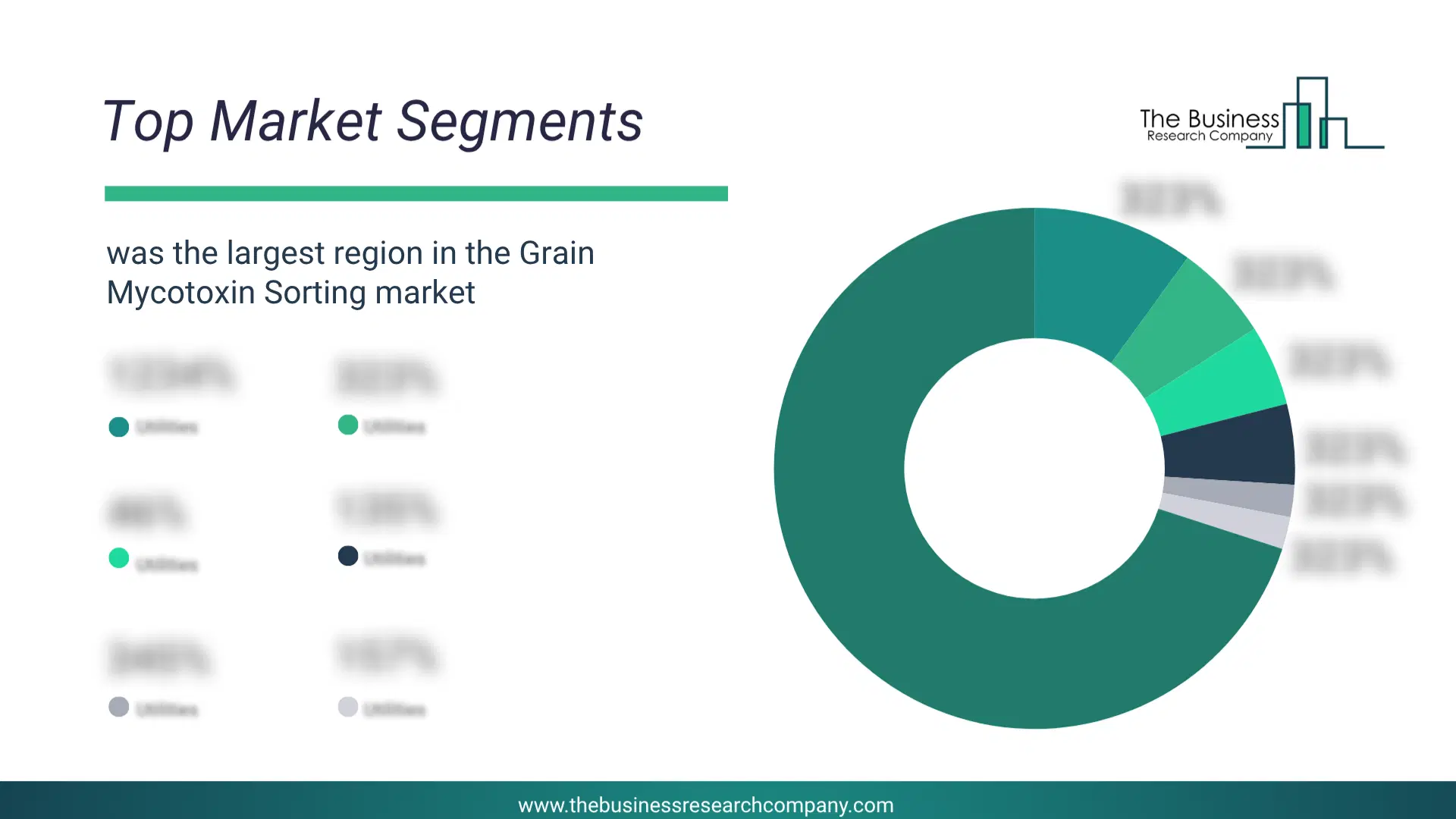
• Grain Mycotoxin Sorting market size has reached to $1.32 billion in 2025 • Expected to grow to $1.92 billion in 2030 at a compound annual growth rate (CAGR) of 7.9% • Growth Driver: The Growth Of The Animal Feed Industry Driving The Market Due To Increasing Demand For Safe And High-Quality Livestock Feed • Market Trend: Innovative Optical Technology Targets Contaminated Grains To Enhance Food And Feed Safety • North America was the largest region in 2025 and Asia-Pacific is the fastest growing region.What Is Covered Under Grain Mycotoxin Sorting Market?
Grain mycotoxin sorting refers to the process of detecting and separating grains contaminated with mycotoxins, the harmful toxic compounds produced by certain fungi, from uncontaminated grains. It helps to ensure food and feed safety, prevent health hazards, and maintain the quality and market value of Grain Products by removing contaminated kernels before processing or consumption. The main technologies of grain mycotoxin sorting include optical sorting, X-ray sorting, near-infrared sorting, and other technologies. Optical sorting refers to systems that detect and remove contaminated grains using light-based imaging and sensors. The sorting capacities include low, medium, and high. The various applications involved are Wheat, corn, barley, rice, and other applications, and are used by several end users such as food processing companies, grain elevators, feed manufacturers, and other end-users.
What Is The Grain Mycotoxin Sorting Market Size and Share 2026?
The grain mycotoxin sorting market size has grown strongly in recent years. It will grow from $1.32 billion in 2025 to $1.42 billion in 2026 at a compound annual growth rate (CAGR) of 7.6%. The growth in the historic period can be attributed to rising incidence of mycotoxin contamination outbreaks, increasing global grain trade volumes, stricter food safety regulations, growing awareness of feed safety standards, adoption of optical sorting technologies in grain processing.What Is The Grain Mycotoxin Sorting Market Growth Forecast?
The grain mycotoxin sorting market size is expected to see strong growth in the next few years. It will grow to $1.92 billion in 2030 at a compound annual growth rate (CAGR) of 7.9%. The growth in the forecast period can be attributed to increasing integration of AI-based defect recognition systems, expansion of smart grain storage infrastructure, rising demand for export-quality grain standards, growing investment in automated food processing facilities, increasing climate variability affecting fungal contamination levels. Major trends in the forecast period include increasing adoption of multispectral and hyperspectral imaging systems, growing demand for high-capacity automated sorting lines, rising focus on food and feed safety compliance, expansion of integrated quality inspection systems, growing use of non-destructive contamination detection technologies.
Global Grain Mycotoxin Sorting Market Segmentation
1) By Technology: Optical Sorting, X-ray Sorting, Near-Infrared Sorting, Other Technologies 2) By Sorting Capacity: Low, Medium, High 3) By Application: Wheat, Corn, Barley, Rice, Other Applications 4) By End-User: Food Processing Companies, Grain Elevators, Feed Manufacturers, Other End-Users Subsegments: 1) By Optical Sorting: Color Based Optical Sorting, Shape Recognition Optical Sorting, Size Based Optical Sorting, Surface Defect Detection Optical Sorting, Multispectral Imaging Optical Sorting 2) By X-ray Sorting: Density Based X Ray Sorting, Foreign Material Detection X Ray Sorting, Internal Defect Detection X Ray Sorting, Contamination Detection X Ray Sorting, High Penetration X Ray Sorting 3) By Near-Infrared Sorting: Moisture Content Detection Near Infrared Sorting, Chemical Composition Detection Near Infrared Sorting, Protein Level Detection Near Infrared Sorting, Organic Material Identification Near Infrared Sorting, Quality Grading Near Infrared Sorting 4) By Other Technologies: Laser Based Sorting, Thermal Imaging Based Sorting, Acoustic Detection Based Sorting, Ultraviolet Detection Based Sorting, Magnetic Separation Assisted SortingWhat Are The Drivers Of The Grain Mycotoxin Sorting Market?
The growth of the animal feed industry is expected to propel the growth of the grain mycotoxin sorting market going forward. The animal feed industry refers to the sector involved in the production, processing, and supply of feed and feed ingredients designed to provide essential nutrients for livestock, poultry, and aquaculture to ensure their health, growth, and productivity. The growth of the animal feed industry is primarily driven by the intensification of livestock farming, as larger-scale, more concentrated farming operations require greater and more consistent quantities of feed to sustain higher animal densities efficiently. Grain mycotoxin sorting enhances the animal feed industry by efficiently detecting and removing contaminated grains, ensuring safer, higher-quality feed and protecting livestock health. For instance, in April 2024, according to the American Feed Industry Association, a US-based not-for-profit organization, the total exports of feed, feed ingredients, and pet food amounted to 19.8 million metric tons, generating a value of $13.4 billion in 2023. Therefore, the growth of the animal feed industry is driving the growth of the grain mycotoxin sorting industry. The rising consumer awareness of food contamination issues is expected to propel the growth of the grain mycotoxin sorting market going forward. Food contamination issues refer to situations where food becomes unsafe or unfit for consumption due to the presence of harmful biological, chemical, or physical substances. Rising consumer awareness of food contamination issues is due to high-profile food safety scandals, which expose risks in the supply chain and highlight the potential health impacts of contaminated products. Grain mycotoxin sorting helps combat food contamination issues by efficiently detecting and removing mycotoxin-infected grains, ensuring safer and higher-quality food and feed products. For instance, in October 2024, according to the World Health Organization, a Switzerland-based intergovernmental organization, around 600 million people worldwide-nearly 1 in 10 become ill from consuming contaminated food each year, leading to approximately 420,000 deaths annually. Therefore, the rising consumer awareness of food contamination issues is driving the growth of the grain mycotoxin sorting industry.Key Players In The Global Grain Mycotoxin Sorting Market
Major companies operating in the grain mycotoxin sorting market are Bühler Group, Alltech Inc., PerkinElmer Inc, Tomra Systems ASA, Neogen Corporation, Binder+Co AG, Sesotec GmbH, Romer Labs Inc, Hefei Taihe Optoelectronic Technology Co Ltd., Satake Corporation, Shanghai Techik Machinery Co Ltd., Steinert GmbH, Raytec Vision S.p.A., Orange Optical Sorting Machines Inc., National Recovery Technologies LLC, Meyer Optoelectronic Sorters GmbH, QualySense AG, Anzai Manufacturing Co. Ltd., Key Technology Inc., Hefei Taihe Intelligent Technology Group Co. Ltd.
This chart is for illustrative purposes; the full report includes a detailed competitor analysis and comprehensive overview of the top 10 companies in the market.
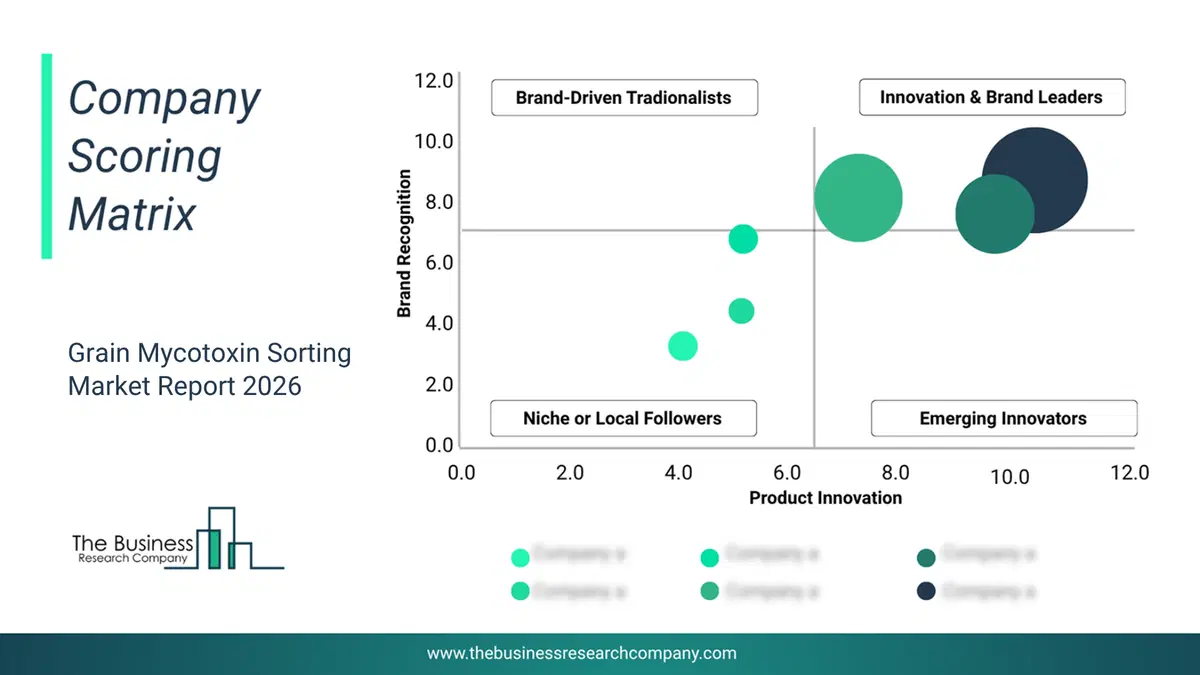
This chart maps companies by product innovation and brand strength, with bubble size indicating relative revenue, helping identify market leaders, challengers, and niche players. This is an illustrative chart; the full report provides a complete and accurate competitive analysis.
Global Grain Mycotoxin Sorting Market Trends and Insights
Major companies operating in the grain mycotoxin sorting market are focusing on developing innovative solutions, such as optical sorters, to effectively detect and remove mycotoxin-contaminated grains and ensure feed and food safety. Optical sorters are machines that use cameras, sensors, and light technology to detect and remove defective, discolored, or contaminated grains from a batch. For instance, in April 2023, Bühler Group, a Switzerland based food and feed processing technology company, launched the SORTEX A LumoVision optical sorter, a precision mycotoxin reduction solution designed to significantly lower aflatoxin and other mycotoxin levels in grains used for pet food and other applications. The LumoVision sorter features modular, multi commodity capability with hyperspectral imaging and light-emitting diode (LED) and ultraviolet (UV) lighting that detects fluorescence patterns of contaminated kernels and ejects them from the product stream, improving food safety while maintaining high throughput and yield. It supports removal of aflatoxin and fumonisin in commodities like maize, peanuts, and pulses and integrates with digital monitoring for operational insights and efficiency.
Regional Insights
North America was the largest region in the grain mycotoxin sorting market in 2025. Asia-Pacific is expected to be the fastest-growing region in the forecast period. The regions covered in this market report are Asia-Pacific, South East Asia, Western Europe, Eastern Europe, North America, South America, Middle East, Africa. The countries covered in this market report are Australia, Brazil, China, France, Germany, India, Indonesia, Japan, Taiwan, Russia, South Korea, UK, USA, Canada, Italy, Spain.What Defines the Grain Mycotoxin Sorting Market?
The grain mycotoxin sorting market consists of revenues earned by entities by providing services such as detection and analysis of mycotoxins, automated sorting and separation, quality assurance and certification, consultancy services, and maintenance and supply of sorting machinery. The market value includes the value of related goods sold by the service provider or included within the service offering. The grain mycotoxin sorting market also includes sales of grain cleaning and sieving equipment, mycotoxin testing kits, dehullers and hullers, electronic and laser-based kernel analyzers, and air classification and aspirators. Values in this market are ‘factory gate’ values, that is the value of goods sold by the manufacturers or creators of the goods, whether to other entities (including downstream manufacturers, wholesalers, distributors and retailers) or directly to end customers. The value of goods in this market includes related services sold by the creators of the goods.How is Market Value Defined and Measured?
The market value is defined as the revenues that enterprises gain from the sale of goods and/or services within the specified market and geography through sales, grants, or donations in terms of the currency (in USD unless otherwise specified). The revenues for a specified geography are consumption values that are revenues generated by organizations in the specified geography within the market, irrespective of where they are produced. It does not include revenues from resales along the supply chain, either further along the supply chain or as part of other products.
This chart presents market attractiveness based on a quantitative evaluation of growth, competition, strategic alignment, and risk, offering a clear view of opportunity areas for decision-making. This chart is for illustrative purposes; the full report contains the complete analysis.

This chart highlights the Total Addressable Market (TAM) by estimating the maximum revenue opportunity using an assumption-driven approach, supporting strategic planning and opportunity sizing across markets. The chart is illustrative; the full report provides a more comprehensive analysis.
What Key Data And Analysis Are Included In The Grain Mycotoxin Sorting Market Report 2026?
The grain mycotoxin sorting market research report is one of a series of new reports from The Business Research Company that provides market statistics, including industry global market size, regional shares, competitors with the market share, detailed market segments, market trends and opportunities, and any further data you may need to thrive in the grain mycotoxin sorting industry. The market research report delivers a complete perspective of everything you need, with an in-depth analysis of the current and future state of the industry.Grain Mycotoxin Sorting Market Report Forecast Analysis
| Report Attribute | Details |
|---|---|
| Market Size Value In 2026 | $1.42 billion |
| Revenue Forecast In 2030 | $1.92 billion |
| Growth Rate | CAGR of 7.9% from 2026 to 2030 |
| Base Year For Estimation | 2025 |
| Actual Estimates/Historical Data | 2020-2025 |
| Forecast Period | 2026 - 2030 |
| Market Representation | Revenue in USD Billion and CAGR from 2026 to 2030 |
| Segments Covered | Technology, Sorting Capacity, Application, End-User |
| Regional Scope | Asia-Pacific, Western Europe, Eastern Europe, North America, South America, Middle East, Africa |
| Country Scope | The countries covered in the report are Australia, Brazil, China, France, Germany, India, Indonesia, Japan, Taiwan, Russia, South Korea, UK, USA, Canada, Italy, Spain |
| Key Companies Profiled | Bühler Group, Alltech Inc., PerkinElmer Inc, Tomra Systems ASA, Neogen Corporation, Binder+Co AG, Sesotec GmbH, Romer Labs Inc, Hefei Taihe Optoelectronic Technology Co Ltd., Satake Corporation, Shanghai Techik Machinery Co Ltd., Steinert GmbH, Raytec Vision S.p.A., Orange Optical Sorting Machines Inc., National Recovery Technologies LLC, Meyer Optoelectronic Sorters GmbH, QualySense AG, Anzai Manufacturing Co. Ltd., Key Technology Inc., Hefei Taihe Intelligent Technology Group Co. Ltd. |
| Customization Scope | Request for Customization |
| Pricing And Purchase Options | Explore Purchase Options |