
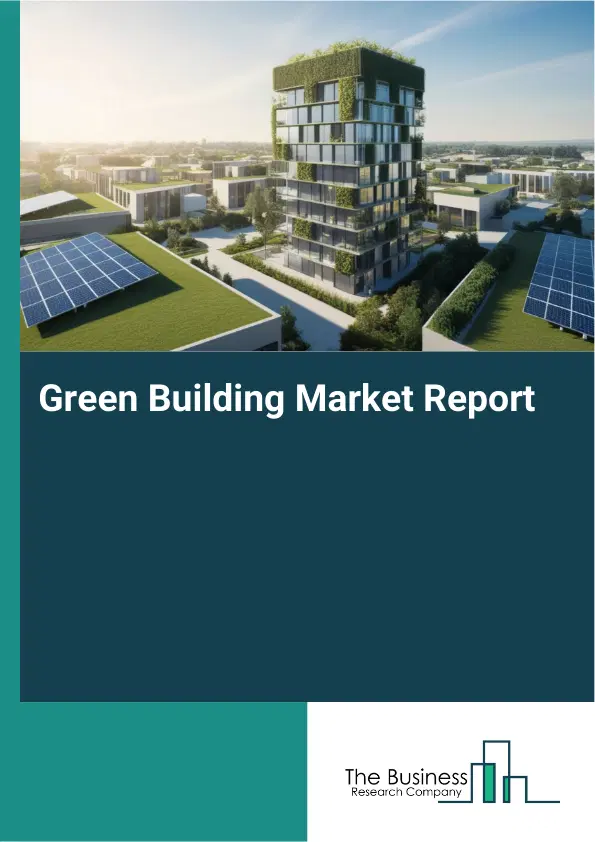
Green Building Market Report 2026
Global Outlook – By Product Type (Exterior Products, Interior Products, Building Systems, Solar Products, Other Product Types), By Application (Residential, Non-Residential Buildings), By End-Use (Roofing, Flooring, Insulation) – Market Size, Trends, Strategies, and Forecast to 2030
Green Building Market Overview
• Green Building market size has reached to $642.19 billion in 2025 • Expected to grow to $958.68 billion in 2030 at a compound annual growth rate (CAGR) of 8.1% • Growth Driver: Sustainable Building Practices Drive The Growth Of The Green Building Market • Market Trend: Key Players Innovate Sustainable Solutions for Building Materials • North America was the largest region in 2025 and Asia-Pacific is the fastest growing region.What Is Covered Under Green Building Market?
Green building refers to the practice of planning, building, operating, and maintaining buildings with a resource-efficient and environmentally responsible approach. Green building aims to reduce buildings' negative environmental effects while increasing their beneficial benefits to the health and well-being of occupants and communities. The main types of green building products are exterior products, interior products, building systems, solar products, and others. Exterior products in green buildings refer to sustainable materials and technologies used for the construction and maintenance of the building envelope, optimizing energy efficiency, and minimizing environmental impact. These are used in various applications, including residential and non-residential buildings, for several end-uses, such as roofing, flooring, and insulation.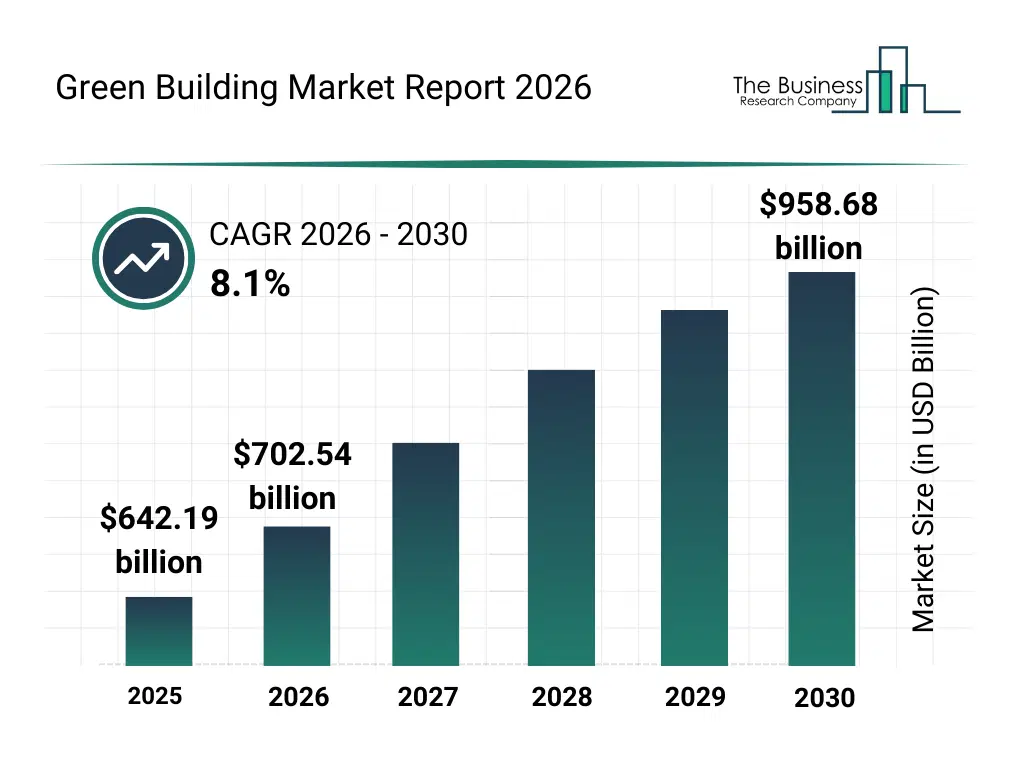
What Is The Green Building Market Size and Share 2026?
The green building market size has grown strongly in recent years. It will grow from $642.19 billion in 2025 to $702.54 billion in 2026 at a compound annual growth rate (CAGR) of 9.4%. The growth in the historic period can be attributed to increasing awareness of sustainable construction practices, early adoption of green certification systems, rising demand for energy-efficient materials, growth in government sustainability initiatives, expanding commercial construction activities.What Is The Green Building Market Growth Forecast?
The green building market size is expected to see strong growth in the next few years. It will grow to $958.68 billion in 2030 at a compound annual growth rate (CAGR) of 8.1%. The growth in the forecast period can be attributed to growing investment in renewable-integrated buildings, increasing adoption of smart building technologies, rising regulatory pressure for carbon reduction, expansion of sustainable material innovation, increasing demand for high-performance building systems. Major trends in the forecast period include growing demand for eco-friendly building materials, increasing integration of smart energy management systems, rising adoption of digital monitoring tools, expansion of automated building technologies, increasing use of AI-driven efficiency optimization.
Global Green Building Market Segmentation
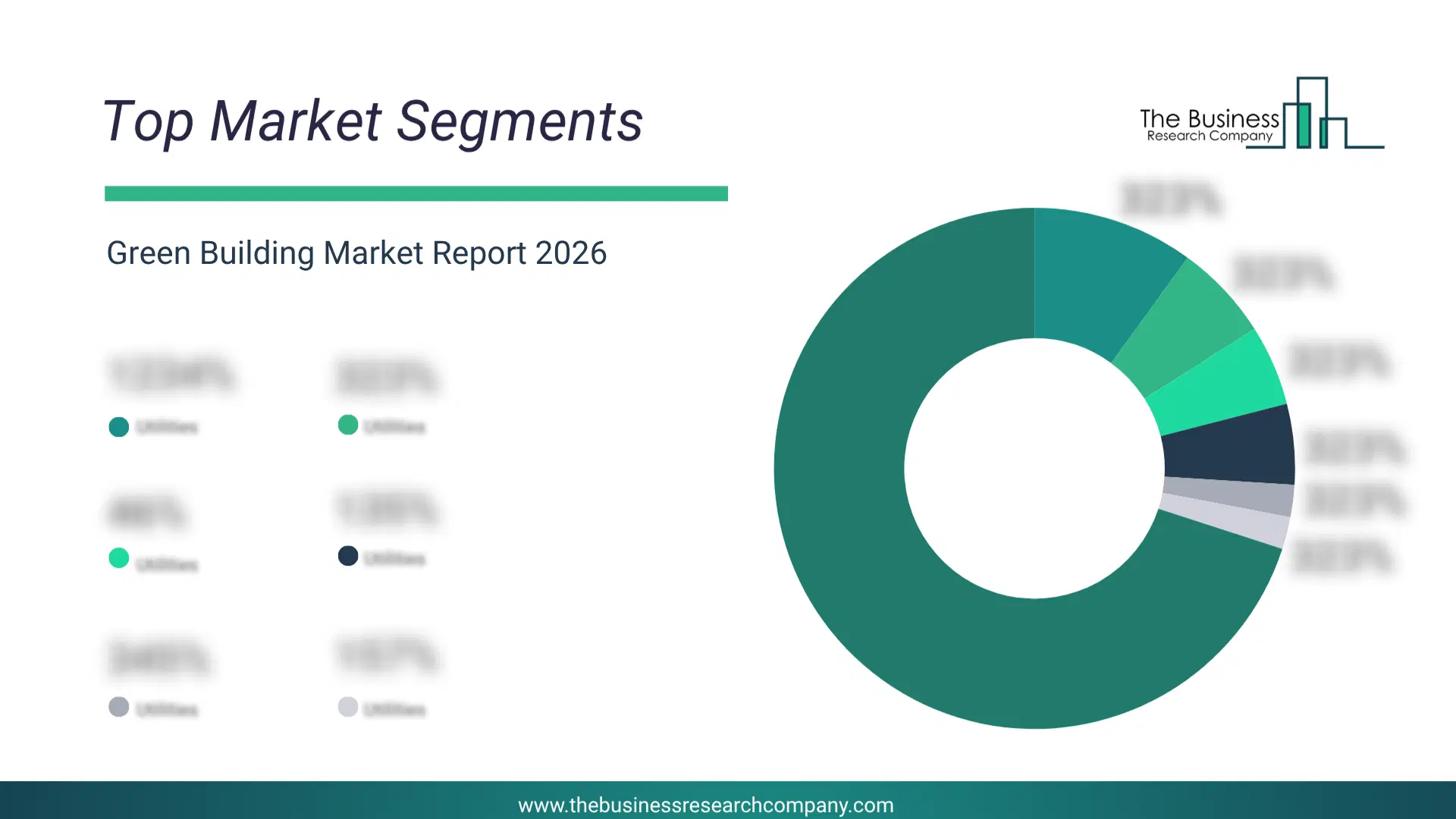
1) By Product Type: Exterior Products, Interior Products, Building Systems, Solar Products, Other Product Types 2) By Application: Residential, Non-Residential Buildings 3) By End-Use: Roofing, Flooring, Insulation Subsegments: 1) By Exterior Products: Green Roofs, Insulated Windows And Doors, Sustainable Landscaping Materials, Cool Roofing Materials 2) By Interior Products: Energy-Efficient Lighting, Sustainable Flooring, Low-Emission Paints And Coatings, Green Insulation Materials 3) By Building Systems: Hvac Systems, Water Conservation Systems, Energy Management Systems, Building Automation Systems 4) By Solar Products: Solar Panels, Solar Water Heating Systems, Solar Roofing Solutions 5) By Other Product Types: Smart Building Technology, Green Construction Materials, Energy-Efficient Windows And GlazingWhat Is The Driver Of The Green Building Market?
The rising interest in sustainable building practices is expected to propel the growth of the green building market going forward. Sustainable building practices involve designing, constructing, and operating buildings in an environmentally responsible and resource-efficient manner throughout their lifecycle. Sustainable building practices are on the rise due to growing environmental awareness, economic benefits for building owners, and regulatory requirements. Green buildings promote sustainable development by reducing resource consumption, minimizing pollution, and creating healthier and more resilient built environments for current and future generations. For instance, in February 2024, according to the US Green Building Council, a US-based non-profit organization, in 2023, there was a 9% surge in LEED (Leadership in Energy and Environmental Design), the most widely used green building rating system in the world, certifications compared to the preceding year, accompanied by an additional 21 LEED certifications for single-family homes in the residential sector. Moreover, there was a remarkable 51% uptick in new LEED project registrations during the same period. Therefore, rising interest in sustainable building practices is driving the growth of the green building industry.Key Players In The Global Green Building Market
Major companies operating in the green building market are Robert Bosch GmbH, BASF SE, Siemens AG, General Electric Company, Raytheon Technologies Corporation, Panasonic Corporation, LG Electronics Inc, International Business Machines Corporation, Cisco Systems Inc, Oracle Corporation, Schneider Electric SE, Honeywell International Inc, ABB Ltd, Daikin Industries Ltd, Johnson Controls International plc, CEMEX S.A.B. de C.V, DuPont de Nemours Inc, Owens Corning, Kingspan Group plc, Signify N.V, Binderholz GmbH, Forbo International SA, Interface Inc, Alumasc Group plc, Amvik Systems Inc, Bauder Ltd, Plastiblok Ltd.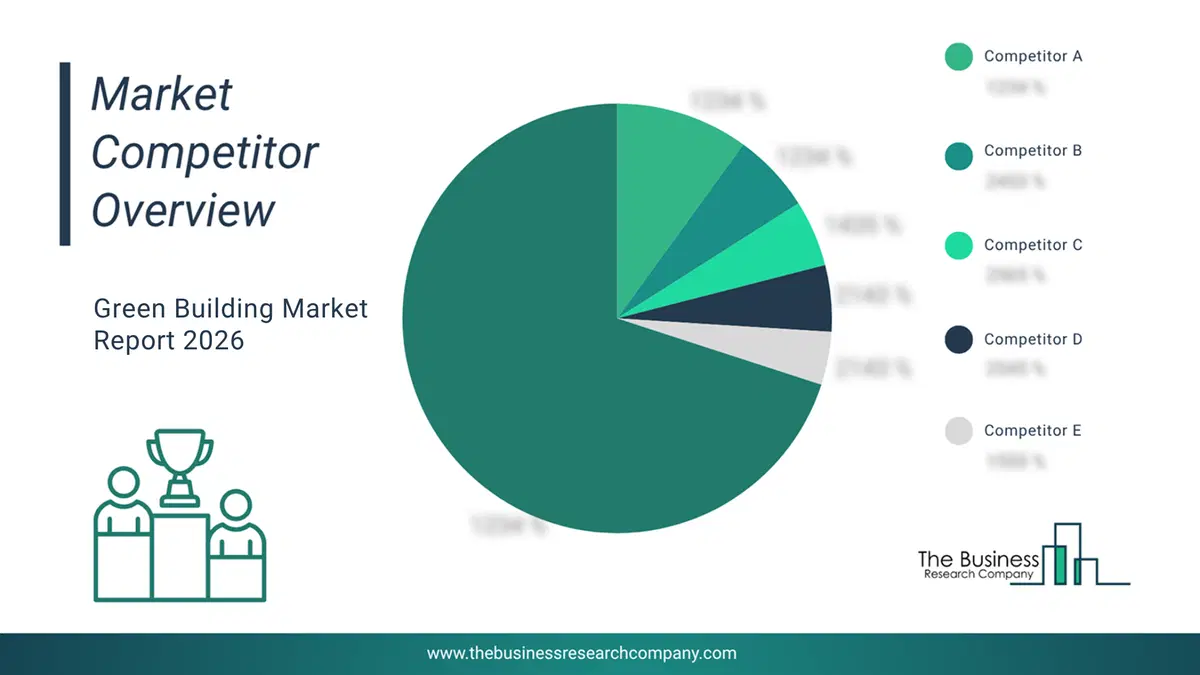
This chart is for illustrative purposes; the full report includes a detailed competitor analysis and comprehensive overview of the top 10 companies in the market.
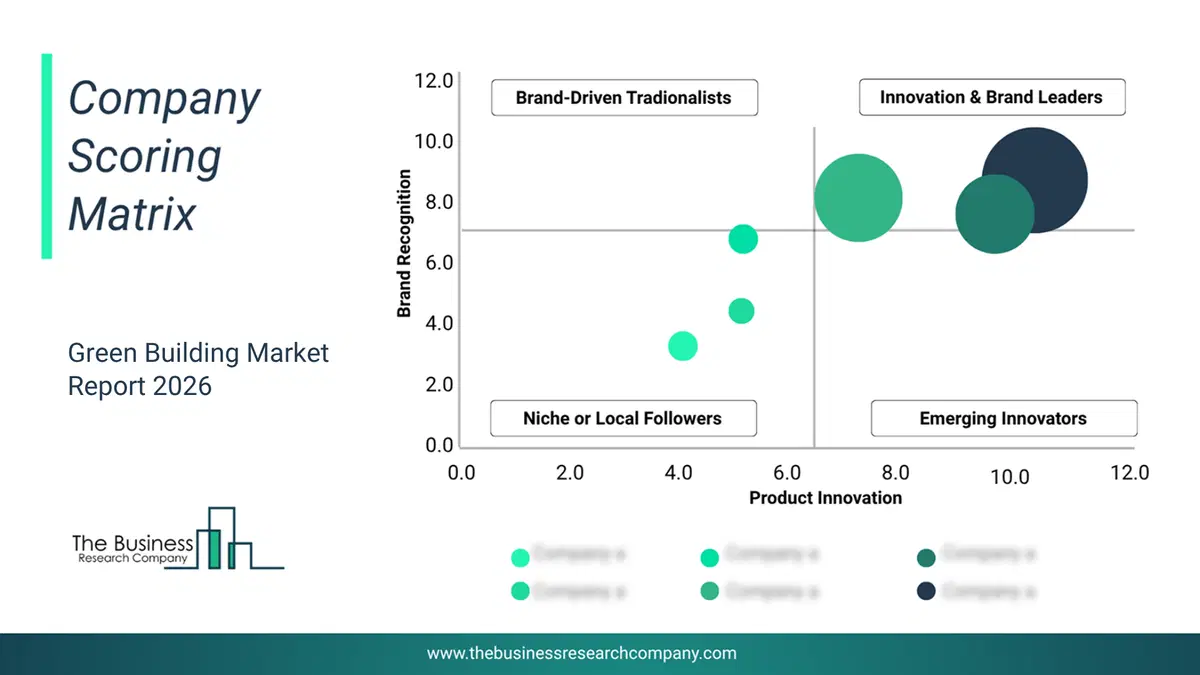
This chart maps companies by product innovation and brand strength, with bubble size indicating relative revenue, helping identify market leaders, challengers, and niche players. This is an illustrative chart; the full report provides a complete and accurate competitive analysis.
Global Green Building Market Trends and Insights
Major companies operating in the green building market are focusing on innovative solutions, such as green concrete solutions, to enhance sustainability and energy efficiency. A green concrete solution is an environmentally sustainable alternative to traditional concrete that aims to reduce carbon emissions, minimize resource consumption, and promote overall sustainability in the construction industry. For instance, in January 2023, ACC Limited, an India-based cement producer company, launched ACC ECOMaxX in India, marking a significant advancement in green concrete solutions within the industry. This comprehensive range offers a remarkable 30–100% reduction in embodied carbon content compared to conventional concrete made with ordinary Portland cement (OPC). These products use cutting-edge Green Ready Mix Technology to reduce CO2 emissions by up to 100%. ACC ECOMaxX delivers greater durability and flawless finishing by utilizing novel CO2-reduced binders and optimal mix formulations. This high-performance green concrete solution is meticulously crafted to meet the sustainable construction requirements of contractors, developers, engineers, architects, and individual home builders alike.What Are Latest Mergers And Acquisitions In The Green Building Market?
In April 2023, SOCOTEC Consulting Inc., a US-based provider of TIC (testing, inspection, and certification), consulting, and advisory services for the building and infrastructure sectors, acquired Spinnaker Group LLC for an undisclosed amount. This acquisition strengthens SOCOTEC USA's energy and sustainability consulting services, expanding on the company's current expertise and highlighting its commitment to sustainable development. Spinnaker Group LLC is a US-based consulting services company engaged in the business of green building communities and sustainable development.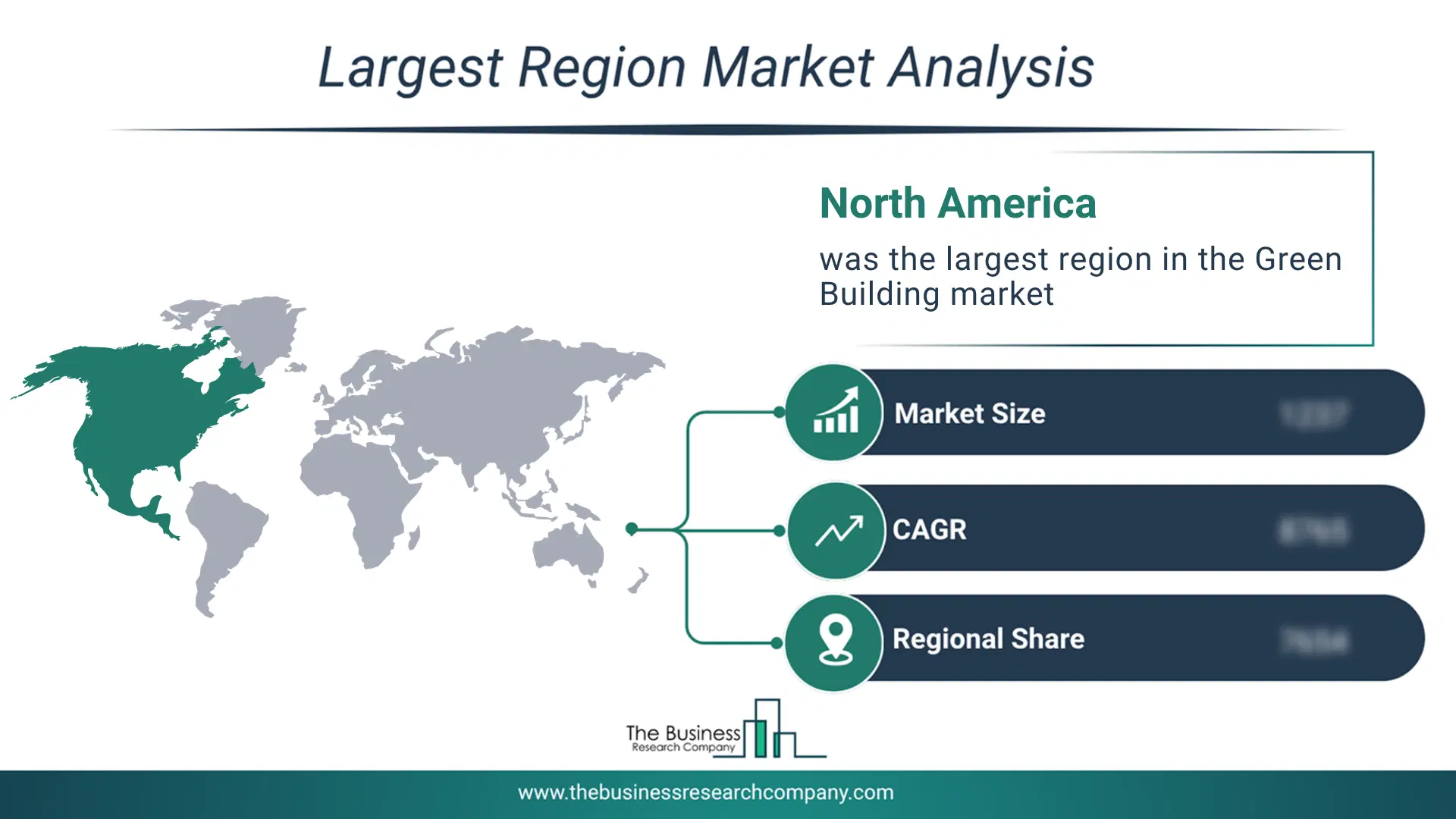
Regional Insights
North America was the largest region in the green building market in 2025. Asia-Pacific is expected to be the fastest-growing region in the market. The regions covered in this market report are Asia-Pacific, South East Asia, Western Europe, Eastern Europe, North America, South America, Middle East, Africa. The countries covered in this market report are Australia, Brazil, China, France, Germany, India, Indonesia, Japan, Taiwan, Russia, South Korea, UK, USA, Canada, Italy, Spain.What Defines the Green Building Market?
The green building market consists of revenues earned by entities by providing services, such as green roofing and landscaping services, indoor air quality monitoring, and waste management and recycling services. The market value includes the value of related goods sold by the service provider or included within the service offering. The green building market also includes sales of solar panels, energy-efficient windows, low-flow plumbing fixtures, sustainable flooring, insulation materials, green roof systems, eco-friendly paints and coatings, and smart building technologies. Values in this market are ‘factory gate’ values, that is the value of goods sold by the manufacturers or creators of the goods, whether to other entities (including downstream manufacturers, wholesalers, distributors and retailers) or directly to end customers. The value of goods in this market includes related services sold by the creators of the goods.How is Market Value Defined and Measured?
The market value is defined as the revenues that enterprises gain from the sale of goods and/or services within the specified market and geography through sales, grants, or donations in terms of the currency (in USD unless otherwise specified). The revenues for a specified geography are consumption values that are revenues generated by organizations in the specified geography within the market, irrespective of where they are produced. It does not include revenues from resales along the supply chain, either further along the supply chain or as part of other products.
This chart presents market attractiveness based on a quantitative evaluation of growth, competition, strategic alignment, and risk, offering a clear view of opportunity areas for decision-making. This chart is for illustrative purposes; the full report contains the complete analysis.

This chart highlights the Total Addressable Market (TAM) by estimating the maximum revenue opportunity using an assumption-driven approach, supporting strategic planning and opportunity sizing across markets. The chart is illustrative; the full report provides a more comprehensive analysis.
What Key Data and Analysis Are Included in theGreen Building Market Report 2026?
The green building market research report is one of a series of new reports from The Business Research Company that provides market statistics, including industry global market size, regional shares, competitors with the market share, detailed market segments, market trends and opportunities, and any further data you may need to thrive in the green building industry. The market research report delivers a complete perspective of everything you need, with an in-depth analysis of the current and future state of the industry.Green Building Market Report Forecast Analysis
| Report Attribute | Details |
|---|---|
| Market Size Value In 2026 | $702.54 billion |
| Revenue Forecast In 2030 | $958.68 billion |
| Growth Rate | CAGR of 9.4% from 2026 to 2030 |
| Base Year For Estimation | 2025 |
| Actual Estimates/Historical Data | 2020-2025 |
| Forecast Period | 2026 - 2030 |
| Market Representation | Revenue in USD Billion and CAGR from 2026 to 2030 |
| Segments Covered | Product Type, Application, End-Use |
| Regional Scope | Asia-Pacific, Western Europe, Eastern Europe, North America, South America, Middle East, Africa |
| Country Scope | The countries covered in this market report are Australia, Brazil, China, France, Germany, India, Indonesia, Japan, Taiwan, Russia, South Korea, UK, USA, Canada, Italy, Spain |
| Key Companies Profiled | Robert Bosch GmbH, BASF SE, Siemens AG, General Electric Company, Raytheon Technologies Corporation, Panasonic Corporation, LG Electronics Inc, International Business Machines Corporation, Cisco Systems Inc, Oracle Corporation, Schneider Electric SE, Honeywell International Inc, ABB Ltd, Daikin Industries Ltd, Johnson Controls International plc, CEMEX S.A.B. de C.V, DuPont de Nemours Inc, Owens Corning, Kingspan Group plc, Signify N.V, Binderholz GmbH, Forbo International SA, Interface Inc, Alumasc Group plc, Amvik Systems Inc, Bauder Ltd, Plastiblok Ltd. |
| Customization Scope | Request for Customization |
| Pricing And Purchase Options | Explore Purchase Options |