
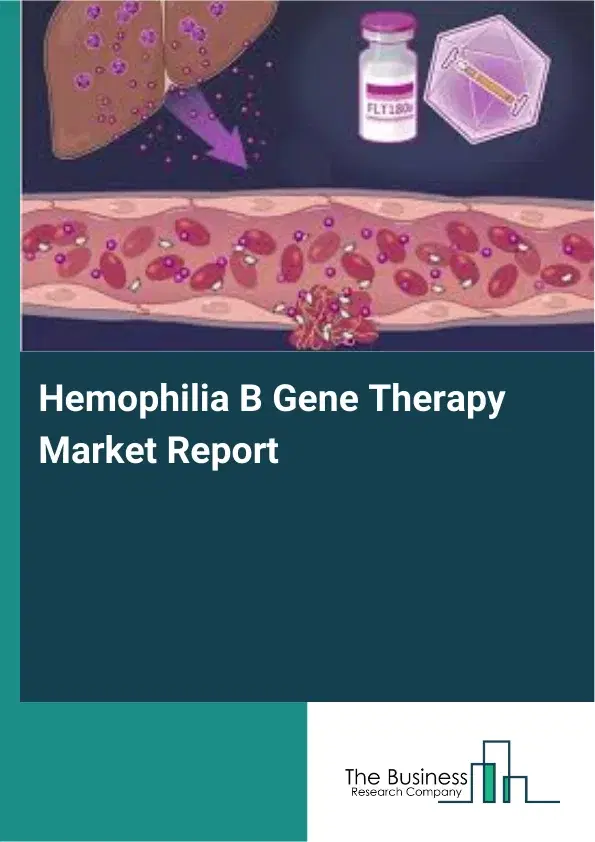
Hemophilia B Gene Therapy Market Report 2026
Global Outlook – By Therapy (Adeno-Associated Viral (AAV) Vectors, Lentiviral Vectors, Retroviral Vectors), By Disease Severity (Severe Hemophilia B, Moderate Hemophilia B, Mild Hemophilia B), By Treatment Type (On-Demand, Cure, Prophylaxis), By Patient Age Group (Geriatric, Adults, Pediatric), By Distribution Channel (Hospital Pharmacies, Specialty Pharmacies) – Market Size, Trends, Strategies, and Forecast to 2030
Hemophilia B Gene Therapy Market Overview
• Hemophilia B Gene Therapy market size has reached to $0.55 billion in 2025 • Expected to grow to $2.01 billion in 2030 at a compound annual growth rate (CAGR) of 29.8% • Growth Driver: Increasing Preference For One-Time Curative Therapies Fueling The Growth Of The Market Due To Reduced Treatment Burden And Long-Term Disease Control • Market Trend: Innovations In Next-Generation Gene Delivery Platforms Improve Targeting Efficiency And Treatment Performance • North America was the largest region in 2025 and Asia-Pacific is the fastest growing region.What Is Covered Under Hemophilia B Gene Therapy Market?
Hemophilia B gene therapy refers to an advanced treatment approach in which a functional factor IX (F9) gene is delivered into a patient’s liver cells, most commonly using an adeno-associated viral (AAV) vector, enabling the body to produce its own clotting factor on a sustained basis. This therapy is designed to address the root genetic cause of the disorder and significantly reduce bleeding episodes and lifelong dependence on regular Factor IX replacement infusions through a single or long-lasting treatment. The main types of hemophilia B gene therapy include adeno-associated viral (AAV) vectors, lentiviral vectors, and retroviral vectors. Adeno-associated viral (AAV) vectors refer to viral delivery systems engineered to carry functional copies of the factor IX gene into patient cells to restore clotting function. These therapies are used for disease severities including severe hemophilia B, moderate hemophilia B, and mild hemophilia B. They are available in treatment types such as on-demand, cure, and prophylaxis, and administered across patient age groups including geriatric, adults, and pediatric populations. They are distributed through hospital pharmacies and specialty pharmacies.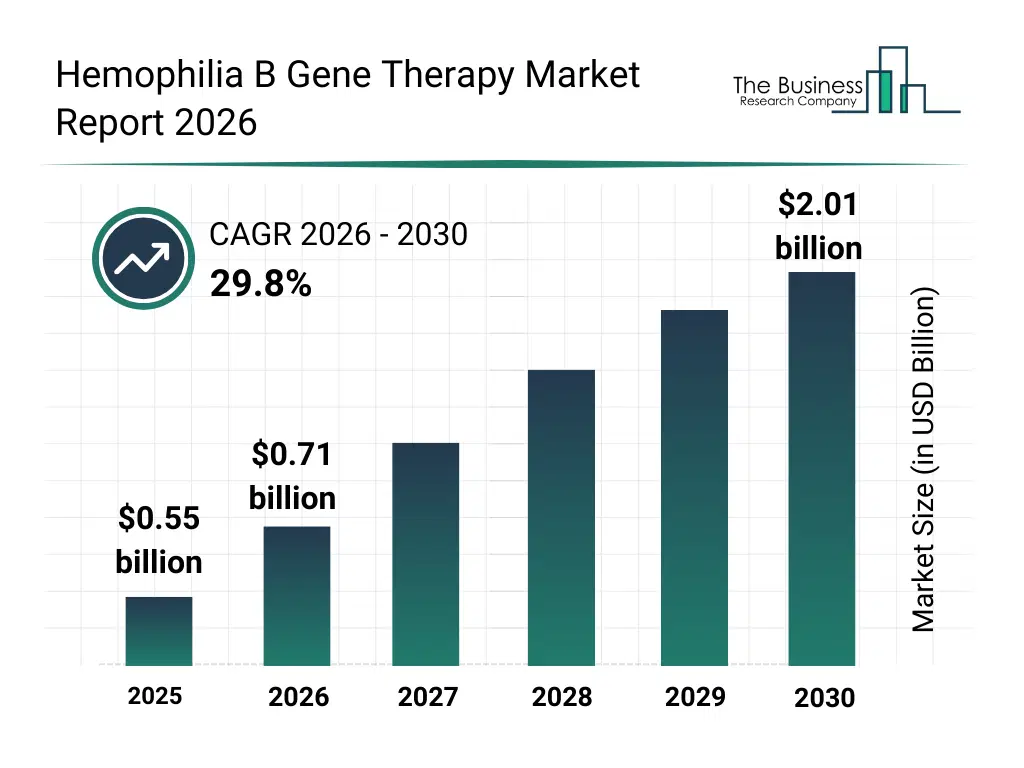
What Is The Hemophilia B Gene Therapy Market Size and Share 2026?
The hemophilia b gene therapy market size has grown exponentially in recent years. It will grow from $0.55 billion in 2025 to $0.71 billion in 2026 at a compound annual growth rate (CAGR) of 29.6%. The growth in the historic period can be attributed to improvements in gene delivery technologies, increased understanding of hemophilia b genetics, expansion of clinical research programs, rising burden of lifelong replacement therapy, availability of specialized treatment centers.What Is The Hemophilia B Gene Therapy Market Growth Forecast?
The hemophilia b gene therapy market size is expected to see exponential growth in the next few years. It will grow to $2.01 billion in 2030 at a compound annual growth rate (CAGR) of 29.8%. The growth in the forecast period can be attributed to increasing approvals of gene therapies, rising investments in rare disease treatments, growing demand for durable therapeutic outcomes, expansion of advanced manufacturing capabilities, increasing patient access programs. Major trends in the forecast period include increasing progress in one-time curative therapies, rising focus on long-term factor ix expression, growing optimization of aav vector design, expansion of personalized gene therapy approaches, enhanced regulatory alignment for advanced therapies.
Global Hemophilia B Gene Therapy Market Segmentation
1) By Therapy: Adeno-Associated Viral (AAV) Vectors; Lentiviral Vectors; Retroviral Vectors 2) By Disease Severity: Severe Hemophilia B; Moderate Hemophilia B; Mild Hemophilia B 3) By Treatment Type: On-Demand; Cure; Prophylaxis 4) By Patient Age Group: Geriatric; Adults; Pediatric 5) By Distribution Channel: Hospital Pharmacies; Specialty Pharmacies Subsegments: 1) By Adeno-Associated Viral Vectors: Single-Stranded Adeno-Associated Viral Vectors; Self-Complementary Adeno-Associated Viral Vectors; Tissue Specific Promoter Adeno-Associated Viral Vectors; Capsid Modified Adeno-Associated Viral Vectors 2) By Lentiviral Vectors: Integrating Lentiviral Vectors; Non-Integrating Lentiviral Vectors; Self-Inactivating Lentiviral Vectors; Pseudotyped Lentiviral Vectors 3) By Retroviral Vectors: Gamma Retroviral Vectors; Alpha Retroviral Vectors; Moloney Murine Leukemia Virus Retroviral Vectors; Spumaretroviral VectorsWhat Are The Drivers Of The Hemophilia B Gene Therapy Market?
The rising number of gene therapy clinical trials is expected to propel the growth of the hemophilia B gene therapy market going forward. Gene therapy clinical trials are research studies designed to evaluate the safety, efficacy, and long-term therapeutic potential of gene-based treatments in human participants. The increase in gene therapy clinical trials is driven by growing investment from biopharmaceutical companies, advancements in viral vector technology, supportive regulatory frameworks, and the need to address rare genetic disorders with high unmet medical need, including hemophilia B. Hemophilia B gene therapy is benefiting from this expanding gene therapy clinical trial landscape by leveraging established clinical development pathways, regulatory experience, and manufacturing capabilities associated with in vivo gene delivery approaches. For instance, in January 2026, according to Bioindustry Association (BIA) a UK-based national trade association, UK recorded 193 ongoing advanced therapy clinical trials, broadly similar to 2024, with over half in early stages, around 80% commercially sponsored, and more than 80% focused on gene therapies, evenly split between ex vivo and in vivo approaches. Therefore, the rising cell and gene therapy clinical trials is driving the growth of the hemophilia B gene therapy industry. The rising adoption of personalized medicine is expected to propel the growth of the hemophilia B gene therapy market going forward. Personalized medicine refers to a medical approach that tailors disease prevention, diagnosis, and treatment based on an individual’s genetic, molecular, or clinical characteristics to improve therapeutic outcomes and reduce adverse effects. The increasing adoption of personalized medicine is driven by advancements in genomics, improved biomarker identification, and growing regulatory support for targeted therapies that move away from one-size-fits-all treatment models. Hemophilia B gene therapy aligns closely with the principles of personalized medicine by targeting the underlying genetic cause of the disease and enabling long-term therapeutic benefit through individualized gene-based interventions. These therapies rely on patient-specific genetic and clinical profiling to determine eligibility, optimize dosing strategies, and monitor treatment durability and safety. For instance, in February 2024, according to the Personalized Medicine Coalition, a US-based nonprofit organization, the US Food and Drug Administration approved 16 new personalized treatments for rare disease patients in 2023. Therefore, the rising adoption of personalized medicine is driving the growth of the hemophilia B gene therapy industry.Key Players In The Global Hemophilia B Gene Therapy Market
Major companies operating in the hemophilia b gene therapy market are REGENXBIO Inc., Pfizer Inc., Bayer Aktiengesellschaft (Bayer AG), Thermo Fisher Scientific Inc., Takeda Pharmaceutical Company Limited, Merck KGaA, CSL Behring LLC, Lonza Group AG, Alnylam Pharmaceuticals Inc., GenScript ProBio LLC, Ultragenyx Pharmaceutical Inc., Takara Bio Inc., Sangamo Therapeutics Inc., Precision BioSciences Inc., Synthego Corporation, MaxCyte Inc., uniQure N.V., Freeline Therapeutics Ltd., Be Biopharma Inc., Asklepios BioPharmaceutical Inc., Cellectis S.A.
This chart is for illustrative purposes; the full report includes a detailed competitor analysis and comprehensive overview of the top 10 companies in the market.
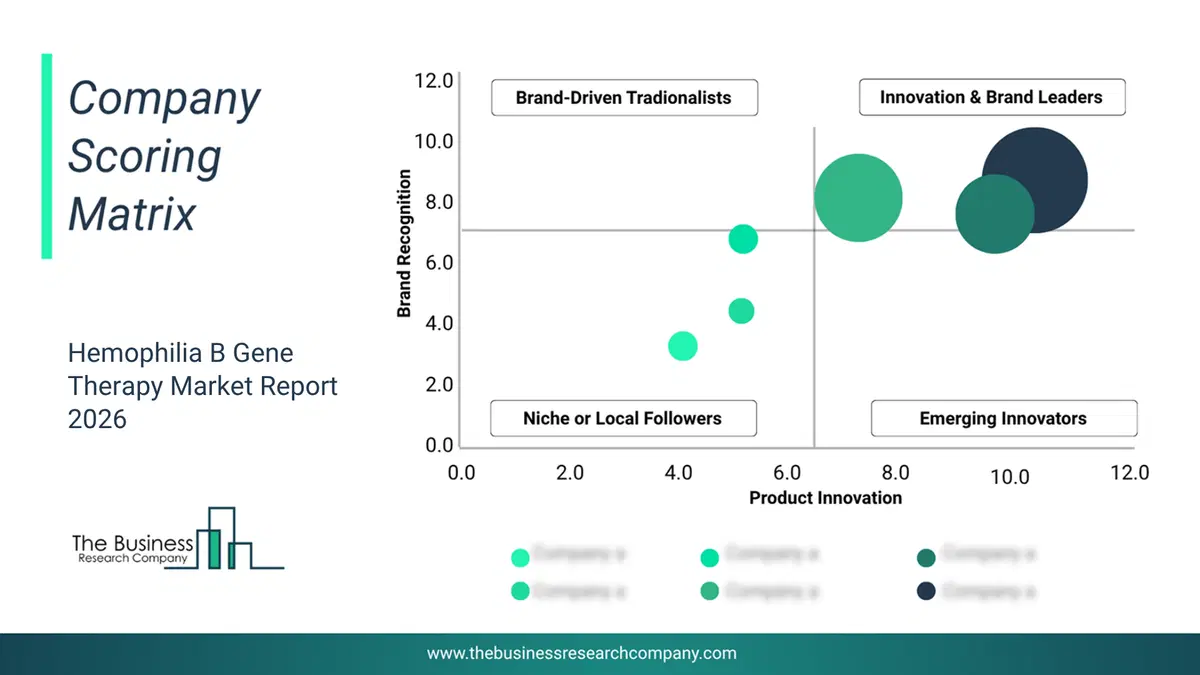
This chart maps companies by product innovation and brand strength, with bubble size indicating relative revenue, helping identify market leaders, challengers, and niche players. This is an illustrative chart; the full report provides a complete and accurate competitive analysis.
Global Hemophilia B Gene Therapy Market Trends and Insights
Major companies operating in the hemophilia B gene therapy market are increasingly focusing on innovations in next-generation gene delivery platforms, particularly optimized adeno-associated virus (AAV)–based vector systems, to enhance therapeutic efficacy and safety. Optimized AAV-based vector systems serve as advanced viral delivery platforms that enable efficient and controlled transfer of functional clotting factor IX genes into target hepatocytes, supporting long-term endogenous factor production. For instance, in May 2023, CSL Behring GmbH, a Germany-based biotechnology company, received European Commission approval for HEMGENIX, the first gene therapy approved for the treatment of hemophilia B. HEMGENIX is indicated for adult patients with severe or moderate hemophilia B without a history of factor IX inhibitors and is designed to reduce or eliminate the need for routine factor IX prophylaxis. According to results from the pivotal HOPE-B clinical study, a significant proportion of treated patients no longer required regular factor IX infusions, demonstrating sustained therapeutic benefit and highlighting the potential of next-generation AAV-based gene therapies in long-term disease management.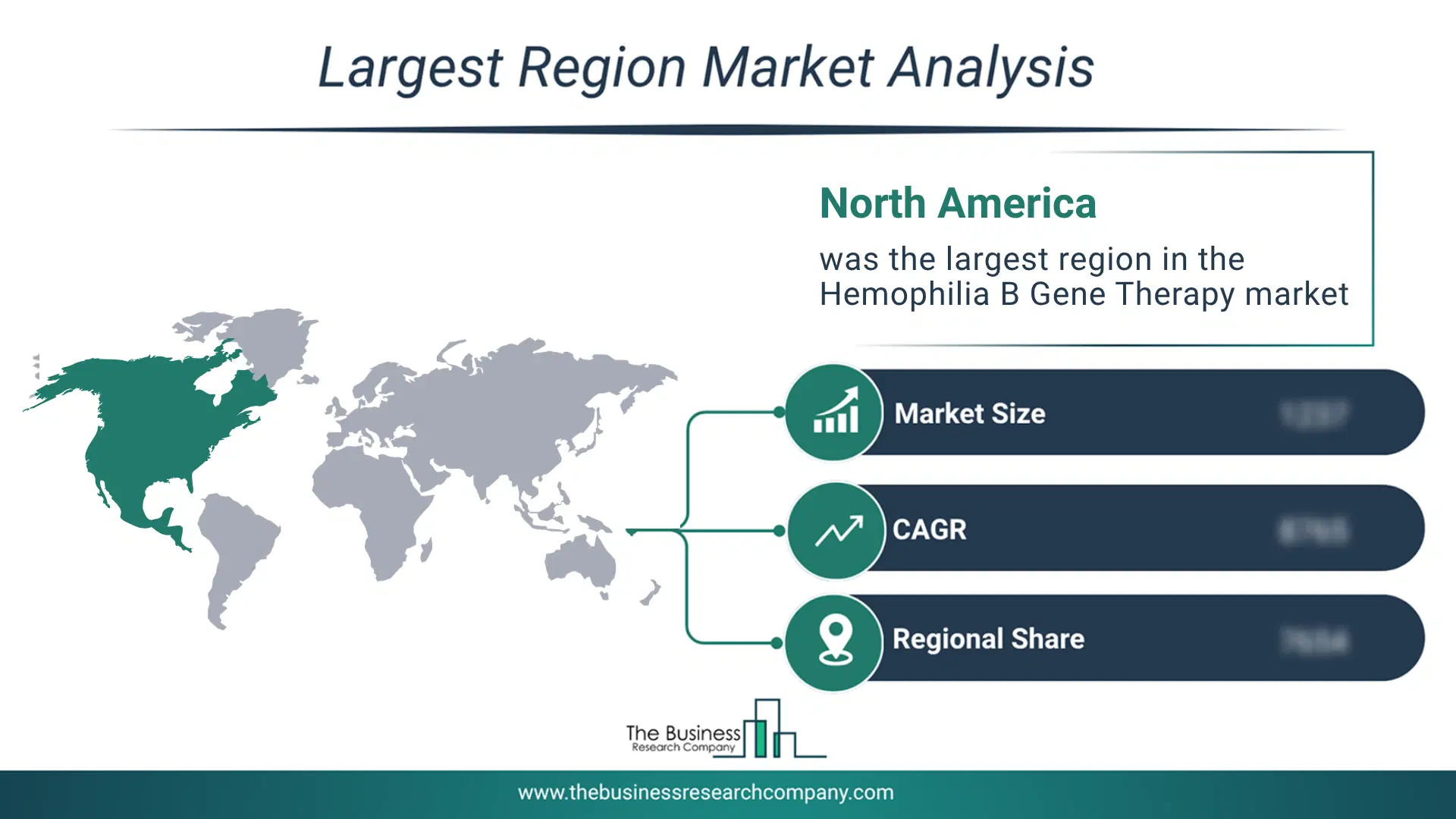
Regional Insights
North America was the largest region in the hemophilia b gene therapy market in 2025. Asia-Pacific is expected to be the fastest-growing region in the forecast period. The regions covered in this market report are Asia-Pacific, South East Asia, Western Europe, Eastern Europe, North America, South America, Middle East, Africa. The countries covered in this market report are Australia, Brazil, China, France, Germany, India, Indonesia, Japan, Taiwan, Russia, South Korea, UK, USA, Canada, Italy, Spain.What Defines the Hemophilia B Gene Therapy Market?
The hemophilia B gene therapy market includes revenues earned by entities through gene therapy research and development, vector design and optimization services, clinical trial management services, patient screening and eligibility assessment services, genetic testing and sequencing services, and regulatory consulting and approval services. The market value includes the value of related goods sold by the service provider or included within the service offering. Only goods and services traded between entities or sold to end consumers are included.How is Market Value Defined and Measured?
The market value is defined as the revenues that enterprises gain from the sale of goods and/or services within the specified market and geography through sales, grants, or donations in terms of the currency (in USD unless otherwise specified). The revenues for a specified geography are consumption values that are revenues generated by organizations in the specified geography within the market, irrespective of where they are produced. It does not include revenues from resales along the supply chain, either further along the supply chain or as part of other products.
This chart presents market attractiveness based on a quantitative evaluation of growth, competition, strategic alignment, and risk, offering a clear view of opportunity areas for decision-making. This chart is for illustrative purposes; the full report contains the complete analysis.

This chart highlights the Total Addressable Market (TAM) by estimating the maximum revenue opportunity using an assumption-driven approach, supporting strategic planning and opportunity sizing across markets. The chart is illustrative; the full report provides a more comprehensive analysis.
What Key Data and Analysis Are Included in the Hemophilia B Gene Therapy Market Report 2026?
The hemophilia b gene therapy market research report is one of a series of new reports from The Business Research Company that provides market statistics, including industry global market size, regional shares, competitors with the market share, detailed market segments, market trends and opportunities, and any further data you may need to thrive in the hemophilia b gene therapy industry. The market research report delivers a complete perspective of everything you need, with an in-depth analysis of the current and future state of the industry.Hemophilia B Gene Therapy Market Report Forecast Analysis
| Report Attribute | Details |
|---|---|
| Market Size Value In 2026 | $0.71 billion |
| Revenue Forecast In 2030 | $2.01 billion |
| Growth Rate | CAGR of 29.6% from 2026 to 2030 |
| Base Year For Estimation | 2025 |
| Actual Estimates/Historical Data | 2020-2025 |
| Forecast Period | 2026 - 2030 |
| Market Representation | Revenue in USD Billion and CAGR from 2026 to 2030 |
| Segments Covered | Therapy, Disease Severity, Treatment Type, Patient Age Group, Distribution Channel |
| Regional Scope | Asia-Pacific, Western Europe, Eastern Europe, North America, South America, Middle East, Africa |
| Country Scope | The countries covered in the report are Australia, Brazil, China, France, Germany, India, Indonesia, Japan, Taiwan, Russia, South Korea, UK, USA, Canada, Italy, Spain. |
| Key Companies Profiled | REGENXBIO Inc., Pfizer Inc., Bayer Aktiengesellschaft (Bayer AG), Thermo Fisher Scientific Inc., Takeda Pharmaceutical Company Limited, Merck KGaA, CSL Behring LLC, Lonza Group AG, Alnylam Pharmaceuticals Inc., GenScript ProBio LLC, Ultragenyx Pharmaceutical Inc., Takara Bio Inc., Sangamo Therapeutics Inc., Precision BioSciences Inc., Synthego Corporation, MaxCyte Inc., uniQure N.V., Freeline Therapeutics Ltd., Be Biopharma Inc., Asklepios BioPharmaceutical Inc., Cellectis S.A. |
| Customization Scope | Request for Customization |
| Pricing And Purchase Options | Explore Purchase Options |