
Home Computing And Networking Market Report 2026
Global Outlook – By Service Type (Broadband Connectivity Integration Services, Router And Modem Configuration Services, Smart Home Connectivity Services, Cloud Based Storage Services, Device Installation And Setup Services, Maintenance And Support Services), By Component (Desktop Computers, Laptops, Wi-Fi Routers, Modems And Gateways, Switches And Hubs, Network Adapters, Range Extenders, Smart Hubs, Network Storage Devices), By Connectivity Type (Wired Networking, Wireless Networking), By Application (Content Consumption, Remote Work, Online Communication, Smart Home Integration), By End-User (Residential Consumers, Home-based Businesses) – Market Size, Trends, Strategies, and Forecast to 2030
Home Computing And Networking Market Overview
• Home Computing And Networking market size has reached to $21.85 billion in 2025 • Expected to grow to $23.27 billion in 2030 at a compound annual growth rate (CAGR) of 6.7% • Growth Driver: Rapid Integration Of Smart Home Devices Driving The Growth Of The Market Due To Increasing Demand For Connectivity And Seamless Device Interoperability • Market Trend: Integration Of Artificial Intelligence In Networking Due To Increasing Need For Intelligent Network Optimization • North America was the largest region in 2025 and Asia-Pacific is the fastest growing region.What Is Covered Under Home Computing And Networking Market?
Home computing and networking refers to the ecosystem of digital devices, software, and connectivity solutions that enable individuals and households to access, process, store, and share digital content while maintaining local and internet-based network connectivity. It includes personal computing systems and home networking infrastructure that support activities such as content consumption, remote work, online communication, and smart device integration within residential environments. The main service types of the home computing and networking are broadband connectivity integration services, router and modem configuration services, smart home connectivity services, cloud-based storage services, device installation and setup services, and maintenance and support services. Broadband connectivity integration services refer to solutions that enable seamless connection of households to high-speed internet services and ensure stable network access across devices. These services are supported by various components, including desktop computers, laptops, wi-fi routers, modems and gateways, switches and hubs, network adapters, range extenders, smart hubs, and network storage devices. They operate across different connectivity types, such as wired networking and wireless networking, and are used in multiple applications, including content consumption, remote work, online communication, and smart home integration. The solutions cater to different end-users, such as residential consumers and home-based businesses.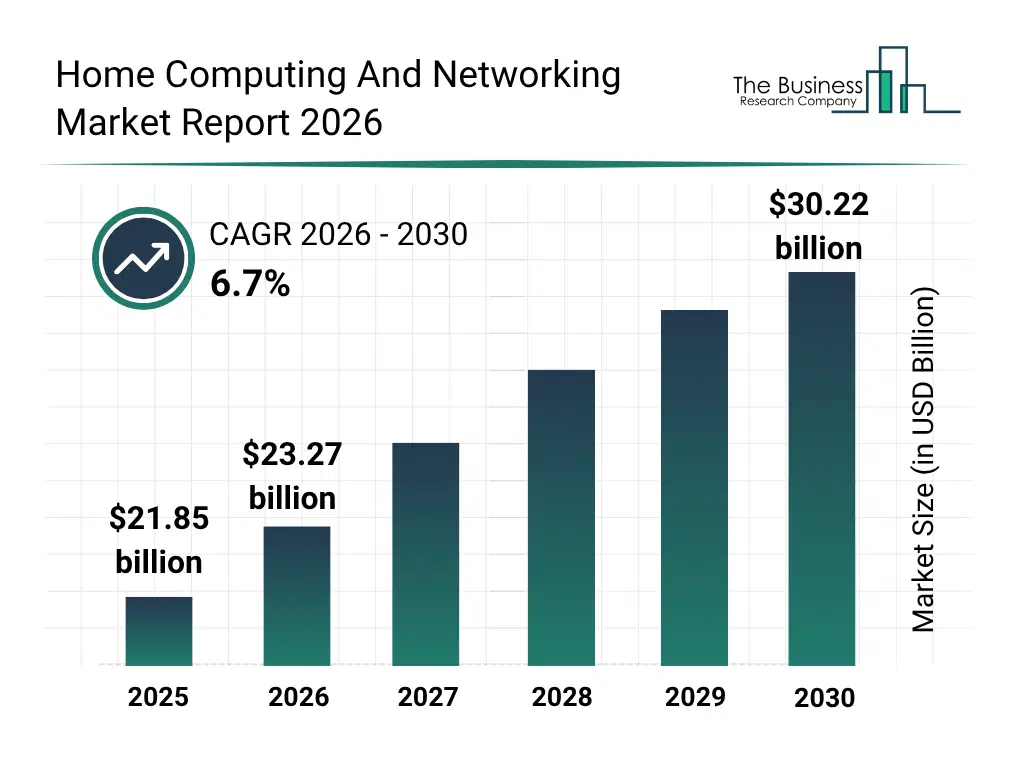
What Is The Home Computing And Networking Market Size and Share 2026?
The home computing and networking market size has grown strongly in recent years. It will grow from $21.85 billion in 2025 to $23.27 billion in 2026 at a compound annual growth rate (CAGR) of 6.5%. The growth in the historic period can be attributed to rise of broadband internet penetration, increasing adoption of personal computers and laptops, growth of home wi-fi routers and wireless access points, expansion of remote work culture, emergence of smart home devices adoption.What Is The Home Computing And Networking Market Growth Forecast?
The home computing and networking market size is expected to see strong growth in the next few years. It will grow to $30.22 billion by 2030 at a compound annual growth rate (CAGR) of 6.7%. The growth in the forecast period can be attributed to growing demand for high speed low latency connectivity, increasing integration of iot enabled home ecosystems, rising cybersecurity threats in home networks, expansion of hybrid work and learning models, advancement of ai driven network optimization solutions. Major trends in the forecast period include mesh wi-fi and whole home connectivity expansion, edge computing adoption in home networks, smart home device interoperability and integration, cloud based personal storage and backup growth, cybersecurity and home network protection solutions.
Global Home Computing And Networking Market Segmentation
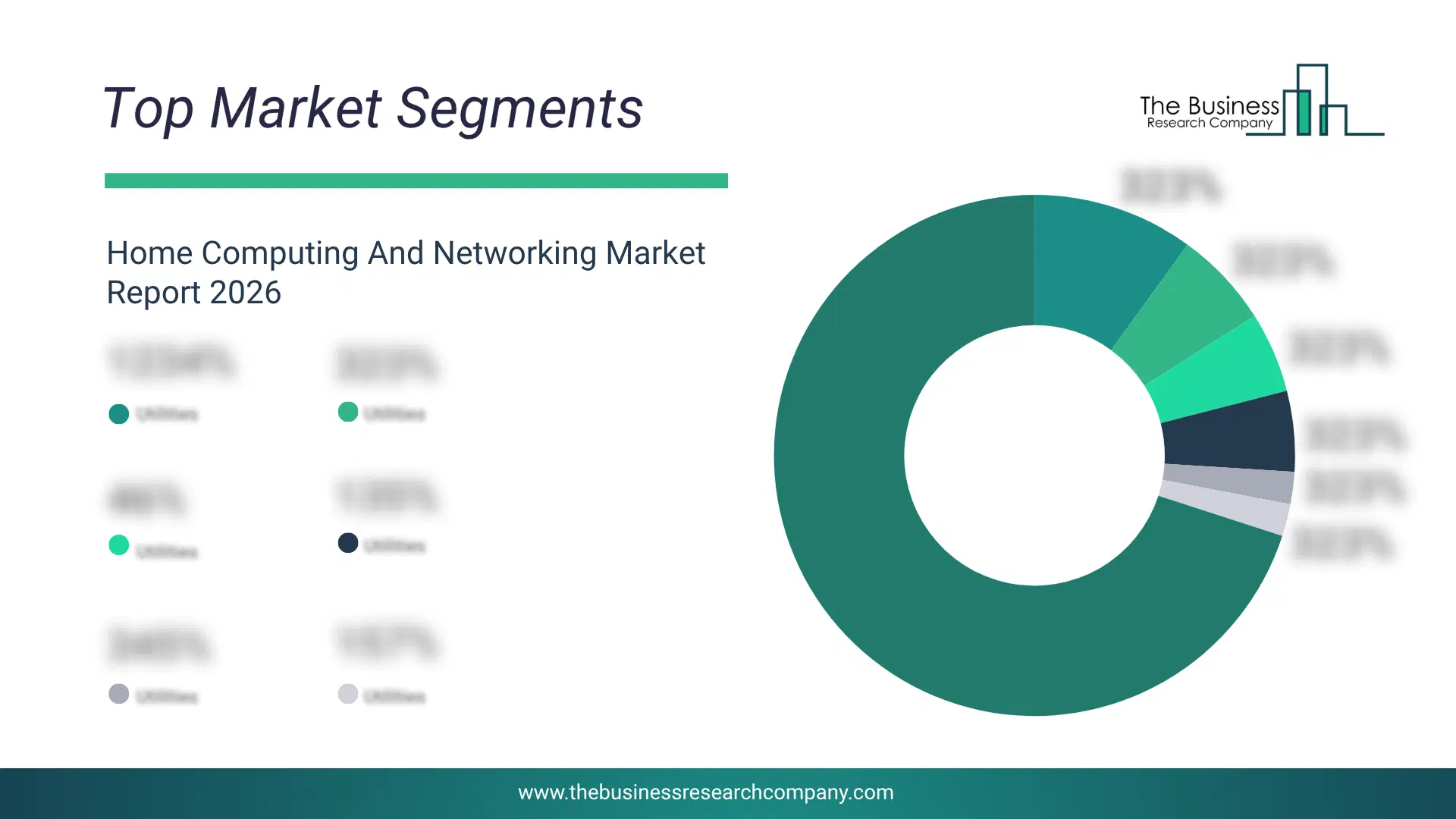
1) By Service Type: Broadband Connectivity Integration Services, Router And Modem Configuration Services, Smart Home Connectivity Services, Cloud Based Storage Services, Device Installation And Setup Services, Maintenance And Support Services 2) By Component: Desktop Computers, Laptops, Wi-Fi Routers, Modems And Gateways, Switches And Hubs, Network Adapters, Range Extenders, Smart Hubs, Network Storage Devices 3) By Connectivity Type: Wired Networking, Wireless Networking 4) By Application: Content Consumption, Remote Work, Online Communication, Smart Home Integration 5) By End-User: Residential Consumers, Home-based Businesses Subsegments: 1) By Broadband Connectivity Integration Services: Fiber Optic Connectivity Integration, Digital Subscriber Line Integration, Cable Internet Integration, Satellite Internet Integration, Hybrid Network Integration 2) By Router And Modem Configuration Services: Router Installation And Setup, Modem Installation And Setup, Network Security Configuration, Bandwidth Optimization Configuration, Firmware Update And Management 3) By Smart Home Connectivity Services: Smart Device Integration, Home Automation Setup, Voice Assistant Integration, Security System Connectivity, Internet Of Things Device Management 4) By Cloud Based Storage Services: Personal Cloud Storage, Data Backup And Recovery Services, File Synchronization Services, Media Storage And Streaming Services, Secure Document Storage 5) By Device Installation And Setup Services: Computer And Laptop Installation, Peripheral Device Setup, Smart Device Installation, Network Device Installation, Software Installation And Configuration 6) By Maintenance And Support Services: Remote Technical Support, On Site Maintenance Services, Network Monitoring Services, Troubleshooting And Repair Services, System Upgrade And Update ServicesWhat Is The Driver Of The Home Computing And Networking Market?
The growing smart home device integration is expected to propel the growth of the home computing and networking market going forward. A smart home device is an electronic device designed to automate, monitor, or control household functions using internet connectivity, sensors, and software, often allowing users to manage their homes remotely through smartphones or voice commands. The increasing integration of smart home devices is driven by rising demand for convenience and automation in household activities, as consumers adopt technologies that simplify daily tasks and improve efficiency. Home computing and networking support smart home device integration by providing reliable connectivity infrastructure, networking hardware, and data management systems that enable seamless interaction among interconnected devices. For instance, in May 2025, according to a survey of 1,006 homeowners and renters across the US by American Home Shield, a US-based home services organization, approximately 93% of Americans owned at least one smart home device, while 42% reported that most of their household devices were smart, indicating strong adoption and increasing integration of connected technologies. Therefore, the growing smart home device integration is driving the growth of the home computing and networking industry.Key Players In The Global Home Computing And Networking Market
Major companies operating in the home computing and networking market are Apple Inc.; Microsoft Corporation; Dell Technologies Inc.; Panasonic Corporation; Cisco Systems Inc.; Lenovo Group Limited; Intel Corporation; HP Inc.; Fujitsu Limited; Advanced Micro Devices Inc.; Western Digital Corporation; Acer Inc.; Seagate Technology Holdings plc; Juniper Networks Inc.; Ubiquiti Inc.; Razer Inc.; TP-Link Technologies Co. Ltd.; Teltonika Networks; Netgear Inc.; Linksys Holdings Inc.; MikroTik Ltd; Synology Inc.; D-Link Corporation; EnGenius Technologies Inc.; Tenda Technology; Buffalo Technology Inc.; AirLive; QNAP Systems Inc.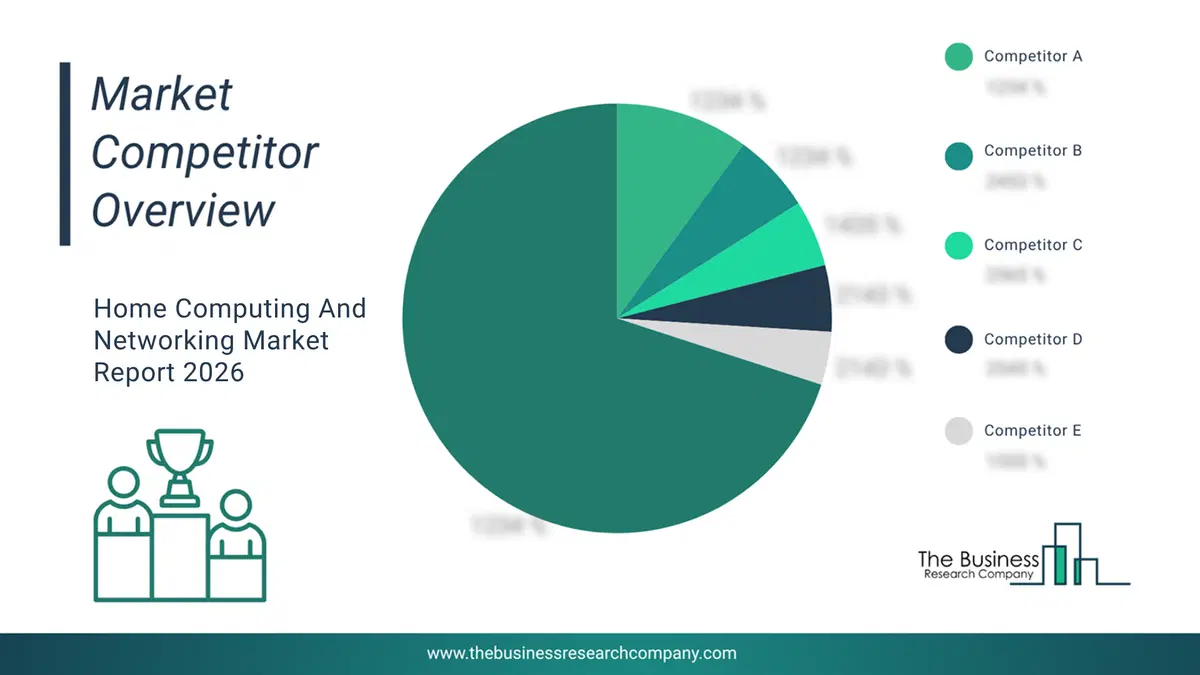
This chart is for illustrative purposes; the full report includes a detailed competitor analysis and comprehensive overview of the top 10 companies in the market.
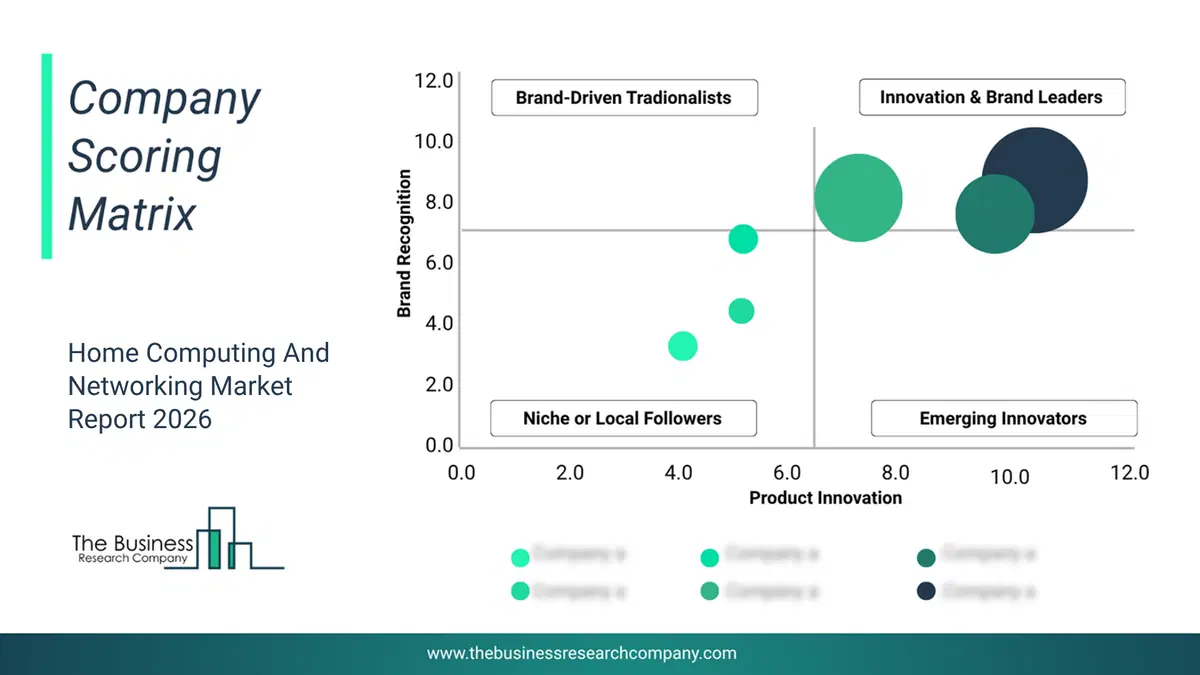
This chart maps companies by product innovation and brand strength, with bubble size indicating relative revenue, helping identify market leaders, challengers, and niche players. This is an illustrative chart; the full report provides a complete and accurate competitive analysis.
Global Home Computing And Networking Market Trends and Insights
Major companies operating in the home computing and networking market are increasingly focusing on the integration of artificial intelligence-powered mesh networking systems to enhance network performance and improve overall user experience. Artificial intelligence-powered mesh networking systems are advanced networking solutions that leverage machine learning algorithms and real-time data analytics to automatically optimize network performance, efficiently allocate bandwidth, detect potential security threats, and ensure seamless connectivity across multiple devices within a home environment. For instance, in September 2023, NETGEAR, a US-based networking hardware company, launched the Orbi 970 series, a next-generation mesh networking system designed to deliver high-performance connectivity for modern smart homes. The system incorporates quad-band technology with a dedicated high-capacity backhaul to optimize data transmission, supports speeds of up to 27 gigabits per second, and enables connectivity for up to 200 devices, facilitating efficient and intelligent network management. Its design offers comprehensive 360-degree coverage across residential spaces, including multi-level homes, and is expandable through additional satellite units to accommodate growing network demands.What Are Latest Mergers And Acquisitions In The Home Computing And Networking Market?
In February 2026, AT&T Inc., a US-based telecommunications company, acquired Lumen Technologies’ Mass Markets fiber business for $5.75 billion. Through this acquisition, AT&T aims to significantly expand its fiber-to-the-home (FTTH) footprint, strengthen its position in residential network services, and accelerate high-speed internet deployment across underserved and high-demand regions in the United States. Lumen Technologies’ Mass Markets fiber business is a US-based operation that provides fiber-based home internet services to residential customers, enabling high-speed connectivity and supporting advanced home networking solutions.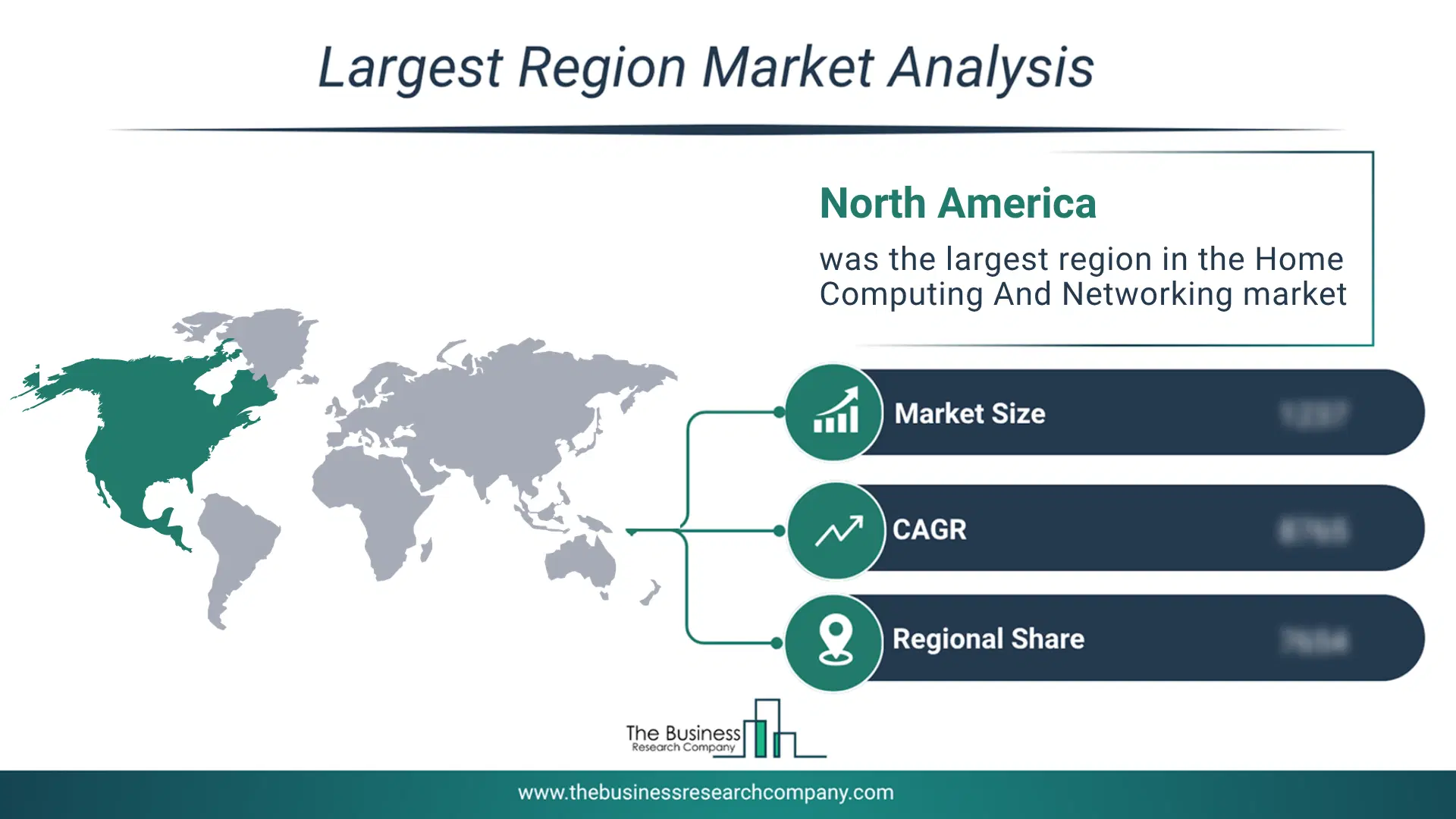
Regional Insights
North America was the largest region in the home computing and networking market in 2025. Asia-Pacific is expected to be the fastest-growing region in the forecast period. The regions covered in this market report are Asia-Pacific, South East Asia, Western Europe, Eastern Europe, North America, South America, Middle East, Africa. The countries covered in this market report are Australia, Brazil, China, France, Germany, India, Indonesia, Japan, Taiwan, Russia, South Korea, UK, USA, Canada, Italy, Spain.What Defines the Home Computing And Networking Market?
The home computing and networking market consists of revenues earned by entities by providing services such as broadband connectivity integration, router and modem configuration, smart home connectivity services, cloud-based storage access, device installation and setup, and maintenance and support services. The market value includes the value of related goods sold by the service provider or included within the service offering. The home computing and networking market also includes sales of gaming desktops, mesh Wi-Fi systems, modems, powerline adapters, wireless access points, and smart home gateways. Values in this market are ‘factory gate’ values, that is, the value of goods sold by the manufacturers or creators of the goods, whether to other entities (including retailers, distributors, and service providers) or directly to end customers. The value of goods in this market includes related services sold by the creators of the goods.How is Market Value Defined and Measured?
The market value is defined as the revenues that enterprises gain from the sale of goods and/or services within the specified market and geography through sales, grants, or donations in terms of the currency (in USD unless otherwise specified). The revenues for a specified geography are consumption values that are revenues generated by organizations in the specified geography within the market, irrespective of where they are produced. It does not include revenues from resales along the supply chain, either further along the supply chain or as part of other products.
This chart presents market attractiveness based on a quantitative evaluation of growth, competition, strategic alignment, and risk, offering a clear view of opportunity areas for decision-making. This chart is for illustrative purposes; the full report contains the complete analysis.

This chart highlights the Total Addressable Market (TAM) by estimating the maximum revenue opportunity using an assumption-driven approach, supporting strategic planning and opportunity sizing across markets. The chart is illustrative; the full report provides a more comprehensive analysis.
What Key Data and Analysis Are Included in the Home Computing And Networking Market Report 2026?
The home computing and networking market research report is one of a series of new reports from The Business Research Company that provides market statistics, including industry global market size, regional shares, competitors with the market share, detailed market segments, market trends and opportunities, and any further data you may need to thrive in the home computing and networking industry. The market research report delivers a complete perspective of everything you need, with an in-depth analysis of the current and future state of the industry.Home Computing And Networking Market Report Forecast Analysis
| Report Attribute | Details |
|---|---|
| Market Size Value In 2026 | $23.27 billion |
| Revenue Forecast In 2030 | $30.22 billion |
| Growth Rate | CAGR of 6.7% from 2026 to 2030 |
| Base Year For Estimation | 2025 |
| Actual Estimates/Historical Data | 2020-2025 |
| Forecast Period | 2026 - 2030 |
| Market Representation | Revenue in USD Billion and CAGR from 2026 to 2030 |
| Segments Covered | Service Type, Component, Connectivity Type, Application, End-User |
| Regional Scope | Asia-Pacific, Western Europe, Eastern Europe, North America, South America, Middle East, Africa |
| Country Scope | The Countries Covered In This Market Report Are Australia, Brazil, China, France, Germany, India, Indonesia, Japan, Taiwan, Russia, South Korea, Uk, Usa, Canada, Italy, Spain. |
| Key Companies Profiled | Apple Inc., Microsoft Corporation, Dell Technologies Inc., Panasonic Corporation, Cisco Systems Inc., Lenovo Group Limited, Intel Corporation, HP Inc., Fujitsu Limited, Advanced Micro Devices Inc., Western Digital Corporation, Acer Inc., Seagate Technology Holdings plc, Juniper Networks Inc., Ubiquiti Inc., Razer Inc., TP-Link Technologies Co. Ltd., Teltonika Networks, Netgear Inc., Linksys Holdings Inc., MikroTik Ltd, Synology Inc., D-Link Corporation, EnGenius Technologies Inc., Tenda Technology, Buffalo Technology Inc., AirLive, QNAP Systems Inc. |
| Customization Scope | Request for Customization |
| Pricing And Purchase Options | Explore Purchase Options |