
Human Embryonic Stem Cells Market Report 2026
Global Outlook – By Cell Category (Human Embryonic Stem Cells, Embryonic Stem Cell Lines, Genetically Modified hESCs), By Product (Regenerative Medicine, Stem Cell Biology Research, Tissue Engineering, Toxicology Testing), By Application (Research, Clinical Trials, Other Applications) - Market Size, Trends, Strategies, and Forecast to 2030
Human Embryonic Stem Cells Market Overview
• Human Embryonic Stem Cells market size has reached to $1.37 billion in 2025 • Expected to grow to $2.12 billion in 2030 at a compound annual growth rate (CAGR) of 8.9% • Growth Driver: Government Funding In Regenerative Medicine Is Propelling Growth Of Human Embryonic Stem Cells Market • Market Trend: Expansion Into Diverse Therapeutic Applications To Advance Regenerative Medicines • North America was the largest region in 2025 and Asia-Pacific is the fastest growing region.What Is Covered Under Human Embryonic Stem Cells Market?
Human embryonic stem cells (hESCs) are pluripotent cells derived from the inner cell mass of a blastocyst, an early-stage embryo. These cells have the unique ability to differentiate into any cell type in the human body, making them incredibly valuable for various research and therapeutic purposes. The primary uses of hESCs includes developing treatments for diseases and injuries by generating healthy tissue and studying the progression and treatment of diseases in a controlled environment. The main types of human embryonic stem cells are totipotent stem cells, pluripotent stem cells, and unipotent stem cells. Totipotent stem cells have the unique ability to differentiate into any cell type found in an embryo as well as extra-embryonic tissues, such as the placenta. The product includes regenerative medicine, stem cell biology research, tissue engineering, and toxicology testing. The applications include research, clinical trials, and others.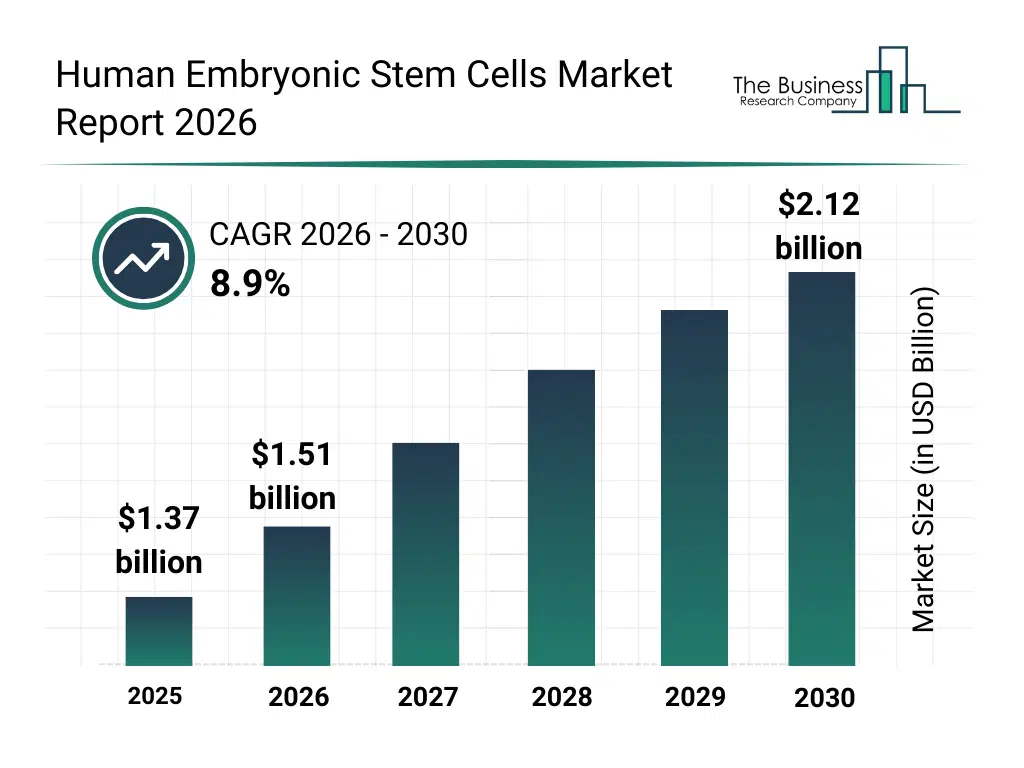
What Is The Human Embryonic Stem Cells Market Size and Share 2026?
The human embryonic stem cells market size has grown rapidly in recent years. It will grow from $1.37 billion in 2025 to $1.51 billion in 2026 at a compound annual growth rate (CAGR) of 10.1%. The growth in the historic period can be attributed to early discovery of embryonic stem cell pluripotency, increasing investment in stem cell research, growing burden of chronic and degenerative diseases, expansion of academic and government-funded research programs, advancements in cell culture and preservation techniques.What Is The Human Embryonic Stem Cells Market Growth Forecast?
The human embryonic stem cells market size is expected to see strong growth in the next few years. It will grow to $2.12 billion in 2030 at a compound annual growth rate (CAGR) of 8.9%. The growth in the forecast period can be attributed to rising demand for regenerative therapies, increasing clinical trials involving stem cell applications, growing focus on personalized medicine, expansion of translational research initiatives, increasing funding for advanced cell-based therapeutics. Major trends in the forecast period include increasing use of hESCs in regenerative medicine research, growing application of hESCs in disease modeling and drug discovery, rising focus on cell-based therapies for degenerative diseases, expansion of stem cell banking and standardized cell lines, increasing emphasis on ethical compliance and regulatory oversight.
Global Human Embryonic Stem Cells Market Segmentation
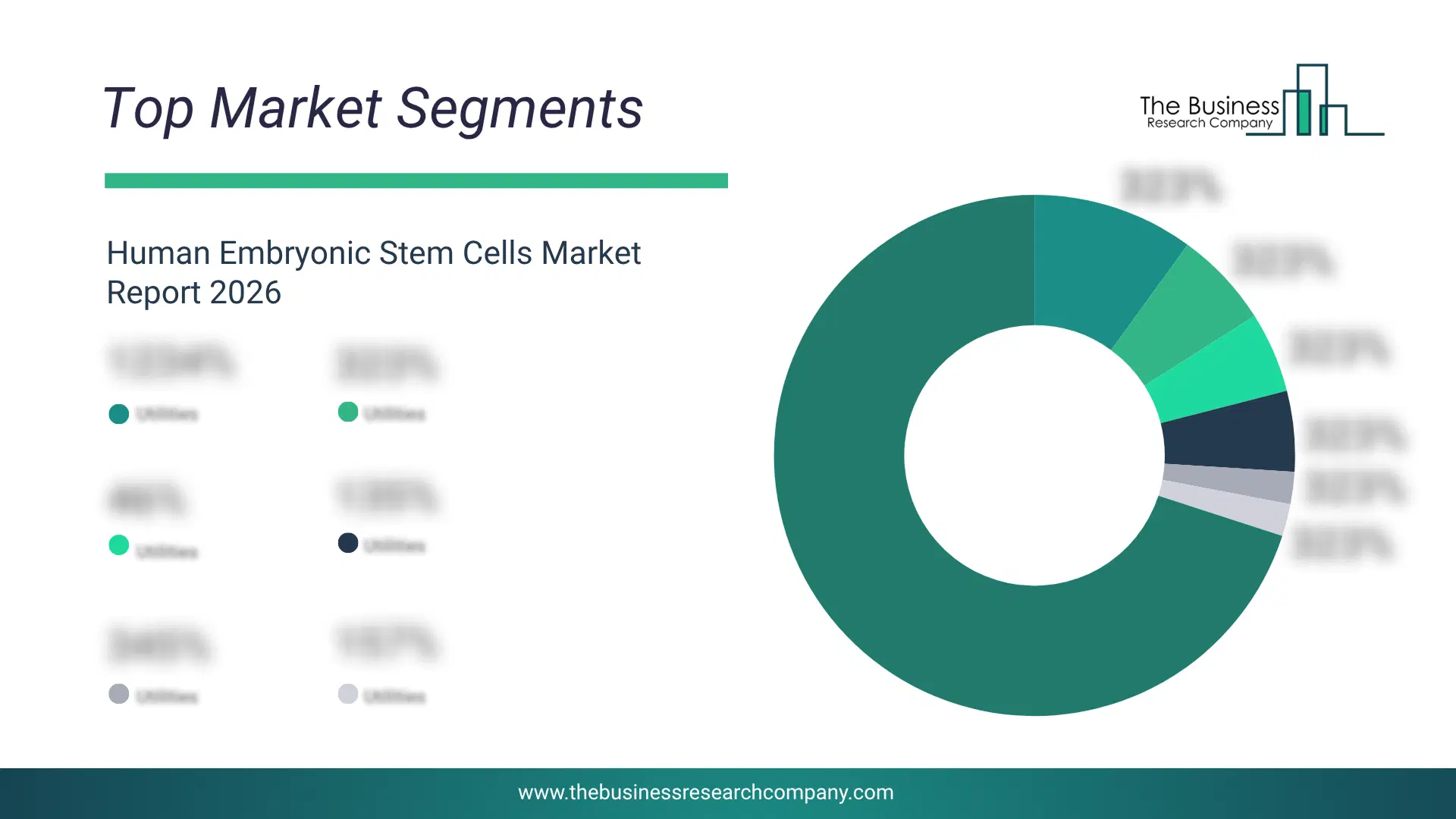
1) By Cell Category: Human Embryonic Stem Cells, Embryonic Stem Cell Lines, Genetically Modified hESCs 2) By Product: Regenerative Medicine, Stem Cell Biology Research, Tissue Engineering, Toxicology Testing 3) By Application: Research, Clinical Trials, Other Applications Subsegments: 1) By Human Embryonic Stem Cells (hESCs): Clinical-Grade hESCs, Research-Grade hESCs, Undifferentiated hESCs 2) By Embryonic Stem Cell Lines: Registered / Approved hESC Lines, Disease-Specific hESC Lines, Xeno-Free hESC Lines 3) By Genetically Modified hESCs: Gene-Edited hESCs (CRISPR-based), Reporter hESC Lines, Knock-In / Knock-Out hESCsWhat Is The Driver Of The Human Embryonic Stem Cells Market?
The government funding for the development of regenerative medicine is expected to propel the growth of the human embryonic stem cells market going forward. Regenerative medicine is a field of healthcare focused on repairing, replacing, or regenerating damaged tissues or organs to restore normal function in the body. There is increasing government funding for the development of regenerative medicine due to factors such as the rising prevalence of chronic diseases, advancements in stem cell research, and the potential for innovative treatments to improve patient outcomes. Human embryonic stem cells are utilized in regenerative medicine to develop potential therapies for repairing or replacing damaged tissues and organs in the body. For instance, in May 2024, according to the Office for National Statistics, a UK-based government department, reported that total healthcare expenditure saw a 5.6% increase in nominal terms from 2022 to 2023, marking a significant acceleration compared to the 0.9% growth observed in 2022. Therefore, government funding for the development of regenerative medicine is driving the growth of the human embryonic stem cells industry.Key Players In The Global Human Embryonic Stem Cells Market
Major companies operating in the human embryonic stem cells market are Lineage Cell Therapeutics Inc., ViaCyte Inc., Astellas Pharma Inc., Novo Nordisk A/S, Roche Holding AG, Pfizer Inc., Sanofi, Takeda Pharmaceutical Company Limited, Bayer AG, AstraZeneca PLC, Johnson & Johnson, GlaxoSmithKline plc, Regeneron Pharmaceuticals Inc., Vertex Pharmaceuticals Inc., Fate Therapeutics Inc., BlueRock Therapeutics, Cell Cure Neurosciences Ltd., Advanced Cell Technology, ReNeuron Group plc, Neuralstem Inc.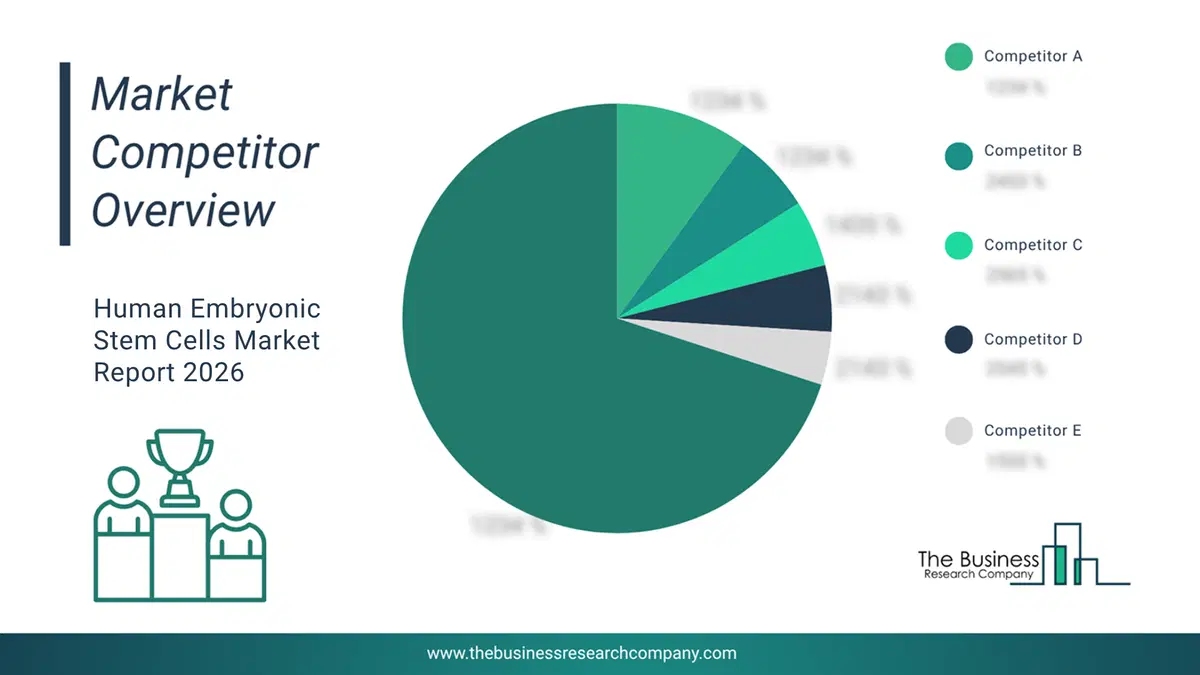
This chart is for illustrative purposes; the full report includes a detailed competitor analysis and comprehensive overview of the top 10 companies in the market.
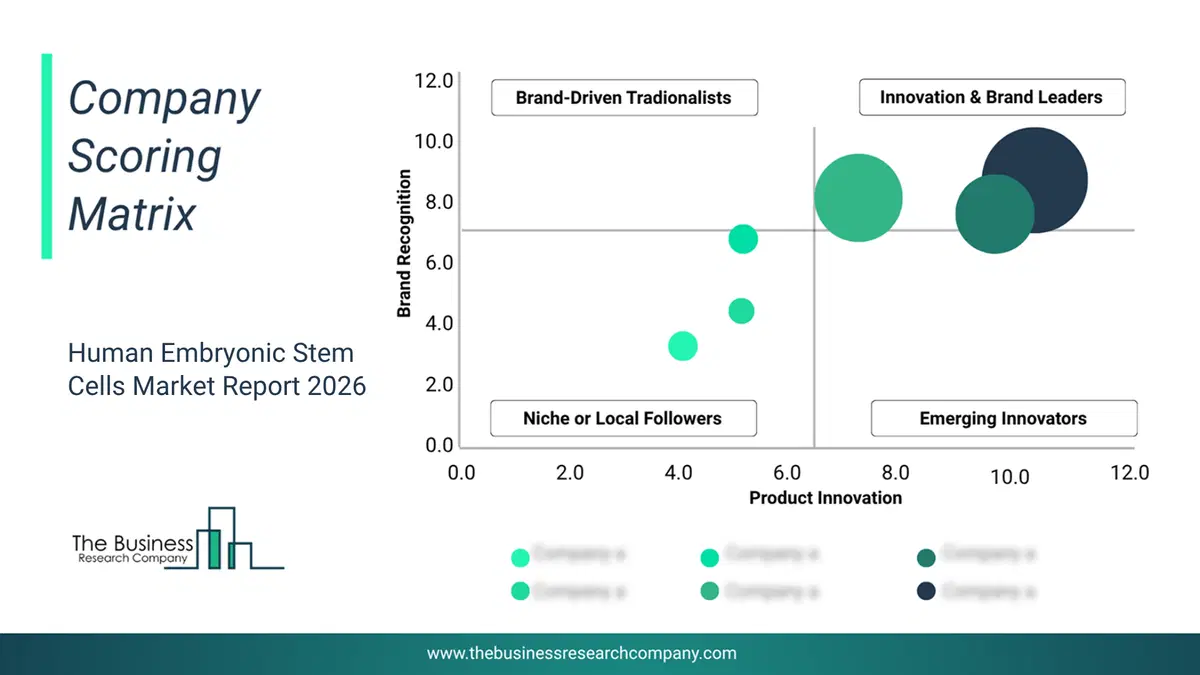
This chart maps companies by product innovation and brand strength, with bubble size indicating relative revenue, helping identify market leaders, challengers, and niche players. This is an illustrative chart; the full report provides a complete and accurate competitive analysis.
Global Human Embryonic Stem Cells Market Trends and Insights
Major companies operating in the human embryonic stem cell market are focused on expanding into diverse therapeutic applications such as pluripotent stem cells for Parkinson's disease treatment, and gaining a competitive edge in the market. Pluripotent stem cells for Parkinson's disease are used to generate dopaminergic neurons, aiming to replace the lost dopamine-producing neurons and restore motor function. For instance, in October 2023, Bayer AG., a Germany-based pharmaceutical and biotechnology company, opened its first Cell Therapy Manufacturing Facility in California by investing $250 million to produce cell and gene therapies globally. This facility initially focuses on BlueRock Therapeutics' bemdaneprocel derived from pluripotent stem cells (PSC) for Parkinson's disease. The facility features fully electric manufacturing to address the industry's manufacturing capacity for regenerative medicines.What Are Latest Mergers And Acquisitions In The Human Embryonic Stem Cells Market?
In February 2024, Charles River Laboratories International Inc., a US-based pharmaceutical company specializing, partnered with Pluristyx Inc. to enhance its portfolio with high-quality embryonic stem (ES) cells and induced pluripotent stem cells (iPSCs). This collaboration allows Charles River to distribute Pluristyx’s ES and iPS cell lines, including genetically engineered and disease state lines, supporting therapeutic development. Pluristyx Inc. is a US-based stem cell technology company that provides an extensive line of human induced pluripotent stem cells (iPSCs).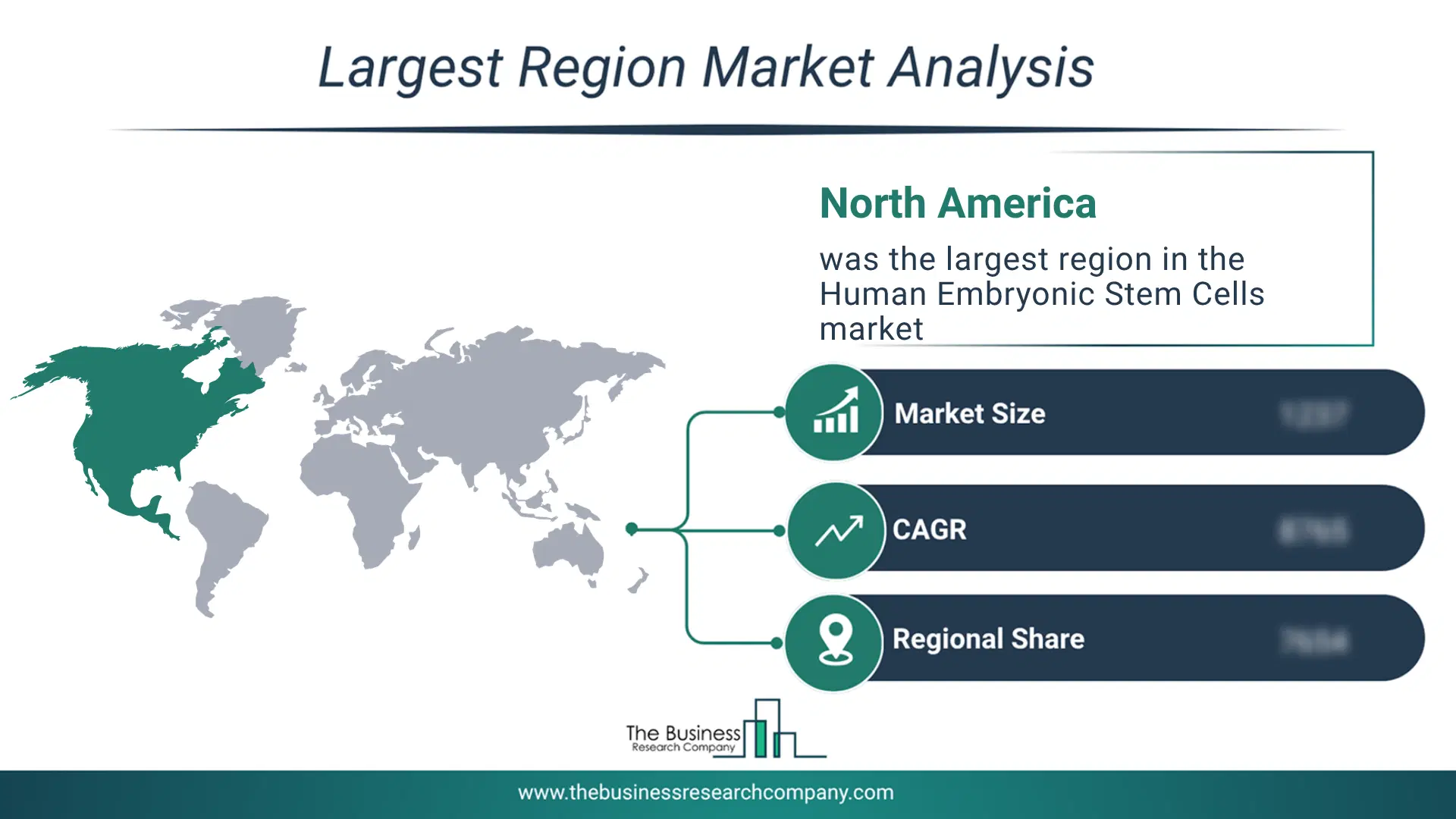
Regional Outlook
North America was the largest region in the human embryonic stem cells market in 2025. Asia-Pacific is expected to be the fastest-growing region in the forecast period. The regions covered in this market report are Asia-Pacific, South East Asia, Western Europe, Eastern Europe, North America, South America, Middle East, Africa. The countries covered in this market report are Australia, Brazil, China, France, Germany, India, Indonesia, Japan, Taiwan, Russia, South Korea, UK, USA, Canada, Italy, Spain.What Defines the Human Embryonic Stem Cells Market?
The human embryonic stem cells market consists of sales of stem cell lines, stem cell media and reagents, and stem cell culture equipment. Values in this market are ‘factory gate’ values, that is the value of goods sold by the manufacturers or creators of the goods, whether to other entities (including downstream manufacturers, wholesalers, distributors, and retailers) or directly to end customers. The value of goods in this market includes related services sold by the creators of the goods.How is Market Value Defined and Measured?
The market value is defined as the revenues that enterprises gain from the sale of goods and/or services within the specified market and geography through sales, grants, or donations in terms of the currency (in USD unless otherwise specified). The revenues for a specified geography are consumption values that are revenues generated by organizations in the specified geography within the market, irrespective of where they are produced. It does not include revenues from resales along the supply chain, either further along the supply chain or as part of other products.
This chart presents market attractiveness based on a quantitative evaluation of growth, competition, strategic alignment, and risk, offering a clear view of opportunity areas for decision-making. This chart is for illustrative purposes; the full report contains the complete analysis.

This chart highlights the Total Addressable Market (TAM) by estimating the maximum revenue opportunity using an assumption-driven approach, supporting strategic planning and opportunity sizing across markets. The chart is illustrative; the full report provides a more comprehensive analysis.
What Key Data and Analysis Are Included in the Human Embryonic Stem Cells Market Report 2026?
The human embryonic stem cells market research report is one of a series of new reports from The Business Research Company that provides market statistics, including industry global market size, regional shares, competitors with the market share, detailed market segments, market trends and opportunities, and any further data you may need to thrive in the human embryonic stem cells industry. The market research report delivers a complete perspective of everything you need, with an in-depth analysis of the current and future state of the industry.Human Embryonic Stem Cells Market Report Forecast Analysis
| Report Attribute | Details |
|---|---|
| Market Size Value In 2026 | $1.51 billion |
| Revenue Forecast In 2030 | $2.12 billion |
| Growth Rate | CAGR of 8.9% from 2026 to 2030 |
| Base Year For Estimation | 2025 |
| Actual Estimates/Historical Data | 2020-2025 |
| Forecast Period | 2026 - 2030 |
| Market Representation | Revenue in USD Billion and CAGR from 2026 to 2030 |
| Segments Covered | Cell Category, Product, Application |
| Regional Scope | Asia-Pacific, Western Europe, Eastern Europe, North America, South America, Middle East, Africa |
| Country Scope | The countries covered in the report are Australia, Brazil, China, France, Germany, India, Indonesia, Japan, Taiwan, Russia, South Korea, UK, USA, Canada, Italy, Spain |
| Key Companies Profiled | Lineage Cell Therapeutics Inc., ViaCyte Inc., Astellas Pharma Inc., Novo Nordisk A/S, Roche Holding AG, Pfizer Inc., Sanofi, Takeda Pharmaceutical Company Limited, Bayer AG, AstraZeneca PLC, Johnson & Johnson, GlaxoSmithKline plc, Regeneron Pharmaceuticals Inc., Vertex Pharmaceuticals Inc., Fate Therapeutics Inc., BlueRock Therapeutics, Cell Cure Neurosciences Ltd., Advanced Cell Technology, ReNeuron Group plc, Neuralstem Inc. |
| Customization Scope | Request for Customization |
| Pricing And Purchase Options | Explore Purchase Options |