

Hybrid Fiber Coaxial Market Report 2026
Global Outlook – By Component (Cable Modem Termination System Or Converged Cable Access Platform, Fiber Optic Cable, Customer Premises Equipment, Optical Node, Optical Transceiver, Amplifier, Splitter), By Technology (DOCSIS 3.1, DOCSIS 3.0 And Below), By Application (Digital Television (TV), Telephone Network, Broadband, Other Applications) – Market Size, Trends, Strategies, and Forecast to 2030
Hybrid Fiber Coaxial Market Overview
• Hybrid Fiber Coaxial market size has reached to $16.5 billion in 2025 • Expected to grow to $26.03 billion in 2030 at a compound annual growth rate (CAGR) of 9.3% • Growth Driver: Hybrid Fiber Coaxial Market Growth Driven By Rising Internet Connectivity Demand • Market Trend: Innovative Developments In Hybrid-Fiber Broadband Solutions • North America was the largest region in 2025 and Asia-Pacific is the fastest growing region.What Is Covered Under Hybrid Fiber Coaxial Market?
Hybrid fiber-coaxial (HFC) is a broadband telecommunications network architecture combining optical fiber and coaxial cable to deliver services such as cable television, internet, and voice. It delivers various telecommunications services through optical fiber and coaxial cable. The main components of the hybrid fiber coaxial are cable modem termination system or converged cable access platform, fiber optic cable, customer premises equipment, optical node, optical transceiver, amplifier, and splitter. A CMTS, or CCAP, is a network device that enables the distribution of digital cable TV and internet services over hybrid fiber-coaxial (HFC) networks. It manages and routes data traffic between the Internet and cable networks, ensuring efficient service delivery. The various technologies include DOCSIS 3.1 and DOCSIS 3.0 and below used in various applications such as digital television (TV), analog television (TV), telephone networks, broadband, and others.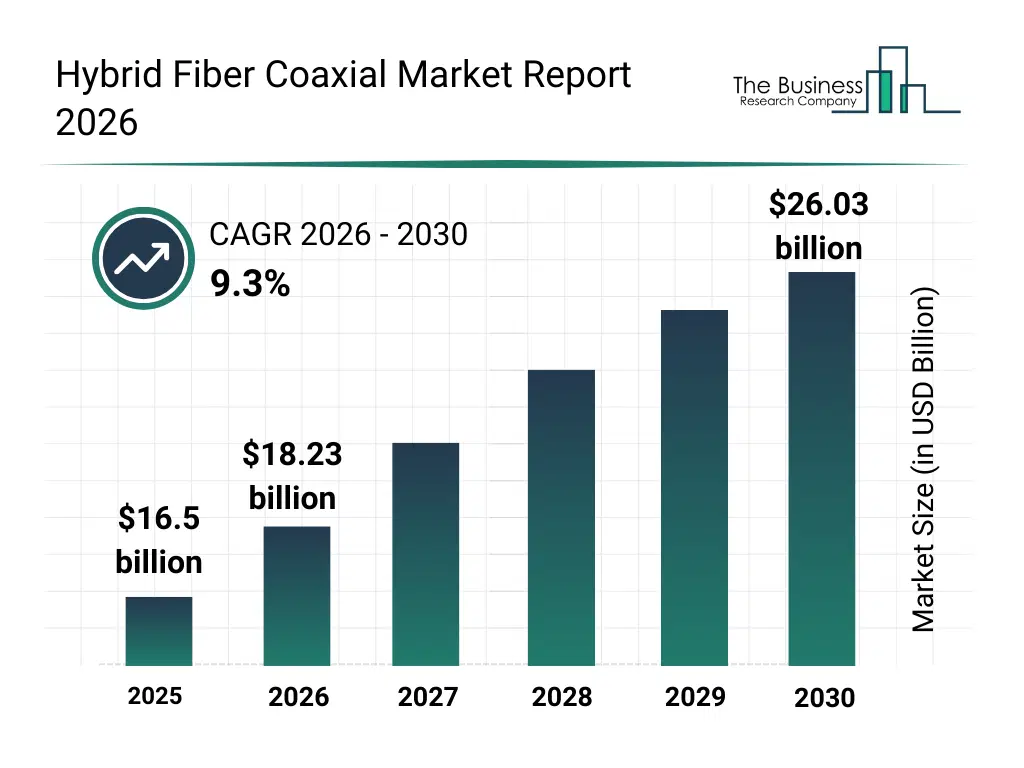
What Is The Hybrid Fiber Coaxial Market Size and Share 2026?
The hybrid fiber coaxial market size has grown rapidly in recent years. It will grow from $16.5 billion in 2025 to $18.23 billion in 2026 at a compound annual growth rate (CAGR) of 10.5%. The growth in the historic period can be attributed to expansion of cable television infrastructure, rising household broadband adoption, increasing investments in last-mile connectivity, growth of digital content consumption, availability of coaxial network infrastructure.What Is The Hybrid Fiber Coaxial Market Growth Forecast?
The hybrid fiber coaxial market size is expected to see strong growth in the next few years. It will grow to $26.03 billion in 2030 at a compound annual growth rate (CAGR) of 9.3%. The growth in the forecast period can be attributed to increasing investments in gigabit broadband networks, rising demand for low-latency connectivity, expansion of smart city infrastructure, growing competition with full-fiber networks, increasing use of data-intensive applications. Major trends in the forecast period include expansion of docsis 3.1 network upgrades, increasing deployment of fiber-deeper architectures, growing demand for high-speed broadband services, rising adoption of advanced optical nodes, enhanced focus on network capacity optimization.
Global Hybrid Fiber Coaxial Market Segmentation
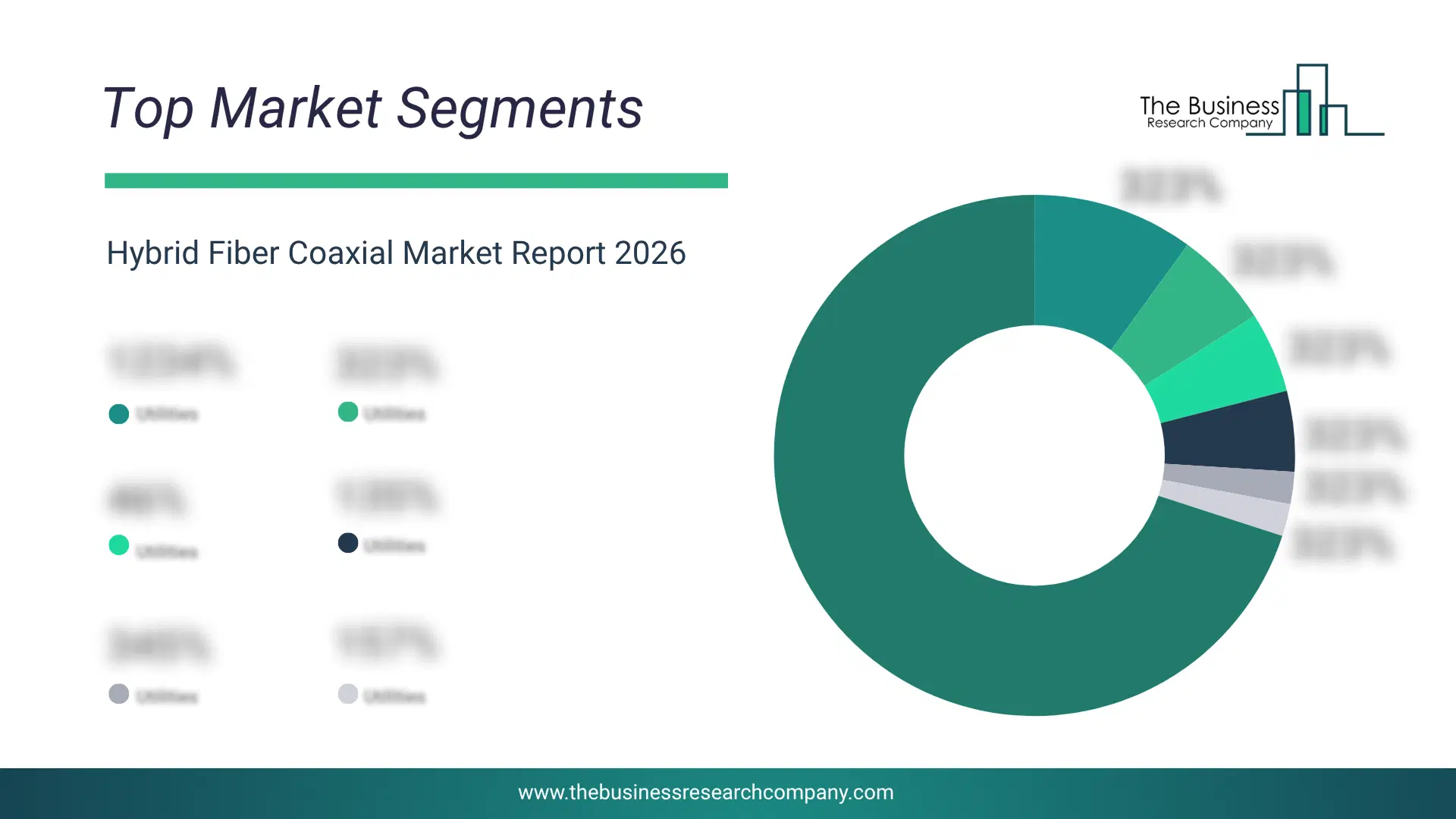
1) By Component: Cable Modem Termination System Or Converged Cable Access Platform, Fiber Optic Cable, Customer Premises Equipment, Optical Node, Optical Transceiver, Amplifier, Splitter 2) By Technology: DOCSIS 3.1, DOCSIS 3.0 And Below 3) By Application: Digital Television (TV), Telephone Network, Broadband, Other Applications Subsegments: 1) By Cable Modem Termination System or Converged Cable Access Platform (CMTS or CCAP): Cable Modem Termination Systems (CMTS), Converged Cable Access Platforms (CCAP), Integrated CMTS/CCAP Solutions, Edge QAM (Quadrature Amplitude Modulation) Systems 2) By Fiber Optic Cable: Single-mode Fiber Optic Cables, Multi-mode Fiber Optic Cables, Armored Fiber Optic Cables, Loose Tube Fiber Optic Cables 3) By Customer Premises Equipment (CPE): Cable Modems, Set-Top Boxes, Gateway Devices, Wi-Fi Routers, VoIP Adapters 4) By Optical Node: Standard Optical Nodes, High-Density Optical Nodes, Compact Optical Nodes, Modular Optical Nodes 5) By Optical Transceiver: SFP (Small Form-factor Pluggable) Optical Transceivers, SFP+ Optical Transceivers, QSFP (Quad Small Form-factor Pluggable) Optical Transceivers, XFP (10 Gigabit Small Form Factor Pluggable) Transceivers 6) By Amplifier: Optical Amplifiers, Fiber Optic Amplifiers, RF (Radio Frequency) Amplifiers, Inline Amplifiers, Hub Amplifiers 7) By Splitter: Optical Splitters, 2-way Splitters, 4-way Splitters, Tree-and-branch Splitters, PLC (Planar Lightwave Circuit) SplittersWhat Is The Driver Of The Hybrid Fiber Coaxial Market?
The increasing demand for internet connectivity is expected to propel the growth of the hybrid fiber coaxial (HFC) market going forward. Internet connectivity refers to the capability and quality of accessing and using the internet through wired or wireless technologies that enable devices to connect to the global network. The demand for internet connectivity is rising due to accelerating digital transformation, expansion of e-commerce, streaming services, remote work, online education, and the growth of social and entertainment platforms. The hybrid fiber coaxial market supports this rising demand by providing high-speed broadband through fiber-optic backbones combined with coaxial last-mile delivery for efficient, long-distance data transmission. For instance, in February 2024, according to the International Telecommunication Union (ITU), a Switzerland-based United Nations specialized agency, the number of people using the internet increased from 5.1 billion in 2022 to 5.4 billion in 2023, reflecting continued global growth in internet adoption. Therefore, the increasing demand for internet connectivity is driving the growth of the hybrid fiber coaxial industry.Key Players In The Global Hybrid Fiber Coaxial Market
Major companies operating in the hybrid fiber coaxial market are Comcast Corporation, Cisco Systems Inc., ZTE Corporation, Telstra Corporation Limited, Corning Incorporated, CommScope Inc., Skyworks Solutions Inc., Ciena Corporation, Singtel Optus Pty Limited, ADTRAN Inc., Cyient Limited, WideOpenWest Inc., Midcontinent Communications, Sparklight, Hargray Communications Group Inc., Shenandoah Telecommunications Company, PCT International Inc., Vyve Broadband LLC, Teleste Corporation, Astound Broadband, Massillon Cable TV Inc., Cable Television Laboratories Inc., Blue Ridge Communications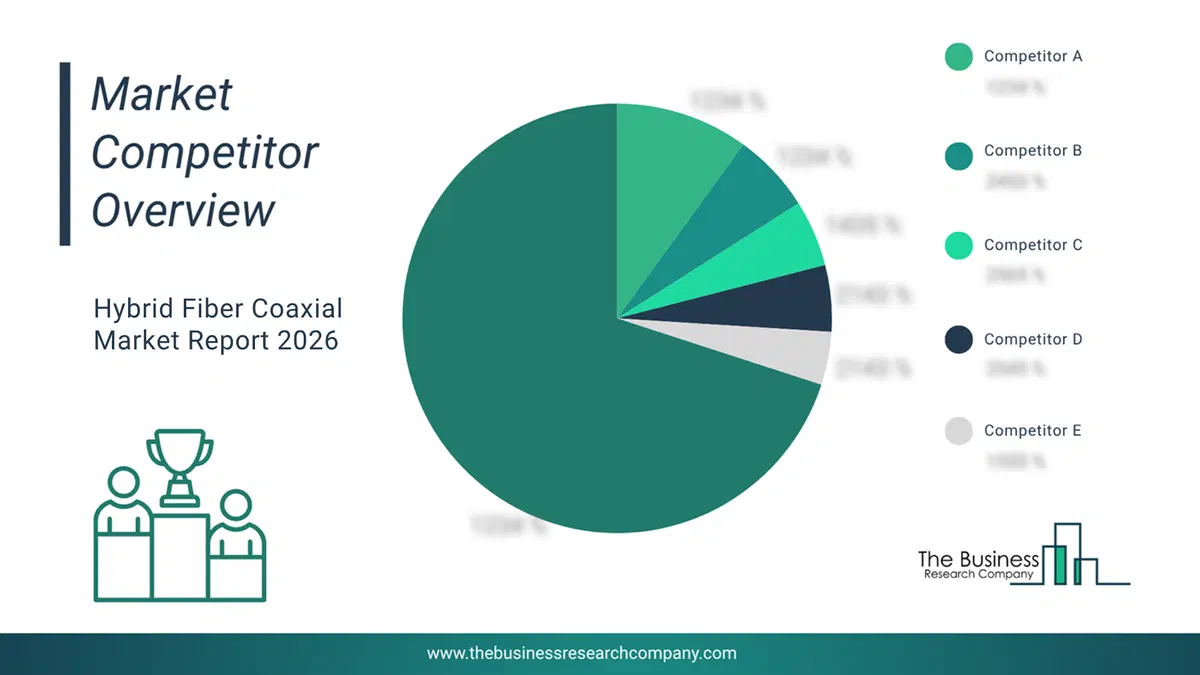
This chart is for illustrative purposes; the full report includes a detailed competitor analysis and comprehensive overview of the top 10 companies in the market.
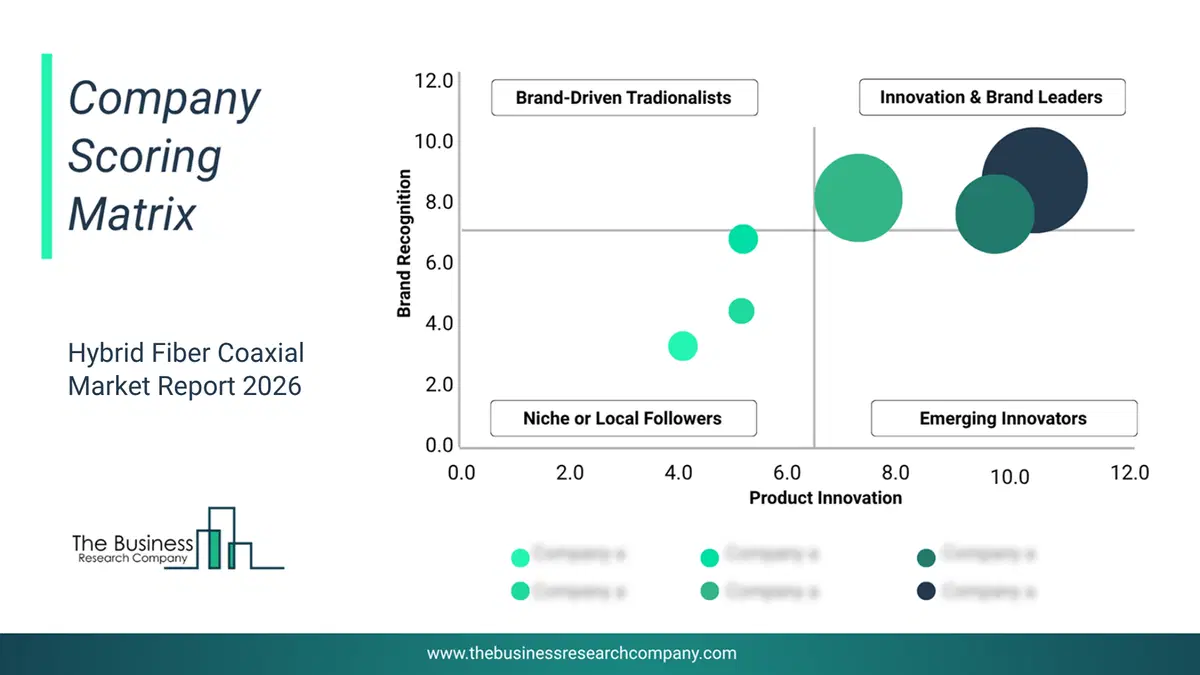
This chart maps companies by product innovation and brand strength, with bubble size indicating relative revenue, helping identify market leaders, challengers, and niche players. This is an illustrative chart; the full report provides a complete and accurate competitive analysis.
Global Hybrid Fiber Coaxial Market Trends and Insights
Major companies operating in the hybrid fiber coaxial market are focusing on developing innovative solutions, such as hybrid-fiber multi-gigabit broadband solutions, to increase bandwidth capacity and support higher data speeds for residential and commercial users. Hybrid-fiber multi-gigabit broadband solutions combine fiber optic infrastructure with complementary transmission mediums such as coaxial cable or wireless to deliver high-speed, reliable internet access while leveraging existing network assets. For instance, in December 2023, Actelis Networks Inc., a US-based telecommunications equipment company, launched the GigaLine 800 Hybrid-Fiber, an alternative solution for last-mile broadband networking that integrates high-speed fiber capabilities with advanced delivery methods. The system enhances bandwidth efficiency and network reliability, offering robust scalability to support rising data demands, seamless integration with existing infrastructure, and optimized performance suited for IoT and high-density connectivity environments. By improving last-mile delivery and enabling multi-gigabit speeds, the solution strengthens network performance for both residential and commercial applications.What Are Latest Mergers And Acquisitions In The Hybrid Fiber Coaxial Market?
In August 2023, Radisys Corporation, a US-based open telecom solutions provider, acquired Mimosa Networks, Inc. for approximately US $0.06 billion. Through this acquisition, Radisys aims to accelerate availability of high-speed broadband access and fixed wireless access (FWA) solutions integrating Mimosa’s point-to-point and point-to-multi-point connectivity portfolio into its open-access portfolio to enhance fiber infrastructure and broadband deployments. Mimosa Networks, Inc. is a US-based manufacturer of fixed wireless access and broadband connectivity equipment.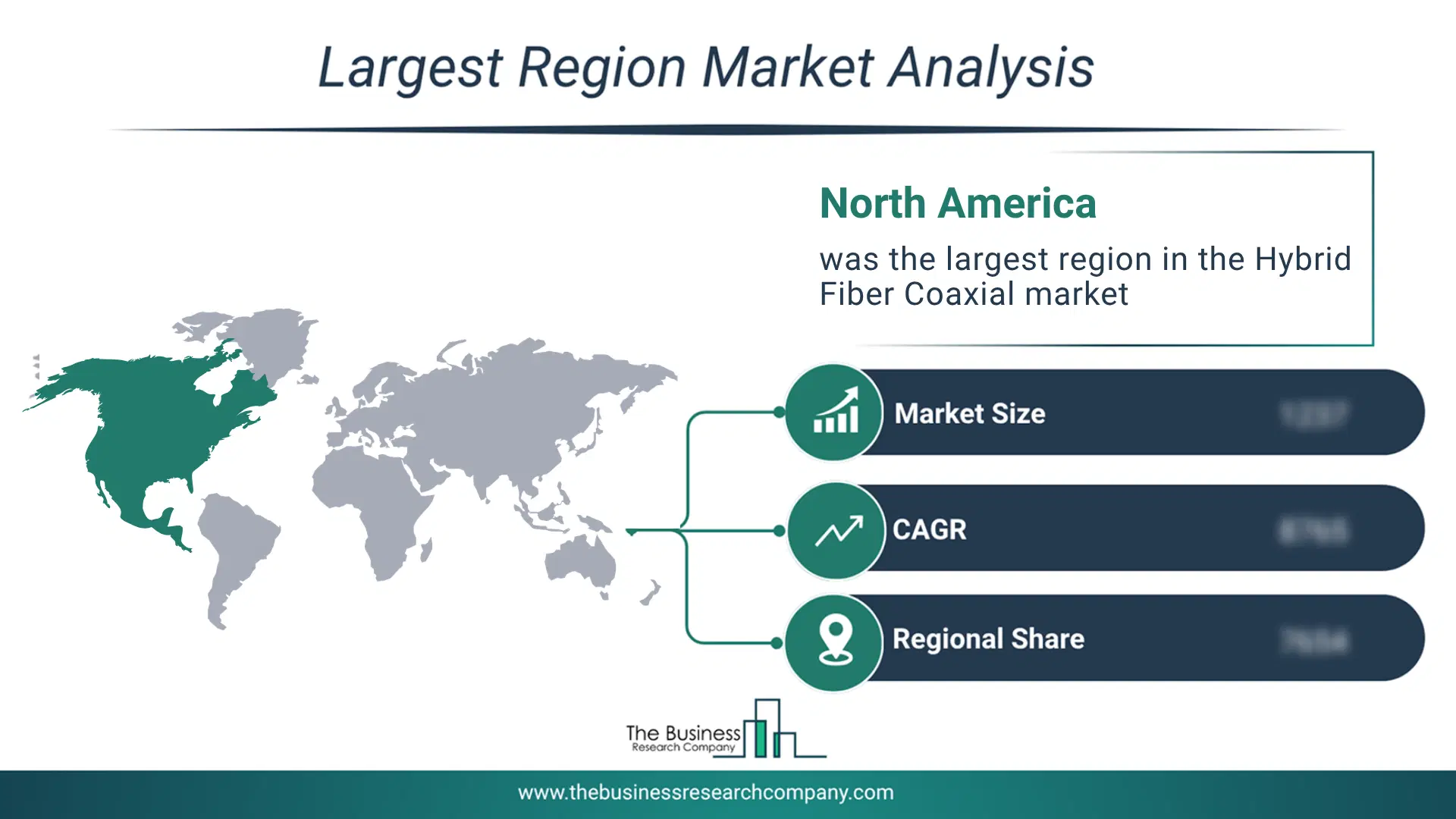
Regional Insights
North America was the largest region in the hybrid fiber coaxial market in 2025. Asia-Pacific is expected to be the fastest-growing region in the forecast period. The regions covered in this market report are Asia-Pacific, South East Asia, Western Europe, Eastern Europe, North America, South America, Middle East, Africa. The countries covered in this market report are Australia, Brazil, China, France, Germany, India, Indonesia, Japan, Taiwan, Russia, South Korea, UK, USA, Canada, Italy, Spain.What Defines the Hybrid Fiber Coaxial Market?
The hybrid fiber coaxial market consists of sales of coaxial cables, fiber optic cables, cable modems, set-top boxes (STBS), networking hardware, instruments for troubleshooting, and headend equipment. Values in this market are ‘factory gate’ values, that is the value of goods sold by the manufacturers or creators of the goods, whether to other entities (including downstream manufacturers, wholesalers, distributors and retailers) or directly to end customers. The value of goods in this market includes related services sold by the creators of the goods.How is Market Value Defined and Measured?
The market value is defined as the revenues that enterprises gain from the sale of goods and/or services within the specified market and geography through sales, grants, or donations in terms of the currency (in USD unless otherwise specified). The revenues for a specified geography are consumption values that are revenues generated by organizations in the specified geography within the market, irrespective of where they are produced. It does not include revenues from resales along the supply chain, either further along the supply chain or as part of other products.
This chart presents market attractiveness based on a quantitative evaluation of growth, competition, strategic alignment, and risk, offering a clear view of opportunity areas for decision-making. This chart is for illustrative purposes; the full report contains the complete analysis.

This chart highlights the Total Addressable Market (TAM) by estimating the maximum revenue opportunity using an assumption-driven approach, supporting strategic planning and opportunity sizing across markets. The chart is illustrative; the full report provides a more comprehensive analysis.
What Key Data and Analysis Are Included in the Hybrid Fiber Coaxial Market Report 2026?
The hybrid fiber coaxial market research report is one of a series of new reports from The Business Research Company that provides market statistics, including industry global market size, regional shares, competitors with the market share, detailed market segments, market trends and opportunities, and any further data you may need to thrive in the hybrid fiber coaxial industry. The market research report delivers a complete perspective of everything you need, with an in-depth analysis of the current and future state of the industry.Hybrid Fiber Coaxial Market Report Forecast Analysis
| Report Attribute | Details |
|---|---|
| Market Size Value In 2026 | $18.23 billion |
| Revenue Forecast In 2030 | $26.03 billion |
| Growth Rate | CAGR of 9.3% from 2026 to 2030 |
| Base Year For Estimation | 2025 |
| Actual Estimates/Historical Data | 2020-2025 |
| Forecast Period | 2026 - 2030 |
| Market Representation | Revenue in USD Billion and CAGR from 2026 to 2030 |
| Segments Covered | Component, Technology, Application |
| Regional Scope | Asia-Pacific, Western Europe, Eastern Europe, North America, South America, Middle East, Africa |
| Country Scope | The Countries Covered In This Market Report Are Australia, Brazil, China, France, Germany, India, Indonesia, Japan, Taiwan, Russia, South Korea, Uk, Usa, Canada, Italy, Spain. |
| Key Companies Profiled | Comcast Corporation, Cisco Systems Inc., ZTE Corporation, Telstra Corporation Limited, Corning Incorporated, CommScope Inc., Skyworks Solutions Inc., Ciena Corporation, Singtel Optus Pty Limited, ADTRAN Inc., Cyient Limited, WideOpenWest Inc., Midcontinent Communications, Sparklight, Hargray Communications Group Inc., Shenandoah Telecommunications Company, PCT International Inc., Vyve Broadband LLC, Teleste Corporation, Astound Broadband, Massillon Cable TV Inc., Cable Television Laboratories Inc., Blue Ridge Communications |
| Customization Scope | Request for Customization |
| Pricing And Purchase Options | Explore Purchase Options |