
Incretin Mimetics Market Report 2026
Global Outlook – By Drug Type (GLP-1 Agonists, DPP-4 Inhibitors), By Route of Administration (Injectable Formulations, Oral Formulations), By Distribution Channel (Hospital Pharmacies, Retail Pharmacies, Online Pharmacies), By Application (Type 2 Diabetes, Obesity, Cardiovascular Diseases), By End User (Hospitals, Specialty Clinics (Diabetology And Endocrinology Clinics), Homecare Settings) – Market Size, Trends, Strategies, and Forecast to 2030
Incretin Mimetics Market Overview
• Incretin Mimetics market size has reached to $21.01 billion in 2025 • Expected to grow to $30.57 billion in 2030 at a compound annual growth rate (CAGR) of 7.8% • Growth Driver: Surge In Prevalence Of Type 2 Diabetes Fueling The Growth Of The Market Due To Rising Obesity And Insulin Resistance • Market Trend: Advancing Diabetes Care With Innovative Biosimilar Therapies • North America was the largest region in 2025 and Asia-Pacific is the fastest growing region.What Is Covered Under Incretin Mimetics Market?
Incretin mimetics are a class of medications that replicate the action of natural incretin hormones, primarily glucagon-like peptide-1 (GLP-1), to regulate blood glucose levels. They enhance glucose-dependent insulin secretion, suppress glucagon release, slow gastric emptying, and promote satiety. These therapies are widely used in the management of type 2 diabetes and are increasingly applied in obesity treatment due to their metabolic benefits. The main drug types of incretin mimetics include GLP-1 agonists and DPP-4 inhibitors. GLP-1 agonists are medications that help regulate blood glucose levels by enhancing insulin secretion and inhibiting glucagon release. They are administered through injectable formulations and oral formulations and are distributed through hospital pharmacies, retail pharmacies and online pharmacies. The various applications involved are type 2 diabetes, obesity, and cardiovascular diseases, and they are used by several end users such as hospitals, specialty clinics (diabetology and endocrinology clinics), and homecare settings.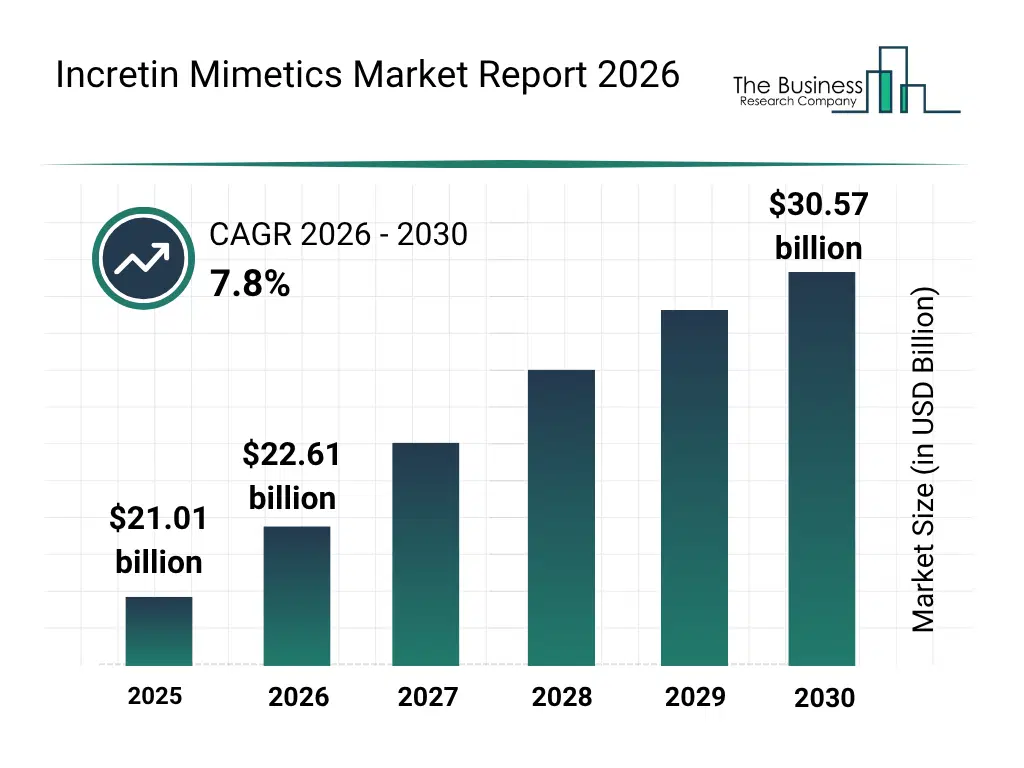
What Is The Incretin Mimetics Market Size and Share 2026?
The incretin mimetics market size has grown strongly in recent years. It will grow from $21.01 billion in 2025 to $22.61 billion in 2026 at a compound annual growth rate (CAGR) of 7.6%. The growth in the historic period can be attributed to increasing prevalence of type 2 diabetes, rising global obesity rates, advancement in glp-1 receptor agonist development, growing awareness of metabolic syndrome management, expansion of reimbursement coverage for diabetes therapies.What Is The Incretin Mimetics Market Growth Forecast?
The incretin mimetics market size is expected to see strong growth in the next few years. It will grow to $30.57 billion in 2030 at a compound annual growth rate (CAGR) of 7.8%. The growth in the forecast period can be attributed to increasing demand for dual and triple agonist therapies, growing adoption of weight management pharmacotherapy, rising cardiovascular risk reduction focus in diabetes care, expansion of biologic drug manufacturing capacity, increasing patient preference for convenient dosing regimens. Major trends in the forecast period include increasing adoption of once-weekly glp-1 injectable therapies, rising demand for oral glp-1 formulations, growing expansion of incretin mimetics in obesity management, integration of cardiovascular outcome benefits in treatment protocols, rising combination therapy approaches for metabolic disorders.
Global Incretin Mimetics Market Segmentation
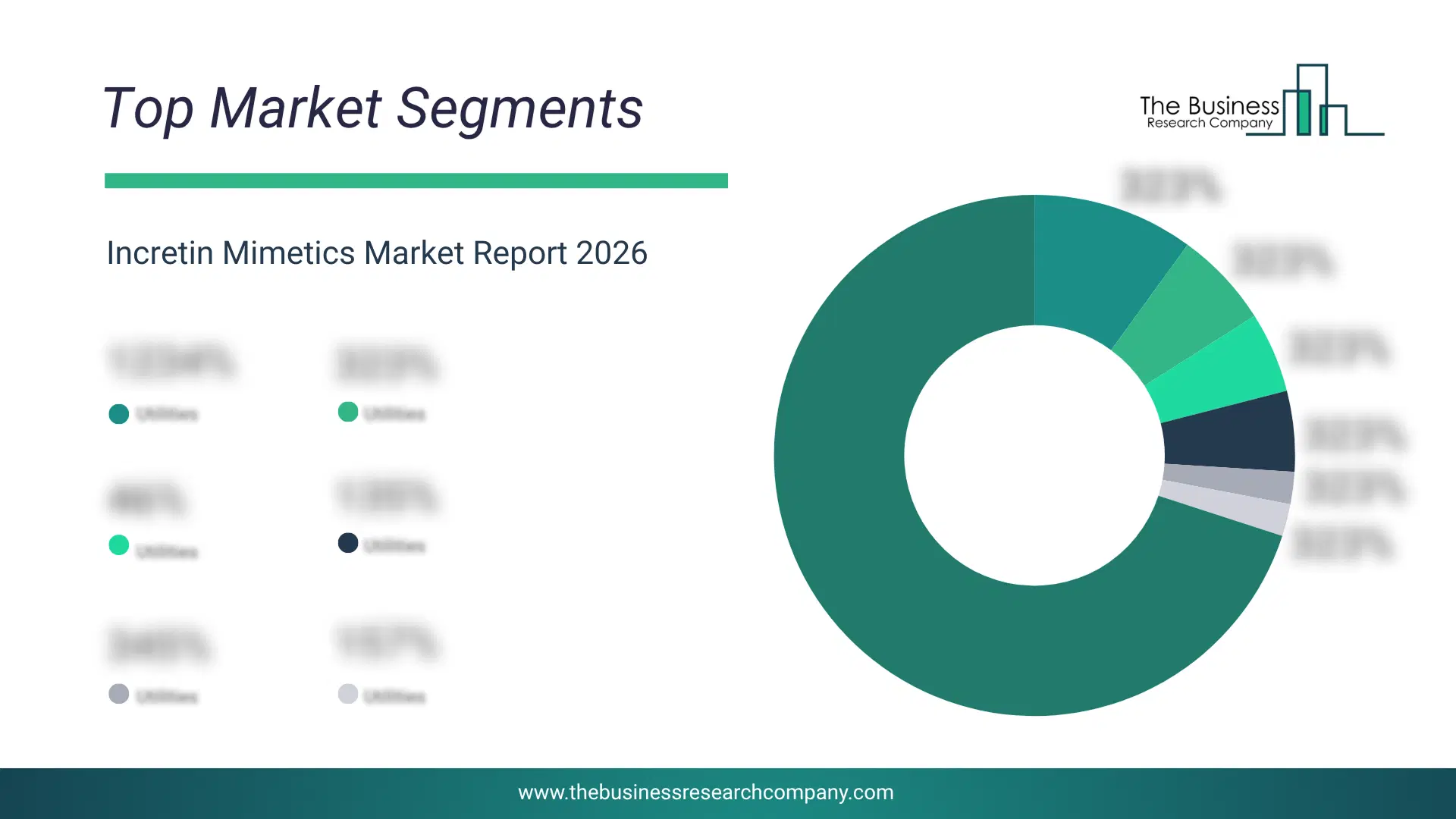
1) By Drug Type: GLP-1 Agonists, DPP-4 Inhibitors 2) By Route of Administration: Injectable Formulations, Oral Formulations 3) By Distribution Channel: Hospital Pharmacies, Retail Pharmacies, Online Pharmacies 4) By Application: Type 2 Diabetes, Obesity, Cardiovascular Diseases 5) By End User: Hospitals, Specialty Clinics (Diabetology And Endocrinology Clinics), Homecare Settings Subsegments: 1) By GLP-1 Agonists: Exenatide, Liraglutide, Dulaglutide, Semaglutide, Lixisenatide 2) By DPP-4 Inhibitors: Sitagliptin, Saxagliptin, Linagliptin, Alogliptin, VildagliptinWhat Is The Driver Of The Incretin Mimetics Market?
The increasing prevalence of Type 2 diabetes is expected to propel the growth of the incretin mimetics market in the coming years. Type 2 diabetes is a chronic condition in which the body becomes resistant to insulin or does not produce sufficient insulin, resulting in elevated blood glucose levels. The rising prevalence of Type 2 diabetes is largely driven by an increasing incidence associated with growing obesity rates, as excess body weight significantly heightens insulin resistance and the risk of disease onset. Incretin mimetics play a key role in the management of Type 2 diabetes, particularly among overweight and obese patients, by enhancing glucose-dependent insulin secretion, suppressing glucagon release, and promoting weight loss. For instance, in 2023, according to the Diabetes Australia, an Australia-based non-for-profit organization, in 2023 approximately 1.5 million Australians (5.6% of the population) were living with diagnosed diabetes, with Type 2 diabetes accounting for 86.7% of cases. Therefore, the increasing prevalence of type two diabetes is driving the growth of the incretin mimetics industry.Key Players In The Global Incretin Mimetics Market
Major companies operating in the incretin mimetics market are Roche Holding AG, Merck Co Inc, Pfizer Inc., Sanofi S.A., AstraZeneca PLC, Eli Lilly Company, Novo Nordisk A/S, Takeda Pharmaceutical Company Limited, Amgen Inc., Boehringer Ingelheim International GmbH, Sun Pharmaceutical Industries Limited, Dr Reddys Laboratories Limited, Cipla Limited, Hikma Pharmaceuticals PLC, Lupin Limited, Biocon Limited, Torrent Pharmaceuticals Limited, Hanmi Pharmaceutical Co Ltd, Innovent Biologics Inc., Zealand Pharma A/S, Gan Lee Pharmaceuticals Co Ltd, Jiangsu Hansoh Pharmaceutical Group Company Limited.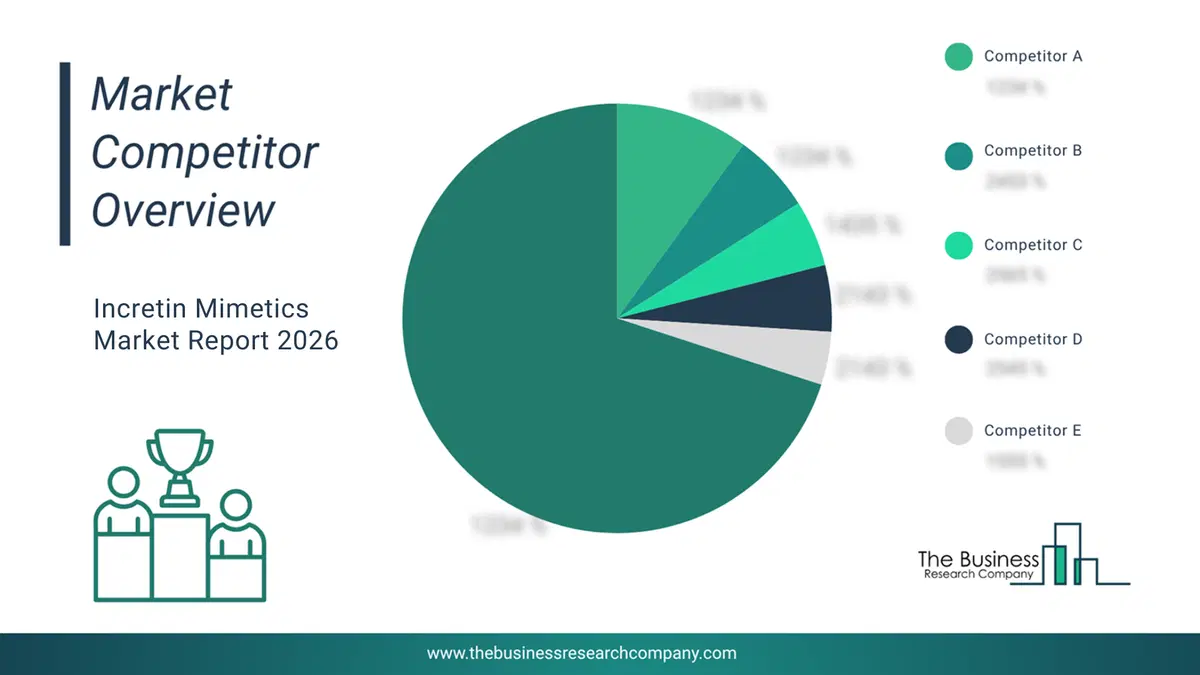
This chart is for illustrative purposes; the full report includes a detailed competitor analysis and comprehensive overview of the top 10 companies in the market.
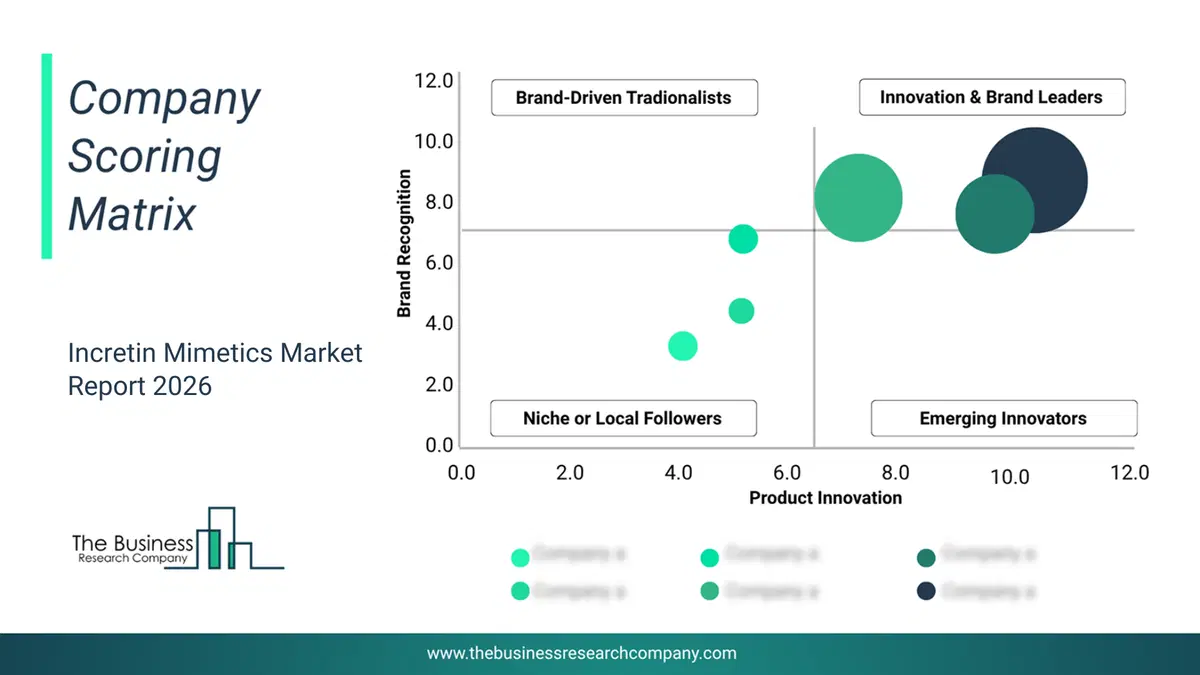
This chart maps companies by product innovation and brand strength, with bubble size indicating relative revenue, helping identify market leaders, challengers, and niche players. This is an illustrative chart; the full report provides a complete and accurate competitive analysis.
Global Incretin Mimetics Market Trends and Insights
Major companies operating in the incretin mimetics market are increasingly focused on developing biosimilar and next-generation therapeutic solutions to enhance glycemic control and improve outcomes for patients with Type 2 diabetes. Next-generation therapeutic solutions refer to advanced or innovative treatments designed to improve efficacy, safety, affordability, or patient adherence compared with conventional therapies. For instance, in January 2024, Glenmark Pharmaceuticals Limited, an India-based pharmaceutical company, launched a biosimilar version of the widely used anti-diabetic drug liraglutide in India. This biosimilar GLP-1 receptor agonist aims to provide a more accessible and cost-effective treatment option, thereby expanding patient access and supporting improved treatment adherence. The biosimilar is designed to deliver comparable efficacy, safety, and quality to the reference product. Such developments support reliable glycemic control across diverse patient populations and contribute to reducing disease-related complications, thereby improving the overall management of Type 2 diabetes.What Are Latest Mergers And Acquisitions In The Incretin Mimetics Market?
In May 2025, Septerna, Inc., a US-based clinical-stage biotechnology company developing a portfolio of oral small-molecule medicines targeting G protein-coupled receptors (GPCRs), entered into a collaboration with Novo Nordisk. Under this partnership, Septerna and Novo Nordisk aim to develop and commercialize novel incretin mimetic therapies for metabolic diseases, combining Septerna’s GPCR-focused innovation with Novo Nordisk’s extensive global development, manufacturing, and commercialization capabilities. Novo Nordisk is a Denmark-based provider of incretin mimetics, including GLP-1 receptor agonists, and markets several blockbuster therapies for the treatment of Type 2 diabetes and obesity.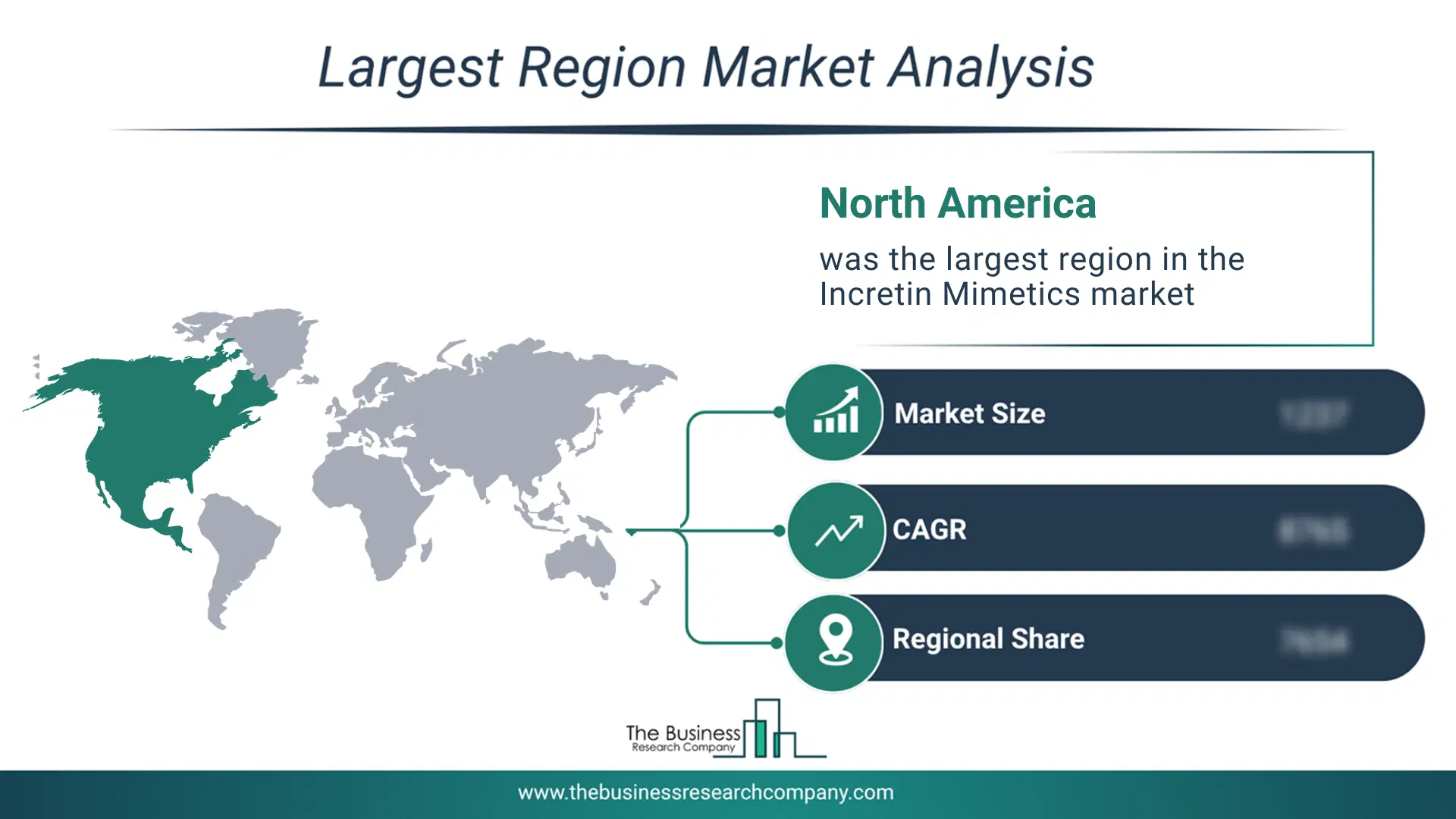
Regional Insights
North America was the largest region in the incretin mimetics market in 2025. Asia-Pacific is expected to be the fastest-growing region in the forecast period. The regions covered in this market report are Asia-Pacific, South East Asia, Western Europe, Eastern Europe, North America, South America, Middle East, Africa. The countries covered in this market report are Australia, Brazil, China, France, Germany, India, Indonesia, Japan, Taiwan, Russia, South Korea, UK, USA, Canada, Italy, Spain.What Defines the Incretin Mimetics Market?
The incretin mimetics market consists of sales of lixisenatide injection pens, tirzepatide injection pens, albiglutide injection pens, and oral semaglutide tablets. Values in this market are ‘factory gate’ values, that is, the value of goods sold by the manufacturers or creators of the goods, whether to other entities (including downstream manufacturers, wholesalers, distributors, and retailers) or directly to end customers. The value of goods in this market includes related services sold by the creators of the goods.How is Market Value Defined and Measured?
The market value is defined as the revenues that enterprises gain from the sale of goods and/or services within the specified market and geography through sales, grants, or donations in terms of the currency (in USD unless otherwise specified). The revenues for a specified geography are consumption values that are revenues generated by organizations in the specified geography within the market, irrespective of where they are produced. It does not include revenues from resales along the supply chain, either further along the supply chain or as part of other products.
This chart presents market attractiveness based on a quantitative evaluation of growth, competition, strategic alignment, and risk, offering a clear view of opportunity areas for decision-making. This chart is for illustrative purposes; the full report contains the complete analysis.

This chart highlights the Total Addressable Market (TAM) by estimating the maximum revenue opportunity using an assumption-driven approach, supporting strategic planning and opportunity sizing across markets. The chart is illustrative; the full report provides a more comprehensive analysis.
What Key Data And Analysis Are Included In The Incretin Mimetics Market Report 2026?
The incretin mimetics market research report is one of a series of new reports from The Business Research Company that provides market statistics, including industry global market size, regional shares, competitors with the market share, detailed market segments, market trends and opportunities, and any further data you may need to thrive in the incretin mimetics industry. The market research report delivers a complete perspective of everything you need, with an in-depth analysis of the current and future state of the industry.Incretin Mimetics Market Report Forecast Analysis
| Report Attribute | Details |
|---|---|
| Market Size Value In 2026 | $22.61 billion |
| Revenue Forecast In 2030 | $30.57 billion |
| Growth Rate | CAGR of 7.6% from 2026 to 2030 |
| Base Year For Estimation | 2025 |
| Actual Estimates/Historical Data | 2020-2025 |
| Forecast Period | 2026 - 2030 |
| Market Representation | Revenue in USD Billion and CAGR from 2026 to 2030 |
| Segments Covered | Drug Type, Route of Administration, Distribution Channel, Application, End User |
| Regional Scope | Asia-Pacific, Western Europe, Eastern Europe, North America, South America, Middle East, Africa |
| Country Scope | The countries covered in the report are Australia, Brazil, China, France, Germany, India, Indonesia, Japan, Taiwan, Russia, South Korea, UK, USA, Canada, Italy, Spain. |
| Key Companies Profiled | Roche Holding AG, Merck Co Inc, Pfizer Inc., Sanofi S.A., AstraZeneca PLC, Eli Lilly Company, Novo Nordisk A/S, Takeda Pharmaceutical Company Limited, Amgen Inc., Boehringer Ingelheim International GmbH, Sun Pharmaceutical Industries Limited, Dr Reddys Laboratories Limited, Cipla Limited, Hikma Pharmaceuticals PLC, Lupin Limited, Biocon Limited, Torrent Pharmaceuticals Limited, Hanmi Pharmaceutical Co Ltd, Innovent Biologics Inc., Zealand Pharma A/S, Gan Lee Pharmaceuticals Co Ltd, Jiangsu Hansoh Pharmaceutical Group Company Limited. |
| Customization Scope | Request for Customization |
| Pricing And Purchase Options | Explore Purchase Options |