
Indoor Air Purification Market Report 2026
Global Outlook – By Product ( Dust Collectors And Vacuums, Fume And Smoke Collectors, Mist Eliminators, Bad Odor And Harmful Gasses, Fire And Emergency Exhaust, Viruses And Fungus), By Technology ( HEPA, Electrostatic Precipitators, Activated Carbon, Ionic Filters, Other Technologies), By Function ( Manual, Sensor), By Distribution Channel ( Direct Selling, E-Commerce, Supermarkets Or Hypermarkets, Specialty Stores), By Application ( Industrial, Commercial And Residential) – Market Size, Trends, Strategies, and Forecast to 2030
Indoor Air Purification Market Overview
• Indoor Air Purification market size has reached to $27.02 billion in 2025 • Expected to grow to $42.52 billion in 2030 at a compound annual growth rate (CAGR) of 9.5% • Growth Driver: Surge In Increasing Prevalence Of Airborne Diseases Fuelling The Growth Of The Market Due To Heightened Consumer Health Awareness • Market Trend: Smart Iot-Enabled Air Purification Driving Innovation In The Indoor Air Purification Market • Asia-Pacific was the largest region in 2025.Market Gains By 2030 – Top Opportunities By Segment
Market Gain identifies the most promising market opportunities by highlighting the segments or products expected to generate the highest incremental revenue growth over the next five years.
What Is Covered Under Indoor Air Purification Market?
Indoor air purification refers to the purification of indoor air using air filters. It is a device that removes contaminating particles (such as dust, pollen, and dander) from the air to enhance its quality. The main types of indoor air purification are dust collectors and vacuums, fume and smoke collectors, mist eliminators, bad odor and harmful gasses, fire and emergency exhaust, viruses and fungus. Dust collectors and vacuums are used to maintain and improve air quality by removing harmful dust, fine particle contaminants and other pollutants from the ambient to enhance the quality of indoor air. The major technologies used in indoor air purification are HEPA, electrostatic precipitators, activated carbon, ionic filters and others. The main functions are manual and sensor. The indoor air purification are distributed through direct selling, e-commerce, supermarkets or hypermarkets, and specialty stores to be used in industrial, and commercial and residential uses.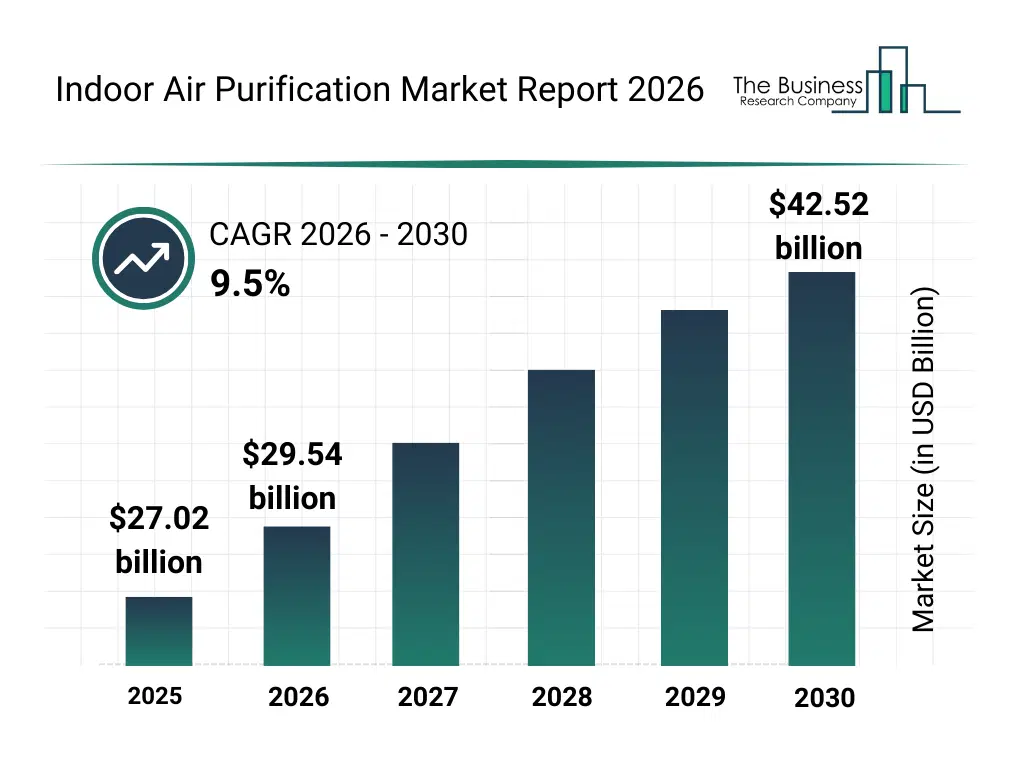
What Is The Indoor Air Purification Market Size 2026 And Growth Rate?
The indoor air purification market size has grown strongly in recent years. It will grow from $27.02 billion in 2025 to $29.54 billion in 2026 at a compound annual growth rate (CAGR) of 9.3%. The growth in the historic period can be attributed to early adoption of industrial purification systems, reliance on mechanical filtration, increased focus on indoor health and safety, expansion of hvac-based air cleaning, growth in commercial purification installations.What Is The Indoor Air Purification Market Growth Forecast?
The indoor air purification market size is expected to see strong growth in the next few years. It will grow to $42.52 billion in 2030 at a compound annual growth rate (CAGR) of 9.5%. The growth in the forecast period can be attributed to rising use of sensor-based purification systems, increasing consumer demand for clean air devices, expansion of sustainable filtration media, development of advanced odor and gas removal technologies, rising adoption in residential and commercial spaces. Major trends in the forecast period include development of intelligent indoor air monitoring solutions, adoption of smart sensor-driven air purifiers, expansion of sustainable filtration and purification technologies, advancement of digitally optimized air quality systems, integration of AI-enhanced indoor air management.
Global Indoor Air Purification Market Segmentation
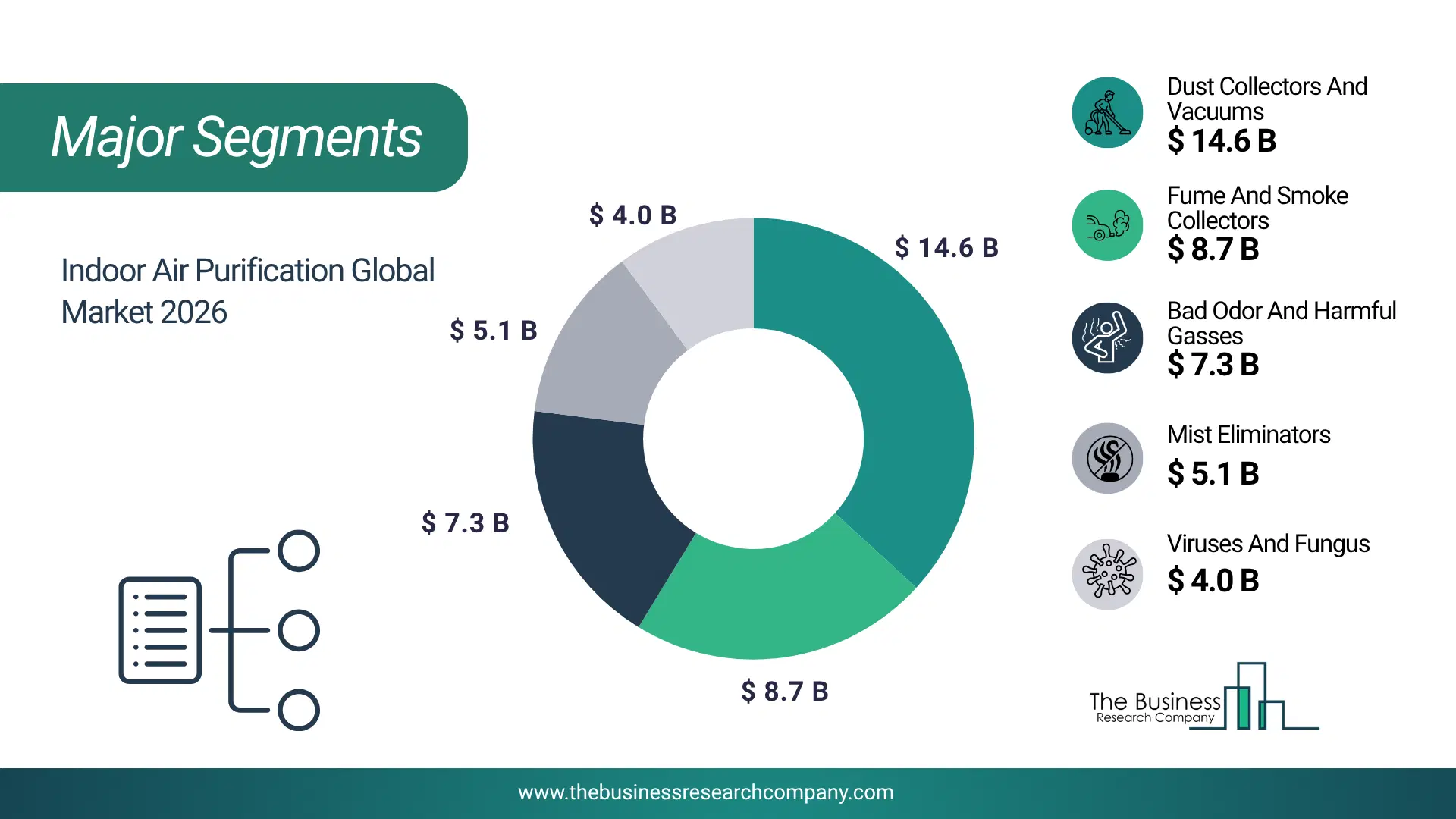
1) By Product: Dust Collectors And Vacuums, Fume And Smoke Collectors, Mist Eliminators, Bad Odor And Harmful Gasses, Fire And Emergency Exhaust, Viruses And Fungus 2) By Technology: HEPA, Electrostatic Precipitators, Activated Carbon, Ionic Filters, Other Technologies 3) By Function: Manual, Sensor 4) By Distribution Channel: Direct Selling, E-Commerce, Supermarkets Or Hypermarkets, Specialty Stores 5) By Application: Industrial, Commercial And Residential Subsegments: 1) By Dust Collectors And Vacuums: Industrial Dust Collectors, HEPA Vacuums, Portable Dust Collectors 2) By Fume And Smoke Collectors: Bench-Top Fume Extractors, Downdraft Tables, Portable Fume Extractors 3) By Mist Eliminators: Cyclone Mist Collectors: Electrostatic Mist Collectors, Oil Mist Separators 4) By Bad Odor And Harmful Gases: Activated Carbon Filters, Ozone Generators, Chemical Absorbers 5) By Fire And Emergency Exhaust: Smoke Exhaust Systems, Emergency Ventilation Systems, Portable Smoke Extractors Or Smoke Purifiers 6) By Viruses And Fungus: UV-C Air Purifiers, HEPA Air Purifiers, Ionizers The top segments in the indoor air purification market will be: • Dust Collectors And Vacuums will reach $14.63 billion by 2030. • Fume And Smoke Collectors will reach $8.7 billion by 2030. • Bad Odor And Harmful Gasses will reach $7.27 billion by 2030. • Mist Eliminators will reach $5.1 billion by 2030. • Viruses And Fungus will reach $4.04 billion by 2030.What Is The Driver Of The Indoor Air Purification Market?
Increasing prevalence of airborne diseases is expected to propel the growth of the indoor air purification market going forward. Airborne diseases are conditions resulting from the transmission of viruses, bacteria, or other pathogens through the air in the form of aerosols or droplets over short or long distances. The prevalence of airborne diseases is rising because global urbanization leads to increased population density and greater air-polluting emissions, making enclosed spaces more conducive to pathogen concentration and spread. Indoor air purification systems helps in mitigate the airborne diseases by continuously filtering and disinfecting indoor air, thereby reducing the concentration of infectious aerosols and improving overall respiratory health in enclosed environments. For instance, in March 2024, according to the Centers for Disease Control and Prevention, a US-based government agency, the number of tuberculosis cases rose from 8,320 in 2022 to 9,615 in 2023, reflecting an increase of 1,295 cases. Therefore, increasing prevalence of airborne diseases is expected to drive the growth of the indoor air purification industry.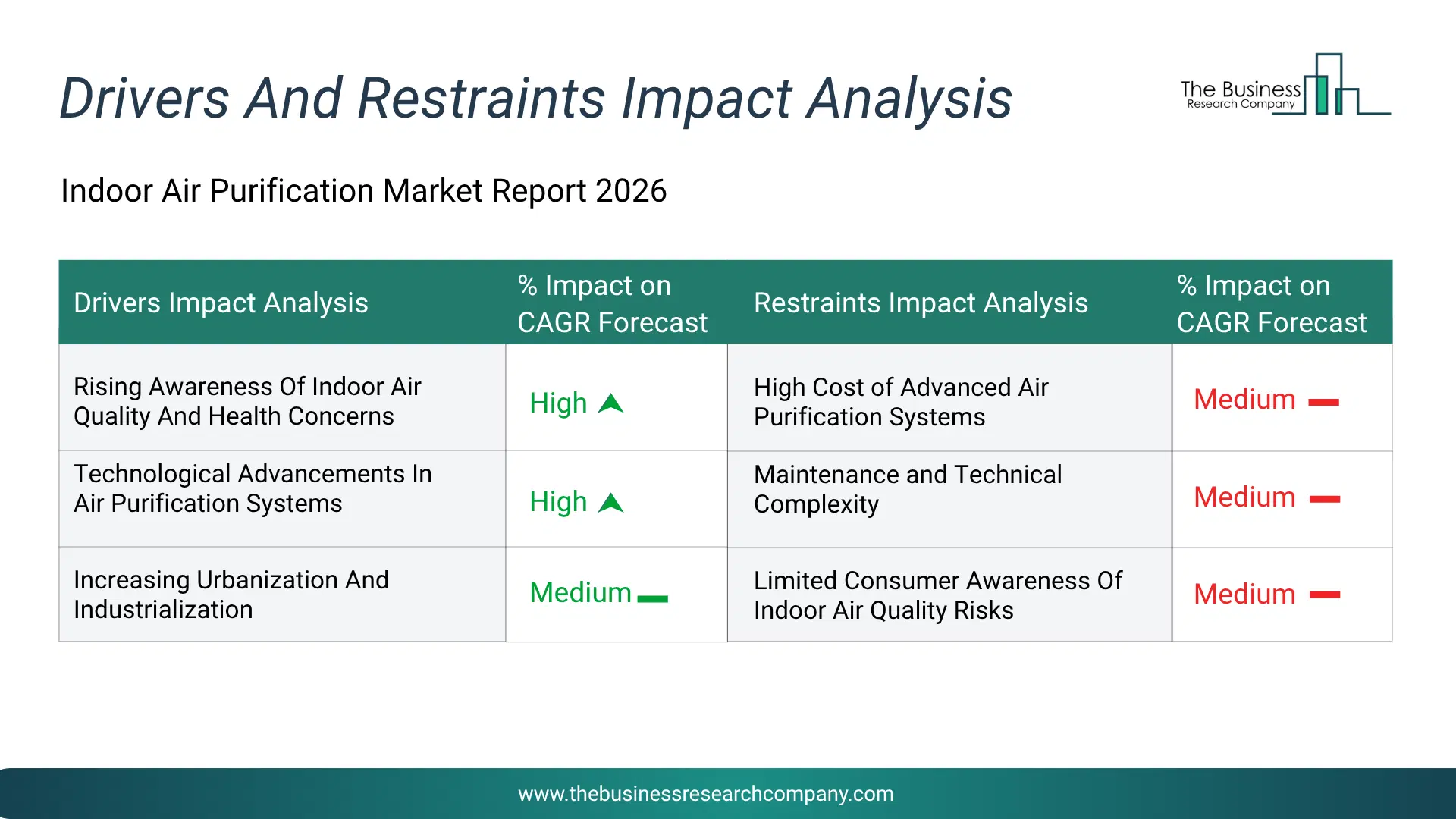
Infographic Chart Showing Key Market Drivers Analysis And Restraints For Indoor Air Purification Market
The chart presents an impact analysis of key drivers and restraints, quantifying their relative influence on the market's growth rate and helping assess the balance between growth enablers and limiting factors. This chart offers a high-level perspective; the full report contains more detailed insights.
How Will The Drivers Impact Growth In The Global Indoor Air Purification Market?
• Rising Awareness Of Indoor Air Quality And Health Concerns (High) – During the forecast period, the rising awareness of indoor air quality and health concerns is expected to become a key growth driver for the indoor air purification market by 2030. Pollutants such as dust, allergens, vocs, mold, and airborne pathogens can lead to respiratory problems, allergies, and chronic health issues. Consumers, particularly in urban and industrial areas, are increasingly using air purifiers in homes, offices, hospitals, and schools. The covid -19 pandemic underscored the importance of clean indoor air, boosting the adoption of advanced purification technologies and driving market growth. • Technological Advancements In Air Purification Systems (High) – During the forecast period, the technological advancements in air purification systems are expected to emerge as a major factor driving the expansion of the indoor air purification market by 2030. Modern indoor air purifiers use advanced technologies such as hepa and ulpa filters, activated carbon, uv-c sterilization, ionizers, and ai-enabled smart sensors to improve pollutant removal, energy efficiency, and ease of use. Smart features like real-time air quality monitoring, mobile app connectivity, and automated purification modes appeal to tech-savvy consumers. Ongoing innovation and integration with smart home ecosystems are driving growth in the indoor air purification market. • Increasing Urbanization And Industrialization (Medium) – During the forecast period, the increasing urbanization and industrialization is expected to act as a key growth catalyst for the indoor air purification market by 2030. Rapid urbanization, industrial expansion, and rising vehicular emissions have increased indoor and outdoor air pollution, especially in metropolitan areas. Limited ventilation in densely populated buildings worsens indoor air quality, driving demand for purification solutions in homes, offices, and institutions. As organizations and homeowners invest in maintaining safe and comfortable indoor environments, the indoor air purification market experiences strong growth.How Will The Restraints Impact Growth In The Global Indoor Air Purification Market?
• High Cost of Advanced Air Purification Systems (Medium) – During the forecast period, the premium indoor air purifiers equipped with hepa/ulpa filters, uv sterilization, smart sensors, and connectivity features often come at a high price point. Additionally, recurring costs for filter replacement, maintenance, and energy consumption increase the total cost of ownership. Price-sensitive consumers in developing regions may be deterred from adopting advanced systems, which can slow market penetration and growth. This financial barrier acts as a key restraint for the market. • Maintenance and Technical Complexity (Medium) – During the forecast period, the indoor air purifiers require regular maintenance, including cleaning and filter replacement, to maintain optimal efficiency. Advanced systems with smart features or multiple purification technologies may require technical expertise for installation and troubleshooting. Consumers may be reluctant to adopt systems that are perceived as high-maintenance or complex, which can act as a restraint on market growth. Additionally, improper maintenance can reduce the efficiency and lifespan of the devices, affecting user satisfaction. • Limited Consumer Awareness Of Indoor Air Quality Risks (Medium) – During the forecast period, the many consumers remain unaware of the long-term health impacts associated with poor indoor air quality. As a result, air purification systems are often viewed as optional rather than essential household or commercial products. Limited awareness reduces purchasing motivation and market penetration. Manufacturers must invest significantly in education and awareness campaigns to stimulate demand.Key Players In The Global Indoor Air Purification Market
Major companies operating in the indoor air purification market are Daikin Industries Ltd, Koninklijke Philips N V, LG Electronics Inc, Panasonic Holdings Corporation, Honeywell International Inc, Samsung Electronics Co Ltd, Sharp Corporation, Dyson Limited, Whirlpool Corporation, Aerus LLC, Legend Brands Inc, Xpower, Abatement Technologies, Pullman Ermator Inc, Envirco Corporation, Camfil Group, Hamilton Beach Brands Inc, Lifa Air Ltd, Coway Co. Ltd., Midea Group Co. Ltd., Xiaomi Corporation, Airfree Produtos Electrónicos SA, Air Oasis LLC, Airgle Corporation, Alen Corporation, Austin Air Systems Limited, Blue Pure AB, Carrier Global Corporation, Guardian Technologies LLC, Levoit, Medify Air LLC, Atlanta Healthcare, Kent RO Systems Ltd., Molekule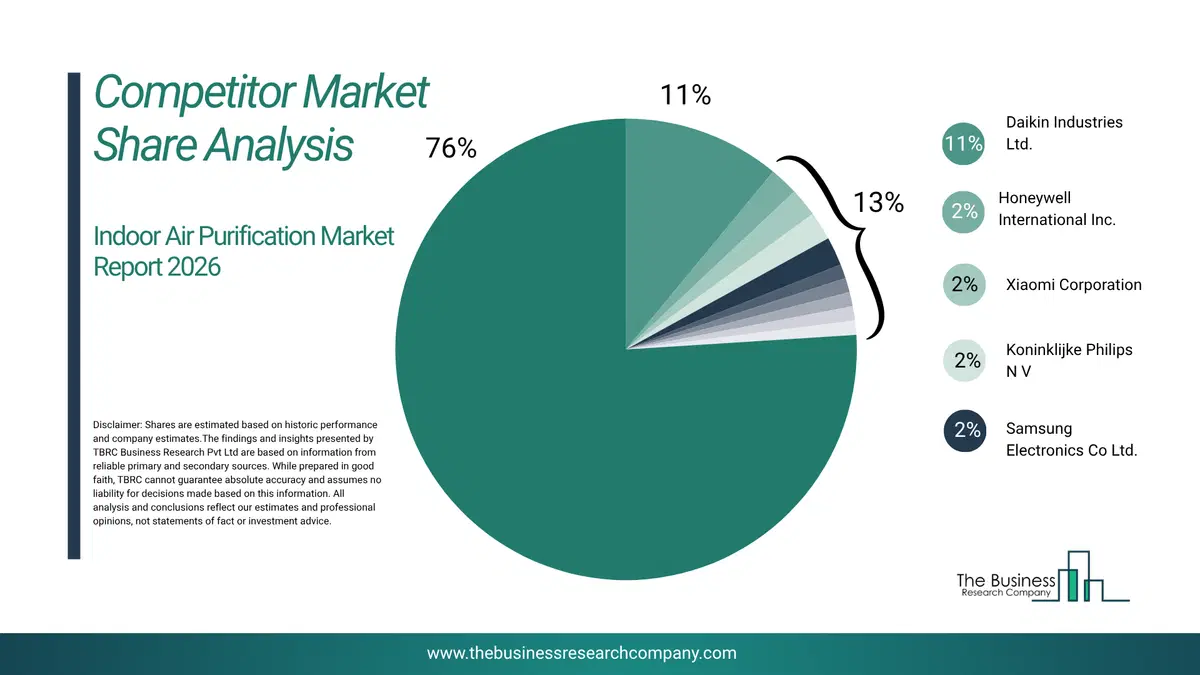
This chart is for illustrative purposes; the full report includes a detailed competitor analysis and comprehensive overview of the top 10 companies in the market.
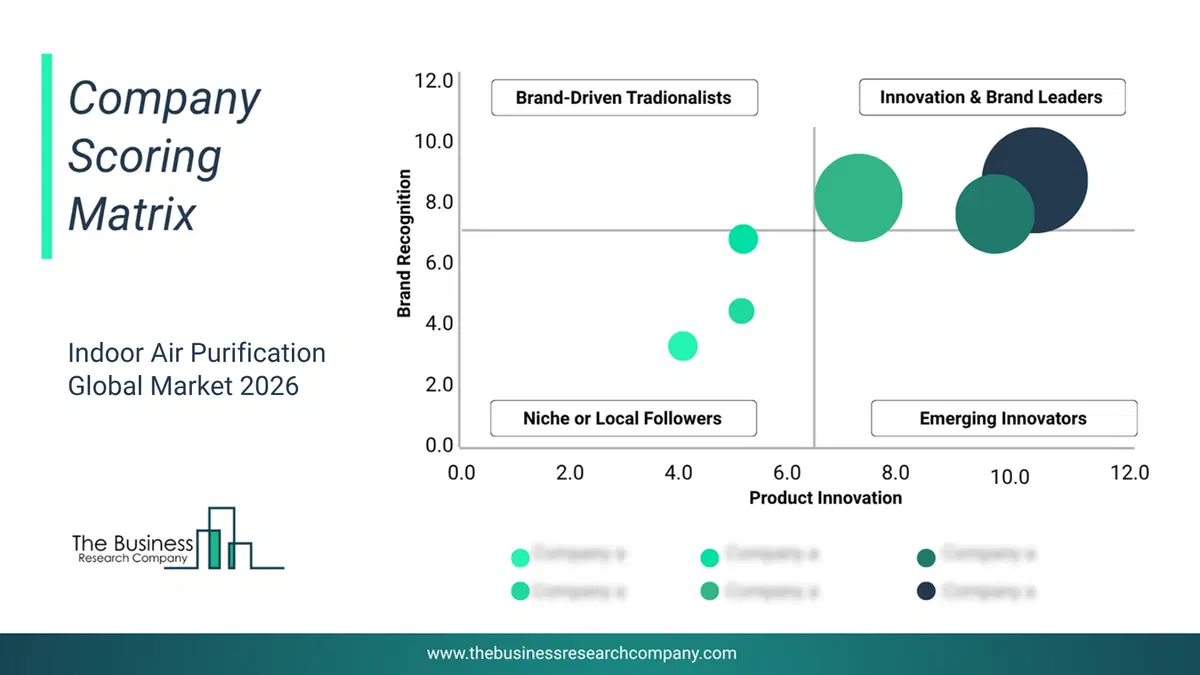
This chart maps companies by product innovation and brand strength, with bubble size indicating relative revenue, helping identify market leaders, challengers, and niche players. This is an illustrative chart; the full report provides a complete and accurate competitive analysis.
Global Indoor Air Purification Market Trends and Insights
Major companies operating in the indoor air purification market are focusing on developing innovative solutions, such as IoT-enabled molecular air purification systems, to gain a competitive advantage. An IoT-enabled molecular air purification system integrates advanced filtration at the molecular level such as photocatalytic oxidation or UV-A/UV-C treatment with connected sensors and smart controls to manage indoor air quality dynamically. For instance, in September 2024, Havells Studio, an India-based consumer electricals company, launched the Studio Meditate AP400/AP250 air purifiers featuring spacetech photo-catalytic oxidation, wireless mobile device charging, and IoT home-ecosystem compatibility with real-time AQI monitoring. This technological evolution enhances purification effectiveness and user convenience, although higher unit costs and integration challenges may slow uptake in price-sensitive segments.What Are Latest Mergers And Acquisitions In The Indoor Air Purification Market?
In July 2023, MANN+HUMMEL a Germany-based filtration technology company acquired Suzhou U-air Environmental Technology Co., Ltd. for an undisclosed amount. With this acquisition, Mann+Hummel aims to enhance its air filtration capabilities and market presence in China and Southeast Asia by acquiring a majority stake in Suzhou U-Air Environmental Technology, allowing for improved production capacity and faster response to customer demands for high-quality air filtration solutions. Suzhou U-air Environmental Technology Co., Ltd. (U-Air) is a China-based company that specializes in air filtration products and cleanroom equipment.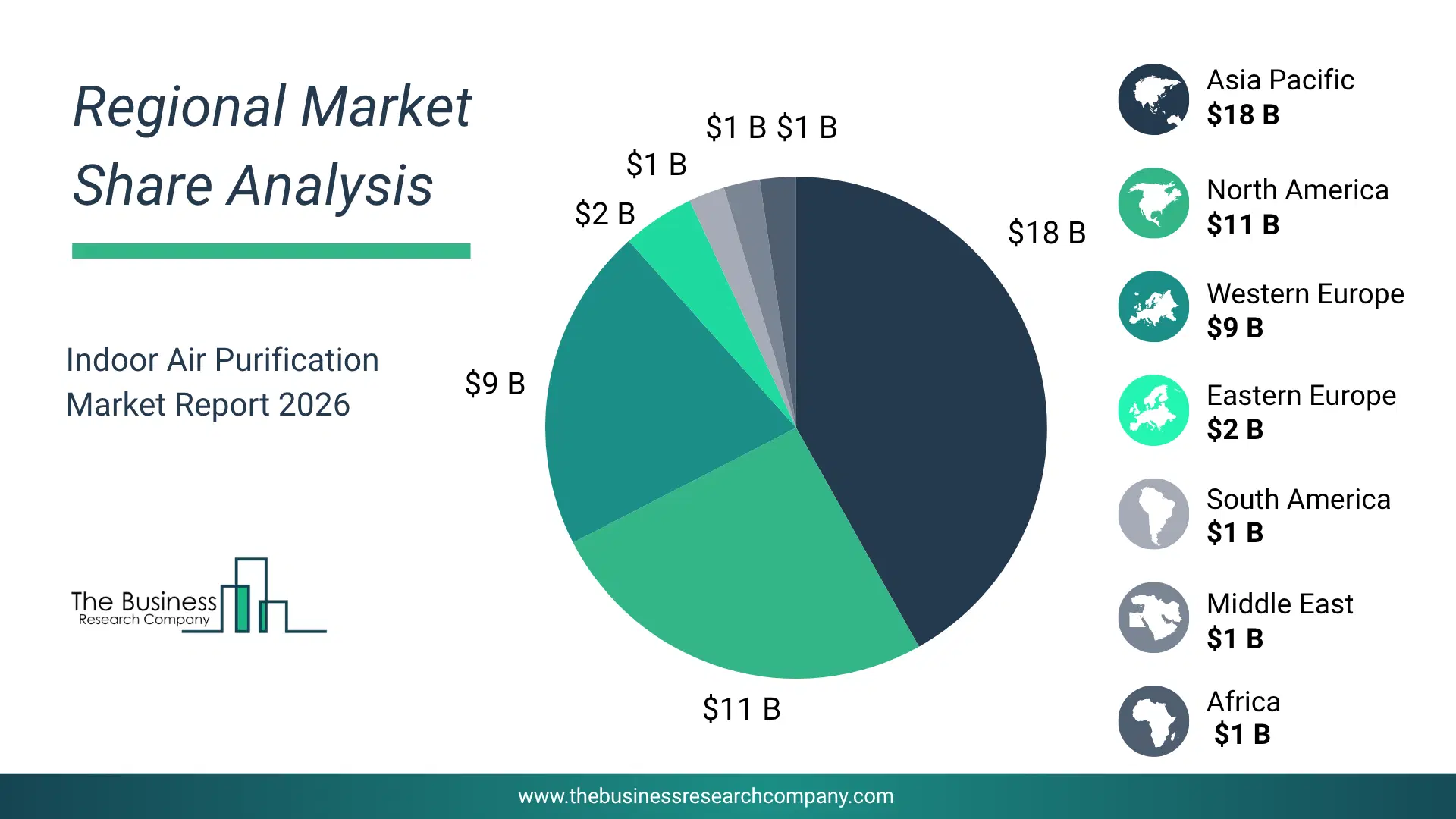
Regional Outlook
Asia-Pacific was the largest region in the indoor air purification market in 2025. The regions covered in this market report are Asia-Pacific, South East Asia, Western Europe, Eastern Europe, North America, South America, Middle East, Africa. The countries covered in this market report are Australia, Brazil, China, France, Germany, India, Indonesia, Japan, Taiwan, Russia, South Korea, UK, USA, Canada, Italy, Spain.What Defines the Indoor Air Purification Market?
The indoor air purification market consists of revenues earned by entities by electrostatic precipitator technology. The market value includes the value of related goods sold by the service provider or included within the service offering. The indoor air purification market also includes sales of portable air cleaners, extended media filters, electronic air filters, flat filters, and iWave air filters. Values in this market are ‘factory gate’ values, that is the value of goods sold by the manufacturers or creators of the goods, whether to other entities (including downstream manufacturers, wholesalers, distributors, and retailers) or directly to end customers. The value of goods in this market includes related services sold by the creators of the goods.How is Market Value Defined and Measured?
The market value is defined as the revenues that enterprises gain from the sale of goods and/or services within the specified market and geography through sales, grants, or donations in terms of the currency (in USD unless otherwise specified). The revenues for a specified geography are consumption values that are revenues generated by organizations in the specified geography within the market, irrespective of where they are produced. It does not include revenues from resales along the supply chain, either further along the supply chain or as part of other products.
This chart presents market attractiveness based on a quantitative evaluation of growth, competition, strategic alignment, and risk, offering a clear view of opportunity areas for decision-making. This chart is for illustrative purposes; the full report contains the complete analysis.

This chart highlights the Total Addressable Market (TAM) by estimating the maximum revenue opportunity using an assumption-driven approach, supporting strategic planning and opportunity sizing across markets. The chart is illustrative; the full report provides a more comprehensive analysis.
What Key Data and Analysis Are Included in the Indoor Air Purification Market Report 2026?
The indoor air purification market research report is one of a series of new reports from The Business Research Company that provides market statistics, including industry global market size, regional shares, competitors with the market share, detailed market segments, market trends and opportunities, and any further data you may need to thrive in the indoor air purification industry. The market research report delivers a complete perspective of everything you need, with an in-depth analysis of the current and future state of the industry.Indoor Air Purification Market Report 2026 Market Report Forecast Analysis
| Report Attribute | Details |
|---|---|
| Market Size Value In 2026 | $29.54 billion |
| Revenue Forecast In 2030 | $42.52 billion |
| Growth Rate | CAGR of 9.3% from 2026 to 2030 |
| Base Year For Estimation | 2025 |
| Actual Estimates/Historical Data | 2020-2025 |
| Forecast Period | 2026 - 2030 |
| Market Representation | Revenue in USD Billion and CAGR from 2026 to 2030 |
| Segments Covered | Product, Technology, Function, Distribution Channel, Application |
| Regional Scope | Asia-Pacific, Western Europe, Eastern Europe, North America, South America, Middle East, Africa |
| Country Scope | The countries covered in the report are Australia, Brazil, China, France, Germany, India, Indonesia, Japan, Taiwan, Russia, South Korea, UK, USA, Canada, Italy, Spain. |
| Key Companies Profiled | Daikin Industries Ltd, Koninklijke Philips N V, LG Electronics Inc, Panasonic Holdings Corporation, Honeywell International Inc, Samsung Electronics Co Ltd, Sharp Corporation, Dyson Limited, Whirlpool Corporation, Aerus LLC, Legend Brands Inc, Xpower, Abatement Technologies, Pullman Ermator Inc, Envirco Corporation, Camfil Group, Hamilton Beach Brands Inc, Lifa Air Ltd, Coway Co. Ltd., Midea Group Co. Ltd., Xiaomi Corporation, Airfree Produtos Electrónicos SA, Air Oasis LLC, Airgle Corporation, Alen Corporation, Austin Air Systems Limited, Blue Pure AB, Carrier Global Corporation, Guardian Technologies LLC, Levoit, Medify Air LLC, Atlanta Healthcare, Kent RO Systems Ltd., Molekule |
| Customization Scope | Request for Customization |
| Pricing And Purchase Options | Explore Purchase Options |