
Insecticides Market Report 2026
Global Outlook – By Type (Synthetic Insecticides, Bio-insecticides ), By Form (Sprays, Baits, Strips), By Application (Cereals and Grains, Oilseeds And Pulses, Fruits And Vegetables, Other Applications ) – Market Size, Trends, Strategies, and Forecast to 2030
Insecticides Market Overview
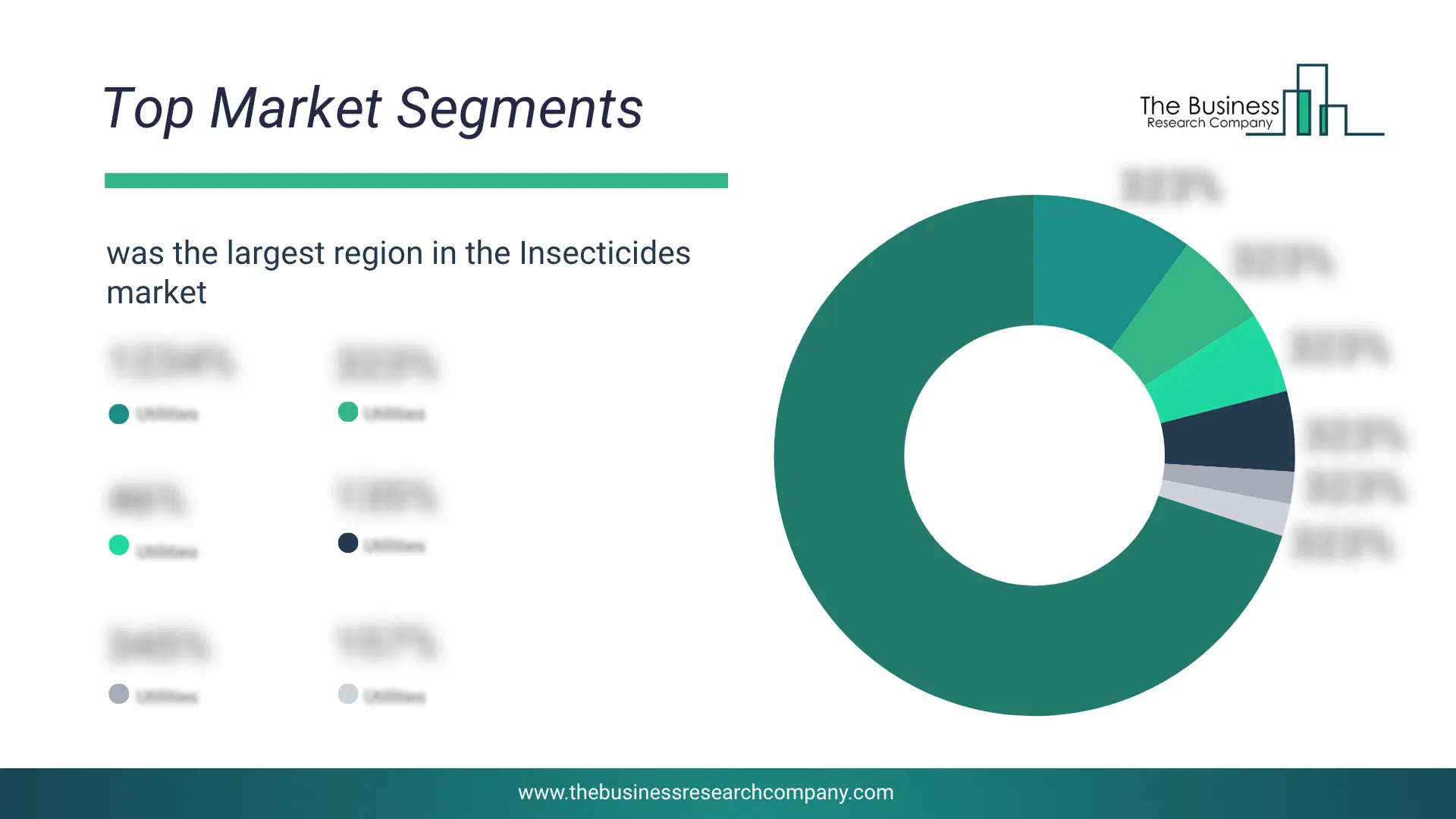
• Insecticides market size has reached to $25.92 billion in 2025 • Expected to grow to $40.68 billion in 2030 at a compound annual growth rate (CAGR) of 9.5% • Growth Driver: Rising Crop Losses Drive Growth in Insecticide Market • Market Trend: Advancements in Insecticides for Enhanced Crop Protection and Yield • Asia-Pacific was the largest region in 2025 and North America is the fastest growing region.What Is Covered Under Insecticides Market?
Insecticides are substances that are used to kill insects, including ovicides and larvicides, which are used for insect eggs and larvae, respectively, to control pests that affect cultivated crops. Insecticides work by either disrupting the nervous system or damaging exoskeletons. The main types of insecticides are synthetic insecticides and bio-insecticides. The principal agents of insect control are synthetic insecticides. In general, they easily penetrate insects and are harmful to a wide variety of species. The major forms of insecticides are sprays, baits, and strips that are used on cereals and grains, oilseeds and pulses, fruits and vegetables, and other applications.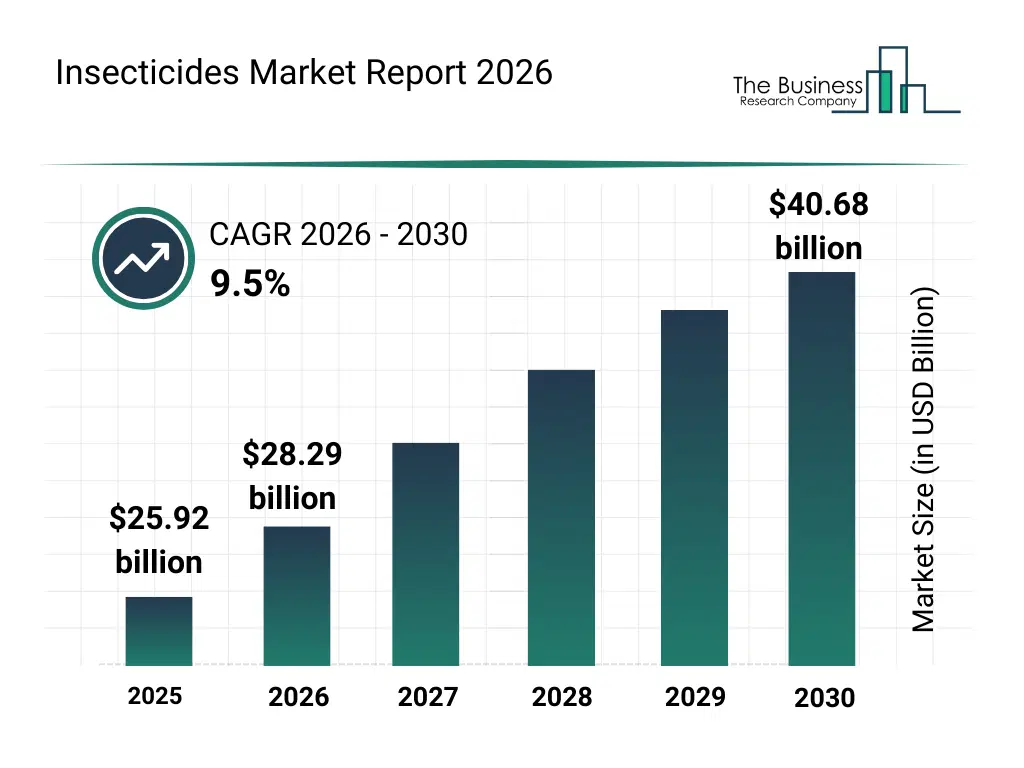
What Is The Insecticides Market Size and Share 2026?
The insecticides market size has grown strongly in recent years. It will grow from $25.92 billion in 2025 to $28.29 billion in 2026 at a compound annual growth rate (CAGR) of 9.1%. The growth in the historic period can be attributed to crop yield protection needs, expansion of commercial agriculture, widespread synthetic insecticide usage, pest infestation outbreaks, government pest control programs.What Is The Insecticides Market Growth Forecast?
The insecticides market size is expected to see strong growth in the next few years. It will grow to $40.68 billion in 2030 at a compound annual growth rate (CAGR) of 9.5%. The growth in the forecast period can be attributed to organic farming growth, regulatory restrictions on chemicals, demand for residue free crops, climate driven pest spread, innovation in bio formulations. Major trends in the forecast period include growing adoption of bio insecticides, rising demand for crop specific pest control, expansion of integrated pest management practices, increased use of targeted larvicides, focus on resistance management solutions.
Global Insecticides Market Segmentation
1) By Type: Synthetic Insecticides, Bio-insecticides 3) By Form: Sprays, Baits, Strips 2) By Application: Cereals and Grains, Oilseeds And Pulses, Fruits And Vegetables, Other Applications Subsegments: 1) By Synthetic Insecticides: Organophosphates, Carbamates, Pyrethroids, Neonicotinoids, Insect Growth Regulators (IGRs), Other Synthetic Insecticides 2) By Bio-insecticides: Microbial Insecticides (Bacillus Thuringiensis), Botanical Insecticides (Neem, Pyrethrum), Biochemical Insecticides (Pheromones, Growth Regulators), Other Bio-insecticidesWhat Is The Driver Of The Insecticides Market?
Rising crop losses are expected to propel the growth of the insecticides market going forward. Crop losses refer to the reduction in the quantity or quality of agricultural crops that occur due to various factors, including natural disasters, pests, diseases, adverse weather conditions, and other unfavorable events. Crop losses may benefit the insecticide industry by increasing the need for pest control to safeguard crops. Farmers frequently resort to pesticides to limit the damage and assure a successful harvest when crops are threatened by insect damage or destruction. For instance, in February 2023, according to a report published by the National Institute of Food and Agriculture, a US-based government department responsible for agricultural research, annually, pests cause a loss of 20% to 40% of global crop production, with plant diseases costing around $220 billion and invasive insects $70 billion globally. Therefore, the rising crop losses are driving the growth of the insecticide industry.Key Players In The Global Insecticides Market
Major companies operating in the insecticides market are Adama Agricultural Solutions Ltd., American Vanguard Corporation, BASF SE, Bayer CropScience AG, FMC Corporation, NuFarm Limited, Syngenta International AG, Sumitomo Chemical Co. Ltd., Monsanto Company, Arysta LifeScience Corporation, Syngenta AG, Corteva Inc., UPL Limited, Kumiai Chemical Industry Co. Ltd., Nissan Chemical Corporation, Isagro SpA, Albaugh LLC, Sinochem Corporation, Rotam CropSciences Ltd., Gharda Chemicals Limited, Meghmani Organics Ltd., PI Industries Ltd., Crystal Crop Protection Pvt. Ltd., Insecticides India Limited, Dhanuka Agritech Limited, Bharat Rasayan Ltd., Indofil Industries Limited, Meghmani Finechem Limited, Marrone Bio Innovations Inc., Certis USA LLC, Valent BioSciences LLC, BioWorks Inc., Gowan Company LLC, Sipcam Agro USA Inc., AMVAC Chemical Corporation, Nichino America Inc., OHP Inc.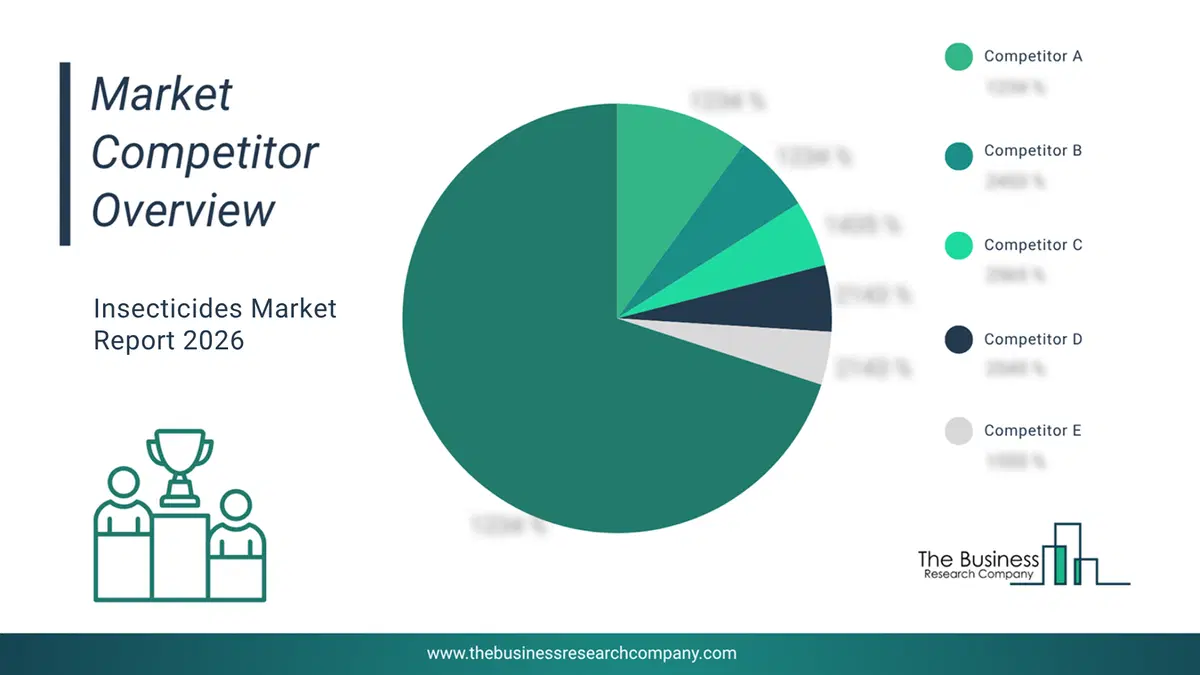
This chart is for illustrative purposes; the full report includes a detailed competitor analysis and comprehensive overview of the top 10 companies in the market.
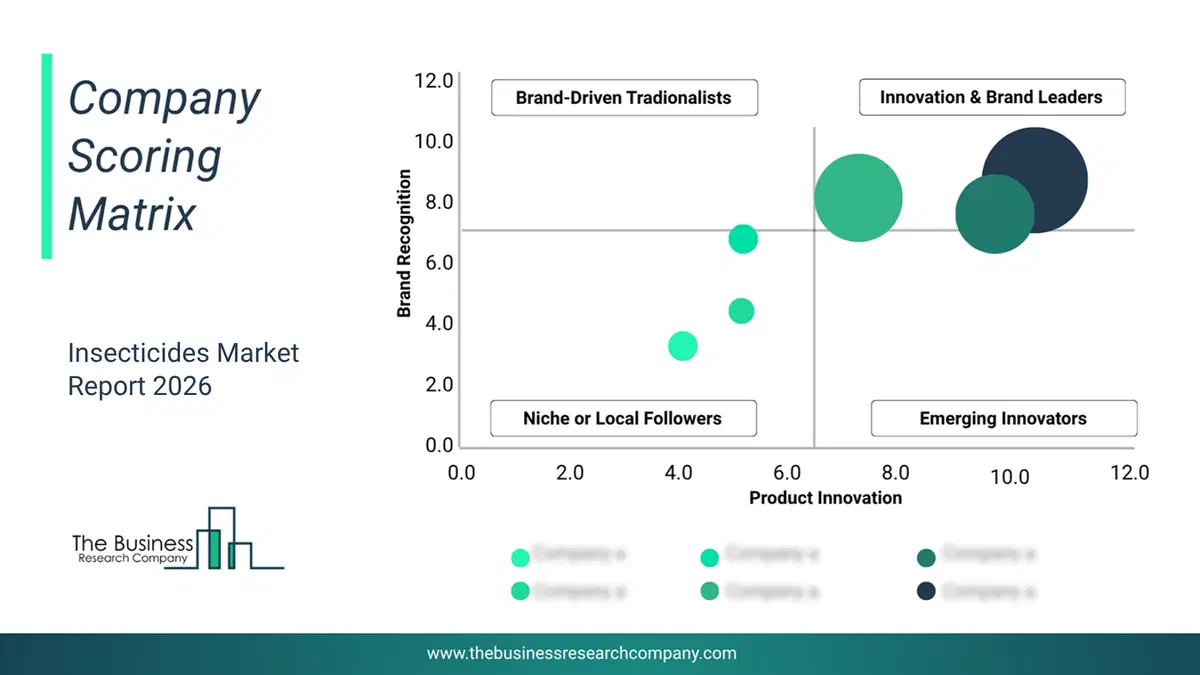
This chart maps companies by product innovation and brand strength, with bubble size indicating relative revenue, helping identify market leaders, challengers, and niche players. This is an illustrative chart; the full report provides a complete and accurate competitive analysis.
Global Insecticides Market Trends and Insights
Major companies operating in the insecticides market are focusing on launching new advanced products, such as translaminar insecticides, to improve pest control effectiveness, enhance crop protection, and minimize environmental impact. A translaminar insecticide is absorbed by the plant and spreads within its leaves, offering protection against pests both on the surface and inside the plant. For instance, in August 2024, Crystal Crop Protection, an India-based chemical manufacturing company, launched Proclaim XTRA. It is a newly formulated insecticide for maize and soybean, offering strong protection against caterpillars, particularly Spodoptera species like Fall Army Worm. It helps maximize crop yield by ensuring long-term protection and improving crop health. This contact, systemic, and translaminar insecticide works by paralyzing and killing caterpillars, providing effective control over various caterpillar pests in an EC formulation.What Are Latest Mergers And Acquisitions In The Insecticides Market?
In September 2025, Envu, a US-based agritech company, acquired Actellic products from Syngenta for an undisclosed amount. Through this acquisition, Envu aims to strengthen its stored grain protection portfolio by integrating Syngenta’s Actellic insecticide solutions and enhancing its offerings for effective pest management in stored cereals and grains. Syngenta is a Switzerland-based manufacturer of Actellic products, which are recognized insecticides used to protect stored grains from pests such as weevils, beetles, and moths.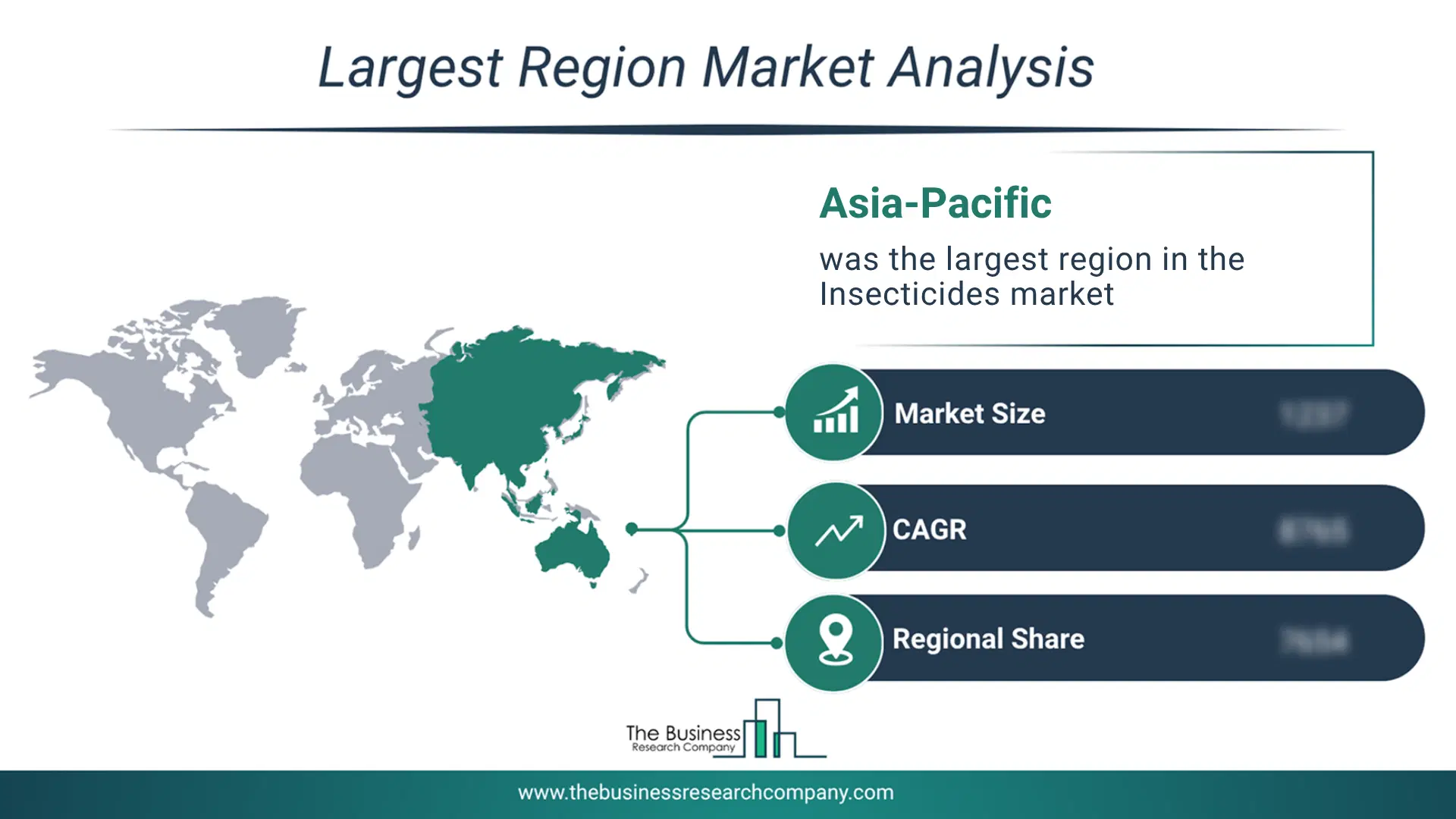
Regional Insights
Asia-Pacific was the largest region in the insecticides market in 2025. South America was the second-largest region in the global insecticides market. The regions covered in this market report are Asia-Pacific, South East Asia, Western Europe, Eastern Europe, North America, South America, Middle East, Africa The countries covered in this market report are China, India, Japan, Australia, Indonesia, South Korea, Bangladesh, Thailand, Vietnam, Malaysia, Singapore, Philippines, Hong Kong, Taiwan, New Zealand, UK, Germany, France, Italy, Spain, Austria, Belgium, Denmark, Finland, Ireland, Netherlands, Norway, Portugal, Sweden, Switzerland, Russia, Czech Republic, Poland, Romania, Ukraine, USA, Canada, Mexico, Brazil, Chile, Argentina, Colombia, Peru, Saudi Arabia, Israel, Iran, Turkey, UAE, Egypt, Nigeria, South Africa.What Defines the Insecticides Market?
The insecticides market consists of the sales of organic insecticides, inorganic insecticides, and miscellaneous compounds. Values in this market are factory gate values, that is the value of goods sold by the manufacturers or creators of the goods, whether to other entities (including downstream manufacturers, wholesalers, distributors, and retailers) or directly to end customers. The value of goods in this market includes related services sold by the creators of the goods.How is Market Value Defined and Measured?
The market value is defined as the revenues that enterprises gain from the sale of goods and/or services within the specified market and geography through sales, grants, or donations in terms of the currency (in USD unless otherwise specified). The revenues for a specified geography are consumption values that are revenues generated by organizations in the specified geography within the market, irrespective of where they are produced. It does not include revenues from resales along the supply chain, either further along the supply chain or as part of other products.
This chart presents market attractiveness based on a quantitative evaluation of growth, competition, strategic alignment, and risk, offering a clear view of opportunity areas for decision-making. This chart is for illustrative purposes; the full report contains the complete analysis.

This chart highlights the Total Addressable Market (TAM) by estimating the maximum revenue opportunity using an assumption-driven approach, supporting strategic planning and opportunity sizing across markets. The chart is illustrative; the full report provides a more comprehensive analysis.
What Key Data and Analysis Are Included in the Insecticides Market Report 2026?
The insecticides market research report is one of a series of new reports from The Business Research Company that provides market statistics, including industry global market size, regional shares, competitors with the market share, detailed market segments, market trends and opportunities, and any further data you may need to thrive in the insecticides industry. The market research report delivers a complete perspective of everything you need, with an in-depth analysis of the current and future state of the industry.Insecticides Market Report Forecast Analysis
| Report Attribute | Details |
|---|---|
| Market Size Value In 2026 | $28.29 billion |
| Revenue Forecast In 2030 | $40.68 billion |
| Growth Rate | CAGR of 9.1% from 2026 to 2030 |
| Base Year For Estimation | 2025 |
| Actual Estimates/Historical Data | 2020-2025 |
| Forecast Period | 2026 - 2030 |
| Market Representation | Revenue in USD Billion and CAGR from 2026 to 2030 |
| Segments Covered | Type, Form, Application |
| Regional Scope | Asia-Pacific, Western Europe, Eastern Europe, North America, South America, Middle East, Africa |
| Country Scope | The countries covered in this market report are Australia, Brazil, China, France, Germany, India, Indonesia, Japan, Taiwan, Russia, South Korea, UK, USA, Canada, Italy, Spain |
| Key Companies Profiled | Adama Agricultural Solutions Ltd., American Vanguard Corporation, BASF SE, Bayer CropScience AG, FMC Corporation, NuFarm Limited, Syngenta International AG, Sumitomo Chemical Co. Ltd., Monsanto Company, Arysta LifeScience Corporation, Syngenta AG, Corteva Inc., UPL Limited, Kumiai Chemical Industry Co. Ltd., Nissan Chemical Corporation, Isagro SpA, Albaugh LLC, Sinochem Corporation, Rotam CropSciences Ltd., Gharda Chemicals Limited, Meghmani Organics Ltd., PI Industries Ltd., Crystal Crop Protection Pvt. Ltd., Insecticides India Limited, Dhanuka Agritech Limited, Bharat Rasayan Ltd., Indofil Industries Limited, Meghmani Finechem Limited, Marrone Bio Innovations Inc., Certis USA LLC, Valent BioSciences LLC, BioWorks Inc., Gowan Company LLC, Sipcam Agro USA Inc., AMVAC Chemical Corporation, Nichino America Inc., OHP Inc. |
| Customization Scope | Request for Customization |
| Pricing And Purchase Options | Explore Purchase Options |