

Insomnia Therapeutics Market Report 2026
Global Outlook – By Treatment Type (Drugs, Medical Devices), By Formulation (Tablets, Capsules, Liquid Solutions, Patches), By Route Of Administration (Oral, Intravenous, Transdermal, Other Routes Of Administration), By Distribution Channel (Hospital Pharmacies, Retail Pharmacies, Online Pharmacies, Clinics, Wellness Centers) – Market Size, Trends, Strategies, and Forecast to 2030
Insomnia Therapeutics Market Overview
• Insomnia Therapeutics market size has reached to $3.2 billion in 2025 • Expected to grow to $4.19 billion in 2030 at a compound annual growth rate (CAGR) of 5.5% • Growth Driver: The Increasing Stress Levels And Lifestyle Changes Fueling The Growth Of The Market Due To Their Impact On Emotional Health And Sleep Disruption • Market Trend: Advancements In Dual Orexin Receptor Antagonists Drive Innovation In Targeted Insomnia Therapies • North America was the largest region in 2025 and Asia-Pacific is the fastest growing region.What Is Covered Under Insomnia Therapeutics Market?
Insomnia therapeutics refer to treatments aimed at managing and alleviating the symptoms of insomnia, a condition characterized by difficulty falling or staying asleep. These treatments include prescription medications, over-the-counter sleep aids, and non-pharmacological interventions such as cognitive behavioral therapy for insomnia (CBT-I). The main treatment types in insomnia therapeutics are drugs and medical devices. Drugs in insomnia therapeutics are pharmacological agents specifically formulated to treat sleep disorders by enhancing sleep initiation, maintenance, or overall sleep quality through targeted mechanisms that regulate the sleep-wake cycle. The formulations include tablets, capsules, liquid solutions, and patches and are administered through various routes, including oral, intravenous, transdermal, and others, and are distributed via multiple channels such as hospital pharmacies, retail pharmacies, online pharmacies, clinics, and wellness centers.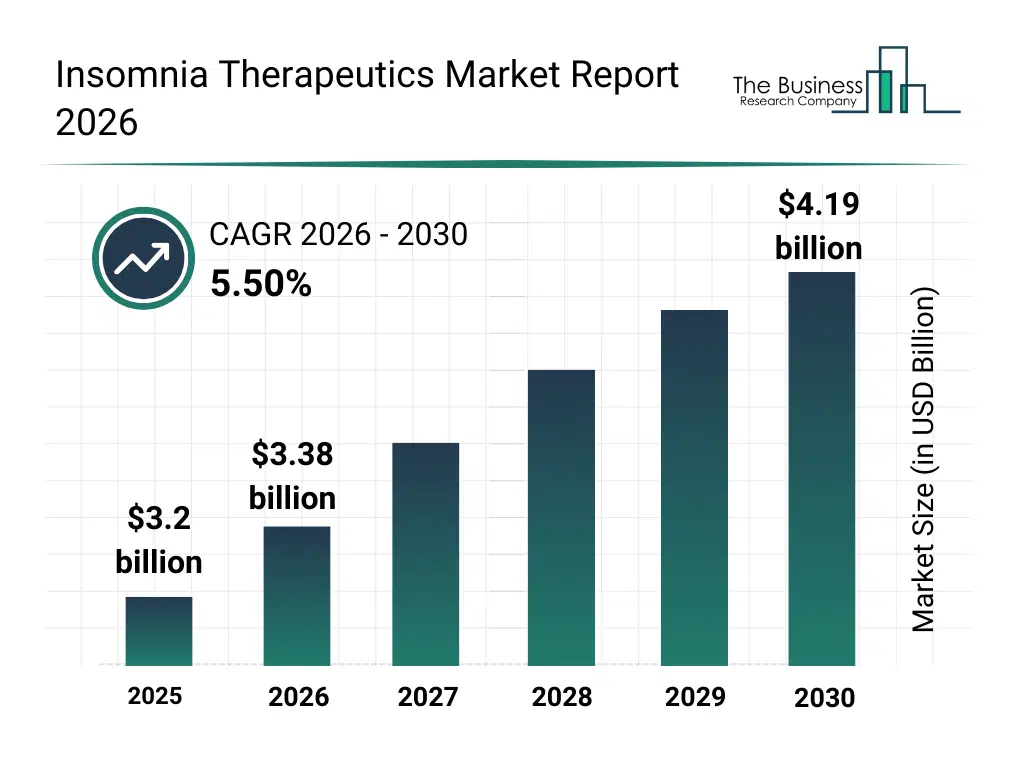
What Is The Insomnia Therapeutics Market Size and Share 2026?
The insomnia therapeutics market size has grown strongly in recent years. It will grow from $3.2 billion in 2025 to $3.38 billion in 2026 at a compound annual growth rate (CAGR) of 5.7%. The growth in the historic period can be attributed to rising prevalence of sleep disorders, increased stress and lifestyle-related insomnia, widespread use of prescription sleep aids, expansion of retail pharmacy access, growing awareness of sleep health.What Is The Insomnia Therapeutics Market Growth Forecast?
The insomnia therapeutics market size is expected to see strong growth in the next few years. It will grow to $4.19 billion in 2030 at a compound annual growth rate (CAGR) of 5.5%. The growth in the forecast period can be attributed to growth in digital sleep therapeutics, increasing preference for non-pharmacological treatments, rising aging population, growing adoption of wearable sleep devices, expansion of telehealth-based insomnia management. Major trends in the forecast period include growing adoption of cognitive behavioral therapy for insomnia, rising demand for non-habit-forming sleep medications, increasing use of orexin receptor antagonists, expansion of home-based sleep therapy solutions, growing integration of sleep tracking with treatment plans.
Global Insomnia Therapeutics Market Segmentation
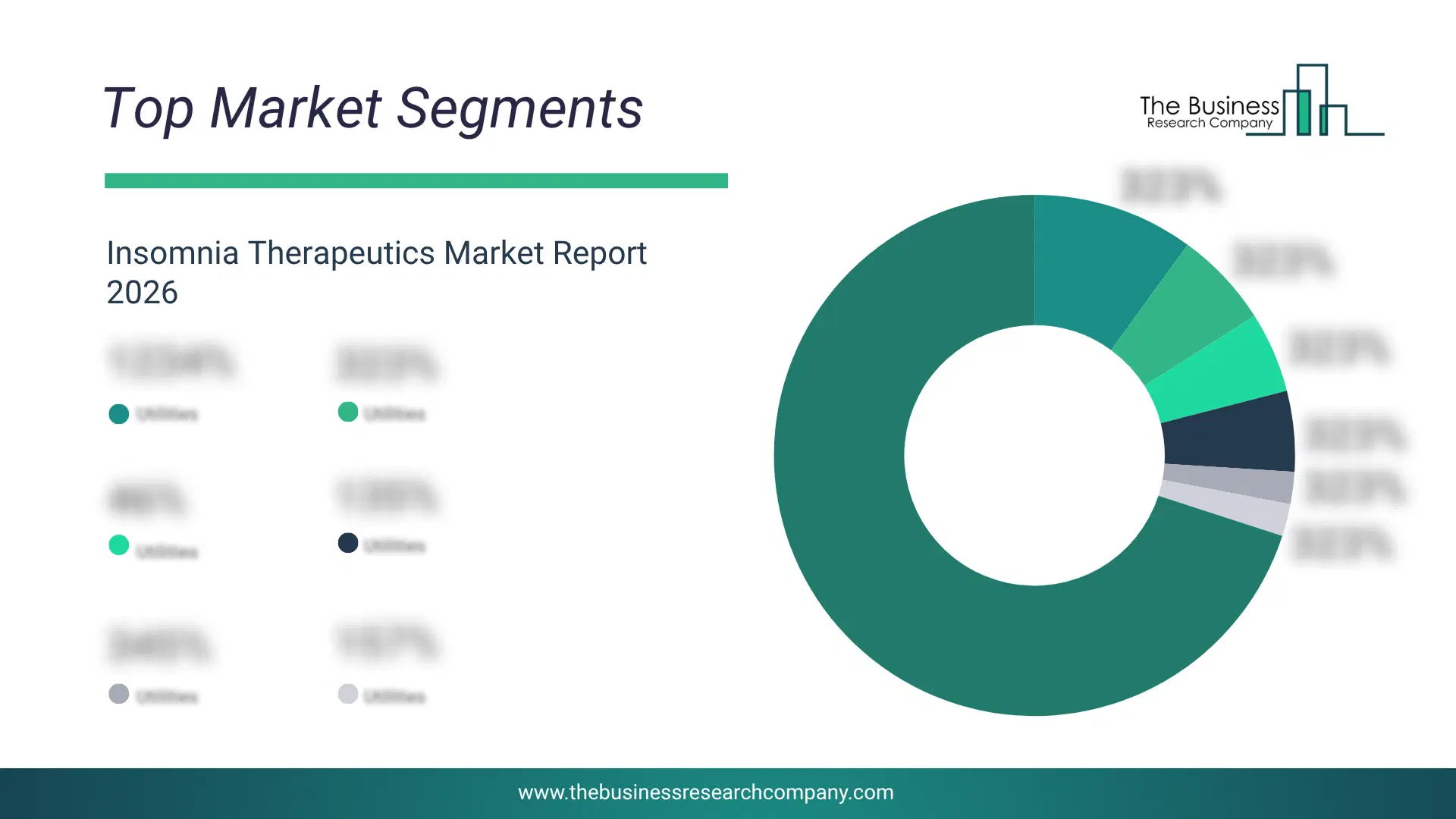
1) By Treatment Type: Drugs, Medical Devices 2) By Formulation: Tablets, Capsules, Liquid Solutions, Patches 3) By Route Of Administration: Oral, Intravenous, Transdermal, Other Routes Of Administration 4) By Distribution Channel: Hospital Pharmacies, Retail Pharmacies, Online Pharmacies, Clinics, Wellness Centers Subsegments: 1) By Drugs: Benzodiazepines, Nonbenzodiazepines, Antidepressants, Orexin Antagonists, Melatonin Antagonists, Other Drugs 2) By Medical Devices: Cognitive Behavioral Therapy Devices (CBT-I Devices), Polysomnography Devices, Sleep Tracking Devices, Neurostimulation Devices, Light Therapy DevicesWhat Is The Driver Of The Insomnia Therapeutics Market?
The increasing stress levels and lifestyle changes are expected to propel the growth of the insomnia therapeutics market going forward. Stress levels and lifestyle changes refer to the psychological and behavioral shifts in daily routines and responsibilities that contribute to emotional strain and disrupted sleep patterns. Rising stress levels and lifestyle changes are driven by constant digital connectivity, which erodes work-life boundaries and limits time for true mental rest. Insomnia therapeutics plays a crucial role by offering effective, science-backed treatment solutions that help restore healthy sleep patterns, reduce sleep-related anxiety, and support mental well-being amidst modern-day stressors. For instance, in May 2024, according to the American Psychiatric Association (APA), a US-based organization of psychiatrists, a share of U.S. adults reported feeling more anxious, rising from 32% in 2022 to 37% in 2023 and reaching 43% in 2024. Therefore, the increasing stress levels and lifestyle changes are contributing to the growth of the insomnia therapeutics industry.Key Players In The Global Insomnia Therapeutics Market
Major companies operating in the insomnia therapeutics market are Pfizer Inc., Sanofi S.A., Takeda Pharmaceutical Company Limited, Eli Lilly and Company, Merck KGaA, Eisai Co. Ltd., Sumitomo Pharma Co. Ltd., Astellas Pharma Inc., Acadia Pharmaceuticals Inc., Vanda Pharmaceuticals Inc., Idorsia Ltd., Minerva Neurosciences, Neurim Pharmaceuticals Ltd., Big Health, Cerêve Inc., Innovative Neurological Devices, Neurovalens, Electromedical Products International Inc., Pear Therapeutics, ResMed Inc.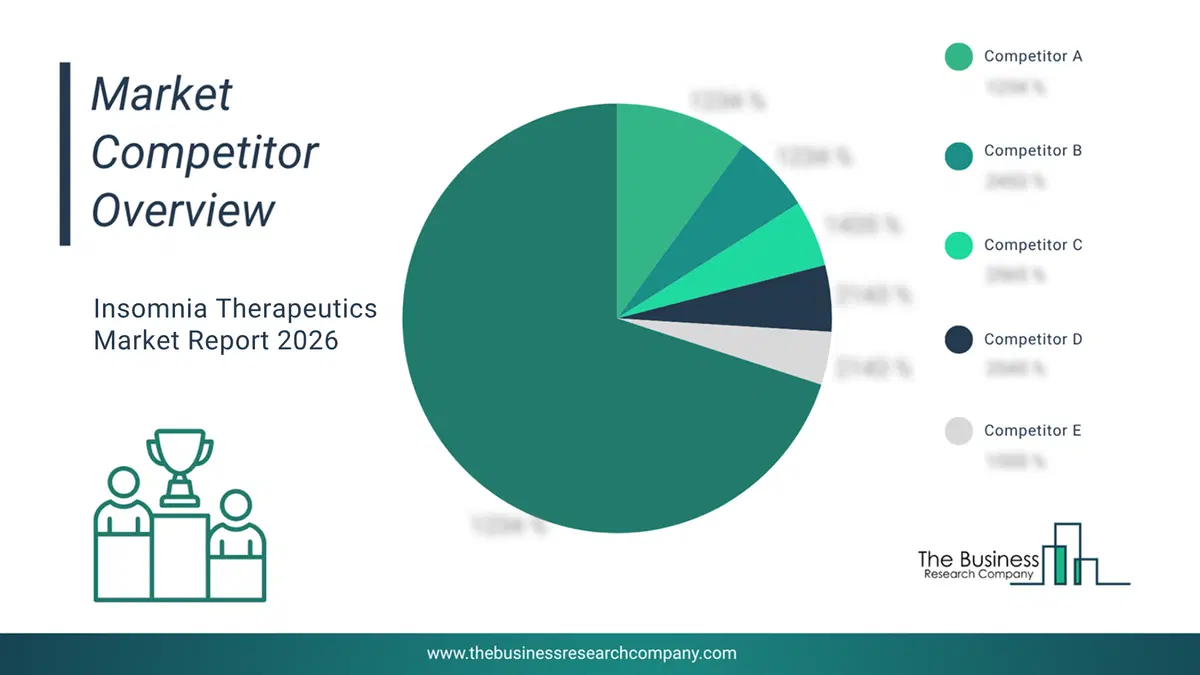
This chart is for illustrative purposes; the full report includes a detailed competitor analysis and comprehensive overview of the top 10 companies in the market.
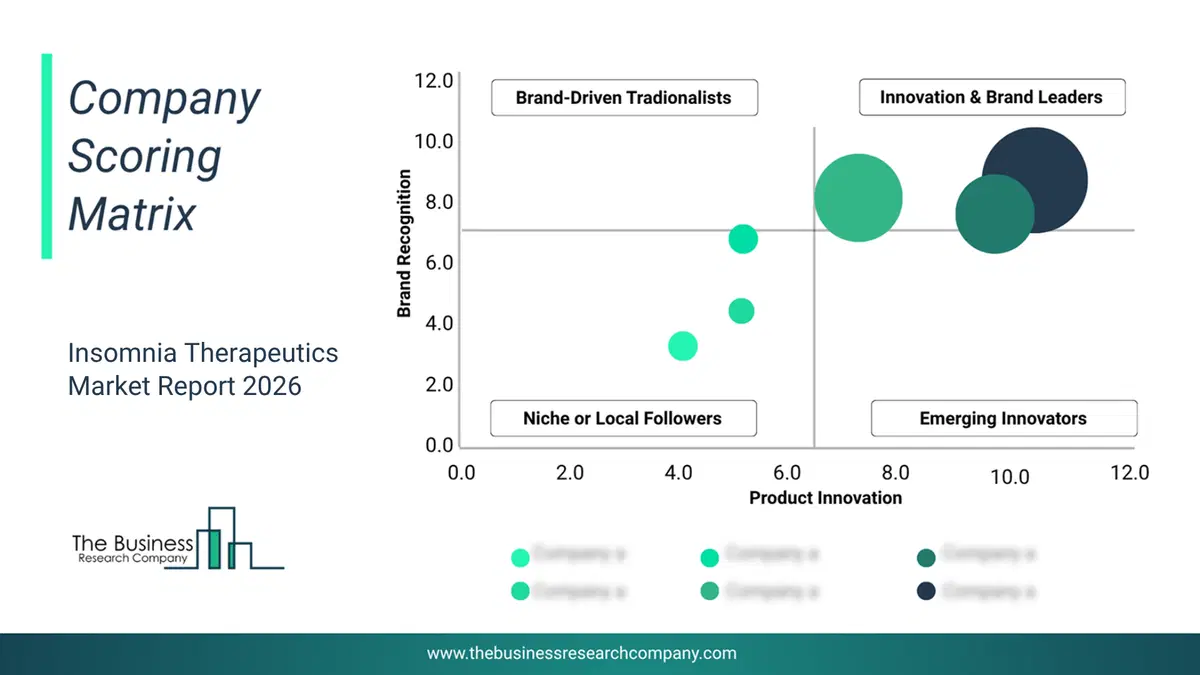
This chart maps companies by product innovation and brand strength, with bubble size indicating relative revenue, helping identify market leaders, challengers, and niche players. This is an illustrative chart; the full report provides a complete and accurate competitive analysis.
Global Insomnia Therapeutics Market Trends and Insights
Major companies in the insomnia therapeutics market are focused on developing advanced therapies such as dual orexin receptor antagonists (DORAs) to provide targeted treatment options with fewer side effects and improved safety profiles. A dual orexin receptor antagonist (DORA) is a class of medication that blocks both orexin-1 and orexin-2 receptors in the brain to promote sleep by inhibiting the wakefulness signaling pathway, commonly used in the treatment of insomnia. For instance, in June 2023, Idorsia Pharmaceuticals Ltd., a Switzerland-based pharmaceutical company, launched QUVIVIQ (daridorexant), a first-in-class dual orexin receptor antagonist (DORA) for the treatment of chronic insomnia disorder. The therapy is designed to reduce nighttime wakefulness without altering natural sleep architecture, offering patients improved sleep onset, maintenance, and daytime functioning. Its approval marks a significant advancement in insomnia treatment, providing a targeted mechanism of action distinct from traditional sedative-hypnotics and addressing the unmet need for long-term, non-habit-forming therapeutic options.What Are Latest Mergers And Acquisitions In The Insomnia Therapeutics Market?
In May 2023, Nox Health, a U.S.-based provider of sleep diagnostics and value‑based sleep care management services, acquired Somryst for US $ 3.9 million. With this acquisition, Nox Health aimed to expand its insomnia care offering by integrating the only FDA‑cleared prescription digital therapeutic for chronic insomnia into its sleep management platform. Somryst is a U.S.-based digital therapeutic that delivers cognitive behavioural therapy for adults with chronic insomnia.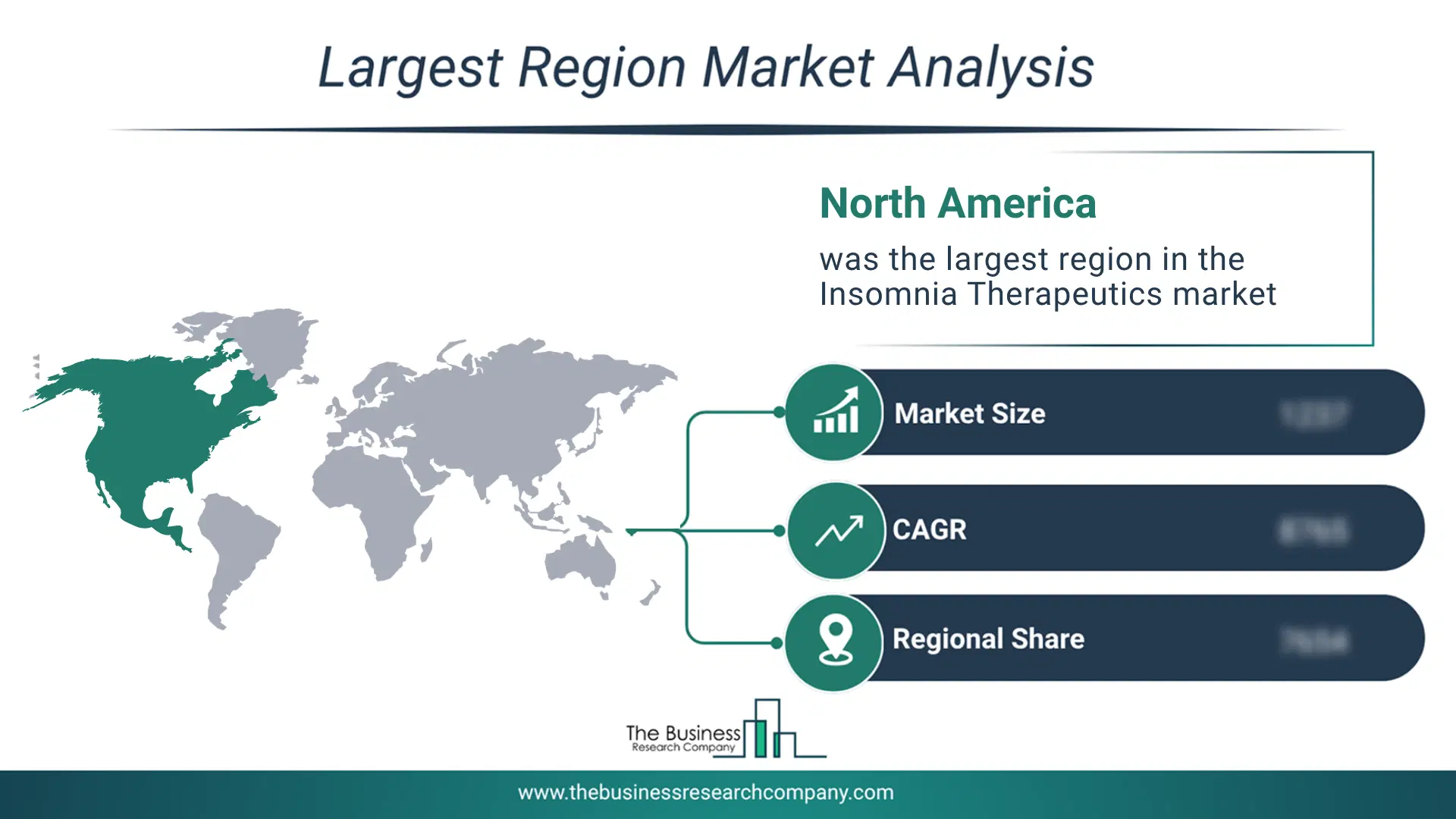
Regional Insights
North America was the largest region in the insomnia therapeutics market in 2025. Asia-Pacific is expected to be the fastest-growing region in the forecast period. The regions covered in this market report are Asia-Pacific, South East Asia, Western Europe, Eastern Europe, North America, South America, Middle East, Africa. The countries covered in this market report are Australia, Brazil, China, France, Germany, India, Indonesia, Japan, Taiwan, Russia, South Korea, UK, USA, Canada, Italy, Spain.What Defines the Insomnia Therapeutics Market?
The insomnia therapeutics market consists of sales of herbal sleep aids, wearable sleep devices, sleep-enhancing audio devices, aromatherapy products, smart mattresses, sleep masks with embedded technology, blue light-blocking glasses, and biofeedback devices. Values in this market are ‘factory gate’ values, that is the value of goods sold by the manufacturers or creators of the goods, whether to other entities (including downstream manufacturers, wholesalers, distributors, and retailers) or directly to end customers. The value of goods in this market includes related services sold by the creators of the goods.How is Market Value Defined and Measured?
The market value is defined as the revenues that enterprises gain from the sale of goods and/or services within the specified market and geography through sales, grants, or donations in terms of the currency (in USD unless otherwise specified). The revenues for a specified geography are consumption values that are revenues generated by organizations in the specified geography within the market, irrespective of where they are produced. It does not include revenues from resales along the supply chain, either further along the supply chain or as part of other products.
This chart presents market attractiveness based on a quantitative evaluation of growth, competition, strategic alignment, and risk, offering a clear view of opportunity areas for decision-making. This chart is for illustrative purposes; the full report contains the complete analysis.

This chart highlights the Total Addressable Market (TAM) by estimating the maximum revenue opportunity using an assumption-driven approach, supporting strategic planning and opportunity sizing across markets. The chart is illustrative; the full report provides a more comprehensive analysis.
What Key Data and Analysis Are Included in the Insomnia Therapeutics Market Report 2026?
The insomnia therapeutics market research report is one of a series of new reports from The Business Research Company that provides market statistics, including industry global market size, regional shares, competitors with the market share, detailed market segments, market trends and opportunities, and any further data you may need to thrive in the insomnia therapeutics industry. The market research report delivers a complete perspective of everything you need, with an in-depth analysis of the current and future state of the industry.Insomnia Therapeutics Market Report Forecast Analysis
| Report Attribute | Details |
|---|---|
| Market Size Value In 2026 | $3.38 billion |
| Revenue Forecast In 2030 | $4.19 billion |
| Growth Rate | CAGR of 5.7% from 2026 to 2030 |
| Base Year For Estimation | 2025 |
| Actual Estimates/Historical Data | 2020-2025 |
| Forecast Period | 2026 - 2030 |
| Market Representation | Revenue in USD Billion and CAGR from 2026 to 2030 |
| Segments Covered | Treatment Type, Formulation, Route Of Administration, Distribution Channel |
| Regional Scope | Asia-Pacific, Western Europe, Eastern Europe, North America, South America, Middle East, Africa |
| Country Scope | The countries covered in the report are Australia, Brazil, China, France, Germany, India, Indonesia, Japan, Taiwan, Russia, South Korea, UK, USA, Canada, Italy, Spain. |
| Key Companies Profiled | Pfizer Inc., Sanofi S.A., Takeda Pharmaceutical Company Limited, Eli Lilly and Company, Merck KGaA, Eisai Co. Ltd., Sumitomo Pharma Co. Ltd., Astellas Pharma Inc., Acadia Pharmaceuticals Inc., Vanda Pharmaceuticals Inc., Idorsia Ltd., Minerva Neurosciences, Neurim Pharmaceuticals Ltd., Big Health, Cerêve Inc., Innovative Neurological Devices, Neurovalens, Electromedical Products International Inc., Pear Therapeutics, ResMed Inc. |
| Customization Scope | Request for Customization |
| Pricing And Purchase Options | Explore Purchase Options |